[00:00:00] Tayson: Hey, everybody. Welcome back to the Live Ultralight podcast powered by Outdoor Vitals. This podcast is all about getting you connected with the vital outdoors. We do that by trying to eliminate the unknowns by getting you out there more comfortably and more confidently so that you'll actually get in nature more frequently. If that's something that you resonate with, if that's something you guys are passionate about, make sure you hit subscribe and stay tuned for all the episodes we have. We have been growing the podcast very fast lately. We've had some phenomenal interviews which you guys will want to go back and listen to, but you're also going to want to be subscribed for episodes to come. In today's episode, we take the team or most of the team that went on a recent backpacking trip
[00:00:37] Tayson: with us in January. We talked through that trip. It was a hot tent trip. We were testing out some gear. We were pushing the limits on some different pieces, but also join us as we talk through what foods we were eating, what gear we were using, the trip itself. Winter is a phenomenal time to get outside. If you don't winter camp already, well, listen to this podcast because it may encourage you to get outside in these winter months. It's one of my favorite times of year to be outside. It's just a completely different experience. It's quiet. It's beautiful. It's a great, great time. Join us as we bring the rest of the guys in the studio here. We have a very enjoyable and fun conversation about everything that went on during this trip. Again, if
[00:01:25] Tayson: you're not, please subscribe and enjoy this conversation. We've got the crew in here from our most recent trip, minus one. Derek, he's not in here, but really quickly just going around the room. Let's just say your name, say who you are so that those that maybe don't listen to the podcast as frequently are familiar with you. We will be recapping a recent trip that we took up to Deer Hollow where we did some cross -country skiing in to an area and then spent the night. The temperatures got down to about negative two, negative three, and just be sharing that experience. The trip itself was a blast. We did just put out a video on this where we filmed it in a different cut, different style that was a lot of fun. You get to just
[00:02:05] Tayson: hear some of the jokes and things that are going around. We had a really good time on it. Go watch that video, and this podcast will get deeper into what we're doing, maybe more gear -specific stuff, and just more of the details that you guys may care about if your die -hard's getting out there often. With that, let's go ahead and go around the room really quickly. Just name and what you do here at Outdoor Vitals, and then we'll dive into more about this trip. There's you, Tyler.
[00:02:34] Tyler: All right. I'm Tyler. I'm over operations, and I like to party.
[00:02:39] Tayson: No, you can't say that. I don't perfect you to party.
[00:02:44] Joe: I'm Joe. I'm the content creator here at Outdoor Vitals, and I like to party, too. I don't like winter camping. I think we'll get into that, I'm sure.
[00:02:58] Tayson: Yeah, Joe was all smiles on the trip. All smiles. Brigham. I'll introduce him. He's our product designer and our single MMA fighter, according to some of the most recent comments on our YouTube channel. I think they said that he looks ready to jump into a MMA ring at any point in time. Anything else you can say about that yourself, Brigham?
[00:03:22] Brigham: I guess that covers it.
[00:03:26] Kaden: I'm Kaden. I'm just a new warehouse guy. I like pretty much anything, but I'm terrible at all of it.
[00:03:35] Tayson: Going to school here, working part -time with us, so glad to have you on board. This was your first trip with us, so we'll get into that as well. All right, so kind of a breakdown on what this trip was exactly. We got up to the trailhead at around probably 11 o 'clock in the morning, I guess, and we wanted to get in there really early. Historically, we've been really bad at getting out of the office on time on these winter trips, and then we're fighting the clock to get our shelter set up and get ready before we always get these winds that come in at night in the winter, and then you're setting up your tent. It's windy. It's stinking cold. We wanted to get in there early and have a more enjoyable experience,
[00:04:17] Tayson: so we started off at about 11 o 'clock and got on the skis and started going. Some of us are really comfortable on skis. Some of us are less comfortable on skis, so how was the ski in for all of you guys?
[00:04:33] Joe: Last time, I think, had been my second time on skis. We did a similar trip. We have a podcast on it. It's like the Deer Hollow or something or other, like basically a year ago. We did the exact same trip, and it went much worse, but that time was my second time ever on skis. I've only ever cross -country skied. I had only ever been in, like, I don't know, like A place for cross-country, skiing, once when I was a teenager and went around for like an hour and that was it. And then the second time I had ever skied, was the last trip that we went on. And I think the last trip I realized that the skiing wasn't ever really that much of the problem with it. So this time around it wasn't
[00:05:21] Joe: too concerned about the skis. One of the reasons we had to leave early is because we had a bazillion things to film. Not only the YouTube video, we were doing, but also a bunch of. We tried to get in the field stuff for our products that are coming up or ones that were currently selling. And we get obviously like if you've ever watched our ads you can see people from The Office Where our stuff, you know, acting like models like running around or whatever and we have to go get those shots and we had to like four things to fill. So that was another thing where it's like, we're gonna be out there, I'm gonna be on skis so I can't move very much at all.
[00:06:04] Tayson: Just what they can just starts taking normal time to And timesing it by about four, when skiing skiing and snow is involved. So, yes, it's real. Real. It's really about it,
[00:06:16] Joe: really, really, every time we're on trail, it does take way longer to film.
[00:06:19] Tayson: It does here, we always over-commit for what's reality.
[00:06:23] Joe: And then I'm always the guy being like, I don't know guys, I don't know. I think we gotta maybe bring it down, bring it down a little bit. But yeah, I'm glad we left at 11 a.m. we actually got pretty much everything filmed that we needed to film.
[00:06:36] Tayson: It was kush. Yeah, but
[00:06:39] Joe: yeah. Last time the, the skis were a problem. This time I had one incident with the skis and that was it and that incident was right out of the truck. As we were going up, the stupid berm, like just pile of snow coming out of the truck and I was immediately slipped and fell on my back and I was not happy. He started off the tree. Yeah, exactly. How I thought the trip was gonna go. Got better from there, I feel like but yeah,
[00:07:09] Tayson: we we aren't laughing at you Joe. We were laughing with, you know, with you because I think you're relaxing.
[00:07:17] Joe: With swearing and then he became laughing.
[00:07:22] Tayson: So I think I think Derek and our office, who's not here right now. He's probably got the cleanest mouths of anyone you've ever met and I think he heard some words out of your mouth. Joe, that he can't hear. Which I thought was very funny. Okay, so we get skiing,
[00:07:44] Joe: can't quite hear it in the video, but you can see that incident and I think, like, we really caught most of the funny crashes and stuff on the video. So, it was a good job. We've, we've
[00:07:56] Tayson: continued to get better at just capturing these trips and running cameras for
[00:08:00] Joe: putting himself in the video. It's fine. Yeah, I realized when I was editing the video, I'm like, I have to be the butt of the joke and everything.
[00:08:07] Tayson: Well, so we we get skiing in the skiing itself was was really nice. It was really interesting though and it's just a true Testament to what it's like to to go out there in the winter which is I kept having these fluctuations of the wind would be blowing and it would be quite cold and we'd be covering up our faces. You know, to be making sure your hands are or covered and then one would stop and also was like, oh man, you can like it's warm, it's really nice and you you'd have like five or 10 minutes of that in the next thing you know the wind would be blowing again and so it's really interesting Dynamic going in but it's it is just a true Testament to Brigham, put it on a different podcast.
[00:08:48] Tayson: The thief of of the backcountry is wind, like it can just steal heat away from your body so quickly. And it is probably the single I don't know. Like, it's the thing that you don't always count on when your winter camping and but it is like hands down. The quickest way to get way too cold to lose way too much body heat to put yourself in a bad position and so yeah, going in I think Just to just to go on to some of the products side. I think that's really where the windbreaker makes a massive difference. And, like, what, what gloves you're wearing can make a massive difference. So, I've been using for a while, like a liner glove. That typically, like, the liner goes, I have been using personally, are actually have a,
[00:09:33] Tayson: had a waterproof memory in them, but they, I will use them. Even with nothing on inside of them, just to block the wind. And it makes a massive difference for keeping my hands comfortable for also, keeping snow and stuff from getting gloves wet over time. Even from sweating. As you're moving, like, you don't realize but you're sweating out there. So yeah, it was it was a really interesting conditions. I think going in. Did any guys notice that at all?
[00:09:57] Brigham: Yeah. Well, and for
[00:10:00] Tyler: When we got out of the truck, it was 16 degrees Fahrenheit at 11 in the morning and it was just under 10,000 feet, probably or like we're like at 9,800 feet. Almost 10,000. Yeah. It was a nice sunny day but when the wind would come up that wind, chill factor would probably take it down to like what would feel like five degrees or so, you know, in the afternoon when we were setting up, so it was pretty frigid cold even though is a beautiful day.
[00:10:28] Brigham: yeah, the those Dynamics I think are just Really interesting like Tayson was saying because 16 degrees in winter. You know, if as long as the sun's out and there's no wind like, even if you're just moving, like a slow pace, it's very comfortable, it's not not cold at all. In fact that it usually feels like warm But even when the sun is shining, as soon as when kicks up that really, like, just changes how everything feels and changes how you have to be more attentive to your clothing and what you're doing and for how long you stop, because if you're stopped stopped moving, you're gonna stop generating that heat and wind just going to cool you down real
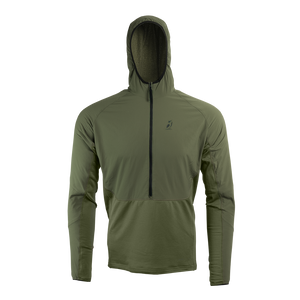
[00:11:16] Tayson: quick. Who had the new? I know you two had the Nebo windbreaker. That's Derek upcoming was Derek. He's not there because one what'd you guys wear?
[00:11:28] Joe: I had the right, I had the rain jacket
[00:11:30] Tayson: at the time that you're like an old version of the Tushar Rain Jacket, is what I was wearing on the way
[00:11:34] Joe: and had some wind pants or something on. I had just some cheap Walmart snow pants for. Yeah, I bought them for like, 20 bucks, they worked fine. Our rain pants, rain pants is what they were. And
[00:11:49] Tayson: were you trapping moisture in there, where you getting sweaty that you could notice
[00:11:53] Joe: not that. I not that I noticed. And then under that, I had the Satu Adventure Pants. So I was actually did. Yeah. And then it was the rain jacket for me on the upper layer and then underneath was the Ventus. And then under, that was just a Just regular. T-shirt. I'm not even sure if I brought the altitude.
[00:12:10] Tayson: But what did you guys? You too. He's gonna sound bad.
[00:12:18] Kaden: Actually wasn't wearing right very much over Vista stuff, but I just had like this Iron Man compression shirt and then a jacket from Walmart and For some reason I was doing pretty okay. But I think I'm just a really warm bodied person. So
[00:12:34] Tayson: yeah, you're related to Derek our director of marketing and so we take about half of what you say is real life. Is always comfortable no matter what the condition is even whenever else is freezing cold. It feels like so not, it's good. So just just throw that disclaimer out there. We gotta figure out how much of what Kaden says we can trust. We're still filling that out. Like this was yeah and things. But Tyler, are you wearing
[00:13:11] Tyler: while we were skiing, I just skiing in my Sawtooth pants and my DragonWool Hoodie.
[00:13:19] Tayson: Are you didn't have any layer on top, see, we're just getting a little bit colder and the one would blow and just deal with it.
[00:13:25] Tyler: I, well, I I stayed back to run the Drone. So I was skiing fast. I was putting out a lot of heat so I never got cold. Oh, even when the wind picked up? Yeah, this during the skiing I hardly ever got, like the next morning I felt like the wind was a lot colder and so that was the only time where like a wind would hit me. And I was skiing and I was like, oh, But like, I didn't really feel the cold too much. Until we got to camp. And then with all the snow and the wind there that was That was when he had to put on the other layers.
[00:14:03] Tayson: so we skiing to camp, we get there, we pick a spot that we feel like a bit out of the wind and What's interesting, I guess about this scenario is there was, was there 70 inches of snow pack at the trailhead? Is that sound right? Brigham, I think you were gonna yeah, no doubt
[00:14:22] Brigham: a little over six feet actually. It was like six and a half feet of snow.
[00:14:27] Tayson: So we have a ton of snow and the upper layer here in Utah. It's we have like the saying, like, oh, got the best power on Earth. We also have some of the worst snow on her because it turns to like find green sand that will not pack together. And so we start, you know, trying to pack down different spots and it's It's a it worked. Okay this time but we've had it where it's not worked and so but the snow is so bad that even where you've packed it down with your skis, walking over a jumping on it and trying to pack it down. Second, you would take your ski off. If it would just sink straight down like postal and then create a massive hole in your area. Yeah. So it was different
[00:15:11] Tayson: in the sense that once we got to camp and we started working on setup, you had to do the entire setup on skis. Like you couldn't take them off to set a stake. He couldn't take them off to navigate anything. I mean you had to be on your skis the whole time through the setup, which I think I've had to do that like, a few times, but it's, it's pretty rare when you can't get the snow to pack in a little bit or enough to, yeah, just be comfortable. At least walking around your tent site area. But really, I think that comes from, when the snow comes down a few days, previous like, it was brand new fresh powder. Like, it usually will pack better, but snow is, you know, a few days older than
[00:15:52] Tayson: than when we were showing up and man, it was, I don't know how to describe it. It's like, it's, like, trying to pack sand together versus snow, so
[00:16:00] Joe: dry sand. Yeah, yeah. Not a good wet sand for like sandcastles, you know, you can pack that down.
[00:16:10] Tayson: Yeah, yeah, that's sugar. That's yeah, there you Yeah so we had a new shelter to set up me and Joe I was we were pretty dead set on giving Joe a much better experience.
[00:16:26] Joe: I appreciate that
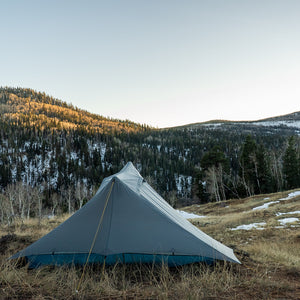
[00:16:27] Tayson: we were we were being mama bear in a lot of ways you know. Watching over her shoulder, trying to help and just make sure that he had a good time because we know of your apprehension with winter camping. So, I, I actually purchased a different shelter and this big teepee style shelter, big Center poll. That's about seven feet tall, and what that would create then, as an area where we could all come and hang out as a as a group. Once the, you know, once it's getting colder at night, getting dark but also create an area where hopefully we could get Joe, make sure he was fully dried out. Make sure he was fully comfortable before he got into his sleeping pad, which, you know, I control what I could control guys, but we'll get
[00:17:09] Tayson: into that. And
[00:17:10] Brigham: well, it was a it was a hot tent setup. So right, it wasn't just a teepee.
[00:17:18] Tayson: So, that was the point of congregating in there was to congregate in a warm tint. Yeah, I mean, and well, I guess what, there's a few points I want to know what that too of, just even sealing up that shelter, but we got that, that's shelter set up. It requires a ton of type points because it's a massive sale. Essentially, even though a teepee is very good with directional, directing wind off of it. Huge shelter,
[00:17:45] Joe: probably like a 15 foot diameter.
[00:17:48] Tayson: Across something like that. I mean, I think they call it a Four to six person shelter. And then with the stove, it's like a three-person shelter. So it's big, it's
[00:18:00] Joe: big. I think you could fit More than that I wanted to stack them. Yeah well I mean I was watching the cookies. I was editing one of the videos together where you're talking about this and you were like this is a this is a four-person shelter and I'm thinking well, I was there. I was like, you could put two put people where I was at. You could put two people on the others like On like a 90 degree angle from me. And then I cross from the stove, you could win another two people and then the honestly like if you didn't care that you had to step over people. You get another two people.
[00:18:30] Tayson: He could probably get like eight people without a stove in there. Yeah, if you really wanted you really wanted to you could it's it's been sizable shelter. Yeah, the goal was that that when you go on some of these winter trips though, it's not always fun. Especially when you got a bigger group. When it's like, all right, it's 6 p.m. the sun's down, it's freezing cold. Let's go into our shelters, right? Because even even sometimes setting up a fire if there's any wind like you can't really even get warm around a fire. Like there's just too much wind. So that was our scenario. Last year as we set up a we built a fire and we sat around it for not very long forums. Like yeah, this isn't working like we're all going to our
[00:19:05] Tayson: tents
[00:19:06] Joe: once the fire has sunk two and a half feet down into the snow, then it can't even vent anymore. It
[00:19:12] Tayson: just starts dying. Yes, can't get oxygen. Yeah, it's not a great situation. Yeah. So this time it was. All right let's let's get this shelter where we can all hang out you know dry out cook and eat together and then go to bed at it. More of a usual time which was which was a lot of fun at work really, really well. But so, we're getting shelter set up. We get that all done in the daylight which was super nice.
[00:19:36] Joe: I really enjoyed that. I probably went into the shelter too soon because I'm like, well, I filmed the videos I need to film and I don't need all just go hang out and here but in the meantime, you know, Kaden and
[00:19:48] Tayson: Tyler you guys were out there skiing and having a good time, um, Tyler you got I mean, did anyone fall besides you on that tree or was there was there, crashes, or
[00:20:00] Tyler: anything to note with skiing That was my first time ever, downhill skiing ever,
[00:20:04] Tayson: you've never skied in your life
[00:20:06] Tyler: only snowboarded. I swear at a time,
[00:20:08] Tayson: okay? But it's gonna say how that's really surprising to grow up here. Not do winter sports, but I know where did that makes a beard full of
[00:20:15] Tyler: snow on one
[00:20:16] Joe: that was my best part about the video footage we have of it.
[00:20:20] Tyler: Yeah. It's fun. Good way to keep warm. Just keep climbing up, steep hills.
[00:20:26] Tayson: Yeah. So we did we did a good job. I think getting some firewood prepped. Any anything else to note about just set up and I don't know anything. Before we last time Brigham dug a huge pit. And put his hot tent in there. This time, you had your hot tent, you decided not to build the pit. and maybe he can tell the podcast audience like, Oh, went into the decision making last time versus this time. I'm
[00:20:55] Joe: curious.
[00:20:56] Brigham: Well, the last time I was worried about I just thought it would be easier to Anchor stakes in the ground versus the snow, which, I mean, there's, there's Civil methods of doing it in the snow. But, Last time I started digging and I had spent enough time digging before I realized that it was a waste of time. Then I just felt like I should just finish the job and then finished taking So I it's like the only time I've ever dug my tent into the ground but this time it was like a no-brainer. There's probably more than twice as much snow and there's no, you don't need to dig to the ground. So That. this time was really my default method versus, you know, any other time I choose to dig,
[00:21:43] Tayson: I feel like once you if you can get like a two foot stick, you can anchor a steak quite well that's
[00:21:50] Brigham: all I do like Generally just cut. Yeah. Try to cut like 20, 20, 24 inch sticks. And That's the snowstick. Yes, I have that big shelter. I think we needed 16, high points and so we had just a bunch of sticks, you know, buried in the snow and it worked really well even in that, Snow. That's just Powdered sugar. You know,
[00:22:13] Tayson: some intense wind that we got, I think, I think yeah one thing yeah we did get it some intense win which I want to get into but I think one thing to know that I've seen over and over again Is different types of stakes out there, right? Like there's fatter ones and there's there's snow Stakes too much and work and they're spiral ones. But what seems to Trump everything? Every time for me is stake length so, you know, for these obviously we're cutting or we're breaking, you know, two foot long, tree branches and then using those as our stakes and they they can go deep enough that they can really get a hold in their But the same principle really applies even for when you're staking in to dirt, right? So that's why for us
[Editor’s note: This is a personal historical observation, not a universal shelter-anchoring rule. Holding strength depends on snow or soil, anchor design, placement, shelter loads, and conditions; follow current manufacturer guidance and plan conservatively for changing wind and weather.]
[00:22:55] Tayson: through the testing and whatnot that we've done. And makes way more sense, especially with the trekking pole shelter. When you've got you've completely rely on those Stakes, which you really rely on stakes in every shelter which to me is a myth that people kind of complain about like, oh, you have to anyways, but there's a little bit more of an important to having those Stakes set. Very well. The dragon pull shelter and so recently we just released a nearly nine inch take, it's like eight inches 8.75 inches, long of an Easton aluminum stake and that's the stakes that I've been using for the past two to three years, about three years actually and they've been phenomenal and they're not the fattest, they're not spiraled, they're not whatever but they are long and super super light
[00:23:42] Tayson: and I have had incredible. Incredible luck with those literally. Don't remember having a stake pull out on me ever with those and It's been there, anyways, just think about that. When you're going to stake stuff in the length of that steak, to me in my experience matters, way more than any other aspect of the state. Maybe I will say the caveat with that would be those like Shepard hook, titanium Stakes that are like, have a diameter of a I don't even know they're just super skinny, right? And they're like, yeah, they're like a nail or a stick as a piece of cord. I have not had good luck with those. Those are two skinny for for how long they are for kind of how long they are. Like I've been told I've struggled with them
[00:24:26] Tayson: a little bit, but they're I don't have a lot of experience with those. I can't talk too much. Well, I mean honestly if they're long enough like as long as the cord will stay attached to that like that's still like really more effective than let's say like a six inch. A v-shaped stake. Like if you have a nine inch nail stake, it would be more effective. Like the length of the stake into the ground is has like the highest impact on holding power. Yeah. Yeah. And I mean, and then just one last, I guess, plug here, since this podcast is sponsored by outdoor, vitals is just like getting stakes in the ground with those trekking. Pole shelters is really important, which is again why we put massive amounts of lead on all of the corners
[00:25:14] Tayson: to help you get the stake into the ground. In the right spot, we'll be able to move the stake in up. I think that's one of the things that I see happen. The most with freestanding tents, there's a lot of times or just any tent but like on a freestanding tent, specifically, a lot of times they give you like a three inch little diameter of where you can get your stake in the ground. Like that's as much cord as they give you or webbing, is they give you we're giving you like 16 or 18 inches and then you can spin that, you know, and multiple directions. So you have a massive amount of space but we get those stakes in the ground which really matters. So stay linked and and then having the room to
[00:25:46] Tayson: get the right placement in it.
[00:25:47] Tyler: I'm having flashbacks to camp. Pretty Outdoor Vitals and having free standing tents, not staking them and either like it wasn't a very high wind night. You would just put all your stuff in there and that would waive the tent down enough. Or if there was a lot of wind, you go find Boulders,
[00:26:04] Kaden: you put them inside the tent. Oh, That's Ultra Lite. You don't have to also work, you carry the mistakes. And you're gonna say you're gonna put the rock on your Stakes but no no you put it right in that side. At least. Did you do like the old Native American heat the Rocks up first? You know, probably smart if it was Winter camping
[00:26:28] Joe: for sure.
[00:26:28] Tyler: But I think I've done that
[00:26:29] Kaden: a lot. I can't even. Yeah
[00:26:32] Tyler: the stakes
[00:26:33] Kaden: when you're a kid.
[00:26:35] Tyler: Or a teenager, even like they seem like such a chore.
[00:26:40] Kaden: People get lazy with them.
[00:26:42] Tayson: They bend them because they're just sloppy. and in on them all crooked, and
[00:26:47] Kaden: that's true.
[00:26:48] Tayson: That's true. All right, so tangent. Over we have like six sticks holding down the corners of this massive shelter and yeah, pretty much. We got everything down. We got climbed into there and we cried. Well, there's six of us were they were in their And it was nice. It was comfortable, like, we're hanging out, we're out of the wind. It's, there's an idiot. Yeah. Yeah. Shoes are off or drying out our socks, right out, our pant legs, and there's just an absolute immediate warmth value to getting out of the wind, so just getting in the shelter but then all, so to have that titanium stove in there, obviously putting off heat is is another factor that really really helps with that. One thing though that I was just thinking about was remembering you know, after
[00:27:37] Tayson: we'd been in there a while I think we'd eaten a little bit we went back out to get more Stakes or firewood. And as soon as we went out there, I mean it was windy out there and I was out there. Maybe five minutes before my my fingers were numb. I was like my body heat itself was pretty like starting to dip a little bit, but really just my fingers were getting, so numbing onto the stakes breaking him off trees. And that conductive heat loss of holding on to to the branches. And I actually had to like fall out my fists Inside of my gloves and just kind of like, tuck them under my arms, and just kind of move around for a minute, to warm them back up, because the way it was so
[00:28:18] Tayson: windy. But when we were out there, one of the things that we're noticing inside the shelter is that we were still getting like enough of a breeze in there. It wasn't getting nearly as comfortable as like, the shelter with the thing on. Yeah, so we ended up, you know, ceiling off the corners of the shelter more and When we came back in and it was way better way, better off after that. Just by making sure that we kind of had some of these gaps. We had a big gap around the door specialists so we kind of sealed that up and then it was significantly warmer
[00:28:50] Tyler: you guys at work to piles because I was inside the tent through nothing
[00:28:54] Kaden: but you guys we didn't know.
[00:28:59] Tyler: Up around like you say the corners, it was pretty much embarrassed the 10 outside of that. Yeah, I decided perimeter. Yeah, yeah. Thank you Tyler. Yeah,
[00:29:08] Kaden: I did it on.
[00:29:09] Tyler: Well, I just stole Brigham shovel probably while he was in the middle of using it, and then I did my tent and then I did the big tent and then I Went back and I was really cold after that. It was that was that windshield was easily putting it below zero degrees, like for just it would sap the warmth out of you so fast. If you weren't, if you didn't have a layers, that would really cut the wind, you had no chance of staying warm, you know, So that way it was actually a hot tent though, when you got in the big hot tent, that was I think we got.
[00:29:40] Tayson: Oh, so I will say, I think the first like hour two, we were in there. We were pretty Inconsistent with keeping the thing stocked. Like because we were just, it would be warm. So then you feel comfortable with get relaxed, get into a discussion or joking around and then you forget and then come fire starts shivering. And then you realize you gotta restart the fire a few times. I think After we came back in the second time we get firewood. I think we're much more consistent about keeping would just feeding that that stove.
[00:30:16] Tyler: Well that first half hour me and Derek were just stoking and stoking it and realized the damper dampener was completely closed. And we're like this thing sucks. It can't even start fire in it, but I think it so like for someone who has never backpacked with the titanium stove, that stove is a is a pretty unique little setup. It's not a one solid piece stove. It packs flat. So it's like an inch thick by like 12 or 14 inches by like eight or nine inches, something like that. And so, you have to unpack it and then use the bolts and stuff, to make the sheet, metal make a box, and then you have to roll out the flu and turn it sideways. And put some little things on it. So, it's pretty cool how much
[00:31:05] Tyler: it packs down, but it's still takes some finesse. To keep it. To keep it working. Good, you know, you gotta pay attention. Only, the
[00:31:16] Tayson: dampener is the biggest one that they gets changed because sometimes unintentionally or it's windy or bumping, it can kind of spin the little the little flute dampener in there. And so
[00:31:29] Kaden: we'll get into in a bit, but Yeah. It's a phenomenal stuff but but yeah, you do sometimes have to pay attention. I will also say that.
[00:31:37] Tayson: After he came in the second time with more firewood I was like we got enough firewood. Let's burn it versus in the beginning. I'm like rationing just a little bit more. I swear every time every time I use My hot tent. I never use all the wood that I get and it's like how many times do I need to do it to learn to just Just burn the dang would not be. So try to be so conservative because I'm just I'm always like, conservative minded when it comes to Like anything in these more like austere conditions and the winter and so I'm always in the back of my mind like well I should have a surplus. and, But and it's that I'd rather just burn it all.
[00:32:17] Kaden: Yeah,
[00:32:18] Tyler: well this time I got a whole load of wood while the big tent was still being set up, I'm like this will burn for a while and then I go and get more wood. And all of that wood is gone because they'd used it for steaks.
[00:32:31] Tayson: It was the woman. So we're hanging out in there, eating some, some food, some of the good, some of the bad. Well name, drop anything here but we did try some new meals out that we're not. Phenomenal. They've got some other meals coming though from that brand. That I'll be excited to try this summer. Some Pro packs or something like that. So yeah, we'll keep in the loop. We're we'll try to continue to add food to the Live Ultralight membership. I gated area where you can get food at discounts and with rebates, Yeah, tried some food. I actually accidentally brought a desert meal that I thought wasn't like an entree. I thought it was mango sticky rice with chicken. It was not. It was mango sticky rice with nothing. And then I saw later that
[00:33:23] Tayson: it had dessert across the label. So I had a little bit of that and that was all right, and then I had a different meal. but I guess, I guess try to talk about one of the points that we were doing with this, this whole Trip. Or with the video that was specifically that we filmed as we wanted to talk about the tip or the hack or whatever you want to call it of eating, a lot of calories before going to bed, it's on a winter trip to stay warmer throughout the night. So your body has the fuel to burn throughout the entire night because it takes more energy for your body more calories to keep body temperature up when it's cold, then when it's hot. And so we were the way that we were
[Editor’s note: This is a historical account of the group’s food experiment, not a universal nutrition or cold-safety prescription. Energy needs and safe cold-weather planning vary by person, health, exertion, and conditions.]
[00:34:01] Tayson: doing. That essentially was eating a lot of food and adding butter to basically everything. I ate. Um, so I had a butter to the entree, and I don't know if it ruined it. I don't think that that's what ruined it, but I was not a fan of it and I did not eat very much of it, but I passed it around. So, what did you guys think of that meal?
[00:34:22] Kaden: Well, I'm a college students and I'm related to Derek and so, I liked it. I think it was in the office with Tyler the other day and he said the college dudes, just have a seafood
[00:34:36] Tyler: diet. He said that they just see food and they eat it. So,
[00:34:39] Kaden: I thought it was pretty good, but
[00:34:41] Tayson: I used to think I was that way. But maybe I'm slowly becoming picky more picky. But, I mean, errors times when I lived in, The parks the world, when I mean, I would eat anything and they weeds off the ditch bank and chicken feet, and chicken head soup, and all sorts of things. But maybe, maybe I'm growing up, I don't know.
[00:35:07] Tyler: I don't like it.
[00:35:09] Tayson: Yeah, it was it was not great but we followed that up with some really good food. So all right bring us got something to say.
[00:35:17] Brigham: I was not about to eat. Three tablespoons of butter. Right before I was gonna try to go to bed. And I think my method of, you know, three or four Reese's cups and three or four Snickers. It worked pretty well. It's the easiest solution. Very risk-free
[00:35:35] Tyler: I brought peanut butter M&M's like, almost exclusively big bag of. Yeah. Big bag of them. I counted up the calories. I'm like yeah. This is about right for today. And then
[00:35:47] Kaden: I have that. And I think I had some like
[00:35:49] Tyler: Snack food on the way. I had some Pringles, I think
[00:35:51] Tayson: and You brought an entree though, like you brought a meal?
[00:35:55] Joe: Yeah,
[00:35:55] Tyler: I brought it. Backpacking. Okay. Yeah, and it was too cold. It was before you guys it sealed, the tent. So, like, even though it was in there for 10 minutes, like by the time, I ate the backpacking meal, it was like lukewarm.
[00:36:09] Kaden: Bizarre. I only waiting like, Wait like 90 seconds. I don't wait the whole 10 minutes.
[00:36:17] Tyler: Well, I didn't say anything about it. I don't want to explain about one more thing.
[00:36:24] Kaden: Well what can we learn from this?
[00:36:26] Tayson: If you were to have taken that meal and maybe popped it inside your backpack or wrapped it in a jacket or something like that. Yeah, because that's all I did. And I wait the full 10 minutes before I eat mine. This place sticking it in the snow, on top of the snow, or whatever.
[00:36:40] Tyler: If I stuck it on top of the snow, if I just had it on top of the, like, the little liner that was on the ground. We'll have to go back to the footage,
[00:36:48] Kaden: I don't know.
[00:36:49] Tyler: But, um, yeah, that surprised me that it like even though it was boiling water in a sealed container that by the time I got to it, it was like Half cooked and lukewarm. So
[00:37:01] Kaden: yeah, I did eat that. I forgot about that. Thank
[00:37:03] Tyler: you for reminding me. Peanut butter M&M's helped afterwards.
[00:37:07] Tayson: But yeah, I'm way more conscious in the winter about putting my meal in a place where it's not going to get too cold outside. Rather it stay super hot for the five ten minutes, I'm waiting and then write open it. Like open it steamrolls out and let it cool off at the pace. I want it to cool off but that way you, for sure, get it cooked. So You know, I mean, there's people that make Koozies for pots and all sorts of things for this exact scenario, but I just find that. As long as it's fully sealed, I'll stick it. You know, sometimes I'll just stick it in like the opening of my backpack or on top of my backpack, or I'll take if, I've got a jacket sitting there just kind of set it
[00:37:40] Tayson: in or around the jacket, the seal it up and something insulate and it'll, it'll stay really hot and and do better for it. But that's a good example of that conductive heat loss we're talking about. Yeah, it's it's powerful thing. So we had meals. We had that country food, email the Tyler, preps and maybe talk a little bit about them.
[00:38:00] Tyler: Yeah
[00:38:01] Tayson: and what they're doing us with. So
[00:38:03] Tyler: yeah. Aaron from Backcountry foodie was a registered dietitian who decided she wanted to hike the PCT and she's also an ultra Runner. So going out onto the PCT she was feeling like she had no weight to lose a lot of through hikers. Go out and I can lose 20 pounds, no problem, you know. She didn't feel like she really do that. Yeah, she didn't feel like She would ever live it down if she went out there and didn't have the food figured out for a big long trip. So she got her food plan, dialed she started helping people with it on the trail. And and after she finished the thru-hike of the PCT, she never went back to work because she just had enough people asking for help with Trail food, that that became her
[00:38:54] Tyler: her livelihood. So she's got an awesome website that helps you do meal planning and has a crazy amount of recipes and you can sort and filter them by diet or calories or ingredients. And so was one of
[00:39:12] Tayson: the coolest things is the packing list aspect? Yeah.
[00:39:14] Tyler: So
[00:39:15] Tayson: like you can you can pick meals and it'll then it can literally give you what you need to buy at the store. Which I mean if you're so special for hiking that's that's huge to because when you go into town you just know exactly what you need to grab. But it's important for any. I mean hiking because that's always how this you get, the story goes for get something and if you're gonna be making meals like she does.
[00:39:36] Tyler: Yeah, exactly. So She she reached out to us and was excited to try to collaborate on some things, and we're starting with her collaborating on the OV 100, so she's sponsoring, 100 Mile Challenge, and we've just been wanting to try your recipes. So I used her awesome little tool to do like this brownie, batter recipe that she has and I just went in there, found it Clicked, six servings, hit the shopping list and and it made it super simple to do it. So I prepped that and we took that out on the trail and We were doing the video about adding calories to stay warm so we added butter to it and that was really good.
[00:40:27] Joe: It was great,
[00:40:28] Tayson: it was delicious. Although Brigham did get me a little nervous as we're going along that I might be eating too much butter. And so I got a little more conscious but I had a slab of butter to my brownie batter. Mix
[00:40:38] Tyler: by too much butter. What does that mean? Worried about it lubricating Heights.
[00:40:44] Joe: OH anything.
[00:40:45] Tayson: That's the only one.
[00:40:47] Brigham: Fat and greasy.
[00:40:48] Tyler: Yeah. All of the snow storm like I had to. Yeah, yeah.
[00:40:53] Joe: That really sucked. That was really cool.
[00:41:00] Tyler: Just get anything on your skis. That's come on.
[00:41:07] Joe: No, I had been afraid of that. I've been eating. I've been training for like a half marathon recently and I changed my entire Dieter at. So, like around this time last year I was doing, like, a no-carb thing. Everybody was yelling at me about it, freaking space right now.
[00:41:26] Brigham: It was backpacking in a two-pound meat stick.
[00:41:29] Joe: That was great.
[00:41:31] Tyler: It was great.
[00:41:32] Brigham: It was
[00:41:33] Tyler: you froze?
[00:41:35] Joe: That time, that's why we did the calories. There's plenty of calories in those things. The but now I'm on a diet where like I'm eating basically all day like a lot of a lot of proteins
[00:41:49] Tayson: office smells like nothing popcorn. I do not share with anyone
[00:41:56] Brigham: during work. I do eat popcorn. That's hunger suppression, right?
[00:41:59] Joe: Yeah. So that and then later, I can eat the higher protein stuff and just go to bed on that. Not feel like I have to eat more. So I have been able to control my weight after because every time I start running, I did this last year when I was like, starting to train for the for the high line. And I was just trying to get into shape. The I start running and my appetite goes like crazy so yeah popcorn is super helpful. Plain popcorn I got a little popcorn popper thing where I can do it without butter or anything like that and then you put spice Spritz a little bit of Pam and not spam of a little bit of like yeah of a little bit of vegetable oil on there, but it's like
[00:42:43] Joe: the spray vegetable oil. So it's like automatically it's like 10 calories added to it, but it's not nearly as much as I would have if I had two tablespoons of that inside of the popcorn. So but yeah, I've been doing that. But with the diet that I have, I go to the bathroom all the time now, and I was terrified on that trip. I was like, I know it, I'm gonna have to go to the bathroom and I did, and I did have to go to the bathroom really sucked. I like tried not to eat that day until the Pringles in the car just to like try to control it. Still
[00:43:14] Tyler: was glorious because it was already dark outside in the wind was going crazy and so we're just sitting here in the tent and a huge gust of winds. Come and we just hear a scream in the middle of somewhere just actually that this distance from here.
[00:43:36] Joe: I wasn't willing to go that far
[00:43:38] Tyler: six feet of snow. You know,
[00:43:41] Joe: you know
[00:43:45] Tayson: There's recently that. The Diamox like the altitude sickness, that that can also give you the runs.
[00:43:53] Joe: So,
[00:43:54] Brigham: yeah.
[00:43:56] Tayson: I heard a Horror Story on a different podcast that so beware that too. All right. So Joe makes it back in the hand for all eating, brownie, batter and our food. The other thing that we had that was Amazing. Amazing. Was we made hot chocolate. This is probably your best. like I would, I would do this every time like no matter what I mean, whatever, like I would just add this, which was just a Hot chocolate, just an individual Swiss Miss packet. And then I added a slab of butter to that the entire had that. And I mean it was probably I don't know if it was like the best, but it was like, top two, three cups of hot chocolate I've ever had in my life and there's no milk in it. You know,
[00:44:43] Tayson: like usually at milk or creamer or this or that. No. Just add butter and it cream and adds the cream to it. It adds flavor to it, it is so good, so dang good. So if you can, I don't know. Maybe what I need to find is probably just a little individually, wrapped butter.
[00:44:59] Tyler: Like a little ones. You get at the restaurant.
[00:45:01] Tayson: Yeah, yeah. I need to start pocketing some of those good. And then for hot chocolate. Yeah, just throw those in Ziploc bag and you've got one per hot chocolate little baggies got, and it was, it was amazing.
[00:45:13] Tyler: When Tayson and I are out there, Whoever has the most Mayo packets left. It's like The cash king because the Mayo becomes very valuable on day day, four and day five when you're craving.
[00:45:28] Tayson: So, yeah. And so if you guys were smart, you would take extra mayo and start charging before on trail. Like when I don't have that, I did last time like I
[00:45:38] Tyler: charge me for golf balls.
[00:45:42] Joe: I don't know what you charged me but it probably wasn't enough because I would have paid anything I think.
[00:45:47] Tyler: I put it on my golf ball.
[00:45:52] Joe: So yeah, a lot of food.
[00:45:54] Tayson: It's really good. Anything else happened that night? It's worth noting. He had some excitement with the chimney. You can see that on the video. I wish I did not stop filming to say myself. Okay, barely stopped it
[00:46:07] Joe: wasn't. It wasn't barely know. There was like, two minutes in there. It's totally gone.
[00:46:11] Brigham: It was two minutes.
[00:46:12] Joe: Oh, it's swing back and forth like this. Hold the tent back, like there was a whole bunch of things going on. Actually, I didn't want to ask Brigham in the
[00:46:22] Tayson: video. You say that's the value of having a leather Palm glove, because the chimney landed on your glove. How did it? How did it hit the glove?
[00:46:29] Brigham: I'm confused. I was all I had, I was laying out my gloves. They were Palms up and they were, I don't know where leather, but they were right next to the stove. Yeah. So in that song, like came right off. The stove and landed on my glove. And if I had Adam Palms down, it's just, you know, nylon melted like a giant cookie cutter hole right through my glove.
[00:46:53] Tayson: Yeah, so what had happened is the stove head dropped, maybe one or two inches from heat kind of the snow was melting and settling underneath it in the chimney. Pipe was bound up on one of these, got these little Higher ties that go around the chimney to hold its shape and that had kind of bound up on the where I was exiting the tent. And so what that had done is that it's slowly been separating those two pieces until finally at this massive gust, come through. And I just pulled the chimney right out of it and it started swinging
[00:47:24] Tyler: around. And at that point, we had the stove like glowing red hot. Like we were keeping it real warm and so then this glowing red hot stove pipe just comes like spinning
[00:47:35] Joe: around.
[00:47:36] Kaden: Yeah,
[00:47:39] Brigham: that's pretty terrifying.
[00:47:40] Joe: You can't
[00:47:43] Brigham: you can't like grab it? Yeah
[00:47:45] Tayson: I've watched Darren on our team, literally brush his down jacket, like it just touch the chimney and all said, we were like, what was it snowing in here? Because
[00:47:57] Joe: down just started flying around melting you
[00:48:00] Tayson: could smell. The plastic is something else down melting on on the thing. But I mean, that's all It takes up those titanium stoves, they get so hot and when you're dealing with, you know, lightweight gear, lightweight nylons and stuff. Yeah, I just takes one Little Brush and it'll melt right through it. So
[00:48:18] Tyler: Okay, how many did you check the scale, the next day, by the way? After all that butter? I'm curious
[00:48:23] Tayson: if I gained weight. Yeah.
[00:48:26] Brigham: That fast. It's
[00:48:27] Tyler: like an extra. That's like an extra like 1200 calories or something.