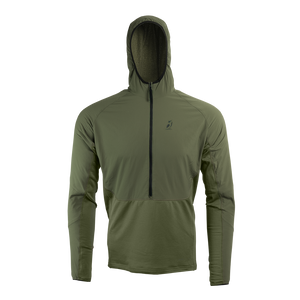
[00:00:00] Tayson: Hey everybody, welcome back to the Live Ultralight podcast powered by Outdoor Vitals. For those of you that are new to this podcast, this podcast is all about getting you outdoors more comfortably and more confidently so that you can start living a life full of adventure. Now, today, we're doing one of your guys' favorite styles of podcasts. Those are product deep dives. There's a ton of information which we cover in here, and it's all going to be about a new product that we just released called the Nebo Windbreaker. Before you tune out, because you've probably not had a whole lot of experience with wind breakers, I highly encourage you to listen to this. You will learn a lot about how to use a windbreaker, how versatile it is, how it's one of the most versatile
[00:00:42] Tayson: pieces you can put in your backpack. Next to base layers, it's incredibly, incredibly versatile. This is probably a piece, or just a windbreaker in general, if you don't choose the Nebo. It's probably a piece that you didn't know you needed, but you really do. There's so much benefit to a windbreaker, and we really dive into stories and examples and how to use a windbreaker more efficiently and all that in this episode. In this episode, I will have Brigham, our lead designer here, Dr. Vitals, on. We will dive into all of the juicy details of creating the product, what we were hoping to accomplish with the product, and just in general, how we choose to use the product. I think you guys are going to greatly enjoy this. Again, this is going to be about the
[00:01:30] Tayson: Nebo Windbreaker. For those of you that think windbreakers are just for runners or for the other guys that maybe understand them, it's time for you to learn what a windbreaker does and start putting it to use so that you can be more comfortable and more confident in the backcountry. In turn, the reason that that matters to us is when you're comfortable and you're confident in your abilities and in your gear in the backcountry, you get out more, which is our whole purpose here at Outdoor Vitals, is to connect people to the vital outdoors. Let's jump right in. We'll roll this interview where me and Brigham talk about the Nebo Windbreaker. All right, Brigham. Let's go ahead and dive in and begin the deep dive of the Nebo Windbreaker. This is a piece that has become
[00:02:20] Tayson: a bit of a fan favorite, I feel like, in your heart, especially. I've enjoyed the crap out of it the last year or so, longer than that, since we've been testing it. It's kind of a niche piece that I feel like a lot of listeners probably aren't actively using a windbreaker or maybe don't have much experience with a windbreaker. The thing is, it's an easy piece to fall in love with the more you understand layering and the more you get comfortable with your gear. Let's start all of this before we even get into the details of what the heck the Nebo Windbreaker is. I feel like we need to give some baseline on what is the purpose of a windbreaker, why is it valuable in a layering system or when is it valuable. Then we
[00:03:09] Tayson: can talk about why we made ours the way that we did and what makes it unique and different. Let's start off right there. Why is a windbreaker important for anyone listening right now and why could it become one of their favorite pieces?
[00:03:28] Brigham: Well, I think the underestimated or the underrated thief of basically the backcountry is wind. I say thief because it robs our heat very efficiently from our body. So, there's different types of heat loss, convective heat loss is when air moves across our body and it draws heat away from our body. Wind is a very efficient and effective means of doing that because you can't see it so it's hard to always be conscious of its presence. It doesn't matter if it's warm, cool or sub -freezing, it always is going to be acting in a way that takes heat away from our body. It can kind of sneak up on people in terms of when they start to feel the sensation of having lost too much heat. At that point, generally, you've lost too much and your
[00:04:42] Brigham: body is going to have to work a little bit harder to get that heat back. I think one of the best examples of that that listeners can relate to is the difference of being inside of your tent and outside of your tent. I feel like people are...
[00:05:00] Tayson: About. Okay, inside the tent. It was Five degrees warmer or something like that, which, you know could be can be true depending on, you know, body heat that you're putting off and and some of those factors, right? But what what I think I'm more referring to is that instant relief of climbing inside of your tent. When that wind stops stealing all your heat away from you, It's massive. I mean, it is especially as you get into colder and colder situations. So when you're out like winter, backpacking, And that wind is blowing and it's blowing a 10 degree temperature, wind onto your body. And then you get inside the tent. It's almost like your body's working really hard to keep itself warm, and you get into the tent and it's like you're body heat. Just starts
[00:05:47] Tayson: shooting up like really fast and it's really noticeable, but it's noticeable summer, winter fall, whenever but just imagine when you're in windy conditions and you're getting cold and it's night time and you climb into that tent and it blocks the wind that sense of massive relief and warmth that comes from that. That's, that's the best. In my opinion, probably way to describe just how much of an effect the wind is having on you. So, again, to bring it back to this base layer here, or this windbreaker here, That's, you know, this is this is one tool that can help combat that.
[00:06:24] Brigham: Yeah. When I mean, unless the ambient temperature is warmer than you know, basically 99 degrees Convective heat loss will always occur if they're if the air is moving it will always occur. Now the larger the difference between body temperature and ambient temperature the more significant that that Or noticeable that affect will be, when wind is introduced, you know? So if its 80 degrees and windy, we're not going to fill nearly as, as rapid of cooling or heat loss, as we would have, if its 10 degrees, And, you know, the same amount of wind and then of course, if we're active, or we've been moving, you know, through snow or just on the trail with no snow, but we've been physical enough to perspire or sweat a little bit then then it's even more noticeable. So
[Editor’s note: This is a simplified historical explanation, not medical or cold-safety guidance. Heat exchange and thermal strain depend on air and radiant conditions, wind, moisture, clothing, exertion, and individual factors.]
[00:07:22] Tayson: it's pretty wild sometimes and maybe this is just a me problem. But It can be hiking and freezing temperatures and Phil cold. And I swear I can still put off sweat. It's like why doesn't the body Connect the Dots here? Sometimes I not a lot but like it is wild because it's very easy to generate, you know, sweat. even in times when it's extremely cold, and then once you've got moisture and wind, then it just Multiplies, the effect on the body and extremely fast rate?
[00:07:54] Brigham: Yeah,
[00:07:54] Tayson: okay. So So that's one aspect of it. Is there any other aspects of just like why the heck should people care about a windbreaker? And yeah,
[00:08:06] Brigham: I just like wind is kind of underrated the use or the blocking of wind is is underrated in terms of Clothing. And the clothing we choose to take on on a backpacking trip. But I think people have just so much to benefit by, you know, applying a windbreaker. because you can get so much benefit for so little weight in any season in any condition of the Year essentially, there's there's kind of always somebody that has a one breaker will always get a boost in warmth. Despite putting it on. So, and that again, is it applies to all seasons? So, even in the summer time, it's it's it's a really good piece to have. in, in your kit, because You can be more efficient in your, in your travel or meaning. It's just enough. Boot and
[00:09:13] Brigham: warmth versus putting on something that is probably way more than as needed. And a result of that means that you're just get, just the right amount of boost and he so that you can keep going for a longer period of time. Another good example of this is like, Backpacking in the mountains in July? Like, that's that's as warm as it gets. Let's say like even up in the High Country, right? But oftentimes there's an edge in the morning. It's it's, it's brisk. When there's more wind in the morning especially on more exposed ridges and and and and in the mountains and so it feels there's a sensation of cold. People have a tendency to immediately kind of over insulate. They get up and they feel cold or you know, they want to feel immediate relief
[00:10:08] Brigham: or immediate comfort so they'll put on like a loft, a lofted piece like a puffy or something and while they're just sitting eating breakfast that will feel comfortable. Oftentimes when people do is belly breakfast with their puffy on, then they'll pack up their camp and then they'll hit the trail with the puffy still on, and then in 10 minutes, They're feeling way too warm and they're already starting to perspire, more than is necessary. And then in 10 minutes, they either to take the puppy off, or what, a lot of people do is They procrastinate for Christ and they taking off because they realize they just left and they don't want to stop again. So then they hiked for an hour in this puffy, you know, a down or a synthetic puffy jacket, basically, in their
[00:11:03] Brigham: They get uncomfortable. Now they're hiking for an hour, uncomfortable and sweating, which means they're going to need to, you know, consume more water, filter more water. It just makes them makes much less efficient for the days travel or whatever the adventure is where if you were to just start the hike with a windbreaker in the morning, you can hike for hours with that thing on and regulate your heat at a much better rate than if you were to put on anything warmer than a windbreaker. Because essentially that's probably all you need to even get that immediate field of comfort because you're just going to block the wind and that wind. Being stopped combined with our own physical activity is going to is going to put us in a really like near optimal condition to start
[00:11:49] Brigham: putting on some miles without having to stop and change layers again.
[00:11:52] Tayson: Yeah, not to mention the moisture that you've now introduced into your puffy. So when you pull it out later, you could be getting degradation of loft or you could, you know, just putting on a wet slightly damp layer. I mean, doesn't take much moisture to then. Become problematic later on, you know, and I think back even to hiking Uinta Highline Trail this last year. And there was a morning in particular that like there's that saying of bold start cold or something like that. Like it's a catchy way to be like, hey don't put your puffy on when you start hiking in the mornings. So I I'm always that guy like I'm like, no, I'm just gonna try my best to start cold. Start really cold sometimes and but but there's times especially in some
[00:12:40] Tayson: of that High Country where even like like this Altitude Hoodie, I'm wearing right now like Still cold at the top of the mountain, even exerting all of this energy because the wind is blowing at such a rate and it's such a cold temperature. But, but any insulation and then I'm just sweating inside of that insulation. And so, yeah, it's a, it's a great piece for to take advantage for that because I could have hiked for the first couple hours, you know, probably three hours that day in that piece and way more comfortable altogether. So we'll get into some more strategies on that. But so just to sum up, though, this is the other applications that you might be. Considering is just really any high level of activity, where blocking the wind could could be important
[00:13:25] Tayson: for for comfort, for retaining heat loss for not losing too much heat. So I use it a tremendous amount trail running. It's a fantastic piece for trail running. Fantastic piece for any active, Pursuits in winter seasons, even so cross-country skiing snowshoeing, anything like that, but don't, you don't just have to think in the winter, right? So it's a fantastic piece for hiking. It's a fantastic piece for for any active Pursuit. I think that there is I think me personally I had a bit of a I don't know if I'd say like a belief that people that use me, windbreakers were typically Runners, like I think they probably use them almost more than anyone else. But I think that that's That's not correct. Like anyone who's you know exerting any level of activity can benefit from
[00:14:14] Tayson: a windbreaker and at the weight category that it is there it's more of like a why not, you know use it and in your layering system then a then a why you shouldn't type of a scenario. So yeah massive wide variety of uses which will get into in more depth as well. But yeah any other I mean maybe to take it one step back further before we go. Any you know any further here is just what is a windbreakers core purpose? Like, for those that might not know like the difference between a windbreaker and a rain jacket. So let's get into exactly what that is. So yeah,
[00:14:53] Brigham: I mean Its core purposes. As you might suspect by the name, is to block the wind, but Reason behind blocking the wind is to preserve our core body temperature by preventing or reducing or slowing down convective, heat loss. Slowing down the rate at which air or wind takes heat away from our body. Yeah, so I mean that's that's really the the core purpose. What kind of fabric is used? Yeah. So when you mentioned rain jacket, I think that's another reason why windbreakers are so underutilized and underrepresented and underappreciated is People. I'll say make them mistake of thinking that they're let's just going to be efficient and time in terms of weight by just using their, their rain jacket, for a windbreaker rain. Jacket is so much less breathable than a windbreaker. That. It really? it's,
[00:15:54] Brigham: it's I would say not just inappropriate, it's kind of setting setting one self up for failure to try to use a rain jacket actively like on the Move, in terms of just to block the wind. Rain jacket is going to be at least two layers. It's going to have a face Fabric and a waterproof membrane and that membrane it has to be very, very, very very Almost are impermeable in order to do, its job of blocking water. So The application of a rain jacket in lieu, or in the place of a windbreaker is is really energy. Inefficient and like water inefficient because A person will get to the point where they're sweating like exponentially faster in a rain jacket than they would in a windbreaker. The rain jacket just does not have the breathability and then
[00:16:58] Brigham: there's there's the, you know, generally a rain jackets going to be heavy or even the lightest rain jackets that might be similar in weight or just so unbreathable and very fragile at that point that they have. Yeah there's just such a narrow use case for a rain jacket, versus a windbreaker.
[00:17:20] Tayson: Yeah I mean to sum that up I think it does
[00:17:23] Brigham: but
[00:17:24] Tayson: to just even some that up a little bit you know another step it's it's that Windbreaker Fabric in our opinion. Should be breathable. Should be allow for moisture to escape and a rain jacket. Simply doesn't write like, typically 90 plus percent of rain jackets out there. Don't allow for any air movement, Vapor movement, meaning moisture movement. Yes, but not air movement and so they're not, they're not are permeable and moisture. It takes a lot of heat and time to transfer moisture out of the jacket as well. So even like our Tushar Rain Jacket with pit Zips and where you can vent it and stuff, it's not going to work as a great windbreaker any any better per se than like a puffy would, because a puffy You know, you're going to overeating, a puffy, you're
[Editor’s note: The broad market comparison above reflects the speakers’ 2023 design perspective and was not independently verified across rain jackets. Air permeability, moisture transfer, and ventilation vary by garment and conditions.]
[00:18:18] Tayson: going to overheat in that piece and you're going to start to get clammy on the inside and so like, if you were sitting stationary, then it might be an argument. But if you plan on using it while moving it all, then a windbreaker has a place in your pack because it does a completely completely different job. And that's just that's just one part of it, right. There's so much more to this will impact. But see I mean personally, Can I can sometimes become like a battle internally where you're like, okay, well, maybe just take the rain jacket this time or that, I mean, the one benefit of say using a rain jacket, over an insulated piece. If you were to start that way, is that the rain jacket will dry out? It will get wet
[00:18:58] Tayson: 100% like from sweating and stuff, but at least it'll dry out easier than a loft insulation. But the windbreakers, the next level of that, where you likely won't even get wet to begin with for perspiration, and it'll be actively drawing, and maintaining temperature at the right level to begin with. So, Yeah, the the material used and when breaker is not, it is air permeable. It is not a water permeable waterproof membrane and so, when you're thinking of this, you know, you're thinking of those either watching, you know, something similar to like, what Brigham's wear on the outside right now, it's a nylon or polyester shell and it's, and it's not a membrane piece. So
[00:19:38] Brigham: yeah, that was a good point and if we're if later on, we talk about materials and we can there's a there's a couple other good points to make there, but okay.
[00:19:48] Tayson: All right, I think we set the
[00:19:49] Brigham: groundwork here pretty well.
[00:19:53] Tayson: So let's jump into some of the specs on this piece, and then we're going to share some stories and use cases. Um, that that just stand out to us of when and why we've used these pieces and how they really function. So the Nebo Windbreaker it is a 20 denier ripstop nylon. It is dwr treated. But there are no other coatings on the fabric which really ate and it's in its breathability.
[00:20:20] Brigham: Well there, so there is there are there is a coating on there but it's specifically engineered to this fabric. So there is a dwr treatment on top of a specific coating that that makes the fabric. Wind resistant and breathable at the same time there's there's other Coatings out there that will definitely block wind but they won't breathe at all. Like Much much less than than this fabric. So they're there is a coating on there. It's it's a proprietary coating that we're not going to disclose, but there is there is a coating that is specific to increase the the winners resistance the durability while allowing very very good breathability.
[00:21:06] Tayson: so in terms of, I mean, that's a really good point in terms of analyzing, let's say other people's jackets, What are they typically putting on a windbreaker to accomplish this or so?
[00:21:19] Brigham: Yeah, I mean going about a windbreaker fabric. There's there's different ways of doing it. There are actually windbreaker. Jackets out there that are multi-layer. So they'll use a face Fabric and a wind membrane and essentially all that is is the same as like a waterproof membrane, but it's much more open microscopically and does allow air to move through it. The other way of making a windbreaker, or wind resistant or windproof fabric is by Is by applying a very thick coating. Think of like what we would do with like a tent fabric, whether that's a silnylon or a silpoly, you know, where it's siliconized and then coated essentially painting on a polyurethane Coating. The visible that will not allow any vapor transfer or air permeability. So that is a an option in terms of
[00:22:33] Brigham: a windbreaker essentially using Tent Fabric and make a jacket out of that. And then then, when it comes to other types of fabrics, you know, I'll basically exclude like knit Fabrics. Like a knit fabric is much too. Open fabric structure to really block any meaningful wind. So in woven fabrics how you adjust the the wind resistance and the breathability, you know, is just by how tightly woven the fabric itself is and then there's other Finnish treatments that can be done to you know, equally woven fabrics. If you're talking like a polyester or a nylon there's processes where they can then take that finished Fabric and then put it through, just kind of think of it as like two rollers on top of each other with heat and then they'll roll that through. So it's kind
[00:23:28] Brigham: of applying heat to the fabric and smashing it at the same time. And essentially that's kind of like taking soldering it, you know, you know, It's almost like for the like the meat cooker's out there, it's almost like searing a steak, right? So you put that stake onto really high heat Grill and that that Sears almost a hard surface on the on the outside of a stake and that keeps the juices in the meat. I don't know if that's perfect Apples to Apples but it's kind of the same idea of is putting heat pressure on the outside surface that flattens. The fiber structures that are woven together that create a very Are impermeable surface.
[00:24:17] Tayson: So those are that treatment in and of itself that Brigham's talking about here, it can be so effective that it can even block down from leaking out. That's like, is the most
[00:24:27] Brigham: Common and efficient way of making downproof Fabrics. So like sleeping bags, puffy jackets. That's the most commonly used method or processed to make a down proof fabric is by that process. So that's Some of the ways that, you know, materials are, are made to to block the wind and then, you know, it just comes down to selecting from those different types.
[00:24:55] Tayson: Yeah. And I mean, since we're talking about it look, I mean, let's be honest. A windbreaker is basically all fabric, that's what it boils down to. Yeah, I mean, it really is 80% of what makes what it makes it what it is. And so, when we first got started in, in this, you essentially ordered two highly rated windbreakers, and we went out on a trip and you handed me one and said, all right, tell me what you think of this on this trip and so we were hiking in in the snow and the one that I had definitely felt. I don't know for sure, but it felt like it had a siliconized coating on it. I think was so slippery with the backpack, it would like it would come up my back and slide up
[00:25:36] Tayson: my back and then when you were using, I mean, nothing looked so unbreathable. Looks like a big trash bag on me about it, but just did not look breathable at all. Right? So we kind of we kind of learned some things from that. And and so what was really neat about where we've got to now with what we put in the Nebo was This fabric is incredibly unique, it's so unique and so hard to weave it as as the way that they're doing. Which I would maybe describe it as like the tolerances are so tight and the weaving is is so tight that they the the our partners that are making this fabric for us, they're making, they're making it in Japan. They can't even duplicate their own results at their own Fabric Mill. That's
[00:26:26] Tayson: that's not, you know, this one. So it's a very It's their highest level Weaver, essentially in highest, you know, oldest fabric. That's able to create this and it's such and it's tight tolerances and ability to do what it does. And what came from this was a piece that blocks the wind is super breathable still, which sounds counterintuitive. I don't know how bad.
[00:26:52] Brigham: Well, I mean what comes down to is you know, if we think about some of those methods that I talked about those are all those all address certain priorities, right? But In terms of overall, objective of the windbreaker, is we wanted a windbreaker that we can move in for extended periods of time. That narrows down or that that almost self-identifies certain priorities or requirements of fabric type or or of fabric construction. type, because We've said we've identified. It's got its got a block wind but we didn't say it has to block all wind. It has to breathe. Now, those two go together. Like if it's going to breathe, then it has to not block 100% of wind. We also want it to be as lightweight as possible while meeting the durability requirements that we have.
[00:27:52] Brigham: Which means we need to be able to hike in this thing all day. So that now eliminates like the lightest weight Fabrics out there. So we're kind of shaping this balance of all these priorities and for an active windbreaker, it absolutely has to breathe. And I don't mean breathe in terms of like, A waterproof breathable membrane and I also don't mean breathe. In terms of some of the let's just say branded wind membranes out there. We need to breathe more than that. And we need to weigh less than those laminate wind Fabrics out there. And you know in testing one of the things we quickly identified as we don't like hiking with plastic. Bags on our bodies. We don't like hiking with really slippery Fabrics, that that don't interface well with other layers in our
[00:28:47] Brigham: system or other pieces of gear that we're using like, say a backpack. So all of those factors, there's all these variables that kind of narrow down, like, what we actually have to get in this Fabric. And then that was like, you were describing with this Fabric and it was just, it was just so great that we ended up where we we did. And it just so happens that that this fabric can only be made in one mil in Japan. Like Tayson said, because the tolerance is of the process of achieving. What we need in this in this fabric, they're so tight. That like like you said, they can't they can't even essentially just take the same. Recipe or set of instructions and just transferred over to another Mill of their own company because it'll be
[Editor’s note: The supplier and manufacturing statements above are preserved as historical company claims from 2023; this package did not independently verify whether they remain current.]
[00:29:40] Brigham: out of Tolerance. Right? For a few yards that might, it might meet the spec, but for a few yards of the role, it might not. And that's that combination of the, the yarn, manufacturing, the weaving process and the application of that coding that I was talking about all of those three things are. So so, tightly dialed in that you know like we they can't or won't or both they won't and can't make it anywhere else and so that's That's kind of the fabric. It's that that's the 20D ripstop nylon. That sounds very basic, but, but it's, it's really fun to kind of talk about the details behind it because yeah, it was we had some very negative experiences with with some of those other fabric types and some of the feedback I've gotten from people
[00:30:36] Brigham: that have tested us for us is an immediate feeling of of a positive reaction. As soon as the piece is put on, it doesn't feel sticky clammy. It feels breathable. It has a great feel
[00:30:52] Tayson: Anyway, I think so two, two points there. One we had an interesting conversation with the Fabric Mill and, you know, regarding this, but regarding other things we're doing here, Outdoor Vitals, where they're saying, you know, we're essentially getting into this realm of only really specialty manufacturers like us, essentially are using this level of fabric because of costing You know, at a mass scale it a typical retail brand, even the highest and Retail Brands, this stuff can start to get overly costly even for them. And so it's really interesting because this is a very, very premium fabric Can't really be replicated and is costly but you know, thankfully, again at our vitals, we do things different. We sell direct and allows us to bring stuff like this to market. The other thing though is, yeah,
[00:31:44] Tayson: going back to some of those other jackets that we tested. Even mine. These are highly rated jackets. Jackets we know people are using rating High. to me, I mean, the one of the biggest takeaways from that trip in particular is why have a windbreaker if it doesn't If it traps moisture, like the whole I may as well just wear any any insulation, if it's just going to trap moisture anyways. Right. Like so we, I was getting a lot of moisture trapping inside the pieces. I know you were as well. And so that's that was a massive negative. Not only were they slippery and things like that, but, you know, that that moisture trapping. And so, so yeah. Coming back to where we started with this, you know, this 20 10 year ripstop nylon Treatments that
[00:32:29] Tayson: are on it. Create this amazing Dynamic of both blocking the wind reducing that convective heat loss and but still being able to allow moisture to escape and allow. Except to escape it at a rate that works really well in the field. So again, boiling it back to what we judge, everything off of is infield performance and the usability of this piece is exponentially higher due to what we have created with it. So, That's the fabric. I mean and it's a it's an amazing Fabric and really what brings this whole piece together other details though on this. Are just going to be that we well the size large comes in at 4.4 oz. So, Super light. I'll say A medium which is what most the weights that you'll read on a website. Like if you're just
[Editor’s note: The weights and specifications above describe the product at the March 2023 recording. Current product details may differ; consult the current product page before relying on them.]
[00:33:26] Tayson: a browse on someone's website and they have a waitlisted for jacket is typically a medium. So, you know, medium may be closer to that four ounce Mark about four even. So for four ounces you're adding a piece that you may be able to wear Sometimes all day or for Mass amounts of the day, it's gonna add warmth to different pieces, which again I want to maybe Circle back to that just a little bit later on the massive range of use of a windbreaker if you're using it, the way we've been using it, you know, the way that we feel like is right. So Looking at about a four ounce piece. For for the Garment. As far as sizing, we will release this in a small through a 3XL. It is still our typical Outdoor Vitals cut
[00:34:09] Tayson: which is a more athletic cut speaking of that. Brigham. So we typically will sized pieces up like let's say the NovaPro. Obviously the cut of that is bigger than an Altitude Hoodie because it's meant to be worn over the top of other layers. Um, what's our, what's our I guess, answer, or how do we view this? As far as what layers may be going underneath it.
[00:34:31] Brigham: So yeah, and actually this was this is a very deliberate. process in terms of the fit of this piece specifically, because It is a piece that inherently should and will be worn in the wind. When you're walking with wind you are you are either encountering resistance or being pushed one way or the other. So in terms of actual movement efficiency, However, a piece like a jacket or a shirt. How it fits is a critical element to the performance of that piece. In terms of energy expenditure and efficiency over miles on a trail. So, That was specifically accounted for in this piece because this is a layering piece, it has to allow, it has to allow for layers underneath it, but also layers over top of over top of it. But when used at the minimal
[00:35:34] Brigham: layer of number of layers, IE over a base layer like you're wearing, if someone is putting on a the Nebo Windbreaker over top of that, and that's it. If there's too much room for layering, they're going to be walking with a wind sail and now they're less efficient, they're gonna it's gonna have more energy requirement on their on their physical effort and so also allows for air to funnel up underneath.
[00:35:59] Tayson: Yep.
[00:35:59] Brigham: Yep. So then you get billowing, you get wind resistance and drag and so the fit is very deliberately done here to Just be as efficient as possible with the ability to layer underneath it, but also have it be Standalone as an outer layer piece. But also, Allow layering over top of it without just a ton of bunching up and discomfort, you know if if it's so roomy you know, to allow for seven layers underneath, if you're just wearing it over top of a base layer and then you put a jacket or something over top of it, it's going to be really uncomfortable. You're going to have tons of excess fabric bunching up and creating hotspots, so it is more on the athletic side of a fit but it does allow for layering over top of
[00:36:49] Brigham: More, you know, multiple layers, including if you were to put it over like, say a Vario Jacket or a Ventus Hoodie, it will totally accommodate that.
[00:36:59] Tayson: You could potentially put it directly on a base layer. You could put it over a Vario Jacket and but you might be hitting a limit or I think you would especially start to degrade some of the Loft in say, putting it over the top of like a Nova or NovaPro.
[00:37:12] Brigham: Yeah. And that's a really good point because that would almost be self-defeating or that would be an inefficient use of the windbreaker is actually with our Nova line of jackets because they are Just wind resistant, probably more, wind resistant than the windbreaker. So it makes no sense to put a windbreaker over top of a NovaPro, but it totally makes sense to put a puffy jacket over top of a windbreaker, the closer that windbreaker is to the the body. The the quicker it's going to slow down heat loss and air movement away from the body. So that's an interesting thing that people don't don't really keep in mind. A lot is that With a windbreaker. Yeah, you're not going to put it on underneath your base layer or maybe even like you might not even
[00:38:08] Brigham: put it on. A under like a mid layer but you, you totally could like, if you were hiking in in the morning with a base layer and a mid layer and a windbreaker. If you, you know, stop for lunch and it's still windy. But colder just put a jacket over top of the windbreaker. Like the windbreaker is still going to keep doing its job. But now you've got extra insulation and you didn't have to take the extra step of shedding a layer to put on a layer and then put the layer back on over top of that.
[00:38:42] Tayson: So I think the windbreaker gets categorized as a piece, that would be an outer layer every time. And while that is most of the time how you end up using it it is not a requirement and bring them especially tested this pretty extensively where he would often layer things over the top of the windbreaker, rather than taking one breaker off putting on an installation piece and then putting the wind breaker back over the top of that. He would just simply put, an installation piece over the top and then take it back off when we started moving again. And yeah. So I so he asked me to kind of do the same and others in the office and there's a noticeable warmth increase by just leaving that on. And it's a really interesting way to use
[00:39:25] Tayson: it, but again, it adds to that versatility the massive range of timing time that you could use or have to keep this jacket on your body. So yeah, so as far as fit goes, I think that covers it. I would say like If you don't have a NovaPro and you were to put this over the top of your other jacket, like you would notice it, blocking so much of that wind. That's still getting through all the stitching on a down jacket, you know. But but again for this particular Probably going to start to compress at least a little bit of the down in that piece. So just be kind of aware of that. Even though it that is a fantastic way to use the wind jacket or a wind jacket. In general ours, is
[00:40:16] Tayson: really size to be able to be kind of over the top of mid layers and base layers more so than all the way over the top of a full-on puffy. So
[00:40:24] Brigham: yeah.
[00:40:25] Tayson: Okay. So other aspects of this we like it. We covered fit covered sizing. This will be released in black and Dark Forest. Was the two colors should be able to see some of those images up online at this point as well. Let's see here, we've got a few things. If you go to our, if you when this is online which I guess at the time this recording will be available for you guys to look at. You can go on to our website and you can see a rating system now where we will rank, its breathability durability warmth, packability things like that, winter resistance, water resistance, so you can go and see some charts to quickly judge some of those things right on the product pages itself. But let's run through some features So, the jacket
[00:41:15] Tayson: has a chest pocket as a single chest pocket on your left side. You can stuff the piece into that chest pocket but the chest pocket is actually quite large. So you can easily fit you know whatever I was gonna say cell phone but Brigham doesn't like the idea of a cell phone in there. So gloves you can put you can put gloves in there. And other other trinkets like that so it's quite large, I will pack it into that chest pocket sometimes still just to keep it confined but the pocket is quite large. So it's really moldable and loose a little bit still in there. But I mean this thing packs down to like the size of your fist. It really does. I so it's it's just
[00:41:56] Brigham: really packable in like A really adaptable way. Meaning like you can just like stuff it into crevices, almost if you want to just fill in some space.
[00:42:06] Tayson: Can you get into your pants if you want it on?
[00:42:09] Brigham: Yeah, and it would just, it would just kind of take the shape of your your pocket. So that's that's kind of all. So why? Like we didn't put like the double side of the zipper just so people could zip it up into the pocket because you're almost losing Adaptability by stuffing it into that pocket versus rolling it up into the hood, or just rolling it up into a ball and stuffing it into a, you know, avoid or a crevice in your pack.
[00:42:36] Tayson: Yeah, there's no insulation. So it doesn't hurt it to be stuffed for long periods of time per se. And, yeah, I mean, just for reference, this piece is can be compressed. So tightly that you could get it into your hip belt pocket on a backpack and it's, it's small. so, really adjustable on the bottom of the piece, there is a Draw cord, adjustable hem. I love this aspect of it. People often underestimate the amount of heat loss that they are getting out the bottom of their jacket. And so we do have a single adjustment on this piece and that is at the Hem. So you can keep that tighter to the body, make sure that you're not just dumping all your heat straight out of the bottom of the jacket. So that is an adjustable
[00:43:21] Tayson: hem. Very similar to that on the Ventus and Vario as far as placement and use. We've got, let's let you describe this one. The closest fitting slick Hood. So you've got slick in here. What does that mean?
[00:43:34] Brigham: Slick means there's no Hardware or adjustment or any kind of apparatus anywhere on the hood. That's another like dialed in design aspect of the hood of the jacket itself is, you know, it's it's a really lightweight thin Fabric. And so the isolated weight of say a cord lock or one adjustment piece of hardware. Proportionally to that area of fabric is very heavy that creates pulling that creates discomfort and opportunity for things to snag or catch. And frankly, if we can design the hood to fit well enough, then those adjustability features are just not needed. For like the likelihood or the percentage of use that they will actually see. So the more stiff a hood is or
[00:44:31] Tayson: the more insulation or materials used in the Hood. The more that an adjustment piece is needed So like if you're watching this on camera, if I was to put this, this altitude Hood up, it's so light. It's so moldable that there's no need to have a drawcord on that like that wouldn't make sense to anyone to put a draw cord on a shirt fabric. And it's basically the same application for this is so light. It's so moldable that getting a very proper fit and there's really no adjustments needed beyond that. So
[00:45:04] Brigham: yes. Yeah, makes the jacket more comfortable. It's like, say you just wanted to sleep in, you know, you put the hood on and now you don't have any adjustable Hardware anywhere on your head. That's going to be uncomfortable. Yeah, it's especially for layering, like, if you were to, you know, be wearing this with the hood on and then feel the need to put on a puffy that does have an adjustable hood and there, you're just stacking Hardware on the back of your head just well. And if there is an adjustment in the piece,
[00:45:35] Tayson: I would just say it's with how far up you zip, the, the front of it. So if you want to fit a little looser, for some reason, just don't do the top two inches or so of the zipper. If you're maybe running into wind, maybe it's hitting you on like, coming into your face or something like that. You could zip that all the way up underneath your chin and it will kind of shrink up the size of the front of that, which I think we inherently do but we never think about. But if there is any adjustment that's needed it's really been able to be taking care of just by by visitor and opening is elastic
[00:46:08] Brigham: the Opening itself, it's elasticized. So it's not just a static hole, it's got stretched to it and then, like you said, if you need more room, unzip it a little bit but it is Close fitting in the way that we want people to be able to turn their head and the hood move with the head, instead of the head move. Within the hood.
[00:46:31] Tayson: Yeah. Okay. Other aspects. We have a YKK. Number three zipper on here. We have elastic thumbhole Loops for layering so you can pop those on layer up, take them back off the back of it does drop similar to all of our other apparel pieces, you know, that's That's another aspect that like it's not only a, it's not a look thing. It is a look thing, it looks better but it's a it's a performance thing to have a drop back for sure. As you sit down ever, you know, as you're moving and whatnot, keeping keeping a lower back on there, it adds warmth. It really does. Keeps those cold gusts from just sneaking up your back. So, Okay. What else have we not covered? So, We we did Cover just the aspect of layering over the
[00:47:18] Tayson: top of it, which I think is a pretty unique Factor. um, let's, let's maybe talk about just some different use cases that we've had this in or any other Aspects that you want to if it's not just use cases or something, that that just makes this different that made, you know, maybe stories that made you realize, like, man. This piece is ready. Like it's it's performing at such a high level. I'm very happy with this piece. Anything like that. Let's let's maybe move the conversation into into that. So yeah.
[00:47:52] Brigham: One thing I'll probably point out just before we kind of move transition to. This is one other actual, I would say utility of this piece is bug protection. It actually, I kind of deliberately used it. kind of with that in mind on multiple backpacking trips where You know, summertime plenty warm. Even if it wasn't windy at all, I was using this instead of spraying myself down with bug spray and it's, it's actually quite effective. So it's just something to keep in mind. I don't I try to avoid using bucks. Praise as much as possible. I just don't like the oiliness of it but it is, you know. The wind jacket, the windbreaker it doesn't run out, right? You know, you can keep spraying yourself and spraying yourself and eventually you'll run out of bug spray.
[00:48:47] Brigham: So that is one other just Useful application is, you know, it's got a hood long sleeves and it is tightly woven. So I'm not going to say it's gonna prevent any and all bug bites, but it is I have found it to be quite useful in like just typical Rocky Mountain mosquito, you know, exposure, it's quite useful. So
[Editor’s note: This is a personal historical observation, not a guarantee of insect-bite protection. Use current, condition-appropriate insect precautions and public-health guidance.]
[00:49:11] Tayson: I'm just being said, yeah, I'm thinking in my head about a time. I was out in Colorado this last year where we were Getting swarmed by flies at an insane and they'd bite you, right? And so they could bite you through this altitude, hoodie. But the windbreaker would have been perfect. There you go. Okay, so let's maybe just turn this. Let's so one of the things that we stress a lot was versatility.
[00:49:39] Brigham: Yeah,
[00:49:39] Tayson: you know because again A lot of times you think of a windbreaker to block win, that's it. I think we've touched on it a few times so like oh you could use it some other aspects. But let's revisit that, you've said that multiple times and and internal messaging and testing and conversations on the office. So what makes this so highly versatile and and a year-round piece.
[00:50:03] Brigham: Yeah. Yeah. That's that's one of the things that we use this more and more it started like, just identifying this concept that For, for how much this windbreaker weighs for, what this piece is. We started realizing how much use we get out of it. In all seasons and all conditions for for that amount of weight. so it it only, it has this interesting ratio of the amount of usability. Throughout the year, for how much it weighs. Compared to like almost every other. Clothing piece that we have. So aside from let's say, Maybe. pants and like the altitude, hoodie, like you're gonna be yours, you're going to be generally for example, all use an Altitude Hoodie as a base layer in the winter and then almost a standalone. Top all the rest of the year long.
[00:51:13] Brigham: So I probably get the most use out of an Altitude Hoodie and it weighs about four ounces. um, If I'm using shorts, I'm not using shorts in the winter time. If I'm using pants, there's summertime conditions where I'm not using pants. Rain jacket, hardly ever use a rain jacket, puffy jacket. I put those on at night, right? Any mid layer, you know, like the Ventus again. I'll put that on, maybe if we're stopping for dinner on the trail or at night maybe in the mornings, right? So that's just like a few isolated use cases throughout a day or throughout a season. but, but a windbreaker is something that Has just this immediate benefit all season long that can be worn for extended periods of time. So it's just this really interesting use case ratio of
[00:52:08] Brigham: take this piece that you didn't know you didn't have. Yeah and then once you have it and you start to use it you're like holy cow. This thing is so useful like in and like you say here around, because in the summer months,
[00:52:21] Tayson: You get up and you start hiking, let's say, you're high elevation, right? You're trying to escape the heat. You're going into the mountains, you know, what's going to keep you warm when the wind's blowing in the mornings and you're starting to hike or heck, sometimes in the middle of day, it can still be you get up on top of a peek and all sudden it's like dang this is this is cold up here. Can I stop moving? I'm cold again back sweaty because you did this 4,000 foot climb,
[00:52:44] Brigham: you get to the top of a peak or a pass. And you want to stop and take some pictures, take it all in, have a snack. So you take your pack off, you get immediate rapid cooling on your back because it's so wet. And that's your cooling off, too fast. It might be 75 degrees, but we because of that wind. Like you're going to cool off too fast. The windbreaker goes on.
[00:53:04] Tayson: Yeah. And that case I was just talking about Colorado with the bugs, like they were just out all day long, and the windbreaker wouldn't have been overheating me to wear that, you know, on top of an Altitude Hoodie. So it would have been, you know, useful there. And that's that's like, all day long in the summer. And then you look at winter conditions and you could absolutely wear all day long and winter conditions as well. Yeah, and so, it's really a piece that that can be used in a massive amount of application's, just a very comfortable warm. Now, let me ask this, let me kind of be the devil's advocate here. Is, is a windbreaker. A superficial Comfort piece? Or is it a critical piece meaning? For like, let's just say safety or something like
[00:53:54] Tayson: that. Like, is this just like a plush piece? Like oh man, it's four ounces. But it's just keeps me so comfortable. So happy, or is there like a reason to say like no this, this could be a critical piece in a backpacking.
[00:54:05] Brigham: I would say when it's When it's used correctly, or when it's thoughtfully used for, like let's say, efficiency of like your clothing, the like, the clothing system that you're going to take on a trip. I'd say it's a critical piece. because, at some point like people have to reach their destination, Which means you got to move. you have to move from point A to point B, or back to point a Got to be able to move. And you have to be able to hydrate your body. At the same time, you've got limited amount of food that you've packed. So in my mind, It may feel to the unfamiliar people that haven't really put it to put it to the test and used it and found the efficiency of it may come across as like. Okay,
[00:55:08] Brigham: this is just like a luxury thing. You just always want to take off that little bit of chill. but it often means that you can pack less weight. If you implement this piece with the rest of your clothing?
[00:55:23] Tayson: Well yeah, I would agree with that, but what I'm thinking of, is this piece may not be. The critical piece if that makes sense in a survival scenario. But what it is, is it keeps your other pieces. Ability to be the critical piece. So what I'm thinking of what I see, countless times over and over and over again. I've made this mistake over and over again is meeting up. And starting to hike or whatever. Like maybe it's not getting up in the morning, maybe it's in the afternoon. Maybe it's just after a meal and you start hiking with your lofted insulation layers on and you start to sweat, you don't want to stop and take it off and you're introducing this moisture into those lofted insulation pieces, right? and, That becomes then full circle when
[Editor’s note: A wind shell is not a survival or safety guarantee and does not replace weather planning, rain protection, insulation, emergency equipment, or the judgment to turn back.]
[00:56:13] Tayson: we get to camp at night or you know when when maybe the weather really turns and suddenly they're putting those pieces back on. And they're not performing at the level, they need to because guess what? It takes heat, it takes sunlight, it takes those things to get the moisture back out of a garment in some cases, even you might be in a scenario where you're not going to get your stuff dry period on this trip because of whether conditions, winter conditions, make it so much harder or or a combination of conditions and summertime even can make that harder. And so so what happens and you know it's it's like the the side effect of this is that then they are compromising these other materials these other layers. That then comes back to bite them when
[00:56:53] Tayson: they actually need those layers to perform versus if they were using. A windbreaker to begin with, to save the correct temperature to begin with and then that lofted piece is in their pack staying very dry, you know, being able to perform as needed when the time is needed. I think that's probably more of where I see this being like this critical piece. Not just a hey this is Really comfortable when it's four ounces.
[00:57:19] Brigham: Yeah.
[00:57:19] Tayson: So okay, any other comments, just on versatility here of what people should be thinking about.
[00:57:27] Brigham: I think as we kind of describe how we've used it. Where and when I think that'll give a pretty good,
[00:57:35] Tayson: I mean you made you made a comment here that I think is just kind of worth repeating that. You said it's the best benefit to weight ratio and the highest number of days used per year for how light weight it is. And I think that really does just just sum up. You know, the amount of days you can spend in this year, the benefit to weight ratio of just being at four ounces, it just it all adds up to be a phenomenal piece and I think that's exactly what the Nebo is. It's not just hey, you guys need to use a windbreaker. It's The Nebo specifically enables that it's not trapping moisture, it's allowing for that breathability. It's not it's not overly. Slippery. It's not and it's not all these things that maybe if you
[00:58:24] Tayson: have tried to win break her in the past and not enjoy it, I think you would have a completely different experience with this. And again, that just really comes back to The Fabrics were able to use the partners were able to have the software able to bring to Market with our direct consumer business model. I actually don't have dang it the price right in front of me right now. But from what I remember this piece is going to come in at a super competitive price point. Specially knowing what is going into this piece in the cost of what's going into this piece compared to Other things that we priced out other things that we tested. It's it's tremendous. And again that just comes back to you guys supporting us to do what we? We love
[00:59:07] Tayson: in a direct to Consumer business model, able to cut out that retail, put our focus on Strictly performance and not trying to hit any kind of price point with things, you know. But a lot of times we put 100% of our focus on performance and the price lands where it lands and oftentimes that price lands, it's still a very competitive rate which is the case with this Nebo piece so It's phenomenal, piece wide range of Versatility and use cases with this piece. And it's it's the the piece you didn't know you needed until today for probably a lot of you guys you know when jacket probably wasn't what you're searching and looking at reviews for. But I promise you it's a piece that you will greatly enjoy. Once you get your hands on it and