[00:00:00] Tayson: Everybody welcome back to the live ultralight podcast powered by outdoor vitals. Today. In this episode, I invite Tyler, for VP of Ops, here.org, vitals to come in and talk through with me, what you guys need to know before, attempting the U into high Trail or some big takeaways for anyone looking at high Wilderness Area Trails such as the Colorado Trail. John Muir, you know, Wind Rivers places like those. You're gonna get a lot of value out of this. We track a lot of stats. We talked about a lot of stats in this, from average heart rates to miles per day. Moving time, lots of things that can be very valuable to you when planning a trip like this. So that was a lot of fun to go through some of those things we talked about how many miles it is elevation gain temperatures how to plan what terrain can be like Footwear gear, what type of clothing. We're bringing what are base weights were, how much water we're carrying all sorts of very, very helpful information to have. When looking at a big effort, high elevation, Wilderness hike like this, which if this is not on your list to do, it should be to get out into some Wilderness, high elevation Wilderness like this, it is one of the it is probably my Most favorite happiest possible place to be. There's just nothing like it. I like it to, you know, transporting yourself to Alaska and experiencing some of the most remote untouched. Most beautiful country there is, but it's right here in the lower 48, so you should have this on your list, but again, this podcast is a lot of fun. We just went through everything and everything that you need to know to hike the winter Highline Trail. The things that you need to know before you attempt it. So join me is I bring Tyler on right now and we dive into this conversation. Oh, and last thing before we start that conversation, we are running right now. A giveaway on the podcast for reviews. So if you will go and write us a review for the podcast or whatever Channel. That you're listening to right now or accept reviews. It helps us helps the podcast grow, but it also gets you entered into a giveaway for cs40, Ultra backpack. That's an extremely high value pack at 300, about seventy dollars. So, if you want to win a $370 backpack and be one of the first to get it in your hands, please go, write us review. You will have until May 15th to write those reviews before we'll close it up and put everyone in to win that. So, thank you so much and we'll go ahead and roll that interview right now. I'm gonna I'm gonna list some stats. I guess first just the spur, this conversation off of things that people should know about this trip. So first off for us, we started this Trail at noon on Monday. We finished the trail at about 4 p.m. on Friday, I would guess Route Around made afternoon, maybe even three p.m. on Fridays so we were I mean what is that? That's it's not it's not a full five days. Essentially of hiking we cut off the front of Monday and the tale of Tuesday, you know, finishing this up and according to my watch, Tyler did a few extra miles because he did King's Peak because he hadn't done that before. I did 108 miles tracked on my Garmin watch and We're going to be referring to Garmin stats a lot and if you didn't know, if your Liberals are like member, you can get a Garmin watch. We really love the Instinct. I've got the Instinct 2 solar. They made me coming out the new one right now. I'm not sure, but there they are very telling. And yes, the data is not always 100% accurate. And sometimes we get in little Muscles. You could say
[00:03:42] Tyler: our watches are constantly tracking different mileage. So then we're like well who's is the control or do we take the average? And it's just I mean what else? We're going to talk about.
[00:03:52] Tayson: What else you talking about us day after day. Yeah, bring them loves to laugh at us because we constantly are kind of bickering for the most part. They're very, they're within like 5% of each other. Say that mine's more accurate because it's newer but you can play around a settings, too. So, you know, if you wanted
[00:04:10] Tyler: less accuracy, you could mess with your settings, like Tyson has.
[00:04:14] Tayson: Yeah. So there's there's things I need to relook at my settings. We discovered that their to in a Slot Canyon. We were hiking in just the other day. My my watch like, jumped up a full mile on his just out of nowhere or seemingly out of nowhere. And so now, I need to go
[00:04:30] Tyler: check. I'm really rolled his eyes at us on that one because
[00:04:33] Tayson: you were tracking yourself.
[00:04:35] Tyler: Yeah, the first day you were tracking in hiking mode and I was tracking and trail running mode and we were off like a mile, which was a lot. So then we're like, oh, we better get on the same boat. So the next morning, we both start our watches and I'm like, I'm gonna switch to the same mode that tastes on. So, I switched to hiking mode, Payson switches to
[00:04:53] Tayson: Trail mode, and then the whole day, they were still off because we didn't just well, I didn't even start them at the same. We neither of us started him in Camp. So, yeah.
[00:05:02] Tyler: So we the reason we track it. It's because we feel like there's a lot that we can learn about ourselves and about the areas that we're in by takeaways by tracking and reviewing it. So we're going to talk about some of that stuff today.
[00:05:18] Tayson: Yeah, I mean, we track mileage, we track elevation, we track movement time, we track heart rates, all these things, and track calories and these are how much food we need. Yeah. And these are, these are critical things in my opinion. In fact, I was sitting down with Allied feather in Germany talking about some of the stuff talk about like how I track my heart rate when I go into elevation and how I track what the resting rate is. And, you know, when I compare data and he's like, dude, you're the perfect person to test this specific insulation out because it's got these benefits. And, you know, there's I guess the takeaway from that though is like when you're tracking these kind of data you have opportunities to learn and then you can test other things out and have a baseline in a historic date range to look at. So, Some of us we do because we just enjoy it personally some of it we do from a real realistic standpoint of improving gear. Because let's say you get a you sleep terribly and your watch tracks that you get a, you know, you get a either, a poor Sleep Quality on the on the watch or you get bad heart rate, you never get into deeper cycles of sleeping. Well, you can start, you can look at that kind of stuff and and potentially say, okay, what was wrong with my campsite selection? What was wrong with my sleeping pad was it too hard? Was it too soft was I not warm enough you know there's all these factors and so data is always a great place to start off the conversation. So coming back to this, we tracked our I tracked 108 miles over the four and a half. Almost five days of hiking. we did 16,000 200 and 17 vertical feet of climbing in those days and we never According to my watch actually on there on day one, I think the trailhead may be, we dipped below this for just like, literally 20 feet under 10,000 feet. For half a second on day one. And other than that, we were over 10,000 feet in elevation every single day all day long until day five.
[00:07:18] Tyler: Yeah. So and this is us doing the trail backwards
[00:07:22] Tayson: compared to us backwards. Yeah. Compared to what most people do, most people start
[00:07:29] Tyler: on the East end and they go west and we did that the first year. The second year that we went up there. We wanted to do it going the other direction because we hadn't seen that part. And we wanted we wanted to kind of play the storms a little so we can get into that a little more but just just for context This Is Us going from the West End East which is US. Starting that's debate that.
[00:07:52] Tayson: Why would you start one way or the other? Because I think in Our Minds, when we did it, we decided to do it backwards for two reasons. One, we'd already seen the other part of the trail, and so, we wanted to make sure we finished the section. We hadn't finished. So, starting on the west side out of us to get those, those miles done. First, in case, something happens. So that was The first reason, I think we looked at it but the case in point why I think most people do it, the other direction is that you start at lower elevation and you build to the highest elevation in reality, you are to not, you're still high. It's not a lot of time to adapt. If you do it the other way, meaning let's say you even slept at the trailhead, which a lot of people do about Trailhead on that and it is lower. I'm still gonna say it's 8,000 or more feet.
[00:08:39] Tyler: I think it's like, 8600 feet. I
[00:08:42] Tayson: can find it really fast but it's still very, very high. And then basically, by the end of that day, you're already up at 10 plus feet. So of well, no, no, yeah, you're getting, you're getting close to that. So there is like one buffer David
[00:08:58] Tyler: on how fast you're going. So I will say, as far as a backpacking trip, we did this very fast compared to what most people do. And so if if you're Planning on this being a seven or eight day trip, which is kind of the average for hiking, The High Line that might give you two days to get to 10,000 feet.
[00:09:24] Tayson: yeah, so our camp was So, our like, end of the first day of actual hiking, was over 10,000 feet for sure. And the trailhead on that you start at, like if you went there to start the trail, which this is a pretty good strategy, it's always a smart thing to camp at the trailhead whenever possible. It's looking like, I'm just gonna estimate that at about 8,000 to 8200 feet. So you do get, you know, that's a good thing to do. If you can sleep there that night, That I say would be worthwhile. Yeah. But then by the end of day one, if you do the big, if you get through the big water section, So there's a, there's a 20-mile dry section on the east side of the trail.
[00:10:09] Tyler: You go like four miles in from the trailhead, on the east side. Smiles, ever more terrible miles, they're super Rocky. And then from that last little spring, you have a 20-mile dry section. So, most people are camping in the middle of that dry section, where there's no water
[00:10:27] Tayson: to filter, which is why last year on day one. We did like 25 miles on the first day so that we could get through that dry section, completely in camp at Water.
[00:10:37] Tyler: 25 miles on day, one with no water is probably not great for acclimation.
[00:10:42] Tayson: Yeah, it really wasn't. We've we dropped a person essentially, on day, one of last year, they couldn't like, that didn't acclimate well enough. Maybe have some other things going on, but either way it was, it is physically demanding on you. So, in that sense of the word, I don't know if that was a better way to do it or not, if you're going to do it the way we did it, if you're gonna hike the first five or six miles, and Camp at that water and then do the 20 miles section in one day. That's all dry. Then that's probably a pretty good strategy. Otherwise I don't really see any benefit to starting on the east or west end for acclamation. In fact, if you start on the west side, at least you have water the whole day and it's just kind of I don't know, like that's the biggest thing that we stress. So much is water. In fact, I don't, I think it was in our Highline documentary which is out right now. Um You probably hear me in there asking Joe like are you staying hydrated? Are you staying hydrated? I probably asked him. You know, he was a good sport like he never called me back out on it. But I bet between me and others. We asked them how hydrated he was every hour that day because we know Joe has the least amount of experience in the High Country and we like that is the single biggest factor to staying. Out of elevation sickness, profile is stress on the body but number one, other than that is just water. Like if you are staying hydrated, it allows your heart to pump less of you to keep your heart rate lower. Like you can look at data. It doesn't know this, you can look at data and you can and certain people. If they have enough data can tell you when you're dehydrated or hydrated, just based on your heart rate because if you're dehydrated, your heart has to pump harder and faster to to circulate your blood and get everything to where it needs to go versus. If you're hydrated, it allows you to have a lower resting heart rate. So, we stress that very heavily because one of the single biggest things that we found is that by having a high heart rate, it's a very good either leading or lagging indicator that you're at high risk of elevation sickness or negative effects, for being at elevation. So,
[00:12:44] Tyler: yeah. And with elevation sickness, like part of the reason we pay attention to hydration, Or any little symptom that someone might be dealing with is because what we found is, it doesn't really matter. What your first ailment is it's if you're at high elevation, it's probably gonna end as elevation sickness. Like it's going to lead to that because essentially, any little Nick in your armor, makes you liable for elevation sickness is, is kind of what we found in our experience. So you start to lose your appetite. You might be headed down the road towards elevation sickness. You start to get dehydrated. You're headed down that road. If you, you know, have any any issues. So I want to talk more about the heart rate stuff in a bit, but back to just which direction should you do the trail? I will say this. If you're looking at it from unless you do it, very strategically where you hike the first five miles like on the first day or like maybe a half day and then you can't put water. I see no elevation Advantage, really? Because
[00:13:53] Tayson: Like hiking 20 miles with no water versus just starting at elevation, not especially when at the end of both days you're at 10,000 plus feet. But what I will say is if you're going to do the full Highline like highway to Highway, it is way more Scenic and like has a better climatic ending. If you go from east to west, it was very anti-climatic for us to have the last day of Highline be the most treed in less Scenic less beautiful per se hike of it. When you're like trying to get off Trail versus like day one was spectacular and we were just in it for four days straight and then and then yes. So so from a Scenic standpoint and whatnot, I would recommend starting east to west, but from a altitude standpoint, I don't see a huge Advantage unless you
[00:14:42] Tyler: unless you're going slower
[00:14:44] Tayson: unless you're Going.
[00:14:44] Tyler: Yeah, if you're if you're gonna make it, Seven or more day trip, you can probably get some acclimation helping if you're going that way. So, other thing I would say is, that section between the East Terminus and Chipeta lake is like the Just the least exciting section of the whole Trail. So it is I'd say the Lighty Peak.
[00:15:10] Tayson: Yeah, as soon as you get past light gets beautiful.
[00:15:12] Tyler: Yeah. So if you're limited on time and you want to get the Highline experience and you're not worried about, being able to say you did all 100 miles of the, you and a high line starting at Geppetto lake or or lady Peak is a good option, you start there on the East End and then work your way Westward and that shortens your trip.
[00:15:39] Tayson: It's like 67 ish miles from Chipeta and somewhere in the high 80s or it made 80s if you start from Lighty Peak. So both of those you basically cut out at least one full day. If not more of hiking. Yeah, hang on which place you start. So that's that's an option like I don't I honestly don't know that I would do the full 108 miles again. If I was gonna do it I'd probably personally start at light epic and do that. Again you cut out an extra day but then you're just in that beautiful country you went there to begin with you're in at the whole time. So
[00:16:12] Tyler: that's because now we're proud that we can. Save it.
[00:16:15] Tayson: Yeah the entire range. Yeah which is kind of section twice now. Yeah the dryer lower sections so yeah, good good aspects there to cover. So I guess other things that we really want to talk about I want to talk about weather and temperatures. I want to talk about water carries trail conditions, so maybe just let's go to whether okay whether
[00:16:40] Tyler: so whether is one of the reasons that we started on the west end for this last time that we did it because the first time we attempted Highline, we got snowed out at Anderson pass in Kings Peak which is the highest point on the trail. This
[00:16:57] Tayson: is like over 3000 feet, August 15. Through the 18th or something is like the days were on trogen snowed out,
[00:17:03] Tyler: it just so happened. That Utah was getting record rainfall and massive flooding all over the state that week that we were in the highest mountains in Utah. Which is not. Not good timing.
[00:17:13] Tayson: Yeah. That's where we learned that the trails in the uintas Are not Trails, they're dry River beds and then when it rains they're just River pets. Rocky? They are.
[00:17:26] Tyler: So so we had that rough experience in 2021 and so going into 2022 we were watching the weather like crazy and we were seeing that there was an opportunity for some thunderstorms and rain on day two and like for sure on day three of our trip. And so our strategy was to start on the west side and get past Kings Peak Anderson pass. Before the storms hit the mountain range. That was one. One reason that we chose to go that direction.
[00:18:03] Tayson: Yeah, we definitely weren't We were expecting rain, we were hopeful, it didn't turn into snow and we had not yet done those passes. So we weren't sure how sketchy they were or what, not in those type of conditions. And, and having said that, now I think that was very smart when we got off the trail last year. There's no doubt in my mind that that was a very wise decision because there are a few passes that we would have had to continue to go through. Way sketchy and would have been way. I would have been very nervous leading a team through those those passes. You talk about Dead Horse Pass, even the backside of Anderson.
[00:18:40] Tyler: We're even that backside of red knob where it's like the
[00:18:43] Tayson: yeah,
[00:18:44] Tyler: kind of a Northeast face.
[00:18:45] Tayson: Yeah. That one be Porky was a porcupine even like it's just, it's a small path but it's you're just on this little game Trail going sideways across it. So it was very nice for us, you know? So if you're going and there may be snow, that may be another consideration because I it's going to be safer to be not doing the highest most treacherous passes during that time. Now, I'm not sure if this will be out yet or not, but we did film 360 footage, 360 degree camera footage of every pass. And we're gonna push that out as a video. So if you want to, like skip through, probably an hour's worth of video of just walking through some of the most beautiful passes, beautiful country. But if you just want to get an idea of what a past looks like, you can also find that that'll be able to run out of vitals YouTube channel. I'm not sure exactly when that'll go out, but Probably similar to when the time of this recording is going to go out
[00:19:38] Tyler: and on YouTube, you should be able to click on the screen of the video and scroll yourself to whatever angle of the past. You want to see? So you can, you can scroll it 360 Degrees to see what you want to see.
[00:19:50] Tayson: Yeah. If you want to be looking behind me while I'm walking forward, you just grab the screen and scroll it, it's a pretty cool technology. That's that's the Hope yet, it's not, it's not out yet. So let's cross our fingers that we have more technically issues, getting it up and running. But so, yeah, I think that's a part of the strategy. But speaking of weather. So we were expecting that whether we're trying to get through all the high passes or at least the passes, we didn't know anything about because even if we had to go over North Pole, pass AKA polar bear pass. We need that that wasn't a scary pass for slipping and falling per se or not, not as bad, we'd been there. Seen that stuff before. So talk to me a little bit about what kind of weather conditions. People could expect in August on this Trail. What's the highest? What's the
[00:20:34] Tyler: Loaf. I would expect everything. Like I'm serious. Like when when you're going into the high mountains, like, I would say I consider anything over, you know, essentially like 8500 feet or above tree level, as high mountains. You're going to be very exposed to the Sun, so it's going to feel extra hot. You're going to be liable for some serious sunburns. If you're not prepared for that, you should have seen Brigham's legs. By the time we got done
[00:21:08] Tayson: with hyaline last time, that was rough and terrible. But I had some leg sleeves on so Impressions socks that I was very happy for
[00:21:16] Tyler: so I would be prepared for heat and high high sun and wind exposure. I would also be prepared for rain and snow. Like literally, anytime we've gone up above tree line and there's a 10% forecast of rain, you are pretty much guaranteed. You're going to see some lightning and some rain, like it's if there's any chance of it, it's you're just so exposed that you're going to get it. So yeah,
[00:21:47] Tayson: I think that's a good rule of thumb, just for sure, if there's any forecast of it, expect it. If you don't get it, like count your blessings. That's not common, it's more common to get the weather. We were seeing I think I think we're getting up into the the mid to high 60s. I don't know if we touch 70s and then in like the hottest part of the day but that does that's not doesn't tell the whole picture because You are more exposed to the sun when you're above Tree Line. Obviously, you're exposed. But I don't know if this is scientific or not, but I believe it is but there's like less atmosphere. So you, you're a higher risk of sun burning. At those higher. Yeah.
[00:22:24] Tyler: Actually UV rating would be higher for the exposure there. Along with that, you are definitely more exposed to the wind and you will get wind burn on top of sunburn. And so it's just, it's just rough on your, on your skin. That way you've got to protect yourself. So something like the altitude Sunshine is perfect.
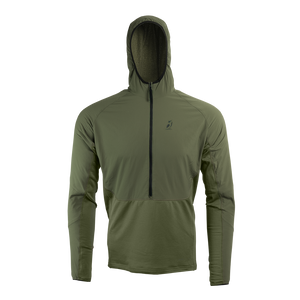
[00:22:49] Tayson: I mean, that's why we call it the altitude. Sony's, because when we're going to Elevation, you want a long sleeve on, you want to hood its feather light, so you can wet it out if you need to or or any Breeze, blow straight through that thing but it's way easier to do that than to put on sunscreen constantly and tax on screen. Yes. Like our faces are still exposed and we have to carry maybe a little face stick but that's way less than like Joe. And one point in the video I was kind of making fun of them saying like my my son had never runs out of sunscreen because he was just lathering up with sunscreen so It is a very nice tool for those conditions. What about Lowe's? So lows,
[00:23:29] Tyler: you're gonna see higher swings in temperature than you're used to Camping lower than that, so, We were getting 70s in the day when we were there last August and the lows, I believe were in the low 40s, high 30s.
[00:23:48] Tayson: Yeah, I have a new temperature sensor that I'm been taking on trips now, which is pretty dang helpful. But my estimation was that we were getting into mid to low 30s on the coldest nights on last trip, but the year prior on the same date. Ranges, we're in the 20s. I mean, it was snowing
[00:24:04] Tyler: woke up with four or five inches of snow that last morning. Yeah.
[00:24:08] Tayson: But the other part that is doesn't tell the whole picture is when you go into High Country like this. Actually, you know, July and August, there's still usually, a lot of water around you. You're typically your campsites are close to water. Like I don't know, just maybe it's the way that we've done it, but but a lot of times there's a lot of water in the ground which gives you a high humidity, you know, number or whatnot. And so even though it's say mid-30s, it can feel colder, it really can and because there's usually a little bit more airflow, because you're high a little bit more airflow. Makes it water in the ground. And I mean that's like every campsite we went to their like, you're close to water or there's just like you grab. Like if you were to look at the soil you can tell it just looks and feels damp because water's not very far it's not very deep into the soil so that yeah, it doesn't tell the whole picture. So usually it's it may be mid-30s, but it can feel colder which is why we both. I think we both took 15 degree rated bags. Yes, that gives us a buffer like you could bring a 30 degree bag but the reason that that buffer felt necessary for us is the year prior when it snowed, it was in the 20s and we were getting wet. Yeah, you're getting into your sleeping bag wet. So having that little bit of buffer room for the Couple ounces of different between a 30 and a 15 degree bag. Was really nice to help. Dry out gear into, you know, be prepared for if those temperatures drop. Could you do this with the 30 degree bag? I think for sure 30 degree top coat specially from us, I'd feel confident you'd be finding it, but Just I, yeah, he did. But I, I would just be weary of making sure you've got layers that you're keeping sleeping clothes dry. You know, those types of things. So Yeah, just expect it all. The temperatures can just swing. So drastically from say 70 degrees in the day to 20 degrees at night. You just never know what kind of weather can be coming in and at that elevation is just big swing's. Okay, let's talk for a second because I do want to get into like gear and clothing. Let's talk for a second about trail conditions and water carries before we get into gear. And some of the other stats that have tracked but I think you're kind of interesting. So I got truck conditions. they we've talked about this before that, like, you know, just like I mentioned like Because of the water constantly eroding, the dirt off of the trails because these things feel like they're dry River beds, more than Trails half the time. It's extremely Rocky and I'm not saying like, I mean, it's all kinds, it's big boulders, it's small round rocks that, that just wear your feet out. It's it's there's sections where you're just stepping from one rock to another rock to another rock and they're all uneven. They're all Jagged. They're all Sharp. So what the trail Runner? It really starts to fatigue your foot because in a like, say a boot, you've got a stiffer soul. And so you don't feel as much of that over time in a trail Runner, you will feel it. And if you're tired and you had a specific Trail, Runner you extra fill it because you didn't even have like on the bottom of. So
[00:27:18] Tyler: my main mistake with that was, I went and did that trail last time on the pair of Trail Runners that I had used all summer to train for The High Line. So I already had 300, plus miles on those shoes before we started and, you know, depending on, on the brand of shoe and the recommendation you're supposed to be retiring. Your shoes at that mileage level, and I just I just didn't think too much of it and I paid for it in the end but
[00:27:53] Tayson: you're thinking I'm not running. Probably I'm just hiking.
[00:27:55] Tyler: Yeah, but miles or miles and those miles are ridiculously jagged. So, yeah, my feet were were really feeling it by even by day four. I was, I was getting pretty tender-footed, I wasn't getting blisters or anything like that because I was conditioned, you know, fairly well and used to those shoes, but I was just getting tender. Yeah. I think all of us were getting tender but Tyler seemed to
[00:28:24] Tayson: be feeling it more. And I would say just some takeaways from that would be you were running the ultra Olympus Olympics. Olympus Olympus 4.
[00:28:34] Tyler: Yeah,
[00:28:34] Tayson: and on the bottom of that, like if you're to typically look at the bottom of a trail Runner, they'll have a harder rubberized Soul. It's thin, but it's there and then they've got all the foam on his particular shoe that rubberized Soul as mainly around the outside, so the intersection of that shoe didn't have that. And so, there was one point, I don't remember, is that trailer, a different trailer. I mean, I've watched a stick poke through the bottom of all of the foam and into your shoe.
[00:29:02] Tyler: Yeah.
[00:29:03] Tayson: Pretty intense. It's like a three-quarter inch long. Yeah,
[00:29:06] Tyler: Jagged Thorn
[00:29:07] Tayson: because of that. Nothing against Ultra is actually just recently, picked up a pair, even though I've been kind of not liking altars for a handful years. I recently picked up a paragon to try them out and there's some things I like about him, but to being to be noted, you, you do want at least the harder rubberized, you know, grippy part of the shoe, a full bottom on. It helped us more than it helped him. Yeah, those are higher cushion more foam. He could still get like a sharp poke better than I could say in my the Solomons. I was running for that trip.
[00:29:39] Tyler: Yeah, it's I think the loan Peaks Which is like the next here down and cushion. They have a full Vibram Soul, you know? And and those would have been just fine.
[00:29:53] Tayson: Yeah. But learning lessons. Yep.
[00:29:55] Tyler: Learning lessons, we did discuss on trail. If we would have traded our Trail Runners for some lightweight. I think if if I already did it again, I
[00:30:15] Tayson: Probably would. like I think if you have the right mid and we're talking like Trail Runner with barely a little top on it type of mid not like a Don't think like a full-on boot, like a, like a Merrell Moab or, I've got a Solomon. Oh crap. What are they cross cross? Something you have a Hoka, that's just, I
[00:30:37] Tyler: have a Hoka kaha Sky, which is a super light,
[00:30:41] Tayson: they're like more of a trail Runner with a boot upper than anything else but they are just a hair stiffer.
[00:30:47] Tyler: Yeah, but they're
[00:30:48] Tayson: just not like you wouldn't want to throw on a heavy pair of boots, because you're going 100 miles and where we were doing it fast. So, That may be preferred, it may be preferred. Sitting here back in this chair. I'm like, I don't know. I might just stick to the trail Runners, but in the moment by the end of the trail, I think we would have swapped him out like day one. We wouldn't have. But by day five, we probably would have.
[00:31:11] Tyler: Yeah,
[00:31:11] Tayson: I don't know if that's helpful.
[00:31:13] Tyler: Yeah. It's I think it's something to consider like we're not fans of big heavy boots. No, they don't they don't do you any even if they're stiff and they protect your feet and your ankles, they're kind of a crutch because if they're stabilizing your ankle so much that your ankle doesn't get stronger when you're training and then that's not great. But then too, we kind of we subscribe to that belief which I will. I think we need to do some like lab testing to really figure out the difference, but we subscribe to the belief that a pound on your feet is equal to like 10 extra pounds on your back, you know, so it's it's really fatiguing to have two
[00:31:57] Tayson: big of a boot. It really is. I love to give the example of, if anyone's like ridden, a road bike versus a trail bike. I remember specifically, I had more of a, like this mountain bike that had came with, like mud tires on it. And I remember I was almost only doing City riding on this bike and so I eventually switched it to a more narrow tire. And I felt 50% more efficient, like just instantly and I didn't even have like, the super skinny road tires. I'm talking just this same Rim, just a slick Tire. It was it's it's massive, but give it a shot, you will notice a difference. If you can shave weight off of your feet but just know going into this. It's Rocky. You may want to consider things for foot protection and mainly, you want to train on uneven terrain so that your ankles and feet and all of that can get used to having its own stability in there. You're not going to roll an ankle on day, one, you know, you just you want to build that up and you want to Have it strong enough that by the end of day you know, five it's not you're not so fatigued That Then You're Gonna Roll your ankles. So just be just be prepared for that when training for this kind of stuff that that, you know, you don't want to be just walking in the city or climbing up just stares, right? You want to get off on uneven terrain,
[00:33:15] Tyler: I would say trekking. Poles to are pretty critical for how rocky that terrain is and how steep and gnarly. Some of those passes are. I know a lot of people don't love to hike with trekking poles because it feels awkward or it's extra money and weight, you know. But when you get up in the High Country and you get that far into the backcountry where no one's getting back to you to help you very easy. Trekking, poles saved us, all from Falls at different points, either, because we're standing on, loose Rollies, softball sized, rocks, or because we're getting tired, or or what. But it's Like something to consider. I mean if you look at our our
[00:34:00] Tayson: stance on that as I would just very strong whether it's high line or other Ones. We have a very strong stance on use trekking poles. We build trekking, pole shelters because to us, everyone should have trekking poles. It's something. We have a pretty hard stance on, so, yeah, totally totally agree with that. Kind of touched on this already with water carries. I don't know if we have much more, obviously, the longest water carries about 20 miles might be 18 or 19, but it feels long, it's dry. It's, it's It's rough terrain, but other than that, there is water of Plenty. So, really Really the only consideration I would have their is filtering efficiency. So, you know, there's a lot of people that say, if you're out on the at that may carry literally one liter of water or, you know, Max 2 liters of water for us, we with the bigger group size. We still were getting up to three liters of water at time and water carries, but a lot of the house to do if you're going to stop the entire group and filter water, it's just more efficient to filter all there and then avoid a stop because getting five four to five or we have six, I don't know. However, many people on the trail started and stopped takes extra time each day, which I'm going to talk about here in a second. Just our some of our moving speeds in time. But for the most part water is pretty abundant, it's pretty easy to plan, pretty easy to see on a map. And I wouldn't, I wouldn't worry too much about that, but really just make sure you've got enough water for the big water carry. And we I would say we do have some opinions on this. When we did the big water carry. I think we were all trying to carry about four liters of water. But we saw other people in that big water carry literally carrying four leaders on their back and two liters in each hand, you know, doing some crazy things. our, our stance on that would or my stance on, that would be You need water? Yes, based on output but you also need water based on time between getting through it. So if I was going to hypothetically try to camp in that dry section, I'm going to have to carry more water if I'm going to take You know, 16 hours to get through that dry section. I'm going to need more water. But if you have the ability to say, all right, this is 20 miles, and I'm going to push through it quite quickly. You don't have to carry as much water because you may be only in that 20 miles for six or eight hours. So, And maybe that's under, I don't know. I'm just kind of throwing numbers out there but keep in mind that the length of duration that you take between water stops, also contributes to the amount of water you need to carry. So for us, four liters to go that distance was adequate. We were mainly going downhill too. So that's a slight other Factor, but we see people. I think some people carry way too much water in those sections. Sometimes they carry maybe in some people are way too trusting that. Like, I only need two leaders, I only ever need two liters right, have the ability to adjust up and down, but keep in mind that if you are able to move through those sections quicker, then you need to carry a little bit less water.
[00:37:03] Tyler: Yeah, I think that the biggest thing is just do the research before you get out there and know. How much water you need per mile or per hour? Essentially, you know, we've got videos about doing sweat tests and stuff like that. If you get that kind of stuff figured out before, you can take the guesswork out of it when you're there.
[00:37:23] Tayson: And even if, even if it becomes overwhelming to like I sweat this much per hour. And what about these conditions and all that? I wouldn't get so hung up on that. Just the more data you begin to collect on yourself. Just more experience that you're utilizing to just apply and fill in gaps and stuff. So it's not like I it's not like when I looked at this 20 mile section, I was saying all right, this many miles this many hours. This many this It's just an overall collection of having data points and having good ideas of how much water I need. So, I don't get too overwhelmed, but collect the data do as much beforehand as you can because that helps you have a better experience out there. So this is a serious enough. Like you need to prepare like you need to fly.
[00:38:07] Tyler: Yeah, it's not one that you you just plan with your buddies and say, okay? We're going in three months to do this and then you don't look at your gear and you don't do any exercise or Preparation and tell the week before you go, that's that's a major opportunity for failure. If you're not, you're not exercising, you're not dialing in your gear, you're not planning.
[00:38:32] Tayson: Couldn't agree more. All right. Let's talk next about some more statistics and then we'll get into clothing choices and gear choices. So some statistics that I thought were pretty interesting. We did so day one, we did 18 and a half miles day. Two 22, 22, 24 and 2021. But the but what's interesting is, if I didn't show you this, I don't know if you've already been really analyzing this over my shoulder here. And you're thinking about like, how much time were like from the time we start in the morning. To the time that we get to camp at night. How much of that time, do you think that we're actually moving whether that's a percentage or an hour? Whichever is easy for you.
[00:39:20] Tyler: I've thought about that too much. Like our typical routine is to get up around sun up. Start packing up moving have breakfast which is a 40 minute break, go to hours, have a break, go to hours, have lunch, go to hours, have a break, go to ours, have dinner and then go two more hours before we set up camp. Right?
[00:39:44] Tayson: Yeah, trying to think of my head. How that adds up, right? Like so
[00:39:50] Tyler: our brakes are always longer than we want, like as far as what we plan, but we also really enjoy getting some food laying down. Take our shoes off like Take some photos. Look at how pretty everything is everywhere. So I would say if we're I would say, our actual moving time is probably eight or nine hours,
[00:40:14] Tayson: okay?
[00:40:15] Tyler: But like our, our time on trail is more like all of the daylight hours, you know, that's like 14 hours.
[00:40:25] Tayson: So two of the days have similar stats in the middle of the trip where we were about 12 to 12 and a half elapsed time hours. From the time that I started my watch the time. I stopped it,
[00:40:38] Tyler: that makes sense.
[00:40:38] Tayson: So on those days you know, those are 22. Mile days, each 22 and a 24 Mile day. How much of the time do you think we were moving versus stopped? Or how much time do you think we'd stopped? That might be.
[00:40:50] Tyler: I'm gonna say nine hours of moving time.
[00:40:52] Tayson: Nine hours time. So, I felt kind of the same as you when I actually pulled this stat off of the watch is shocked me.
[00:41:01] Tyler: Yeah
[00:41:01] Tayson: and this stat I would say is probably one of the less least. Accurate of the stats because it basically just triggers if it if it feels like you're moving, if you walk. Yes,
[00:41:11] Tyler: spot to the water spot.
[00:41:14] Tayson: Yeah, it could it could track that Etc. But what I saw is that on average from a lap time to not, we were moving only 63%
[00:41:24] Tyler: of the time. Well,
[00:41:25] Tayson: and that meant on those 12-hour days, we average. Between 7 and a half and eight hours and 15 minutes of move time. So, you were you overestimated by? We'll just call it an hour.
[00:41:37] Tyler: Yeah,
[00:41:37] Tayson: which was which was just probably It's not, that's not bad, but that kind of shocked me when I was like, whoa, we stopped that much. You know, we stopped that like That seems like a lot of stopping, you know, and it seems like we're moving very efficiently. But obviously we have a the bigger the group The more stops you have. One person has to use the restroom. One person runs out of water because they didn't filter enough, you know, one person needs this and the whole group has to stop and then when it's okay, let's time to go everyone packs up. Well if one person packed up, slower it slows, the whole group. So all those things add up to 30 plus minutes a day. I would say with the group of five just the extra time, but Let's yeah. It's just it's really interesting. 63% of the time, we're moving from the time, we break Camp to the time we stopped to set up camp only 63% of the time while we're moving every single day, like clockwork. Our average pace of moving time was 20 minute miles and other another. In other words, three miles an hour. So we were moving at three miles an hour on average all the time. We did have some fast sections where we were doing four minute mile and five minute miles which sometimes I can't trust like the fastest moving Pace because it maybe a gap in tracking and it like jumps you forward or something, but I can confidently say that we were going four miles an hour multiple times almost every day. Which is pretty interesting. So usually, coming down the backside of passes. Sometimes we'd push a little bit faster or just little little things like that. Not not, we definitely don't do that much. We're just seem to be very consistently between 18 and 22 minute miles which averages us at 20 minute bios. So which which that all plays in for the mileage. You, look at that move time. That's how much time we needed to accomplish those miles. Pretty dang. Interesting, two of the days we had 20 and a half minute mile average, but I mean, you talk about it, 30-second difference. So very consistent on our move speed, which I thought was pretty interesting. But yeah, really shocked me because I feel like we're fairly efficient Yeah, only 63% of the time from Camp to camp. We were, we were there on our best day which was our last day of the trip, which this one made sense to me, basically, 74% of the time we were moving. So, We were very efficient, that date, nine hours, 25 minutes of elapsed time with basically seven hours of that being moving time. So we took very few breaks on that day which makes sense because I want to finish it.
[00:44:07] Tyler: Now,
[00:44:08] Tayson: we had one less meal.
[00:44:09] Tyler: We saw us people.
[00:44:12] Tayson: And we wanted to get done. Yeah
[00:44:14] Tyler: we filmed last because it's less Scenic.
[00:44:16] Tayson: Yes, some of these like it made sense to we had some higher lower percentages like day two. That was the day we had to stop. We're going slower, you know? With Joe but then also we had to stop and have a conversation, spent an hour, at least in that conversation, getting the Garmin in reach, synced up to his phone and everything verified there. So there's more break time on their
[00:44:36] Tyler: day. Three, we ran into just a lot more people because they were doing kind of the standard Kings Peak hike. So we're talking to people,
[00:44:44] Tayson: lots of people stopping us talking about outer vitals, watch videos, Etc. But I think this is the important part everyone. Including me, I do this every day in my life. I overestimate. What I can do that every day in my life, I overestimate what I can do. And I can tell you already, we're gonna get comments on YouTube saying, Dude, I'm like 80% of like I'm moving 80% of the time. I know that I am and this and this and this and you know, I would just say a lot of you are all so overestimating but until you get hard stats in front of you, you know, take it easy on the keyboard because you're probably perpetuating misinformation. take this with a grain of salt to know exactly what is reality and you're talking about a group of guys that are all fit, all training, all running, you know, 20 miles a week or more Like done this year over year you know we know what we're doing, I'm not saying we're the best, I'm not saying we're the top percentage or anything I'm saying. Like this is a really interesting stat to apply to yourself because if you're lower than our fitness level, you may be taking more breaks. And most people overestimate what they can do. Most people just think if I move it three miles an hour on average and this, and this, and this, and this well through miles, an hour, is harder to hold than you think. And it doesn't take much to start to derail that and so on, so forth. But it is possible, we did it. But again, we're we're guys coming in with, you know, 10 to 12 pound bass weights, doing a lot of training on a lot of prep work. So Yeah, that's cool. Something cool to know.
[00:46:19] Tyler: I'm really not mad about that 65% for one. We still got 20 to 25 miles a day. We did it in the time that we wanted, but also I feel like we enjoyed ourselves, you know. Like a lot of people I think look at the pace that we went at and thought like, oh well, if you're, if you're moving up to sundown like what's the fun in that and for us, Yeah. I mean that's what it comes down to is we have the fun on the trail not in Camp. Right, like exactly. Like for me there's no reason to rush to Camp. If you're just gonna sit around a camp, like I would rather just see more. We have our meals in beautiful Scenic places where we can look at 400 miles. Yeah, we do dinner right at 5:00 and we do miles after dinner because we have more energy to do those last miles and because we get a hike during the prettiest time of the day, you know. So so I feel like it's a little bit of a mind shift to think like, okay, well let's let's spend our non-moving time out on a trail rather than in Camp. Like what if you're trying to leave a small trace or no Trace essentially when you're camping. It really isn't much reason to hang out and camp for hours.
[00:47:42] Tayson: Yeah. When I look at the three days in the Middle where we weren't getting on trailer, getting off Trail. We were averaging five hours of break time during the day. Which is pretty, dang, good to think that we were just out, enjoying eating filtering, some water looking at stuff. Whatever we were choosing to do, we weren't moving for five hours a day, but we're still getting 22 to 24 miles in. So a lot of filtering water time,
[00:48:08] Tyler: right? Yeah.
[00:48:09] Tayson: Which, by the way, by the way, we have a new water filter in our membership exclusive. So if you're a Volkswagen, remember we obviously sell retail gear, and food products, we do that, so that we can give it to you at the best possible price. If we don't gate it, we have to follow what's called MSRP or map pricing, excuse me, and listed the same price as everyone else. But inside the membership, we can drop the price of that by another 10%. And we can also give you rebates back. So it's the cheapest place to buy water filters or food, especially like those reoccurring type of things. You can save big over the years. Discounts you get rebates. Yes. Yes. You'll get money back. When you buy through that. So, the new water filter, Platypus Quick Draw. I tested this product for a full year, using a single water filter on every single one of my trips and it was phenomenal. And I do just retired trees. Yeah, he may have used two or three be freeze. Not that we hate the be free, but it just seems like the longevity and the ability to backflush this platypus. Quick Draw is, is really. Really important. Yeah, I mean, I don't even know how many days I spent out on trail, but it was significant obviously and and this that filter is still going. In fact, I just decided to retire it on our last trip because we're filming where we were filtering. Some pretty muddy water and it was pretty disgusting, not discussing was pretty. I was disgusted with the amount of time. It took compared to you quick draws and they're like, boom, two leaders and I'm like, I'm half a liter it right now. But you know, I I think I In My Head retired at last year so I didn't really clean it out before this trip or before I retired it for kind of the winter months. But it's phenomenal filter. You can go snag that inside the live Ultra membership for those who don't know, that's a ten dollar a month membership that instantly that ten dollars gets loaded into store credit. So really you're just transferring ten dollars into your outer vital savings account and Benefits of 10% off year, round exclusives like these where you get rebates and discounted prices and a whole lot more. So go check that out. back to this, though, I water filtering water takes Certainly got five people filtered water. It just takes time. and, And I just wish that sometimes I was someone who had had Giardia and was just willing to to drink whatever water I come across. Maybe I just need this experiment with octave sometimes a little bit more but yeah, just some things to know there. Okay, let's let's get into the last stat and then clothing. So the last stat I wanted to share with you guys is heart rate. Specifically what I track when I go to elevation is my sleeping resting heart rate. So what did my heart rate get to while I was sleeping? Now when I'm at home in my own bed in fact, I'll pull it up for last night. Just Just for reference. I'm typically in the 40s, low 40s a lot of time. So my heart rate last night looks like it was 47, but a lot of times I'm sitting at say, 44, that's probably my most common number. It's 44 resting heart rate while I sleep. When I go to Elevation, that's not what I'm getting day one. I was at 67 now for going into 10,000 feet terrain, that's actually quite common for me as the first night. A lot of times even I'm even in low, 70 ranges. So that was not concerning to me at all. I was like, okay. Solid right where I need to be based off of my historic information night. Number two, I was at 66 on the resting, but I was at in the 70s almost all night. I dipped for just a second right before
[00:52:04] Tyler: I woke up into the 66. So and that night was about 1000 feet higher.
[00:52:10] Tayson: Yeah, it's a little bit higher so there's kind of two things working against me there. but, What I can learn from that and I knew in the moment was, we camped at a spot where we didn't know there was water, like 200 yards ahead because we that was our latest camp we set up and I was running low on water, and I was getting just the slightest a bit dehydrated per se. Because what I typically like to do, especially at elevation, I'm very adamant that throughout the night. If I wake up to roll over, I grab a sip of water. I try to get rehydrated during the night, well, that night, I didn't have to get up to go to the bathroom. And I could just tell that I was getting behind. So when I woke up that next morning there were some concerns, I was starting to develop, just like, oh man, I didn't drink as much as I wanted. But my resting heart rate, still dipped right at the end to 66 and because I'm not really checking my phone statistics out there. I'm really just taking checking my resting. And number, I didn't know that for most of the night, I was in the 70s or even 80s. So then I get to night. Number three, my resting was 75 now, night number three was after the day where I started to not feel good, the tail end of that day. I started to lose my appetite started to feel very nauseous when we were climbing up north pole paths. We had the two highest biggest
[00:53:28] Tyler: passes. In that day. So we did Anderson pass first thing in the morning and then North Full Pass right before we camped. So it was just a massive day of effort. Our biggest miles highest elevation.
[00:53:42] Tayson: Yeah. Big day of effort. Highest elevation. And right before dinner that night, I started to feel sick. We went to climb up polar bear, polar bear pass, North Pole pass. I was feeling very sick, very sick, got to the top, leveled off, felt okay. Got to Camp did my best to, you know, rehydrate and eat did okay. Just forcing things in but my resting heart rate that night was 75. And I don't think that was because of the lightning After the light notice that
[00:54:10] Tyler: like,