[00:00:00] Tayson: Hey everybody, welcome back to the Live Ultralight Podcast, powered by Outdoor Vitals. Today we have a very special guest, Mr. Ben Vaughan of Hiking Ginger B on Instagram as he would be known, to come on the podcast and talk about a whole bunch of things. Now this podcast was a lot of fun for me because I actually found or came across Ben by seeing a photo on Instagram of him wearing one of our jackets, and so I was like, man, who's this guy? I started digging in. I'm like, this guy has a story to tell. So we brought him on. So let me go ahead and read his bio so that you can get to know Ben before we jump into the interview. But phenomenal interview, lots of interesting stories and takeaways there. All right, Ben is a seasoned adventurer who dedicated 22 years to the US Navy, including five combat deployments. It made a life -changing choice to retire and embark on a new path. In 2018, he sold his car and belongings to hike the Appalachian Trail for five months, realizing that a conventional job couldn't quench his thirst for adventure over the next couple of years. Ben took on the Pacific Crest Trail and the Continental Divide Trail, earning him the status of a triple crowner. In 2021, he tackled the demanding Hayduke Trail in just seven weeks and was about to embark on the Pacific Northwest Trail when a unique opportunity emerged and he went up to Alaska to become a dog musher and help out with that. Tons of amazing insights here and an amazing story. So I'm excited to roll this interview and let you guys hear a little bit more from Mr. Ben Vaughan. Well, Ben, I'm super excited to have you here on the podcast today. You have a ton of experience in a ton of different realms, which I'm excited to explore. And so I thought I would just start this off by asking a little bit of your background with the military and just kind of getting to know what you were doing for the military and what that 22 years of service was like.
[00:01:57] Ben: Yeah, so I originally enlisted when I was 19 and no high school diploma. This is back right before Desert Storm. So I was an operations specialist dealing with communications, navigation, controlling helicopters, fighter jets, sitting in a nice air conditioning room. Went over to Desert Storm as my very, very young, I was probably 20. That kind of made me grow up a little bit. And I realized that, hey, I want to make this a career. So I put a lot of focus on learning as much as I could to become an officer. And then so about seven year mark, I got picked up and I was given a commission and I went into the surface warfare area. So I did quite a few deployments on ships and I was in Kosovo, but I was sitting off the coast firing missiles from a nice air conditioning room again. And then as my career progressed, I kind of went towards the expeditionary side and I was the CO of small boat unit and we had six 35 foot sea arcs with 50 cal in the front, 50 on the back, you know, three people, maybe four on that small boat and eight sailors. And we could be dropped into anywhere in the world. And we did a tour in southern Iraq and in Kuwait. And then I left that and then I went with the army supplement. And the army, the Navy guy, 18th Airborne Corps went to Baghdad. And that was my last combat deployment. And after that, they wanted me then to go to Afghanistan and I was like, hey, I think I'm pretty good. So I retired and went into the contracting for a while and just in any way. So I sold everything and I was a complete noob, packed up and went to the Appalachian Trail and that's kind of started my outdoor journey and haven't worn a suit since I started the AT.
[00:04:06] Tayson: Yeah, I saw a photo on your Instagram of you and you had more medals on your shirt than looked comfortable to wear for sure.
[00:04:15] Ben: Yeah, that was a buddy of mine's retirement. He retired after 30 years or so. And the guy, Secretary of the Navy, a month before that, came up with a new rule and said retirees can rock a beard in their dress uniform. And I was like, well, I'm definitely going to do this. So I definitely stood out at that retirement ceremony and the admiral overseeing it came up to me and he's like, you must be Ben Vaughan. I've heard that you're going to be here. You look great. And so I didn't know how he was going to receive that, but the admiral had a good sense of humor, so I appreciated that.
[00:04:55] Tayson: That's awesome. So tell me about what inspired you to get out on the Appalachian Trail. That was your first of your trail of your triple crown or so what what pulled you out to it? Sound like that wasn't necessarily like your background per se, but here you are heading out on the trail.
[00:05:13] Ben: Yeah. so um years ago, I was dating this girl and she was up and lived up in Boston area and we did a bunch of hiking up in New Hampshire and one day, we like that, I don't know, maybe five or seven miles. We got to top of a ridge and we're sitting there eating lunch in these two dirty. Smelly guys came by with Harley anything on and I thought it was a big deal. We had like five or seven miles and had five or seven more, you get back and some like, hey, where you guys going, right? Maine was like, no, you're not. I'm just starting like, Georgia. I was like, there's no way my girlfriend hit me because yes, Appalachian Trail. So just kind of put it, I'm still on active duty so it was just in the back of my mind for a long time. Did a lot of reading You know, up on it and I was just never in a position where I felt I could drop everything and go do it. And then finally, after just being fed up with, you know, working for the military industrial complex. I stole everything and went, everybody thought I lost my mind. Um but I was going through something and maybe I was a little bit, but I just want to get out of the corporate and corporate worlds. So I packed everything up, sold a car, a property, all my surfboards, everything I owned pretty much and I went down. There took a Amtrak train Down to Georgia and started, my hike and didn't know anything. Had three of everything fits with the military teaches you But you know, through hiker you don't, you don't need a whole lot, but it takes a little while to figure that out or at least it for me.
[00:06:48] Tayson: Right. No, that's That's interesting. So so what what shocked you the most about getting out on trail, you know? Yeah, I mean you had down there you're just like
[00:07:01] Ben: well initially
[00:07:05] Tayson: I'll go ahead.
[00:07:07] Ben: Initially what shocked me is that you really don't need to shower as often as you think, you know, I think the perfect First four days and I thought it was a big deal that I hadn't showered and then you as you know, you quickly get over that and come to realization that that's not, you know, your focus but I just love being out there and people I met early on were cheated. My Success funny story about that on day one. I'm down there for that little brief. They give you about, you know, what you need to do and not and Here.
[00:07:42] Tayson: No, you're still here. I I turned your video off just to see if it would help with the audio. So we'll see if that will likely just throw in a image of you because the video on my end is just super super choppy. So we'll see if this helps the audio have a little bit less of a delay.
[00:07:57] Ben: Yeah. Yes. Sounds good and you can use. Any of my photos from Instagram, if you want to do something that helps with the podcast. But so I'm there, the in brief and that's see this young Kid but find out, he's 19 years old, he has the tiniest pack I've ever seen. Of course, I'm rocking 40 pounds of gear back, probably over the top of back of my head and I was like I'm gonna have to say this kid's life. He has no idea what he's doing and so we started you. Just as we're hiking, we kept stopping at Saint camp and same spot and coming to find out. What's scrapbook? And he'd already done the PCT. He's finishing up his Triple Crown. So we hiked the entire Trail together became Good friends, he lives in California, so he came out and saw me for a few days. I hike the PCT and then two years ago and I got back together hiked Vermont Long Trail and I think he's pretty impressed how I went from 40 pound pack to 10 pound base weight. So yeah.
[00:09:08] Tayson: So with that. How did you keep up with them in the beginning? How I, how fast did you start dropping gear and wait.
[00:09:13] Ben: Just stubbornness and not letting it. Yeah, just stubbornness and not let a young kid. And I'll do me. You know, I was a military veteran and when you look at this, young kids show me up and seem like every few days, he'd be like Hey, you really don't need that in your pack. So by the time I finished I was probably down to you know, what from 40 I guess, full 44 fully loaded with food, to probably hiking 25. I still was carrying a lot of weight but I definitely helped me out and I figured out what I needed and what I did need
[00:09:49] Tayson: Yeah. so, you go to the the at what's kind of your big takeaway that that led you to want to continue to do more, It.
[00:10:04] Ben: Well, when I finished, I finished the at, I was like I'm wanting done never doing that again. I was wrecked. I couldn't like I'm a big Runner so I couldn't really run for the month after the at just everything hurt. A lot of A bike ride on beach cruiser, just trying to get some blood flowing there and I was like I'm never doing that again and then sew all my friends here. I was in Virginia beach at the time and all my friends here. Like, all right, well, you know, go back to work and I was like, no I gotta do something different and I found a job and come Colorado didn't know anybody there and move out there and started teaching skiing snowboarding and probably two months in the Colorado. I was like, well it's almost sign up time for get that PCT permit. Let me go ahead and do that. Got the permit and then I was like well here we go. So Good at wearing Colorado and then that next step, I was down there at the border are getting ready to start PCT.
[00:11:00] Tayson: Yeah, you didn't you didn't sit around on the sidelines too long and didn't even take a full year off.
[00:11:07] Ben: no, I didn't and You know, once I'm on a PC team, I'm like, what you can be one done, but you can't just do too. So, you know, probably a month into the PCT. He already knew I was going to do the CDT.
[00:11:20] Tayson: Yeah. so, So you go, you do the PC T. Was at the very next year you did the CT CDT.
[00:11:35] Ben: I did. So I did 2018, I did the at 2019 PCT and then I was in Colorado. It was February. And the covid thing started to kick off and I was like, this doesn't look good. What am I gonna do? So I packed up. In February 22nd. I started the at Downey Georgia and I was like I just need to get away from all this craziness. And as you're probably aware of the Appalachian Trail Conservancy, or whatever, they're calling with ATC. Was making it really difficult on a few hikers that were out there. Same, because sleep and shelters horse in the Parks. You know, you can only hike during the day and you got to leave Shenandoah just we just getting really really difficult. There's a lot of backlash online about you know, you're taking the virus in these small Trail towns. So I got to West Virginia, Harper's Ferry and said well, I get off the trail and two weeks later I was at the start of the CDT. It's rolled right into it like year 2020 about 4,000 miles.
[00:12:47] Tayson: Yeah, just jumped right into Wow, wow. Wow, that's incredible. So a guy like you, that's got that much experience, I'd love to dig into. I don't have the things that you've learned. The things that like your takeaways from just that amount of experience. And And you've got I mean you're you're Adventures Continue after just the Triple Crown. So maybe isolating to the triple crown for a minute. Yeah. I mean, what do you what do you feel like the average hiker, the average person maybe aspiring to go on a Long Trail doesn't know that that we could share or shed some light on I make.
[00:13:27] Ben: Yeah. So um definitely, you know, most people on that but not saying And everybody should be ultralight but it definitely helps. If you can minimize that weight, you're carrying you think about all those steps you're going up. All you're going down all of that. Pounding is Amplified with the more weight you carry. So that is definitely a key. Takeaway that tell people. And then also, you need the right shoe. You don't need the most popular shoe. You need the shoe that works for you and sometimes It's hard to find out because I see a lot of people quitting their Trail when they're through hike because they have overuse injuries like shin splints it. Eban, plantar fasciitis. And most of the times that's because they're doing too much, too soon. They're not, they're not in shape for it. Or they're carrying that extra weight. So and then, I think, a third thing would be get the right gear and again Not the most popular gear but the right gear for you. And sometimes I take a little while to figure that out,
[00:14:37] Tayson: Yeah, I'd love to hear if you've got any tips on shoe selection or how you would know that, right? Because it is it is very common, right? It's like, oh, everyone wears Altras on long trails, so I need to wear an Altra or this really famous YouTuber, you know, touts or, you know, so on so forth. I'm curious in your opinion, if there's things to look for or if there's any way to shortcut finding the right shoe.
[00:15:04] Ben: Yeah so you know as a marathon runner and Iron Man so I really had my shoes dialed in on you know there's three foot type. Basically either have a neutral footnote or your pronate, and there's a shoe for your foot type. And so that's what you need to find is. Not that YouTuber who says these are the best shoes in the world. They might be that person but there may not be for you. So I'll get the right shoe for your foot type. I think a little bit wider toe box. I see the value in that. However, You know, there's I won't name the company but there's a company out there and I have a pair of their shoes right now that they don't last 300 miles. So then you got to figure in that expense, how many pictures she's gonna go through? I did find I test test it out. A shoe for a company. Can I mentioned brands on this?
[00:15:57] Tayson: Yeah, yeah. Go ahead.
[00:16:02] Ben: Um, so I tested out of shoes, it's Italian company. And I'm, as soon as I asked that question, I'm drawing a blank on the, on the name. So they're looking for people to wear tests are new through. I can shoot and I did I tell you what? What is it?
[00:16:18] Tayson: I the only one that came to mind was Scarpa that I think is Italian.
[00:16:23] Ben: That was Salewa.
[00:16:27] Tayson: Mm-hmm.
[00:16:27] Ben: Well, and I used three pairs of Salewas on the CDT. The entire CDT only use three pairs then when I hiked the Hayduke, I wore one single pair of shoes for the entire 800 miles and that's a extremely tough environment. Now, at the end, I probably needed shoes at about mile 650, but I wanted to prove to them, that pair of shoes with last 800 miles and I managed to complete the entire Hayduke, and that one pair of shoes,
[00:16:59] Tayson: Yeah, we got to get into the Hayduke, at some point because that is such a wild Trail, but that is that is incredible to, to get that kind of mileage out of. And, and that's, that's a valid point, right? Some of these shoes really do break down at 300 miles and depending, I'm not sure, you know, kind of years, your stature. But for me, you know, I'm, I'm in about 200 pounds. And so I, I tend to blow through shoes even faster than some of these guys in my office that are, you know, Buck 40 or something. So no, it's it's, it's an important factor. What do you say to this, though? Because from my understanding, when it comes to trail shoes, all of them are built as a neutral shoe because the ground is uneven. And, and things like that is kind of their claim to it, right? But like, when you get a road running, there is like a pronation shoe and things like that. So do you have any opinions or insights on on that aspect of most, you know, trail shoes that I'm aware of are just a neutral shoe?
[00:17:59] Ben: Um, no, I think if you supinate, which means your foot tends to bend inward a little bit. You need that, just a little bit of support. If I had a shoe here I could show you. There's just a little piece of plastic, basically, they put on that for people that supinate. That's gonna help you on the trail. And if most really, really large guys will—I'm sorry, that's pronate. You pronate inward. And then supinate: most really large guys will supinate outwards a little bit, and you can get a shoe that's built up on that outside edge that will affect it. And there's no right type of foot, you know, just some people supinate, some people pronate, some people have neutral feet. So I think it your guests or anybody's gonna do a hike and get that right shoe, it's gonna really help them from getting injured.
[00:18:49] Tayson: How how much time do they do? You feel like you need to spend an issue before you know if it's a good shoe or not for you?
[00:19:00] Ben: Know. That's a good question but you know, if you buy a shoe and you're out, I would run in them. That's the quickest way to find out and you know shin splints IT band issues and plantar fasciitis are the top three. Had giveaways that you might be in the wrong shoe, while I was on active duty, I actually was really hardcore into triathlon. So I worked at a triathlon store and we sold Shoes by what suits everything you need for Troutman. And so I learned all this from the manufacturer and then, when employed with customers come in, I can just have a walk and I could tell what type Which strike they had. And now I think the technology is even greater like times you'll stand on a electric pad. And you know some laser will take a look at your foot and tell you hey you're one of these three foot types. I don't think a lot of outdoor stores. but do that right now, which I think they should um, but if you go to a running store, then you can find out what type of shoe and then from there There, you can decide, okay. Here's three brands that kind of fit my foot tight. And I like this color, which that's gonna come In with some people I like this color a little better than this is a shoe. I'm going to go ahead and try out so that will cut down that learning curve a little bit on finding That shoe for you.
[Editor’s note: The footwear, foot-type, pain, and injury statements above are personal observations from Ben’s historical running-store and trail experience, not a diagnosis or universal fitting protocol. Persistent pain, numbness, weakness, or injury symptoms warrant current guidance from an appropriately qualified clinician or footwear professional.]
[00:20:23] Tayson: Yeah, I think that's great advice. I think getting into a really good running store can shortcut so, much trial and error that you'd have to do on your own. And, you know, as a company that, that makes our living only selling stuff. Online shoes is one that I we still advise people to try to get fit for if you don't know your foot type already or you don't know your preferences already. So I think that's really good advice. I wanted to ask this now, I kind of want to get into maybe what were some of the most challenging aspects out there on the trail for the Triple Crown and I wanted to start with talking about Frostbite. So I have had really mild levels of frostbite, I've lost feeling and a couple of my toes on two separate occasions for about a month at a time. But you have a photo on your Instagram, of a, whole different level of frostbite would love to hear about that. And maybe any other really challenging aspects of.
[00:21:21] Ben: Yeah. So, so, I still deal with a little bit, I was out, surfing two days ago and the water started to get a little colder and my feet, my toes, and my fingers were started. Tingle. And then I definitely had the challenge in Alaska when it drops down to -30. No matter what gear I have on. I'm I'm hurting most of the time out there, but, you know, I was 2019, was called snowmageddon on the Pacific Crest Trail. I think this year they probably exceeded that from what I kind of saw on Instagram, but there's a group of us. We got to Kennedy Meadows and everybody was saying, you can't go into the Sierra you'll die, but there's five of us said, you know what? We're going to do it. And so we took off and it was it was post hole in for a long, long time. And then I think what I made a mistake is well one there's nothing I could do about the cold and snow but wearing my Kahtoolas. The way they wrapped around my big toe. My second toe. I believe they're cutting off blood supply. And I had hiked up Mount Whitney and it was almost solid. The ice and we couldn't find the trail. So I was just going basically straight up, you know, it's kick stepping. So I came down from that my foot was really, really hurting. And I was under the impression that I probably broke my big toe. So when I got to Kearsarge pass, all of us. Cross over the past and went in went in town. I'm sitting there looking at my big toe, and it's all black. And so me and another hiker, The traditional took a needle and thread and pour some Jack Daniels on it and you know, Lance it. And I was like, I I'm good. Next day, went back in at Kearsarge Pass and got caught in a massive snowstorm. I was just I probably got two miles five miles down over the past and nine in the morning and it was so bad, I couldn't see anything. So I just I couldn't even set up my tent. I just crawled inside my tent and the temperature dropped below freezing. Oh right below zero. I couldn't start my fire, I couldn't all my water was frozen solid. I laid there for about 20 hours and the next morning, Well, I don't get out of here. I might not survive this, so I climb back up that pass. And when I got down, you're probably familiar that one. 90 13, Mile Road, I'm sitting there like, well, I got out of that, but I'm not safe yet. So, um, a guy that was clearing rocks off of off the road City, employee or state employee. I was like, hey man, I really need to get out of here. I know you're not allowed to do. This and he said, get in and drove me down the bottom and that's when I jumped on a train went to Los Angeles where my daughter lives and went to a doctor and he said, if I had a textbook and said, this is what frostbite looks like. This is the picture I would show and he said if you had to come out of there you probably lost a couple toes. So luckily I took care of it and then I took three and a half weeks off recovering and then skipped about 250 miles of the trail and I went in caught up with all the people out. hiking with me about a couple weeks and then, once we finished up at the Canadian border, I went back down and finished those Who went back at Kearsarge Pass and looked completely different and finished up, that 200 miles of trail that I skipped.
[00:25:06] Tayson: Yeah. So That's, that's such an interesting story and I'm curious when you kind of realized like in retrospect now? When you realize that you're getting frostbite like, because in my mind, I would guess when you're laying in your tent, your feet probably weren't getting fully up to temperature, right? Like you're you made it sound like it's really cold and maybe colder than you are geared up for, right? So, do you think that frostbite
[00:25:33] Ben: I was constantly cold
[00:25:35] Tayson: and then Go ahead.
[00:25:44] Ben: Well, you know, it was freezing cold in the morning. I mean, I would have to pound on my shoes just to get my foot on and another mistake I made is I switched into Hiking boots, instead of my traditional Trail Runners and I think they were a little tight and then, what, that could too low, you know, I sleep, so wrapped around him. I think those two things along with the cold and then, you know, the day, He'd be wet. And just I my feet never really unfroze in. I didn't think I had frostbite. I thought I had Broken toe. I remember once I got down, I went a little store there in Lone Pine took off my shoes and drinking a beer. Here. And this old timer walks by like a nasty case of frostbite. Now it's just a broken toe but I realized I needed to get Looked at and it wasn't until the doctor said, you have frostbite, like, my toes. Not broken. He's like, no, this is frostbite. So I had zero experience. You know, all my time in the military? I was I was in desert. So frostbite, never crossed my mind and That. So, as ignorance on my part and a good lesson learned,
[00:27:00] Tayson: Yeah. It's, it's such an interesting thing, I mean, it's just it, when you're up at those high elevations, things can change so fast, right? Like the weather rules in really fast temperatures, can swing really, really fast? And so I think it's always a lesson to be had when when you're experienced something like that for sure. Any like long-term? so I mean, you kind of you kind of looted to this like what's what's the recovery like on it and then what's the long term recovery like or or Long-term, I don't know what he's still have to deal with it at this point with it.
[00:27:38] Ben: Yes, so for me, you know, there's a lot of nerve damage so I still have it when I get really cold. I can fill up my fingers because I get frostbite my fingers, I got frosting it so they still hurt really bad and extreme cold conditions like Alaska. But you know, as in snowboard instructor, I had no problems at all, there's a couple days. I might got down to zero where I was like oh my toes and fingers are hurting. There's all that nerve damage but you know, the recovery was laying on my daughter's couch, with my feet up, drinking some whiskey every day. Hey, and just, you know, putting some aloe on it because I didn't post. There's a couple pictures, I didn't post. Because after that, that black Bliss, You're opened up and my toe nails fell off, and it was just, it was very nasty. And so put I learned that aloe vera helps, keeping it elevated and you know, it's basically just time I just letting that he Heal. And I probably went back to the trail a little bit early, but didn't have any open wounds. It was still a little uncomfortable, but I'm you know I was just getting back out there three weeks on the couch is about all I could do and I was seeing posts with everybody. I've been like with It's and it was kind of funny anybody hike that PCT in 2019 knows me as that guy that got frostbite. It was pretty popular. Story of warning people not to go into the Sierra because this is what will happen.
[Editor’s note: Ben’s needle-and-alcohol treatment, aloe use, elevation, recovery timing, and return to trail are preserved as a personal 2019 account, not frostbite first aid. Suspected frostbite requires prompt medical evaluation; do not rub, puncture, or deliberately thaw tissue when refreezing is possible, and use current emergency guidance.]
[00:29:06] Ben: But I'm gonna take most of the blend. I'm on that. The weather was bad, but I made a couple mistakes that probably didn't help at all.
[00:29:15] Tayson: Yeah, makes sense. Any other, I guess big challenging moments on any of the hikes. To complete the Triple Crown.
[00:29:27] Ben: You know, the San Juans you come out of the desert. Which is pretty easy hiking other than snakes and lack of water. But then you know, you start getting to the San Juans and it was still a lot of snow. And there's a couple times I was like I need to get off this mountain and as you know up there those are small mountains. There's All times. For me to get to a Trailhead, was going to be even more extreme than what I was in. So I follow these creek beds and you know, they're super Steep and you just got to walk on the side of the mountain and just to get down into A tiny little town. So, the snow was pretty aggressive on CDT, and then add a couple of moments in Wind River range, trying to get over Knapsack Col. It was fingertip holding on a rocks. You couldn't see the trail because of the snow and I didn't have crampons. So, you know, get over Knapsack Col took me way longer than it should, just because I didn't want to get injured. And then there's one part on CT, where it's on edge of a mountain and I can't remember what it's called, but you can either go down the mountain, five to six miles and come around back. Up to get on the trail or you can take this one mile icy Ridge to get across. I'm like, well, I'm just going to do this icy Ridge but As I'm going just taking my time going real slow, I'd run some hikers, you know, at lunch before that, and they're like, which way you go. I'm going short way. So I didn't know there watching me, but I'm going on this Ridge and this little snow Bridge collapsed and it's like an 800 meter slide down to giant boulder pile. And, as I'm sliding, I'm talking to myself. Like, this isn't going to happen, and I'm digging it with my fingers and my shoes and and everything. And somehow I stopped myself and Halfway down. Bloody fingers, have nice gash on my hip because we're in shorts. I don't wear pants when I like,
[00:31:38] Tayson: yeah.
[00:31:40] Ben: And I got out of there and got to the campsite and a couple hours later. These four hikers came in and they're like, dude, we thought we were watching you die. And I was like, yeah, I was going through my mind too, but somehow I stopped because, you know, that's, that's a common way on a lot of trails that people. Fall slide down into rocks. You can't control yourself. So probably should have had an ice axe so I could self-arrest there but didn't have a nice acts on that trail. So another lesson learned from me right there but yeah, no seriously trekking poles and then the Hayduke was probably the most challenging.
[00:32:16] Tayson: Yeah, just to back up before you go to the Hayduke, do you like checking poles? Are you able to like jam those into the ground? Similar to an ice sacks or
[00:32:28] Ben: um, that's what I was using my trekking poles, and that's what saved me, one of my trekking poles finally caught and I was like Yeah Lifesaver.
[Editor’s note: This is a personal close-call account, not snow-travel instruction. Trekking poles are not a substitute for route-specific snow and avalanche assessment, suitable traction and self-arrest equipment, practiced skills, conservative limits, and turning back when conditions exceed the plan.]
[00:32:40] Tayson: Yeah. No I it's crazy. I mean it can get. It can get Western real fast. I was running an ultra marathon this summer and there was a little snow slide and it's almost like I was watching those. I think they're called lemons or Lemmings Lemmings that like kind of follow each other off of a cliff, right? And it's like I was watching these Ultra Runners do the same dang thing because the first person you know, slid down the next person, slid down and pretty soon, everyone's just kind of going off the edge and I'm like, I'm not going down that like that looks way rough and so as I'm going around some some lady slid straight into a tree and cracked rib and I mean it was just crazy to me but know that sounds that sounds terrifying. What you're just driving that stuff? Like my worst case scenario that would play through my mind. Would be to slide that far and to yeah, I'm not I would say I'm just not totally comfortable on snow slides like that. I think I sometimes I'll see people like posting videos of them like sliding down big Banks. and I guess if you've seen someone do it before it makes sense, but to me in my mind he just don't stop right or you pick up too much speed and becomes uncontrollable and It's yeah, it's pretty pretty, wild times out there, but I just stopped. They didn't watch you slide down to your death. I mean, that's a, that's a, that's a wild story, for sure, for sure. Um so yeah you finish up your Triple Crown. I'm sure that was super gratifying and and whatnot but I didn't I think you it was after you completed your triple crown that you still went on to do the Hayduke Trail, correct?
[00:34:13] Ben: Oh, he did. That is correct. It was The following year, I was like, all right, I need something. Whereas another good story I've told this on another podcast, Is for that summer. I wanted to be a river raft guide. So I found this company in Colorado. They love my resume and I realize gonna be the new guy not know anything up. Basically, it was I had to pay 500 dollars for the training. I got to live in my tent on the River all summer long and no showers were provided like you go good with this and like, yes, right up my alley, let's go. So I did a phone interview and they're like, you know, you're really over qualified for this and then I mentioned my age. So, a little bit older, I just had a broken 55. Now, this is like, right 52 and they're taking back by that and they're like, Like listen, I've served my whole life. I've done Iron Man. I can hang with these kids in water because you know used to higher in these 20 22 year olds, whatever. I'm like I'll swim laps around these kids in the river and they're like, all right. And I thought it's kind of weird how the phone. Call ended and I thought I had the job and two weeks later I get a voicemail saying, hey just letting you know, you're not in our demographic. Of what we hire and it really pissed me off because I know that meant they thought I was too old for the job. So I'm like, well, what am I gonna do? I was like, well, what's the hardest Trail in America? Hayduke, let's go. So that's kind of just being pissed off at a company that didn't want to hire me.
[00:35:50] Tayson: Well that's that's such a I mean that's a huge motivation for me to stay in shape and whatnot as so that I can do the things I love for a long time, right? Like because I feel like you can see people that You know, their health starts to degrade and passions. They had Hobbies, they have they can no longer do, right? And to me it's like man, I want to do this stuff as long as it possibly can so it's a big driver for my health and I would totally attest that I've seen, you know, 55 year olds or older people doing things that no 20 year old could do, right? So That's crazy. And that's crazy. That they actually cited the demographic aspect in that. I mean, that's a, that's a whole nother side of things, but my, you know, HR department would be freaking out over something like that. but yeah, so okay on your shoulder and you're like I'm always here Go ahead.
[00:36:44] Ben: Oh, I was just saying. I made a couple phone. Calls to some lawyers. I know and said, hey I think I got something here and they're like, you know what, man, just let it go. I know you're pissed off but just let it go. It's like, all right? So
[00:36:59] Tayson: Try not getting much out of a little river raft company, I suppose, but so you've got a chip on your shoulder. You find this Hayduke Trail, which remember everything. I also hear that it's it's got to be one of the, the rowdiest trails, in the sense of, but it's a different, if it's a different hard, right? I think a lot of people think like, okay, you know, the most amount of vertical climbing into sending makes a trail of the hardest or so on support, but the Hayduke is kind of all of the above, it's it's more of a route than a trail water, you know, there's nothing out there hiking through Just solution, right? You're hiking on. Mars is how I describe it, right? Like you're just literally walking through an uninhabitable place for the most part, but so, yeah, I guess walk us through a little bit of the Hayduke, I'd love to hear your thoughts on the Hayduke and how you how you approach that trail.
[00:37:49] Ben: Yes. So As it was. Research as I could. And I tell you, there's not a lot out there. You know, I bought the book written by the guy that created the Hayduke. And I wouldn't recommend it because it's it doesn't really tell you much. I just couldn't find anything on it, so I bought a lot of topographic maps. and you know, just trying to piece everything together and Put the train down to. As close as I get to arches and got right into the park, on that backside and started. And if I had two challenging at first because you start in Arches and it's like, well that's you know, you're on Trails but essentially that it's once you get on The BLM land is when it really gets challenging finding a way down into this Canyon and you're looking 200. feet down, you're like and it's sheer Cliff like there's no way there's no way for me to get down there and what I found on the Hayduke is there's always a way. And sometimes it might take you hours to find it which can get a little frustrating. So you definitely test your patience on the Hayduke. It is like you're not going to get in that 25-30 mile day, like you want a lot of times because you're going to be trying to find the trade. Well and then I ran into once I got out of the park, so I'd probably be on the trail four days, five days, I ran. Into a guy coming the other way. He was finishing the Hayduke and he asked me what I had for navigation. I was like, man. That's got these maps all this paper or at this book. And he's like all that useless and gave me a download of the actual trail that I put on, I think was on Gaia. and that guy really saved me and we knew a couple same hikers from our past through bikes and I can't remember his Trail name, but he gave me all the data that I needed to make like easier, but, you know, again you could be walking along this Canyon and you think your GPS is showing you, you're on trail, but your 100 feet off and It above it. And so you got a backtrack and find a way into this Canyon and sometimes it always just seems impossible. And then, you know, You're you're in this Canyon and it Cliffs out and you look down and sometimes it's four feet. Sometimes eight feet sometimes it's 20 feet. And, you know, you can load your back down but then you got a hike up and around to try to find a way to get back down there and then come get your pack. So I just learned to just deal with it and not get frustrated, like I'm not getting the miles and I want be safe. Don't get injured. I think the sketchiest one was I lower it, watch out and it was probably only about 10 feet drop but there was these Boulders right there where you jumped in Yeah, so if I jump down there, I'm gonna break my ankles. So I'd lowered my pack already and so I spent about an hour, maybe an hour and a half, trying to find a way. Just billy goat climbing up, these sheer Cliffs and trying to come around and really Thought. Okay, it seemed like every day, I was doing something that I could seriously injure myself on that trail. And then the best option I found was there's a tree About was probably, you know, eight potentials around and it was about five feet off the canyon wall. Like well, here goes nothing. I just took a leap and wrapped myself around that trail and then slid down the 20 feet. But just you Got wrecked on my arms and legs from, you know, sliding down that tree. But that was the only route I could find to get into that Canyon. Oh yeah, it just seemed like every day. I was doing something like that. Like this is the most ridiculous Trail and, you know, I like to call the Hayduke, the PhD through hiking because I would not recommend it to be your first through hike. It'll ruin you.
[00:41:48] Tayson: Yeah, no, that's sounds. That sounds terrifying to be leaping to a treat and then slide down. Yeah, it's and it's it's waiting dangerous, right? I mean it sounds like you took off on this Trail solo down on these slot. Canyons, not like you've got service. It's not like you got cell phones out there, you know, that work and yeah, that's not super up. But I'm also interested because you just, you just took off on this Trail. I know that some people do the Hayduke, they'll do cashes, the little Berry food, or bury water and some of those stretches, you know how much food were you having to carry at a time and, and, you know, to make because it's Big stretches, right?
[00:42:32] Ben: Yeah, I think my longest who carry was nine days which as you know, that's a lot of weight, you know? So that I roll out of town, heavy heavy but I milled packages around to some key areas and there's a couple times. I had to hitchhike like 80 miles to just three Supply and it's like 80. I'm really is pretty easy for me to get hitches. I didn't have to wait a long, long time, I think, you know, out there in Utah somewhere. I see them. Absolute middle of nowhere with a backpack. They're gonna feel sorry for you and like, all right, this guy's needs some assistance.
[00:43:13] Tayson: Yeah, I could leave him and he could, but not me.
[00:43:16] Ben: I think I did, I think I did two or three. But most of my food carries were released. Or seven days. Very rarely did. I do anything under seven days? So like I was carrying a lot of weight every time I hiked out of town.
[Editor’s note: The Hayduke route-finding, cliff descent, tree leap, hitchhiking, and food-carry descriptions above are Ben’s historical experience, not a route plan or safety protocol. Current access, water, resupply, navigation, weather, permits, emergency options, and technical hazards require route-specific primary information and appropriate experience.]
[00:43:30] Tayson: Yeah, that is that is a ton of weight. Okay, so got the Hayduke in here and just for the sake of time, I may push on. I'm sure there's just so much more to unpacking in some of these hikes, anything left on the Hayduke, that you really want to touch on before maybe we transition into what you've been in the last couple years.
[00:43:52] Ben: Nothing, that's pretty good.
[00:43:55] Tayson: Okay. So
[00:43:56] Ben: representation. But like I said, you know, if your listeners don't, don't go ahead and do it unless you're ready.
[00:44:01] Tayson: Yeah. Warning comes with this Trail, for sure. So then you wind up in Alaska, which I don't think you have any ties to Alaska. So, tell us how you ended up in Alaska and what you were doing and and maybe just what that life is like. I I know, from kind of trying to piece together a little bit before the podcast, I was pretty unsure. Even what you were doing or I you know who you're working for that kind of thing. Like what's, what's going on up there and and how did you land up there?
[00:44:33] Ben: Yeah, so it definitely is the most unique job. I've ever had. So our fishing, my plan was to go hike. The Pacific northwest trail and I already know my packages out and I realize, I need to let some snow melt so buddy of mine said, hey I've got this gig North Dakota building, might not like trails and I need Help to finish his contract. I was like, all right, perfect so well, in pounded dirt building, my mountain bike trails for people. Four weeks and I was just getting ready to start the Pacific northwest trail. And I got a text that said, hey if this was a girl, I Knew that had moved up to Alaska. And she said, do you want to be a dog musher on a remote Glacier in Alaska? And I'm not There in 100 degree. Temps pounding, this dirt tired. I said you know that doesn't sound too bad so maybe Phone call asked about the job, they're like, yeah, well you don't have dog-mushing experience so you're gonna be at. So you're gonna be picking up dog, poop and Handling dogs and I'm like, all right. Only thing I want to get out of this is I want to learn how to be a dog musher and they're like, well, we'll train you So I Googled the guys going to work for his name is Dallas Seavey. And you know, once you Google Dallas you don't hear much about Dallas Seavey down here in the lower 48, but everybody in Alaska knows him. He was his whole family is Grandfather, helps start a race called the Iditarod, his father, his won the rare, Race three times. And the Iditarod is considered the toughest endurance race in the world. That's on the human not on the dogs. After we've finished the Iditarod the dog's or still jumping rare to go after 1000 miles. And the musher is completely wrecked. So his father won the race three times in Dallas. Grew up as a dog musher. He's only 36 37 now and he was the youngest ever finisher race. The youngest to win the race and he's got five wins under his belt. So I talked to him on the phone I'm like, hey I want to learn how to do this and he said, I'll Teach you I'll train you and that kind of like Tiger Woods said he'd teach me to put. I was like all right I mean So sure enough that summer. So Dallas has a kennel in Talkeetna, Alaska with 130 dogs in the winter. They train for the Iditarod and guests coming in. We do tours with him, that's the winter time, set up, and then the summertime take 50 of those dog. Fly him up to this remote Glacier of a 5000 feet in the last of that country and five of us. So this is this is my third summer doing it. Five of us live up there, you have no running water, you have no cell service and guests fly in on helicopters and we take my Intel. They pay $600 for one hour up on the glacier with us.
[Editor’s note: In context, Ben is describing paying guests arriving by helicopter for historical glacier dog-sled tours. The unclear words “we take my Intel” are preserved from the immutable transcript because bounded audio review did not independently support a verbatim correction.]
[00:47:24] Tayson: Wow.
[00:47:26] Ben: And we can do 72 people a day. So the days are very, very long. So the first year I did it and then he went back to Colorado and then the winner after that Dallas called me up and said, hey, why don't you come back to Alaska early and And help me out with some dog training and be a handler for the Iditarod so you can see what this is about. So, I did that and then I said, Then went back up to the glacier for my second summer. And then this last winter I stayed and I was the kennel manager. And what we did all All wear long trained dogs for the Iditarod which is one of the most extreme things I've done because you're yeah team. Of 10 to 12 Dogs, you're in the remote Alaska, Backcountry climbing mountains, bombing down mountains through the trees, deep snow. Ice moose very, very dangerous animal for a dog team.
[00:48:20] Tayson: Yeah. So you get
[00:48:24] Ben: That's right.
[00:48:32] Tayson: Sorry I didn't mean to catch off there. I was just saying for a for a dog team. All right, miss her terrifying, right? They kind of misunderstand him as as potential threats and Wolves.
[00:48:42] Ben: Yeah. So moose don't actively seek out dogs. Yeah, so a moose won't actively seek out a dog team. Almost most of the time they'll run away. If they hear the dogs barking but, you know, you can come around a turn. If a moose is Laying there with their calf, she's gonna get up and come and just start stomping your dog team. So for that, you know they look at like a pack of wolves and they're Protecting themselves and protecting their calves. So for that reason we always carry just to protect the dogs. I've never had to use a weapon out there for for that reason. So I've unfortunate but it's a very common thing in the winter that you hear about. Mushers come upon moose and the moose start attacking the dog team, so definitely very quiet, can't be. A violence situation.
[Editor’s note: The moose encounter and weapon comments above describe specialized historical dog-team operations. They are not wildlife-defense instructions; use current Alaska wildlife guidance, applicable law, trained local protocols, and non-escalating avoidance practices.]
[00:49:33] Tayson: Yeah, for sure. So, what time of year is the Iditarod held?
[00:49:49] Ben: Illusion right, cut out there.
[00:49:53] Tayson: Oh, I was asking what time of year is the Iditarod held. And, and why is it the most challenging race on the musher? Because I'm kind of the same thing, like, it's more of like an exposure thing. Then, I don't know the most grueling endurance race. I'd love to hear, you know, when is it held and what makes it so challenging for the musher?
[00:50:17] Ben: It. Yes. So it's held the first Saturday March has been going on for 51 years, so next year, will be the 52nd running and I'll be actually be back in Alaska for that. I'm probably get up there in February, I'm not racing it, but I will be helping out at the start line. It is an individual race. It's the musher and their dogs. What's like solve the help and put the dogs on the line and walking them up to the start. Once you start You're on your own for 1000 miles and to win that race. That's about nine days. Some of the most intense exposure you Imagine temps have dropped down below 40 negative, 40 negative, 50 degrees, extreme winds white out. Conditions, heavy, snow Alaska. It's got everything Alaska's going to throw at you on that race from Anchorage to Nome. And so it's the musher that's, you know, the dogs are they're already breed on the Alaskan Husky and they're working breed and all they want to do is run. If the tips do drop down to negative 20 negative 30, you'll put a jacket on him that they can run in, maybe some pop as they all wear booties on their paws. But you'll put some like shin pads that are insulated. So, Dog care is the number one concern with any dog mushing event. So to race the Iditarod you have to do three quality. Qualifying races. Once you've done three you're in for the next seven years or so. And you get graded at these three races and that's total 700 miles. And the number one thing you're graded on is dog care. How you treated your dogs, how you cared for your dogs during that race. And you can win the race and not get a passing grade. You can come in last place but as long as you took care of those Dogs. Then they're gonna let you continue to dog mush in other races and eventually race the Iditarod
[00:52:17] Tayson: Yeah, so are these I mean, based off those numbers, you're going about 100 miles a day with the dog's. Are you stopping to sleep? Are you setting up a camp? Do you have to I mean at a half to imagine these dogs have to stop at some point, right? And rest.
[00:52:37] Ben: Yeah, so it's all strategy. There's three mandatory stops on the race. So at some point during the race, you have to stop and rest of the dog for eight hours. There's another mandatory 12. Or stop, and you can take those anywhere you want on the race. So and then the last mandatory, eight hours is about 70 miles from the Finish. Every racer has a stop at White Mountain and there's a checkpoint and that's where everybody has to do their final, eight hour arrest. So very common way to mush the dogs is go about 40 to 50 miles and then rest some for four or five hours and then doing it means for the dogs, you know, it's As soon as you get to a checkpoint and you're gonna stop and that's where all your food is pre-position. So there's a lot of logistics that I was well where you're going to put your Food along the course and straw for the dogs extra clothing for yourself and anything, you might need when you stop. Because I've done quite a few, 100 mile runs and training. And so you know you 40 50 mi stop Camp the dog's. So it's You want to maximize the dog's recovery when you stop? So as soon as you stop your undoing them, you know, the back of their harness so they can walk around a little bit in circles and you're going to immediately give them food and it's going to be warm food, you're going to boil some water, add it, to some frozen meat and some kibble, Oh, and then they get a hot meal, his scissor done, eating more like straw down and you want to leave them alone and they'll immediately curl up and start their recovery. What that means for the musher though is you get very, very little rest on those four and five hour breaks because you're fixing gear. Are your prepping for the next run, you know, you're just doing a lot of things, you might get an hour of rest and that break. And so a couple that with all the exposure it can be. It's extremely physically challenging every time I would do 100 mile run. I come back and for a couple days, I'd be like I still feel it. It's a lot more physical than anyone thinks.
[00:54:51] Tayson: So so as the dog musher in that Iditarod race then you know, are you, are you sleeping like what an hour a day, maybe something like that for nine days.
[00:55:03] Ben: Yes, so you're standing on the runners. And you're using your brakes. So break is how you guys steer the sled, giving the dogs commands to go left, right? Straight ahead a good lead dog's know. Those commands will keep you actually listen, if you tell him to go right or left, which the commands are haw and gee, I don't understand left and right but you know just the physical act and also holding on I developed some really intense tendonitis in my elbows, this winter and it's because I'm holding on so intensely. If you fall off that sled, the dogs aren't going to stop. They're gone. And you're in the middle of nowhere with a runaway dog team. So your job is to keep them at about nine miles an hour. That's kind of The Sweet Spot that they can run 1000 miles over nine days. So, all the mushing we do is always about nine miles an hour, whether we're doing tours, we're training or doing other races. Outside of the Iditarod, you keep those dogs right at about nine miles an hour. Now, going uphill, you'll be a little slower, you'll be running next to the sled, helping push that sled up the hill, help the dogs out. And then go downhill, you'll have two feet on the brake. And you're still an dog's down to about 15 to 20 miles an hour. You're just holding on just zipping through trees banging off a Trees, I've run into, I've been slammed into plenty of stuff bounced off, and I'm on my side being drugged down the trail. Just holding on and you got to figure out way to write that sled and get back on. Because like I said, if you let go, the dogs aren't gonna stop and wait for you.
[00:56:38] Tayson: Yeah. Yeah. That's got to be that. That sounds like a pretty scary part of that is, I mean getting left behind by your dog. Team would be Be very dangerous and and why
[00:56:49] Ben: I tell you when I'm doing chores on a nice freshly groomed Trail, I get I get a little butter. A little bit butterflies, every time I hook up a dog team because you never know what's gonna happen when you're dealing with, you know, up to 14 Dogs online. They don't always get along, so you gotta kind of stay on them if they start goofing off or start trying to pick a fight with her buddy next to him, because they do love the listen, but if you let them just keep going down their own path, you know, it can turn into a big tangle of dogs real quick.
[Editor’s note: The Iditarod schedule, qualifications, dog care, feeding, rest, speed, sled control, and kennel practices above reflect Ben’s October 2023 account. They are not current race rules, veterinary guidance, or do-it-yourself mushing instruction; use current event, veterinary, and qualified professional sources.]
[00:57:20] Tayson: Yeah, so you think you'll keep doing working at this dog team for a while something you you think you'll be able to sustain or
[00:57:30] Ben: Yeah, so I'm gonna go back, I'm gonna go back in February, right? Do a month or so and help out with some special projects. They've got, there's the Arctic games are going to be held, and I'm going to be a dog musher in those, just kind of showing people what dog mushing is I'll help out with the Iditarod and some tours at the kennel and then I'll probably leave for a month or so and I'll go back in April in May and set up the entire Our Glacier operation from buying everything. We need getting helicopters. Just sling it up to the camp site and then Getting the tour operation running and then I'll probably be out because I just can't. It's the most beautiful place on Earth being up there. But this would be my fourth summer in a row and it looks the same every time so little burnout of doing a full summer up there. So Yeah. Potentially go through high after that or I don't know. I'll figure it out. I got some time to look at other opportunities.
[Editor’s note: Ben’s Alaska work, Arctic games, Iditarod, glacier-operation, travel, and thru-hiking plans above were recorded in October 2023 and were not verified as current.]
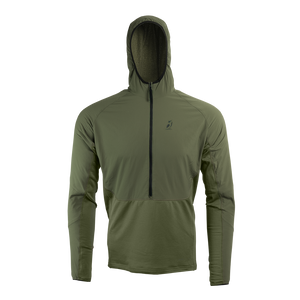
[00:58:29] Tayson: So how I initially kind of came across you as I think I I think I just spotted you in like I don't know it's like a suggested photo or something like that and you're wearing one of our jackets and your mushing dogs and I was like who's this guy? Is I kind of popped him in to our team chat and was like, hey, we should get this guy in the podcast, I'm sure he's got a story and then we'd kind of demons like, oh yeah, he's a triple crown or he's all this, you know, this is kind of funny to see that I guess. But when you're out with these dogs, are you using more? I mean, are you using a lot of modern layering system techniques or using? I don't know, massive. Moosehide parkis.