[00:00:00] Tayson: Hey, everybody. Welcome back to the Live Ultralight Podcast powered by Outdoor Vitals. Today we have a very special guest all the way from Finland. Teemu Hartikainen, which Brigham gladly pointed out was probably an easier Finnish name to pronounce, um, was our guest speaker on today. He is a through hiker and Nordic skier, uh, gear designer and wilderness guide. Um, he's covered around 7 ,500 miles across various trails from Finland's UKK trail to the Pacific Crest Trail. Um, and in this episode Brigham actually, I think you were the first person to talk to him at PCT, uh, trail days, but he was actively on his PCT, um, adventure when we met into Teemu and, um, Brigham became very fascinated with, with his backstory of, of doing these, these Nordic, uh, winter ski trips, dialing in gear for that, um, you know, all the way down to calculating things like fuel consumption and, um, it gets very granular. Um, and, and the details really start to matter when you're putting yourself into these very unforgivable, um, situations. So Brigham, you first kind of came on the radar with him and, um, found this fascination with, with Teemu. So, um, from the conversation we just had with him, what are some of the highlights that, that you see listeners wanting to hear?
[00:01:24] Brigham: Yeah. I mean, first is like kind of the overall, just breadth of his experience doing these, I'd say more unique, uh, trips or adventures where they're, they're, they're really expedition style. You know, they're, they're over two months long and they're in wintertime, you know, in Scandinavia into the Arctic circle. So just the, the, the uniqueness of the conditions. And, uh, I think it was, it was really fun hearing his, uh, lessons learned from one attempt from a trip and then, you know, going to the next, the same trip, the next year and, and making some, some substantial changes and seeing how that played out for him and improving his efficiency. Um, and then, you know, just again, the context of, you know, he's done, you know, the PCT, I don't know, 1 .5 times, you know, or whatever, and then, um, how different that world is compared to these long distance ski throughs, or I don't know, through skis. I don't know if what, I think that's what you might call it, but, um, yeah, it was, it was really fun. Um, kind of going through all the, the, the finite details of the, the decision making process even.
[00:02:37] Tayson: Yeah. So we'll go ahead and roll this interview, but I think you guys are really going to enjoy the, um, details that we talk through. I think there's a lot of lessons to be learned. I think, um, it's also interesting just to hear, you know, why he does these, these specific type of adventures, what he's getting out of them. Um, but I think you will all have something to learn from, from Teemu and I'm definitely excited for him. And then we'll talk a little bit about what he's up to in, uh, about a month from right now, he'll be starting a new adventure and we talk about that. So we'll go ahead and roll this podcast. I think you guys will really enjoy it and we'll see you guys on the other side.
[Editor’s note: This episode was released January 2, 2024. The upcoming expedition timing described here is historical and should not be read as a current itinerary.]
[00:03:11] Tayson: All right, Teemu, we're super excited to have you on the show today. Uh, we first met you at PCT trail days. Um, and I know that, uh, you, you still bring them away from, from our booth for a little bit of just, uh, berating him with a lot of amazing adventures that you've been on. Um, but maybe let's back up and just hear for a second about how the remainder of your hike went on the PCT. And then we'd love to jump into all of these other adventures that, uh, you've done in the past.
[00:03:44] Teemu: Thank you. I'm happy to be here to speak with you guys. So PCT from the trail days on, uh, it was a bit smoky in the beginning, going through to Washington. We kind of rushed it with my partner, Belma, and we ended up doing our longest days, uh, in Washington, which wasn't so good. I mean, it was so, uh, pretty, but we needed to kind of get to the border within our limits with the permit that we had. And when we got there, we did our flip back to, it was Bernie, where we flipped from Lone Pine originally because of snow and some injuries. And then we actually got permits to hike South from Bernie. So it was really exciting to be able to continue on the trail and also get the sober experience because we had been on the trail since March 8th. So we had a Long height.
[00:05:02] Tayson: Well. And this is your second time coming back to the PCT, right?
[00:05:08] Teemu: Yeah.
[00:05:10] Tayson: You'd attempted it in what 2019. And then this is kind of the come back and and re-attempt refinish.
[00:05:18] Teemu: Yeah, it's it feels amazing to finaly kind of been done with the trail started 2019 or years ago and didn't end up making it the whole way because we had another like heavy snowy year in 2019 and I had some timely. It's so after this era there were some More snow to cover and it was like to post. Holy to keep going and make it to my deadlines. So ended up waiting a few years and now finally able to do it. It wasn't Daisy. This time either even more snow.
[00:05:58] Tayson: So It seems ironic that snow would be a problem for you. Where you spend so much of your time in the snow
[00:06:08] Teemu: Yeah, I mean, there's no that we have in Finland, it's completely different what's on the PCT, so we don't have those mountains.
[00:06:19] Brigham: yeah, I think I mean it was It was really fun to to connect at the Trail Days event and I mean, the timing, the timing is perfect because again you're coming back the second time. and also, Just, you know, speaking to you about just the PCT and then some of the other things you had been doing and some of the things you've been planning. I was just thinking, How much more logistically challenging it is to do a through high. Or attempt to through hike and then have to come back and attempt it again. Just so the audience knows you live in Finland which is no close distance from the west coast of the United States. So yeah, I mean, can congratulations on even being able to make the arrangements and yeah, I totally understand how the the time constraints would be. Just a bit of a. Less common concern that most PCT hikers have in just a tempting or finishing that trail.
[00:07:28] Teemu: Oh, thank you. Yeah, exactly. It was hard with the logistics, he has coming from abroad. You don't really have the same kind of support system, if something breaks down, or you need to, like, send somebody some packages to hold some gear. Because we, we spend a long time on the trail. We changed here for many, many, many times. And, luckily, we had a friend, hike, the trail last year, and she connected us with someone in San Diego. And then they ended up helping us throughout the trail and to be honest, we could not have done it with out, so it would have been just Too much hassle with all of this. Gear changes and stuff. So At all.
[00:08:21] Tayson: I mean, if you're starting in March and you're finishing into the fall, you're going through a lot of different types of gear, right? You're, you're switching gear a lot and having to adapt to completely different seasons and then obviously different different climates going from the south southern part of the United States in northern part of the United States.
[00:08:43] Teemu: Yeah, basically, when we started in Campo the second day, we got snow on the trail. So basically we started with warm gear and Then we just hiked on and find out that, okay. It's going to be a really cool time in the SoCal section and we also have a ton of rain and we had all planned to go through this era early in the season, to kind of be better with all of the snow conditions and weather. but, That kind of backfired when I had my first injury on the second week on the trail. So I had to deny this on my ankle and we needed to wait around 3 weeks for that to heal. So, That already pushed us back a lot. And what do you think? And we need to cause that? Yeah.
[00:09:41] Tayson: What do you think? Caused that or well were you doing any pre-training or was there a fall or something or
[00:09:48] Teemu: This many contributing factors that I've tried to work out. Why? That was and I mean, I did some training beforehand, but it was Cross country skiing. So it was not like walking with the backpack on coming from that to like hiking its a bit different than hiking all of that elevation gain. And also I had a backpack because I wanted to bring a larger pack to fit all of the snow gear and everything warmer gear and I ended up going with a backpack that I had had some minor issues with the fit. Prior to the trail. But that okay I'm just I haven't just got used to the backyard. So I brought that and ended up kind of helping my pelvis and a position that's Maybe not the best for me, and maybe affected my stride. But you can you cannot know about those things.
[00:10:54] Brigham: yeah, it's a I think to give like the audience a little bit of context, I really appreciate that you brought up, you know, going from a lot of time on on skis versus hiking on, you know, just walking on the ground. I think we'll get into into that but I just for context on your background. I think it's good for the audience to kind of know a little bit about, you know, kind of what you have been up to like the last five years. If you look at kind of some of the things you've been up to, you've been spending a lot of time, let's say away from home or not you know, not necessarily sleeping in your own bed kind of out in the wild consistently for for years now. And I think that's pretty, yeah, it's really interesting and you know, in that context of you, you know, having going to the PCT and and, you know, having in an injury or, you know, some some issues like that. Yeah, just the difference is between the terrain that you spend a lot of time in versus going someplace new, I think sometimes there's You can only do so much and you know, some things are just going to happen. Yes, so maybe give us kind of a background on what you've been up to the last handful of years and what you're typically doing. And so that we can we think we can get some context for actually how the maybe the PCT is not as normal of A hike compared to some of these other things from from what I'm looking, at least on this list. Right? So yeah, give us a background on what you typically are up to over in Finland and Scandinavia.
[00:12:44] Teemu: Right. So hiking and feeling this a lot different than hiking in the US on this lump trails. I started doing the long hikes. five years ago, in 2018, I was kind of in a situation with my last that I wanted to do something different and I needed time to think about it and then I just started to do some digging with all of this. Backpacking gear. What can I do differently? And I found this old lost trail. That was about 600 miles. Long but it had never been maintained completely. so, that kind of my I'm just say it. I just got into this. Kind of Adventures mode that I wanted to go and try. If I could find the trail and if I could just walk along it because I will always been in the woods. I've been in this Scouts since I was seven and a lot of orienteering and different kinds of activities in the wood. So, just kind of natural to seek that space in the nature. and, To do that high. And then along that hike, I met my partner and she actually introduced me to the PCT. She had read the book Wild and she told me about this hike and she wanted to do it and then I kind of stole the idea from her. and, I hiked the rest of the trail and finished it and was already planning to fly over and try and hike the PCT the next year. So I tried that it didn't work out. Then I flew back to Finland and thought about. Okay, I have a whole lot of time to spend my summer, so why don't I go Another thing. So I looked around and found that there is like an 800 mile Trail in Sweden. That is also innocence. More of a Choose Your Own Adventure type of height that there are Trails throughout the whole height. But you can choose your own way. You can like change as so, I went and hiked that the same year that I first, first tried the PCT this Finland and the Swedish hiker.
[00:15:31] Tayson: They are they in the summertime? Like, are you going in the snow or you or are you not?
[00:15:36] Teemu: Oh, you can do both. So most people hike in the summer time but about one third of people who hide also hike or ski in the winter time. So you have a lot of different options and you can also like ride your bike on some of the trails on this little different activities you can do.
[00:16:00] Tayson: And you kind of alluded to this earlier. At least with the Finland, one is Is a lot of the trail, a lot more flat than, than say, hiking out west in the United States.
[00:16:12] Teemu: Yes, in general. It's really flat compared to any of the trails that you have. So okay it's forested, there's a lot of lakes. So there's a lot of water supply everywhere. You don't need to stress out about that and pretty much all of the water. You can just drink, okay? You don't need to filter sometimes.
[Editor’s note: This is Teemu’s historical personal account, not universal water-safety guidance. Snow, lakes, and streams can contain biological or chemical contaminants; use current local guidance and an appropriate treatment method for the actual source.]
[00:16:34] Tayson: Okay. So in 2019, you attempt the Pacific Crest Trail and then you also go and do this, hike and Sweden and then have about after that.
[00:16:45] Teemu: so, after the hike in Sweden, I got to thinking that. Okay, I'm down some Shortcuts in. Finland, during the time, just getting into other things, and I did. Think about doing the same Trail divided in Sweden to do it in the winter time as well goes to auctions. so, Me and my partner. We first tried the trial in. I think it was 2021. And I actually got injured along the hike as well again. And I quit and she finished. And the next year I went ahead and tried it again changed my tactic with the gear and stuff and then did it the next year and we are. So
[00:17:52] Brigham: that was that was 800 miles in the winter.
[00:17:56] Teemu: Yes. 800 miles in the winter through the open mountains in Sweden.
[00:18:03] Brigham: Was it farther north then?
[00:18:06] Teemu: So it kind of starts white South like middle of Sweden and then you ski or like all the way to the northernmost point of Sweden. So it's like there's a like a triple country border pointed, there's no way this Finland and Sweden that connects
[00:18:31] Brigham: Yeah, that's a it's, it's fascinating to me because if you think about, I mean, I love to hear your just kind of breakdown of a lot of different aspects of that, you know, how are you traveling? Was it all on. Skis, the whole time was worth their other modes of transportation that you were using. You know, were you staying in It was it a combination of huts and your own sleep system? Or was it, you know, 100% self-sustained with your own shelter? I, it's fascinating to because you're talking about the wintertime, basically, in the Arctic Circle and being pretty self-sustaining for. I mean 800 miles, I can't imagine that would be less than a couple months, but yeah, please. Elaborate, you know, on, on your your system, you know, you mentioned, you learned some things, the year, prior with gear and, and, and your your tactics. So I think that's really fascinating. I know when I spoke to you in Oregon, That caught my attention. You know, when you mentioned where you're going to be doing this upcoming year and your previous experience with you know covering that many miles in the middle of winter, in what I would say is very You know, in hospital. Conditions. So yeah. I Please. Operate on that.
[00:20:04] Teemu: yeah, so maybe I could start with what people usually do and what we did when We tried to Trail the first time, or my first event. So, basically what you do, what people usually do is they have their Nordic Backcountry during skis there. Long and skinny with metal edges and then you have a leather boot with that. So you kind of just I can snow on skis, that's basically it. And you do that by pulling poke or a sled behind you. So you need to carry all of the weight because winter gear typically is more heavy than your typical true hiking kit. So we started with all swaying in about 35 kilograms, that's something like. 75 pounds. Yeah,
[00:21:10] Tayson: yeah,
[00:21:10] Teemu: 70 yeah, around that. And we had actually done a lot of modifications to our gear, and we have made some some of the bags that we used in those books ourselves, and we had some gear that we made, and
[00:21:30] Tayson: So, quick question on part of that, that's a lot of weight compared to people are typically backpacking with. Where does the weight come from? Where you having really long? Fueling like between a resupplies as it really far? Distance is a lot of food in there or or is it just a lot of intense winter gear?
[00:21:54] Teemu: So both gear and food. We started with mine days of food. I think because we wanted to have some time to figure our routines out because it was like for first Very long winter break. So we don't want to have that flexibility with the food. So we had like 20 pounds of food. He Then you have few or the multi-fuel stove because those are more reliable in the winter time in very low temperature. So you have some of that in the weight but winter gear typically what you would use is a tunnel pain which can weigh a lot. And then you need to have worm sleeping bags. What we typically use is we use a down bag and then this lightweight synthetic on top of it, to kind of capture some of the condensation that you sweat during the night. So it doesn't get flat as quickly as it without. So that brings some weight and then clothing is probably one of the biggest ones you need to have so many layers, and Yeah, it can get really cold. We didn't have temperature or lowered and minus. And T, I think. Minus 20.
[00:23:25] Brigham: Sure Fahrenheit.
[00:23:28] Teemu: I'm not sure about the Fahrenheit is -20 Celsius. I should
[00:23:34] Brigham: That's probably like, my, you know, in the negative 10 to negative 15 ish.
[00:23:41] Teemu: Yeah, somewhere around that.
[00:23:45] Tayson: Okay. So this is your traditional, this is like more traditional setup for your first attempt. Right? You've got a 70-ounce sled. You're pulling it on Nordic skis. You're carrying nine days worth of food at a time and then just some lots of layers, you know, and some heavier pieces, like tents and whatnot. Yeah, that go for you then.
[00:24:11] Teemu: So it actually it went pretty well. We did something that people in Sweden, typically don't do with their sleds. They usually have these bars that connect to this led to give it in place, but we dated in the style that they do on Polar Expeditions with just pulling cord like a string, a rope and it kind of made the skiing in some sense easier because it wasn't like pushing you around when you went downhill, you can like steer it very well but it kind of it was this. I Troubled, that they would like to get stuck behind on trees and stuff, and sometimes I just lost control completely. So it gives it gave us some trouble, but it was okay. And then in other ways, it like our gear work as we intended it to work. But the thing is we prepared for minus 40 degree like whether that's what can happen, it's not often that it does, but if you get caught in a cold snap, you want to be safe with that because most of the time, you are skiing in Areas where? Where the weather can change rapidly and you can lose vision to white out. And in those conditions sometimes the rain is so that you cannot Safely ski on because you might fall. Away for something like that. So you just want to set up camp and write it out.
[00:26:03] Tayson: Is when the pretty big engineer is there? A lot of wind up there day in and day out?
[00:26:08] Teemu: Yeah. Yeah, there can be we didn't have that much wind in the beginning but later in the hike my partner she got caught in one of those storms. it was, I think 70 Mi an hour winds, so, That was.
[00:26:27] Tayson: Yeah, that's probably where things like that. Those tunnel tents are going to shine a little bit, right?
[00:26:36] Teemu: Yeah yeah. Just like for worse case scenario.
[00:26:41] Brigham: exactly, you know, for I so I'd say at this point, you have some quite a bit of experience. But you know, if somebody You know, how long does it take? Would you say, you know, for maybe somebody that is kind of doing this for the first time? to learn how long does it take to learn that lesson of the situation, you described when the wind picks up and it's a whiteout situation, that lesson of as soon as these conditions exist, you just stop where you are and set up camp because I I think, you know, a lot of people and, you know, in our probably side of the world where You may be have a goal for the day and some, some bad weather comes in, and there's a natural tendency to just push through. Even like, for the very experienced Backpacker, it's like, hey, well, let's just push through the rain or the snow or the storm just because but there's definitely a way less room for error in that scenario, you know. So I, I think it's interesting to think about, you know, how long it takes somebody to to learn that lesson and kind of already have that confirmed in the in their minds that as soon as this whiteout situation starts, then you automatically just stop and set up camp.
[00:28:07] Teemu: I think it takes a while and it's not. Many people. Learn it on the old, it's too late. They learned the hard way. So, I'm of the guy and that I like research, my conditions were, I'm going to every I do my research on that and I don't want to leave me. And those situations any further than I have to. So if there is A very good reason to keep going. You're out of food or something like that. Yes, I would do it, but Most cases, you don't have to. If you continue in those conditions where you cannot see and it wind is blowing you around and snow is accumulating. It's going to be very slow to get from A to B. It's going to be very slow it makes more sense but just stop. Wait it out a day or two doesn't matter. You can ski fast or when the weather settles down. So I don't know. It's we kind of in The Finnish contacts, April tend to look up to Polar explorers and what they do and because they kind of have that time limit that they only have a set amount of food and they cannot go any further. If they fall behind their schedule. They have to do it and the terrain is more flat so you can do it. So people look up to that and I think that's where the idea. pretty much comes from that, okay, you have this handheld GPS device and then you just follow that blindly and then you end up breaking your ski or like yeah.
[Editor’s note: Whiteout and severe-winter travel decisions are route- and condition-specific. This personal account is not a substitute for current forecasts, avalanche information, navigation planning, emergency preparation, or local professional guidance.]
[00:30:07] Tayson: Yeah. So, I'm I'm kind of curious to how long it takes you to set up your winter setup. Like if you did have a storm like this role in, And you need to set up your, your shelter and your gear. Is it is it a lot more difficult for you to set up that particular shelter is their adaptations? You're doing to that shelter with different types of stakes. Just some things like that.
[00:30:36] Teemu: Yeah, it's actually pretty funny because you would think that large strong winter, then it would take more time or it would be harder to set it up. But in reality, There are some tricks that you can do to make it faster than your typical any season and what you do is you Have the tent. Kind of almost ready to pitch at all times. You roll it up. You take the tent poles out of the channels like halfway through and then you have like tape them together. So there's only one joint where you just pull them apart and then you can kind of fold it only once and then you roll it all in and you just keep that on top of your sled. So when you need to set it up, you just pull out your stake bag, you take the stakes out, they have some carabiner clips that you can easily just click onto your tent and You basically just have like three stakes and and that is facing the wind and then you just kind of fall the tent open and connect the tent poles one by one. Just typically three or four of them so you can do that in three to five minutes if you train for it. And we do people, it's going to be even fast.
[00:32:08] Brigham: Wow. And with With anchoring your tent. you know, there's I think in I'd say non-arctic parts of the world, it's very common for people to take, you know, snow stakes and and maybe that's adequate. Maybe it's not. Was that what was your anchoring system? For setting up those tents in in short amount of time.
[00:32:38] Teemu: so I do use a snow Stakes as special on those flat open areas where the snow is wind back, so you can kind of in pretty easily but what I do is typically those no Stakes Have holes in them throughout the whole length. So you just take the middle hole and you connect a guideline to that middle hole and then you make a Deadman on her other fat in the snow. So you just sink it in and I'll just know, it's sights. And that's, that's what I use. But I know that if this noise like really powdery, it isn't backed it in those more forested areas that we have, a lot of people can also make some of those kind of makeup every back. and then you just click the carabiner to handle that and then you just that as your Deadman. Here's Barry a bag. Yeah. Basically interesting. Yeah, people people also use plastic bags sometimes.
[00:33:51] Brigham: Yeah, they're not or what are they feeling it with?
[00:33:55] Teemu: Yeah, yeah. You just feel it with snow and then you just bury it in the small. It holds pretty well. The more surface area, you have the better.
[00:34:06] Brigham: Yeah, that's that's super interesting. I mean, because the snow Stakes, they weigh a lot compared to Any normal, backpacking stake. And so a bag like if you could use like A lighter weight Fabric and a bag that's gonna weigh less than the snow stake.
[00:34:22] Teemu: Yeah, yeah. Typical like I don't know. Stay the ways like two to three ounces, but then there are those short MSR. These are ones that only way and owns each and you need To be bending on the 10th. You might need like eight to 12 of them depends. Yeah, and it's still a bit more weight. You can get by pretty light, but those are at the very minimum that you want to have it takes a bit more effort.
[00:34:58] Tayson: Yeah. So this particular hike, you end up, not finishing it, your partner finishes, but you come back to do this hike again. Correct. So maybe walk us through changes that you made lessons that you learned in gear and how you're approaching this hike for the second attempt.
[00:35:20] Teemu: Yeah, so the first, then for my partner, it to 70 days to complete it and it was mainly, do the weather. But because of the weather with sometimes, it did not have a snow to walk on. It was like we had a month of rain in the winter. We are weird. So sometimes it was just bare ground and you just walked along roads because he could really ski in the rain. So but she's got a.
[00:35:50] Tayson: So what are you doing with the sled? At that point? You just dragging in the ball.
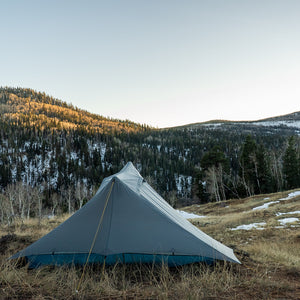
[00:35:54] Teemu: It's just drag it in the dirt. That's actually we we did install some Runners on the base of or folks and that helped they only have like a few scratches in the bottom so you can just drag it along the road. But what I was getting at was that that taught me kind of a lesson that okay. This kind of conditions can also happen that you cannot really drag this lid really well. And then when you go do your resupply, its kind of pain in the butt to just drag it along and try to find a place where to leave it. Because some of those sounds are like cities. You can apply. Leave it everywhere. And then transfer station wise, when you go to your starting location, we were almost Banned From a Train because we had skis and led and all kinds of backs with us. So it was a lot of hassle with that. So I ended up doing a switch over to a backpack instead. because, The traditional winter gear does not fit in the backpack or it would wait too much. I kind of needed to do a complete rework of what I was bringing us here in the winter time. So, I was familiar with the clothing systems. I had a pretty, like, lightweight clothing system already, but I left something out and swap something for different pieces. To kind of try things out. And then also, I switched from the tunnel pain to a pyramid style tent which does pretty well in the wind as well, but it's very lightweight. And what else, clothing,
[00:37:52] Tayson: you know, using magnet, you're not using like a hot tent setup or anything, right? You're just using just a pyramid. Is it, are you using like a floor or an inner in it or just more of the canopy?
[00:38:06] Teemu: so the pyramid and I don't use a hot tent, it's A bit too much hassle with the firewood and on the open areas, you cannot really find any. So it's it's not really efficient where we do this as a groups. But what we do with the tunnel tent, anything with the multi-fuel stove, you need to be really careful when you bring it in the pan because you can have carbon monoxide build up and you can have like a large flame if something some gasoline leaks. So you need to be really careful with that. But what we do is you bring it inside the pen and it will actually hit and up so much. So that even if it's like minus 30 outside, you can just Hang out with a t-shirt on so it stays warm due to the multiple stoves. So it also has that purpose that I can drive some of my gear and to make that process more efficient. I had a solid wall inert and like I have in there for the pyramid tent, so it kind of retains the heat better and also because you will have a lot of spin drift snow like getting into the tent even if you have some snow around the skirt of the other ten but you will always have it. So it's good to have that solid inner. But the thing is that those haven't been on the market. So it's hard to find them. You need to make gear by yourself or find something that almost works.
[Editor’s note: Fuel-burning stoves can cause carbon-monoxide poisoning, fire, and fuel-spill hazards in tents or other enclosed shelters. The preserved account above is not an operating procedure; follow current stove and shelter manufacturer warnings and qualified winter-safety guidance.]
[00:39:48] Brigham: So yeah, you had to kind of make a custom inner tent for the pyramid that you had.
[00:39:56] Teemu: Yeah, I ended up finding a fitting. Nerd. And For the shelter I had at the MLD Duomid XL. and I found an inner that was almost compatible with it, but I just added some Some adjustments to it so I can find it better and I have more room in the end.
[00:40:19] Brigham: yeah, I remember when we when we spoke and in Oregon, you explain that to me and I I was I was really impressed with with that. technique that you used, I mean, and maybe you can elaborate a little bit, but That seemed like a really. Important part of your logistical system and maintaining your efficiency to accomplish that that trail in the amount of time that you had safely. So I mean maybe just Explain. How the how you use that to your advantage, not just to be warm, but to probably dry out gear and be able to keep on on your your schedule. So,
[00:41:12] Teemu: When my gear got more lightweight, I could ski faster and because I didn't have this led dragging behind me. I could also ski faster. So my speed sometimes doubled. Compared to before. So that was a huge Factor. and, You also do have some like Wilderness Hots in Sweden and you have some wind shelters that you can use to your advantage when if the weather is bad, you can. Also sleep in those. So you have some margin of error. So I hadn't used the pyramid 10 before in any strong storms. But I asked around and did my research and I found out that okay, this should work well enough. and on my second attempt, I did run into some situations where it was really beneficial to Have that strong? Strong system as a pen. oh, I did have some Strong storms and it stood. Well, so that's good. And yeah, my second attempt was a lot more quicker, so I skied the It's called Vita Bandet, or White Ribbon in English a skid, the second attempt in 52 days compared to the Senate days before. So, It does have a huge effect on. Yeah.
[00:43:04] Brigham: Just cutting down the way and then having more Mobility without the sled. Yeah. That's that's pretty remarkable. What if you break that down? You know, what was on a slow day? What was your average? Slow day mileage versus your average efficient day. Mileage.
[00:43:28] Teemu: Oh, so there are some things that you need to factor in when talking about like average day Pistons travel and is because when you start in typically February, I started in the middle of February. So when you start early, the day's are short and they are older and later on. And On this short.
[00:43:55] Tayson: Yeah, it's gonna ask you like, how much time do you really have that far north in the winter months?
[00:44:01] Teemu: well, it depends I see as you go on, but I think it was like from I would want to say 8 a.m. to Like, 4 p.m. At the beginning. So it's not very short because it starts quite down south. So, Okay. It's not as short as it could be but still it's kind of that you need to be efficient at during the day if you want to still makes a lot of time.
[00:44:32] Tayson: In a tent on back to back to back days, right? Because like we'll go out winter camping and, you know, you spend one night in there at like you got like, 14 hours or something feels like in your 10. It's like that's seems like a long time, but that's one night, that's not like over and over again. So Yeah, I'd love to hear about that but continue on I guess with with the original question but just something to note. It's it's a totally different situation than most people are used to backpacking in, right? So
[00:45:04] Teemu: Yeah. Yeah, you have some duties and chores to do at the camp. It will take hours of work to melt the snow and have the water supply for the evening and the next day. And then you do it in the morning to fill up the reserves as well. And it takes a lot of time. So yeah, I want to get more.
[00:45:28] Brigham: Yeah, I wanted to get into that with when I mentioned earlier, you're you're tent and stove system is almost one of the most important systems that you have. When you talk about, logistically accomplishing your trip. It doesn't just keep you warm. It doesn't just heat up the water for your food. But as with you've got a clothing system and a Sleep System that are constantly accumulating moisture. And you also have to drink water to function physically as a human being. So, maybe elaborate on that. How are you dealing with? I mean, that's how are you calculating, how much fuel I mean? Even just knowing how much fuel to pack to heat your food that alone is An important thing. But now you have to know how much fuel to pack to you know drink water, as well as dry, your clothes out. So maybe you could kind of talk about those things hydration. Food can consumption and moisture management.
[00:46:36] Teemu: Oh gosh. I always I always have the same mistake. I do not jump down. How much fuel has been? So I, every time it gets to the winter season, I need to kind of find out how much I use each time again. I have a bad habit of that, so I don't know. It's like one of those meets size models, I think I use About four to five days by myself. So I I use a tiny bit of view compared to what most people use. so, it's gonna be or we may be on a few, I think. So weak. So yeah,
[00:47:22] Tayson: how are you melting snow? You know what I mean with that amount of fuel? Like to me seems like fuel is kind of the lifeblood here. Like, you're gonna be burning a lot of it to both melt snow to dry clothes to, you know, Food. So, How are you melting? Are you melting snow for water? I mean is that your water source or
[00:47:46] Teemu: Yeah. Most of the time it's coming from the snow. So, You just end up sitting there and adding some snow on your pot and then you kind of stir it around to make the process faster and you just keep doing that. Most of us. But yeah. Yeah, you have the stove on and then you just, you always need to have some water left at the end of the day to pour it on the bottom of the pot. Because if you don't have that, you can burn through the pot if you just add snow. So you first need to have that seat water in the Pot and then you just slowly. Keep adding adding that. Snow in the mix.
[00:48:36] Tayson: We have slow process though, right? When I do that. Yeah, I can take me, you know, sometimes I've done it for, I feel like hours, but she you're not running your stove for hours. I mean, right. You're
[00:48:52] Teemu: It takes about an hour, an hour and a half to do all of the duties in the evening for me. So most people boil, it also just to get rid of any any Bacteria or whatever might be in the snow but I don't. So I just melt it and leave it at that to make it more efficient poise. so it takes some time then I This actually is one of the best tricks that I learned. I don't know where I learned it from, but you kind of punch a hole underneath your sleeping pad to the snow and then you place your water bottles in there and it stays liquid overnight. So Yeah, that's a social. I,
[Editor’s note: Teemu’s choice not to boil melted snow is preserved as a historical personal practice, not water-treatment guidance. Melting does not by itself disinfect water; use current local guidance and an appropriate treatment method.]
[00:49:44] Brigham: I learned that from my dad when I was in Scouts probably 10 or 11 years old, we would do winter camping trips and We would always take a big. Container of water. Probably two gallons, Maybe. We would haul it in with sleds and he would always boil the water. Right up until the second, we left the house, and then he would pour it in a jug knowing that when we got to Camp, all we had to do, was bury it about, you know, a foot or two under the snow. And that water would remain liquid for, you know, hours, probably more than 24 hours in there and I've always been fascinated with that. And so that was that's a familiar, you know, technique that you mentioned. So that's a good one.
[00:50:37] Tayson: So, so you're running such just so that I get this straight, you are running your stove for almost an hour every day.
[00:50:45] Teemu: Yeah.
[00:50:46] Tayson: Okay?
[00:50:46] Teemu: And you also can use the same heat, it's not going to be asked warm if you have the pop on top of the snow but you can also like hang your sleeping bag on your shoulders and kind of lean more towards the heat so you can use that as well. Yeah. So you can just try most of the gear that way and some socks and gloves that I use, I just used my body heat to like cry them during the night or during the day when I'm skiing and swapping outside and blah, it's Using everything that you can. Like, if you have running water available in a stream somewhere, you just go and like that instead of melting the snow, anytime you get the chance to do it. Safely. And sometimes on those wind shelters or Hots. You can also use wood stove to melt the water, so you can say quite a lot of fuel. I using everything that you have around you
[00:51:55] Brigham: I mean. it just sounds like efficiency is the name of the game. and, You can only learn. You can only gain these efficiencies by refining as you go, you know. I, I would imagine you were Way more efficient, 30 days into the journey at then you were after five days. And and, you know, five days. That's a pretty substantial amount of time. For most people that work would do a backpacking trip in these conditions if you think about most mountaineering attempts, you know, that's commonplace for them to hydrate by melting snow. um, but most Summits are, you know, a two or three-day, Climb at best. And so, you know, they're The, the importance of being efficient with fuel is important for them but it I think it's a new, an entirely new level when you're doing it for days and days and days on end. In those in those, in those conditions. Yeah. It's it's fascinating. And then I think for People Like Us at, you know, maybe you're going to do like, one or two nights in the winter or or not, even winter camping, but you know, when you mention putting the sleeping bag over your shoulders and you know your mitts or your gloves against your body and using the sleeping bag to contain the heat of the stove, but also dry off and and get rid of some of the moisture that accumulates That's amount. That's like a level of Intricacy that most people on a normal backpacking trip or just their their it's not going to be worth it, you know? Because you don't have to carry that much fuels. So or, you know, you you're going to be done in three days. So why bother with The just, the finite little details of draping a sleeping bag over my shoulder while I'm by a heat Source melting water to drink. So it's it's super fascinating. I you mentioned something to me, you know, a trail days that you, you kind of figured out in order to distantly, keep your clothes functioning properly and drying out you were, you know, you were turning on your stove. Or you're doing something, where every few days you would turn on your stove and, and you would heat the tent up for certain amount of time, could you go into that a little bit?
[00:54:44] Teemu: Yeah, so basically on top of the Everyday duties with the water, snow melting. I would also run the stove once a week. Usually just for maybe 30 minutes to heat them up, even more and then For the accumulated moisture. In the sleeping bag, most importantly, most of the other clothing is going to be dry. Most of the time, or if you're older, jacket is not dry. It doesn't matter because it's gonna freeze, and when you put it on in the morning and it just ski and it's dry as you go. Like, I've been putting a lot of thought into my clothing system. Choosing the materials that do not soak in too much water or moisture. They don't retain it, they just let it true. So, there's a lot of mesh, kind of Layers nowadays. To allow for that. Use a there's a Scandinavian company over there, that has a Like Nets these kind of netting for for base layer. Do you have ever tried those? Yeah, Brigham actually he recommended the Brynje base layers to me but then that kind of Sparked me a memory that hey, we have something like this in Finland as well. Svala who makes the same kind of holy properly in Mesh base layers. That's our really light and they just if you watched them and you like, They dry pretty much instantly when you just grind. And Yeah, we have those as well, so I'm using them nowadays. It's going to be for my next trip when I have that base layer. I've been like running with it on like, for the best two months. Now just testing it out. Testing it cool.
[00:56:52] Tayson: Yeah. So I want to, I want to go back to kind of drying out gear and you're sleeping bag because that is It's really interesting thing, right? Because one of the best ways to dry something out or I don't know if it's the best way, but one way to dry things out is to actually sleep with damp gear, right? So but there's pros and cons of that, right? Sometimes sleeping with ampere can take away too much heat from you introduce moisture into your sleeping bag. You know, and sometimes that that isn't a factor but sometimes it isn't and what you're doing back to back to back days. Like this, you know, what did, what do you have to share or what have you learned about, you know, drying out some of these layers? I imagine you're probably trying to dry out socks every day, base, layers, every day, maybe a pair of gloves every day or something like that. So, you know, how would you attempt this? Would you sleep with your gear or is that kind of something? You decided was just not worth it? I'd love to just hear about your drying techniques of some of these pieces. Okay.
[00:57:55] Teemu: So basically if you did everything as efficiently as you could, you wouldn't need to like worry about your sleeping bag, getting wet. You would be using a vapor barrier like layer inside the sleeping bag where it's basically a trash bag that like collects all the moisture in that you sweat overnight. I didn't use that because I'm too much of a Comfort guy. I might get into it later on, but Waking up. Damn. I don't like it. So I'd rather just dry my gear. Every once in a while and about like getting in the sleeping bag, I tried to have a dry clothes on so when I'm getting to Camp, I slow down so I don't sweat and I give my body some time to like Heat up my layers. And if the like, He immediately is not too high on the outside. You can kind of just slow down and let your body do the heating and made rice your gear over. Let's say 20, 30 minutes of the last last Milestone, you're hiking and Then when you get to Camp, you just also are going to spend with the pyramid. And it's gonna take about 10, 10 minutes to set it up. You just spent some time, like, doing that. It gives you warm. So, during all of that time, I typically have almost dry clothing on me, even if I sweat during the day. So that dries, most of it up, it's going to be a bit of like energy loss with that, but it's not significant. It's just better to not spend your Pew doing that. and, then when I get to the slating stage where I drive, Socks that I still have kind of damp from the day. I just put them up like on my layers, like between layers, on my shoulders. So everything is kind of like around the neck or the head area where you will. Anyways, be like braiding out and it's going to be exposed over there. Yeah. So that's where like yeah, so it doesn't like get Pulled into sleeping bag.
[01:00:28] Tayson: Yeah, that makes sense because a lot of times when I've attempted this myself, I'm putting I'm putting wet. pieces of gear, or damp pieces of gear down into my footballs And it's just totally trapped in there, right? It's it's and so it can, I mean, eventually in a perfect world that that Vapor can push through the layers and exit the sleeping bag. But I wouldn't say that it's A guarantee or have had times when like maybe a sock or something like that, kind of gets rolled into a ball and shoved into a corner and it just doesn't get dried out versus, you know, like you say laying it up here, you know, you've got a lot of heat in your core but also it's spread out, you know, it's not crumpled in a ball. There's there's air movement, every time you're rolling over and things like that, you're at least getting some air movement, so that makes that makes a lot of sense to me.
[01:01:26] Brigham: Yeah. Yeah, I think I mean you mentioned, vapor barriers and and that I there. It's a proven technique especially in polar regions and and Expedition type travel. It, it is a proven technique but I I appreciate you explaining your way of doing it because that is also a proven methodology to accomplish the same thing, which is managed moisture, so that you can continue on the journey, right. And so I to me, like I think you know the the biggest lesson is either technique requires like being consciously, deliberate And intentional about such small details, like Tayson mentioned, you know, we we can get away with most of the time having damp socks in the foot box because the next day, they will have dried out mostly but our conditions are not so critical. you know, even if it's like two or three days, but that extra step of being deliberate and intentional about, you know, with Putting the The Damp pieces up against you know, the warmest part of your body where they have the room to evacuate the moisture. That's that's, you know, drying off. Yeah I think either way It's, you know, to maintain the efficiency that you need on this type of trip. It's it just requires that next level of of detail and like discipline, really. I mean, there's, there's so much just sounds like there's just so much discipline required to Just maintain.
[01:03:15] Teemu: Yeah. Thanks a conscious effort to do it over time over a long period of time for sure. And one reason I haven't been getting into those things that building something in your food, folks of the sleeping bag like a cold feet. It's just It's so cold down there that it would not try know people. Just there's some people that They have bad circulation or whatever it is, but I know.
[01:03:52] Brigham: Yeah, you're not alone for sure.
[01:03:54] Teemu: Yeah. But the most important part, I think to keep dry would be the boots. like, if they get damp, Like there's no way for the moisture to escape during the day, even if they're like breathable membrane. Boots ski boots. It's just it stays wet, it will freeze and it will freeze your nose. So yeah, that is actually where I use vapor barrier. So I just have these socks. I have a thin liner inside them and I just swap them out once a day.
[Editor’s note: The audio and context clearly concern cold-injury risk from frozen, damp ski boots, but repeated bounded decodes did not resolve the final body-part word reliably. The preserved transcript says “nose”; understand the risk here as involving the feet or toes, not as a verified verbatim correction.]
[01:04:34] Brigham: Do you do the vapor barrier? Do you do your Vapor Barrier sock against your skin or do you do it over the sock?
[01:04:42] Teemu: So I have a thin liner against the skin. Then I have the vapor barrier and then I have a take wolves all over that kind of just to keep it in place and give me some more insulation.
[01:04:54] Brigham: So the only thing you have to dry out that really thin line or sock.
[01:04:58] Teemu: Yeah, and it can be managed with body heat.
[01:05:03] Tayson: Yeah. Yeah. That's that sounds really smart actually. Something that thin and light is going to dry out really quickly but it probably keeps it much more comfortable inside that Vapor Barrier sock. So yeah, it seems really smart. So you know, you you go back, you you do this hike. The second time you finish in 52 days like you dialed in your systems a lot. Probably I mean just from the way you talk about it too. Feel like you built a lot of confidence in these type of conditions. And now you've got your site set on another even more lengthy trip, right? So maybe walk us through what you're about to attempt and if there's any Any changes to gear or how you're approaching your gear for such a crazy endeavor.
[Editor’s note: The moisture, body-heat drying, vapor-barrier, and ski-boot methods in the preceding block describe personal expedition practice. Cold injury and insulation performance depend on conditions and the complete system; do not treat this as a universal layering or drying protocol.]
[01:05:57] Teemu: Yeah, so my next trip is going to be me heading to the southern tip of Norway. and, Attempting to ski through the whole country all the way North to the northernmost point. And that's going to take about three months give or take a month or two depending on whether and about 1700 miles on skis.
[01:06:31] Brigham: And when are you doing this, excuse? sorry, you're starting when
[01:06:38] Teemu: yeah, so this a few factors in play that are changing currently but I have a very similar kit As I had on my last Sweden trip. so, I am preparing to start this in about middle of January, but it's James that they're will be short delay, because My backpack maker is. Sick. So I'm back isn't here yet. I need to steal best running and yeah, so it's gonna be Kind of a late start, but I don't mind. I got room to play. Yeah, so
[01:07:25] Brigham: Middle of winter skiing from the southernmost point of Norway to the northern most point. Of Norway. Yeah, you miss you on your Sweden trip. You know, you you were twice as fast basically on your feet. You had dialed your weight down significantly. What do you expect or what was your your day-to-day pathway on that last Sweden trip? And what do you expect that? It's going to be on your Norway Expedition.
[01:07:58] Teemu: Okay. So my back way, for the Sweden, Sweden ski tour was about. I think the base weight was around 19 pounds or something along those lines. mine, three kilograms for the metrics out there and I dropped it down by like, Two pounds butt and of the I because it gets more brooches. So I'm going to do the same his time. At my starting way is going to be just about the same 18, 19 pounds. But that is going to be me bringing along more electronics and Some other gear that I'm testing out and that's kind of going to add to the weight, but I'm going to be more efficient with carrying water. So that's kind of going to make the overall system more lightweight. And then one interesting factor in play as well, is that with skiing equipment, weight is not always everything. So my Skiing kit. I have tried to make it as light as possible but with The skis, I'm using the design of the ski has more to do with the efficiency and a few ounces here and there. So put some effort to finding out the best system for that.
[01:09:35] Tayson: So quick question on the pack what kind of capacity of Packers you or using, how big is the pack?
[01:09:44] Teemu: For this, we didn't trip. It was 55 liters. And for this time, it's gonna be 60 to 70 liters somewhere around that.
[01:09:54] Tayson: And then for the the skis, I mean Norway, I don't know, I guess I mean I have never been there but I'm I'm picturing. There are mountains and things like that. So are you ever using skins on your skis or what kind of skis are you moving into?
[01:10:12] Teemu: Yeah sometimes but if I use skins, they're going to be kind of like a half-length kicker skin underneath the food. So many manufacturers of this kind of skis, they have this kind of connection that you can just like click it into place and then Kind of having just underneath the food. So it doesn't drag you down so much that, like, a full length skin would do. I'm mostly going to be using flexible skis and then just using this skins when I need to and I found it that those kickers Skins are going to be so patient for me to climb like straight up all kinds of angles that I need to. So it's not going to be like straight up straight down. It's gonna do the job.
[01:11:07] Brigham: Yeah. I mean you're gonna be you're gonna be taking the most efficient around, you're not going on an Alpine touring trip where you're trying to you know, You know, run run circuits in the morning and get up and get some downhill time. You're you're trying to cover distance and so I imagine you're going to be focused on that versus. Finding good a good run for, you know, a morning.
[01:11:32] Tayson: So are you staying with the long Nordic ski still like longer, skinnier skis?
[01:11:38] Teemu: Yeah, actually went even skinnier from the skinny skis, I had and even longer. So I went longer and skinnier and with more, I don't know how you pronounce it camber. Yeah. It's it's a it's a rare. And around here. So, yeah, more camber and more stiff so it's gonna get get me to that better taking Clyde experience.
[01:12:05] Tayson: So what are you looking at? As far as like miles per day that you're you're estimating on average for this upcoming trip?
[01:12:15] Teemu: so, in Sweden, I did Just under 20 miles on average per day, I think. And in Norway, I'm matching. It might get a bit higher but in the beginning it's gonna be slower and Later in the season, it's going to be faster. So it's hard to estimate but I'm thinking it's going to be around like typical day when I get into like the written of everything. I think it's gonna be like 25 miles per day, but I know I did some longer days in Sweden as well so if I now have more efficient kit and skis I might be just doing more. It depends on whether and everything.
[01:13:04] Brigham: Yeah, I'm also curious how many days of food are you carrying at one time?