[00:00:00] Tayson: Hey everybody. Welcome back to the Live Ultralight Podcast, powered by Outdoor Vitals. Today we are going to be doing a trip recap on a trip that we just got back from last week. This was a trip that we tried a year ago and had some issues with I guess you could say didn't quite go, our way due to some weather conditions. Deepness of the snow and things like that. So we wanted to go back and attempt it again. This year, it's just a phenomenal mountain range that we have in our backyard and so going in and summiting this peak is something that we wanted to do for a while. So, What we're doing today, we're going to talk through that story and we talked through, I don't know lessons, learn gear choices and hopefully just have a good time. So I'm gonna crack open a soda here and we'll dive in. But how you doing today? Brigham.
[00:00:48] Brigham: Doing well, it was spring yesterday. On February 1st but it's so nice back to Winter. It was I was actually glad that didn't snow was much as I thought it would like last night in this morning, basically not. But yeah, they I think that whether companies make all their money on over predicting bad weather so that you Checking the weather and they get more ad clicks. That's my prediction because yeah, I mean it was like it's gonna snow last night and then it changed to snow this morning and then
[00:01:20] Tayson: well there's a short got 14 inches which is pretty good. Like that's, that's good mountain snowfall but I was expecting Yeah, to just be. Kind of rain and snow all day today. Do you remember when we attempted this last year? Those two February.
[00:01:36] Brigham: That's two years.
[00:01:37] Tayson: Two years ago?
[00:01:38] Brigham: Yeah.
[00:01:38] Tayson: Where does last year, go? What, for real, we didn't we didn't try that last year.
[00:01:42] Brigham: No, it wasn't last year, two years ago,
[00:01:46] Tayson: Wow. that messes with my head a little bit time is absolutely flying, but wasn't it, February
[00:01:57] Brigham: Yeah. Yeah, it was I mean it was like, typically here we've got somewhere time frame. It's got a pretty good base of snow by February
[00:02:03] Tayson: this year. We attempted it a couple weeks earlier just end of January. But it hasn't been as snowing, but we've got a lot of snow on the forecast. Right now and through the next little foreseeable future. So we'll see if it starts to accumulate again. But Yeah, other than that. Any anything new I guess obviously you're always working on developments, things like that. But any other New exciting things around the office before we get into the story.
[00:02:36] Brigham: Well, I mean yeah. There's You mentioned some developments stuff, which is appropriate for. Kind of the podcast today. There's, there were several items we were Doing some good field testing on that. We've we've had for a while but it was This was a good trip to kind of have them in their, in their element.
[00:02:58] Tayson: Yeah, I like about head to toe we were we were testing things in the tents out of the tents, just the whole time. So yeah, it was a solid solid trip. In that sense. Yeah for sure. Well, we have a lot of developments coming in. If you didn't listen to the State of the Union podcast, we will preface that we don't have quite as many brand new products as last year last year, was one of the biggest launchers you've ever had. But a lot of that was fueled by delays and covid and then kind of everything stacking up but we do have a lot of products under development and there will be some product launches. And so stay tuned at that. And and as for the usual, if you follow us on YouTube, you may get some some little peeks of things, but a lot of lot of fun stuff coming up. A lot of stuff. I'm really about, but So let's, let's step backwards just a little bit to what this trip is and how kind of our experience on the first attempt. You can go find a video of this from, I guess, two years back now. Where I can't remember if the title of the video might be something like, you know, negative 15. Degrees. There's a coldest weather or something like that but it was a super cold trip. The last time, the idea is though, that we go in we we start from a highway that's that's paved. It was up to a ski resort so we start right off the highway we Snowshoe in and essentially where we're able to follow a bit of a road for, for most, well, for over half of it. And then we tee off and go straight up to a 12,000, almost 12,200 foot Summit. This is the third highest mountain range in Utah. So kind of third highest mountain range Peak here. So it's a very tall peek. It's very, very exposed and we had this idea of, hey, let's go try to Snowshoe up there and see how it goes. Now, the first attempt that we did we really just should have moved the trip dates. We were pretty sat on the trip dates that we did. Out and it was we had we had received like two feet of snow and some of these areas over the last 24 hours or so. And so the basically it was probably the one of the best definitions of just like A mental. You know, slug Fest or you're just the farther, we'd go up the more deep. The snow would get so that more tired, you would get throughout this hike. Deeper and harder, it would be to move and there hadn't been any like snowmobiles on the road and like that, we're just totally breaking fresh powder and so at the start it might have only felt like we were, you know, going through a foot of brand new powder on top of a very big, you know, kind of base of snow. And then the farther we got up to the point where we were really pushing about two feet of snow. Like our snowshoes, we're sinking 18 inches or more or more into the snow maybe 20 inches. It was intense. We were, we were basically switching who was breaking the trail, every like 100 100 150 yards, because it was so exhausting to be the lead person. And to go, the four miles into Camp. It took us like four to five hours. So I tell you just how quick.
[Editor’s note: The preceding opening includes March 2024 product-development, YouTube, membership, weather, route, snow-depth, travel-time, and summit-intent statements. They are historical speech, not current availability, promotion, route, avalanche, weather, pace, or summit guidance.]
[00:06:16] Brigham: Yeah, it was, yeah, it was a little over five hours back up real quick. So, when you, when, when When you say we start up right off the highway and we go up a road. We're not actually walking on what you would think of as a road. It just means the route. We're under the the road is buried under feet of snow, you know, so it's not we're not having this convenience of walking on a road. So I think that's an important distinction. This is a winner trip where we're wearing, snowshoes from the truck and The route follows, what in the summertime is a dirt road but in the winter time it just becomes a route that's, you know, under 6 feet of snow so there's no comp. There's no packed snow. It's not a groomed Trail. There's sometimes snowmobiles that take that that route but on on this date there had been none. So yeah. Like as you described You know, with snow shoes, one of the I guess. Misconceptions for the, the uninitiated or the inexperience at snowshoes. You just walk on top of the snow. That's the case if it's packed snow. But you know, when you talk about, there was probably a base of like four or five feet and then we had gotten Pretty quite accurately about two feet of snow. You know leading up to the morning that we started. It was actively snowing when we started. So now You know, we're we're starting on. From the trailhead or where we started you? Yeah. You're sinking about a foot, but every, you know, 200 feet that we went up in elevation, by the time, we're halfway to our destination, we're at least syncing to our knees. Every step this is with snowshoes. I have very high flotation snowshoes and you know it was still the case and and it was uphill the whole way. So it's almost like The snow shoes. Never like cleared the plane of the snow surface. So really just like holding a pilot snow on top of the snow shoe. Yeah and so it's like you have resistance, you know, when you lift your knee and when you drive your foot forward and so I was telling Derek on the way up this this last time last week, to kind of describe what it was like, because as we'll get into it later, the hiking conditions were much better, but I was like, hey, just for some perspective, there was a point and it's in the video. The last video do you remember like when there was one point where you like, hey, Just so, you know. In the last, I don't know. You said something like in the last like five minutes, we've gone like 100 yards or something. Something like that. Where like to give you an idea of that pace like its it was less than one mile an hour. I mean like that's all
[00:09:21] Tayson: outgoing. Like that's that's like Max maximum.
[00:09:26] Brigham: Like yeah, maximum speed. And and it was where we were probably like the last 30% of that trip. We were probably switching out like every 200 yards who was in front just because it's, it's probably at least twice the work to be the front guy. When you're nearly breaking Trail through the powder. Yeah, it was, it was a
[00:09:51] Tayson: physical a physical trip for sure. Well and I, I want to preface the in this podcast. We are going to talk about a ton of Year from snowshoes to just a lot of things that we were using and and why we do these trips, right? That's going to be kind of something that we talk about, but To come back to it. You said this multiple times. You said it again, on this trip, you set it on the last trip. Every time we go out on snowshoes, I feel like a quote that I'm gonna hear from Brigham is snowshoes are not an efficient way to travel in the back country. It's like this, there is a misconception that because you have snowshoes, like you're, you're Trucking along you're moving and the reality is There's nothing efficient about a snowshoe, it just makes something that would be impossible. Possible. So, I don't know because every Snowshoe trip is so different. I don't know what I could even say as far as like an average speed with the Snowshoe because it it's so dependent on the trip. You're on. Yes, it does make it possible. Like going through that trip last year I mean we wouldn't have made it a couple hundred yards. We just would have been posting all the way down to our thighs, or deeper, and we wouldn't have made it, you know, more than 400 yards from the vehicle before we just would have turned around. So they did make it possible for us to get the four miles up to where we were where we camped but they're just, they're not efficient. And I guess first piece of gear to talk about would be snow shoes themselves. I was testing and I would say testing. I'm kind of just always testing I bought and I used a new pair of carbon-fiber snowshoes from Komperdell We've been huge fans of Komperdell poles. Absolutely love their trekking poles. In fact, they're in in the live Ultra Lite membership for purchase and and so I wanted to try out some of their snowshoes and they had innovated. This brand new carbon fiber, ridiculously light Snowshoe. so, I've been running them for, I guess, two years now and that was, that was interesting because Brigham is using the MSR Evo, the model of that
[00:11:56] Brigham: Evo Ascent.
[00:11:58] Tayson: And old though. Yeah, they're older. But they're like, they're like, kind of that composite or plastic deck, have an extender Autumn versus the one I have, you know, mine are 25 inches, but they've got some holes in them and they're just really focus on being super lightweight. And this trip really highlighted, the My lack of love for them, I guess you could say, in fact, what, we'll get to it at the end, what, what my full consensus was. But with snowshoes, it's interesting because it's not just about the weight of a snowshoe. When you talk about like let's say Trail Runners, right? Like the weight of a trail Runner or the weight of a hiking boot is so important because you're just logging so many miles and yes the tread pattern matters a bit like you want to, you know, but most but so many of the name brands Shoes have a good tread pattern already, like they're gonna have good grip, they're gonna have some of these things and so really like weight and just comfort, you know? And then the amount of cushion is what you're looking for there. And so, I took that kind of philosophy of like, all right, wait on your feet, just Stacks up so much with these carbon fiber ones but really, they're flotation. Just wasn't isn't quite high enough. And for me, you know, I'm just sit about 200 pounds, most of the time, and Yeah, I like there's there's kind of some hexagonal holes in them that that allow a little bit of snow up and through there a little bit less flotation but it it makes for probably a lighter weight piece. And then I don't have the ability to like add length to it which which like bring him so he can add a little bit more length to his and kind of Custom Tailor that for the snow conditions that were in. and so and the last thing, which you'll definitely see if you watch the video to come out those things because of, I think, I think because of the way that they're built with kind of the ridge around the outside and also the hexagonal Cutouts in them, they get snow on the deck and then it checks the snow. At, at the back of my legs, my butt, it'll flip it all the way up and down my gloves and the back of my trekking, poles often just Like, snow caked onto the back, depending on the conditions. And so, for this particular trip, those weren't the Snowshoe. Now do I hate these snowshoes know I think that for what they if they're designed for light snow you know, less than six inches or even groomed Trails for sure, take them, they're stupid light and efficient but for a rugged Mountain ascent and powder. Yeah, not what I was looking for in a snowshoe but I don't know. Like if I was to look, I mean, I think the ones that you have Brigham are probably the best. What do you think? Makes those snowshoes great? Or what do you think? Are things that people could look for in a snowshoe? Yeah, I would say. first, I'll talk about like what to look for in a snowshoe and then my kind of my recommendation based on a lot of experience with them. So, you know, The size and basically, the length.
[00:14:59] Brigham: And, or width of the Snowshoe is the biggest contributing. performance factor for call it flotation. But remember, you're not floating on top but just the maximum resistance to sinking, so we'll call that flotation. So, the longer, the, the shoe, the Snowshoe, the better or The Wider, but in when you're covering a lot of miles, length is better than with. Because now, you're having to spread your feet out farther, which is going to create a lot of stress on the joints and make you less efficient over to miles. So length, let's talk, let's say, like, I would say look for a good length of Snowshoe and then the decking There's some that have like an aluminum tubular frame with, like, kind of a vinyl or a PVC decking. And that's the basically, if my hand is the snow shoe, it's what's filling in all the space, and that creates resistance on the snow, with your body weight, right? So that is what adds the flotation. So, what I would look for is something that has as Matt as much, Surface area. Inside the footprint of the Snowshoe to resist sinking through the snow. So as solid as possible as as few voids are openings as possible and then an appropriate length, you can like there are some snowshoes out there that get really long and if you're a smaller stature person, you're going to have diminishing returns to a point. But, you know, something at least, you know, 25 26 inches long. Assuming it has a very solid decking, meaning not a lot of holes or spaces. And then I There, you mentioned like the weight thing, right? So, someone that's familiar with like trail running or just Footwear and in general is going to kind of have that expectation that the best thing to do is to go for the lightest example, but that can Not necessarily be the the number one priority. So if you've got a super light Snowshoe like yours but it's short and has lots of voids, then you're going to lose all the efficiency that you've gained by going Lightweight by sinking farther in the snow. So, Look, that's what I would say, look for in terms of flotation. Now, also, in terms of grip, grip is a big one because, well, we found out. It was in this trip. Yeah. I hadn't thought much about it until this trip. Yeah, you want as much grip as possible. That's what I would look for as much grip. And when I talk about grip, generally, a snowshoe on the bottom is going to have on the sides. Kind of what I would call a runner with with gnarly steel teeth. They kind of look like shark teeth, and those are steel and those run the length of the sides of the Snowshoe. You want those to be as long as possible because that's going to give you forward grip and lateral grip to help you. Not slide. So, the longer that is think of it, kind of like the wheelbase on a car, you're going to be more stable. However, that's not the only group you want in a snowshoe, the call of The Binding where your foot sits, it has the ability to Pivot within the snow shoe. While the snow shoe stays on the same level plane and under the forefoot, there should be a really big set of teeth and they should be at least an inch long, these steel, you know, they're triangular teeth. You definitely want those and then a big one is Some kind of traction Elsewhere on the Snowshoe that helps with the downhill. So it's on on yours. They don't have any on mine, they're there, they're molded into the decking. So they're, they're like a composite plastic but they're molded in all over the bottom in different angles and directions. And so that helps with, again, the side to side stability, and then the downhill traction, So you want as much traction as possible and it's almost kind of hard to not really know what is as much as possible until you take two of different brands and put them side by side. And then it's really easy to kind of say, oh, I see that one has not as much traction and that one has a substantial substantial amount more tracks. So definitely look around and compare and look on the underside. And then the other thing I would say to look for Is. I don't think all brands offer this, but I really like the ability to add length to my snowshoes. So, some Snowshoe brands have removable extensions and they can add. In my case, I think they add four or five inches of total length to the Snowshoe and it's totally solid. There's no space on that extension. It's a solid deck of plastic. One other thing I would look for is, What's called a heel elevator? And it's a mechanism and on yours have them, and I think they're Method. It's just a bar that when it's not engaged, it just sits flush with the snow shoe and it never, you never know it's there. But when you are going to be going uphill for extended periods of time, it's worth raising that bar and it locks into a detent on the Snowshoe. And so you now your heel rests on that and so when you're when you're going uphill it reduces the angle that you're actually that your foot is actually Setting down on, which makes it easier on, on your legs, on your calf muscle, and you're able to get better traction and better drive step for step. So that's what I, that's what I would look for. It does help to pay attention to weight but It is in my experience and not the primary factor or the priority factor. I would, I would prioritize everything else before I prioritize, the weight of the actual Snowshoe because you'll find with snow, Just having good traction and maximum flotation, will that that Trump's the weight of the snow shoe. Because if you don't have those things then you have no efficiency and no no traction, no? No Drive step for step
[00:22:01] Tayson: and I think I think as we go through this story, I'm just kind of pulling up and looking at snowshoes, you know, maybe this will be something that we end up adding into the the membership at some point, just because I think we're we're slowly learning what snowshoes would be ideal to recommend, but we will as we get into the story I think let's let's pause the Highlight. The difference is in our snow shoes and performance on the trail because there was some clear times where there were different races in performance. I think he highlighted all of them. The last one that I would add though that I experienced on this, this particular Trail was Bindings. So my bindings were like a cloth like a nylon strap system and look, when you're going out where it's never going to get above freezing temperatures, and but you, when you're hiking and stuff like that, you may Potentially melt some snow. And then that gets into that, that webbing it becomes a nightmare. It's a tighten, those to loosen. Those it is pure chaos. So making sure that you're getting a binding that is that is using, you know, more of these rubberized straps. Easy to use, when you've got gloves on per se, those things also come into place. So did want to highlight that? That was something that, you know, coming back to it, those, those comfortable carbon fibers and she's using, I think they'd be great for Mellow train. You know, likely a little bit more Pac snow. And if you're using them for a single day, they'd be awesome. Right? Because you're buying isn't accumulating moisture throughout the day and then becoming harder to use your. You're going to be able to move really quickly. So if it packed snow, you can use, they have like a neoprene cover over the toes, which I actually really like, but it keeps a lot of moisture off of your boots, but you could use really lightweight shoes with them. So you could like these things. I feel like a really Built For Speed and a little bit more mellow terrain versus what we took them into so. But we'll highlight some of the differences in filled performance as we get up and kind of start talking about actually summiting the peak. But So last year just to recap we we got up there. It was so brutal just to get the four miles in. We knew that there was really not a hope for us to get all the way to the peak because it was just getting continually harder and harder, you know, who knows? We might have got up to like three feet of snow and then the trail just gets steeper and steeper and so we ended up not attempting to Summit. We ended up camping that night turn around and coming back out. The idea though was that we would would kind of set up our base camp and Camp their two nights while we summited the peak. But with calling it early, we had to end up doing that. So this year, we went in, with, with the same, itinerary hike, about four miles in set up camp, then do the four miles up to the peak, come back down the next the next day. Yeah. And then, since night two there in Camp and then hike out and so, you know, I think, I think we could have you could have blitzed this whole thing in a day in the right weather conditions, but we needed a couple of nights of testing of other products. And so it just worked out to be a good pace of a trip where we weren't potentially overextending, and we're getting two nights in, and just a, is a solid itinerary think so. So this year, we get up there, we had a couple of others tagging along with us, Derek and Joseph. Two guys in our, in our marketing department. So they were the ones that were able to come on this trip. And so, yeah, I mean, we, we got out there, probably started hiking around. Noonish midday and and went up the four miles now. Something that we and I'm pretty adamant. I'm trying my very best to do is I really like getting into Camp early when it's a snow trip. Just makes a huge difference to get your Camp established before it starts to cool off around here before the wind picks up because it's like always the wind picks up right as it's getting dark and desk. So we do try that. Joe and me, we stopped to film some ads and some different things. And so we were a little bit behind the ball. I think Brigham you got into Camp around 3:30. Or was a 4:30. It might have been might have been 4:30. Okay. And then we were almost a full hour behind you by the time we got in there. And and to give you some perspective, it's about It's a I think it's a little over, a thousand feet of climbing and about four miles in. And we were sharing one, big shelter, three of us. Brigham had his own hot tent. Smaller just one person in size but but we have a bigger like eight-person, TP that about three people in the snow with it. With the stove is Max but Derek had already kind of padded out the snow and and so we got there, we had a leg up but definitely was rolling into Camp later than anticipated. Even though the conditions were significantly better. It still is just not fast, paced fast moving. Hey, maybe I should pull up and just see, but I would guess to get that like three and a half four miles, but it still is almost two and a half three hours.
[Editor’s note: The preceding snowshoe run includes historical claims about flotation, length, surface area, traction, heel lifts, bindings, packed and fresh snow, slope travel, speed, and specific products. It does not establish a safe design, load, pace, terrain threshold, performance guarantee, current product status, or buying recommendation.]
[00:27:08] Brigham: Well, so I was just gonna comment on. So the conditions this time one, it was a lot warmer. And then two, there had been some snowmobiles as had gone up this this this this, this, this route. So I so Derek and I actually did it in it was about an hour and 45 minutes. Like it's that it was crazy how much faster the pace was because yeah, I was wrong. It was, it was 1500 feet of climbing. And yeah, my Pace on Strava seen an hour and 40. yeah, so it was pretty like That I mentioned like so many times. Like, hiking with Eric up there, I'm like, wow, this is, I mean, this is night and day different from the last time. One, it was, you know, it was like, just Low 30s, I think, you know what I mean. It wasn't like it wasn't really cold. There was really light snow coming down, but not threatening and then Yeah, it was just snow conditions were great, like it just made. Hiking on snowshoes is about as easy or about as efficient as it can be, you know, climbing 1500 feet. Yeah, we did that. Yeah. It was about an hour and 45 minutes and so that was that was nice. Definitely nice, not the five hours. I mean so taking a consideration we camped in the exact same spot one year. Took us an hour and 40 minutes One year took us five, it's bizarre. I mean it's That's and, and this is so like, that's that's working way harder the first time. I don't like your range with snow shoes. Like, that's, that's the breadth of what your experience could be. Could be Pretty as almost as good as it gets and then it could be as bad as it gets and there's no like if it's a trip that requires snowshoes, like that's just kind of what you get.
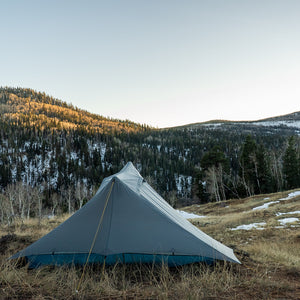
[00:28:59] Tayson: Yeah. That is, I did not put that together just the level of Darkness, but it was huge, absolutely huge. Anyways, so we got into camp, Camp set up fast setup, pretty efficiently. I think even though we were rolling into Camp later than I wanted to. So with multiple hands to help get Camp, kind of set up. So some things I guess just to know for those of you that are interested in hot tents. And what works typically running. We've been running the Seek Outside systems. So I have a bigger Seek Outside the Cimarron And then were you running their stoves? They're titanium stoves are crazy light. I know that there are some other stoves out there somehow like Windows in them. Some are full boxes, but my, my large U-Turn stove is what it's called. It's like two pounds. Even for a bigger size, wood burning stove, it's really incredible. What you can do. So you're looking at this. And for this, for this snow shelter, the sleeps, three people comfortably. I mean, you could sit five, six people in there sitting and then, you know, sleep, your probably three, four would be pushing it. That, that shelter is about three pounds. I didn't bring any Stakes, just planned on on cutting sticks and using those as the stakes and then the stove itself, a little over two pounds. So you're about five, maybe maybe a little bit over that, but under six pounds, For three people's shelters in the winter. Now, most of us did bring like a little ground cloth or something like that, so let's just call it six people divide that up. It's about two pounds of person. Now, you know, I carry most of that and those guys carrying nothing but, you know, That's what it could be.
[00:30:44] Brigham: They certainly didn't carry anything out on their hike out.
[00:30:47] Tayson: Yeah, yeah. I like out. I was I was maxed out with with space. You know, I do bring like a small saw, that's, I believe it's on, you know, maybe eight ounces or so. And then, you know, I say a little bit of a ground sheet, which can be pretty, dang light too. So yeah, it's a pretty efficient system for Brigham set up because I have an identical setup to him. It's about the same two pounds for your stove and then that that shelter's like two pounds or less. So you might be about four pounds all in with
[00:31:20] Brigham: that, that's like right at four pounds. which is, I mean and it's it's nice because it's totally Consolidated. Or I can consolidate that within my pack is one person. I'd like it. There's I have no need to divide that up among people and it's easily, you know, size wise, or what it takes up in my pack, it's very manageable. I was using a 45 liter pack. So
[00:31:46] Tayson: which is pretty wild 45 liter pack with a hot tent setup and You know, and snow conditions, you're bringing more insulation, you're bringing more clothing, so, and I never looked at your pack and thought it was over packed over stuffed. So yeah, you can get really light and do it really comfortably. These hot tents set up. It fills a little bit, like you're kind of once they're set up, once they're set up and you're in there in the stove is rolling. It's it's such a reset comfortable relaxing environment. You're just, you know, you're just feeding the fire and you know melting snow and drying out gear and chatting. You know, it can be windy outside your your nice and protected in there. It makes for just incredibly enjoyable when winter.
[00:32:31] Brigham: Yeah, it I think that's a really interesting. System. Because I'd say it's a notch above like what snowshoes can bring to the table. Like snowshoes are very utilitarian. There's nothing fun about it. It's just enables it. Enables you to do something that you otherwise couldn't. And then the our tent hot tent set up, I'd say it's just a notch above that in terms of now it's doesn't just enable you to do something that you, otherwise couldn't it there. Once all the work is done well, which it's never really done. But once the initial work is done, it is a bit of a Like a luxury but it's but but it's a luxury that provides a ton of utility. So for example, you know you mentioned you we like to get in the winter on winter trips, we really like to get to where we're setting up camp well before dark. There's some really. Practical reasons for that, in a winter trip. There's no way you or I, or I don't think most people can avoid sweating well, a sweat soaked. Top against your skin is potentially dangerous in subfreezing temperatures, right? That's where you're going to have the potential for hypothermia and a bad situation. So, Managing, that becomes really important. And so getting to Camp well before dark. When you have that huge temperature drop its really like practical because now your activity level decreases, but you're still semi-active meaning, you're you're kind of you're Tamping down the snow to make your tent, site your setting, up the tent, you're pulling things, out of the pack and then you're going to find in the case of a hot tent. So now you're going to find firewood and then you. So you're kind of hiking around a little bit but as a much lower exertion level. So it allows your body to maintain enough heat generation, that it's drying out those sweat soaked clothes, while you're getting work done, that has to be done no matter what. So that's why it's nice to have that time. But the utility that comes from these luxurious hot tents comes in that. If you don't get that clothing system, dried out by your activity, you have the ability to do that now and we know that there are ways to dry your clothes out throughout the night without the fire or without the hot tent, but it's a slower more time. Intensive and active participation intensive method, of doing it. Whereas when you have the hot tent, I'd say I was able to get kind of most of my clothes like 70% dry. Before I got the stove going. Um
[00:35:28] Tayson: yeah.
[00:35:29] Brigham: But then once you have the stove going you're in there and it's Between 60 and 80 degrees in the tent, things are drying out and you're still, you know, you're there's like still always little tasks to do like your your feeding, the fire you're breaking sticks. You step outside to soft a few more thicker chunks of wood and so, but you're able to do it with a bit of a more relaxed setting where it's not so urgent that you get dry. But you now know you've got like two or three hours to kind of slowly dry out. And you're never cold and that and that, that conserves body energy, which is really important, especially when you want to get a good night's sleep because you're at, you know, over 10000 feet of elevation, you don't want to have elevation sickness and the next day, you know, you've got a mountain. So it's this, the hottest is it's a great system, it does, you know, it's kind of like those shoes and that like, yeah, it's still work but now there's a little bit of comfort and luxury, attitude to it, but there's tons of Like usefulness that you can constantly you know, take advantage of with
[00:36:39] Tayson: that setup. Yeah, and we'll do trips, we definitely do trips where we don't bring the hot tents. We've done them a lot. Probably do less of them honestly, but, you know, but but if like, if you were a very Mission driven focus, and you want to just go light, you were you were trying to be super efficient like yeah, you could go back to it but two things I did want to bring up that I that I don't think you touched on one. You want to enjoy these trips, you want to be fun, you want to be enjoyable, and it's not always that fun. To not have the hot tent and just basically, as soon as that sun is down, like what are you gonna do? You basically just climb into your sleeping bag to stay warm, so then you're laying in your sleeping bag from say, six pm at night, tell seven a.m. in the morning, when it starts to get light, maybe longer. And so, that is just a long time to be sitting in your sleeping bag. So it's so with a hot tent, you know, we don't get into our bags till you know, 10 oclock until like it's
[00:37:41] Brigham: time to go like
[00:37:43] Tayson: the time is to go to sleep. Yeah. So like that buys you you know, five hours or more of being able to sprawl out, move around, you know, not just be in the sleeping bag because when you're going on those winter conditions and the temperatures dropping down to teens on the high side, likely lower, you're not just hanging out in your clothes, you know, in your tent, it it's cold. So you're getting in your bag. You're watching a movie or something on your phone or you're listening to a book or you're whatever. But you can't. I mean, I can't sleep for that many hours. So you're trying to fill this time. You're trying to fill some space. It's totally doable. It's totally doable. But just know that, when it's that cold, when it's those conditions, you're pretty much get in your bag. And so, the other thing I would say though is, like, yeah, we we definitely can dry Out Clothing. We have methods of drawing Out Clothing, without a tent, to an extent. But that's all so different on multi-day, excursions. So, How much moisture and things I needed to dry out on day one was totally different by how much compared to how much stuff I felt like I needed to dry out on day two with with longer time on feet with you know more exertion more exposure to elements you know all of those things my gloves were were more wet, right? And and you know just stuff like that that my pants are more wet. My, you know, I've got more layers that maybe got more sweat in them and so it kind of adds up the longer, the trip you do. So now, I'm not saying any of that to scare you away from doing trips without a hot tent. It's totally not required. We've done tons of them. We're just saying there's some real pros to the hot tent if you're interested, and that and then don't come at massive weight penalties. You don't have to add a tremendous amount of gear and weight and bulk in order to make these happen. So I think there's a lot of tents out there in tent makers out there that make the tents out of heavier Fabrics. Then the stove's themselves are like four to five pounds. But just know, there are cheaper options. And again, the options we've used so far is through Seek Outside. There's some other people maybe coming to play in the space too, so there should be some more options here in the near future, as well, for the ultra light side of
[00:39:54] Brigham: this category. There is one really important thing. Forgot. With that time. It's it's winter time. So water filters are out. It's freezing temperatures, constantly. So water filters are not a reliable option. So, as we're sitting in these in these tents for, I don't know, three, four hours, being warm, eating our food, drying our clothing out, we're melting snow, because that's our, that's our water source. So that's where it's another luxury that's incredibly useful. So, you know, it's like, if you're kind of taking score it's like yeah, there's luxury gets one point, but like this luxury now, there's all these critical must-do tasks that are happening because we have this luxury. So We could have two or three of us melting snow. At one time on the top of the stove.
[00:40:52] Tayson: So
[00:40:52] Brigham: again, so there's always different methods for things. There are the the gas stoves that you can take. So whether that's isobutane which they start to lose their efficiency or effectiveness at a certain temperature threshold and then there's the liquid gas stoves that you you pressurize with the pump like white gas or kerosene. Those are all viable options. However. We have one stove that we're able to hydrate three people at a time. Now, if you have a gas stove, that's one, gas stove. So if three people want to do that, they all need their own gas system. So it's, it's it is quite useful and very efficient because you're, you're, you're awake anyway, you're up, chatting hanging out, Drying out clothes. You're doing all those things anyway. So you and we were able to you know, melt I don't know, three liters each night, at least I over melt per person. Um, and so it it is really important and it's it's a the the for the weight penalty and the effort to have that system. I think it's Totally worth it all things considered, and so like that, you know, both nights that's what. Like, one of the critical tasks that we were doing is, is melting melting snow for for drinking water and, and all get into, you know, kind of my experience with that on the second night. Once we get kind of
[00:42:23] Tayson: down the road,
[00:42:25] Brigham: if we ever really get into the story,
[00:42:26] Tayson: was winner.
[00:42:28] Brigham: Winner, winner trips. There's like so much going on.
[00:42:33] Tayson: There's a lot going on.
[00:42:36] Brigham: The fun to talk about
[00:42:37] Tayson: now, one other thing, just in terms of weight and bulk, personally, I don't take a stove when I go in the winter, like, gas stove. If I'm taking the wood burning stove, you know, Brigham you did. So you can definitely do it both ways. There's some safety reasons to maybe do it like Brigham. So you have that as an option. If you need to start a fire or just needed, Quick Heat or something like that, I bring a fire starter for sure. But I did not bring a stove so you got some options and some different ways of doing that, but So we get in there a night one, and there's so many more things I want to talk about gear wise. There's watches, there's boots, there's food. There's there's a handful of things here, but we, I guess For for this night the last thing I'll talk about is we were testing out some new meals for ready some like snack sized meals and absolute clear. Winner the apple crisp everyone was loving this. This apple crisp and then there was some like fruit and yogurt freeze dried stuff. That was really good and so be watching the membership made me a few months down. The road here will be adding some more snacks and desserts and things like that to the OV Pantry section of that. But I will say this sitting in that tent hanging out and just snacking, I didn't like count out my calories for this meal. I just kind of filled up some bags and had a rough idea. Plus then I ended up throwing in some extra Stuff that we were testing even with all the exertion that we did over those two days. I'm sure I like ate as much calories is not because you're just hanging out in their you're having hot chocolate. You're having Snacks and desserts and meals, and stuff like that.
[Editor’s note: The exact calorie quantity or comparison in the preserved phrase “ate as much calories is not because” is unclear. The surrounding speech only describes this participant’s March 2024 camp eating; it is not nutrition or calorie guidance.]
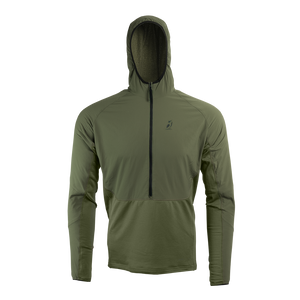
[00:44:20] Tayson: So, just a good time, just good time, hanging out talking to everyone. You know, we had four of us in the tent just just Hanging out before bringing went back over to his tent and went to bed but it's good night. Went to bed that night slept well, a lot of us were sleeping on the new Therm-a-Rest XTherm. We did all put that in the membership area. So it needs to save some money on a premium pad for winter conditions. It's in there now but that pad that is money seven. Are you crazy light for what it is? Just a phenomenal, phenomenal pad, we can't. We've used it for years. This is a newer model with the NXT and I did notice, you know, the extra half inch that it gave me. I found it to be a little bit more comfortable than the two and a half inches that used to be. And yeah, noise wise I didn't think about it much which probably means that is it is an improvement because I definitely thought about it on my old one. I mean, you'd move and it just sounded like a potato chip bag and this time I'm sure it was still there but it was fainter. So I'll give it some some bonus points there too, so two thumbs up on the newer X therm, the NXT version really like that. And yeah, you say some money on it, go inside the membership. So we get up the next morning we have a very slow lazy start. I would say we didn't like get up and head out of Camp right away the other guys Derek and Joseph, they were not going to go up the summit. They were just gonna do one night head back into the office. So they got up headed out and then we hit it out shortly after them. And I think I broke Camp around 10:00 in the morning. That's maybe one downside of the hot tents. Is you strike up that fire? You hang out and You can spend some time just hanging out in there and be comfortable, so yeah, it's really comfortable. So yeah, I didn't roll out. We also knew that we weren't, I don't know. I didn't feel super pressed. I think we were trying to leave by about nine but didn't feel super pressed on time and stuff. So So yeah, I take off down the trail about 10 oclock and Brigham was hot on my heels. Except when I turned around, I was not seeing Brigham behind me. So I went about a half a mile and then I was like, all right, I'm gonna take off a Ventus that I was wearing just put on a Nebo windbreaker. which again I mean, it's cold conditions, it's Breezy up there, your high up on the mountain, over 10,000 feet, but when you're doing that level of exertion, I was hiking in, Fact. I may have to go back and look, but do you remember if I had the mid-layer on or was it just the Nebo I think I just need an EVO.
[Editor’s note: The preceding hot-tent, stove, filter-freezing, snow-melting, food, calorie, sleeping-pad, membership, fire-starting, drying, warmth, and camp-routine claims are preserved March 2024 field speech. They are not current stove, fire, ventilation, carbon-monoxide, water-treatment, hydration, nutrition, cold-injury, product, or purchasing instructions; several pad/product phrases remain unclear and have not been invented.]
[00:47:01] Brigham: Yeah, you were in just the Nebo.
[00:47:02] Tayson: So I was just hiking in a new updated turn. And amiibo pretty much the whole day.
[Editor’s note: In the preceding clothing exchange, adjacent speech identifies Ventus and Nebo layers, but the preserved phrase “a new updated turn. And amiibo” is not unambiguous enough to convert into exact product wording. No additional product name has been invented.]
[00:47:11] Tayson: So anyways by the time I stopped and had slowed down a few times and films and things. Brigham, finally came marching up the trail and it was pretty apparent. That he was missing something.
[00:47:22] Brigham: So what happened there? Please a couple things I didn't have in my hands. That yeah, I think Tayson stepped off and I was I think I was just getting my pack on and I just gonna Relieve myself from the snow for, you know, a minute. And I was like, yeah, I'll be right behind you. And so when I did that and then started walking, I took like two steps and like something did not feel right and I realized I wasn't I didn't have my trekking poles. Because they were holding up my tent. So, like, I've got the whole stove set up there. My sleep systems all set up in their bunch of gear in there. And yeah. So the so it takes him did he legitimately got like a half mile cuz I sat there and kind of had a conversation of frustration with myself. I was just kind of looking at my tent and thinking through wondering if I wanted to take it down just to have the polls eventually, I decided that I would just hike without the polls, so, Brutal. And and this, which is like I mentioned the trail up was really nice but from where we went to the top of the mountain was, Mostly unbroken Trail. Know, there was a few snowmobile tracks for a little while, but like it is also snowed about four or five inches that night. And so, yeah, that was That wasn't great.
[00:48:48] Tayson: Yeah. So we kind of talked about over and and we're like, well whoever's, you know, in the lead, will try to give the polls to, and So, we went forward under that mentality. So, yeah, really the snowmobile trail died out pretty quickly. There's there's some of those crossing the trail, but for about a half mile out of camp, it was pretty much just our own tracks. And then after about a mile, there was no snowmobile tracks and then at about two miles. Yeah. Then it. Trail where we're just shooting up towards the top. So
[00:49:29] Brigham: kind of break off this. Buried dirt road. And then you break off to kind of just go up. This, this long ridge that takes you to the top of the mountain. Yeah. And this peak this peak, well, I guess
[00:49:46] Tayson: I should say the trail to this peak on both sides of it. It's just it's just nasty. It's just straight up. There's not like they're switchbacks. It's not like there's you know, anything that helps you go thousands of feet up you know more efficiently The the ultra-marathon that I've done it goes up and over this peak and it is the absolute worst part of the the day. And even though it's early in the day, because coming up from the backside, it's just straight up on what you could argue as a game Trail. There's no switchbacks, there's no anything like that. It's just just straight up. And then on this side it's it's much the same. So I remember specifically both times coming off of this, this peak. I mean, you're trying to run but it's so steep that you're, you're just killing your legs. Like, you're just blowing out your quads and things. And so if I give you a perspective of what it's like in the summer time in the winter time, it's really Steep and it's it was very thick. So as soon as we stepped off of the road, The you know the road that's six feet down underneath us, it got it got even more deep more powdery we started, you know, and then you and then you're all. So starting to climb. So you know, we're basically trying to make our own switchbacks in this and and just move up and I think, you know, we tried a little bit of switching off the polls. I took him actually brought a shovel and so I tried using shovel, I gave him the polls. But basically I decided that I just wanted to keep the poles in my hands and I would just break break the trail because it was slippery. As well. So, so to give you an idea in some parts of this, as we're sending this. Is really deep snow and then in other parts of it, we could get up on kind of some more Windswept phases where the snow is harder or it wasn't quite as deep because the wind blows so hard up there. So exposed And both brought their own challenges. The deeper snow obviously, just physical exertion These other areas they were slick. They're, you know, there's a lot of rocks your stepping on which can also be very slippery and I don't know between it first. I just thought that my my I don't like my equilibrium was off because I felt like I was a like, I had a few drinks or something trying to climb up here, but between the elevation, you know, the wind the, you know, just whatever it is, the exertion, you know, I felt like I just was all over the place and so I wanted the polls my hand just for balance. But the farther we went up this thing just grinding out. And and you know this this part really slowed us down because for a lot of the trail, we've been averaging two miles an hour on the way up, even. But here we we dropped well below a mile an hour climbing this, but this is where I started to become pretty apparent. That our snowshoes were just drastically different. So I was slipping often, in fact, there was one that'll look where we had to go down. Kind of. We descended just a little bit and then had to come back up. And I just slid straight down. This thing, whereas Brigham was able to cut across without trekking, poles cut across this, and descend, without sliding pretty much any any steep downhill. I could just start to slide away and then on the climb up to I was, you know, I just didn't have the same amount of traction. As Brigham and that I think, you know, to give myself a little credit. I think that that was probably the biggest Factor. Well, anytime I'm at, 11,000 12,000 feet in climbing. Like, I can get a little light-headed. I do think that I was just, I was not feeling very planted on these snow shoes. It was slick. I mean, I, you know, on the way down, I, I hit the ground, you know, slid down on my butt a few times, because my snow shoe started to go to, I almost attempted, you know, a sled run there, but the thought of probably wouldn't be the wise as this thing. but but yeah, I mean The difference though with my snowshoes and his mine does have like the outer cleat or or track and it does have the grip on the toes. But on the decking itself there's just there's no additional grip and then if you were to compare where mine does have grip compared to his as grip, his is just way more aggressive tread and more of it. So you know it's just really out shown the snowshoes I was using in terms of grip on a face like this where you're climbing your ice. You're hitting rocks. You're hitting deep snow and it's all steep.
[00:54:18] Brigham: Yeah. Those those snow conditions were, it was just I'd say the surface, you know, condition was just very it was, it was variable, it was like Very inconsistent, like every 50 yards, it changed, you know, from just powder to win cept crusty. You know, hard packed snow to this kind of weird. Crusty snow that was on top of a really, you know, a three inch layer of like, just powder dusk. That was really slippery. So it's luscious memorably. Yeah. And then and then we have these little bushes that if you got close to them, you'd sink, and then you'd have these really Rocky sections where it was very Windswept. So, you know, there's probably only just a few inches of snow On top of or around these rocks. So sometimes you'd step and there'd be a rock right under your foot. You couldn't see, sometimes you could see them. And so it was just very, just very inconsistent and so, momentum and efficiency was was a definite Challenge. And so, like, you know, I'd never, I'd never looked at the bottoms of your snowshoes, but like that's where you could clearly see the the difference in the designs and the traction available on those surfaces.
[00:55:39] Tayson: Yeah, I mean, I said the whole way up and just that this was the durability test for that carbon fiber because Stepping. I mean, when it's whatever 20 degrees, Fahrenheit, 10 below freezing, it's windy, it's cold and and she got cold carbon fiber, and then you're stepping on rocks with 200 pounds. You know, it was a great durability test and we'll get into that, but Um yeah, just a kind of a brutal climb and all the while if you turn around and look below us, you could see pretty far but looking above us you just couldn't see much at all because of cloud coverage kind of that foggy. Clouds rolling through and it was It was kind of actively snowing just like off and on this real powdery fine. Like, not like it was putting inches on the ground but like enough to like blow into your eyes and just just
[00:56:32] Brigham: reduced visibility and yeah, the visibility was worth for sure because The higher we went and the more, the wind blew. Yeah. So whether the snow was falling or it was just blowing off the ground. The depth perception. So now we've got this very inconsistent snow surface and so it was very unstable, you know, like we've probably looked like a couple Drunken dudes like stumbling up this mountain which is you know kind of yeah that's what it looked like and there was a heck of a false
[00:57:03] Tayson: Summit in there because we couldn't see the top. And so you're looking around at this mountain over here and you're like well where do we? Where we getting in correlation to that and you could see this one Of us and you want it to be the summit but there was some pretty solid false Summits in there. And then by the time we got over that fall Summit and started to climb a little bit more. Um, Meanwhile my electronics are all malfunctioning my phone keeps shutting off because it's so cold, which is really frustrating because it's a, it's a newer phone that I just haven't had that level of issue with the phone before in cold temperatures, but it was shutting off. So I'm trying to film a little bit and it's shutting off and then my watch, I've liked this COROS watch a lot but I don't know what was happening. Exactly. But it, it wigged out and gave us some extra elevation on that climate seemed like. And I think my heart rate stopped, stopped, stopped monitoring, and it kind of made me wonder if maybe COROS while they focus. So heavily on trail Runners, if maybe they don't test them in the most. Extreme of conditions in cold temperatures or things like that. That maybe my last watch was. I mean it was like the Tactical version so probably did get a lot more testing in those conditions but yeah it you know heart rate I started to not trust on it and then all so my Ascent somehow it it added you know because I think on paper it was maybe 2500 feet of climbing maximum I really like 3700, so something was kind of glitching there, but I mean, it was cold. Electronics are malfunctioning a bit with the cold and we're just kind of grinding away. And then visibility come became so tight in there. Just really couldn't see the top at all and tell literally I look up and I'm like, holy frick, we're at the top. Yeah, that's the sign. There's the sign like wasn't expecting that. I'd given up hope on on it being like around. The next Corner type of thing and and then we were there. And so we got up to the top I've got a little video clip of me kind of showing visibility where I'm standing about six feet away from a Cliffy Edge and you can't even see the cliff Edge. So we we got a heck of a view up there. After all of our efforts. We I did, I did sign the book that was in the Frozen mailbox with, you know, basically just a big ice chunk in it and We just spent a whole lot of time there even though we ground and ground to get up there. I mean I think in a perfect world on like a summer condition, right? You get to the peak and you stop and you you have your food, your snacks and all that. But in these conditions, it was It was more like the wind is blowing our tracks off, it's actively snowing and there's enough. Cliffy edges up here that we probably should just try to follow our tracks down as soon as we can.
[00:59:48] Brigham: Yeah, I mean it was it was it was interesting how quickly the wind, you know, covered up tracks that we've had just set like 10 minutes prior to, because we were just To the top and following our same tracks down but yeah. Tracks 100 yards away where we were starting to get difficult to follow and and why that was important is I mentioned we took this Ridge, it's this really long drawn-out ridge. Is because that's the safest that's the only non Avalanche, terrain route. So it's a ridge. So either side of the ridge is You know, over a 30-degree slope so, like consider that out of bounds. No man's land. And so, that's why You know, once we started going down we had no visibility. If he came really important to follow our tracks, so that we knew we were taking the safe route because with the visibility, you just couldn't see the topography. Like, you could not see and so like you could easily Wander off, you know, five degrees to the South or to the north and in 150 yds. You could find yourself on a 40 degree slope, which is like you know, really dangerous especially in windy conditions and what that does to the snow. So yeah, it was I think we started making really good time and it didn't take a ton of energy. But what took the most time was just Like the the focus of finding our staying on our tracks.