EP 172 - 50 Miles in 1 Day: Grand Canyon Snow, Fish, Permit Checks, & Power Walking

Live Ultralight Podcast

EP 172 - 50 Miles in 1 Day: Grand Canyon Snow, Fish, Permit Checks, & Power Walking

Highlights

Originally released in April 2024, this historical account follows Tayson and Brigham through a one-day South Kaibab rim-to-rim-to-rim, while clearly separating an earlier 38-mile first day plus next-day Bright Angel exit. It covers pacing, weather, group spread, food, hydration, emergency layers, and historical product and membership claims without turning them into current guidance.

  • How the prior 38-mile fastpack and next-day Bright Angel exit differed from the current one-day South Kaibab rim-to-rim-to-rim
  • Why the participants power-hiked uneven descents, managed long climbs, and treated fast stops as part of their own pacing strategy
  • How rain, snow, wind, darkness, and group spread changed the margin during the South Rim return
  • What the speakers historically reported about calories, hydration, electrolytes, sleep, hypothermia concerns, and emergency insulation
  • Which April 2024 product, jogger-launch, membership, price, credit, and CTA claims require current independent verification

Chapters & Timestamps

  • 00:00:00 — Current one-day R3 and the earlier two-day fastpack
  • 00:05:05 — The hard-hike group and its mileage ambition
  • 00:09:02 — Uneven trail, downhill restraint, and long climbs
  • 00:13:51 — The narrow cold, wind, and snow forecast window
  • 00:21:16 — Brigham’s shoe change and early heel friction
  • 00:25:33 — Phantom Ranch water and fast group stops
  • 00:34:06 — The permit check and a separated group
  • 00:41:12 — Manzanita, rising wind, and the North Rim climb
  • 00:43:30 — North Rim exposure, precipitation, and gusts
  • 00:50:30 — The fourteen-mile water stretch and foot care
  • 01:08:55 — The fast return toward Phantom Ranch
  • 01:34:39 — South Rim switchbacks and worsening snow
  • 01:44:49 — Overdue hikers and the 3 a.m. trailhead call
  • 01:55:47 — Historical emergency insulation and stopping concerns

The Field Guide

Prefer to read? Here’s a practical breakdown of the episode’s most useful ideas.

What the April 2024 Grand Canyon Long Day Tested

Originally released in April 2024, Tayson and Brigham recount one long-day Grand Canyon effort with a larger group. Their account distinguishes two trips that the earlier candidate conflated: a prior fastpack covered about 38 miles on day one, slept near Phantom Ranch, and climbed roughly ten miles out Bright Angel the next day; the current effort was a one-day South Kaibab rim-to-rim-to-rim, followed by sleep at the South Rim camp and departure the next morning.

A One-Day South Kaibab Out-and-Back

The current route began from camp before dawn, descended South Kaibab, crossed the canyon, climbed to the closed North Rim, returned to Phantom Ranch, and climbed back to the South Rim that night. Some members had discussed attempting the circuit twice, but the snow and deteriorating conditions ended that plan. The next morning was for breaking camp and driving away, not for completing the South Rim climb.

The speakers also compare this effort with the earlier two-day fastpack. That historical comparison explains why the participants treated the irregular steps, logs, holes, and long uninterrupted climbs differently this time. They describe the canyon trail as difficult to settle into rhythm on and frame the 5,000-foot climbs as a different demand from accumulating the same elevation through shorter rolling climbs.

Pacing, Stops, and Group Spread

The larger group separated almost immediately. Some participants ran downhill, while Tayson power-hiked because the prior fastpack had left his legs depleted. The discussion treats that as one person’s pacing choice rather than a rule. Fast water stops, shoe friction, heel blisters, and access to food became recurring details as different participants moved at different speeds.

A permit-check anecdote at the bottom is comic in the retelling, but the later group spread had a more serious edge. Once darkness, snow, cold, and limited communication accumulated, participants at camp did not know exactly where everyone was. The final group reached the trailhead around 3 a.m., after concern over unanswered messages and a plan to wait at the trailhead.

Weather Changed the Margin

The forecast and the canyon’s elevation range produced warm lower-canyon conditions and cold, windy rim conditions in the same effort. The speakers recall rain, hail-like snow, strong gusts, exposed edges, horizontal snow in headlamp beams, and a rapid temperature drop. Their statements about windbreakers, insulation, gloves, and changing pace describe what they carried and did in April 2024; they are not current weather, route, or safety instructions.

The North Rim turnaround was intentionally brief because it offered no services and was cold. On the South Rim climb, the weather became the central concern. Brigham describes increasing his pace as blowing snow and wind made visibility and stopping less comfortable. His recollection remains descriptive rather than prescriptive: fatigue and exposure narrowed the group’s options during a long objective.

Food, Water, and Recovery Were Personal

The speakers report individual calorie totals, drink-mix use, foods, water consumption, electrolyte choices, urination, and previous calorie and sleep walls. Those quantities belong to their own historical effort. They are preserved because they explain the story, not because they establish safe intake targets, diagnoses, or performance guarantees for anyone else.

Tayson describes eating while moving through easier lower-canyon sections and using drink calories on climbs. Brigham compares the day with a solo effort four weeks earlier, when sleep deprivation and insufficient calories had reduced his pace. Both accounts connect access to food with continued movement, while the adjacent transcript notes keep those observations from becoming nutrition or medical advice.

Emergency Layers and the Decision Not to Repeat

Both participants carried extra down insulation and other layers because they had considered what stopping in wind, snow, and sweat-damp clothing might mean. They discuss hypothermia, an injury, running out of energy, helping another person, or needing a short sleep. These are historical reasons for their own gear choices, not a complete emergency system or a claim that a particular layer prevents cold injury.

After one circuit, the group abandoned the proposed second lap. Fresh snow, fatigue, timing, and concern for people still in the canyon outweighed the original mileage ambition. The title’s “50 Miles in 1 Day” describes the completed current effort; the overnight and next-day climb belong only to the earlier 38-mile fastpack.

Historical Product and Membership Discussion

The closing includes April 2024 observations about the Nebo windbreaker, Injinji socks, Skyline and CS40 packs, shorts, unreleased joggers, blister experiences, accessibility, fit, venting, wind blocking, weight, and comfort. It also includes then-current Live Ultralight membership, store-credit, discount, launch, purchase, rating, review, sharing, and subscription language. Adjacent editor notes identify those statements as historical and require separate verification of current specifications, availability, prices, credits, terms, and conditions.

No resource links are supplied because the approved resource allowlist for EP172 is empty. The package remains an unpublished local release candidate, and its final semantic release decision belongs to a fresh independent audit of the rebuilt transcript and public fields.

Ask OV a Question

Have a backpacking, gear, or trip-planning question for a future episode? Send it through SpeakPipe below, or message us at support@outdoorvitals.mom.

Recent Podcasts

Full Transcript

This transcript has been cleaned for readability and speaker flow. Minor transcription errors may remain.

Read the transcript

[00:00:00] Tayson: Everybody. Welcome to the Live Ultralight Podcast, powered by Outdoor Vitals. Today, we are going to be breaking down a recent hike that Brigham and I did where he went down to the Grand, Canyon and did rim to rim to rim. So that was the south rim starting on the south rim because the North Rim is still closed for Access. So we hiked from the south all the way to the north rim, turn around and come back. We did that with the big group of guys and it's just a really enjoyable time in the canyon. So that's the plan today. So Brigham, how are you doing?

[00:00:29] Brigham: doing well?

[00:00:31] Tayson: As per usual, actually spring. Yeah. Finally warming up which I'm not complaining about at all. Um yeah, so let's let's just talk about this story. It was it was a heck of a day we have I guess, historically we did this same route, or close to it, two years earlier, when we fast packed it, we learned a lot. It was really good and it was really fun to come back and revisit this hike in a different, you know, on a different style of trip. So that one we we covered 38 miles, we went from the South Rim to the North Rim back to the bottom which is a Phantom Ranch and we slept was a 38 mile first day and then followed by about a 10-mile second day to hike out of the canyon on Bright Angel. Bright Angel Trail. So bright, angel! Trails closed this time. So we just went down South Kaibab up north Kaibab and back up South Kaibab. So a little bit different, but we have done it, Brigham, you've been in the canyon, a handful of times. Specifically more on the south side and you have done rim to rim. In fact, you went a month ago and did rim to rim to rim before this effort. So we've yeah, we've been there a few times and if you get nothing else out of this podcast, it's it's probably that we actually really enjoy this Trail and we'll probably go back. Again, that is it's just an epic iconic Trail. I feel like, yeah, this definitely Funny because I feel that way at the end of every single time is just like this is, this is one. I want to just keep doing Kind of a good tradition. Yeah, there's something about it. That's definitely worth doing over and over and and going back to it and It's different. It's different to go down into the canyon versus stay on the rim, you know, like people drive there all the time. I mean, just when I was leaving the line to get into the national park was, was huge. All right. So, there's I mean, it sees tons of people but most people stay right on top or maybe hike like a half mile down or something from the top but that, that particular Park. I mean there's so many different views and Vantage points as you get all the way down into the canyon. So just a phenomenal Phenomenal trip. So this particular trip was a little bit different. We were, we were meeting up with some buddies. That would that do a, an annual hike. So this basically 20 guys, they'll get together doing annual hike and they usually try to try to get to 100 Mi on their hikes as well. But this, so the plan with this one was actually to do an R3, right rim to rim to rim and then turn around and do it again with maybe a couple hours of sleep or something like that. And just try to Blitz it and it's definitely one. I was interesting because these guys have all hiked before together, and this is mine and Brigham’s first time meeting them and or at least meeting most of them, and, and Hiking with them. And it was, it was, it was fun fun to get to know these guys. And they're pretty like very Mission focused, like they were very set on this plan of doing an R6 and just just a lot of athletes. A lot of guys have spent a lot of time in the mountains and they definitely feed off of each other a little bit. There's definitely some you know, energy And kind of pushing each other. I felt like there was happening and so Yeah, so we got invited on this, we show up. I have an ultramarathon this like in two days and this was just last weekend so I had previously Decided to not do the R6 and just do the R3. But everyone else was still planning on doing the R6 and so we we got there Thursday night. Met everyone. And with the plan was to sleep at a campground there, that was about three miles from the South Kaibab trailhead And so would sleep there, get up and be hiking by about 4:00 4 a.m. from the from the camp. A lot of people when they do the the room to room to room, they'll they'll they'll take the shuttle to the trailhead but With the mileage. We were trying. It was gonna work out well to start the hike from Camp, to get six extra miles to try to hit that that 100. So and I don't know that the shuttle runs it for him. Yeah, I don't think it does either. So I think we were up before it and then, we were honestly, anticipating probably getting there after the shuttle was closed down as well. So, um, Yeah, anything else I missed on? Just kind of setting the stage of what this was. Obviously, we can we can talk about

[00:05:05] Brigham: the trail details as well. Yeah, I mean the You mentioned that this group, they do it every year. they try to hit, you know, somewhere around 100 miles, but I think the other goal that this group tries to accomplish his Is to do a hike that's like, really, really hard. Like that's That's definitely type 2 and eventually type three fund where you're pretty completely beaten down by the end, you know. And so they they actually had talked to us about the route before, you know, wondering, like Hey we're thinking about doing this for our annual hike. We know you guys have done it. Like what are your thoughts? And we basically kind of just told them like well one is like it's a good long day and that's you know it's a 48 to 50 mile hike but knowing what you guys are kind of looking for probably isn't going to be like that. Terrible challenge that you're looking for. So you probably would want to do it twice. so that was kind of like what they were looking for is to You know, a pretty good amount of pain I would say.

[00:06:11] Tayson: Yeah, they kind of seek that out. This is something that they all do. It seems like to keep themselves in shape, you know. So like, because when you set a big goal like this, obviously, you know, you have this, like, brutal hike coming up every spring. It definitely pushes you, right. Gets you off the couch gets you out logging miles or in the gym or whatever it is. And so they do it a little bit to, to keep themselves in shape in the off-season per se. And then also yeah, to just kind of push their limits, find their limits. Do it collectively. Historically, some of the hikes they've done of have been way more, you know even like route-finding and stuff so they were off Trail stuff. Yeah. Time's off Trail stuff and like Alaska and Montana or Idaho and so this one, they're like oh there's a trail like you know it's gonna be that much easier which I mean when you don't have to way-find that's a big mental ask and it gets tough when you're going through the night and because usually they were, you know, sleeping very little on some of these and so there wasn't aspect of that. That being said, there's the Grand Canyon is brutal. It's it's the Grand Canyon for a reason right. And the biggest Factor. The two biggest factors I'd say that people often Overlook in the Grand. Canyon is, is one It is graded Trail like I mean like it's it's Trail, right? It's not your off Trail, but the trail itself at times is pretty rough, you know, Bright Angel, Trail pretty, dang good. Very well graded. But you go like South Kaibab, you've got these logs that go across the trail, then you have mules that come in up and down the trail and they dig these big holes in the trail. It's very, very steep. And so you've got this mixture of like it is Trail but like you're constantly stretching your foot to hit this log jumping onto this rock stepping in a hole lifting your foot up and over like even on the downhill you're like lifting your foot up and over stuff. Yeah and it's a weird thing to experience because you're going down steep stuff but you're still lifting your foot up. Yeah

[00:08:08] Brigham: like everyone that I think everybody that I was within ear distance to hear talk throughout any time during the hike. Like that was one thing that Coming up was like they're it's not even possible to get in a Cadence or a rhythm with your with your feet. So it's like it's a trail but it's like the most inhospitable trail or like just the most uneven Trail, that's it's technically a trail but I mean you might as well be off Trail in terms of like the Footwork. And the the leg work that it creates like, that's it's almost like walking just through miles of Deadfall. You know, if like, every log was about a foot off the ground and you're, but they're all randomly spaced, you know, and you just, you're just, you're just stepping over, and

[00:09:02] Tayson: Pretty good comparison because I was just about to say like at times, I would have rather just been off Trail like because there are definitely areas of mountains or whatever. That it would just have been easier to not be on a trail at all. Yeah, versus the trail. That is there, right? So yeah, like like, very short Deadfall, you know. Like not like like not like hurtling Deadfall. But you know if you're talking about 12 to 16 inch Deadfall like on the trail. That's kind of what it feels like at times, right? And then you're going down, so it lures you into this and you're going down a lot of steep Trail. So largely into this feeling of going faster or like, hey, like if I just start jumping from here to here to here, it's easier and it is easier, but it like like cardio wise or maybe even mentally wise. The thing is we kind of did that the first time we did it with fast packing. So I had more weight on our backs. By the time I got to the bottom, our legs were not up for much more hiking that day and we had a whole lot of hiking like it really just blew through our legs, blew through our quads and calves, especially just pointing your toe and landing on your toe. And so it's a brutal Trail. So that's the first thing I would say about the Grand Canyon and even going up the north side, you know, the trail that they've built is amazing, but it has massive steps at times and and just at the same Cadence issue, essentially, so the other part of the Grand Canyon, I think people often Overlook is. Like on a day, there's a lot of people that'll climb. Let's say, 4,000 feet of vertical or 5,000 feet of vertical. I mean, when I was out on the Appalachian Trail, you know, you're just climbing up and down Hills the whole day, right? And, and You get a lot of vertical by the end of the day, maybe even up to 4,000 feet in the day. But it's all like a 500 foot, climb a 500 foot descend 500 foot climb 500 foot descent. What is extremely difficult about the Grand Canyon is it becomes exponentially more of an ask on the body to go 5,000 feet of straight climbing versus like 1000 feet up 1000 feet down or 2000 feet up 2000 feet down. So it I don't know if we have really any other places know or I've ever been where you just go, 5,000 feet, straight up in one push I've had like 3500 foot climbs, maybe we've hit four at times. Those are rare super rare, but the Grand Canyon. It's a full five thousand feet on both ends of it of climbing and so when you do an R3 you do you drop down the 5000 feet. Then you get all the way over the other. End you climb in the 5000 feet in one shot. Turn around, come down and then you're doing that again. So, on the day on the whole day, you're getting about 12,500 feet of climbing and descending, but it's exponentially. More hard to have chunks of 5,000 versus a couple thousand back down. It just it lends you to like, oh you do the first one or 2000 feet really well. And then you hit a calorie wall or you start cramping up because you weren't hydrating well enough or it's very hard to like keep Pace the whole climb up if you're not very aware of that. So so those are the two things. I just wanted to point out about the trail and then obviously Brigham, you noted this. But on the day we were looking like we were going to do about 49 to 50 miles to do the R3. The first time, right? So yeah, other than that, we were expecting some interesting weather. Yeah, we timed it, perfect. Always basically. It was looking like it's going to rain on us at about nine or 10 a.m. and then and then that we're gonna have some higher winds. Now, like, looking, I was looking at like the weather in the south rim, Phantom Ranch North Rim. And I didn't like looking to as much of a detailed description, but I was just seeing like 20 to 23, mile an hour winds Not necessarily thinking about more of like gusting winds, right? We'll get, we'll get to that. So we know we're gonna have wind. We knew we were potentially have a little bit of water. And it was, it was pretty cold. Starting off the trail. It was 40 degrees, you know, according to the weather app at the campsite which wasn't bad. But then it was supposed to dip the temperature supposed to dip throughout the day being like, the high in Phantom Ranch. If we were, if we had been a Phantom Ranch in the very middle of the day, I think we would have touched about 60 degrees. But the high on the north rim, according to the weather app was 34 degrees. So you get a massive disparity of of temperatures doing it, especially in the spring right North Rim. Still a snow on it, that's why it's not open, but you're starting on the south rim Phantom Ranch so much lower than you that it's, it's quite hot. So, it's just this big, big temperature, swings and we, we had timed it, where we were going to get some additional whether to make sense to just the temperature settings.

[00:13:51] Brigham: Yeah, yeah. It was just, it's just amazing because if you look at like the weather, Forecast read out you know like the four days leading up to when we were going to start our hike. We're just beautiful. You know? Probably like. 60s at The Rim, you know, getting down to Upper 70s down at the bottom and then the two days, maybe two and a half, three days that we were going to be there. It was 20 degrees colder. It was like just this little and then immediately like the day after we left, it was back up into the 60s and 70s, and sunny and no wind no snow.

[00:14:29] Tayson: It was unique. Yeah,

[00:14:30] Brigham: great timing.

[00:14:34] Tayson: So there's a few things that we'll touch on at the end of the podcast too. Before we dive into the story, some things that we're carrying will be will be some of the those and there's a few other like takeaways that will share about just like, maybe like some advice if you ever were looking to do this hike. But right now let's just jump into the story so we we get there. Basically, we're meeting, you know, about 1920 new faces, and trying to get to know people and I'll talk a little bit about the hike and then we go to bed. fairly early nine before 10 and then we, you know, alarm goes off at about 3:30 a.m. and we start Gathering up the group of of guys, and we Ended up breaking camp at about 4:15. So take off that a camp and we were hoping it. We were hiking. We were running or anything like that and most guys weren't planning on doing any running at least to my knowledge. Most of them had like bigger packs on and stuff with just nothing in them but like they're typical hiking backpacks. This is a big group of Sportsmen so like hunting backpacks and stuff as well. And We we launched out of Camp doing 16 minute. Miles hiking base. We were cruising it. Nearly a Four mile, an hour Pace, just going along the flat. Flatter top to. Buckeye, Bob Trail. And got to the South Kaibab Trail and it. We had some wind for sure. Like as soon as you get up on there I think it's I think the Grand Canyon Even there like twice, right? But it's always windy. So we're getting some wind. We start dropping into the canyon and I don't know, he probably made it a mile, two miles down the trail before, you could kind of turn your headlamp off. It had gotten light enough fast enough that you could start to see start, pull out the camera a little bit and get some of those beautiful views of that. South Kaibab offers I will say that is the one big benefit. I would say of South. Kaibab Trail is. Yeah, even over Bright Angel is you're kind of going down. More of a Ridgeline. And so, you're getting expansive views off of two different sides. You can really see a lot, a lot of the canyon. And if you're there, you know, for something like sunrise or Sunset, it's it's a phenomenal, phenomenal site, beautiful beautiful view. Yeah, kind of, like you mentioned the group started to thin out and, you know, people are kind of doing, you know, handling, the trail itself at different levels, you know, with the drops and awkwardness of the trail and so on and so forth. And so the group started to thin out, I mean almost immediately and that was kind of the plan from the beginning, as we wouldn't be staying as a group of 20. It's just too big too big of a group everyone's on two too much of a different pace, different Fitness levels, different desires of how quick they want to do things or not want to do things different paces. so started to thin out a little bit, but me and Brigham. We're trying to be, I don't know, I was Brigham was planning on doing the R6 right. But either way, we had told a lot of people We don't advise running down. And we got about halfway down and pretty soon. Some people start running it.

[00:17:47] Brigham: I didn't even see them know. Oh yeah. Yeah.

[00:17:52] Tayson: Dan and those guys and there's probably seven plus guys that started to break into some slight running on the downhill and I kind of wanted to just be a little bit more up at the front but I very consciously was like nope I've done that, I will not do it again so I just power hike down. And it went smooth really pretty got to the bottom and I can honestly say I fell a million times better than the first time I had done this Trail. Obviously had a little bit less weight in my backpack with not having to carry like a tent and a sleeping bag and a pad and a little more food but Yeah, the lack of running I immediately was like such a wise choice but yeah I mean how did the hike down from the top? Go for you.

[00:18:40] Brigham: It's good. Yeah, it was I I don't mind the kind of the cold start and because it's nice to just Say did not be hot, you know, hiking and in the heat. So but yeah, I was definitely You know, and and I you mentioned been there several times. So kind of have the experience to know, like, I'm not gonna try to not gonna try to keep up a pace and and and go quickly down down the canyon. So yeah, it was good. I had to stop and use the one of the, the first bathroom, which is only like two miles down and It makes sense not saying guys were running and yeah got one because people were really trying to go fast and I wasn't trying to go fast but I stopped to use the bathroom but and by the time I got out like I couldn't even see anybody. So I eventually I mean it's took probably. A couple miles before. you know, the next people in front of me, stopped to either get water or use a bathroom and so you know, eventually kind of caught up with people that yeah. by the time got The bottom. Yeah, I was I was feeling good and again, I think it's I had the advantage of having done it several times and kind of knowing what I need to do to To get to the bottom. Feeling good. so, it was definitely uneventful and So, I felt, yeah, I felt solid down towards the bottom. The one thing. It's interesting the river. You know, how it's just like that murky Brown. Oh, it was way Brown. It's ah, I haven't seen it at night. A nice blue for a while like it's it's really cool when it's kind of this greenish blue. but the last couple times I've been down, it's, it's been that murky Brown, so It's like,

[00:20:42] Tayson: how do you think is the biggest part of that?

[00:20:46] Brigham: I'm trying to figure it out because I've been down there in April. Malt a couple times. May couple times I went down in March. I specifically looked at the river when I was crossing

[00:20:58] Tayson: a driving home like by Lee's Ferry. Yeah look nice and blue. Oh yeah, I remember that it's turned up,

[00:21:04] Brigham: you know, from yeah.

[00:21:06] Tayson: From either between there with Rapids, or maybe it is like Rain or yeah, I'm sure it has a lot to do with just the, the cubic feet of water at

[00:21:16] Brigham: the time. Yeah. Oh, you know, one thing I I noticed really quickly probably about Three fourths of the way down. You know, I said I was feeling good. I was however, like, and this was a bad Omen that, like four miles into it, that that's when I started, nosing, my feet were like rubbing really bad on my heels. I had made a last minute shoe change. Because like the week prior had done, a couple highs and my shoes were kind of putting a lot of pressure on the outside, kind of that knuckle of the ankle, that kind of ball. And like it was putting a lot of pressure and swelling it and so I thought well 100 miles, you know the Grand Canyon I don't want to do that. So I have a couple other pairs of shoes that I hike or run with frequently, so I thought well, I better maybe I'll take those. Both pairs. And then kind of flip a coin as to which one I start the hike with, and I can always Change shoes, when I get back, you know, from the first round. But yeah, the shoes I chose. Were there a pretty precise fit and they were really like, my heels started getting ton of pressure. And so I could just start to feel like the hot spots Besides from that. Yeah, wasn't wasn't feeling. They were too bad at all these. Yeah, I was running in Saucony. Peregrines or hiking and Saucony Peregrines. On the way down. Yeah,

[00:22:52] Tayson: I personally haven't tried those but that's that's never fun. That's actually When you're like under 10 miles into potentially 100 miles at first.

[00:23:01] Brigham: Yeah.

[00:23:04] Tayson: So, yeah, we get to the bottom. I thought, like I didn't, I didn't know what to expect with this group, you know, talking about like, like me and you started the hike together and you feel lost to use the restroom and like I didn't see you. And I was like, oh, we'll see him at the bottom, you know, type of thing. And that like it's never saw you because everyone was was moving quickly. It was very apparent that this that the group was Was minimizing any kind of stopping time? They were trying to basically hike or hike as fast as they could, you know? And I don't, I don't know. I just I'm curious I don't know what if you have a thought on this but like I couldn't tell if they were hiking as fast as they could. just to I don't know like make the hike harder or if it was their hiking fast because they want, they knew they had to do it twice and there's like a bit of a timeline on it or if they're just hiking fast because like egos

[00:24:00] Brigham: well yeah, yeah and I couldn't I couldn't get it, you know get a gauge on it either because it's like I think it could have been any Any of those because like a lot of them had never even been here before or been to the Grand Canyon before. And so you know, just thinking back to some of the times like when we did the rim room to room, you know, a couple years back as a company. There were guys that not been there before and it's really easy. To feel like, oh yeah, I can really speed up, you know, so there's like maybe that element. And then there is the elements of like Like you said, maybe they were kind of anticipating. Well, like, I gotta do this twice in over the next 48 hours or whatever. And so, I better hurry and I also, I do think, you know, having gone with that group and kind of looking back on. I first sure there's the element of like the group. mentality, that kind of like the group, Itself, you know, whether it's by Design or not you know there's a lot of driven guys you know? And and and so like I think there's Just a lot of that psychological Dynamic of like people. They don't want to look like they're slow, so they're just gonna keep bass and then some people like, you know, they don't like feeling like somebody's behind them so that they always feel like they have to push forward and It's probably just combination of everything. Um, but they were yeah there was definitely a

[00:25:33] Tayson: push for Speed. Yeah. More more to come on that as the day progressed, but I guess my biggest surprise is just like yeah, like I you peeled off behind and I I didn't see it. Like we filled up water at Phantom Ranch which is basically at the bottom pretty close to the Colorado River there and it's kind of the bigger city. So down in the bottom of the Grand Canyon, you have this little city, like there's cabins down there, there's a general store, and there's a bunch of camping spots. So definitely like the biggest camping area I would say in the Grand Canyon and the most facilities right? And so it's a great place to typically stop grab water and you know and move on and then if you're there in the middle of the day you can you can go into the little general store and hey, apparently, they take credit cards. Now, an Apple pay and all sorts of things. Oh, really. So, you know. Yeah, I used to be. You have to bring cash. Yeah, that's what I thought. Um, so be aware that you may, you know, maybe we'll just leave my wallet so

[00:26:27] Brigham: crazy work.

[00:26:28] Tayson: Yeah. I had specifically thrown 20 bucks in my pack cash because I was like, oh might be nice but yeah, even though I was there and I could have it didn't end up working out for me to stop slowed, out of all the kids, got Phantom Ranch down there, that's again where we had stayed the previous time, we done this, and Yes. So like I thought I just see you with Phantom Ranch and You know, just wasn't the case. Like people were moving so quick and people were, I was really impressed because what happens typically in a big group setting is You everyone like you do a break, you do a stop and everyone. Takes a little bit more time and it's really slow to get back moving again. Whereas these people were dialed, I was like, I came in with basically my ultra running mentality of like a pit stop, which is like, I have my Ziploc bags, I mixed my drink super fast to fill them up, throw him back in my pack. I repack the front of my pack where I've got my calories and the fast pack and I'm gone. And I somehow it usually takes longer than I feel like it should but maybe, 15 minutes stops. Right? So we're so, but I was like, slow for these guys like 15 minute stops. They were like they were ready to go. Which always Surprised me. But I was definitely like, mixing a bunch of drinks, whereas they were just like, maybe filling water or things.

[00:27:47] Brigham: Yeah,

[00:27:48] Tayson: but yeah. How to super quick pit stop there. And then we're we're cruising up. So from there, from Phantom Ranch essentially move up to, we'll just go to Manzanita. Out of, I don't know eight to ten mile push from Phantom Ranch to Manzanita and you are climbing the whole time but it's it's more of a gradual climb right. And so um coming out of their my plan the whole time was don't run down South Kaibab. You want to push like run or push in the flat bottom section. And then obviously your hiking up and then on the way back, it's like, well, again that section if you want to move fast, that's the section to move fast in to get back down to Phantom Ranch. So I left that section, those Runners had already like like that. Run down south came out, they were gone. I didn't even see him at the stop either and something around. These are some guys that are out there, you know, let me I'll push and just try to to catch up a little bit to him. And so, I start jogging and then I jogging into this group. and, It was dude. Oh, I was gonna say this. It was so I had a lot of great experience. A lot of these guys were so focused, I don't think they even looked at the canyon I was filming and enjoying a lot of stuff. It was a massive fish in that smaller Creeks that came from Manzanita.

[00:28:59] Brigham: I know I've always wondered about that and kind of look because it's a beautiful Creek. It's the I think it's bright, angel, Creek, but another guy that I Kind of passed up on the way back down Jared. He's like he showed me. He's like, dude, there's a bunch of trout in there. I'm like what? You know and he showed me. I mean he took he filmed it and it was cool to see that there's, there's Robin in there.

[00:29:22] Tayson: I didn't see, I didn't look super close, but this guy that I was with, I think it was Jared. He was saying that they were some kind of sucker fish. I wasn't weird looking at. They were like 10 and a little cluster and yeah, I believe that. Um, but he's like, but I don't know what kind they are and I need to look it up and, but it's pretty interesting. I hadn't seen this fish before in there and So, yeah, we're kind of pushing because it's really cool. As you leave, Phantom Ranch, you get into this, like Box, Canyon kind of thing. Where it's just, it's you I wouldn't call it a Slot Canyon because it's not that narrow. But it's just got these big tall walls of very side.

[00:29:55] Brigham: Yeah, very high wall and windy. Like it's really windy like big drawn curve. So like you can't

[00:30:02] Tayson: See, if you look forward, you just see like a wall, mmm. It's pretty cool. And it's, and I always think of everything in the Grand Canyon is going to be like, Red Rock, but this is like Black Rock, right? It's like dark Rock. And so it's a really, really cool section. And so, I start pushing I was talking to this guy named Jared and I'm like, I'm gonna, I'm gonna jog a little, and try to just catch up to, to Blend, he's like I'll go with you. So he started jogging with me. Catch up to this group and we Feel like we were in pushing we were not pushing her. Like, this is like, very slow pace job. Right? You know? 13, 14 minute type miles, right? Just And we start catching up this group and I see him up ahead of us and they're kind of jogging too, but two of them are jogging and one is walking and I'm like, I'm like, looking at this and then like, kind of put my head down, look around keep jogging for a minute. Look back up, two of them are jogging. One is walking and I'm like what is going on? Like it was the strangest thing. So finally, we catch up to him. And I'm like, so we're kind of matching their pace. And I'm having to kind of Shuffle and Jog. And this guy in front of me is just walking. And I'm like What how are you doing this? Right, so I start like, I started trying to like copy his walk, just To see if it was even like possible for me to do. This guy had the fastest most dialed in walk I've ever seen. He was walking like 14 to 13 minute miles, and he was making it look like he was just strolling, right?

[00:31:26] Brigham: He wasn't trying that hard.

[00:31:27] Tayson: Yeah, I didn't look like, yes, it wasn't. It was. I mean, he just got this and he wasn't taller than me. Didn't have like, massively long legs. But he just, he just opened up the big long stride and how does polls and his pumping on his poles and it was just, I don't know. It was for some I pointed it out to him and just laugh. Like I just like I don't know how you just like oh yeah, I like dialed in this walk, man but He was like, very aware that he had this super power, pretty cool because we're all along, you know? And I was like, man, I wonder if that like Almost feel like sometimes over striding like that, like hurts my knees more than just do it like a little Shuffle and and doing like a higher Cadence. But man it was it was I mean I I just had to call that out. It was very impressive. currently, I was like, I mean, I've ever runs from all see something where there's like, Walking races. You know like this guy he could answer one of those things you had a dial but so yeah meet up with this group and and I just kind of stuck together. So we We yeah, we're pushing probably. I would say, we at we're average in a little under, like 15 minute miles, and just pushing. But I was, I didn't realize that that is a climb. It is a climb from Phantom to Manzanita, it's not like it's it's like flat on the bottom of the canyon. I want to say you climb almost 2000 feet. I think. Yeah, I think the most gradual part is that

[00:32:58] Brigham: narrow windy, candy or Canyon but I think once it opens up, I think it it is a bit, deceiving the how much incline there is because there's a few like Like, I don't know. three or four hundred yards long like kind of just no switch back just climbs? Yeah, that's a good. It's good. Climb that stretch. Yeah.

[00:33:21] Tayson: Really pretty though. We are kind of expecting. I was, I kept looking up being like Oh I wonder if we're gonna get the rain clouds coming in because it was about nine coming up on right now 9:00 and You know, in that Canyon at least, especially facing that direction or not, you couldn't see anything. It was just blue skies. It was nice. And what it was, what is going on. Like, this is supposed to be crazy, whether, you know, and whatnot. But now just cruised up the bottom Really pretty Trail. Just talking getting to know those guys, you know, they were from all over Montana Colorado, Oregon. So just meeting a lot of people swapping stories and moving up the canyon And yeah, just just went that way until we got to Manzanita, but how was your hike I guess from from Phantom and onward.

[00:34:06] Brigham: Yeah, I had Like I said, I caught up to a group again. It's it's not the whole group is just there's just kind of like group spread out, right? So there's probably four other guys besides me about a mile or two from the bottom. So then we got to the bottom of watered up. and, we got held up a little bit because one of the guys that kind of organized, it got thoroughly interrogated by a ranger who had who had she like admittedly said, I don't ever come down into the canyon and I'm new, but I came down last night just so I could be here to check your permit and she was like, very thoroughly, like, Asking all the questions and then she actually ended up forgetting to actually handle his permit and look at it, and then she came back while we were filling up water.

[00:35:02] Tayson: She's like, I forgot to check your left.

[00:35:05] Brigham: Whoa, yeah, she like dismissed us, you know? So she was waiting for us at the bridge. Right?

[00:35:10] Tayson: Right. Because she, when I went by, she's like, are you Steve? Are you Steve this? It was funny. I mean, that was

[00:35:16] Brigham: definitely a delay, but it was it was interesting and

[00:35:19] Tayson: that makes more sense to me, why I didn't see you guys the Phantom Ranch because I didn't feel like you were much behind us. Yeah,

[00:35:24] Brigham: yeah. So she was you know, she did this whole interrogation at the bridge and then dismissed us. We walk over to that first water station, we're all watering up and kind of talking about it and Came back, so I forgot to check your permit even though I was asking you all these questions. He's like, I am new and I never do this and I never come down here. This one guy. I forget who it was. He goes so Are you like a gs7? Which is like the government. It's like a government hierarchy or pay scale. Yes. I'm just technically like a pay scale but like gs7 is two notches. Above the lowest government scale which is like I was like oh is that gonna she kind of like defended catch that and the offended? She's like, Yes, I am a gs7 because I mean, the GS scale goes up to 15, and then there's other scales above that. So, it was like, it was, it was pretty. I tried to, I had to, like, look away and try to not laugh, but anyway, we got it second. He we got the group. He was all just kind of like hanging out to just watch all of this. It was pretty funny. Anyway, we got this message again and then but I did get the hike with that, that group.

[00:36:45] Tayson: Just before we move on from that, I think the, the comedy, the other part of the comedy that is like, Like the permit to go down in there with a bigger group, which by the way, like we were so separated. We were, never one time with more than like five people hiking together. Oh yeah, never right. and so, I think the permit they said was like well under 100 dollars or something, it's really just like a notification of, hey we have a bigger group coming satellite, send someone down there on the clock hike all the way down there. Spend the night. Check a permit and hiked all the way back. Like, like, they lost money. You know what I mean? Like, it costs way more money to pay a gs7 to

[00:37:22] Brigham: do. I don't even think I didn't. We she didn't say, I don't think she hiked. I think she wrote a mule she was spic and span clean. I mean, she's like, I work at a desk. She said that she's like, I'm an admin person, I work at a desk, I mean, and it showed, but it was pretty fun. But yea, total waste of Money and time. But yeah, it was all it was pretty funny.

[00:37:49] Tayson: Yeah, that last thing I remember seeing is just, there's a lot of people that start moving out of those camps, early in the morning. I don't know if you thought the same thing, but A lot of big backpacks. Oh,

[00:38:01] Brigham: a lot of big backpacks and that is, I guess that is a popular thing to do is to just Go to the bright angel Campground, which is right outside. Phantom Ranch and then hike out, I think maybe people might do like it as a two nighter and do like little day trips up to parts of the canyon but there's definitely outgoing traffic and typically, I think a lot of the outgoing traffic goes up the bright angel Trail but again, it was closed. So now yeah, there was a lot of, you know, traffic coming up but there were some really large large packs on people you know, climbing up out of there so I always I always loved it because I'm always like going through

[00:38:44] Tayson: so cheery. Okay, good morning. And You don't get the same greeting, back most know. I don't, they're grinding up this hill. I mean, and they're only like a mile in of, like, a five. Six

[00:38:55] Brigham: mile climb. It's like this is gonna be all day and there. I mean they're carrying like A good 80 leaders of. Packing only three and a half three, three foot tall packs. You know that even if you Very conservative math. They're like 50 plus pounds, you know,

[00:39:14] Tayson: we don't advise that but anyway it was oh you passed.

[00:39:18] Brigham: Yeah, yeah. We got released by the ranger again and but so I did get to hike for Well, probably five six miles with, with a group, which was which was great. It was, you know, we were making great time and So, let's see.

[00:39:34] Tayson: Phantom Ranch. You were hiking with them, still?

[00:39:36] Brigham: Yeah. All the way to about. Well, yeah, I hiked with the group all the way to Manzanita. Now, a couple people that peeled off to relieve themselves or whatever, but I rolled into Manzanita, I think around there with at least a couple people, but most of the group had either. Slowed down or stopped to relieve themselves on the side of the trail. And but I mean, so I got to hike with people for a few miles, which was it was cool. And, you know, that that's a stretch that you can really be efficient with your time. As long as you don't have to stop to you know use the bathroom or whatever. But yeah yeah that takes us. I mean that was the man's Anita. I did feel bad.

[00:40:25] Tayson: guys just walking in front of me Jory and I I saw a big snake on the trail and I was like, Snake, you know, he didn't do anything like snake, you know, doing something like. Hey, and by the time, he finally registered what I was saying and looks down he Standing On Top of the snake, right? So he just jumps like straight in the air, you know, the snakes just like, totally not like totally chilled out, right? Well, he goes up or like a threat and he just launches in the air and I'm like, man, I'm sorry, I just should have said nothing. Like you would have walked, right? Past it, like, without anything that I scared you to death by making you realize there's a snake, is your stepping right over it but as big bull snake is like I want to say it was five foot, it was a big thanks.

[00:41:09] Brigham: I've never even seen a snake down there.

[00:41:12] Tayson: Yeah, I did feel bad for him when he launched into the air. So I So I get up the Manzanita again, just a an efficient stop. But Manzanita marks off like the the start of the north rim climb. Like it's like that. Where as soon as you leave there you are climbing up. So it's it's yeah, like that section in the bottom. It's kind of the nice most peaceful section kind of a I look at it as a bit of a rejuvenating section and I'll talk more about that as far as just, maybe strategy if you're going into the canyon later. But like Really nice section. You get a man's need to have this big beautiful trees, but when I was there, the wind started whipping people's gear was getting blown around. There was like a metal roof on a on a building that's down in there and that thing sounded like it was going to rip off, like it was like vibrary, you know, like, holy smokes. So we're starting to get some, some big Gus, I don't know. Like at that point how strong they were but like 30 plus mile an hour gusts pretty easily. And yeah, we start gearing up and I starts cooling off, right? So I threw the Nebo windbreaker on and And just that was that was it really started started climbing, knowing like, all right, I've done this climb before. It kicked my butt. Last time we had some some guys in our group that it was kicking their butts cramping up and I kind of got, is this much slower Pace? The last time it like, by the time we got to the top, I was starting to Taft to slow down to not cramp up. And so I knew it was gonna be one of those. And so, I was, I was being pretty careful, I guess leading up to it, and that was excited to get back on it. And again, that running group that had run down South Kaibab was still not in sight. Still gone, right? And I'm like, man, they really are cruising. If we were just clicking off like 14 minutes miles, climbing up here. And then we stopped for 15 plus minutes to, you know, repack our bags and fuel up. And so there they got to be 20 minutes ahead of us minimum plus then our 15 minutes, you know, so start thinking like, man, they're really, they're really cruising.

[00:43:29] Brigham: Yeah, moving along fast.

[00:43:30] Tayson: Um, but yeah, we start to climb but this point, there's a few other people on the trail doing either coming up from the bottom to just do the north rim that day or there was one group of women. And these These Girls impress, the heck out of me, like, I hope that I'm doing this one, when I'm, you know, late 40s 50s, but this group of three, four wins four women, we're cruising up the, the North Rim as well. So few people out there but we started climbing and it started to get Western real quick. order to get like 40 plus mile an hour gusts And like the Nebo is like, I mean, you're climbing like you're climbing fast and like it was like just enough. I was about the perfect piece of gear like maybe I could have something on my hands. They were probably the only part that was really cold but it started snowing on us a little hailing on us a little raining, a little bit getting these massive gusts. There's a few spots on the north rim too. That like have a pretty good ledge drop off and I know I don't typically feel like I'm someone who's like scared of heights. But what's funny is like there's one particular Edge where there's I don't know easily 500 foot drop and I kind of like leaned out just a little and looked off of it. And the guy with me, he's like, right on the edge like, oh, you know, just looking off and he's like, he's a he's a funny dude. Tyler, he's just he's a Hanging off the edge. And and I'm like, man, that's crazy. And like, I kind of like mentally noted like Dude, that's like I'm a little uncomfortable on this Edge, right? It was funny as like fast forward to later that night when I laid down to close my eyes, That image showed up in my head, very first thing. I'm like, clearly that had an impression on me, write 40 Mi an hour guys on the trail above a 500-foot drop, you know, but Yeah, I mean other than that though just just cruised up the trail me and Tyler were hiking together and we just locked into a speed and were able to hold that the whole way up. Maybe a mile from the top, we started to run into like snow and a little bit of different Cadence. And you need at that point where like, man, I think the tops here and mentally I mentally I was ready to be at the top. But for the most part, our hike went pretty smooth, but this is kind of the funny part. I think of the story is, again, I'm, I'm like new to this group. I don't know what's going on. I guess with their inner workings of because they, these are all guys that have done the

[00:46:02] Brigham: site. Yeah. They all know each other, right?

[00:46:03] Tayson: Yeah. And so I'm kind of asking like, man, Tyler like, are these guys gonna be able to, like, hold the speed the whole time? Like they're cruising, are they, are they gonna blow up or they not like are these guys like super proven that they're, you know, and It's like, I don't know, I don't know. But we literally get to the last straightaway before we get to the North term parking lot and we can see the last one in the group. and he's like, oh like first he tells me to be quiet. He's like because he like wants to speak up on a little like. Okay. You know, so then we get up there we watch him like walking to the parking lot and he's like, all right run and I'm like, what? Like running to the parking lot. Snap, a photo and run out. And I'm like, why is that we're gonna take their souls right now? So that's the don't know, that's the David Goggins, quote, like, right essentially, it's like, Yeah, I asked like passing them in, in the manner that we pass them like, like trying to demoralize them, essentially be like, no, you're not. You're not the fastest guy on the mountain today, type of thing. So clearly like there was some inner workings with this guy named Dan and Tyler, where I think they had, they get a little competitive with each other.

[00:47:08] Brigham: Yeah. They know how to push each other's buttons. So it was

[00:47:14] Tayson: funny because sure. So we jog, we jog up the hill into the parking lot. Snap a photo and they're like, oh, like you're gonna sit down? And I was like, nope, we're tagging and going, and it turns to go and dance is like, oh, he like, hey, I think he hit it and he was next to him is like, are we gonna go? He's like, no, no, I need to eat or something. It's we leave and it was like it was just it was really Tyler was just laughing like it was we get like far enough out. He's like that was awesome. That was so good. Like did you see their faces? But I mean, just from another point is Tyler and asked you want to stay at the top and I was like, no, I don't want to stay there, it's freaking cold Frozen parking lot of snow. I would rather tag it come down at least a little less and then stop. If we need to there it's not like there's water there or anything. There's nothing for you there. Except for years, the coldest part of the hike. So anyways, that was my experience getting to the north rim. Well, I am the and the north rim is like it's a very

[00:48:14] Brigham: It's not a. I guess if there wasn't snow there and it was really nice and warm, it would be like kind of pleasant to hang out for a little bit, but it's also like kind of anti-climactic when you're there because you you're there, but you can't see anything out. Like, you can't look back behind you towards the canyon and really get much of a view. It's interesting because it's like It's a big obstacle to. to get past, you know, to overcome and it's a good Milestone but like you get there though and psychological, you're like, I have no reason to be here, so I guess I'll just turn around. But

[00:48:51] Tayson: yeah, first time I got there, that was my feeling was like south rim. Like, you are on the edge of the rim and you have

[00:48:57] Brigham: massive views.

[00:48:58] Tayson: So, I thought the North Rim would be the same and it's like,

[00:49:01] Brigham: oh, I can see 100 yards and trees and yeah, well when I so when I got into manzanita, that was the first time I'd seen you since I probably before I peeled off to use the restroom. Yeah, because we spread out. But yeah, so it's just like a quick. Hey, and that was like, like you said the wind started ripping. And you could feel it was now a cold wind. And so that was interesting. So that there's a water spigot there that you can get drinking water. So, I mean that a lot of people that's the main thing to do there, but I had developed a blister on each of my heels. That I guess like my mistake was that I should have. Stopped. A few miles earlier when it was just a hotspot and tried to tape it or at least change my socks or laced my shoes differently. But you know, I I wanted to get ahead a little bit to Manzanita and and be more efficient with my stops and you know get water and some, eat some snacks while I'm doing all that. So yeah, I So I filled up my water and it is that's the only water station. There's nothing at the top so you basically have like a 14, ish Mile Stretch because you have to go up to the rim and then back down

[00:50:27] Tayson: specifically for us on this trip though.

[00:50:30] Brigham: Yeah yeah. So so for water that's your last water until you come back past that water source so it's about 14 miles. So every I think most people were not just feeling up, just the bottles they've been using but all so filling up extra I filled up an extra two liter bladder So that took some time and takes everybody time. So I had to stop and then I thought well yeah, I better. You know, kind of resituate some snacks, and, and food and my pockets. Different types of calories because again, it was going to be a 14, Mile Stretch and then. You know, mix them electrolyte mix. And then Also because it was getting so windy, I could feel it being cold clouds, were darkening, got out of windbreaker. I just been hiking in like just an altitude hoodie at that point. But I knew I was, I knew it was going to be really cold up top, so Plan accordingly, got out the windbreaker. and even though I knew it looked like really dark clouds, I just did not want to, you know, I wasn't going to be putting on a rain jacket like just want to do that. Hold off on that as long as possible. So got the windbreaker out and then I'm like, well, yeah, now I gotta take my shoes and socks off. Try to tape up my heels, like, I keep some Leukotape in my, in my kit. And I also had an extra pair of socks. So, I thought I'd try to just do as much as I could to help my feet. So, I take my shoes off. So I'm sitting there kind of leaning up against the sign thing and I'm Barefoot and then I get one heel taped and then the rain just Unleashed. So just started blowing rain and so then I just trying to tape my other heel and like it was just getting rained on. So it was just a wet foot. So the Leukotape was not sticking and so I tried that for like a few more seconds. I'm like, well, this is not even worth it. So I tried to hurry and pack up everything up, everything else up just wasn't getting wet, but it was a long stopped, and it was a bit frustrating. But, I mean, it's crazy. Like, the group dynamic was so driven, like, I mean, I there was nobody in sight by the time I left like everybody was gone. So,

[00:52:52] Tayson: yeah, that was messing around. So I actually took, I have like, I had a 360 camera. As soon as I got in there, I took it and turned it on. Yeah. And just left it on the table while I was doing stuff. Yeah, some of these other guys like okay, I had a shoe off the socks off. All the stuff that I'm like, I'm good, you know what I mean? All I'm doing is mixing drinks. Yeah. And repacking my front bag and Somehow that stopped turned into. I think the cameras on for about 18 minutes, I'm like that seemed like, like, it goes so fast, right? And I mean, I didn't sit down. I didn't do anything. I just repacked my bag, maybe use the restroom. Maybe put on additional layer of clothing. I think I put the Nebo on there, but like I said, I'm thinking I'm ahead of all these guys. Like this guy's got a shoe off know, man. He's up on his feet shoes back on. He's ready to go before I am. I'm like these guys are efficient like, yeah fast.

[00:53:45] Brigham: Yeah. I was, I was impressed by that. I mean, because that's stopped turned into a way longer stop than I wanted it to, but Trying to get that win was really moving because at that point. So now I'm kind of like I kind of want to do like kind of a brunch like a moving brunch where I was eating more variety of things. To try to get some fuel in the body. It was going to be a little bit slower burning, but also gets some faster burning things in like right now because it's just a straight up climb for the next five or six miles or whatever, you know and then all so get a substantial amount of electrolytes in my water and but I so I remember now when I got to Manzanita Mark and Steve had both gotten behind me. They I think they both at different times, stopped to use the bathroom. That's right. Because I don't know they were remember but like It was like by the time I was taking my socks off, like they they stopped and did

[00:54:46] Tayson: nothing but get water. I don't, they don't mix anything. They don't make it, they do salt caps. And

[00:54:51] Brigham: Steve, I am pretty sure did not stop at the water. Wow. Like I saw Mark get water but somebody Next to Mark's like there goes Steve and he just kept going. Whoa, so

[00:55:03] Tayson: but I think you're aware though. This is like

[00:55:05] Brigham: yeah

[00:55:06] Tayson: like a 14 Mile right stretch. Yeah, I mean

[00:55:10] Brigham: Anyway, but yeah, that that climb was so my mentality with that climb was to just go just steady like moderate steady pace. And not like not push Pace but but also not slow down. And I would say, at that point, I was getting, I was feeling pretty good about how my like fueling and hydration strategy was going. I, you know, more later on the hydration strategy but like so, it was good, but I was, yeah, I was by myself, like, the whole way up the north rim and well, um, by You know, there's haven't done it, you know, before there's like certain Milestones on the way up, where you look by kind of compare how you feel and where you are time. Wise and but I did, you know, I was as I was getting I think probably like a mile or two from the top I started thinking, okay? Feels like, people should start becoming down past me now and and that was the case, like for like the next mile, you know, I could everybody that was ahead of me was working their way down. There were a few gusts of wind though that were I mean they were moving me. Yeah, they were physically moving me. It was impressive. How strong that wind was and luckily I say luckily like the rain Changed to like this really dry. Like balls of snow. It's like nearly hail nearly snow. Yeah. And it was windy enough that like Nebo was the perfect piece for that climb because just on top of an altitude, I took my hat off to lose heat on purpose and so I was like, Just going from, you know, no hood to a hood and then I'd get a little bit hot. I take the hood off and then, but like I just I mentioned before I do not want to put a range jacket on as much as possible and it was fine, it was perfect because I never had to but the windbreaker was like just enough to keep me from getting wet and it was never really that wet anyway. But then when it was snow is just bouncing off, you know? And so I think there's just set up

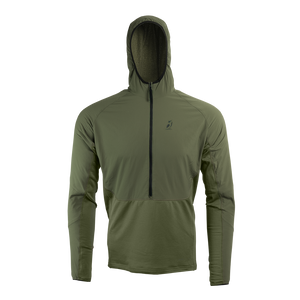
[00:57:29] Tayson: it really is. And the thing that I also like about the Nebo for that client and for like even that like slightly damp conditions is Because it's such a thin Fabric and because it's like a woven, not a knit. He does like repel the water or the snow a little bit better. It's the because we don't have to use any like really any treatments on it. A breeze really well. Right. But then there's no risk. There's such a low risk for it getting wet because it's not your jacket. It's not your insulation. It's not so If you do sweat in it or it gets rained on, like, yeah, you like, like, because like, you get these little, sometimes you get these little storms in the west where you're just like, it's only gonna rain for 10 minutes. Like, do I really want to stop and, like, the Nebo, the thing I realized after that is, like, It's so low risk because even if it got wet, it's not your actual insulation piece. And also it, dries out so fast that I just love that about it. And I was thinking about that on the cycle and like like it's it's perfect for this because it, otherwise I'd be worried about let's say it was even the Ventus. Yeah, you're right. Well, I don't want the insulation to get wet and and two layers of fabric to get wet you know? Because then you got to dry out two layers of fabric and that's

[00:58:42] Brigham: weight that it's holding onto. Yeah it's for a trip where you're you do have to do higher miles. So efficiency is way. Comes into play way more significantly. Is it is a great piece because, yeah, because you can, you never have to stop the take it off. And it's low risk, because, like you said, if it gets wet, Compromise anything, right? It doesn't compromise your safety or your temperature, regulation

[00:59:14] Tayson: that thing. I think I think one last thing with that is like you could call this a wind shirt. Like you'll see that sometimes out there like and it really is because I think sometimes when you say like a windbreaker jacket, it feels way more substantial heavy thick unbreathable. You could literally wear this like it was a shirt. It's like that breathable and Light. It's like almost all of your guys' shirts out there so so just keep that in mind and there's actually more on clothing and gear that I want to touch on at the

[00:59:43] Brigham: end.

[Editor’s note: The preceding Nebo product, fabric, breathability, drying, moisture, comfort, and performance statements are April 2024 participant observations from this specific trip—not current specifications, availability, guarantees, or purchasing guidance.]
[00:59:45] Tayson: Safety gear specifically. So Let's come, let's come back that. But yeah, I thought the same way and personally, I was, I was very happy with the wind and the cold and the rain because I was like, like, one point, I was like, oh man, this kind of sucks. I was like you know what? It really Doesn't because if it was hot me personally, and if you, if you follow the podcast a while, you know, I sweat like crazy. Oh man. It was so nice to not be overheating. And then worrying about I've got A drink more, and more water. I've got a hydrate better. I've got a take the time to mix more electrolytes, more drinks. And so, it was, it was so much easier this whole day for me, to stay hydrated. Usually, on an effort like this. I'm thinking I need to drink about a liter and a half of water per hour, but I think I got away with maybe a liter of water an hour, which was just so much more manageable for me. So, I was like, thankful like, yes, it's cold and it's snowing. But the views were amazing like to just get that disparity of colors coming in and clouds, swirling around. And then to have it cooler worked and my favorite in the grand scheme and things. I think some people that was the worst but to me, I was like, dude, this is awesome. Awesome! It was the right gear, it's awesome.

[Editor’s note: The preceding roughly one to one-and-a-half liters-per-hour hydration rates are Tayson’s historical personal report in cold conditions. They are not a safe target, medical advice, or hydration guidance for another person.]

[01:00:56] Brigham: Well it was cool because like

[01:00:58] Tayson: the joggers on you get.

[01:00:59] Brigham: Yeah

[01:00:59] Tayson: you get like a

[01:01:00] Brigham: little spray of rain. Well, most of the way up. It was like Hail or snow and then like the sum of the sun would like peek through for a couple minutes and then it would cloud up but it was like it was really cool.

[01:01:12] Tayson: Yeah. So and the views on that North Rim there it's a really cool Canyon. It's like this like you kind of climb up this main one up to Manzanita, then you take a left up a side Canyon and really pretty waterfall shooting out of the side of the mountain, the greens up. You go into at the top, you get into Ponderosa, so just a really a pretty Trail. So if you can, if you can unclick from the, the brutal mess of the climbing. It's beautiful.

[01:01:37] Brigham: Yeah. That's like yeah, you might as well. Yeah, it is what it is. It's it's gonna be physically demanding on the way up. So you might as well.

[01:01:44] Tayson: How many times have you done that? The hike up. Three three. Yeah. Was it windy on the one that I wasn't there for? I'm wondering about Canyon is always windy.

[01:01:54] Brigham: It was it was windy but like Breezy, not strong wind advisory windy, just just Breezy.

[01:02:01] Tayson: Okay but

[01:02:02] Brigham: yeah I started yeah. People started passing me coming back down the other way and but when I got Trying to think. I was pretty surprised that there was a couple people that I caught up to one of them wasn't feeling very well, but what I got up to the top Yeah, there were like a couple other hikers up there. Yeah, in our group, there was some hikers. Just hanging out and then I grabbed a couple more snacks just recitation, everything. Dumped water from my bladder back into my water bottles. So I had those readily accessible. Yeah. Enjoyed a couple snacks up there.

[01:02:43] Tayson: There wasn't water though, right?

[01:02:45] Brigham: No

[01:02:45] Tayson: yeah no.

[01:02:46] Brigham: I just used the two liter bladder, I all that. Oh and then dumped that into my bottles just so I could grab them real quick. But yeah, I was it was a quick quick stop because it was very cold up there and it was snowing. The wind was blowing and it was its Two, I don't know. two feet of snow up there. Something like that. It was cold. Yeah.

[01:03:08] Tayson: So when I started coming down because like again like you mentioned I saw you in Manzanita you're like one of the first people kind of coming in behind we left something on 15 minutes or something. I had a Brigham. And I've always known you to be the guy. That's, like, you're always gonna stick with whoever you're with. Like, if someone wants to go super fast, you just stick on their tail and go fast with them. And, you know, one of just the most strongest, consistent hikers, I know of and we started to go down, we started to pass some people that I hadn't seen a man's Anita. And dude, I started to talk to Tyler because he's still with me and I'm like, like, dude, something's wrong with Brigham. Something happened to him? No one passes Brigham on a hill. What's going on? You know, I like legitimately was like, and then, like, we passed a few more and I was like, dude, something happened to Brigham. I was convinced of it. So, if when we saw you, I was like, oh, that makes sense like you're taping your foot and all this stuff, but but again, you were all so pacing, you've done. This hike. No one else has done this on this whole group and you're pacing to do it a second time around. But dude, I had like a moment that were in like something happened, like I was like, actually getting nervous. I was like, dude, this is something's going on. But yeah, taping taping foot in the rain would not be fun. So, come down the north rim. So we I mean obviously we had, we had gaped this front group, we'll call it the Dan group because he's kind of the leader of this little cooler of of three, four people. And because they'd stop, I mean, they were, they were eating Pax off sitting there, we'd laughed. And, you know, we looked up a little behind us hadn't seen him. So, me and me and Tyler, were just Cruising down the trail. Making good time, not running, not anything. It kind of seemed like maybe Tyler was being just being real careful, like trying to really wait the polls and and and rightly. So I was trying to do the same but We got most of the way down the canyon and all the sudden just right up behind this comes running in Dan and this group were like holy smokes. Like you guys ran down the North Rim now or like what's going on? He's like oh yeah, we saw you. Like clear down there and we've been hoofing it to catch it, you know? And

[01:05:15] Brigham: they were they ran they went when when I was almost to the top they were running down

[01:05:20] Tayson: really? They were running down in the snow. That's yes, slick.

[01:05:24] Brigham: Yeah.

[01:05:24] Tayson: Dang. So yeah, they they caught us and then they they stopped and hiked with this and it was like but I think they just like it felt like they wanted to be in the lead group they wanted to be in the lead and so we're hiking with them for a little bit. We get to Manzanita I do a full stop again. You know resituate they stopped for like three, four minutes, maybe like they like you say they just filled up water really and then they just go. and so they get out in the head and so we start going and And I started kind of running. Like this is, this is an opportunity for me for just training for like this. 100 mile ultra and stuff. Like, I got 30 miles on my legs. How often do I really have a chance to just kind of open up and run a slight downhill when I'm in this far in? So my car. All right I'm gonna I'm gonna run up and catch those dudes. So, so I start jogging and I'm like, I'm moving like I'm going like 10 minute miles,

[01:06:19] Brigham: it's nice because it's it's downhill and you can you can actually pick up some Speed without like feeling. Like you're you're being hard on your knees and legs because it's gradual enough.

[01:06:29] Tayson: Yeah. so I started like doing like I probably did like a full 10 minute mile and I'm like, why have I not caught these guys? They were only like a few two minutes ahead of me, you know? So sure enough, I Come Around the Corner. Finally, see him, and they're running. And I'm like, these guys are running like They're crazy. Like they got to do this again. You know what I mean? And and anyways I catch up and kind of working behind them and I'm like all right. and they were running, maybe like, like 13 minutes miles or something so they weren't they were running running, there's more of a shuffle and So, I run with him for a minute. I'm like. All right. I'm gonna, I'm gonna go up ahead and I just kind of want to, like, push for a couple miles. And, and like this, like, again kind of thinking, like, man, if I can get some Some good faster miles on on tired or legs and stuff is just a good chance. And so I go up in front and I put down some like here laps like I was running like You know, nine ten minute miles there. But then there's clients, you'd always like stopping climb up and then you'd run again and and just felt super good. And I get all the way down into the Box Canyon and I'm like, all right, I need to slow down and fuel up. You know, because I've been drinking a little bit and eating a little bit and I was I'll talk maybe a little about this in a minute, but I was eating and then I got in the Box hand in my car and I'm gonna slow down a little bit more even and really put the food down because I know I've got another 5,000 foot line coming in. So but I didn't slow down a lot. Like I was still doing 13. 14 minute miles. Probably through there and So I'm almost to Phantom Ranch like that last little Bridge. And literally, it's starts to get real tight and they're too, like the turns get a little tighter. And and I thought I was two plus miles ahead of that group because I had just gone that fast and there was at least one spot where I looked back. And like I couldn't see him in and I could see I felt like at least a mile and anyway some Crossing that bridge and all sudden feet right behind me to do, hey, you know, I don't like just gotta jump and turn around and share it off. There's these three guys Dan Anthony and Nick and I'm like, surprised like just so shocking. I'm like, dang, you guys are like, really pushing And I think it was Nick was just like, freaking Danish just making us run so fast. Like throw it down in the bus. Like I didn't want to run that fast. We didn't want to run that fast.

[01:08:53] Brigham: But I can't not,

[01:08:55] Tayson: they can't not. Yeah, yeah. So and at this point, like we're almost a phantom and then my head, I'm going. Well, I hope you weren't running too fast to like hydrate and eat a little bit, you know, because that's like your region time. And but man, they were they were he was so happy. He was so happy like that he caught up. Just so funny to see the guy in first being like so happy. And the guy in second being like freaking and making a Sprint down these Hills and like It was it was comical, right? But I was actually really happy because part of the reason we were going to do this. Let's hike with people and Network and and just get to know these guys. And so my sweet, I get to hike out with you guys. Now, you know, and so go down to Phantom Ranch. and of course, you get there and there's a bunch of other people that are camping and we're like, you know, very quickly sorting through her gear, get filling up water and all these like everyone around us is just kind of like looking at us. And finally, someone asks, like, what do you guys doing? Like, oh yeah, we didn't remember him like Way you guys did rim rim, rim. And then one of them was like, oh yeah, we're gonna do it again tomorrow, right? And they're like, what like who are you people in? Like, where Navy Seals? He says to Like oh yeah. That makes it like it was just so funny like they're just toying with them. But so yeah. Another thing, if there's really anything else that Phantom I don't think so but yeah. Basically got in the Phantoms feeling good. I you know, really focused on getting some food down but again just a pretty oh before Phantom and the Box Canyon, I ran into three sheep. Oh, you did three sheep. Yeah, sat there and filmed him. And I mean, they just had dropped down like a steeper section and climbed up another steep section. Next to, like, one of the only parts that wasn't just Cliffs Cliffs. So they came all the way to the Bible. All the way to the bottom. That's cool. One of the

[01:10:50] Brigham: guy that Cole passed because he was having feet issues said he saw sheep as well and filmed them

[01:10:58] Tayson: it. Yeah, they saw some coming down South Kaibab is actually one was a ram. And it got stuck between two groups where it went to jump off this way. And then it hit into these guys and turn around and came right past him on the trail. Let's go. He got like a slow-mo shot of it like jumping across the train. Yeah, yeah, it was, it was it was a good video. Yeah, I was stoked. I'm like I was really enjoying the whole thing like I was The rundown of man's needed it. Cooled off, got it just hot enough where I'm like, man should I put some Sunscreen on my face, but it was just kind of like at that level. But real peaceful, nice rundown to Manzanita. Get a canyon, it's cool. I turned on some music and was just just enjoying it ran into these sheep, which was really cool. And Yeah, I'm just an enjoyable got to Phantom Ranch and and it was like, all right. This is like hot. Like if you'd been here all day it would have felt hot. I think. But yeah, just a good clean. Clean run for me to at least. So did you, did you fill up water like at actually at Phantom Ranch or down by the river? Papa General Store there? Oh, that was kind of the funny point is I literally there filling up stuff and one of the guys with us went to go like try to buy a beer or a lemonade or any see what they had on the store. I guess, he got behind some people that were, I don't know what they were doing, but he was clearly unhappy. About it. Yeah and because he's like, he's trying to buy it, they couldn't you know so I'm like in there feeling up and I just assumed that they were all getting water there. So we go to leave, we leave, we get all the way down to the river. Where there's that other water stop. And they're like, hey, do you guys need to grab water and I'm like, It's like half a mile. What do you guys mean? Yeah, well you got water. I'm like, what were you guys doing? If it's like I don't understand. I thought we were all getting water there but I just wasn't watching what they were all doing. I guess, and I don't know what they were doing, but so, yeah, they stopped. They stopped there to get a little more water than I had already. I saw that both ways at the General Store. Their Phantom Ranch. Well,

[01:12:55] Brigham: okay.

[01:12:57] Tayson: But yeah, so yeah, I was your hike down and and back down to all the way down to Phantom Ranch.

[01:13:03] Brigham: Yeah, it was it was, I mean it was glad to get off the top for sure because it was I felt like it would just it just kept getting colder and colder and to a point because you get low enough that it starts getting warmer. But you know, it was, it was fine and the seems like the clouds kind of were breaking up a little bit more, so there's some more sun. It was just really pretty like those that change of being cloudy into the sun was really nice. And yeah, I just kept kind of a moderate pace. So that was when starting down the north rim was, when I started having to relieve myself, like At least twice an hour. It was I don't know if it's like going downhill or if it was a cold but that was like the start of it for me where I was. I was stopping so much. To go to the bathroom.

[01:13:57] Tayson: They're also not the fastest pit stopper. I've ever met just throwing that. No, no. I'm like I'm I would be like done and out of there like 10 seconds. No,

[01:14:08] Brigham: minor. Probably a minute stop. For sure. Maybe more, I don't know. But yeah, they're not fast pit stops. So it bothers me when I have to go that much. So I went down, stop had to stop several times just from there to Manzanita. But then, when I got to Manzanita the site, it was nice. There was it was not raining or anything. So I'm like, okay well I'll try taping my foot again. So got some more snacks. And that is kind of where I decided to eat, like some more, like a more substantial. So I got like, my, my main lunch meals, as usually like a tortilla with salami and cheese and mustard. So I got that out and ate it, you know, ate some more substantial foods, and then just repackaged all my stuff to be accessible. But then I, yeah, then I had to take my one shoe and sock off. Retail. And it was it was it was it was dry. So it wasn't. It wasn't a problem. Yeah, use the bathroom. I did Stretch A little bit, just haven't gone down that. I just stretched the legs. took a few minutes to do that, and then Hit the trail. There were that point, I think there were There were, I don't remember who it was. There were some guys behind me but they I thought for sure they'd catch up, but they didn't. So I just hit the trail again,

[01:15:36] Tayson: you know, I'm like the camera guy like Justin and that group.

[01:15:39] Brigham: I never saw. I didn't see them. Okay, at all, I saw them coming down and yeah, I never saw them from the time way up on the South Rim when we first broke away but

[01:15:50] Tayson: had to have passed them On the way down from the north.

[01:15:54] Brigham: No. Like I I don't I couldn't explain it like I don't know. I never saw them except for going down the South Rim. Okay. Um but, Yeah. Left left. Man's need a and I think kind of like you that's a that was very enjoyable. Hike, such a recharge where it's like you get a lot of recovery just buy hiking at Same Pace. I mean, even like a faster Pace, but on that stretch it's like seven, eight, miles of really good trail. That's the nice thing about that. Stretch is it's like consistent Trail and you can get in a rhythm and it is like recovery while you're going and so that was I really enjoyed that but yeah from like North Rim down to Probably that tight stretch of Canyon. I was like totally by myself and then, Great weather. Feeling feeling good. Just continue to have to stop and and and go to the bathroom. You know, how

[01:17:06] Tayson: are you doing? Like? I think you're over hydrated or maybe you didn't have enough salt to retain it or what are your any thoughts on that?

[01:17:16] Brigham: I don't know. I mean, it's hard to it's like, I don't know if actually over hydrating actually causes that, you know what I mean? I would assume it does. I was I was consuming two liters of water between every water stop. So, for Manzanita to the northern back to Manzanita, I consumed four liters of water. Over 14 miles, that's a lot. So, I mean it, I'm sure that's probably most of it. I felt like I had in terms of how I felt. I felt great in terms of like sodium and electrolytes, so I think I my intake was fine. but I was just became just so inconvenient and annoying to stop so many times. But I felt good, you know?

[Editor’s note: The preceding four-liter intake, urination, sodium, electrolyte, and possible over-hydration discussion is an individual historical interpretation, not a diagnosis or medical, sodium, electrolyte, or hydration recommendation.]

[01:18:07] Brigham: I mean yeah eventually right when the canyon got tied again. I can't remember his name but he was like I caught up to him and he looked like he was walking like pretty slow. So I was just like hey man, how you doing? He's a zipper pain Guy Brian.

[01:18:25] Tayson: I think his name his name?

[01:18:27] Brigham: No it was the guy that finished the hike last year. I forget his name. Because there were two that said they'd finished like last year, he was one of them. So I was like, how you doing, you know, I asked him how he was feeling and anyways, he's like, oh yeah. I've got my feet are torn up. I've got big old blisters and he had said he was unhappy with his shoes and So, I hiked with him for a little while I just I'm like, well getting down towards the bottom having hiked with anybody for several hours now. So hiked with him until he had he's like, I gotta stop and get off my feet for a minute. So I pressed on and Just got down to. The water spigot on the right by the river. So I didn't stop in Phantom, Ranch. Proper. I just went through and then just stopped at that last water spot right by the river. and, Yeah. Filled up water and that was where I mixed in my super fuel. Yeah, powder.

[01:19:36] Tayson: Just so I have high carb drink, mix you get about

[01:19:39] Brigham: 400 calories.

[01:19:41] Tayson: In your drink mix.

[01:19:42] Brigham: Yeah, so I had I think I had three extra Scoops in that. Rationed little Ziploc bag. So it was probably like more like 450 or 475 calories.

[01:19:53] Tayson: Yeah,

[01:19:54] Brigham: but I was kind of staging to have really faster burning. calories, you know, accessible and I'm trying to think what that was probably. It was almost dark. not, I don't know, it was right around Sunset, I'd say yeah. But yeah, fill the water to get freaking cold. Yes it was crazy. How fast the temperature started dropping and I was I was still just wearing an altitude hoodie and but I wanted to be in that as long as possible for the uphill stretch. Yeah, but yeah. That guy wasn't far behind me. He caught up to me, right about the time. I was putting my pack back on to hit the trail and then Yeah. Started at the uphill stretch cross the bridge.

[01:20:46] Tayson: Yeah yeah. So I mean I guess for me just a phantom ranching out to kind of cap off some of this. Um, yeah, there's essentially that point there was three other guys in me to started out. And I had I had very, and I'll cover this a little bit here in a little bit, but I Slowed down fueled up new. This climb was coming and so I was hoping it's kind of, those were like he gets to the hill you're like I hope I feel good. Got to the hill started up and was like I don't feel great, but I feel like I can hold a very steady pace and feel good about it, right? So like you're starting to slow down a little bit compared to say the north rim climb and was feeling good. We started up there, got about a mile into that and And Dan, you know, I think, I think, from what I understand, he hit a calorie wall, right? He so he he like, dang, your stopped. Like he had, like, slow down that like like really significantly and get some food and stuff in them. And so he dropped back, so then it was Nick and Anthony and me just cruising out and it was I got brutal. Our goal is to like my kind of goal like we kind of had a time goal that these guys have been kicking around and then and then it was like, all right like we're slowing down pretty significantly about halfway up the climb. So let's just see if we can get out in daylight like we can get to the top and and off to put our headlamps on like that was kind of the new goal. So yeah, just kind of kept pushing clicking him off. But man, we hit this sign halfway up. And you don't think it's halfway you think like oh we gotta be like you know 70%. Plus the way up this thing and you get to the sign and it says 3.5 miles to the to the south rim in your life 3.5 miles. So then I do the dumb thing and I pull my phone out to check elevation How much more climbing do we have, right? And it's like 2500 feet and you're like we are literally halfway how can we possibly be only halfway? You know, so I had to like kind of get to into my mental state of like, like I didn't it didn't like slow me down or stop me, but it was one of those words like Sucks that I wish I didn't know that, right? Like Because it definitely after that, I feel like the two guys with me, mentally, all so kind of wanted to slow down and eventually Anthony kind of he stopped and put some more layers on. I mean, do that guy can wear a lot of layers but he stopped, you know, kind of put some layers on like, yeah, go ahead and so we kind of we pulled out a little bit from him but it was that's like where the real last. That was like the the only part of the trail. The honestly fell like a real grind was like the last mile of the north rim and this like three and a half miles on the south rim. But the thing that kind of was just got a little frustrating. So we were still getting beautiful views. But then not long after he passed that sign. This wind just rolled in and I mean, there's one point when you're kind of on more of like a convergence of the, The Ridge. And so you can see off one side, see off the other and we were on this thing and it was just like, blasting us and like, all right, this is not as fun anymore. Like I had the Nebo on. I wish I had gloves on but I didn't want to stop and use the gloves. Because I have these trekking poles that have like grips, and it's a battle to get gloves on and then put those grips back on I love those poles but but Gloves with them or just a little Annoying. And so I didn't really want to stop and so then you just you're just hoping it out and I mean we passed a couple groups that didn't not look like they were in good situations, but you know, they're just pushing on like what else do you do? Like, so many people drop into this Canyon and just going down. It's so much easier than when you turn to go out. And so they get themselves into Situation. So one of the guys, we passed was about at that halfway sign to to Asian guys, that on the older side of life and they just did not look like they were I don't know, but I we passed them and then like another group passed him later on, I found out. Plus hours later and I was like they passed some three hours later and they'd only covered two miles still. Yeah. Like they were down to a cry. Remember hearing that. And they were

[01:25:04] Brigham: They were tourists, like they, it was you or the other guys, tried to talk to him, they didn't speak any English, you know, I mean, so they definitely did not know what they were. Getting into.

[01:25:15] Tayson: Yeah. It's it's so it's I Canyon's brutal. But yeah, we we pushed on got to the south rim me and Nick. Which this is Nick's for these guys as well and a kid a kid's tough. Like he's never really done distance like that but he was a Former College running back and he's just an athlete, you know, and he he pushed on hard and, and did it pretty? Dang, well, but Yeah, we got to the top snapped the photo. And then that was it like where's the Headlands? And at that point it was so cold. It started snowing right? Then like maybe started snowing with like less than a quarter mile for us from the top. So we ran over to the bathrooms, you know, shut the doors essentially to stop the wind and then and then layered up and then we got all layered up and about time we were about to leave, Anthony showed up. So then and just waiting for him to hike back to camp, but it was like the whole hike back to Camp like the three miles across the top flat. We're just in this deep conversation of like this is bad like this. this is potentially sketchy because I don't know what these other guys have packed. I don't know what kind of layers they have. I don't know how far back they are because like if the speed that we are moving and the speed that we are passing, some of these people, it was like, these guys are gonna be a long time, right? And then if you're down in a canyon and it's that windy and that cold for that long, it can become a real risk especially if you've got to stop or someone gets injured or anything. And so the whole backpack to Camp we're like you start to think like this could be real bad for people and That was definitely like the talk of the conversation for the rest of the night was like, man, I hope people have decent Gear with them. I hope that they're still moving and Yeah. But we got back climbed like immediately into our tents like had to literally Shake snow off of our tents climbed into our tent, Scott warmed up and I kind of jokingly said like we should go get some food but I wasn't sure if they wanted to or not and then sure enough Tyler shows up and he's like, hey we're going to get pizza. So like we rush out be like basically smooth. Talk our way into a seat before they closed the restaurant. And yeah, we had some nice hot pizza and we're just thinking about everyone else who's still in the canyon, did he roll in with Mark and Steve? At that point, he rolled in with Dan. He was a damn, okay. He caught up to Dan, and then him and Dan hike down together. And then, Mark and Steve, we had left and I think they must have showed up. Pretty quick, after we left to go get food. I don't think they're much behind us. But yeah, so we went ate. It was awesome. I mean for me, dude, it was an amazing day. It was like, Smooth sailing. No injuries. Not really feeling too sore. Like my strategy, which I can kind of get into in a minute. Like it was Smooth felt that was like, it was like a Redemption trip on the canyon because the first time the canyon beat the guitar out of me. I got injured messed up my knee for months. It was just a battle. And so this one was like, for me, at least it was good, but then in the back of my mind, I'm thinking there's some people hurting right now and that Canyon, you know, you're just thinking about that. So, yeah, we get back to camp and then and then Steve who's kind of like the, the organizer of this group, you know, he's like started asking about a question and then he essentially, he's like, all right, I'm gonna go and like, wait at the trailhead so they don't have to be the last three miles in this freezing, cold snow. And that was kind of it. I can't remember. If I went to sleep before you got back, or if you like or if I think I was just in my tent and you showed up, I was about to go to sleep. You showed up, you know, asked asked how your trip went and just sounded like you were just hitting your marks to to go back and you're like, all right, I'm gonna try to get a few hours of sleep and then go back for round two and I'm like, breaking them. I don't think anyone's doing around too but I'm jumping ahead in your story here. But oh, it's fine. I mean because well, so

[01:29:21] Brigham: Yeah, so I step off from the bottom. and like I said, it was the end of day, you know, getting Sunset, ish time and so start climbing and yeah my my goal was kind of like with the North Rim was to just keep a steady Pace up the North or up the south rim and You know, because again, like I came down here to do it twice. and, it's probably I mean it's relevant to climbing up the South rims, like my strategy like we were actually when we stepped out of camp in the morning and we're kind of walking along that along the top for those three miles, kind of mentioned to a couple other guys like My kind of timeline is how I was trying to strategize it or game plan. It was like if I can do the first round and 18 to 20 hours like that then that would tell me. I was like Doing my pay. I was keeping my Pace like in that window, how I wanted to be just in terms of energy management, so that's kind of how I was strategizing my Pace up the south rim and I was feeling quite good and I should say. I went down and did this hike by myself four weeks prior. And so throughout this whole hike I was kind of like mile for mile comparing. Where I was at and how I was feeling compared to four weeks ago. There were some, there are a couple conditions or one major condition that was different. This trip versus the earlier trip which was the the timing of my sleep but I was like mild for my all feeling so much better than the time I did it before. So when I you know, I wanted to be really careful and just for context. So on the previous trip four weeks earlier, when I started up the south rim towards the end of the hike, like I hit a wall that I would say was a sleep deprivation wall and a calorie wall. I hadn't managed my calories very well and I had been awake for a very long time and those two combined to like reduce me to Rubble for like three miles and so I was comparing how I felt and I felt really really good. Like in terms of I felt strong. Yeah. My feet were really hurting but like you know, as terms of Physical ability, like I was feeling great. So I just maintained that pace, you know, that there's kind of like I'd call it a break area. There's like a little Hut. It's an open Hut. That's got like the benches inside. Yep, it's not fully and close but it does have a roof when I got to that. Oh, you were still, I

[01:32:14] Tayson: was always from the top. I was feeling like

[01:32:16] Brigham: feeling really good. My feet were killing me, but I

[01:32:20] Tayson: that's where you hit your sleep while last time.

[01:32:24] Brigham: I hit it before that even before that basically quarter mile up the bridge ask the bridge

[01:32:31] Tayson: yeah to there for very long climb out

[01:32:33] Brigham: is where I hit the wall but when I hit it when I got to that place at this point I was feeling really good and I'm like okay well I'm gonna I want to get off my feet for five minutes so I set a timer and that's when I put my Nebo windbreaker on because the wind started Like you were saying, you know, it was a really dirty into your eyes. It was like It was, it was and so I thought well, I'll get in here. I'm gonna just Lay down an element elevate my feet for five minutes. I didn't even like stop and eat or anything. I was doing really well on calories so I did that. And then figured I would check my one heel again. Tape it shifted a little bit, so I just kind of like slapped another thing, a tape over the top of it and that actually was a pretty quick stop maybe 10 minutes. It was totally dark at that point, but from then on was when the Rend, the wind was just blowing. Snow and it wasn't a ton of snow at that point on the trail. But All, I don't know. Maybe a couple miles later was when it really got bad. Now that sign that sign that you

[01:33:47] Tayson: passed, everyone saw that sign. Well, what's interesting for me is like

[01:33:51] Brigham: For me, that sign is a more positive experience. Because that trip prior when I was like, just really in in that wall Zone. Yeah, that sign is when I started coming out of the wall because I had stopped and drank a bunch of calories and and pounded a bunch of like high like sugary foods. And so, Mentally for me, seeing that wall was like, it was like, okay, this is like the downhill stretch, even though it's very much uphill but like, mentally for me. It was like, there's that sign. I remember last time, Starting to feel better when I was around this area, and it's like a, those switchbacks just gonna say, am I got surprising your feeling

[01:34:36] Tayson: better at because that is the absolute steepest. Part of it

[01:34:39] Brigham: is, those switchbacks are like, in my opinion, the most physical Obstacle of the whole south rim and that sign is not even. At the end of the switchbacks it's like 3/4 of the way up the switch back, she still have more. But I do remember, you know, like for me, it was like, okay, there's the sign. It's not like I was like happy about it, but it was a it was like a positive motivation for me. It, which was good because I needed some positivity. Because then from there, the rest was like the weather. It was just like wanted in the high exposure spots. Yeah. And so I, I wanted to just stay with just the Nebo on again because it was, it's physical. But I also, you know, that was when I really started thinking about the The effects of the weather, you know, and potentially, what they would be on me. But at that point, it was dark that every once in a while, I would check behind me, you know, you can see the line of headlamps behind you, you know, all the way down the trail to the bottom. So then I was kind of doing the thing where I was like thinking about other people of like, okay, there down there. And the weather's getting bad. So that means they're going to be in this weather longer than me and I knew what I had. So I was quite confident in managing the weather or the conditions. But yeah, I'd say from from there, I had it really well in my mind, I've got like my Milestone checkpoints from there, all the way to the top. So it's for me, it's just kind of a okay. I've just the next checkpoint is this place and then this place and then it's the top. And so But man, it was like one, probably one one and a half more miles. Where there's a lot of exposed ridges and the wind then, at that point, like a mile later. So now I'm maybe two and a half two miles from the top, the it was like the weather just stopped like, even holding back and it was full snow and it was like hard icy snow. And it was blowing horizontally out at you and your hiking by headlamp and so like the the light from the headlamp reflects off all the snow and it's really hard to see and the wind was physically moving me a lot of the time. And so I was like Very conscious of like those are very dangerous conditions for like a quick onset of hypothermia. If you're like, If you're not dressed, right? Or if you're not dressed, right? And you have to stop. And so like You know, I was just quickly calculating all this in my head and I was like, man, I'm starting to get very bothered by the wind blowing like stinging my face with the snow and so I just like I just like doubled my speed. I am I just really started stepping it out because my thought was like one. It's gonna warm me up, too. It's gonna Make it less time that I'm in these conditions and three, I'm tired of this. Dang snow in me in the face. And so, I was just like, I want to get out of this. I treated it like it was like a, you know, just a something I just wanted to get over with. So I just picked up my pace for, like, the last two miles and two miles to the rim and like, yeah. By the time, I got to the top, the ground, you know, grounds covered with snow, quite dangerous conditions, and I kept looking and the lights. you know, we're just getting farther and farther away like the headlamps of people behind me and so there were a couple guys up ahead of me that I was kind of getting like, Just write up about to. By the time I got to the top of the south rim, I could just see him like one or two hundred yards ahead of me. But it was it was freezing cold. Like it was really really cold and and the wind just was not slowing down. The snow was not slowing down and once I got to the top, I did stop and put on a fleece layer. And then put the windbreaker back over top of it. Put both hoods on. And then just have that three mile. three mile hike back to Camp, which was interesting because I kind of just followed the group when we Went from Camp, down to the canyon. but, So, I wasn't really familiar with the route. I was like kind of going off memory and Footprints so I was just trying to follow the footprints of the guys in front of me and but I was also trying to go as fast as possible and I think I was probably going about like four miles per hour Pace but and I was just falling Footprints falling Footprints and because if I would like look up there was just so much snow blowing, I couldn't really see. Yeah, it was, but my lights could actually see the footprints and so I was just following that and there was a couple times where I, I started seeing the footprints and then registered, wait a second. These foot Are going back towards me now. So I was like, okay, I guess I better turn around so I would just turn around and follow the footprints. And then you could tell that they were like They had gone past a turn or something and then I and then I get behind them. And then I, I think I'd see kind of like the reflection of headlamps way up ahead in. there was like two or three of those instances but yeah, I definitely tried to kind of book it back to Camp once I got Got to the top but yeah, I mean this guy's ahead of you had said, like they thought you were running at one

[01:40:33] Tayson: point because you increase your speed so much. I

[01:40:36] Brigham: mean, it would have looked like it too, especially because like when you're trying to go fast, You do have to almost like start jumping up on some of those logs. If you're gonna, if you're actually gonna pick up your speed so

[01:40:48] Tayson: yeah

[01:40:49] Brigham: it was it was interesting and yeah I got into camp and and I actually, you know, physically, like I was feeling quite quite good and again, especially comparing to how I felt the last time, when I got to the top I was like pretty, dang tired. but you know, I was feeling like I could pick up pace and push it out a little bit faster, but um, but yeah, it was interesting and so, yeah, you were, you were in your tent and those two guys were the only People that I saw when I got to camp. talked to them real quick and then went over and kind of talked to you through the tent and that was kind of, when you were like I don't think anybody's going tomorrow because like the consensus like when we

[01:41:38] Tayson: got up there was It was brutal, it was hard, but the temperature dropped so fast and so much and there was so much snow coming down. And I think after you've done a 49 mile day, it's not the time when you want to reassess. If you're going to do finish something, right? Like, yeah, so far and you're so tired and you're getting sleep deprived your time. So like the, the snow is like the way that they got, those hiking with me. He's like, this is the icing on the cake. Yep. This is what, you know and essentially because then you're thinking like well that trail could be slick like it doesn't it like on the north rim even though it was like you take a few steps on it hardens up refreezes and now it's ice right? And so that was I think the number one thing that people kind of side is like the trails gonna be, too sketchy to go back down with with really fresh snow like this and See, everyone kind of had said, no. I think we're not and then because I had seen Steve like in the van and go over there. I was like, that's not what someone would do if they were like planning on going back out to do another 50 miles. They'd go straight in their tent and go to sleep, get calories in and go to sleep. So I'm like, my like consensus. Like, I don't think people are going out the group. I was with weren't acting like it. Steve came in was acting like it. So when you got there I was like, very just so you know, like before you go dive off the canyon, when no one else does. I don't think they're going?

[01:42:56] Brigham: Yeah, it was, it was really weird. Just an interesting because I did most of the hike by myself, you know, I mean, so like I get to Camp by myself and so like I had no idea who was where, you know what I mean. Like I had no idea what conversations had gone on ahead of me and so, but I wasn't go about to go like knocking on tents and asked waking people up. I just assumed people were kind of sleeping. There were those two guys that were just ahead of me.

[01:43:24] Tayson: I talked to you this Dan his plan because, you know, he's like kind of leading the charge, he wasn't gonna sleep at all, he was gonna turn and burn on the south rim and I like I kind of like just kept asking, like, are you serious? Like, that's insane man. He's like, yeah, I just think, like, if I stopped too long, I'll get swollen, I'll get this. Like so, like, I don't want to get all stiffened up and I was like two. That is bad. A like to just turn and and burn on the south rim that was his original plan, you know? I was like, that's

[01:43:54] Brigham: interesting. Yeah. All right. So I so at that point, you know, you said that everybody else was basically asleep. Well, I mean, to my knowledge, right? Like I didn't even know, Mark and Steve had taken the van. Like, I didn't even know they weren't in Camp. So I was just like, well, I'm gonna get in my tent, eat some dinner refit and set my alarm for three hours from. Now, that was kind of what I wanted to do, was get three, three and a half hours of sleep and then and then get up and I just assumed that that was kind of what was going to be happening, is that people would just be getting up at their their times and The probably probably when I get up there's probably gonna be somebody else and a couple other guys doing the same thing. And so, I don't know, we can kind of transition back to you and kind of what's going on at this point.

[01:44:49] Tayson: I mean, I was like, I said I wasn't ever planning on doing it the second time and so I'm just hanging out. I don't have a rush to get into sleep or anything. So it's kind of listening in and I'd heard did like kind of bump into Steve here, a little bit there. But then, yeah, I mean, I talked to you went to bed and and just assumed known as going back out. And then sure enough about 3 a.m. Steve came walking over to a group of 10. So it was right by ours and was like, hey, You think you could get up and go sit at the trailhead. I can't stay awake any longer but these guys are non-responsive like I'm messaging them on the Garmin I'm messaging them on the phone. They've always been responsive in the past. Like usually we're sending messages back and forth and I'm getting no messages back and so I'm worried but I can't stay awake any longer, right?

[01:45:33] Brigham: Yeah.

[01:45:34] Tayson: And so, as he's having this conversation at 3 a.m. The guys finally get to the top and call Steve on the phone. And so like as he's having someone else getting ready to go, get in the van to go sit at the trailhead, he gets a call and it's like, oh, they're out there at the trailhead. I'll go pick him up and that was the last group of guys. There's three guys, that was

[01:45:57] Brigham: so,

[01:45:58] Tayson: so yeah. So then I'm thinking like I might have said something I don't remember but I'm like breaking no one's if Steve has been awake for all these hours waiting. And like that's this whole situation. I'm like dude. Don't if you're still thinking about going again. Don't because no one go. But yeah,

[01:46:15] Brigham: that was yeah, that was It's interesting like peace and all together because like I said, I got in the tent. Had some dinner just kind of got myself ready to get some sleep and I set my alarm. and, I fell asleep. Like I would say, probably pretty instantly. and, But I did, I did wake up. and I remember hearing, like, because I had like a hood on bumped, but I had, I had like a hood on and I was in my, in my quilt and lean against the pillow, and but I did what I did wake up and I guess I didn't. Think it was my alarm, but I remember hearing Steve kind of moving around and like I could hear some of these things. but it was like in my mind, it wasn't making sense because I remember kept looking back and seeing headlamps behind me. and so I was just like, am I like you know, Delirious or is this not making sense and I was like, trying to pay attention because I was like Who would have been well, who was behind me? That was terrible weather. And like, so then I started like running through Well, if anybody stopped man like to rest like you could getting really bad situation, if you were just like so tired that you thought the right thing to do was stop and rest and you're totally exposed like there's no, there's no shelter. Um, so I, you know, if they maybe had some Gear with them, then maybe they'd be okay. But yeah, I was like, trying to piece it together, things weren't adding up and I was like really tired. Oh yeah, because I do remember, I think I looked at my phone, I was like my alarm hasn't gone off yet. but then, I That all kind of, like, settled down. I didn't hear what. Actually

[01:48:13] Tayson: you aren't that. Somebody had enough to know what happened

[01:48:16] Brigham: somebody called and said like, hey they got there, I didn't really hear that. so I I went back to sleep and then I think when I did check my phone, I was like, okay, well I'm going to reset my alarm for an hour. so in my mind I'm thinking like oh well if I just wake up in an hour Get up. If anybody is up and going, then I'll go with them. If they're not, I'll set it for another hour and then do the same thing. but I, and I remember thinking, like, But at that point, it's going to be between like five and six if I get up a second time and if nobody's up at that point, like there's no way anybody's doing it in that time frame. The

[01:48:57] Tayson: time frame, they had to leave on. Yeah, Sunday morning. So

[01:48:59] Brigham: yeah, I went back to sleep and then woke up to my alarm, kind of woke up, stuck my head out, nobody was, there was not a light on, so I went back to sleep again, woke up around 5:30 ish. Did the same thing and it was totally dead. So then I then I like zonked, till 7:30, maybe 8:00 or something like that. Yeah.

[Editor’s note: The preceding overdue-hiker, nonresponse, snow, sleep-deprivation, and 3 a.m. account is historical. It does not establish a current emergency protocol, safe wait time, communication plan, or sleep strategy.]

[01:49:25] Tayson: I mean, just to wrap this, the story part of this up really quick. Basically, got up the next morning, snow all throughout Camp. I was kind of shaking snow off my tent. There was a little, there's a surprising lack of accumulation for how much snow. I feel like I shook off my tent but, you know, like there's maybe one or two inches Max, you know, and we kind of hung out the next morning talked. And then we kind of just, just broke down camping and headed, our own ways by 10:00 or so, but awesome, awesome hike, but wanted to kind of go back really quick and just talk about a few key pieces. I feel like, so if you're interested in doing this hike, absolutely recommend it obviously physically. I think you understand now, like it's extremely demanding, don't go in there. Like, untrained don't go in there without a game plan and and stuff, but So some of the things I wanted to touch on I actually did the math just because I think it's valuable to track this and share this, I consume from the time I woke up and then got back off Trail. I consumed 6,600 calories. I had brought much more than that. I brought about over 8,000, I probably could have eaten a little bit more if like on the very end of the the thing. But it got to the point where I was like So close to the end. My hands are so cold. I don't want to deal with it. And so I just kind of quit eating essentially like the last but 6,600 calories. So, electrolyte wise. I drink, I don't know how much I got there, but I was aiming for pretty high electrolyte numbers and I try to drink a lot of my calories. I packed about 22 is either 22 or 2400 calories of drink mix specifically And I got off the trail. I bet I had consumed about 1800 or more calories in the liquid form. I really, really like those for climbing, just like you mentioned, because you don't have, you got your hands and your trekking poles at that point, you can't be, like, eating gummy bears efficiently and climbing, right? And so, I really tried to make sure that I was drinking my, the most amount of calories on the climbs. Food wise, I brought the number one food for me was mangoes. I had those Costco mangoes. Oh my gosh. I bags and bags of those you know I had some bars going down, pretty easy. I had some, I like some Knack purees that I like, and then I had some like, that's it bars. Which is like a fruit Blended up fruit bar, but it's like 100% fruit. And then just some like fruit puree things, which is basically gummies, those all went down really well. And then when I would stop and I was researching, I'd grab a handful of jerky and I'd eat those at the actual stops. I didn't really want to eat them while I'm trying to run but I grabbed those eat them while I was there and then I kind of walk out of the place with the with the handful of jerky and that was kind of like my protein. Trying to make sure I was getting some protein throughout the day. I think that that helps as far as maybe slower burning, but also just, you're breaking down muscles the whole day. So I think it's, it's good to be putting some of that in throughout the day. That's kind of like my food strategy as far as what I took, but I think the bigger thing was I I was very cautious of how I wanted to execute this, I wanted to hike down the south rim. Once I got to the bottom, I wanted to put my polls in my pack and free up my hands. Give my arms a break from like stress and get them like, so that they're fresh again when I get to the next climb. But also get my hands free, so that I can eat and drink, right? So then I really like that. So, from like Phantom Ranch all the way up to Manzanita and bolt directions. My hands were free and I consume a lot more calories. And the idea there is, this was going through those sections basically, like juice up like, get, get like, well, over 1000 calories in my system and so that when I hit the hike, I'm kind of re fold up and and then I don't have to eat as much while I'm actively hiking that worked really well. Both in terms of getting a lot of calories in during those sections and all. So, I did like having my hands free allowed me to film a little bit me to eat a little bit and then my arms just, I don't know, like it's a real thing, but like they're just fresh like so like So that was my my strategy there really thought that strategy worked well and probably the number one benefit of putting my poles away was access to eating. While I was going. I mean, I was, I mean, just my after mile, I was just you know, popping yogurt covered raisins in my mouth or, you know, just just kind of just getting it down and I think that worked really well because I did not hit any kind of walls on the climbs tell, maybe the South the top of the south rim, when I just kind of consciously Quit eating and because I didn't, I just didn't want to anymore and I was like, you're so close and we're gonna hit our timeline that we were like we were hitting. We're on Pace for what we wanted to do. So

[01:54:06] Brigham: yeah.

[01:54:06] Tayson: So that's kind of my my strategy with it. I I was planning on doing some light, you know, faster movements through Manzanita to Phantom that bottom part whether that was jogging or whether that was you know, hiking really fast. I wasn't sure but I did plan ahead of time to move quickly through those areas and then you know, not try to like run or do anything too crazy on the actual rims themselves coming down or up. Yeah, mangoes were the were the ticket, man. I ate a lot of mangoes. I've never eaten. I don't have a Costco here, where we're at our cities, too small and so, I think that's my new thing though. Is anytime I down there I'm buying a bag or two of those because those are my like they're heavier, they're not like the lightest calories per ounce, but Just went down so well. Yeah,

[Editor’s note: The preceding 6,600-calorie total, drink-mix amount, electrolytes, foods, protein, timing, pacing, and calorie-wall discussion describes one participant’s April 2024 choices. It is not nutrition, medical, hydration, or performance guidance.]

[01:54:53] Brigham: they yeah. I I certainly appreciate the bag. He gave me. I enjoyed every one of them because they they're I don't know, there's there's sugar on them. It's important to like Recognize. And test out and prove out for yourself. Like, what you consumed easily and like mangoes. Yeah. For me, too. They something about the The chewing, the sugary, the consistency, how easy they are like you eat one. It makes you want to eat another. So it's like with the like the really long distance high mileage when you when you actually are really trying for maximum efficiency like how easy your food is to consume, is like a big factor in your efficiency, and in accomplishing like, The the plan you want to execute, right?

[Editor’s note: The preceding food-ease and efficiency claims are historical participant opinions, not a performance guarantee or nutrition recommendation.]

[01:55:47] Tayson: Yeah, yeah. when you want to eat it and make a difference, So, yeah, I think I kind of sums up those sides of things some of that strategy. Now, some other things that that we specifically mean you did on this hike and I think is very wise. Let me comes to like, emergency gear, like we always have like first aid kits and things like that, but we specifically also brought some prototype down pants and a, you know, a down jacket of some kind, right? A puffy jacket and the reason behind that and I also brought gloves and some really lightweight rain mitts so I had some pretty good warmth on my hands. If I needed to add those two layers, both of them are really light but they do On both, they do really well. And the idea here is, we knew from previous experience like, let's just say something happened and you had to stop and you're on the north rim. Like, it's so cold. You're likely covered in moisture from sweat that your body temperature can start dropping so fast. It becomes it becomes a very dangerous or like you said pretty hypothermic, or actually hypothermic situation, so fast and people don't think about it enough. So we have these like well we just call our down suits. I mean, it was like between the two piece is it's, it's Maybe a pound, right of safety gear. But man, there's a lot of peace of mind that comes with that because again, when we got to the top, when I got finished with the hike and I was thinking back, I'm like those guys in the back, like what if they have to stop? What if And they don't have a down suit, you know what I mean? It was like, man, that is so, so much safer to have some gear like that. And so, maybe you don't have specific gear like that, like puffy pants, but I mean, at least bring like, thermals and a rain layer so that you can layer a few pieces on and try to retain some of that warmth. Because when you got 40 mile an hour winds and you're kind of wet and cold, and let's just say something happens. You even hit a calorie wall you have to start moving too slow and you start to not generate as much body heat and Downward scary spiral.

[01:57:50] Brigham: Yeah. I mean I kind of my strategy, or my reasoning between behind taking that down suit like Was a lot of it was based on the hike four weeks earlier, where, you know, I did that by myself and I hit a calorie wall, a sleep wall. And I thought, you know, if I had knee, if I had actually tried to stop and get some sleep on that trip, I would say a best, it would have been pretty hard because it was not nearly as cold but I also, um, well actually on that one, I did have the down suit but But if I needed to sleep, I could have slept because I could have kept all my body heat, right? Like, I could have curled up on a bench, put my down suit on with my windbreaker, underneath to block all the wind and actually got, you know, say 20, 30 minutes of sleep and recovered and then finished the hike. And so, going into this hike, that was a big part of it was. Well, I'm trying to do this twice and I know that at some point sleep, deprivation could come in. So I want the ability to Stop and sleep with without threatening my safety and actually be able to get some sleep. But then all, when we looked at the forecast, it was like a no-brainer. I'm absolutely going to bring this the the puffy suit because again like let's say I do run out of energy and I need to lay down and take a quick nap. Or, you know, I you know, maybe we need to help somebody else or wait for a group to catch up to make sure that they're on the right route in that whether, you know, you are so sweaty with that wind like it'll suck the heat out in five minutes like in five minutes if you were to stop and just sit there with no, you know, no other layers and you're wet like You could start getting hypothermic and probably five minutes with those with those winds and the snow. So that was, that was like a big part of the strategy and like, just what seemed, like just mandatory safety. and that was, you know, that was heavy on the mind that night was like, those guys behind me like, if they're if they're exhausted, if they're going so slow, that they're not even Generating body heat then you know, that could be a bad situation.

[Editor’s note: The preceding down suit, puffy layers, thermals, rain layers, wind, wet clothing, cold exposure, hypothermia, stopping, and sleep claims are historical participant reasoning. They do not establish a safe insulation system, exposure time, treatment, or emergency plan.]

[02:00:18] Brigham: So, Yeah, you know I I'd say my pacing strategy, I felt was pretty much spot on like I finished in about it was about 19 hours. So I was kind of right in between the 18th, 20 hours and I felt like I had a lot of good energy I think I probably left 500 Cal unconsumed. I probably consumed about 4500 that day, but I felt, I felt good, you know? and yeah, it was It was good. So last couple things I

[02:00:54] Tayson: want to hit on because and I just looking at this, I got a I got some meat and we've been on this way way long and this has been awesome. I love retelling this story and reliving it because it's just such an epic day in adventure. But Two other pieces of gear. I wanted to point out personally Number one, Injinji socks. I've got to push and try to get these inside the membership. You know, for those who don't know, we have the Live Ultralight membership. 10 bucks, a month goes, ten dollars into your store credit and then you get discounts on everything we sell including retail items. But these Injinji socks, I went through the whole hike, zero blisters zero issues whatsoever. I was consistently bump, you know, other guys were taking off shoes messing with stuff talking about it. The interesting thing was I was not the only one on the hike with Injinji socks. Every single guy with the Injinji socks told the other guys, the exact same thing. I like never had a blister with Injinji socks. They worked so well for me. Like I don't even need to bring two pairs of socks now and so on and so forth. If you're doing big efforts like these in particular like I still like darn tough for certain things. But when, when, especially when you are not too afraid of being cold because I like by by doing the toe socks and spreading your toes out, you get like, it adds a cooling effect to your feet. And is that part of where, like the blisters, you know, come from. But so I would just say, don't necessarily wear them in cold temperatures, because I did that once and they're freaking cold, freaking cold. So, for this phenomenal and and there was multiple other guys in the group that had the same, you know, experience with me, you know, specially again like on the front. Like maybe not for you or is on the heel but like on the front of the foot phenomenal toes, you know, and all that are just keeps the heat down and friction down. So those are huge win. And then just the Skyline pack for an effort. Like this, that thing was absolutely amazing. Right? I'm packing water and food up in the front vest area of those Pockets. Underneath the bottom I can store more things for me. I'm running my camera and my phone down there, but you can easily put gloves or I put my windbreaker down there. One point, or my bag of mangoes down there. Like food has a lot of access for a long day out like this doing 49 miles. You know, I also need to carry a little bit more than like a little tiny day pack, you know, because I do have like a little down suit in there. I'm carrying a lot of calories. There's a little bit of first aid stuff you want. And so that pack capacity-wise and and like, for the effort itself, Just absolutely worked phenomenal for me. It was really, really happy with it. And, and for guys looking at doing efforts like this, I think it's definitely one to look at. Yeah, you can go with a smaller pack, for sure, you know, get like a 15 liter, maybe even smaller. But you are like maxing that back. Pack out and and I don't know, I really like this one for that because I don't have to Max it out. I can always shrink this down more and more. But it's like to handle it. Well, it's like it doesn't start bouncing right. A lot of these like they're basically running bests and then you like put 15 liters of gear in them. They get a tremendous amount of Bounce, which then creates friction and blisters on your back, or on your side. So because this one is designed for heavier loads just never had any issues with with, you know, that never ending blisters or rashes or things like that. So, that was a home run. But yeah, those are just some of the we were talking about the nebo's, freaking awesome. Use the Skyline Trail Shorts. They're awesome. I went with a Long sleeve altitude because I'm I've been really conscious lately about like overheating myself and so trying to play with some different gear because I've just been such a hoodie guy for so long, trying to play some different gear to help with that. The long sleeve worked really well, I will say that on the north rim. I was using the Nebo hoodie to help block that. And that was kind of the idea there. But man, the Nebo hoodie was like 10 times as loud as an altitude, but he would have been because the wind was just Flapping that so loud and I had to have the hood on so that my hat didn't blow away because I had my hat like as tight as it would go. It was just a whole whole thing. But the Nebo was awesome and you know, everything really worked out for me. Had the HOKAs—no blisters. HOKAs worked great. Never even took my shoes off the whole day. So yeah, that's kind of gear breakdown for me. I don't know if any any last words because I'm a couple minutes to wrap this up.

[02:05:25] Brigham: Yeah, I'd say the Injinji socks are good. I use them on my last one. No issues whatsoever was using different shoes. I don't think there's any pair of socks, that could have done anything to prevent the issues that I had heels heels are just different but but they absolutely work. Well for the toes and they work well for everything, my last room for him. The on the packs. Whether or not you have a Skyline or not, I was using the CS40, but just making sure you have the ability to cram a ton of accessible food and fuel and drink, mix that you can just do stuff on the go. Is it's a huge. You have upper pocket. Yeah, I added two shoulder strap pockets and then I have my hip belt pockets and my water-bottle pockets on the CS40. So I was able to load up a lot of stuff, really accessible. That's key just in a high mileage trip like this, where it's like, you're beyond the normal mileage that you're going to be able to. You know, have a end of day recovery, you like end of day and then a whole other day on top of that, but you need all of that nonstop. So yeah, that was big. I do, you know, for me having a kit that's got some Leukotape or other tape to take care of feet because I had a feet issue, you know, that was obviously a major factor for me. Yeah. I mean I think that's kind of my big gear takeaways, I use joggers the whole time I packed a pair of skyline shorts in my pack in case the weather was favorable but I did the whole thing in the joggers and and honestly they were like perfect for me because of the weather conditions

[Editor’s note: The preceding Injinji, Skyline, CS40, pack-access, blister, load, fit, and product-performance claims were recorded in April 2024. They are not current specifications, availability, guarantees, or buying advice.]

[02:07:12] Tayson: they were they were perfect. Yeah I might have said that I did a shorts but that was that was inaccurate. I did the entire hike in these joggers that are gonna be coming out in early summer and same thing. They vent extremely well, but they block the wind. So they work like a, you know what I mean? So I'm not North Rim. I'm not getting just smashed by the wind and having a rip away on my heat, they're venting but they just have that edge and so perfect. So I loved him for this, I never Never felt like I was overheating in him, but I was sure glad to have them on both of the climbs out when the winds whipping and stuff. So if you're someone who, I mean, they're just a really cool tool to have in the tool shed, right? Like well, some people like hate the idea of like hiking and getting stuff brushing against their legs and stuff. So like that works for them but like it's like you're hiking in a pair of pajamas or I run in these a lot. So here it gets freaking cold in the winter and you're running. And on mornings that it was windy, I would literally run in these. And I I mean I'm running 10 plus miles in these and it feels like their shorts. Like I would forget that I wasn't wearing shorts essentially like that's how well the fit the work is for me. So, yeah, look forward to these, they're, they're sweet tool to have for barely a couple more Oz than the shorts weigh and the shorts weigh, four and a half ounces, right? So like you're talking a fraction of the weight of typical pants, but just massive utility in these things. So really excited to get those out and they were, they were money for this trip. I was a lot of the guys do one guy hike jury. He acted in his underwear for like 10 miles.

[02:08:48] Brigham: Oh, we did. Yeah,

[02:08:48] Tayson: he had pants and he's like Pants are too hot. So he just ripped them off and hiked in his underwear for miles. And, you know, so that's like a good example of just like I was never too hot. He was in these pants with vents and they were way too hot for me, even with the vents. So really, really cool product, really excited to bring it out and there's definitely an awesome use case for it.

[Editor’s note: The preceding jogger launch timing, weight, venting, wind-blocking, fit, running, comfort, and performance statements were April 2024 prelaunch claims. They do not establish current launch status, price, specifications, availability, or a performance guarantee.]

[02:09:12] Tayson: So all right, that was our recap of our rim to rim to rim adventure and Adventure. It sure was. And but what? A hike, highly advise. You guys have this hike on your your bucket list. Now, you don't have to do R3 and one push, there's different ways. You could do it, you could just do rim to rim, you could do, you know, north to south and stay in a hotel. Come back to the north. To break it up over two days. There's options here. So don't feel like you have to do it this way but getting into the Grand Canyon, it's amazing. Don't just see the Grand Canyon from the top of the rim. There's so much more to that Canyon. As you drop down into it, you can camp down in there. There's multiple camping site areas, Cottonwood and, and, and Phantom Ranch, another one. So go spend some time in the Grand. Canyon highly, highly advise it, awesome, awesome trip. Hopefully, this was valuable in terms of a good story but also in terms of a few key takeaways for you to take, if you ever go and do a trip like this. So, Thank you, Brigham, for coming on spending a couple of hours with us. Maybe our new longest record. I don't know, but but it's awesome. So, okay with that. If you guys would, please share this podcast around anyone that you want to hike this trip with us someday. I think that'd be awesome. And just make sure if you have not yet rate and review the podcast, as always go join the Live Ultralight membership. It's a phenomenal way to save on backpacking food other Essentials as well as save on all of our gear and it doesn't cost you anything. You just load $10 in store credit every month. So it's a phenomenal offer, thousands and thousands of people joined have joined this, and they stay on it because it's, it's such a win-win scenario. And we're adding more and more to it all the time. So, go check it out. Make sure you guys are subscribed and we'll catch you on a future episode of the live ultralight podcast.

[Editor’s note: The preceding Grand Canyon route suggestions, podcast CTA, Live Ultralight membership, $10 monthly store-credit, discounts, savings, value, participation, and subscription claims were recorded in April 2024. They are not current route, permit, safety, product, price, membership, credit, launch, or purchasing guidance; current terms and conditions require separate verification.]