[00:00:00] Tayson: Everybody welcome back to the Live Ultralight Podcast, powered by Outdoor Vitals. Today, we are going to be doing a race recap on the Bryce Canyon 100. However, we're bringing on a new host for the day, so usually, I'm obviously the one hosting, but in this situation, I'm going to be the guest and we're gonna let our friend Jeff Pelletier, kind of interview, me and walk through the race in that way. So for those of, you know, don't know, Jeff me and you probably met about three years ago through the podcast and Jeff runs a large YouTube channel travels all over the world running these Ultra and we've stayed in touch over the years. And then last fall is when I got to meet you in person through pacing you through the Moab 240. But for those who don't know, go check out Jeff's YouTube channel.
[00:00:45] Tayson: He's a fantastic interviewer, just some amazing films, but really, I'm just gonna turn the reins straight over to you, Jeff to, to be the host, I guess for for today.
[00:00:54] Jeff: Yeah, well, I have questions for you, and so I figured instead of you and I doing a, you know, our 90 minute the, you know, call and hearing what your race, I figure, why don't we record it and let people in on these questions. So, what I thought we would do is we talked a little bit about your background, how you came to running because running is a relatively new thing for you. Talk a little bit about the
[00:01:15] Jeff: This race series because I don't know much about these, the vacation race series. And then, of course, we'll get into the race as well. And then do a little bit of a play-by-play. So first of all though. Congratulations man. First hundred Miler you did exceptionally well. So congrats, how are you feeling overall? Physically mentally just, you know, how are things?
[00:01:34] Tayson: Yeah, yeah, I feel really good. Like I had I had some, you know, like my foot hurt for like a day, but the swelling went down and it was totally fine. So, like I really had no long term issues. Now, there's like some weirdness. I think when you do an effort this big, we're like, like, I don't know what's wrong. But my, my calves feel a little, just different than they ever have before. But all things considered, I'm feeling really good about the effort and feeling good, physically.
[00:02:01] Jeff: Good. So your relatively new to running. You've been running now for, I mean, I guess about two and a half years, I know you picked it up shortly after I think we first spoke on the podcast. Tell me just summarize for us all how why you started running how you started running, what that Journey has been like. Why, and how you decided to run 100 miles?
[00:02:22] Tayson: Yeah, so I never anticipated running Ultras. I only started to run to condition for backpacking. And for fastpacking, I was getting more and more interested in this idea of like, hey, if I go from being able to hike 15 miles a day to being able to do like a fast packing trip, or maybe you cover 30 miles a day. Suddenly like a whole world of Trail opportunities, open up to me, for my life, my timelines. You know what I mean? And so that was like the Spurs like, hey, I've wanted to go do certain hikes for a long time. I've never done them because it would take me too long and so I got really interested in fastpacking and I just saw running as the tool to train for that. So the whole first year that I did any running at all and I'm
[00:03:09] Tayson: talking like I'm going from like I'd run like maybe a mile on a treadmill at the gym before I like lifted weights, that was the most I'd ever run or like in gym class growing up when they'd make you run a mile. Yeah. But and those were those, I feel good if I ever could complete those without getting a side, ache or like having to stop and walk, like, that, was my condition of running, right?
[00:03:27] Jeff: That's, I remember reading a, there's a quote that's like my sport is your sports punishment? That's like when you're playing soccer like go run four laps around the track. Like
[00:03:36] Tayson: oh man, windsprints for football like that. There wasn't a worst torture. You know what I mean? So yeah, that was my history. So but as I started Train for fastpacking and things like that. I started to just follow guys like you but then also it just opened up this world of of like distance and Ultra distances and then ultra-marathons. And so I just started like, I started to get on my radar and I think after, you know, the first like, six or so, months of training, I was like, I wonder if I could do an ultra, sure. And funny enough, like our first real fastpacking trip. We went over this mountain range called the Tushar Mountain Range. It was like a 70 mile trip and we bumped into some guys that were up there and they're like, oh yeah, on Saturday we're running an ultramarathon up
[00:04:17] Tayson: here and I was like, oh I never knew there was an ultramarathon in our own backyard on this mountain range. And we left that that trip and that just kind of stuck with me. So eventually I looked it up and was like, huh? Maybe I could run this Ultra right here in our own backyard and so You know, it's probably about 10 months into me starting to, like, run once or twice a week. When I was like, hey, I'm gonna sign up for this first Ultra, and then I can like, and part of me to be honest at that. Point was like, then I can talk to guys that run Ultras and be like, yeah, at least I've done it. I can relate and I can ask better questions and understand it, right? And so that was that was a part of the first thing.
[00:04:54] Tayson: But then there's also the side of me that was like, I don't know why, but like a marathon doesn't seem like a hard enough effort. Or like one of thing and some like like my Marathon, like everyone's like, I want to run a marathon once in my life to me. It was like if I ran an ultra that would be cooler and be like more of a challenge. And so, yeah, that was really, it sign up for that first Ultra And it punished the crap out of me and and then I don't know why I stuck.
[00:05:18] Jeff: And so yeah, so so an ultra being like technically is anything longer than a marathon. A marathon is 42 kilometers, 26 miles roughly, and technically and all for his like anything longer than that, in practice it usually it's around 30 miles, 50 kilometers is usually and then 50 miles or 80 kilometers and goes up from there. So how long was that first Ultra that you took on?
[00:05:39] Tayson: So it's called a 70k. But it's it's like 75 plus K and reality. So I want to say the first year, it was around 4546, Mi
[00:05:46] Jeff: sure, sure. And that's like, 46 miles of trails with elevation change. So it's a lot of time on feet to this isn't marathon pace. It's it's up down and you know, there's a station to take breaks but you're moving for hours at a time. So I remember talking about that. You learned a lot from that. I know you're struggling still with some hydration and nutrition issues but it sounds like you got the bug what started out as a bucket list item for you. You thought? No, no, maybe there's more here for me. What's Next. Alright, so
[00:06:14] Tayson: I finished that and I like it, I think it's on camera and I was like, don't ever let me do that again. I don't need to ever do that again. And I mean, and that's through like my slurred speech because I was so messed up and my face was twitching and I mean, it was bad, right? And two days later I was like, I have to go back and do that again. Like I I like had like a Revenge bug. Honestly where it was like I have to like do that how I trained to do it and right and I kind of had the bug. Yeah
[00:06:39] Jeff: yeah so how long after that was it when you chose, you know? Again there's these these benchmarks and ultra running. There's 50k, 50 miles or 80k, 100K is another one and then 100 miles, which is the big one. That's the one where you're you're running through the night, you're seeing the sunrise to me that there's something special about seeing the sunrise while you're out there. Riding so, to me, I don't think everybody has to run 100 miles her but there's something special about doing that. When did you decide you want to do 100?
[00:07:06] Tayson: Um, honestly, it was not even on my radar for the first two and a half years of running. So I ran that first one and the idea of going any farther was like impossible. So then I ran it again and I was like the idea of going any farther was like pretty much. No still like there's no way. So it wasn't until last October which was I don't know how many months ago now six or seven months ago or something. When I came out to Pace you And I was running kind of 30 miles segments, with use. I ran the first one took a four-hour nap. Came back in. I mean, it was probably longer than that, but that's how long I slept. And then ran another 30 miles and it was cooler conditions because I was usually running with you in the night time
[00:07:48] Tayson: it's a slower Pace because it's a 240 mile race. Not again.
[00:07:52] Jeff: This was the, this is the Moab 240. Of course, a lot of people will have heard you talk about that. So I was doing a 240 mile or taste and was coming up to join me for sort of Starting around that just after the halfway point for some of the more mountainous sections as my pacer. Yeah. And so, through that effort,
[00:08:09] Tayson: it turned on this light bulb of like, hey if I like slow down and I don't run it crazy, high altitudes and I don't find a race that's so hot and exposed, maybe I could go farther, like, maybe this impossible thing of doing say 100 milers, 100 miles or like might be possible and so that got the wheels turning. But prior to that it was like no, that's completely impossible for me. I'm Not a runner, right? Because that's always been my. Excuse was You know, I'm a 200 pound Runner like and I'm not built for this and I haven't done it my whole life. And so it always felt like I was I don't know I run but I'm not a quote, unquote Runner and and so yeah, it wasn't until I did that effort that I'm like maybe in the right situation or if
[00:08:51] Tayson: I just if I didn't go run at the top of 12,000 foot Mountain, maybe I could do it and so that got the wheels turning. And then, yeah, I kind of shopped around looking at 100 for a minute and it was pretty tough to get in on my realized pretty quickly. There's qualifications for them and the ones that like I've heard of, they're like, sold out. Wait list Lottery system
[00:09:12] Jeff: Lottery is yeah.
[00:09:13] Tayson: And so I kind of like looked at that at the end of last year. And then I found a couple that would like That just doesn't look like fun, like it was like real deserty, I don't know. And so then this one popped up the Bryce Canyon 100 on my onto my radar and I think the reason had popped up before is they they don't run their their system off of UltraSignup, seems like they kind of have a competing product per se.
[00:09:37] Jeff: Yeah. So
[00:09:38] Jeff: this is, if I can jump in, this is the Vacation Races, that's the race series. I, I don't know a lot about their Races they look to be maybe smaller but very Scenic and slope. Canyon Bryce Canyon Zion. So they're there, they're living up to the name. It's like these are vacation destination places to run and so what you're mentioning is UltraSignup.com is sort of And it's the, it's the main website at least in North America for Ultras where you both find and register and even look for results. You can find athletes all their results are on there. It's like one one system and yeah, like you said, they're not, they're not on there. And so, but obviously, this was close to where you live here in southern Utah. So you're probably looking for something not too far from home, and this is almost in
[00:10:24] Jeff: your backyard right, Bryce Canyon. So it does look beautiful. So what is it about? This course that appeal to
[00:10:30] Tayson: Yeah. So um I mean one, I just wanted to run something that was pretty like not just like there was one that I was looking at like outside of Vegas and it's like literally running in this dirt hole, you know, it seems like and so yeah when this one came on it's like oh it's gonna be pretty. I know that. It's it's local. And the reason I hadn't come up, this is only, they only run every other year for the 100-mile distance and so okay. So that's why I like, when it finally popped up onto my radar was like, oh wow, like yes, I'm really interested in this. Like, it has mountains, it has scenery. It's not like just crazy monotonous and stuff and so, yeah, I looked into it, I literally looked into it. It had a qualification of running a 50-mile Ultra before
[00:11:07] Tayson: that. I've never run one. I've only run like these 45 to 47 mile ultra is and so I actually had to email in and say, hey I think I I think you should consider letting me into this race, you know, this is my ultra running career but also like, you know I'd like backpack a ton and you know, different things and they're like, yeah, we'll let you in and then sorry I so like oh but in that conversation too dark. But you should do Antelope Canyon instead of like this one. And I'm like, what do you mean? They're like oh yeah Bryce Canyon's like a harder one and I'm like yeah I'm interested in running in just the sand. Anyways, they let me in and so then I was like okay I think part of that like played into the conversation into my decision of
[00:11:44] Tayson: like well now I have to But, I literally thought about it for, like two days. I hadn't been running prior. I've been running about maybe five miles a week, prior to signing up.
[00:11:53] Tayson: I had three months before the race and I thought about it for a little bit and I just asked myself the question of why not? Instead of like instead of look at all the reasons why I shouldn't like I just was like, why not and then why not now? And and really I couldn't come up with a great reason not to because I think in a lot of like when you go start looking at 100 Mi training plans and stuff, I think most people plan him, a little farther out than three months and do training training, a little farther than that, but I was like, you know what? Like I think I met this stage right now on my life where I can just dedicate all of my free time to it, and So it's like why not just do it right now and so
Editor’s note: This describes Tayson’s personal three-month build for a June 2024 race, not a general 100-mile training recommendation.
[00:12:31] Tayson: yeah, went for it.
[00:12:33] Jeff: And like you said, you you're coming into it with maybe you know, not necessarily like a lot of running experience but a lot of backpacking experience and 100 milers. I mean there's a lot of hiking in it too. There are typically designed where the cutoff times like you might have Up 10 Runners really, competing and racing and then everybody else is out there, kind of just trying to get it done and usually the cutoff times reflect that. So I think I'm gonna get into the race itself but I'm sure you're you're, you're experienced just time on feet, just being out in nature that grit that you developed too. I'm sure played a role in your success here as well. So tell us about the race. This is 100 100 miles, but it's my understanding is, it's actually basically two big 50 miles Loops, right. It's
[00:13:14] Jeff: two Loops of the 50 Mi course.
[00:13:15] Tayson: That's what they changed to the week of. So it was supposed to be the original big loop and then a big out-and-back. And the out-and-back went to the highest point in the race, up to like 9,500 feet. They changed that to two 50-mile loops and of course, like your 50 mile Loop to like, like the 50 mile, Mark is like, the closest to the start and finish, which that up. But
[00:14:01] Jeff: And then they also it's got. It has seven to nine thousand feet. They said, I'm not sure where you ended up with was that.
[00:14:08] Tayson: So with the loop, the way that we did, it ended up having about 15,000 feet of climbing.
[00:14:13] Jeff: 15,000 feet of climbing. Wow, yeah,
[00:14:15] Tayson: yep. And then, there was one, there was the last thing that they pulled on us, the night before was, there's another aid station that they end up closing down. So there was a 30 mile segment of no crew.
[00:14:26] Jeff: Okay. Do you know roughly how many racers started? Yeah, there's
[00:14:31] Tayson: there's about 115.
[00:14:32] Jeff: Okay, 15. Okay. Yeah. So on the smaller and but that's actually pretty common for North American Ultra as they tend to be smaller compared to say, a comparable racing Europe. So, so let's get into it, then we've got this race. Few curve balls thrown at you, it's now two Loops instead of one. So mentally, that's more challenging which we'll talk about more elevation change than you would banked on, tell us about the sort of the start time. You know, set the stage for us for that first day and what your goals and expectations were heading into the race.
[00:15:07] Tayson: Yeah, so goals and expectations, obviously goal. Number one is to finish. Now, I'd looked at this course previously in previous years and there was almost a 50% failure rate of people, right? And so to me, I was like that says, two things that either says, like, Vacation Races is attracting vacationers. Sure. Or or like the course is harder than people. Expect? And then when I talk to some people like the racer, the race people put on the race. They kind of said the same thing like, oh, Bryce is the hard one. It's like and then they're not, like, look at the the layout. I'm like, I don't see how this is, as hard as like, the, the Tushar one that I done, but knowing that, it was like, all right, goal number one is finished, like everyone else is done a 50-mile. Ultra, I never
[00:15:50] Tayson: have half of them aren't finishing so I need to finish. Number two was like, if I ran exceptionally. Well, I just I thought that maybe like a 30 hour mark would be possible. And but I also like looking at the metrics that depending on the year that was like top 10% of Runners which I'm like that's probably way too high but again it's not a race as much as other races that are, you know, UTMB qualifiers or I mean or like, you know what I'm saying? But yeah, where you go in the world, something like the perfect scenario. I could do this in 30 hours but
[00:16:23] Jeff: the goal is to finish for sure. And what is the cutoff time for the race? 36 hours 36, okay? So that wouldn't give you a huge buffer but like you said, it would put you in the top 10%. So 36 hours the race started on the Saturday morning at what 5 a.m. Yep. Yep. Which is pretty typical. So you're waking up whatever ticker 3 a.m. get ready for ya. So and then that start line in my office. So I was able to sleep in
[00:16:51] Tayson: a little bit longer.
[00:16:51] Jeff: That's great, you're relaxed. You don't have to worry about traffic and trying to drive somewhere in the morning, but that would put you at like, he'd be starting a five in the morning and you're finishing kind of the next evening. you're running all day all through the night and then Into into the
[00:17:08] Tayson: house. At least. Yeah. Look cut off would have been. I want to say around. Oh crap. I think it's five p.m.
[00:17:15] Jeff: 5 p.m. all right. Around lunchtime, call it. The next days here. Running a whole day all night and then the next morning. So tell us about how you felt that morning.
[00:17:27] Tayson: Yeah. So I was doing everything I could because I have all these theories, like, I've done this, this other Ultra where I've failed, you know, in my mind kind of like fail that certain aspects of it. And so I was trying to bring in all those things and one of the things that I theorized about was that I get excited for the race in an elevates, my heart rate, and then it caused me to have like, early cramping issues. But obviously there's other aspects. Like the high altitude and the other race and some other things. And so I didn't take any caffeine, I tried to just stay super level-headed and then I kind of had these like Governor marks. Meaning like I don't want to run faster than this. So I was too scared about getting too relaxed and wanting to go too fast because
[00:18:06] Tayson: there's all these Racers around me and so I really focused on that in the beginning. So the whole morning it was like Smooth, like get to the race line. Smooth. Don't get excited about anything. Like, try to just play this. Keep that mindset. And so yeah, I mean, that was kind of where we were at. We ended up starting and then just start running. I didn't think I was towards the front but like I just remember watching like because you're on a big open dirt road to start. I remember a lot like letting all these people kind of pass me and I'm like, okay, like be cool with it, just relax, like this doesn't matter, you know, cuz there's really any reality like position doesn't matter and didn't matter for me. but there's a there's a psychological side of Passing or getting past, no matter.
[00:18:47] Tayson: If you're 60th place and it goes to 61 which is like, it doesn't matter. But psychologically, in the moment it's easy for me to, to care about that. And so yeah, I just remember like trying to run really slow first miles and just not get too excited because I was so nervous about elevating that heart rate too early in the race.
[00:19:05] Jeff: Good. Yeah, yeah. Running your own race is so hard and that's, you know, something you learn I think with experience is That idea of like you want to be passing people but it's much better to get past early and then be passing people later in a race like that and maybe maybe that'll be the end of being what you're experience was. So just kind of summarize, I mean, you know, how did the first say 50 kilometers go for you? Because that's kind of the warm-up, you know, 100 mile race. And was that kind of your thinking, was it sort of just like, get say 50k 50 miles in my cow? What was your strategy?
[00:19:37] Tayson: Well yeah, so the very first crew-accessible aid station was about 18 miles in and so that's like a bit of like the landmark I was looking at to get there and feel good like if I could get there and feel good because also keep in mind both of those other Ultras that I ran, I started cramping by like Mi 10 which was totally impressive. Right? Like I don't it's still like just a weird thing but yeah. So it's like just
[00:20:00] Tayson: If I can get there and I'm not cramping, then hopefully I'm in a rhythm and the rest can fall into place and so yeah. So the first miles like They went they went smooth. Like I found someone that I talked with for a little while and was able to breathe through my nose and then we kind of got funneled into this really steep climate at that point. There's some other race distances that started funnel onto the same Trail. So then it like it got clogged up for a while and I mean there's just some different Dynamics where but It get like one of those scenarios were in the first Ultra is, there's like a really steep section and the first Ultra I would have been like, oh, I got a pass these people like, why not? And this one, I'm like, no, like just just
[00:20:35] Tayson: hang out here, like just walk it, you know, it doesn't matter. And and then we got up to the top and there is just a really long smooth Road. And so, I just ran a big like Nine Mile segment there and so really Just felt quite smooth. Got to mile 18 and you know I actually took this from you but I had like put together a Chart. Essentially, that I gave to my my group that has, like, all of my, like, the aid stations here, and then, like my projected times, they get like wider. I mean, it was I saw that on your video and I was like, That's money. And so when I rolled into the, the Blue Fly, excuse me, that would have been East Fork, aid station, and saw my crew for the first time. They're like, hey, you're ahead of schedule.
[00:21:19] Tayson: And in my mind, I was like, that's perfect because I was trying to really hold back, so like I felt, I felt like I hit that spot in a, just a great, a great position. And that gave me a lot of confidence, like, hey, I, at least ran this first part, right? And hopefully now, I'm
[00:21:33] Jeff: like into a Groove. So, tell us about your crew. What was your support system for this race?
[00:21:37] Tayson: Yeah, so I had my parents were there, they just have a truck and a camper shell, which I thought would be really useful after watching. You use the Ross monster on the Moab 240 and and it ended up not being as big of a deal because I didn't like sleep, right. But But no, so, I just had my parents there. I'd like laid everything out, had all of my, my drop bags for each aid station. And really, the only thing that I had to like prep them on, was having them pre-mix like my heart, high carb drink mixes into a water bladder and then that way, I could just swap out a water bladder and grab anything else that I needed. And so that was, that was the crew. And then I had one of our guys from Outdoor Vitals their filming. He was
[00:22:21] Tayson: there on a media pass filming and then I did have a Pacer that was going to come in at mile 65, that following night.
[00:22:27] Jeff: So, yeah, and so let's, let's talk now she's well about your nutrition and hydration, at this stage, you're probably still on your plan and things may have changed later, but what was at least your plan for nutrition and hydration going in?
[00:22:41] Tayson: Yeah, so, my plan was to be drinking. I because I'm like a little bit of a bigger guy. I was aiming to eat or drink over, 500 calories an hour and then for salt intake it was to be drinking and all my fluids at least 1,000 milligrams of sodium and every leader. And then I was like any eating of is a little bit above that. And then for amount of hydration, I was, I was kind of my range, I guess is typically like middle of the night, might be like, one liter an hour but then peak of the day gets closer to two liters an hour. So I want to be
Editor’s note: The calorie, fluid, and sodium figures that follow are Tayson’s historical race plan and personal experience, not nutrition or hydration guidance.
[00:23:22] Jeff: more happy your heavy sweater. And you you've determined that. I think through both testing as well as just anecdotal experience,
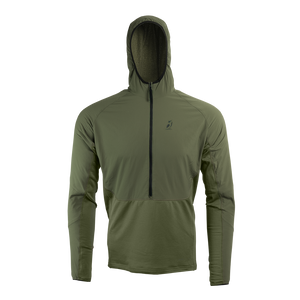
[00:23:28] Tayson: right? Yeah. And I actually switched out some gear and some things this year to run in some gear that was a little bit more helpful for heat. And so just realizing like, how much better I perform in the cold. And so I ran in a slightly different kit where I've been running in like a sun hoody before. Yeah, I just realized how much additional heat the sun hoody was bringing on. And so, like I used to say like, oh, I switch two leaders, an hour that is like the maximum worst conditions. And so, I have been able to pull that back just a little bit with changing up some gear and some things like that. But, yeah, overall, I was kind of planting on ranging, you know, closer to about a leader and a half or less an hour. Yeah. That's kind of like the
[00:24:07] Tayson: three markers. Now, I will say though, just like the week prior to the race which is always the worst thing, right? But I jumped on a call with with a friend who, you know, was around Runners a lot and has a lot more experience than me and It kind of laid out my strategy and he's like, oh man, like if you're drinking, if you're mixing in that much carbs, like you may have a hard time like eating on top of that because I was intaking like, you know, almost like 100 carbs an hour in the drink mix essentially. So then he's like, you might struggle to eat but like that's fine. So then I kind of have that in the back of my mind where it's like I kind of deprioritized eating just a little bit because I knew how much I was drinking in
[00:24:48] Tayson: carbs so primary source. Absolutely was carbohydrates in the drink mix with Skratch products. Scratch a little bit about the Skratch Super High Carb Drink Mix, I'd imagine. Yeah so he's the super fuel, they call high carb, drink mix now write it rebranded that and then I mix in their other product. The sport drink makes Get the right concentration of salt. And then I did have, you know, I'd learned from other experience to to have one flask and then just some salt tabs. So that I can kind of use the one clear water to help regulate if I'm feeling one way or another perfect.
[00:25:22] Jeff: Yeah, that's really smart. So, made it through the first aid station. 18, kilometer 18 miles. He said for the first supported aid station were there other Aid stations every what 10 miles?
[00:25:32] Tayson: Yeah. So the first we kind of ran through one at like two miles but that was more for the next round. So the real other aid station that actually did anything out. Was it about mile. Nine Mile nine. I stopped grab my drop bag and swapped a couple little things and then ran and basically another mile or nine miles into the next one so
[00:25:50] Jeff: well. Yeah, not miles. Both 15 kilometers. That feels like a good Cadence to me for, for an eighth station. It's not too, you know,
[00:25:57] Tayson: not because I had all of my drop bags planned for the previous or the different distance, and they were They were slightly bigger distances, so then when they shortened them all, made it harder for me because I was had, like, my water bladder, a two liter water, bladder, that I was using a lot. And it's not like, wait that's gonna be too much fluid for this distance now and so it's
[00:26:20] Jeff: right. So kind of through the math off you. Yeah, but so take us through the next, you know, the next 18 miles
[00:26:28] Tayson: or so. Yeah, so the next 18 miles had like a six-mile push to another aid station area. Things went really smooth there. You know, ended up talking to a guy named Andy for a while and he'd run Leadville and so it's just kind of learning. I guess a little bit about that from from people that are run other Hundred Mile races and and Ran into the next eight station. There's lots of dust like mine, you like we run on some of these roads and there's just this powdery dust. There's lines like almost a mile of like vehicles that seemed like because they had like three or four different distances, coming into the 18th and so that made it a little bit challenging but everything went smooth. I mean, the only thing, it didn't go smooth. There is, I filled up my water bladder and I
[00:27:13] Tayson: and I I don't know if it was me or my parents but like somehow the top didn't seal and it just exploded all over my lap and so I'm covered in like sticky goo basically. But that was like the only thing he didn't go smooth and then I anyways got got the stuff I needed. There went to the next section which is an eight mile section and that's where things started to get hard again. Now, I knew that like in the middle of the day from experience for my own experience. That I needed to dial back effort, a little bit in the middle of the day because I am a heavy sweater and because I don't do great in the Heat and so it's like, hey if I'm gonna dial back anything like dial back in the middle of the day, turn it on at
[00:27:51] Tayson: night, right? Like go harder at night and and so that was in my mind but it still wasn't like I thought it was still kind of earlier morning and it was probably but I was probably about noon by that point. And so what that next section is these is these roller like you kind of like roll into a canyon and then kind of roll out and roll in and it's down and then back up and down and back up. But overall you're like net, gaining over and over and over. And so by the time I finally got through that like all those rollers I was like holy cow that was a lot of climbing but kind of like sneaky climbing and it was and it was like slower a little bit slower of a section than I thought, but from there, Kind of dropped down
[00:28:29] Tayson: pretty steeply and then run into the next, a station. And at that point, that would have been an area called Red Canyon. And that was about 33 miles in. But that's when it's like getting into the heat of the day and a red Canyon. You know, you go and do a loop right there, which was like, I had heard along the way from people that were running it. They're like, oh yeah, that section really sucks. And so it's kind of like building that up in my mind but Got into Red Canyon and Joe, it was their filming decided. It was like, oh, I can run this like, six mile section with you and get some film. So he jumped in and I was still feeling really good at that point. So I was climbing really good, feeling really good and so I did push a
[00:29:12] Tayson: little bit through that section. That I can remember and I was passing people on these climbs and I remember Joey and like man you're like climbing really well. I was like yeah I feel really good. I've always been usually I'm a better climber but I remember looking down at my arms and just seeing like my entire arm was just glazed with sweat and I'm like Hot like it's it's definitely getting hot and it's totally exposed to if you've seen Bryce Canyon it's these open desert Red Rock, Canyons. There's no special in this area. There was no vegetation and so it's very exposed. It's one two in the afternoon, but made it through that section. Still feeling really good still running. I had been concerned, too, because in some other Ultras, my My shin or like my tibialis gets really tight and starts to hurt. I'm
[00:29:58] Tayson: gonna starts to hurt my knee and so I'm kind of just, you know, being thankful for as long as I'm able to run in a smooth as I'm able to run. And so, even on like these steeper sections, was still moving early fluid and well, and so at this point, still things are going really well. So when I loop back into that red Canyon aid station, that's where that like 30 mile segment comes in with no crew. And you know, like you say it's only like two in the afternoon so it's like, hey I'll see you at like midnight, you know, like tonight or 11 p.m. and because of some of the changes in the course, thankfully, I realized right before I was about to leave that I needed to grab a headlamp even before I'd see them again. And so, yeah, that was kind
[00:30:44] Tayson: of like where the race started more so to like become like not just a smooth sailing thing but
[00:30:52] Jeff: Yeah. Looking at the elevation profile on your Strava. Like yeah, it's started out. You get two big clients. You guys climbed up to 2600 meters. So that's like 85 8600 feet, I think. And then you kind of like I can see all that. Like it looks like just a lot of rollers but then you drop all the way down but you never go lower than what is it here? 20 100 meters around 7 when I was in. Yeah, so you're that's the lowest you got and then you start just climbing again and that's probably what you're talking about now. Yeah, I can see her heart rate. Fluctuating a little bit there, it looks like it might Spike to bit. When you had somebody filming you might have been a little bit of adrenaline, maybe that's all. So where like you say got warmer but paint
[00:31:33] Jeff: a picture for us of what the terrain looks like under foot at this point, how technical was it were able to get a bit of a flow where it was a single track, was it, you know, what was the train itself like
[00:31:43] Tayson: yeah, so pretty much for Mi 25 on, it's all single track until Let's see about mile like 56 or something so there's a huge like a huge section of just single track and and part of it was like a bike trail that's a little bit more established. There's some equestrian Seth going on in that area too but it was single track. Now as far as how technical there would be a segment like the bike trail segment from Coyote Hollow to Red Hollow really quite good trail. Except for there's a few steep downhills as far as just like technical underfoot not not too bad.
[00:32:20] Jeff: Was it send dirt lacrosse? What
[00:32:24] Tayson: was the same? Yeah. Yeah. So it was not much slick rock. It was mainly just dirt but the dirt their turns to like powder. So not so much sand either, but it's the powdery dirt. And so, wherever you got into areas where is high traffic. It was very, very powdery and then so like, somewhere probably around is probably Red Canyon too there. So, maybe 30 miles in, I did a sock swap. And I was like Blown Away how dirty my feet were already. So I was using like in Gingy socks and yes, I'm pulling off each toe, you know? And I'm like, wow, so I wiped them down with a wet wipe. But yeah, I mean, definitely Sandy stuff that was it was pretty good at getting into shoes that like my shoes don't normally make my feet too dirty like they're not quite that.
[00:33:15] Tayson: Open of a weave, you know some some are like knit that just dump dirt inside of them and mine aren't too bad. I was running in the HOKA Speedgoats but yeah. So and then as far as yeah, just trail conditions. It wasn't nearly as technical as other Trails like nothing like like the Tushar one where it's like, this is a Goat Trail. This isn't a real Trail, you know? I mean but but not but also not like not all of it is just like greeted, nice switchbacks. Like there was some parts in that red Hollow section, where you're doing big, you know foot and a half two foot step ups and you know and and so there's there's definitely some of that mixed in there too. How was the body feeling at this point? So yeah, this point I was, I was feeling good,
[00:33:58] Tayson: like I said, like, I ran that, that Loop and red canyon really well, things were feeling really good. I'm trying to think, I think I had a little bit of food right there at the before I left that, that on the big section, on my own, but overall, like things are working. Right? So, I'm happy. I'm happy at this point. Soon, as I left that aid station though. Like there's a pretty long slow climb out of there and I started to feel different, right? Then. And at first, it wasn't like a big deal. It was like, oh, maybe I'm just like, digesting the the couple of quesadillas, you know, pieces, I had or maybe maybe this and then kind of keep pushing through that area and I and I caught up to a couple people and they were looking like horrible. The one girl was
[00:34:43] Tayson: like throwing up and, and, you know, and I'm like, oh man. Like that's interesting. Like, because I'm feeling pretty crappy too, you know? And so then kind of limped through that section for six miles and get to This this section called Hillsdale. Canyon, Joe was there because he had this media, so he was a loud there. And I got into that station thinking, like, Hey, Joe, I know I've been ahead of all of my pieces so far, but I feel like garbage and I think when I get to, to the, to you guys tonight, I'm probably going to, like, lay down and sleep for like, 20 minutes or something like I, you know, like that there's like 20 miles away. So I'm just like totally projecting out everything, but it was like, I was, it was not going great, right there. And I was still
[00:35:27] Tayson: trying to piece together what was going on. Like my stomach wasn't really wanting more food. And, and liquids, and I'm just feeling I'm not like on a calorie wall, but I'm just feeling lethargic in just not, not in a good spot, right? so, Get some nutrition kind of their, you know, restock everything and then head out on the next section. In the next section I knew is going to be hard because I knew I had some, some big climbs in it. And so I'm moving through that section and I start to like Spiral a bit because I'm like this is only Mi, you know, 45 or something like that. Like why am I feeling this way? I just done the Grand Canyon Rim-to-Rim-to-Rim, which is a was a 50 Mi effort and I I've ended that day feeling way better than I am right
[00:36:10] Tayson: now. And I'm, you know, and this is my old trace of 50 plus more miles, and so, I'm kind of going through all those thoughts and not feeling good, and then I get to these clients. And I climb the this client, and I'm like, oh, I'm looking at like the little chart on your watch, right of of your elevation and I see the top of the line, I see, come down. I'm like, okay, we get the top of this climb, and I drop down to eight station. Like I get the top of the climate down on my Doesn't look like the king in the aid stations and and I realized, oh, that was just the first little climb. There's the big climb behind it and that was where I really was like, holy crap. When I get to this next stage station, should I just
[00:36:46] Tayson: turn down and do a 50? You know? Call it, 15 mile, ultra go back to the star. You know, I'm starting to go dark and I'm, and I'm like, Um, you know, I'm just, I'm just painting this picture of like, this is so bad. I don't know what's going on. I'm mentally going down. I'm like, I'm only 47 or something about 48 miles in, like, I expected a low. I expected my low. Add Mi 80 or Mi 90. Right, I did not expect it right now and so like, if I feel this bad right now, how's this gonna work? So finally, I'm going along. Sorry. Remind us how far into the race is a time wise at this point. What time of day and how many hours have you been on feet?
[00:37:23] Tayson: Yeah, so it's coming up on like, six, seven PM, right? So, it's 13 14 hours in And so finally, I just like I'm like hey I'm not getting any fluids down. I'm not getting any food down right now. The next plate time, I see like a log to sit on. I'm just gonna sit on the log and see if I stopping allows me to get food down and, and just reset for a second. And so I do, I sit down. Take like a three, four minute break, And I get some food down on some water down. I'm like, okay, that worked like, you know, and I'm and I'm like, let's just get to the next day station and I'll take a little bit longer break and see what that does for me because I had been those the words I think you had said them
[00:38:04] Tayson: during the Moab Ultra like this Relentless forward progress. And so that was like the Mantra of the race was just like I was going through Aid stations, really smooth, really fast. I wasn't wasting time. So this is the first one where I'm like I may need to like take a minute here. And so I finally at the top of this climb And I and I get down into this aid station, that's that's below it. On the other side, I sit down and I could have fallen asleep and five seconds like five seconds, and I'm sitting there and I'm listening to all these Ultra Runners behind me in the tent because this kind of tent section is all full. And I was kind of sitting on the outside and I'm listening to all these guys and they're all Ultra Runners that have run other hundreds and
[00:38:42] Tayson: they're all just commiserating, right? They're like this so hard, you know, like they're going off. Like I've been throwing up and I've been this and I don't know what's going on, you know. And and the more I listen to him, the more actually helped me process. What was actually happening for me, which was, you know,
[00:38:54] Tayson: in retrospect was just like, like heat just heat stress and heat fatigue and it come on. Kind of so slow and steady that I didn't pinpoint. It is what it was and so I got thinking a little bit more and I'm like, you know, if I can just get some calories down, get fluids down and it's cooling off now. Because now it's 7 p.m. like, I think I can, I can rebound this if I just take like just cool off like don't run right now just walk and eat. So I did I sat there for maybe 10 minutes and then I was like okay I need to get my stuff together so I got my stuff together and I'm like because I'm also worried about cramping. Cramping is like the number one thing that's played me. So I'm like I don't want to sit here
Editor’s note: Tayson’s description of heat stress is his retrospective account; symptoms during an event can require prompt race-medical evaluation.
[00:39:31] Tayson: too long and one thing that I've learned with some experience is that I think rapid cooling Triggered a lot of cramping for me. It's stuff that like, Alpine, you know, guys that are doing Alpine is like, they'll see that a lot, they'll be sweating climbing. And then when they stop, they'll they'll cool off and it'll cause cramping. And so it was starting to cool off which was really good to get my core temperature down. But I'm like, I can't do this too long because for some reason, when I finish running, like even if I go out for like a two-hour run or something. At this weird.
[00:39:59] Tayson: Fluctuation thing that happens afterward. I get super cold and I think it's because my body continues to sweat but I continue, you know, stop exerting.
[00:40:08] Jeff: Yeah. Um, yeah, it's doesn't know that you're done yet, so it's still in that high state of like, I better keep cooling. You, that's why we often have this like you know what? After you're running sometimes you get like you start to shiver really quickly like your body still trying to cool itself and it's like it doesn't know they did. It can just relax right?
[00:40:26] Tayson: So anyway yeah. So keeping that in mind I ended up, you know, trying to like okay I need to just walk, you know what I mean? And so I I got back on my feet I was eating and drinking thankfully. Again, at that point, I got some good amount of food down me and right. As I stood up to leave, though, my my buddy, Andy that I hiked a little bit with came in and he wasn't looking good, and I was like he's like, hey, how you feeling? And again, this like has no bearing because it's like the middle of an ultra. There's some bias in there, right? But he's like, he looks at me and he's like, I'm not doing good. This is way harder than Leadville. And I was like, really in the lady, next to him was like, oh yeah, I've
[00:41:04] Tayson: done Leadville. This is way harder than Leadville. And and I was like, interesting well like you know, going and but to me, I was just like, oh, you hear so much talk about Leadville, right? And so to me I was like this is harder than Leadville, maybe I'm not doing that bad after all. You know, like maybe maybe I'm being too hard on myself. Right? And so I just kind of took that as like one little win listening to all these other Ultra Runners that have done hundreds and how they were feeling. I'm like, okay, maybe I'm a little bit better than them. I'm not throwing up, I'm not, you know, and and so I kind of took all that and I took a little bit of motivation out of that left and was just like, hey, hit my markers. Like I have to get
[00:41:37] Tayson: rehydrated I haven't you know gone to the bathroom and in 15 miles or something. I got like that's gold number one like like drinking enough to get back to there. And and so I did I just started walking up this this climb and this climb was probably a three mile client. And literally, by the time I got to the top of that climb, I had like, rebounded so much just cooling off. This was like, is almost dusk wasn't quite like, it was almost time to plot the headlamp and so between the temperatures cooling off me slowing down exertion enough to To get fluids in completely rebounded. And then it was like, Hey, I'm feeling good again, it's night time. I'm like, like I made it through and I think I'm gonna do well during the night time, like I'm gonna be able to push again.
[00:42:19] Tayson: And so yeah, I got through that next section and like got to a point where I was like, kind of Passing out people again. Feeling pretty well. Got up to this, this uncreated station called Blue Fly. So that would have been Mi 56. And by that point it's full dark and you know again it's just like it's all these little things that I've learned were just adding up. So like I grabbed my gear trying to be efficient in these eight stations, but I go and I sit in this tent and it was just like, Easily just sat in that chair for a while. Just like the rest of these people that were all around me that we're at the last aid station, that we're struggling. And I'm just like, no, like, I know all cramp up because it's so cold up here. This is like
[00:43:00] Tayson: kind of the high, a most exposed part of the race. So like I think all of those little things were just paying dividends. So I was quick in those eight stations. Got out and was able to, you know, not stop cool off to the point where I was really struggling and then it was like this most runnable section of the race right there and I had rebuilt myself to a point where I could run it again. So I was running this. This section I was passing some people and I was just like this is good again. Like I was like, it was like this this full rebound. So it's running with my headlamp through there. I'm about four miles from the from the crew-accessible aid station and headlight goes to reserve mode. And no backups. I just anyways, so it slowed me to a walk
[00:43:47] Tayson: for a while and I was trying to catch up to a guy in front of me to maybe use his headlamp and I was just about to him. And these two ladies come running by that, I had talked to a, an aid station behind us. One of them was like a race director, for a really cool race out in Virginia. And anyway, so I start running with them and they are flying. Like and they're like, oh yeah, we're out hunting. It's night time. We're good. Like we're we're like, it was like, they were clearly, she's like this, like my 20th 100 mile or, you know, like they were doing and so I'm like trying to push on, like, I don't know if I can run this fast, you guys are like hauling, but now like this is the lady that was thrown up earlier. And
[00:44:23] Tayson: anyway so I push and like run with them in and it was a really good last you know, two miles or three miles. But it's interesting because I did not think I could run that fast, but I totally ran it just fine with them. And so, like, Looking Back Now, like, that probably was an interesting thing, but again, my whole mentality going into this like constantly was don't over push, don't overstretch. Like, I was so nervous about that and so it's hard to run your own race when you were literally trying to keep up with somebody dies or headlamp.
[00:44:52] Jeff: Yes. Yeah, yeah, exactly.
[00:44:53] Tayson: So So all in all like I got into the next aid station and that's where I picked up my crew member. So this guy named Brandon Gilman. He's he's the guy that actually met through work here. He's done like our 100-mile ChalleNGe Program and just a really cool guy, really cool dad. And so we had brought him onto a podcast or something like that, a year to previous and he'd reached out to say, hey, do you need to pay her like I think that'd be really cool. So he ended up coming down. He's also associated with this company called Kogalla. And they make these waist lights like 40. Yeah, so I pick up my waist light which I had already had and was training with and ran a waist light and headlamp as well, and it was like full brightness out. Now, I had a Pacer, I
[00:45:37] Tayson: did it. I did a gear swap, their so I changed my clothes. Just a fresh stuff
[00:45:40] Jeff: before we get into that next part just catch us up. What mileage are we at? Now? When you so this is smile, this is what Time
[00:45:51] Tayson: Mi 65 and it's now a little after midnight.
[00:45:53] Jeff: Okay, so over 100 kilometers, I can see. Yeah, there was a big descent. Now you're you're into sort of a flyer section relatively speaking how much of a motivator, how much of you know, Sure, you're looking forward to that having a Pacer and what and what did that do for you, mentally?
[00:46:12] Tayson: Well, just like with the Moab 240 I'd never met Brandon. So this is gonna be my first in-person meeting of him. And so I think coming into it, it was like oh this will be nice, but I didn't know what to really expect. I've had a Pacer in one of my other Ultras and I was in such a bad position at that point that it felt like it didn't matter. Like it was just like, it's complete wash because I'm totally like done, right? but I was excited to have someone and then but they're like you know you hope the conversation goes well and just that it's helpful and so expectation was was a little bit of a question mark but I knew it would help. I knew that. Like, like I wouldn't have asked him to come down. If I didn't think a Pacer was
[00:46:52] Tayson: gonna help. I also, at this point, didn't know what to expect for running through a full night because I had never done a full night. And so I didn't know if his job was just gonna be to keep me awake or, or what to expect. I knew that typically, like, I'm someone who can usually, like stay up late or get up early, like, kind of better than people that have been around me. I guess you can say. And so I thought I might do okay through the night but I wasn't sure. I wasn't sure if I just hit this wall that I've never hit before, and it just totally like knock me out. So I was glad I had him for that. But yeah, like now we're well into the night. We're 65 miles in, you know, had had a big low but at this
[00:47:33] Tayson: point I'm feeling pretty good and so I actually It started to eat a little bit. Like, I was like, I think I remembered that a station. I grabbed quite a bit of like, real food,
[00:47:44] Jeff: what kind of food?
[00:47:45] Tayson: And I think I grabbed, I had bacon, and quesadillas again, were the two, but I also had like, had a A little bit of a GI issue or I had to use the bathroom there and I was like, wow, that was kind of interesting, but whatever and and so then we run to this next one. So that we start running through this next section kind of walking out eating and whatnot and then we we get to run and we moved through it really quickly again, but the most part just passing a few people here and there, but everyone's so spread out at this point. But but it was like, Hey, filling, good, conversations flowing really well, really enjoying it. I learned some things about him that I didn't even know. I didn't, I didn't realize that like, he's the, he's a soccer coach for A