[00:00:00] Tayson: All right. Welcome back to the Live Ultralight Podcast. Powered by Outdoor Vitals. Today, you guys have a very special treat, it is just me on the podcast mic here and I'm gonna be recapping, 100-mile backpacking trip. I just took in the Wind River Range. This trip was was really kicked off by our 100 Mile Challenge. So you'll probably hear me refer to that, but Yeah, I was and it was kind of like a Plan B/C option for me. So there's there's a lot to cover here about hopefully throughout this episode. I'll just be able to kind of walk you through. Take you on the trail with me as I relive, this particular Adventure.
[00:00:45] Tayson: I'll talk a little bit about some pieces that I was testing. As far as gear goes, I'll talk to you about the Wind River, mountain, ranges themselves. And what I saw and what I learned because Those mountains are phenomenal. I've actually been into them one other time about this five years ago and I thought they were really really cool but like I had no idea. How much more there was two, those mountains. So, we'll be covering trip. Cover in the mountains, we'll be covering gear. But really, it's just going to be very informal and fun episode because it's it's just me. I didn't bring anyone on to say interview me about this process. I just
[00:01:28] Tayson: wanted to share with you guys and especially all of you that are hundreds and hundreds, and hundreds of you guys that are doing the 100-Mile Challenge. Hopefully, this is relatable and fun for you to to relive as well. And there was, it was, there's some really interesting things for me, at least to see how things panned out. And How specifically year over year experience made this trip possible and we'll take take more into that. So I guess let's start by talking about why the Wind Rivers how did the trip get planned how to things come about? and,
[00:02:12] Tayson: The plan and some of you may be aware of this was to go back and Hike. Another section of the Colorado Trail, we had about 135 miles of trail that we were planning to go and hike, to do the next section, we're trying to do the Colorado Trail and for sections, over four years, how Ever in July I was out riding my mountain bike with my kids and trying to be the cool dad that I want to be. I was showing them a cool jump on the mountain bike as we were riding around a little kid's Skills Park and I don't know the fourth or fifth time I hit this jump. My bike kicked out
[00:02:52] Tayson: from underneath me which is why I don't jump on a mountain bike because it just behaves a lot more different than I'm used to Growing Up on dirt bikes kicked out sideways and I couldn't save it and I came down hard on my shoulder and I separated my shoulders and I've got this really wicked awesome lump in my shoulder. And it was a whole, massive setback. So between that and some of the other guys things going around on the office for actually fully decided to cancel the Colorado Trail. And put that on the back burner and I kind of rode off. And a lot of ways, 100-Mile Challenge, just thinking, I'll have to do
[00:03:32] Tayson: the Stacked version. But as time went on and I worked on rehab and healing the shoulder, it became more practical to. Hey, maybe I could go do something and Something to note here too, is after I finished my 100 mile hike in May, I took a massive break from running and hiking in general. We have a lot of things going on, we had some canceled, some other canceled trips in June so I wasn't getting out on height and Hiking as much as I'd like to and then I just quit trail running for like two months and then I got injured right when I started to trail run again and I couldn't continue to trail run.
[00:04:13] Tayson: So I was pretty much feeling like I hadn't trained since May. But my shoulder started to feel a lot better and I just realized like, hey I could still, I have a five-day window where I didn't have my kids. And so I thought if I if I was able to find something Maybe I could still do the 100 Mile Challenge stacked or not stacked nonstop. And keep kind of my streak alive of doing. These 100 miles hikes with the OV 100-Mile Challenge for the last. I don't know, it's been four or five years. And so, I started looking at the Sawtooth Mountains and how to route. All plant was all excited about that. And then I found out about
[00:05:00] Tayson: The Wapiti Fire up there and they ended up shutting down most of the Wilderness I was going into. And so it came down to a third plan and option which was the Wind Rivers. And so I got looking in there, like, where have I not been in the Wind Rivers? What do I want to cover? What's practical and possible for me? It needs to be a loop because I'm the only one going, so I don't have a shuttle. I don't have options like that and I'd heard a lot about the Cirque of towers. And so, I thought, you know, to be really cool to start more on that end and do the Cirque of the Towers. And
[00:05:32] Tayson: then, you know, figure out a big loop from there. So I just pulled open onX Backcountry. Threw it into the 3D mode and just started playing around with Trail options. And You know, if you know anything about me and this time of year, I want to go into the High Country. I, I love being up above tree line and seeing those big, massive basins and Granite, Peaks, and things like that. And so that was that was the goal. To put together a trip where I could, I could get above tree line and just see some amazing amazing sights. So so I spent a weekend, you know, not a whole weekend, but Clicking around and playing
[00:06:17] Tayson: around and looking for, for really cool routes through here. And actually, was really got really serious about trying to Summit Gannett Peak, which is the highest peak in Wyoming. But the more I read trip reports and looked at that the more it seemed like that was not, it's not the time of year to do a solo. I guess someone who's not a major mountaineering kind of guy. You needed a rope up. You need to have a partner glaciers and snow bridges were getting sketchy. So I ended up kind of throwing that out
Editor’s note: This route-planning account reflects Tayson’s September 2024 research and decision not to attempt Gannett Peak solo. Glacier, access, permit, and route conditions can change; it is not current route guidance.
[00:06:46] Tayson: and I went to a route starting at it's called Big Sandy or Sandy Trailhead. Let me yeah, Big Sandy trailhead. And basically going going north from there. So I was going to be able to see pretty much. Well, I was able to see all new country in the Wind Rivers. because the only other place that been too was Titcomb Basin, so with that, in mind, Loaded up a pack with all the prototypes and things that I needed to be testing and a camera. I actually brought our big freaking camera and a tripod. To try to capture some of these these views that I knew were going to be on this hike. Usually, I'll hike
[00:07:36] Tayson: with like GoPro or cell phone or insta360 and just keep like even more of that action, cam size and weight. But I decided to to go big on this one and pack a camera. Which will loop back to. So
[00:07:55] Tayson: I drove up there on a Wednesday night. Wednesday. And got to the trailhead. And it's a, it's a really long dirt road to get in there. So that set me back and there's just always set backs, right? So that time, I got there. I'd like less than an hour about an hour of hiking, but I was able to do and the thought there was I had. You know. So for from the time that I dropped my kids off at school, on a Wednesday morning, I have until Monday after I'd be after school and I'd be picking them up from school. And so I have this really that was my window. And so, Wednesday, I get
[00:08:38] Tayson: up there and wanted to get some extra miles in because essentially that means that I have Thursday, Friday, Saturday, Sunday to do the hike, because I've got to be driving back Monday morning. Pretty much straight away to get home in time to make sure I'm picking up my kids from school. and, so, I'm I'm pretty much thought was if I can sneak in any extra miles on Wednesday that makes it. So I don't have to hike 25 miles a day on these other days, but unfortunately, I was only able to get a few miles Wednesday night, but it was a lot of fun to get in there Wednesday night because it had been raining and
[00:09:19] Tayson: snowing. The day as I was getting in there. And so I got to have some, some really beautiful views of the Mountains mountain peaks covered in snow, right from where I ended up stopping for the night. It was super wet and just just something about the Wind River range. It's It's son of a, there's a lot of granite there, but also, it's it's one of the only mountain ranges in the area. And because of its size and stature in the way that it runs, it is just a magnet for storms. It collects a ridiculous amount of water and I mean a quick Google search. Will tell you that there's 1300 1,300 named lakes. on in
[00:10:08] Tayson: the range, which is just, It, there's just so much water there. Right? So I knew it was going to be a really good test for, you know, shelters, top, quilts and potentially rain gear as well. But got in there. Slept the first night, got up next morning and started hiking. And I didn't get that far into the hike, you know, 10 plus miles, I believe, when I remembered that I have left, All of my lunches in the van. So I like a lot of these Trails. I like to do like a tortilla meat and cheese with mayo at lunch, I don't know what it is about mayo, but in the mountains like the fatty texture or
[00:11:00] Tayson: something about mayonnaise always hits the spot for me and then maybe able to get some meat or some cheese. I feel like also just helps me kind of Stay Stay regular with things and so I look forward to those lunches all the time and it's not the most calorie dense or the lightest weight things, but I just really have found that they bode well with me. But I had left all of them in my cooler. So I had no lunches for any of the days. And so I learned pretty much straight away. That I was going to be rationing food for this. 100 mile hike. so,
[00:11:41] Tayson: Yeah. And and I guess just to give a little bit of context, when I left Big Sandy, I pretty much was going, just reoriented. Almost straight, North not, quite Street. North by said, go up towards a river called Boulder Reservoir. Sorry, not a river. And then getting up into some High Country on The High Line Trail. and, I think it's important to note too that there's There's like a high line and a Skyline Trail know. There's a high route and a High Line Trail. So you've got Andrew Skurka’s High Route, which is different than The High Line Trail. So anyway, so I took off on that. Got up in there and day, one was
[00:12:34] Tayson: just Beautiful, beautiful day of hiking. Didn't see anyone all day long. And I and I was just I got some really great beautiful Vistas things were going pretty well. Towards the evening time. I got into some more trees and closer to some other Lakes. I did bump into one. Group of hikers that day. and, Essentially. I was trying to hike extra miles because I thought this was going to be one of my more flat hikes. Of of the trip. So I actually ended up hiking, I want to say, 27 miles that day. And I camped next to a lake called Aust Lake, which is near North Fork Lake. Super, super pretty area. And if you
[00:13:41] Tayson: want to see some of these views, we will release a YouTube video at some point. And you can see, just kind of what this looks like, but To recap day one. I'm just trying to think of what what the day was like. Just like, after Lake after Lake. But I was surprised at how for how far north this mountain ranges. The tree line is still quite high. So I actually thought I'd be hiking above tree line for most of the hike. And what ended up happening is that I was in the trees for a lot of the hiking that day which just really surprised me but and then last like there's actually, I think there's
[00:14:27] Tayson: a clip on the video footage where I'm like, Over 15 miles in and I'm like, man, I feel like a million bucks. This is like the best day of hiking ever. I'm loving this just enjoying being out there. Solo and alone. And then by the time I get to like mile 22 or 24, I was like done done, my knee was hurting. You know, I I was rationing food all day. and it was, I was not super. Because you could say happy to started to started to fade off, pretty quick had highs and lows within the same day, which is very common for those of you that are out there hiking. It's very common to
[00:15:16] Tayson: have right. Moments where it's the highest of highs another romance where it's it's not great. You're more on the lows. but yeah, I was having this this knee pain, which was was definitely frustrating and I just really hoping that that knee pain would go away and and lessen up. And then I was the, I have mentioned, I was rationing food but I mean I want to describe what that means. One of the things that I've been doing the last few years is trail running and with trail running. There's there's A lot of crossover. There's a special when it comes to like, Performance in the backcountry making your own body, perform in the backcountry. And two
[00:16:08] Tayson: of the absolute biggest things that I've learned and been able to dial in because I struggled to dial in, at least the hydration side as a learned, a lot about nutrition and hydration. So, starting with nutrition this year, when I ran my 100-mile ultra-marathon. I finally like seemed like I hit my Hydration numbers pretty well off. I, I was taking in at least 1,000 milligrams. Of electrolytes salt, for every liter of water. And and obviously like the salt that you take in matters to like, not just like Morton’s table salt, right? So I was taking in Skratch was the primary electrolyte mix and that's going to give you things like potassium and chloride and these
[00:17:03] Tayson: other things that help you absorb the water as well as just keep everything in Balance, right? But there is a newer one that I was testing out because on that particular hike I had excuse me, run a friend of mine had given me some salt tabs or capsules and I realized like man this could be really useful. And what ended up happening is is I we ended up I ended up testing and then bringing on as a retail product, we sell. Now capsules from Redmond, real salt or Re-Lyte, as I guess, is the brand or the sub brand of what it is. Redmond salt is known for making a really high mineral-rich salt or mining
[00:17:48] Tayson: as I should say. And so, they've started this other brand of hydration, called Re-Lyte. And I've been really, really happy with this. So on this hike I took a bunch of salt tabs from Re-Lyte, which we now sell. So if you're little, shall I? Remember, you can go and get these.
Editor’s note: Tayson’s Re-Lyte capsule use, endorsement, and retail-availability comments reflect his September/October 2024 personal experience, not current availability or nutrition guidance.
[00:18:02] Tayson: And the reason I like them is they were just, so, just so easy to calculate, you know, when you're when you're ultra running, a lot of times, you're calculating your food Very specifically for each aid station, and each mile of the trail. But when you're hiking it's it's not always like that, right? You're you're filling up when you need to fill up water. You're mixing drinks when you want to mix drinks. And and so I really like the idea of these salt tabs because if I wanted a salty, drink, you know, mix of drink, I could literally take like a great value, lemonade dump it in a water bottle and then I could, I could
[00:18:37] Tayson: just pull apart the capsule and dump the salt in there. If I didn't want to Salty drink, I wouldn't do that. I would just take the salt capsule and then drink water but it's also really easy to map. How much salt you're taking. And I knew that this is going to be really critical one because if I'm going drastically under on calories I believe you're kind of if you're getting into potential like ketosis situation. I think salt is pretty helpful and staying hydrated, obviously, but the second important part of burning fat, right? And then The other side of it is, is like I've Got No Room for are like, I can't get out the tube
[00:19:16] Tayson: sick, or this trip, is not gonna work. I can't get behind on fluids and have a bad day. I can't, you know, like, I have to hit numbers because I have to hide 25 miles a day in the wilderness. So I use these salt tabs and it ended up working extremely well, I was essentially aiming to take in 400 milligrams of salt for every liter of water, which is quite a bit less than when I'm running. And to my understanding your sweat salt. Concentrate Remains the Same Whether you're running or walking right? And so it's like, you'll probably be asking a question, why so much less salt than when you're running and you're taking in
[00:19:58] Tayson: a 1,000 milligrams of salt. Well, a couple things one, I'm eating more food, that has more salt in it. When I'm hiking versus when I'm running, when I'm running, it's pretty much all what I'm drinking. But hiking, you're taking in more food. You're getting salt from that. And two, your body actually can store Salt. And I don't know all of the science here behind it. But there are there are salt and fat reserves in your body and I just found that if I'm if I'm doing a lower exertion level activity, I don't have as high of a need to make sure I'm heading like a full thousand milligrams. So Goal, take 400 milligrams of salt
[00:20:40] Tayson: and salt tabs or drink mixes for every liter of water. If not more. So, it's kind of bouncing between 400 minimum, I guess you could say, what I was taking. The other side of what I learned and brought into this. This whole situation was from the the nutrition side. And again this is this is stuff. I've learned, I'm not like a nutrition expert, it's just this is what works for me. It's what I've studied at a book, so it's what I've studied out of professionals and doctors in this industry. But what I found is that or what if for my understanding your body can burn about half of the energy, it's expending from fat when
[00:21:27] Tayson: you're doing efforts like these and the other half needs to come from your nutrition. And so what I what I did and also like there's there's this, there's this concept and running that's a little more popular called bonking bonking is when you basically just hit a wall, it's like you're running along. Everything's going good. And then next thing, you know, just have no energy and you feel like complete crap and you just like half like you just Have to stop. And it's called hitting a wall or bonking. and So to avoid that, if you are dripping in consistent and constant calories, you're able to Keep yourself off of that wall, right? Because your body's burning,
[00:22:11] Tayson: fat is efficiently and fast as it can. But then you're dripping in additional nutrition, that additional nutrition is just going to help you to avoid that, that Bonk or having issues. So um, so that was the plan. I was taking in about 100 calories every hour and just trying to make that work. The best that I could as I was hiking and it worked really well and I have definitely had a moment that day and the next day where I was like man if I you know, just hadn't learned and practiced them, some of this stuff when I left that food back in the car, I would have been in just a Significantly worse position,
[00:22:55] Tayson: not to mention by dripping in the calories, throughout the day, getting carbohydrates throughout the day. Those carbohydrates, also help your body absorb fluids. So another side benefit of kind of doing it this way,
Editor’s note: The electrolyte, calorie, hydration, and fat-burning discussion is Tayson’s personal September 2024 approach, not an individualized nutrition or medical prescription.
[00:23:06] Tayson: but I was hungry one. I was hungry, probably fed into how I fell getting into camp at night wishing that. I had more food or wanting more food but that's only hungry throughout the day. But I mean, I sunup to sundown, Set Camp just as it was getting dark. And I mean, I got out of my tent just as it was getting light. I was actually started hiking that morning, like, left Camp, started hiking. I want to say, around 7:20 in the morning, and that's pretty standard for this whole trip. So get through day one, sleep at this beautiful Lake, and I knew that coming into day two. I was going to get into some really cool High Country. So got up started hiking and really cool experience, just not far from Camp.
[00:23:56] Tayson: I was hearing elk, bugle, and the farther I went in the down, the trail, the closer I was getting to this. Bugling group of elk and I got pretty clean close to him. And they were I don't know how far they were maybe a couple hundred yards away. I couldn't see him but I let out a bugle, which I kind of do just with a whistle essentially. And I had this, this. bull bugling back at me. And it was, it was, it was a lot of fun, and I, you'd be able to hear that you hear that in a video. But really, really fun experience, really beautiful morning. Got out there. Ran into someone pretty
[00:24:38] Tayson: quick actually on the trail that was doing a CDT thru-hike. and, Then I continued on my way and then I cut up and into this little Basin with the lake and was feeling like I was in the middle of nowhere. Like man, just felt like I was never going to see anyone because the trail was so faint and went up to this lake called Timico. And actually sat down on the side of this Lake for just a second to take a break. and just take in this, this beautiful view and I remember specifically saying to myself, man, there's no one here. I feel like I'm completely alone. Just absolutely beautiful and I like
[00:25:26] Tayson: kind of finish this thought and then I like look to my left and like, two guys are like walking like 20 yards from me. It's like well, super shocked me, but started talking these guys and these two dudes for 31 or 32 years have been coming and hiking in the Wind Rivers every single year. And so I just started picking their brain about so many things with what they thought like the risks were with Bears and the area, what they felt like some of the most beautiful areas were and just they were telling me about how much things have changed as far as the amount of people coming in, because I'll tell you what, Big
[00:26:06] Tayson: Sandy Trailhead was insanely busy. Probably the busy. Yeah. I would say easily other than a national parks busiest Trailhead I've ever been to but almost no one went the direction that I went, they all went straight up towards the Cirque of the Towers, but Anyway, so talking to these guys and they're just such an amazing wealth of knowledge and they just really showed me like how big the Wind Rivers were and how after hiking for like 32 years. It just still felt like they were still exploring. Like there's just that much country up there. Anyways, I'm it was trying to think of anything else. They said that, I don't want to share here, but phenomenal, the toxic
[00:26:56] Tayson: guys like that and it was all. So, I would say, one of the things that I took away from that conversation, it was just wild to think about as they told me of an experience there's only from about four or five years back. Or they were up in these mountains. same week, roughly in September and they got hit by a crazy Windstorm and It a camera, like the speeds of the Windsor or whatnot, but they said it blew down 10,000 trees. And that everyone where was just like abandoning their tents and gear and trying to get out of there. Said that in a single night, it froze over the Lakes so thoroughly that you could
[00:27:44] Tayson: walk on the lakes and that because of the wind, it's sprayed water up on the bushes. On the far side of the Lakes like 20 to 30 yards and that was all frozen ice. Sounded like just one of the most bizarre experiences and then trying to hike out. Well, the trail is covered under, you know, sometimes up to 20-foot-high tree, you know, Falls and crossings. So they said it was, it was anyways, it was absolutely wild but it's just a reminder of like How insane these mountains are? How because, when I had gone in there, it was the same time of year five years ago and it snowed on us and it was
[00:28:31] Tayson: one of the coldest trips. I just wasn't fully prepared the pad that I was sleeping on. Was A Very Old Pad that we Commissioned a long time ago for from outdoor vitals. And I think that thing just was not warm enough, you're sleeping on cold Granite, you're sleeping next to water everywhere. It snowed one of the coolest trips like that I can remember like there's cold trips when you're out of the tent. And then there's cold trips where you're cold out of the tent and where you're cold in the tent. You know, and and just that was probably the, the coldest I remember. Being at night time in quite a while.
Editor’s note: The extreme wind-and-freeze story was relayed by hikers Tayson met, and his cold-night comparison was personal history. Neither account predicts current Wind River Range weather or conditions.
[00:29:13] Tayson: But these mountains are just so. Rugged, just so. Intense, it's just so, it's so cool. So cool. So what it's really what attracts me to these mountains. But so I break off from them, you know, and because I'm hiking 25 miles a day. I will be 100% off because some of you guys out there listening to be like, what is wrong with you? Why did you hike 25 miles a day? That's the exact opposite thing of what you should be doing in the back country. Well, let's talk about that for a second. I agree. I don't think that this is what everyone should be doing all the time. I think that hiking 25 miles a
[00:29:58] Tayson: day. Is, is less than ideal? But at the same time, I think hiking 20 miles a day. Is is more of a sweet spot for for me, at least where I am getting enough breaks throughout the day. I'm getting enough time to stop and relax but I'm also there to explore. so, A big part of me going and doing trips like this is to explore big part of why I even go into the backcountry. It's just to see and explore things. See things that so many other people never ever get to see. And the thing about exploring and seeing things is you have time limitations, you know, 99% of the stew. We have time limitations,
[00:30:47] Tayson: for me, it's kids, it can be things that are needed a business. It can be a whole magnitude of things, right? Even even someone like me that, like, let's be honest, I have more ability and Fortune to spend time outside. Then a lot, a lot of people. I still have limitations myself that that make it tough, right? So in this window, I wanted to see as much of this beautiful country as I possibly could. And I wanted to complete the 100-Mile Challenge. So let's, let's talk about the 100 Mile Challenge. The idea with 100 Mile Challenge is to encourage or push people to go out there and do a DIY 100 mile hike. Why 100
[00:31:29] Tayson: miles well? 100 miles is typically less than most. People are going to be hiking unless they're they're through hikers or section hikers. Most people go out there and they hike. You know 20 miles in a week in maybe up to 40 mi in a weekend if they're pushing. And that's just how that's the kind of trip, they always do. So setting a distance of 100 miles. Absolutely pushes people to go past their typical limits and to force something to happen. Plan a little bit better, maybe go somewhere where they haven't been able to go because it just took more time, more energy, more planning so it encourages them to go and Hike a bucket list
[00:32:10] Tayson: level hike, right? The other side of it is I am a massive believer and pushing your own limits and doing something like, like difficult and challenging. You know, at least once a year, I end up doing this year. I just decided I did way too many of them. Oh man, I I almost burned myself out between Grand Canyon, 100 mile hike, a hundred mile ultra marathon and a Backcountry hunt that I did. That was insanely physical. I'm ready for some relaxing trips. I mean, I did go on some relaxing to trips. I took my kids out, backpacking, and camping in a handful of different ways. Whereas more relaxing trips, I like to mix it up
[00:32:55] Tayson: but the power I see of doing these. These 100 mile hikes or pushing your own limits can be boiled back to this concept called Muskogee. So if you want to look up misogi, that'll explain it. But what I found is that pushing your own limits teaches. You thinks one, if you never push your own limits, you'll never know how far. You can go, right? If you're not willing to risk going too far, you'll never know how far you can go. And by pushing your own limits, I find that you you rewrite your brain to possibilities. You rewrite your brain to what's what's possible. And what's practical And then when you come back to you know,
[00:33:36] Tayson: quote-unquote real life you come back with the perception that is completely changed. You come back with this perception of like man this problem that I have Um, or this thing that I have to do is so hard. And when you go into something really, truly hard, like really, physically hard and mother. Nature is involved. it, it allows you to be like this isn't Hard. Get you. It gets you back into perspective. The same reason I love to travel. I love to go travel in the second and third world countries. And just remember How fortunate I am. And when I see things, when I come back and I see things that aren't right, that
[00:34:16] Tayson: aren't great. I can just be like, man, that's not even a problem. Like why am I frustrated about this, right? it's it's it's nothing right anyway, so those are those are some of the reasons I wanted, you know, I'm out there doing 25 miles a day but again, part of it is to just to complete a challenge, a personal goal and to This much of this country as I can. so, going through day two, and It was again, just just absolutely beautiful. Got down, saw something for Lakes. Had a couple passes. I'm just kind of scrolling my route on onX um, in the 3D mode and looking at some of this, some of this
[00:35:05] Tayson: is honestly funny because as I'm looking at it, it's like, I can hardly remember and that and then and you'll say like well that's because you're going so fast, what know it's like when you're passing like 20 plus Lakes a day, I didn't, I never knew what some of these Lakes were. Like they're just two many. To to keep track of right? It was just Just so many lakes. And day two was such a, such a blur. That's so interesting. Anyways.
[00:35:43] Tayson: The end of day two. I got to up to this, this beautiful area. where it was, the got up to Lake called, Middle Fork Lake and Funny enough, those two guys that I talked to were like, oh yeah, and you get to Middle Fork Lake. If you go down to The Far Side, there's some really amazing Camp spots campsites up there. And I was thinking, oh yeah, like I'll get the Middle Fork. I'll do that. Like, mileage wise should be fine to do that. know, by the time I got to the bottom of Middle Fork Lake, I was at 25 or 26 miles or something like that. And so I had to find a campsite
[00:36:27] Tayson: close. because when I looked at this Lake and this is like, what was so mind-boggling to me about the Wind Rivers was It to a Lake Way, deep into the backcountry Into the Wilderness. And in Utah it's like yeah you can find those but they're not they're not huge Lakes, right? They're just little Lakes like, you know and but these lakes in the Wind Rivers. Like I got to this one was like This lake is two miles long. Two miles long. It's a huge Lake. I can't just walk around the edge of this Lake. And go set my camp on the other side. And unless I want to be an hour into the dark when
[00:37:09] Tayson: I setting my Camp, right? It was just, it was so fascinating to me how big these Backcountry Lakes were. And this wasn't just, this isn't the only one I ever some. Other lakes that I went past that were just astronomically big and it's really hard sometimes when you're when you're doing your little 3D flyover on a computer screen to be like how big is this lake or how is this? And that's why it's So much better to to go there, right? But The set my camp that night and I'll be honest, I I my knee had just gone in this ebb and flow where it was like, it felt, okay? And then I'd like go
[00:37:50] Tayson: to climb and my knee would start to hurt and then it would feel kind of okay. and then I got to Middle Fork Lake and I took a couple pictures and then I hiked up the side of this hill to to set a campsite and, it was only like 200 yards and my knee just Like gave I don't know, gave up something the right word but like I just developed this incredibly sharp pain. The sharp pain that I had been feeling got worse and It was really concerning for me. Like you're trying to start it off but you're like, man, what is this? Like, this is gonna derail the trip right here. I'm gonna have
[00:38:30] Tayson: to start cutting things out and just start hobbling back to the car tomorrow. So there's there's a lot of uncertainty, but set Camp up. Get my bear hang done. climb into my tent, my soaking wet tent because There's because you're camping next to lakes and streams everywhere. There's so much condensation and there was like no wind at night to help blow air through your tent and keep that condensation down. So, there's tons and tons of condensation not to mention that the first day everything got wet from some rain and and things like that. So I remember pulling out my tent and, you know, it's just it's just soaking soaking wet but I was testing our
[00:39:14] Tayson: new top quilt with the gold treatment. ExpeDRY and it was really, really impressive. But I won't get too much into that. Just just know that the whole purpose of that is that it dries more thoroughly and fast and I can 100% testify that even getting like, moisture all over the outside of the bag. And me climbing in the back. All sweaty from hiking that bag was was drying out and and relofting to 100% every night of the trip. It was really, really impressive.
Editor’s note: The quilt’s drying and relofting-to-100%-nightly claim was Tayson’s September 2024 prototype trip result, not a current performance guarantee.
[00:39:51] Tayson: but go to bed sleep that night, not to mention that sleep was a little rough throughout this whole trip because I'm a side sleeper, but I
[00:39:59] Tayson: Cannot sleep on the shoulder that was injured. So I really could sleep directly on my back or on my one shoulder that was not injured. And that was, that was difficult to say the least. It was, it was a little bit frustrating at times. And I'm just used to having a lot more flexibility of rolling around and sleeping in different positions, but Next morning, I get up and start walking. It's freezing cold frost on everything. Walk around this Lake and get to the far side. And the trail I was going to take up through this pass while I found out pretty quick. It's a route, not a trail. There was no Trail there. So I'm
[00:40:36] Tayson: hiking up through this pass and my knee is Just progressively hurting more and more, and more. and, I get to the top of the pass and I literally sat down and was just like I, I think I'm gonna have to call the trip short. I can't. I can't do this. My knee is really hurting. I sat there, I stretched it. I took a took my trekking pole and rolled it on some muscles. Trying to figure out what muscles were tight. And we're pulling on my knee to create this torque and tension, and sharp pain. Because that's that's my whole theory about all of things like you get knee pain. There's a root of the knee pain and the root of the knee pain is typically either muscles above or below the knee.
Editor’s note: Tayson’s explanation of his knee pain and self-treatment is a personal theory from this trip, not a diagnosis or general injury guidance.
[00:41:27] Tayson: And and I just believe that with kind of pretty much, any joint pain. Right? So I stretch out, I take a little bit of a break and I start walking and the knee had really been hurting mainly on uphills. So the next section of Trail was all downhill cut down through this beautiful area. Went past the lake called Rainbow Lake. And man that's funny. I did think there is a trail on the one side of Rainbow Lake and now that I'm looking at it there is and it looks like it was way shorter which is comical because I was like, man there has to be a faster way around this Lake, but Beautiful area seeing
[00:42:08] Tayson: seeing ospreys just everywhere everywhere. And so fun to hear them in the mornings as they were making their their calls, you know, their Calls and just dive into the canyons. And it was it was really, really pretty, but it was pretty much all downhill. So things are going. Well, I'm trying to pick up some speed because on day two I did not get as many miles as I wanted to. I want to say that I only did like 23 instead of 25. Part of that was because I had stopped for a little to film just a little bit. I think that day, but the other part of that was these trails are, they're no joke.
[00:42:51] Tayson: Like when you get up into the Wilderness they can't use chainsaws. They're so under travel and things that That they're not they're not the kind of trails, you find on the Colorado Trail or the Appalachian Trail. Like they are rugged trails and I was using my COROS watch to navigate because onX Backcountry, would not work and load on my phone. I need to check it again. Now that I've been back but I don't know what happened there. I think there was an update and it just completely fail. And so then I was using my Garmin inReach app For when I needed my phone but really, I ended up navigating 100% of the trip with my COROS APEX 2 Pro watch.
[00:43:33] Tayson: I had luckily loaded the GPX file onto my watch and I had to navigate the entire trip off of that.
Editor’s note: Trail maintenance, wilderness rules, app behavior, mapped routes, and device performance described here reflect this September 2024 trip. Confirm current land-manager information and carry navigation appropriate to the route.
[00:43:45] Tayson: um, but anyways, I I was scooting along sort of been on day three and there was a lot of like more mild terrain during this section not a lot of climbs pretty. Pretty, you know flat he's easier going clicking off the Mi and Got to later in the day. And and by this point I wasn't rationing food anymore. I need to mention that actually had a little bit of extra food in the very bottom of my food bag. That I had forgot that are like these little snack packs from from ReadyWise and I had forgot that I had those. So I had because I hadn't eaten them, the first two days. Now, I have,
[00:44:35] Tayson: you know, an extra 400 calories a day. For the next two days. Plus there's a little bit of food I hadn't finished on both of the first cities, like I almost crashed and maybe a hair too much. So, I was eating and that was that was good. It was really helping me feel better, but hike and along and Got up to the point in the day where I was going to start my climb. Now the climb here. was and this is where
[00:45:04] Tayson: I started to bump into a lot more people because I'm getting back closer to the Cirque of the Towers, But I was climbing up past an area, called Skull Lake and passed an area called pyramid Peak. And Mays Lake and Pyramid Lake. And it was it was going really well and when I got to the climb, I was kind of nervous all day like about the knee but the knee just felt like it went from feeling like I'm gonna have to reroute everything and cut this short to feeling like, hey I think it's okay like feels a lot better. I don't know what's going on here, you know, and and got to this climb thinking like, okay,
[00:45:43] Tayson: this will be a big test for the knee. And the knee did totally fine climbed up past pyramid Peak. Passed the area called Twin Lakes and then I stopped in Hailey Pass and had my dinner, which was one of the most iconic views I would say for for like a dinner, spot of the trip. Just just absolutely beautiful but drop down from there went down to another. Massive lake called, Grave Lake that again was like two miles long just Like in Utah, I've never been to a lake that big that didn't have boats on it and in the universe, they're everywhere. It's it's just It blows my mind. but, I'm getting ahead of myself here,
[00:46:32] Tayson: so, And that night down there, a Grave Lake. and at this point, I had hiked, I'd hiked over 25 miles that day and was Basically setting up camp in the dark again. And Body was feeling pretty good. I'm thinking I think I've I think I've got this like, I think I'm actually gonna be able to do this. 100 mile hike.
[00:46:56] Tayson: Next morning, got up went past a lake called Washakie Lake, and then went up through Washakie Pass. Now this is kind of comical to me because as I'm going up through Washakie Pass. I literally say to myself, this is the steepest pass. I think I've ever climbed up. It's just so steep. Not that. It's like, way long or way hard. It was just so Steep and I'm carrying carrying this big camera. I've got off. Got Seven pounds of extra gear over like my ultra light setup. So really starting to weigh on me and for us reading that I've got all this extra weight but get up through that pass bump into a
[00:47:40] Tayson: few people. And then drop down from there. And then this is when I'm getting now over by Lake called Shadow Lake. Billys Lake, Barren Lake and getting close to the Cirque of the Towers that section of the day, really pretty, just trying to hit hydration marks. Make sure I'm staying hydrated because it was, it was, it was, it had gotten a lot hotter from day one, when I was there till this last day, this is day four. This is Sunday. Funny enough. When I had been driving up there, I had jumped on a phone call with Dan Becker and he'd ask for us going, I told him he's like, oh yeah, like you're going to the
[00:48:24] Tayson: Cirque of the Towers so it'll be great. Texas Passes in that bad. I'm like I honestly haven't had time to look at all the passes and see what they're like. So I didn't know anything about Texas. With the fact that he said it kind of made me like What's Texas, Pass, Texas, pass terrible? I don't know. He's like oh, it's really not that bad. It's not as bad as they say. I'm like well what do people say what if people say about the past? And anyways I'm coming around. let me just tell you what, when you're What I was a like 85 miles in or something like that. And you come up to Texas Pass. And you
[00:49:00] Tayson: see this past, that literally is just A rock scramble route. That was a little bit demoralizing, because that, this past, in fact, was the steepest pass. I think I've ever done on a, you know, quote unquote, actual Trail Just straight. just, Just straight up the mountain. And I was, I was cursed and down a little bit for line to me but honestly he I don't think he did lie to me. It was it wasn't that it was that much vertical. It was just that it was that Steep. And so the best thing you could do. Put your head down, don't look at the top and just just keep moving. Right, Relentless, Ford progress. Got up
[00:49:46] Tayson: through the pass and oh my goodness. It was just insanely insanely beautiful one. I bumped into a bunch of bighorn sheep. So I got some cool pictures and stuff of these bighorn sheep up there but then you just have that beautiful view of the Cirque of the Towers. And and it's just, it's hard to describe this. And I think what I didn't realize is just how big and how beautiful they were. And I think they don't get nearly the credit that I believe that they should and I think it's just because guess what you have to hike to them. Like you don't just get to You know like drive your car to him like
[00:50:34] Tayson: you do and say Yosemite or Zion National Park. Like you have to hike a significant amount of distance to get up here. but, Yeah, absolutely. Beautiful coming down. Texas Pass was way steeper than I than I wanted it to be on tired. Tired legs got down in there. You know, took a couple little stops and then went up to go through a pass called Jackass Pass. The pass was really easy but after the pass really sucked coming past Arrowhead Lake. Absolutely just a rock scramble and unless you take a trail goes way up and around the lake. And then, and then went down by the North Lake. And again, just turns into this rock scramble. And I'm
[00:51:21] Tayson: just so tired, right? I'm like, crossing mile 90 on the trip now. Ready. Ready to be done? I guess you could say, but after getting passed, both those Lakes, I had a very enjoyable, Eight Mile Walk, you know, back down to the truck with little to no climbing. In fact, my watch or my Whatever my mapping service, I can't remember where I was seeing. It was saying that there was zero feet of elevation gain and it's just always think when you're that tired, you're just like, if it was like five feet of climbing, I'm like you lied to me, you said there is zero feet of climbing, you know, because you're just you're just toast. Like I was, I was really tired and mentally mentally really tired.
[00:52:08] Tayson: But so I guess to recap the trip, specifically, I tried to end the trip with some of the most scenic country, and I would say, that's true, like, what shocky pass and that whole area was Was absolutely incredibly beautiful. And well worth it. And I think my answer was because when I, when I was hurting and not functioning great, I kind of was like, you know, I don't need to do this, I don't need to kill myself over this. And if I only got 90 something miles, like I'm literally going on a 40 mile hike the week after. And so, I'm gonna do the 100-Mile Challenge in the Stacked version. Like, why am I,
[00:52:49] Tayson: why am I trying to kill myself to do all this stuff? And I I kind of made peace with that but then I things started to work out. I was doing better. So I went into the whole thing and when I got done with it, I guess my thought on it was I am so glad I did that trip. Exactly. that trip was, there's nothing I would have cut out of that trip, like everything I did and everything I saw I wanted to see and the idea of being like, well, I should have, just hiked, 70 miles, or I should have just like 50 miles. Yeah, that's That's one way to see it. For sure.
[00:53:24] Tayson: Like you can spend more time maybe, but I've now had the ability to see so much more and I can't think of anything that I would, I would cut out for that like I just enjoyed all of it. So I was really happy, really, really happy at the execution of the hike and I honestly was really proud. I've never hiked that many miles on that rough of terrain. With that amount of elevation gain and loss on that level of crappy Wilderness Trails you know, or it's tough to maintain them. I've never done that and to do so with less training than I typically want and everything. It really came back to this concept of like
[00:54:12] Tayson: the base fitness and just the things I've learned over the last three years, four years specifically um, it all of that came into a head to make this, this trip possible, right? And and I, I did like I have a pretty Good sense of accomplishment for for doing this particular hike. I know it's not like the most crazy thing in the world, right? But it was, it was sunup to sundown hiking every day and pushing with special with the amount of weight, I was carrying with camera gear and things like that. It was a lot. but I highly highly advised people go do this hike, it's it's absolutely an incredible hike
[00:55:01] Tayson: and So much more country there to see. Oh my goodness, there's so much more country there to see that they're really this Wilderness in so many ways is. I don't know. It's got to be. Has to be one of the best wildernesses out there. Like, there's just so much, it offers, and so much. total terrain. I mean like even as I was coming past like the Cirque of the Towers, I'm looking to the South, I'm like holy cow, there's a whole nother. Range of mountains, not even like single Basin. I mean, like basins this direction and I went I didn't even get to see Titcomb Basin. And thought I was looking at Titcomb Basin, but there were
[00:55:44] Tayson: so many basins and still so much country between there and Titcomb Basin, like, it's just an incredible, incredible Wilderness Area and was a ton of ton of fun.
Editor’s note: This recommendation is Tayson’s 2024 personal route judgment, not current access, conditions, or suitability guidance.
[00:55:55] Tayson: So, all right, let's talk about anything else from this trip lessons or things. As far as gear goes, I was
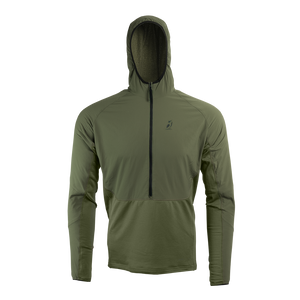
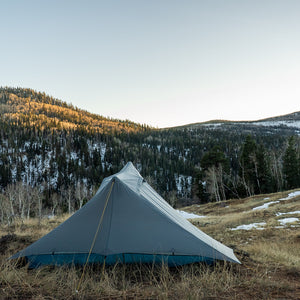
[00:56:02] Tayson: testing a new tent, prototype, and specifically a new Fabric in the tent. The tent design impressed me, but the fabric did not. So I'm not going to throw that out there. I guess too hard because I not gonna say we're never gonna use it but or how to say that I will ever use it. We're not we're not super big fans and that was actually a What's called the UltraTNT fabric? I'm losing UltraTNT, I think is the name of the fabric. But other parts of that tent. Absolutely enjoyed and loved. We've got a a mid-layer another mid layer type piece. That I really, really enjoyed on this
[00:56:55] Tayson: trip as well. Obviously, the CS40 pack is always just an incredibly comfortable pack for trips like this. That carbon fiber suspension is just, it's so impressive. The work that we put into that harness, that hip belt that suspension. it's incredible and and yes, carbon fiber like the carbon fiber we're using is Is really expensive, it just absolutely. It's for that carbon fiber frame from a manufacturing side. Costs us 10 times. What an aluminum frame would cost. 10 times. But I'm telling you the more you hike with that carbon fiber frame, the more you will never want to hike with this with the more stiff aluminum frame. It's really, really incredible, really really comfortable. gear wise
[00:57:46] Tayson: like running through my gear is pretty, dang streamline, you know, running A Tushar Rain Jacket. I think I had a I think I had a NovaUL, plus this the southern mid-layer. So I had to Overkill on jackets for sure, Highline joggers, the joggers were great. Probably could have got away with shorts, but in this terrain, I did enjoy the joggers Australian knowing that it could be pretty unexpected and storms can roll in and really Wreak a lot of Havoc, it's hard not to have the joggers, I guess. The Hoka HOKA Speedgoat 5s, we're still my shoe of choice. They worked. They worked really well. Platypus QuickDraw water filter. Phenomenal against something
[00:58:42] Tayson: in the membership area of the website. And ReadyWise meals were primarily what I ate out there. They're they're really good. I know, I know most of you guys listening by the crap out of Peak Refuel meals. And don't get me wrong, Peak Refuels are amazing. But ready, wise is right there with them. In terms of quality in terms of price, their packaging is a little bit smaller, and some of the ReadyWise meals actually have more calories and weigh less than Peak Refuel meals. So you gotta check out those ready. Wise Pro meals, specifically, get the pro meals,
Editor’s note: The ReadyWise/Peak Refuel comparison and membership availability reflect Tayson’s September 2024 experience, not current product specifications, pricing, or availability.
[00:59:18] Tayson: which is also in that membership area. Yeah, I don't know what else to say about this trip other than I
[00:59:29] Tayson: came off this trip feeling. Like it was exactly what I needed. A gave me some really good perspective in life. Some of the things that I'm trying to personally work on and grow and be be better at because I've had some pretty pretty big Life Changes in the last year. I feel like this this trip ended up Playing right into them. Like right. Like I don't believe there's accidents in in life, really. because by not believing an accidents, you can believe in, I guess, full accountability, and so things like leaving my food in the car, you know I wasn't an accident probably was was something I needed to learn on whether I was working on
[01:00:17] Tayson: acceptance of that or whether it was something that I just brought into my life or something that I needed to. you know, maybe it was just me, like, rationing out food and realizing like, hey, maybe I can get away with less food than I thought or Just different things, right? But the, I came off the trail. In a, in a really good spot and just was so happy for the opportunity to go and do this hike. And, and I thought a lot about all of all the other participants in the 100-Mile Challenge, while I was out there and just what they're doing it. I mean, one of the most uplifting things I ever do was
[01:00:55] Tayson: just logging into that Facebook group and see everyone posting about. All the things they post about losing weight getting out with, with friends and family, rekindling relationships with friends, and family, rekindling a relationship with backpacking that maybe they've, they've let go of pushing their own limits, you know, changing their own perspectives in life on. Possibilities realities. You know all the all these things that are just such positives and definitely those were all top of mind for me is, as I was out there. and it's, it's It's, it's fun. It's why? Why I love to do what I do. That's why I love my job. That's why I love my business. And I hope that just
[01:01:39] Tayson: me recapping. This was interesting and was also maybe a little bit inspiring or maybe you learned something from this. Yeah, just trying to recap on anything else. I learned from this, I'm again a huge proponent of having a GPS watch last couple years. I've been running these COROS watches and really really like them. They're really really insightful. As, as usual, take going to seriously, get good rest in the days prior, you know, keep the stress on the body days, prior way down, and then just hydrate and eat consistently and make sure that you're staying hydrated. It's, I found that to be just so big. I had no altitude issues on this trip, which was really good because
[01:02:26] Tayson: usually, I'll have some level of like headache or something that at least comes up and I can get on top of butt. Really was able to just avoid just avoid all of that with with what I feel like was good execution.
Editor’s note: Tayson’s rest, stress, hydration, eating, and lack-of-altitude-symptoms comments describe his personal October 2024 experience, not medical or altitude guidance.