[00:00:00] Tayson: Hey everybody. Welcome back to the Live Ultralight Podcast. Powered by Outdoor Vitals. Today, we have another Ask OV podcast episode which is basically just a Q&A with myself and our lead designer, Brigham, here. So we've been collecting questions from you guys for the past few weeks. And since we did our last one of these as well, we've collected some more questions but we have a big list of questions so we just go and we select three to five of these questions every time and dive right into those. So if you are interested in having us specifically answer your questions, let us know. I do want to maybe throw in one caveat. I think it's
[00:00:39] Tayson: always fun for people to talk about designing products and throwing like a bunch of ideas for new product design. Those questions aren't going to be super conducive to what we're trying to do with this podcast. You can write them in. We've got them for the last 10 years. They come in all the time but I did see some podcast questions come in that were specifically, like why don't you design a product like this, or like this. And some of those we can, we will definitely stop and explain like, hey, this is the process of creating a product you can't. Do it that way or some of those but other ones are kind of like gear
[00:01:10] Tayson: ideas, right? It's, it's very fun to design gear and so we get a lot of those in. So, we're gonna head out of These podcasts are definitely designed to be focused on. Yes gear. But also you know skill sets preferences reasons why we do things or don't do things in the field or as a business. A lot of things are on the table. But anyways, I just saw a few those come in and I'm like, I don't want people to think that like, just, I don't know. We've since the beginning of time we get, we get people, riding and saying, you should design a product like this, you should you should tweak this. It's always
[00:01:45] Tayson: gonna be there, it's always going to be feedback. Yes, we do. Look at it and we are aware of it, but those questions probably won't make it into the podcast as all I'm saying. Yeah,
[00:01:53] Brigham: I would, I would second that maybe just kind of make a suggestion or maybe add context is You know, we're a direct-to-consumer. Company and so give that we don't have our products placed in stores across the country of the world. Like we're there's nobody else that can really talk about our product for us so I would just suggest take this as an opportunity and think of it that way of Q&A, because it's a bit of a unique opportunity. You have to ask. Either of us direct questions and potentially have a good chance of getting that question answered and think about you know you know how to get the most value passed on to the audience.
[00:02:40] Brigham: In terms of what you might ask us because we really enjoy questions and answering questions, but that's a bit of the context of what we want to provide value. Is we're a small direct-to-consumer company. We want to give you this this resource that you can, you can talk and ask either of us. questions and and have a good chance that those questions are answered, which is A bit unique in this industry. Yes. Like this, very
[00:03:11] Tayson: first question will dive into is a really good example of the type of question that I think could be really valuable for for people to be thinking through, and we can get very specific to your trip, your situation, your seasonality, because people learn from that, you know, what am I taking for this particular trip in this particular season? What would you guys do with this? Those can be really valuable to a broader audience. And so those are ones that we hope to continue to get in and be able to bring to light. So um,
[00:03:39] Tayson: other than that though, before we dive in anything new going on this week or or anything new to talk about, I mean, as far as company-wise the OV 100 Mile Challenge, registration is now open and it is starting off hot. We've had more registrations than ever. So super excited about that and just so that you're aware of it, there's a limited time to sign up for this before we close it. This is a year long basically year long program. So we open up a sign up window in the first part of the year and then we're on into the the training and The live q and A's and everything else that goes along with that.
[00:04:14] Tayson: To help you go accomplish your your dream bucket list hiking and be a part of a community doing that and have all the tools that you need. So that windows open super excited to see how how many people have already signed up. Definitely trying to be to just like every year grow. We've grown this, every single year. We have tons of people that come back and do it year after year. So, if you've already signed up, thank you very much. I'm really looking forward to this year. If you haven't, go do it again. This is a program we're not looking to make any money on. I actually give away, well, over a hundred dollars worth
[00:04:46] Tayson: of physical product and the sign up as like 60, something bucks. So we we really do it because it aligns with our goals of getting people into the Vital Outdoors, so go check it out. It could be the best thing you do this year and I'm probably gonna do a Another podcast about doing big challenging hikes or setting big challenging goals and the benefits that I think that exist from doing those, but I'll save that for a different podcast. Other than that around the office. We do have some guys up in Salt Lake City right now at a show, we'll be heading up there tomorrow. We've got a trip coming at the end of this month.
[00:05:19] Tayson: We'll go, we'll go backpack into kind of a desert wilderness on the outskirts of the Grand Canyon Definitely looking forward to doing that. It's an area, we've an area, I've wanted to get into for a long time but What else? I mean, anything else new for you? Brigham right now. yeah,
[00:05:36] Brigham: that's yeah, that's kind of the next few weeks for me. Really.
[00:05:42] Tayson: Yeah, we've been, we've been doing a lot of work, getting everything in for some product launches later this year. So we've got We've got some stuff. Starting the production cycle, I guess you could say. But if you don't know, production cycle is a long cycle. So stay tuned for for later in this year for some pretty cool products that I'm definitely excited about, but yeah. With that then. Let's just Dive Right In. We do try to also keep these to about 30 minute episodes, so we'll do our best to not get on to massive tangents
Editor’s note: OV 100 registration, pricing, included products, February travel, and later-2025 product launches describe company plans and offers as of February 2025, not current availability, pricing, or commitments.
[00:06:14] Tayson: and early day specific to what you guys want to hear from us. Of course, you know, we love tangents but we'll try to keep this you know, concise that you guys know exactly what you're getting into and you start these podcasts. First question, we have a couple of
[00:06:28] Tayson: questions really around Fastpacks but want to start with this one. how many days of hiking is the Fastpack designed for
[00:06:39] Brigham: Really. It's, it's kind of optimal window is like, Two to three nights tops like that is that is what it is designed to do. It's of course, we can make a backpack that can handle many more nights. Anybody can do that. It's just a matter of volume, and the intent behind the Fastpack is something very light Nimble and fast whether you want to run with it or not. And so the Characteristics of a pack that would hold more volume than that. Or from mental to the goal of wanting a light nimble. Pack that you can either run or hike, swiftly with. So yeah, two three nights with say would be Our intended use. Now,
[00:07:25] Brigham: I will say We're a PCT Days last August and a guy came along using the Skyline Fastpack on his thru-hike of the PCT and was so, we met him at the, we were at the Oregon-Washington border. So he'd already been through all of Washington, he was going Southbound anyway, it was really intrigued by that use case and impressed with his kit and that he was able to do that. So much so that I told him that when he finished his through hike, I wanted to get his pack from him to kind of use as like a quote science, right to see where it was, where the wear patterns were and see how it held
[00:08:06] Brigham: up because that was definitely outside its intended, use case and they would be very valuable and so Austin is his name and he did, he ended up sending that back after I think 1,500 miles because he said his Through part of the Sierra, the weather was getting really bad and cold and he needed to kind of bulk up his kit and needed a little bit bigger pack. But Yeah yeah it's cool to see that back it.
[00:08:38] Tayson: it was yeah really really interesting to see that pack come back and just see what how well it held up and in different ways and See where the weaknesses were. But yeah, I would I would second that right one to three nights or or one to three days even if you want to say that. Like for me personally it you'd have to be very very intentional to get up to like four days three nights with that pack, mainly because the food right? But yeah, the biggest thing is, you know, we're trying to move fast, move light with that pack. And so that's kind of the limitations we, we did ourselves. Plus if you
[00:09:15] Tayson: are using the pack that way that, you know, we kind of designed it for which is to be moving swiftly quickly, you know, resupply or pretty good options, you know, every 60 to 100 miles,
[00:09:28] Brigham: you know, so well. And I mean, oh, don't leave out the conditions right? Like, you know, two to three days in very mild and or warm conditions as much more doable. When you only need a 40-degree quilt and you know, a really lightweight pad and you don't probably won't even take a jacket because you're spending so much time moving that essentially you need 20 minutes to set up the tent eat and go to bed. Those are kind of some of the conditions. Are influencing it that are what you can really do with it. So
[00:10:04] Tayson: yeah, from a capacity standpoint for sure. You start layering in that colder. Weather gear in it. It takes up space, right?
[00:10:12] Tayson: Next question. On, in terms of the Fastpack, can I dye the Fastpack?
[00:10:18] Brigham: You're welcome to try. So, just keep in mind this fabric has already been dyed at an industrial level at a weaving and dyeing facility. on a massive scale and that dye is intended to be the the end state color of the fabric. So how well whatever dye method one might choose to attempt is definitely an unknown. And We can't have any, like, just two, two unknown for us to say, what will happen? Yeah. Very welcome to try and make an attempt to dye it or Coloring it with a sharpie or
[00:11:01] Tayson: we've seen. Yeah, we've seen posts of people that will color it with with markers. I saw one that was looked like it was a full dye process and it actually looked pretty good. I have no idea how they did it. I don't know where that post is. Now, I think it was one of our Facebook groups, you may be able to just go join our Facebook group and find it in there. It might have been a member so it might have been our in our member Facebook group, but I have seen someone do it. I have no idea the story behind it, but yeah, you can definitely try and we've seen a lot of
[00:11:35] Tayson: people also just make it a bag of artwork as well. And that how does that? How does that compare with like say a CS40 because someone could look at the CS40 being white.
[00:11:50] Brigham: all again, all so I would say that's that's an unknown quantity of, you know, couldn't tell you exactly what's going to happen. I would suspect that there's a possibility that they're going to take whatever dye or paint or marker differently. Like this Skyline is nylon right? And the CS40 is mostly UHMWPE. Fiber the Yarns so think of it's almost like one’s UHMWPE, one’s nylon and you know nylon dyes differently than polyester so there
[00:12:25] Tayson: might be a big difference there and I thought would be that kind of the coatings on the CS40. Would make it a little bit more challenging to dye.
[00:12:34] Brigham: Not on the outside that yeah, there's nothing. There's no nothing coating wise or, you know, finishing wise that would be different with the CS40 versus the Skyline. It's just the actual The molecular composition of the yarn makes the fabric. Might take the dye differently.
[00:12:53] Tayson: Yeah.
Editor’s note: Skyline Fastpack capacity, intended trip length, PCT use, fabric composition, and dyeing comments reflect February 2025 products and observations. Dyeing or marking a pack may perform unpredictably and may affect materials or warranty; verify current instructions and product status.
[00:12:55] Tayson: Okay. Here's a here's a different direction questions. What were your big three on your most? Recent backpacking trip. And why did you choose these? So, craft to get a little bit of context to what the trip was and then give the big three-year Big Three. Yeah.
[00:13:16] Brigham: I mean so I mean really my last trip. It would have been actually a hunting trip. So my big three is going to be different. So I use a hunting pack that's, you know, designed to carry 150 pounds. So it's a very robust pack made by Exo Mountain Gear. shelter was a Would have been a. Call it a Fortius prototype—Fortius tent, and then I had a Well I guess a prototype sleeping bag so that's so yeah. That question let me is
[00:14:01] Tayson: let me let me ask this or change this up just for a second. What would you take if you're in the same conditions and you're backpacking. Sure. Just like there's production model stuff. Yep.
[00:14:13] Brigham: I would I would take a CS40. You
[00:14:17] Tayson: were in snow.
[00:14:18] Brigham: Oh yeah, no high. Temperature is about 22, 23 degrees, low temperatures single digits. It would have been a CS40, same tent—a Fortius tent—and then a 15-degree top quilt. That's an XTherm. Yeah,
[00:14:37] Tayson: XTherm sleeping pad. So, 15-degree quilt, you said. Fifteen-degree quilt. And what would you expect? The overnight low to be single digits. Yeah,
[00:14:46] Brigham: so for contacts. To get to let you in on. I mean, how When we release a product, we have, we have a lot of confidence in the product. So with top quilt, Be, you know. for the last few years, I've made a concerted effort to really push the boundaries of what people consider acceptable, use of a top quilt. And I've done single digits in top quilts many times. I've done. Mid-teens with 30 degree top quilt. Very, very successfully. And without You know, any kind of cold issues. So and For. Full transparency. The only thing I'm doing differently to make that possible is I'm just sleeping with the clothes that I pack already, right? I'm already packing
[00:15:40] Brigham: a puffy jacket in my jacket and my backpack. So I'm sleeping in that. I will have a very lightweight pair of puffy pants that, I will also sleep in but that's something on a winter trip that I'm going to take. Anyway, I'm not taking it for the purpose of being able to not pack a heavier sleeping bag. I'm taking it because it's dark at 5:30 in the winter and if I want to sit around and be comfortable, I need some puffy layers and some insulation. And so there's no reason to not sleep in that, which means that I don't need to pack an extra pound or half pound of the sleeping bag or top quilt
[00:16:18] Brigham: just because it's totally unnecessary.
[00:16:21] Tayson: Yeah, I think there's a, there's a lot of takeaways there actually. And I want to stick with that before I kind of give my answers. Well, number one while maybe let me give my answer really quick my last trip that I did. I was using 10 different prototypes on that trip. So, just like Brigham said, at a prototype Fortius tent, a prototype sleeping bag. I had a prototype backpack that you’ll see later this year, which I'm super stoked about, and then I had a new NeoAir Loft. That's the super four and a half. Almost five inch thick pad from Therm-a-Rest. So that's what I took. The conditions ended up being really cold desert
[00:17:11] Tayson: conditions and I was way underpacked. The the NeoAir Loft was not warming enough and the The bag was pushing the limits but but what I would have taken if I was going into this again, it was single digits in the desert. So we're just really cold. Big massive temperature swing. What would have been a an XTherm sleeping pad, it would have been either a 15-degree top quilt or a 15-degree StormLoft sleeping bag. One of those two, I might have brought the 15 degree sleeping bag just because it was an overnighter and I wasn't as worried about weight And then I would have had, you know, our for that one. I was carrying
[00:17:56] Tayson: some camera here and some other things. I probably would have gone with the Shadowlight pack. But that's the stuff to say. I like to see us 40 a lot carrying of the CS40. It's just so comfortable in the back. So probably would have gone with the CS40. Honestly. So I would have been my kit but I want to come back to both of us were using XTherm pads. And I think that's something to pick a part here for a second. This last year, both of me and you made a switch to where pretty much spring summer fall winter. We just used an xtherm sleeping pad. I used it when I did my Wind River
[00:18:31] Tayson: hike and that was, you know, three season temperatures and there's a few reasons for that why we've kind of latched onto it one. The amount of extra weight of an XTherm compared to more of a three-season pad is very negligible. I want to say you're talking like three, four ounces, Maybe. Between say like a NeoAir and an XTherm for my particular size of the pad. It's probably going to vary for different people, but you're talking just call it four plus four plus ounces and change. So it's not a massive number there but the R-value is massive. It goes from say like a mid 4 to a 7 or something or 7.3
[00:19:13] Tayson: or something like that. So huge swing there. So, why would we do that one? I just say it this way, your mattress at your home has like an exponentially High R-value and you sleep at 70 degrees right in your house. And it's not like you're upset that your mattress is too hot. I mean relatively speaking, right? You've done on your whole life and so that's like one factor to consider is I've never been upset that my air pad is too. Hot. Second reason is the XTherm has more puncture resistance. Because it does have a thicker fabric on the bottom of the pad, so there's just less likelihood of puncturing the pad. And then I
[00:19:54] Tayson: would say last and this isn't really specific. to historically, the Are a bit crinkly and Loud. The newer. NXT X therm is no longer crinkly and loud. And so that's that's not an issue for us anymore. So when they release the NXT, we both picked up the XTherms and we've been, I don't know about you, but I'm almost exclusively been using them at least in the last 12 months. And, and
[00:20:20] Tayson: what that also does is it allows you to do things like, use a 15 degree quilt in colder temperatures and that that truly truly boosts how low a temperature that you can take a sleeping bag or top quilt into?
[00:20:34] Brigham: Yeah, I mean hopefully, anything that we're saying here, just Conveys helps helps. You guys listening, just have a bit more confidence and what we're talking about. I mean, Like I I actually use an XTherm, the original for years before this one came out, but I would use it more. So, Just in the winter time. Mostly because that one was a little bit thinner. It was crinkly. So it was really a more specific winter time application. But you know, like you said with the NXT, it's a little bit thicker. I would say just normal noise levels, like it's just, I don't think it's any louder than anything else out there. Yeah, so that, that noise reduction
[00:21:22] Brigham: is there and then the weight is Just enough for how warm it is, it's like class leading in terms of weight. And so then it becomes a matter of well, Then you take the added benefit of the, in my opinion, it's the most durable backpacking. Inflatable pad on the market. I don't know of one that has more robust materials. So it almost is a very significant peace of mind to use year round. Now, I still use other pads because I like to experience what's out there and and you know I got a NeoAir Loft as well. We're
[00:21:58] Tayson: excited about the NeoAir Loft for summer and they're good. But
[00:22:01] Brigham: yeah, the the confidence of just knowing that like, if you just run with an XTherm like I don't know if I were to just say to anybody, what pad, what if I gonna have one sleeping pad, what would it be? The Therm-a-Rest NeoAir XTherm NXT, hands down. Like that's just one pad that you're never going to be complaining that your mysteriously burning up from the underneath your, you know, you're not going to be too hot, but it's going to be more durable. And it's going to weigh, less than. Many three-season pads out there. I'll throw out like the another good pad that I sleep. Pretty well on is a is a Big Agnes
[00:22:47] Brigham: pad. It's a 4.3 R-value pad. It weighs like two or three ounces more than the XTherm. so,
[00:22:56] Tayson: Yeah, yeah. So so let's talk about this for a second. Let's talk about stretching kind of that, that range, that you talked about using your top quilt in. A lot of people are looking if they're looking to invest in something like a top quilt or sleeping bag, it's a it's a usually sizeable investment and they're always kind of bouncing between temperature ratings. I think it's hard when you like, go to say even our website, that's like there's only a 15 degree swing between bags and it's very easy to be like, well I need a 30 degree bag, I need a 15 degree bag, and if I'm gonna go colder than that, I need a zero
[00:23:32] Tayson: degree bag. So they they do that. But then they also like or they go out and they look, what's the coldest temperature? I'm going to sleep in. I have to get one for that rating and then I'll just have a really warm bag for everything else. but I would argue what we've We've experienced firsthand is that you can get a really big range out of the top quilt. So maybe talk a little bit about that, like the kind of range of temperatures that you've used top quilts in and and which topic that was
[00:24:04] Brigham: yeah. I mean, I think
[00:24:09] Tayson: You've been on one about this 30 degree model for a while and like it's to be transparent, the 30-degree model is our least-purchased temperature rating.
[00:24:19] Brigham: Yeah. And to be clear. That's I don't even think about that. Like that's not why I'm bringing this up with the 30 degree model. It's just For how compacted is for how light it is. And then just having the experience that I've had say, like in a 15-degree top quilt, so much confidence in that then kind of realizing That. I think I probably had more nights in the 15-degree top quilt where I was uncomfortably too warm. That's probably what that's probably like the ultimate. The number one factor that has pushed me towards using a 30 degree way more. It's just like when I think about it, And I'm talking like, I'm using a 15
[00:25:04] Brigham: degree top quilt, not cinching up the collar. I'm In about as few closest one can wear you know while still being semi dressed and
[00:25:14] Tayson: my skin’s sticking to the pad.
[00:25:15] Brigham: Yeah. And and it's just been just been overkill for me, in a lot of a lot of experiences. And so, and then, you know, again, Mentioning just like I'm already packing the clothing or insulation, that I'm packing because the conditions for the trip call for it. So I just when you combine the two you just get so much flexibility and again like if you get too warm you can just take the puffy off and sleep in whatever you know if you're still have a mid layer underneath there and then the nice thing about I'll even say like when I have slept in a 30 degree, top Quilt, Inn in the teens and a 15 degree,
[00:26:02] Brigham: top quilt and single digits. With that system. My mid-layer has a hood and my puffy jacket has a hood. So like, I'm not packing a balaclava, because it's all it's all ready. Like, that's all covered. Like, that's all taken care of. It's just one less thing that I have to keep track of. And just yeah, I guess that kind of thought process is Really. Presented, a lot of usable range with. Whether it is the 15-degree like you just have a massive usable range.
[00:26:39] Tayson: Yeah, yeah. Layering clothes in inside of the bags can do a lot. Like, obviously, that's not something that's like scientific to be like, well, this this product, you know, this jacket is going to add this much to it, but it definitely adds a lot. And the other thing I would argue is, let's say, you're, let's say, you did get a 15 and you want to push the limits of it. Well if you're hanging around camp at all like you want to have these other layers in your back pocket. Anyways and so it's really just effective to use them. You already want to pack maybe some puffy pants or or something like that. So why not
[00:27:16] Tayson: just use them for sleeping as well? It makes a ton of sense saves you weight? And it just allows you to have a really versatile bag in and of itself. I've had a ton of a ton of success with that as well and funny enough. This last year, I was the same way. I I was we were testing. We were testing top quilts and the model that I had was a was a 15 degree model. Took it on two different, week-long trips in September. And I roasted a lot on both of those trips to the Wind Rivers and out to Colorado. And Pull it like uncomfortably hot and it was the first time I remember being
[00:28:00] Tayson: like I am uncomfortably hot. and it was like, you know, it's it's easy to vent in a top quilt, but it's not always like super Pleasant to heavily vent in a top quilt, what I mean by that is like, If you just open up the top quilt. Well you've kind of got drafts since now it's got like a cold elbow or a cold spot versus something else. And so there is A good reason to not overbuy a temperature rating in a sleeping bag or a top quilt.
[00:28:29] Tayson: So anyways, okay, let's move on keep this moving for a second. We've got some questions on backpacking
Editor’s note: Pack, shelter, quilt, sleeping-bag, and pad models, weights, R-values, temperature ratings, durability, and availability are February 2025 product context and personal field experience—not current specifications or a universal cold-weather system. Choose insulation for current forecasts, individual physiology, and adequate safety margin.
[00:28:39] Tayson: trips for this year. Yeah. I mean, with in light of the OV 100 we are planning to go back to the Colorado Trail and do another well, the plan right now is actually about 135 miles on the Colorado Trail, just the way that that it works to get on and off the trail. So that's one that we have planned for around July. I've also got a plan to go do the Timberline Trail. In August up in Oregon. And then other than that, I just, we have some like, a lot of the, the work one- or two-nighters that we've, we've got been looking at but Yeah, what other as far as backpacking?
[00:29:25] Brigham: Yeah, I mean we will do. Okay, we'll do this one, just outside Grand Canyon. That'll be two nights, the end of this month and I think that'll be really cool. Kind of just be in that. Grand Canyon Country or terrain. And Be fun to do that in. Like call it the late winter and Just enjoy that. Colorado Trail. I'll probably I'll be doing a trip in the Winds in June and then all go, you know, go up to Idaho first weekend or first Overlapping, July and August. trip up there. I plan on doing the Timberline Trail, that he's really cool. Yeah, if I could get if I squeeze one more trip into the Winds, maybe in September
[00:30:15] Brigham: I'll be pretty happy.
[00:30:16] Tayson: Yeah. Yeah, I'll have some more trips. Fall. You know, head back out to Ouray, Colorado or We've been discussing heading to Montana as well, so we've got a, we've got a few things, biggest one, that would be the Colorado Trail. And man, I continue to keep looking at doing the Tour du Mont Blanc. But Such a such time commitment, such a time commitment, which is a struggle for. For me, and, and kids, and stuff like that. So, That kind of tells into this next one, which is backpacking. Trail bucket list hikes. Any any like or run up on time but like one or two top ones that you are. Do you think about going to
[00:31:03] Tayson: do some day?
[00:31:06] Brigham: So, I mean, I've talked to you about this one before. There's, there's one up in, I think it's in Sweden, it's up in north of the Arctic Circle but it's called Kungsleden—the King’s Trail. It's a big long like maybe a couple hundred miles. Trail up there. That's that's a bucket list. Hike for me. I also would love to do. That's I mean bucket. List is strong term,
[00:31:38] Tayson: strong term. Well, that's like a real big bucket list. What's maybe like a half step from there? Something that like you might actually get done in the next, any, two, three years.
[00:31:49] Brigham: Any Kind of like high route type. Like there's a Wind River High Route. I think that would be really cool. There's a loop in the Sawtooths in Idaho that I really want to do. that I it's it's probably like I don't know, 60% on trail 40%, kind of scrambling and off Trail and Just really like that type of type of experience.
[00:32:16] Tayson: Both of those would be, I would have a whole different respect for the Wind River High Route after going through and kind of touching it a couple times on my last hike. I know it would be really cool though. Like really, really cool. I would have one more to that, that I'm hoping this year. We go to the Timberline Trail and August and maybe next year in August, we go to the Wonderland Trail. So that's that's a strong one. We're looking at being able to do that probably without permits because that's like such a hassle to get selected for a permit and have all that. So there's way you can do it without a permit where you
[00:32:54] Tayson: just got to cover. 30 plus miles a day, something in that range. And so I've looked at that a couple times. It's kind of hoping to do that this, this August. But it's gonna work out better for us to do the Timberline Trail. So that's one other one on the, on the to-do list. So, Okay. Any final thoughts on any of these topics for
Editor’s note: Colorado, Oregon, Idaho, Montana, Sweden, Wind River, Sawtooth, Timberline, and Wonderland trip timing, routes, mileage, and permit ideas were February 2025 plans. Verify current access, permits, closures, conditions, navigation demands, and your own readiness.
[00:33:14] Brigham: today? That was a good one. Yeah, good questions fun to talk about. Hopefully it was insightful and helpful.
[00:33:22] Tayson: Yeah. I think in terms of the sleeping pad and Yeah. The range they can get out of a sleeping bag, I think that can be really valuable to people and I don't just I want to end that I guess with one last thing, which is When I was first starting backpacking and you know, acquiring my own, you know, camping gear and things like that. And something that I drastically overlooked was the warmth of a sleeping pad and I had quite a few miserable nights because my sleeping pad was just not warm enough. Now I know that they've read on the ASTM rating system which is way helpful because I was sleeping on a pad
[00:34:01] Tayson: that said it was like in 4 R-value and when they changed that rating scale, it went into the ones, the scene to a 1 R-value and so it's no wonder I had some seriously miserable nights. But what I want to say is the next time, you're cold, if you ever get cold on a future backpacking or hiking or camping? Trip, whatever. Take the time to just try to consciously say, am I cold from my pad? Or my cold from my bag, right? Everyone wants to blame the bag because that's what you're wrapped up in, but take a second to really consciously. Am I getting cold from underneath or am? I getting cold? You know,
[00:34:39] Tayson: from from on top and I think you'll be surprised to just take note of that. And once you find out, I know for me on that last backpacking trip a 100% apparent that the pad was ice cold underneath me. And so anyways, but like, historically, I don't know that I would have consciously taken note of that say 10 years ago. So I'll just challenge you guys to consider that on future future times when you, if you ever butting up against the limit of being comfortable from. So real quick tip,
[00:35:11] Brigham: like at home, discovery on your own way to do it risk. Free is if you have like one of those at home inflatable mattresses, they're like eight inches, thick, right? Like they come in like twin, Size queen size those aren't insulated at all. You just blow air into it, right? It's I think it would it for me, it's very easy to identify. So, My house is usually 69.70 degrees. if I blow that pad up and try to sleep on that all night, 69 degrees. It's very noticeable, the heat loss coming from the pad. So that's with no wind because I'm in a house 69 degrees and you know if I were to put same blanket
[00:35:58] Brigham: that I go to bed in my normal bed, over top of me, but do that on that air mattress. I've done this like many times and it's noticeably uncomfortable like I feel the heat loss coming right out from the mattress and that's you know, just kind of a way to like, kind of prove it to yourself and and point it out and get yourself to notice what that feels like and a very like, Risk free. And
[00:36:22] Tayson: yeah, yeah. It's um as a kid I slept on a waterbed for a few years and I had four blankets underneath me and two on top and I still froze from underneath. Water and Air can. not be your friend in terms of warmth, so Anyways, we're gonna
Editor’s note: Pad warmth, ASTM R-values, heat-loss diagnosis, and at-home air-mattress examples are personal February 2025 guidance, not a guarantee or a substitute for current product ratings, forecasts, and an adequately conservative sleep system.
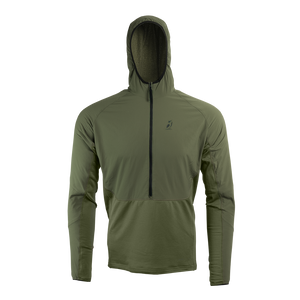
[00:36:43] Tayson: wrap it up here. Just a reminder, the OV 100 Mile Challenge registration is open right now. Just really quick, what you get with that when you sign up, you get it will ship you a Tern Merino Wool Hoodie. That we sell for $85. We will send you a physical workbook that walks you through all of the trainings. All of the you know, everything we've put together for this, which I mean we walk you through like physical training. We walk through, you know, food related stuff. We walk through, you know, getting through injuries. We walk through how to lighten your pack. You know, in the most simple ways, we walk through so many things inside
[00:37:16] Tayson: of there. So we'll ship you those, but then there's an accompanying, video course, we do live Q&As. We have a Facebook group that's blowing up already with people just in there, supporting each other learning from each other sharing and just builds a lot of accountability. And so there's just so much there and then if you guys actually do what you say, you're going to do, when you sign up and you go make 100-mile hike happen or you stack together, a string of backpacking trips that add up to 100 miles. We will ship you a finisher shirt and pin and I think there's something else in that comes with that. So that's everything you get
[00:37:50] Tayson: with this. I promise you, it's a tremendous tremendous value. It's something we absolutely love doing, we have it. So many people come back and do this year after year, because of the value that's in there and, and the fun of it, it's a lot of fun in there. So while the window’s open, jump over there. Sign up for the 100 Mile Challenge and Make sure you guys are subscribed to this podcast. Write in your questions. We're gonna be doing these once a month and would love to answer your question specifically. So we'll see you guys on a future episode.
Editor’s note: OV 100 registration, price, apparel, workbook, coaching, group access, finisher items, and monthly Ask OV plans describe a February 2025 offer and company plans, not a current promotion or commitment.