[00:00:00] Tayson: All right, welcome back to the Live Ultralight Podcast powered by Outdoor Vitals. Today we have a trip recap and a new special guest appearance from Ty. So, on this episode, we're just gonna be going over recent trip that we did. I mean, typically on this podcast we're going over all three things, ultralight, backpacking and or gear design since we design a lot of gear and love to talk about the technical details of that. But today we're going to be recapping a trip and just talking about some of the fun things, some of the less than fun things. Some things we learned About a trip that we did down into the greater. We'll call it Grand
[00:00:35] Tayson: Canyon area, going down there. I mean, I guess when we were there might have been, we might have just been ticking over into March. So, you know, winter-esque, but we've had a really, really dry year. So really, just a desert hike in a very, very remote area. So there's kind of the context, but let's introduce you to who came on the trip. So we have Brigham here came on the trip with us, you guys on the Brigham, but we've all got Ty. So Ty gives us a little bit of a backstory on your role here, and also your backpacking
[00:01:12] Ty: experience. Prior to this, oh boy, well, I'm the warehouse manager and so I run everything around products shipping out customers and everything like that as far as experience goes really know, very experienced, very much, now this and learned it this trip. I've gone out just for normal like day hikes and just overnights but besides hunting it's usually just quick little trips.
[00:01:40] Tayson: And Ty also was nursing along a ankle injury that he's that you he was running and got ran off the road and injured his ankle. I buy a driver and he also didn't get the fully itinerary for the trip that we learned, as we as we got out there. So um, anyways, so before we left for the trip, I happened to see large packages of like, dude, wipes and Ty’s backpack. So I started to go through some of his pack and we we dropped a few pounds worth of just wipes out of his pack along with a few other things. So we thought we lighten up as pack a little bit
[00:02:21] Tayson: for him. But you know, experience is the best teacher, right? So we, you know, I'm not gonna like, you know, pack everything for you, but we also know that Ty drinks, a lot of fluid throughout the day, typically how much fluid total do you think you drink a day
[00:02:38] Ty: realistically? Two and a half to three gallons of water. Yes, so we've we've
[00:02:45] Tayson: offered to pay for him to go to a doctor and see what's going on. But he doesn't want to hear, he loves drinking and I think he's like his bathroom breaks. He likes that every like five minutes he gets to go to the bathroom so like we're not sure. Yeah 15 we're not sure what's going on there but there's just a little more context but Brigham, you want to walk us through kind of the I mean technically you were the planner of the trip. So walk us through what the trip was and what we were expecting on into it.
[00:03:13] Brigham: Uh yeah. Well we wanted to do a two-night trip. One of our kind of monthly trips are usually like a one-night trip. We had some some gear that we needed to To test, just get a little bit extra testing in we still do. So, I want to make it a two-night trip. A little bit of it to be more adventurous, it is at the time it was late February, you know? So although we had a really dry and almost precipitation, free winter, thus far, I can never know. So we chose to Go more towards the desert just so we could. Cover the miles and and and and, you know, have a fun adventurous Loop without
[00:03:59] Brigham: being confined or restricted by the slow pace of snow travel. So, yeah, you know, when it's a two-night trip, you've got basically three days of hiking to fill up and which is a great opportunity. So wanted to do something that would require, I don't know. and the 20-mile day of hiking, and so, Not too far from us like two and a half ish hours from us. We can get into the greater Grand Canyon area. And I mean, technically, if we continued hiking up what 10 more miles? A certain direction, you know, we would have entered the boundaries of the Grand Canyon National Park, but so that's kind of the terrain description. Is that just think
[00:04:54] Brigham: lower levels of the Grand, Canyon dry desert, lots of mesas and rocks. Own. Very little water availability. and, you know, again it's Even in February, the Grand Canyon. pretty stable at the bottom but the mid upper elevations they can be freezing cold with a lot of snow or they can be like pretty pretty mild, you know, and So it ended up being very spring-like conditions. I would say it was probably 60 degrees. In the day. It overnight lows were 40. So and we
[00:05:35] Tayson: were The route we had planned, we were going off. There's this really just not much information. And so, I actually talked to someone who frequents this area, and we're gonna do an out, and back and they said, don't do out in back, do this Loop. And so, we weren't fully aware of how everything would go as far as mileage and trail conditions and things of that nature. So, we originally thought we would be hiking a little over 30 miles. About maybe 34 but then only when we actually looked at the Loop and some ways I thought, well, maybe we'll be more like 30 or 32 miles. Um, but that wasn't exactly what transpired. So, as we're
[00:06:19] Tayson: driving down their Ty had only come on one previous trip and it was a very low-key, like, three, Four Mile hiking. You know, we hung out and ate and played dice games and stuff in camp at night. And so he, he didn't quite know that this trip was gonna require more mileage and he'd asked us the day prior like, well, how much water should we take? I'm like, well, we're taking one day's worth of water. For me to bring on that was three to four liters of water. And I think Ty showed up at the trailhead with seven, he Had he had the next and at least another six pounds of water minimum over us to
[00:06:57] Tayson: start the trail, but we wanted to get some mileage down. We were hoping we could get about 10 or higher towards dark the first day, but we weren't able to start the trail and tell about one of the clock because it is a couple hour drive down there. So, we started the trail around 1:00 after driving 30-plus miles on a dirt road? and, yeah, I mean, it was I guess, my initial experience of the area was Some remote area.
[00:07:26] Brigham: Yeah, it's it's very remote desolate. Terrain. I think it'd be actually kind of cool. I wonder if we could get like a BLM ranger or someone from the BLM one of the podcast and talk about like that specific area, be kind of cool because the question we talked about while we were hiking along is like man how do like So the trails are, some of them are like pretty consistent and then some of them are really spotty. You're really relying on a couple cairns here and there to really weigh fine. And so it's, it's not a high traffic area by any means. It's You know, what do you say, 30 miles on a BLM road,
[00:08:09] Brigham: but then you enter a BLM Wilderness, which means it's nonmotorized. And It's just so remote that you can. There's definitely a feeling that like not many people go out there. Although weird, you see signs that are surprising but Of you know people but we can counter a single person, but we left the truck. There is a little Trailhead thing there. I
[00:08:33] Tayson: open it up to sign in. Oh, I only one person this year had signed into it so that's two full months into the year and they had gone a half, a mile in to the spring and turned around and came out so that's all the traffic. So I mean as long as people are signing in that went in there and my friend he was in there quite a bit he's like yeah there's almost no information in there so I had to buy a physical book of Canyon earring and that's where I've learned almost everything like I say area. So it's yeah, it's really really remote. And if you're watching this on YouTube, Or I think
[00:09:07] Tayson: we can do this on Spotify. I need to double check if we're actually doing that already we'll put some just some like b-roll footage of some clips of the area in there. I may do a YouTube video on a smaller topic but I kind of want to keep some ways selfishly Kind of want to keep this area like let's talk about. So if you listen to the podcast, you're gonna get some information on YouTube. You may not hear much about us me talking about this area. Because to me, like, I had a, I had a feeling going in there, just like, it felt so remote that I was like, this is one area. I'd love
[00:09:35] Tayson: to just see stay remote and the thing about that though is is its remote for a reason. It's not convenient to get there. Yeah, it's not convenient to navigate certain times of year. You would never want to be in there for water and heat reasons. So, it'll stay, it'll stay remote for those reasons. I mean, there's a reason it's already remote and and not as traveled. But yeah, I mean true, we didn't really see footprints and we
Editor’s note: The route, access roads, trail register, BLM designation, visible traffic, and seasonal suitability describe this group’s February 2025 experience. Confirm current land-manager access, closures, permits, regulations, road conditions, and route information before travel.
[00:09:59] Tayson: Almost as far away from the truck as we could get where they're coming or people are coming in from the other side. But we're probably skipping ahead. But yeah, I mean, I would love to know the backstory. There's any artifacts in here and there's all sorts of History. Just really, really cool, but I mean is where hiking and you're, you're getting those Grand Canyon Vibes right away. Massive, massive, plateaus on either side and we're just walking down into that Canyon. I guess any other thoughts on like the first part of day one or at least starting off the trailing expectations or Anything else, the preface what we're about to head into? I mean the start
[00:10:37] Tayson: of it. The trail was awesome, it was easy I was like oh this is the typical what is
[00:10:42] Ty: yeah
[00:10:43] Tayson: it's like this gonna be easy
[00:10:45] Ty: but
[00:10:47] Tayson: yeah, so we lean in. So we get down to the bottom where we intersect with kind of the main Canyon of the area. and just to give you an idea of the remote of this, We searched for probably. I mean, well, I searched for maybe 10 minutes. These guys were, they went some different directions, trying to find a trail like for about an hour. I just sat there in the middle. Well, he went around. And you went that way. I was not gonna go up until I knew which way was right?
[00:11:19] Ty: But
[00:11:20] Tayson: it's it. The canyons are so steep in there that you you have to know where you can get up and out of canyons because I mean it's it's all it's basically Slot. Canyon at least south of us are like from where we were at and to get up out of the canyon. We're at it was you could probably have scrambled a couple of places like crawling and climbing but there's one spot that you can get out and and it just wasn't easy to find. Like it was behind the one spot of vegetation in there. It's kind of tucked up behind there. So anyways, I got up there and there's just really cool trail That just it
[00:11:52] Tayson: would like you get up on one little Plateau, not even apply to a shelf. I mean and then it would cut like 100 200 yards, this side and he'd cut up to the next level. You cut a couple hundred yards back and you cut up another level. So you just kind of zigzagging of these really cool shelves, but these guys eventually found it. I tried to go find him but they had cut back underneath me and I couldn't see him on my man. I hope they came back. I think I had at least told Brigham that I I called back to him whenever he first found the first cairn but that section of the hike
[00:12:23] Tayson: was really For the next. 5 plus miles. It was just looking for cairns like, we're just looking for rock Stacks, trying to see where to go to get up and out of there. But really, really beautiful section of the high really cool kind of I really enjoyed that climb out. It was just, I don't know what it was about it but it felt really backcountry I guess you could say yeah there was no like there wasn't really anything built on the trail to improve it, it was just way finding your way up. This this face so caught up on top of there. And then we started to basically cover. We're basically going from one
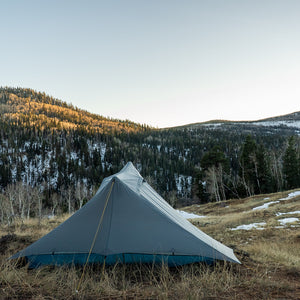
[00:13:03] Tayson: canyon into the next canyon. Where we were hoping there's a spring but I wouldn't get that next until the next day. So, We hiked up across. I don't call that sorry for that one so much bigger than that but we were cutting across from one canyon to another on a small trailer up there. Really pretty, I mean conditions like nothing. Better to hike in temperature wise at that point in the day. Until we got camp. And then, all sudden the winds picked up drastically just in time for us to be putting up our shelters. so, I had a little bit more fun, this is only the second time or so setting up a 40th
[00:13:47] Tayson: tent which happened we have a gear share program here, where employees can grab gear that they don't need or want to own and so Ty grabbed a tent out of there, it happened to be a prototype of the original Fortius. and, I never know what you're gonna get in those, those gear share programs, you might get a broken stake, you like it. It's catering at your own risk things sometimes But you had a lot of fun. I mean, we both did I came over and helped you. And we had, we had some fun setting up that tent in the wind. Oh
[00:14:18] Ty: yeah. It was, it was an adventure for sure.
[00:14:21] Tayson: Yeah, we I don't know. We had some crazy wind and all so you're trying to get him in the place where we've got, you know, space with rocks and bushes and everything up there. So sharp cactus everywhere. She trying to mine all that stuff but Um yeah, I mean we got the 10 set up and again just lots of lots of it. We were actually wanting to do a podcast while we're out there on trail, but by the time we got into Camp we'd like 10 miles. And the wind was so rough that it just it wouldn't have been any fun. So yeah wouldn't work. Well, we pushed it off a day and yeah I
[00:14:57] Tayson: mean any other thoughts on day one or night?
[00:15:01] Brigham: all right, it was a really, I mean, despite the wind once we were settled in and it's pretty relaxing night just sitting out there. I mean, the star, the starlight was incredible. I mean again when you're that remote there's no Light pollution to speak of at all. And so it was kind of it was a clear night like very clear night so beautiful, stargazing opportunity and you know, it was the wind definitely made it a lot colder than it actually was, but I thought was a pretty enjoyable enjoyable night, sit down there
[00:15:40] Tayson: and stay out too long. And I think we hit 9:00 maybe and we're like, all right let's go into our tents. So he had a very long night. In the tents. But I I slept so good. I like, I had like, what we got up at 7, the next morning. So we are the tents. Along time, 10 hours and I I'm sure I slip nine of them. So it was it was definitely. It for me I don't know
[00:16:09] Brigham: how the Restless better night's sleep. I had in a while, so yeah, I slept great.
[00:16:15] Ty: The wind was a little bit of an adventure. I found the spot where all the sand just collected in my tent. So I got to eat sand for a good amount of the night until I had to find new sleeping position. But I will say right before the trip, I decided to try out an eye mask because I was hearing Brigham talk about how much of a difference that makes, and it’s so few ounces. That was the best thing I could have brought on this trip because it saved me a ton.
[00:16:42] Tayson: Yeah, definitely an underutilized piece and or we were having so much wind, but it's still like a warm, not like a warm wind but not a really cold situation. He was he was warm enough for sure. So, we get through that night, get up next morning, I say, around 7, tried to break Camp around 8. We're a little slow on that, but knew we had a big day and we kind of had had looked at some of the mapping I needed to get back into town relatively early on Friday afternoon, if possible. So we had kind of have a deadline that we were trying to to work with. And so we looked at it, we're
[00:17:25] Tayson: like, you know, tomorrow might be a 20-mile day. It might be a 20-mile day. And so we wanted to get an early start on the day and we did Water Wise. I think we were all in a good spot with but we were, I mean, we're who aren't earned the dog here, we weren't I was like, slightly rationing, I guess since I put it, I wasn't I wasn't rationing. But like again, we were gonna be We were expecting to be on mile 15 before we got to that first water source. I think we're all doing well in water. At that point started off the day really, really pretty against still crazy remote. And Hyped, until we got
[00:18:07] Tayson: over to an area where we started to look for spring. The first spot we looked for the spring, there was no spring and so we got I started a little more concerned there because I was really expecting the spring to be there and had drank pretty much all my water. At that point, thankfully, we started to go down that Canyon the way that we thought we would be able to continue the trip.
[00:18:29] Tayson: And we found a spring.
[00:18:31] Brigham: Yeah, sure thing. That first came, we went down towards the spring. That was the one where that guy had told you, you could go down. I'm trying to remember because they're They're didn't show a trail down there right on the mouth. I don't remember seeing a junior Canyon did, but
[00:18:50] Tayson: I had told him. Yeah, we're gonna go to Mountain Sheep Spring.
[00:18:53] Brigham: Yeah.
[00:18:53] Tayson: And he's like, then just Loop it. He hadn't actually said to go down that Canyon per se. Oh, but, I had showed him as I can go across Ranger Trail. He's like okay, just loop back. So I think I'd kind of made a partial assumption that we should because I hadn't specific.
[00:19:11] Brigham: Yeah. Like as the canyon started dropping. Yes. That we could probably. Yeah, got it.
[00:19:15] Tayson: Yeah, so we came. We went down that can a little bit farther, found, a beautiful spring, a great spring tie, really camelled up. With with water, going back to seven liters of
[00:19:30] Ty: capacity, I have a secret to tell you. I feel that my Platypus, so it was actually eight.
[00:19:36] Brigham: Okay. But, but
[00:19:37] Tayson: to make sure
[00:19:38] Brigham: up until that point for the time, we left the truck to got to that spring. How much water had you consumed?
[00:19:46] Ty: But a tenant got to the spring. I was down in my last liter and a half. So, five and a half liters.
[00:19:53] Brigham: Let's see, his notice how he says his last leader and
[00:19:57] Tayson: a half, right? Most people listening. They carry a leader and a half when he goes later in that, right? Yeah. So, yeah, you can seemed like five and a half liters of water. At that point, I'd consumed four. Bringing my thing was right in that ballpark. Apparently tied camels up with a full eight liters of water, me and Brigham. I mean I filled up I felt basically for I had my dog on the hike and so I put like, kind of a partial half liter in her side about three and a half liters and I drank a full leader sitting there, what we had our lunch and ate so, um, but I would likely be
[00:20:36] Tayson: hitting some water. I knew one spot for sure we'd be hitting water, so I just need that. I had to get through the rest of that day, was all before we hit water the next day.
[00:20:48] Tayson: Anyways, so from there, we started dropping on that Canyon. And we got cliffed out. There was a precarious way down the canyon, or you could. Scramble down a very narrow shelf and get to a ladder and then climb down the rest of the canyon. It was a stretch and we didn't really have cordage to drop her packs down and yeah, we decided that we were not going to take that route. And that was a determining factor in the trip. And in the day, I would say because what that meant is that we had to hike a little bit back up, the canyon, kind of way find our way up to a trail to cut from
[00:21:32] Tayson: the canyon we were in to another Canyon that we knew we could get down and Hike out. So I must have confirmed that guy that that was a common thing from Mountain Sheep Spring. All that trail. Oh yeah, that route was one that worked but I knew the other one to work.
[00:21:49] Brigham: Yeah,
Editor’s note: Spring locations, flow, route continuity, ladders, scrambles, and the decision to turn around describe one February 2025 trip. Desert water and route conditions can change; carry current maps and contingencies, confirm reliable sources, and do not assume a mapped spring or passage will be usable.
[00:21:49] Tayson: so that added probably four or more miles to the trip at least and hour and a half. If not more of hiking because they're having to scramble and kind of way-find our way up these these cliffs and shelves to get back up to the trail, then once we had to Trail, we had to cut, you know. Two, three miles over and then go back down and then I can never mile back down. So, might have been the because, we don't know how hard it would have been to get from where we were all the way out. It might have added three or four miles to the to the day. But That was. I always hate those
[00:22:27] Tayson: situations. You have it in your mind where you're like. All right, we're gonna, we're gonna get down this Canyon right here to be good. There was kind of a trail in there, so it's felt like it was gonna go. But when you're ever like in a situation where I have to add miles unexpectedly, I feel like it, it does something mentally, so that's part of the day was like kind of the I feel like, I don't know you guys, but I kind of just like locked in. I put on some music and just kind of like, all right, let's get these next. Next three, four miles done and and it and we picked up,
[00:22:58] Tayson: I would say we picked up our Pace at that point. Knowing that we needed that. We'd added four miles of the trip and that we needed to cover more miles to get to a position where we could get back to the truck at about 11:00 on the following day. We saw okay, random random aspect of this. I don't want to skip over. We saw
[00:23:19] Brigham: a really cool looking frog.
[00:23:21] Ty: One of the only of never says they like Sally Wildlife. We saw this whole trip.
[00:23:28] Tayson: Was a metallic-looking frog. I did talk to my buddy after apparently most of the frogs and the Grand Canyon look like that and he doesn't know why does?
[00:23:40] Brigham: Yeah,
[00:23:40] Tayson: I thought I was seeing like an endangered species. Like it was just the most bizarre looking for. I almost stepped. I was laying on the Rock and was like, totally camouflaged in which color changing is interesting. But Turning your skin. Metallic was a whole different ballgame.
[00:23:58] Brigham: Yeah. I mean, it looked like it, it really looked like somebody had spray painted the frog with like just a rattle can of like sparkly gold or bronze. spray paint, sort of looked like because it I mean, it was It had a shimmer to it, like a reflected light. It was crazy. Pretty cool though.
[00:24:23] Tayson: It was definitely tough. I was definitely interesting. Tough part here. How is your ankle doing at this point? I after we had to scramble up now that Canyon.
[00:24:34] Ty: Oh, yeah. It's After the first little scramble, I was like, okay. I think I need some like a little bit of ibuprofen and I'll be fine and then I kept seeing what it was really getting to. And by the time we made it to the top I was like I think I might have to just go back the way we came. Like I don't know, if I can go another, you know, 12 miles today and then 10 miles tomorrow.
[00:24:57] Tayson: Mmm,
[00:24:58] Ty: because he was just getting really sensitive and everything.
[00:25:00] Tayson: When are you gonna have that conversation with us?
[00:25:02] Ty: Oh, I wasn’t. I mean, I was just going to turn around and disappear and not say anything. Yeah I was just like you know what? Worst case scenario, they’ll find me at the truck. Like, I don’t know, I'll be fine. It's fine. And I should add um, I didn't exactly come prepared because I didn't know the maps or anything to download for this hike and I was my bad. And so I was just going off of you know Google Maps and was just about to find my way back to where we started.
[00:25:37] Tayson: That's why on your watch and you do the breadcrumbs. Apparently, if you come with us, then he can at least breath from your way back up there. He So we cut over, I would say, is about that time of day. After after that, scramble actually wasn't, even that it was once we started to go downhill, your pace started to slow. Um, it seemed like that was really what triggered your ankle to hurt was was the downhill side. But we get we get down, we come down this really cool trail like starts by going through this like crack and then they work in these switchbacks and this area they had improved the trail. So the Stacked
[00:26:19] Tayson: rocks and things to make it past like passable or I guess more safe to pass will be my guess, is that? It probably went probably made it through before. But now is you know an actual two-foot-wide trail at least Wound our way down to the bottom. And this is the first time that I had this experience on trail and I mentioned that I had brought my dog on the trip and her pack had broken. I had a very cheap Like pack. That mailed like I don't know maybe a liter’s worth of items on each side of this pack and the webbing head had come unstitched on it. So I got to pull out
[00:26:58] Tayson: the trusty first aid kit, pull out the the sewing kit. and sew that pack so it could finish the trail which was good. I've carried it a very ultralight sewing kit for years now three, four years at least and that was the first time I ever actually had to pull it out. So learned really quick that I could probably you know use 10 minutes of sewing lessons on YouTube what would have been helpful but the pack Held together and made it through the rest of the trip. But Yeah, it was it was I guess a good test of the first aid, kit fact. I need to go through my first aid kit and replenish some things
[00:27:38] Tayson: I gave. I use some stitching, I guess and have to replenish that, but I, I'm not hand off. I gave you some cord. I gave Ty something out. I can't even remember now tape and and alcohol wipes because they're Anyways, these guys want, you know, went a little bit ahead but we went up just going down this Trail. At this point, we hit into a spring and there was water for a while. The canyon was really tall, really, really pretty area and Yeah, that's
[00:28:09] Brigham: pretty consistent I mean so when he says we went down this Trail, basically the trail is the canyon bottom. So it's think of it. It's it's a wash like a very Rocky. Stream bed. That's at the bottle of this Canyon. So it's not really steep, it's very gradual but most of the route was that but I bet that it was a flowing stream for a couple miles baby quite a ways, which was like a pretty cool and you could, that's where we started, seeing more footprints like shoe prints, which had been, you know, fairly recent because you could kind of identify and identify like the tread
[00:28:49] Tayson: and
[00:28:50] Tayson: but well, and that was also where we were kind of all the way across this big drainage area and there was a trail that teed in So, our guess was that people were we dropped down, right? Kind of said the trail got improved. Yeah, another Trail teed in from right there and so there must be another
[00:29:07] Brigham: access point. It wasn't inside a ton of miles to like a dirt road from that point. So
[00:29:13] Tayson: yeah, maybe one day off to come in from that side of it or the interesting. but, Prior to this, just a little background story too. We knew that there wasn't any rain in the forecast. Thankfully As a little bit past that we got into full slot canyon. Yeah big I mean not like super narrow slot canyon, you know it's points maybe 10 feet across but most of the time 1520 feet across at least but you just I don't even know, maybe I didn't know there was any slot canyon in this particular area, like, at least like that. I thought I'd be more like the stuff we'd already come through or Hey, it's narrow and not
[00:29:57] Tayson: but you can climb up on shelves and different things but we ended up entering into that and there was probably four to five miles. On a roughly of just slot canyon or miles just winding through winding through. Really, really cool experience I've ever been in slot King in like that, or what was your feeling on that?
[00:30:19] Ty: Not like that. I mean, I've done one hike, the Kanarraville Falls, where there's some slot canyons and stuff, but I haven't gone for that long and especially to see like, Endless amounts. Like once you really got into it and like there was no actually it was awesome.
[00:30:37] Brigham: it was a, that was really interesting and because what I was thinking about earlier when we started today was you know, when you look at the map of that, What? What we were walking in. when you look at it on a map, looked almost identical look hardly any different than Places that we walked, that were not a slot canyon at all. um so what I'm getting at is it like it just by zooming in on a phone map and even looking at the contour lines and understanding contour interval like There is just not much difference between what was slot canyon and what was not slot canyon, and I was pretty surprised by that and especially for
[00:31:24] Brigham: how long that was. Just because it just doesn't it, really did not look much different on the topographic lines then. Those more open. Canyon bottoms that we walk through before and after that, just not much difference which is really you know, it's kind of interesting and cool but like Something to keep in mind to anyone planning like a desert hike. be really lean on the side of caution, because I would say. Like in a flash flood. You die in that. Can you like there's you’re dead like there's just no there's no surviving that there's no, there was sheer wall for for miles and no no way to escape. So if you're looking at a route
[00:32:16] Brigham: and looking at contour lines on a map and saying, okay, well yeah. It looks like this and these contour lines look just almost the same. You get stuck in that if there's rain, you know, anywhere around there. Like could potentially be very, very dangerous situation and and I and I thought about that and there was, you know, there was no rain anywhere in the forecast. which is, which is good because that's one where it was a bit of an unknown,
[00:32:46] Tayson: and we would have been turning around and It would have taken us way longer to get back out the same way. I mean yeah because you know we watched the weather forecast specially going into desert like that if we'd got to that slot canyon not knowing enough context and if there was any rain projected there's a good chance we would have to turn around just duplicate that
[00:33:06] Brigham: whole woman I can in the dark. I mean we did well I mean like do that was I mean like for hours, you know, that that point
Editor’s note: Their slot-canyon and no-rain observations are historical trip conditions, not a forecast or route clearance. Check the full drainage and current weather immediately before and during travel; avoid confined canyons whenever flooding is possible, and follow current land-manager guidance.
[00:33:19] Tayson: But yeah. So slot canyon was really, really cool. Got through that tied into the main Canyon that we then be hiking back up now we're kind of hiking back up towards the vehicle's or the vehicle. I've got into that came in, and Basically started to just try to plan. Well, how far do we have to go before? We can pitch our tents and that Canyon was deceptive. I mean, I know that. Forth. The end of the day, the miles get longer like the first couple miles out of Camp, man. You're, you're all fresh. Everything's good. And then, like the last miles of four Camp things can drag out and I was really feeling it in that
[00:33:59] Tayson: canyon where we hiked, what felt like was for 45 minutes and then Brigham's like, all right, I think we should get up to this point. I'm like, we're not at this point, like I'm pulling my mouth, I'm like, no way. Like we've only gone this far on the map like what is going on here? So he did we ended up you know deciding to push to put herself on a little bit better position for the next day because we again we're trying to to do what we thought was gonna be around 10 miles to get back to the car, 8 to 10 miles or so. So we needed to get in a position where we
[00:34:32] Tayson: were about that far from the car and so we did a hike a little bit in the dark. So Ty got his first taste of a plus 20 mile day of backpacking. while carrying A lot of water and we don't know what else was hidden in a sec. Yeah,
[00:34:49] Brigham: there were still dude wipes, but there were still
[00:34:52] Ty: dude rodders. I brought 12. That was it. That was my toiletries. We were good. Don't worry, I sacrificed 17 pounds of water.
[00:35:04] Tayson: Yes, that's true. Right? Seven or eight eight times. Two. Point two. You're you're probably 18 pounds of water in your full. Yeah.
[00:35:15] Ty: Well I remember when we were scrambling up, you guys there was one part where we had to take off packs and throw up. I remember tasting was On Top of the Rock, it was my turn to go up and scramble upside took my pack off and threw it up there and he grabbed it and it was just an immediately like, holy cow. How much do you have in this? And it will say, you know, as an experienced hiker and a good boss. He did tell me to dump out water because it was gonna be other places to fill up. I was on survival mode, and I thought I was just gonna have to, you know,
[00:35:46] Ty: hands in it, back to the truck. And so, I didn't want to dump out any of that precious water, when I, when I picked up your pack,
[00:35:55] Tayson: to lift it up on that rock and roll, set it down. I, You were in the 40 pound range. I was a for sure like and to me getting to that level is like shockingly heavy like it. So I had like a, a real, like shocking experience when I lifted your pack up like First I didn't say holy cow. You know this puts out there. I was like, dude, you cannot do this like this is insane. I don't know what you have in here but it feels like rocks. You know. It's just it was really really like actually where my mind went Was two years ago year and a half ago or on the Colorado
[00:36:36] Tayson: Trail. We ran into this guy who legit have, like a 60, 70 pound pack. It was, he had everything he could imagine all, I mean, and that dude wasn't didn't he say he was like packing
[00:36:48] Brigham: like 12 13 liters of water? Because he's like, he's like I just didn't know, I don't, you know, I mean.
[00:36:54] Tayson: Yeah. And in like He he had made it. We were passing him on day two, right? Like halfway through day two, he'd been on the trail for like a week. To get to the same mileage number, right? Like it's slowed him down that much. Anyways we picked that pack up. It was like when he when we passed like I got his pack off and Would I picture pack up? That's where my mind was. Like, I went straight there. Like, holy crap. Is this, this leg isn't heavy as that dude's pack. Yeah, very, very, very heavy. And what we'll, we'll have to Circle back to maybe what you learned from this whole experience at the end
[00:37:33] Tayson: but, um, but yeah, 20 mile a, by the end of it, you were really feeling it and you were filling it in your feet a lot with blisters. Yeah, walk us through, we get to Camp. Set up camp. It was a really good camp spot. There's no wins down in the canyon, which is really nice. Great. Um, so we set up and started cooking our food and Ty didn’t really want me to be hungry. So he kicked off his shoes and started peeling back layers. And what did we fight?
[00:38:01] Ty: Yes. So I mean really my body was feeling pretty fresh. It was just my feet were hurting and I couldn't figure out why and a little bit of a backstory, right? Before this hike I decided I was gonna wear some mid top boots for a little bit more ankle stability just in case those boots are all so Gore-Tex boots. So keep your feet nice and hot. You have a really heavy pack on putting in the Lot of miles and I was just feeling rubbing but I normally I'm not one to blister and when we got to camp and like I could feel something in my sock and so I told Tayson I was like hey
[00:38:35] Ty: I bet you I'm bleeding right now.
[00:38:37] Tayson: Oh yeah, you bet and
[00:38:38] Ty: like the 20s like 20 bucks? Yeah. And so, yeah, Moment of Truth came took off my sock and found out there was like just a pretty gnarly like three-inch blister on my right foot. And it was completely torn open. Just wet nasty, it was looking really rough. Yeah, what
[00:38:59] Tayson: point is the blister, like just covering the entire bottom of your foot. Oh, so
[00:39:05] Ty: that night it was just like a three inch and you know it
[00:39:08] Tayson: was a good. Oh yeah,
[00:39:10] Ty: you know, like I got it all the way across the pad of my foot.
[00:39:13] Tayson: For sure.
[00:39:14] Ty: The good thing is is you know, Tayson came prepared and also when I took my left sock off. I didn't think there was blister on that one. There was a giant blister, it just didn't pop yet.
[00:39:25] Tayson: Looks like the same size. Oh
[00:39:27] Ty: yeah. And so and then all my toes were blistered up and everything. And so let's talk for a second
[00:39:33] Tayson: about Gore-Tex versus non-Gore-Tex boots in these environments, right? So the benefit of having a Gore-Tex boot in in sand because these are very Sandy conditions is, you keep a lot of sand at your shoes. Which is pretty beneficial the con though is because there's that waterproof membrane in the boot, you can't vent. You generate a lot more sweat you generate Need to be like walking all day in a rain jacket, even if it was just the rain jacket. It shuts, down all breathability and it's like walking on your own personal sauna. Essentially, And so, there's times and places. I know some people that prefer to hike in Gore-Tex boots, in these Sandy conditions. What I
[00:40:17] Tayson: would probably say about that though. Is it would be really hard to walk in Gore-Tex boots or shoes Trail Runners with Gore-Tex if you're doing 20 mile days. And if you're not ultra light, yeah,
[00:40:31] Brigham: I think the yeah, the pathway The distance I I think the terrain is well. I would say at least, maybe I don't maybe maybe half, maybe a little less than half of the miles, were what? You would not consider Trail miles. They were I would consider them. off-trail. Just walk Walking On. Baseball to football sized rocks. And River, probably 10 of those miles, was walking on stuff like that. So, He got a lot of extra weight, you've got a bad ankle, so you're unstable, you got a lot of heat, a lot of moisture. He has just kind of like a perfect storm.
[00:41:14] Tayson: For you.
[00:41:14] Ty: Yeah didn't for the ankle support. The ankle didn't give out. That's the important part next time. We'll just tape your ankle. Yeah. Oh that's for sure happening.
Editor’s note: Ty’s ankle, blisters, footwear, ibuprofen, taping, and first-aid discussion is a personal trip account, not medical advice or a universal footwear rule. Treat hot spots early, keep feet as clean and dry as conditions allow, and seek appropriate medical care for significant wounds, infection signs, or worsening injury.
[00:41:25] Tayson: Yeah, I mean that trip. It was not easy on the lower leg. So like I've been kind of out of training as much like its I haven't been training as much lately and so that trip was a true Testament to my ankles and my shins and my calves and stuff. Because you're yeah, just so much uneven terrain and walking in river bottoms is rough because there's so many, you know, rounded rocks from for being in the river bottom. And I was I was definitely feeling it in my feet ankles shins casts so to also come in with a pre-existing ankle injury. I was definitely on my mind a lot Trump if I feel like this
[00:42:09] Tayson: ties got to be really killing, you know, like um so kudos to you for the for the grit there and making it through that day. Yeah, that night really nice stayed out a while Talking and eating and relaxing again stars were really, really exceptional out there even in the bottom of a massive Canyon. Like that was the canyon we tied into. I mean, essentially, it still is a slot canyon. You really couldn't have got out of it, it just wasn't narrow. So it's like, you couldn't get out of the canyon, but it's more like 100 yards across or 50 yards across, you know. So a lot more a lot more spread out. But yeah, really
[00:42:50] Tayson: really pretty out in there and in that out of great night, I mean we're talking lows lows around 40 degrees, which Most of us were in 30-degree bags. And so we were toasty and just really the quite comfortable. So I mean, no words and ties. Now he's still figuring a few things out, you know, sleeping on pads and you know, Used to that, I mean, and that's one thing to know. I guess just to give some context to have had conversations with people were there like, even when they have a lot of help, and I spent a lot of nights on trailer. Oh, they're like, man, I just didn't sleep. There didn't sleep
[00:43:30] Tayson: that great. I think you have to realize that you'll never sleep. as far as I'm concerned, at least, and people I Circle and talk with, you never gonna sleep like here at home on your 14-inch mattress with your perfect pillow and a climate controlled home. You know, all of these kinds of things. You can't really replicate that. In the backcountry, although we will do our best to continue trying to create those situations. So, context wise, you know, most of us, at least me in Brigham. You know, if I sleep, I would say this, if I sleep three straight hours without needing to, like roll over or kind of wake up to roll over,
[00:44:10] Tayson: something like that. I, I consider that like a really good night. Usually, for me, between two hours. I'm meeting to kind of roll over shift around just a little bit. I'm a side sleeper, so I get a little more pressure on my shoulder. So, with that kind of context, Ty. How did you sleep? Yeah,
[00:44:28] Ty: I surprisingly pretty good. Yeah,
[00:44:31] Tayson: you were tired.
[00:44:32] Ty: Yeah. And I think that was the first night I had some struggles, just, as the sand on. It was just at one point, I woke up and I had so much in my mouth. Like, I had to like, rinse it down and spit out the sand and so, but I just kept that one to myself, his he don't He just part of the fun. You just got to learn and take it but the second night. Yeah, I normally only sleep a few hours a night and I got like five hours unbroken and it was crazy.
[00:45:05] Brigham: Wow. Yes. So that's the real.
[00:45:07] Ty: Yeah, I was a little tired.
[00:45:09] Tayson: Only got up five times to pee and you're good. It's like three times and how much water did you have to start off the second the second morning? A second day, I had started with eight from that spring. Yeah, I think I was at
[00:45:24] Ty: four, four and a half
[00:45:26] Brigham: so I got this.
[00:45:27] Ty: Yeah. cuz I had I don't know about a liter and change. And then I had three liters in bottles. Yeah,
[00:45:38] Tayson: it seemed like a lot because we could see two-liter and a half size, the big smart water bottles, on the outside of your pack. They were still full to the brim. Meanwhile, me and bring him or, like down to her last like single liter. Yeah, bottle and I knew all, so, which I had tried to tell him. That there was more water about a mile or two out of Camp. So anyways, we got up earlier about 6 a.m. the next day started hiking by 7 or earlier and I started heading out of the area, got up a little bit farther there was that a little bit of water. I ended up filtering just one
[00:46:16] Tayson: more liter just to make sure I had enough to get back to the truck. I knew that it was kind of a hot dry section out. A lot more open. Lot less shade. And I asked Ty, “Do you need some?” He said, “No, I’ve got about seven liters extra right now.”
[00:46:30] Ty: I’d had eight liters, and everything in my body still did not feel like I was ready to get another. I was like, “Oh, that’s another two liters.”
[00:46:37] Tayson: really, he's got water anxiety. So something we're gonna go to work on Yeah, I mean that's second day. Cruise out of the canyon is really, really pretty. I don't know, I mean there wasn't there wasn't too much exciting, I guess that happened. It was a little bit farther, I think than we thought and it are speed. So ended up Taking about an extra hour, over what we're kind of originally planned. It would
Editor’s note: Mileage, water carried or consumed, temperatures, spring flow, pack weight, and timing are approximate observations from this February 2025 trip. Build water, pace, turnaround, and emergency margins for the actual route, party, season, and current conditions.
[00:47:05] Tayson: take us to get out of there, but still made still made really good time. I don't know any any thoughts on that last, that last day of of hiking again, we had to end up covering 10 and a half or so miles. I want to say broke ten. Which rounded up the trip somewhere around 42 miles I want to say Yeah. Any other any other thoughts on on that specific day before? I just start grilling time,
[00:47:34] Brigham: what he learned from the trip. I was. No. Are you ready for? I'm ready for the lessons. Yeah. Yeah,
[00:47:40] Tayson: I think everyone is. So, all right, Ty. So you you've done it. Now, you've done a bigger-mile day, you you talk the whole time about being interested in the OV 100 Mile Challenge hike that we do in the summer. You kind of skipped asking. Like am I proven yet? Can I go yet? It'd be a bigger more like You're showing a lot of grit.
[00:48:01] Ty: But maybe still some lessons, just to be that to be learned, you know? So
[00:48:04] Tayson: getting through the entire hike now What are the big takeaways for you?
[00:48:10] Ty: Not hiking in Gore-Tex for sure the blisters that was really big issue, thankfully with the tape and everything. I mean I can push back push through the pain. I'm really glad though that I didn't have like sand getting in my shoe and just making even more.
[00:48:27] Tayson: Once you have a popped blister. Yeah, I introduced a lot of sand into the sock. Yeah.
[00:48:31] Ty: Yeah. And so um, that was one and then obviously water. And also knowing the maps like those kind of go hand in hand like I've seen and like you know, really trusted you when I should have that they were water and everything like I could have cut back on a lot of water,
[00:48:50] Brigham: a lot of weight.
[00:48:51] Ty: A same with meals. I didn't know how meal structure really went like, on the hikes because I'm new.
[00:48:57] Tayson: I don't, we, we don't stop and cook food. We just we we do non cooked lunches, I guess you could say, usually trying to just eat quicker, be efficient when we know we're covering 20 miles a day or anywhere near that. I mean just in general I never cook lunch. Usually lunch is kind of the opportunity to Eat something a little more normal so we'll bring meat and cheese and tortillas or things, just things like that but I didn't I wasn't wear that so he brought like a teary, you know, three
[00:49:28] Ty: extra Peak Refuel meals, just waiting, just extremely
[00:49:32] Tayson: sure what this up to you, but you can cold soak those to my knowledge. Like if you just put water in like maybe an hour before lunch, it would be cold but it would have been rehydrated, it'll something. Yeah.
[00:49:43] Ty: Yes, but between that and just learning a lot about cutting weight, just small little tips and tricks. Like seeing you guys portion out your daily like snacks and carbs and calories and how many pounds of gummy bears. Did you bring? Hi, I'll be honest. I brought six pounds of gummy bears, but it was six pounds. Six pounds. I looked at the pound. Yeah, you know,
[00:50:04] Brigham: it was said that I was expecting like a little Ziploc sandwich bag.
[00:50:09] Ty: Three of the quart-sized sandwich, or quart, size bags. Full reason. Why
[00:50:15] Tayson: no
[00:50:16] Ty: I heard rumors that Brigham really likes gummy bears and I was like, all right, you know what? I'm gonna be just the Workhorse. I'm gonna pack some extra gummy bears for him. Make freaking like me a little bit and then You know. It didn't turn out that way. I came home. I don't think I got a single gummy bear man. What the high offered multiple times but I did weigh my gummy bears. When I got home because I read a book about lightening up, We gave him some required reading after the trip. Yeah. And I finished with four pounds and 12 oz of gummy bears. So
[00:50:49] Tayson: finish. So you ain't
[00:50:50] Ty: no, I came home with an extra hourly there.
[00:50:53] Tayson: That's as much as my sleeping bag, my tent and my pad.
[00:50:59] Ty: Yeah, some carried it and gummy bears. Hey you never know. I was like to preface I'm diabetic. I need sweets That was my argument between your so many people. He's going to diabetic or he needs sweets once you're done.
[00:51:13] Tayson: Yeah.
[00:51:13] Brigham: I have some commentary but I want to I want to let you express your anything else you you learned or
[00:51:23] Tayson: what about water because Here, you're drinking gallons. But out there, you didn't, you didn't drink as much. Why do you think that was?
[00:51:31] Ty: Yeah, so a lot of it like so for the first day, for example, I have this really bad habit and if I'm traveling out to a spot to get to hiking and everything, I do things, the absolute worst and I dehydrate myself. And then when I get to the spot I feel like I could rehydrate myself in about 10 minutes and then go on walking.
[00:51:50] Tayson: So I don't know if I'll feel it will just pause right there. So
[00:51:55] Ty: I know this is wrong,
[00:51:56] Tayson: okay? I
[00:51:57] Ty: just I want to make sure, you know, I know this is wrong and it's not how it should be
[00:52:01] Brigham: well, but but what do you know is wrong? Because oh, you know, okay, so, what? There's, there's no such thing as rehydrating in 10 minutes. So just just so you know, like you or