[00:00:00] Tayson: Everybody welcome back to the Live Ultralight Podcast. Powered by Outdoor Vitals. Today we have another episode of Ask OV. So we've got myself and Brigham. Our lead designer on the podcast. To answer listener questions that have been written in. Now, you can ask these questions by specifically just writing into outdoor, vitals support team. You can leave comments on the YouTube channel where we also post these, wherever you want to get us these questions and we are happy to answer them and just help people get outside and have more enjoyable experience. So, We're just going to jump right in with you. Try to keep these episodes a little bit faster paced, so we try not to
[00:00:39] Tayson: go much over. 20 to 30 minutes on these and just make sure that we're answering the questions. The best we possibly can. we, you know, as far as usual will play a little bit of catch up here, but we just did that on a recent podcast, we've been Backpacking a lot on the Grand Canyon lately and I know you've got a trip to Capitol Reef that's still on this week. Yeah we're spending a lot of time out on a night out there, testing gear and just I don't do and doing what we love to do, spending spending nights outside and spending time outside. So it's been a really enjoyable spring, a very busy spring from
[00:01:20] Tayson: a lot of the trips, but I don't think we'd we'd have it any other way, or we probably do it a different way.
[00:01:25] Brigham: Yeah, you know, it's all, it's all good. Yeah.
[00:01:28] Tayson: Okay, well, let's just jump right in and as usual, I, I usually skim these beforehand, but I don't practice reading them aloud. So Susan wrote in and asked, I was wondering if Brigham could share his tips on and tricks on packing up, certain items. I find myself dreading the process of deflating and rolling up sleeping pads. I keep thinking that there has to be a better way than to roll, unroll, reroll, unroll again and again to try to purge as much air out of it. I figured if anyone knows the secret, it has to be Brigham. so, Starting with sleeping pads and then any other ways that maybe you keeping tightly packaged items
[00:02:09] Tayson: in your in your bag? yes, so I I think I'm getting what sounds like is She's not looking for an alternative to rolling up at how to tightly roll it up and get the air out.
[00:02:21] Brigham: Yeah. There is there a way to do it more quickly efficiently tighter I'll walk through what I do really quick. So in the morning, I'm I sit up, I wake up, I sit up and when I have made the decision to start packing up, all pop, the valve and let my body weight. Put as push as much air out as possible and then I'll kind of lay down real quick. Maybe roll over onto my stuff. I can just move my arms around and spread out try to push the air out. and then, I'll just Sit up on my knees. Inside the tent really quick. And grab the end of the pad and just really quickly, just
[00:02:57] Brigham: roll it up like a scroll without folding it, and then I'll roll it back out. And then roll it into thirds, start at the bottom end, and then just start with a really tight roll and then just build that roll up and that will push all the air out as I'm as I'm doing it. And then, you know, when the you get to where you've rolled it up and there's maybe six inches of pad left unrolled and I you know, you kind of have to finagle a little bit, I'll just put that between my knees, turn it sideways. So I can squeeze that last bit of air out of it and then close
[00:03:31] Brigham: the valve off and then stuff in the bag. That's how I do it. It's It's definitely neat and tidy. It's it, is I agree. It's It's not something I enjoy doing. It's it's kind of a pain but the way I am is I do like to pack my pack really neat and tidy. So it's definitely something I find worth doing. If I wasn't going to even do that. I I am okay, if I can accept, you know, that I want to be even faster with just not even putting in stuff. Sack just rolling it up, getting the air out and just kind of folding it into a large rectangle. And then stick in
[00:04:07] Brigham: that inside the pack
[00:04:08] Tayson: I haven't really done that. I always roll mine. So that's the main thing. I'm pretty much the same as you. I would say. The one caveat here is, depending on the pad, sometimes they can trap a little bit of air in it. And so you may just want to experiment with the number of folds or how your folding it I've had in certain pads where, like Brigham said, he folds it into thirds with like the Therm-a-Rest-style pads, folding it into thirds works really really well. That other pads were sometimes that seems to cut off the ability for the air to get all the way to the top. So, I would just say, depending on
[00:04:46] Tayson: your pad experiment, a little with like, are you folding it into thirds? Are you folding it into fourths? And then yeah, there's just any other way to to make that a little bit easier.
[00:05:00] Tayson: Pad dependent. I also like, one last thing is when I'm rolling it, it inevitably starts to open up or spread wider, so I will always hold it with the other hand. I kind of adjust it back in and then continue to roll it, adjust it back and continue to roll it. It never just rolls perfectly up this way without a certain level of readjustment at the top. So if you're expecting that and where it doesn't really work that way for us, but any other like neat tips and tricks to keep your pack tidy that kind and we pack a dry bags specifically and not allows us to compress. compress items like our sleeping bag. And then, you
[00:05:38] Tayson: know, once we've got all the air out of that dry bag, then we roll it, nice and tight. And so
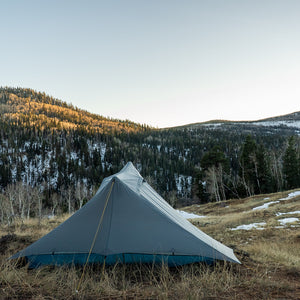
[00:05:42] Brigham: that's one thing that I know both of us do I could, I mean, I think in two minutes I could Quickly run down exactly how I take down my tent and my tent has everything in it. So, I try to not just have a bunch of stuff laying around in the tent. If it's something that I'm not wearing, or may put on in the night, it's not in my tent, it's in the pack. So, in the morning, when I'm taking down my pad, I'm setting anything that's in the tent outside the tent, so that Once the pads rolled up, I grabbed my dry bag stuff. The quilt in there? And then I won't completely seal
[00:06:19] Brigham: it up yet, I'll just set that outside and then everything else is out of the tent. So I take my rolled up pad set outside the tent. Then I get out and I take the tent down, once the tent is down and stuffed and its stuff sack Then I will compress the air completely out of my top quilt. Squeeze that and compress it down. Seal it off clip it. So now it's a moldable object that I squeeze to the to match the shape of the bottom of my pack and then I will stick that in the pack. I want to do that like the very last thing so that it doesn't start to expand while
[00:06:59] Brigham: I'm packing everything else up. So I do that. Once everything is taken down then all do that rolling up of the quilt. Smash It, mold it to match the bottom of that pack stuff that in and then in three minutes everything else is stuffed in. The pack. The tent goes on top the pad, on top of that might throw a layer in there just to fill up some space. And then those are like the big items, the the quilt, the tent, and the pad, and then, everything else just feels up space in there. But I do, I pack things. I fill the space at the bottom of the pack with the the dry bag that
[00:07:33] Brigham: has my quilt in it, and then the tent is placed in horizontally, my pad is placed in horizontally, and then everything else just fills up the spaces, so Yeah, the only other thing I know that we do
[00:07:45] Tayson: for saving space specifically is sometimes we will repackage our freeze-dried meals because sometimes those freeze-dried meal bags. Can just take up way too much space that on that are in them. So sometimes, if we're getting tight on Space, we will repackage them into zip-top bags that, that and that will save space.
[00:08:07] Tayson: Moving right along here, Daniel. Is actually part two of a question that we've answered. The second part of this question was, Sometimes things break or fail on the trip, what equipment has failed and how do we fix it on the trail? Where are some tips for emergency gear repair? so, two things that I personally take, is, I take Tenacious Tape or it actually Gear Aid field repair kit inside of that, as some Tenacious tape patches, as well as a it's called a Seam Grip or Aquaseal essentially that allows you to patch a pad on the trail now Caveat here, patching a pad on the trail is not fun and it takes time
[00:08:55] Tayson: that glue typically takes about eight hours to cure or to harden. So, if you pop your pad at night, consider it probably unusable for that night. It's not going to be till the next night that you could have it. Potentially fixed so smart to throw that out there. The other thing is I bring a small sewing kit and I mean, this is Very, very Ultra, like a couple of needles, spool or two of tiny thread, like, tiny spools of thread. And that's something that I have had to use to repair. Actually my dog on one of our trips, this spring has like a vest style backpack and it it broke. And so I did have
[00:09:41] Tayson: to sew that on trail and that was really handy, but I've always considered the sewing kit more for things like backpacks. Maybe some apparel like, you know, maybe like a like a pant or something like that. But for the most part, A lot of the stuff I'm taking out there is probably going to be more fixed with the
[00:10:00] Brigham: tape patch. so, Yeah, I I don't even take the sewing kit. I I take Tenacious Tape with a little applicator, tiny brush, and a little tube of Aquaseal. And yeah, I think with pads like that's the most likely kind of failure. That could really put a hurt on somebody's trip and sometimes I think some little pokes or doable with just Tenacious Tape, but it's it's it's a gamble like it may not work and then like you said, if you're messing with the sealant and putting tape on like that's not getting fixed right away. So Um, yeah, like I, maybe people would think about things like pole sleeves and stuff like that. I don't
[00:10:46] Brigham: even, I don't even well. I use trekking pole tent, but maybe if they're really, really windy place and really far from you know, any other option to get assistance, like, maybe the pole-sleeve thing might be be worth it to those but
[00:11:06] Tayson: I think that really depends on the shelter you have because in our case, one reason trekking poles, they're You know, they're quite durable, but I guess you could snap it while you're hiking. But if worse came to worse, I would use it, you know, hopefully in an area where I can find a stick, it would also work.
[00:11:23] Brigham: Yeah, around for round off the top of the stick, I'm not gonna poke through and
[00:11:27] Tayson: know you could use a stick in a pinch. But yeah, if I was using regular a regular-style shelter, they usually come with a pole sleeve and I would just leave it in. I mean, I would continue to take it that wouldn't take it out of my pack by any means. I usually quite small and light and easy to, to bring. So, I have most likely to fail. I've seen other than that I've seen, you know, people put holes and puffy or something of that nature but I don't know knock on wood. We haven't had
[00:11:58] Brigham: gear failures. Prevention. I think is Probably more important than the tools to repair it. You know, some people just are kind of not they their minds are focused that way, but like, I mean, we sometimes kind of joke about I'm pretty paranoid about preventing punctures and stuff with my tent side. Yeah, I always sleep with the foam pad underneath and like, I'd rather just put some prevention into it and still have the option to repair. But yeah. Prevention.
Editor’s note: These field and emergency repair methods describe the hosts’ May 2025 kits and experience. Use the repair product’s current instructions and cure time, test the result before depending on it, and prioritize a safe exit when a pad, shelter, apparel item, or other critical system cannot be made dependable.
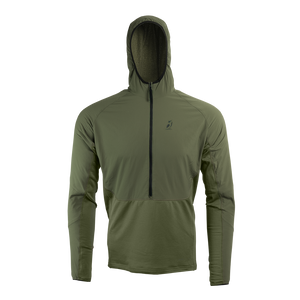
[00:12:34] Tayson: Though. It's worth it. All right, another question here I'm going to just kind of summarize this a little bit but Zachary Johnson is asking why we don't install thumb loops on all long-sleeve tops. I think you just means like everything he's saying from base layers, mid layers, insulation, layers. Is help with layering and comfort. Same. The only thing that he thinks you shouldn't have thumb loops on a rain jackets or like, Expedition parkas. so on this, I'm I'm actually not as sure where the questions coming from because we do have thumb holes. Or at least layering thumb loops on? Almost every jacket. A lot of pieces. I know. I'm on base layers.
[00:13:25] Brigham: We don't that's, Mostly based on. just, experience with our with the base layers, we've never felt like it was worth adding the extra and just having you know, I don't really want to layer loop on the loop onto Loop onto Loop. Kind of like, I mean, I'd rather layer hoods than than thumb loops. I know they're small but they With the way we make base layers, the the wrist cuff is trim enough that. it's just not a complaint that we really have heard in any substantial amount from anybody and personally testing like on our side it's just not even it's not even a thing because they fit close enough that We're not having our sleeves,
[00:14:19] Brigham: you know? Fly up our elbow when we put on a jacket or a Ventus or anything like that. Yeah,
[00:14:25] Tayson: one distinction I would make is we have this like thumb loops where they go through the fabric and then there's other pieces of ours where there's a thumb tab. I guess you would call it works. More like a A piece that you that it's not actually a slit in the fabric. It's a piece of stretchy elastic essentially put on your thumb while you're layering and then you pull it back off but we do have those and they're not gonna see those maybe as is easily on say product listing images and things but we do have them there. And then like just like you're saying what something like our Altitude is fits quite closely
[00:15:04] Tayson: and so we don't really have it. Coming up our arm. However, that's not to say that in another piece another base layer that we might be creating that, it might be designed to fit a little more baggy and that we wouldn't add it back on. So, But I would say for the most part we do have either a thumb hole Loop or a thumb tab. I don't know if that's the right word for it. Well, I'll say yeah, we either have thumbholes
[00:15:29] Brigham: or thumb loops.
Editor’s note: Thumb-loop, base-layer, Altitude, Ventus, and future-design comments reflect Outdoor Vitals products and design thinking in May 2025, not current specifications, inventory, fit, warranty coverage, or product commitments.
[00:15:30] Tayson: Yeah. Yeah. On a lot of stuff for pretty much everything.
[00:15:35] Tayson: All right, we've got a couple of rain jacket questions to follow up on. What I if I'm not mistaken. I don't know. That's okay. What's the difference between a rain jacket and a hard shell?
[00:15:50] Brigham: A quick answer is a lot of these kind of questions. There is not a. Webster’s Dictionary-type definition or official answer book. so, what I may say is going to differ from what someone else will say, so, I would start with that, because That's that's the real answer is, maybe there's none, because there isn't an official answer. There is no governing or defining body that says What a hard shell is and what a rain jacket is.
[00:16:30] Tayson: What first maybe start with what they have in common.
[00:16:33] Brigham: Yeah. What they have in common assuming the hard shell is waterproof and that would, that would be the thing. There they are both designed to prevent moisture from penetrating and getting into our clothing system from the outside. Now, in general, I think hard shells are just essentially they're just a heavier more Burly version of the same thing. They might have more layers to the the general what the shell is made of. But that's pretty much the biggest difference is they'll they'll maybe use a more robust and or heavy. face fabric, there's still a waterproof-breathable membrane in there, some of them might have two layers on the hardshell side, but They're they're working
[00:17:29] Brigham: in concert with each other to do the same thing and then there might have a backer fabric on the inside and then some hard shells, may even have a lining fabric. On the inside between the person and the, the backer so that might be four layers in a hard shell but in general, it's it's kind of as it's sounds like it's a harder shell so the fabric is just thicker, heavier more durable. They might even have reinforced or extra layering of more durable face fabric and certain places and they are the way I see it also thought of as more of a Skiing snowboarding. maybe, maybe climbing mountaineering type piece versus just a dedicated
[00:18:28] Brigham: rain shell but it's a very
[00:18:35] Tayson: Here people call them both, you'll hear someone just call a rain jacket, a hard shell sometimes, yeah or something, but I think that sums it up really. Well I think I think a hard shell just typically is a little more. Burly and multi-layered. This is kind of the easiest way to So I think that's good.
Editor’s note: “Rain jacket” and “hardshell” are used here as practical May 2025 category descriptions, not universal standards or performance guarantees. Check current construction, waterproofness, breathability, seam treatment, intended use, care instructions, and fit for the specific garment.
[00:18:53] Tayson: Should you only buy DWR treated down? And this is kind of this is apparently this question came from a YouTube comment. Easy answer is no. So I would
[00:19:05] Brigham: I would say yes or no. She's no. We shouldn't tell you what you should or shouldn't do like. That's that's that should be. That's that's my default answer is I don't want to say what you should and shouldn't do in regards to down and most things.
[00:19:20] Tayson: Yeah but I think I think the idea if I was to read between the lines here, make some assumptions here. The concept that you're down, has to be DWR-treated. I would say is false. There is a natural level of DWR on most down at least, well produced down, they're not going to strip, the natural DWR off of that down and unless they have to it's usually entails that they're putting on a different coating. So they're going to have some levels of some some ability to manage moisture already, right? Again you're coming off of a Down. Clusters are coming off of a waterfowl. I mean a bird that lives in water. So There's a level
[00:20:00] Tayson: that already exists there and there are pros and cons to DWR treatments. And and I don't know if we have time to get into that really deep here. So if you if you want that maybe write an additional comment to and we can we can really get into the Weeds on that, I think. Yeah, that there's a lot.
[00:20:22] Brigham: There's a lot that you could get into. I mean and and again this person says DWR and then you mention the DWR that already comes on a waterfowl and then somebody else might even think of another type of technology or treatment applied to down as a DWR. And when in fact, none of them are actually the same thing you know. So you know when when you say a goose or a duck has DWR. That doesn't mean that, that has a man-made chemical that has been applied to the duck. That means it has similar properties. Naturally occurring on the down that come from that animal. That provides some water resistance to the down. Same thing with
[00:21:10] Brigham: the the man-made or human-applied, you know. durable water-repellent finishes that are applied to down the, you know, some kind of manipulation of chemicals and or other compounds or substances and then you know, there's other treatments applied to down that are not chemical necessarily at all or not, you know, some kind of coating or something that's sprayed onto the down there just you know and and we have We've used at least two, if not all three versions, right? So and they all, they all have their pros and cons, they all have some benefits and, and some some compromises. But DWR is a is a term that's often. Maybe use a little too. Liberally without
[00:22:06] Brigham: enough specification specificity. I would also just say
[00:22:10] Tayson: with this. You can buy something and you can do at home treatments too. So like let's say find a piece of gear you absolutely love or it's a used piece of gear, you get it, a really good price, it doesn't mean that you can't also treat it yourself with certain treatments like a DWR treatment. And in most cases, if you are buying a DWR treatment, at some point, you're going to have to re-treat it with the DWR. But yeah, there's there's lots of pros and cons. Um, actually, maybe the best place to quickly reference. You would be to go back to when we released our newest version of our down top quilt last fall. And
[00:22:49] Tayson: listen to that episode about the behind the designs of the top quilt. We talked pretty extensively about a newer treatment of down or putting in that with our ExpeDRY down and it has a nanogold particle permanently embedded into that down versus a, you know, man-made DWR treatment and there's pros and cons to it. And we've been very, very happy with actually not having a DWR as well. So but that's something that's come out very very recently that wasn't available three years ago, right? So like it's just always changing but I would just say in general Like I would almost I would almost rate it this way. The quality of the down you're getting,
[00:23:33] Tayson: is more important than the coating of the down that you're putting on it, maybe that will help you put the priorities in the right spot as you're looking to make a purchase too. So
[00:23:42] Brigham: yeah.
Editor’s note: Down treatments, ExpeDRY, product history, at-home DWR treatment, and care comments reflect May 2025 terminology and company experience. Follow the current label and manufacturer care, repair, and warranty guidance for the exact insulation product; treatment performance is condition-dependent.
[00:23:44] Tayson: Um what makes rain gear wet out are more lightweight or more breathable Fabrics more likely to wet out faster. This is gonna be our final question for the day. Yeah.
[00:23:56] Brigham: Okay, so again, this is another one of those terms that is Not defined and even in conversation, it's loosely. Defined. So like what is wetting out? Some people say wetting out means the thing is failed and it's leaking. Some people understand wetting out to be You know, it becomes saturated, it becomes completely soaked water stops beading off of the face fabric and that's probably more along the lines of what I consider wetting out. And but I would try to make clear that a jacket or fabric wetting out. Is not the same as failing and or being breached by water meaning water. Now is coming through it. A jacket can be wet out and still block
[00:24:50] Brigham: water from penetrating through all layers of the fabric, but the easiest answer is what makes a fabric wet out is when the DWR is completely exhausted and nonexistent anywhere on the face fabric. And so there is no kind of chemical process. That's Making water bead up and bounce off or run off easily. And so now it's nothing more than just the face fabric, the That. Nylon or polyester, those Yarns that are woven together to make that face fabric. The water eventually just kind of absorbs into that. And and what's behind that is is the waterproof-breathable membrane, that membrane is incredibly thin like it's thinner than a human hair. So if you envision that,
[00:25:49] Brigham: now, you might understand that it's not, you're not going to Feel like you're going to feel everything that's on the face fabric once that becomes wet and saturated like that little membrane. That is almost always, it's completely transparent because it's so thin like it's not going to provide any physical Barrier, that is going to prevent you from feeling. That completely saturated fabric. So it that's that's kind of like the the wet out state is Yeah, the face fabric that's a layer of fabric just like you could be your shirt, it's completely wet. And now you're gonna feel You're gonna feel that wetness just like if you get like a thin plastic bag that maybe you
[00:26:39] Brigham: would put produce in the grocery store. Put your hand in that plastic bag and dunk it in an ice bath. Like your hand. That bag is going to kind of suck up around your skin and your your hand is going to feel like it's in water and that's exactly the same thing. But even more so because that membrane is so thin, but that's Essentially the DWR ceasing to repel the moisture from the exterior that is, that's the bulk answer of what causes a fabric to to wet out. So,
[00:27:16] Tayson: so then Would a more lightweight or breathable fabric? Be more likely
[00:27:21] Brigham: to wet out. In general, I would say. Yeah, I mean you've got less material. Up or lighter or a thinner. Layer. That is going to absorb water or become saturated faster. So yeah. In general. Yes. Yeah,
Editor’s note: Wet-out, DWR, face-fabric saturation, membrane performance, and breathability comments are May 2025 technical explanations, not a promise that a saturated shell will keep every user dry or safe. Maintain the garment under current instructions, carry insulation and weather margins, and act early to avoid dangerous chilling or hypothermia.
[00:27:41] Tayson: I would agree. Okay. I think that covers everything. For rain jackets. So and we're coming up on our time. So there's another episode of Ask OV. If you guys want to have your own questions answered, or have a expand upon a topic for you, make sure to write in just go to outdoorvitals.mom and and write in to our support and say, this is a question for the podcast that I'd like answered and ask your question. Or you can also jump over to our YouTube channel where this will be posted and you can leave comments there on the comment section. I will sometimes just write straight back to you some answers and whatnot or will take
[00:28:22] Tayson: those and actually put them into a future podcast if you need to elaborate on them at a deeper level as well. So keep writing these questions in we'll keep making this content and keep doing our best to to, you know, help you guys have more enjoyable experiences outside based on experiences that we’ve had ourselves. So, thanks so much for tuning in. Make sure you're subscribed. Share this with a friend. If you think they could get value from it to To them and make sure you've reviewed the podcast. If you can on whatever platform that you are currently listening to it and we'll see you guys in the future.
Editor’s note: The question-submission and response workflow describes May 2025 practice. Use current official contact or channel options if submitting a question now; no generic homepage or support resource is included here.