[00:00:00] Tayson: Everybody welcome back to the Live Ultralight Podcast powered by Outdoor Vitals. Today we're going to be doing a bit of a trip recap podcast of some Adventures. We've had down in the Grand Canyon, as well as answering a few of the questions that have come in from you, our listeners. So this originally started out as just a, you know, Q&A style podcast. However, as we started doing some Recaps and just catching up that ended up taking over most of the conversation. So you'll see kind of a flip in the conversation. The farther we get into the podcast but it ends up being just a good time for us to recap on some massive efforts that
[00:00:39] Tayson: we we did in the Grand Canyon, including a pack rafting trip and a R3 attempt done back to back on back-to-back days, so basically an R5 attempt in the Grand Canyon. So yeah, appreciate you guys having here? And we'll go ahead and cut back to the original cut of this podcast.
[00:00:59] Tayson: Before we dive into some of that, it got a little bit busy around the office. So April, we slacked a little bit today, is actually the first day of May, on some after double up this month, on our Ask OV sessions, because we have a lot of questions coming in, but Let's start with what we've been up to though. I actually just kind of went back and, and checked on the last episode. I hadn't even got on the packrafting trip by the time, we recorded realized episode. So let's yeah, we got a few things to catch up on plus we were on a trip last week as well so I may have to just do
[00:01:39] Tayson: a separate one and if this is something you guys are interested in, let me know but I did do a packrafting trip in the greater Grand Canyon National Park area where I was quite a ways out of the the main corridor of the National Park. And packed in.
[00:01:57] Tayson: Put about 30 miles on the feet to get about seven or eight miles floating down the river. So not the best packrafting trip, but it allowed us to connect some Canyon's that would otherwise be very, very hard to connect. So most of that trip was kind of wayfinding Route finding no established trails. In fact, there was A few times. I wasn't sure. We were gonna make it out of the canes that we were in, and it definitely far exceeded my comfort levels and climbing levels or experience levels for not having any climbing gear. Either just walking around the desert with, you know, 35 pound packs with. Packrafts and paddles and personal flotation devices and things
[00:02:39] Tayson: like that. And trying to find our way up and out of these drainages. So Pretty wild trip, but definitely really, really cool. I was able to get get my packraft from Alpacka Raft and Man, it was pretty, it was pretty addicting. So I'm really looking forward to putting together some some trips in the future or I'd be doing more packrafting. More specifically of the rafting side instead of the packing side because obviously adding I don't know 13 to 15 pounds worth of additional gear. If not more, it's not fun if you're not using the gear proportionately. So yeah, I would love to do some more packrafting, and for this, you are familiar
[00:03:26] Tayson: with them. Like, before I really, I haven't been a big researcher into this category but really really phenomenal, how small and Nimble, those those packs get because you actually pack your gear inside, the tubes of the packraft. And then you basically zip it up, reseal it and then inflate the raft and It's all the weight is very, very low in them. We went through some Class II, I don't even think we hit like a Class III rapid in there, but it was it was really remarkable just how well they, they perform. I mean, they're light, they're spinny. So like you get a little bit of undercurrent and also in your spinning like a top. So
[00:04:02] Tayson: you're kind of constantly trying to paddle forward so that you can keep your nose Downstream versus like I feel like maybe on bigger boats or boats with Rudders. You can kind of Go with the current, there's a little bit harder, you have to actively track, you know, line. Yes. Okay, yeah, you're either paddle and forward or backwards, just trying to keep your nose. The direction you want it because they're so small compared to the power of those rivers that they can just Making a space. And sometimes I'd be paddling along in the in this, like the slow end, or like the slope portions. Where It would just spinning and I just go with it because
[00:04:38] Tayson: it let it go. It was easier to just go with the full rotation and keep paddling and to fight it. So just they're interesting little wraps for sure but tons of tons of
Editor’s note: The routefinding, packrafting, river-current, rapid-class, personal flotation, and load comments describe Tayson’s May 2025 trip and first-hand impressions, not current river conditions or general instruction. Packrafting competence, suitable craft and protective equipment, access, permits, flow, weather, and rescue options are route- and date-specific; confirm current land-manager and river requirements before travel.
[00:04:50] Tayson: fun.
[00:04:50] Tayson: Let's try to think of any specific call outs on that. I mean, one, I was testing our newer version of the Shadowlight. That'll available later this summer and absolutely blown away that with over 35 pounds, the pack weighed about 38 pounds; at the trailhead it was about 37 pounds and so ebbed and flowed from there to pay on water. It's blown away that a pack you know, as light as our Shadowlight pack could carry that much weight so comfortably. So really, really excited about the suspension suspension system that the Brigham's been Redesigning. And we've been testing, and just going through multiple prototypes of it and and that's gonna be huge when that comes out. So really, really
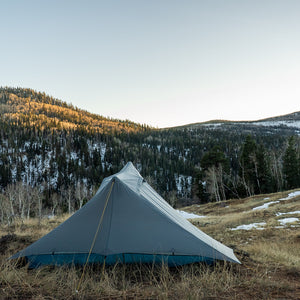
[00:05:36] Tayson: excited about that other cool call outs. We had I didn't get to see this, but apparently some people in our camp were getting harassed during the night by a ringtail cat. Which are quite rare. So, you'll have to look up a picture of a ringtail. Yeah, apparently, there was one down there, and we were camping a very nice spots. Like it's a lot of rafters camping there and apparently, he knew how to come in and steal food. So he was harassing one of our guys, that was not sleeping in a actually. I was only one sleeping in a tent ever, and I was just laying out on ground sheets, but after enough experience is with
[00:06:15] Tayson: seeing enough scorpions out there having spiders, crawl, all over you. I It's just worth it to pack an ultralight trekking-pole-style shelter in there and not deal with with bugs all over me. And so, Yeah, he was he was kind of, I guess, flashing his light and chasing off a ringtail cat during the night. A couple of times. He was, that's what I've seen down there before. Like, hiking down there at night. I've
[00:06:45] Brigham: I'll have to Google what that looks like, because It's kind of like it's almost like a raccoon, but just a big, big long tail and like, black and white black and white. I think that, I think that's what I've seen. It almost feel like he could almost write it off as like, skunk colors, interact and type of yeah, size or form or so. Yeah, I mean, I from what, I know there just extremely rare to lay eyes on so, I and they must be very nocturnal. I would imagine as part of why they're so hard. This is your fine
[00:07:15] Tayson: but Yeah. Overall, I was just happy to get out of there. The guy that led that trip. No fear of heights, and it showed. So
Editor’s note: The Shadowlight prototype, suspension, load comfort, wildlife, food, campsite, and shelter comments reflect one May 2025 test trip and camp. They are not current product specifications or a guarantee of load comfort, wildlife behavior, food-storage compliance, or campsite suitability; use current product and land-manager guidance.
[00:07:29] Brigham: Sounds like something I'd be happy to be done with
[00:07:31] Tayson: this. I will, I can almost promise you. Brigham you with not made this one with with like, your vertigo or here. Yeah, I was, I was I had there are a few moments there, whereas like the end of the day, you're physically exhausted. You still have to climb up this crack. Where you're 300, where you're climbing around a 300 foot pour off. And We had to stack rocks to get up to the crack, and then you just wedge your hand in the crack. and, and that's your handhold and it was getting like between the combination of both myself, getting exhausted, not being super comfortable with climbing, in another guy in our group that I started
[00:08:13] Tayson: to get worried for because he, he hadn't been in places like this and he wasn't maybe as Quite as physically fit, as some of the other people in the group, I started to get to a point where I couldn't watch him climbing because I was so nervous. I've watched him falling. And so I was like, my, my Loot on the trip was like, okay and thankfully that was our last climb that was really sketchy and then we camped that night on a an amazing spot where we is basically drop off a bull side. Again, while I was happy, I was in a 10. I'd probably be fearful to roll off my pattern. Roll off a
[00:08:51] Tayson: cliff in this spot but amazing views.
[00:08:55] Brigham: Yeah. Grand Canyon has a lot of A lot of area that's not just hiking
[00:09:01] Tayson: this in the same Canon as everyone else. The same mean trailheads, everyone else, so pretty, pretty unique spot. But again, we will get to these questions, but we will play a little bit of catch up here.
Editor’s note: The off-corridor terrain, climbing, routefinding, exposure, and camping observations are personal history from May 2025. They are not route directions or a statement that access, camps, permits, anchors, or conditions remain suitable or legal.
[00:09:13] Tayson: Bring my also just got back from a trip. Into the main Grand. Canyon National Parks with a group of about 18 other guys. And the this is a group of guys that do this hike every single year they called their death hike. It's actually a group of Sportsmen really um, they're going to do this. And and so they kind of, I think historically, my understanding of it as they do this to make sure that they're in shape for for hunting season. But also just to push themselves mentally and physically and and use it as a chance to grow. And, and spend time with friends and so The goal is to do an R3. So go
[00:09:56] Tayson: from south rim to North Rim to South Rim and then
[00:09:59] Tayson: Potentially sleep a couple hours and then do it again. Do a second R3. So this could also be seen as an R5, but for our sakes, we've been calling it kind of an R5 or R6 because we're essentially sleeping or is like two separate r3s, but yeah, we went, we went down there met up with this group of guys and I mean went on a massive Adventure. So each lap is about 50 miles. So this year is a little bit under 50 miles, but some people's watches was tracking 50 miles my tracked in the mid 47, mile range and then you've got 11 to 12,000 feet, I want to say of climbing each day
[00:10:43] Tayson: and the thing about the Grand Canyon is It's it's unlike any other Trail. You'll go on because the clients are 100% continuous. So Depending on the North term of the south rim south rim, The Climb is around 45 to 4600 feet just in one. Go in about five miles, five to six miles. And so, it's that, that makes it incredibly Steep and you just never get a break. He is just constant climbing. I'm the north rim you slowly climb about 2000 feet. And then from there you do, the the big push up to the north rim and that's about 38. 3900 feet, straight climbing, So very, very grueling. But how did it go Brigham? What
[00:11:31] Tayson: were your thoughts on the trip?
[00:11:33] Brigham: Yeah. At least I get kind of tired of that place being in there that long. Well, because you're just doing the same thing making laps twice, you know. And so it's just becomes very Very long, find myself not looking around as much. Well, hardly at all, you know, on the second, you know, on the second lap and yeah, that's that's a long time. Just been just just like walking, it's it's it's kind of weird how it just think it's just a long time to just be walking on the same place and it's over. It's just like kind of a blur in time. of realizing that when you're done is like, Basically, two days later just
[00:12:21] Brigham: feels weird, but interesting work. Yeah, I left that place, not feeling a lot of versions. See the
[00:12:31] Tayson: See more of it, go back. Yeah. Well for me this is my third Grand Canyon trip of the year. We went into a section of the Grand Canyon, and then I went into another section of the Grand Canyon, and then this one. So I especially felt fatigued by like the terrain, which is crazy, because the first time I went in there, I was blown away at how beautiful. It was. The second time I went in there was similar to the first. I was just, I just loved it. this would be my third R3 and I was very much just Knows to the ground. Talking with the guys, I'm with do a whole lot less looking
[00:13:08] Tayson: around condition-wise. It was 10 to 15 degrees hotter than last year when we did this and that showed like immensely and I'm talking like, on average, at the top of the rim, the bottom everywhere, we went, you're about 10 15 degrees hotter and that just really, really manifested itself in terms of Fatigue in terms of how it affects our stomachs. And every everything in between here and it was it was just way more brutal. I have been dealing with a handful of injuries and just came into this way, less trained a little bit more heavy and so I I was pretty worried in terms of that and so I definitely did my My hiking time
[00:13:50] Tayson: slower than last year. So My very so in the first R3, I was almost two and a half hours slower than the year prior which Which is a lot, that's a lot of time. In fact, when I got to the south rim, I looked at my watch and I'm like This is a very like demoralizing moment for me, I'm like, we're filling up water at the very, very bottom and I'm like, holy cow. I was within like a mile at the top right now, it's like 30 minutes from the top right now, last year, so, I was just Just felt like I was so far behind. Yeah. Conditions were were different but in all reality,
[00:14:28] Tayson: in my opinion, more challenging at least for my from my experience. However, because they were good, it offered us the chance to do a day, too. Where is the year? We were getting snow like inches of snow and just it, we had people that were down in a canyon a lot longer and I'll just accumulated and that's not attempting a second lap. So yeah, I got through day one. I mean Along with the heat, I noticed that my feet were just immensely.
Editor’s note: Mileage, elevation, rim access, temperature differences, pace, injuries, fatigue, stomach effects, snow, and water observations are the group’s May 2025 recollections and device estimates. Current trail access, permits, water availability, closures, and weather can change; this is not medical or exertion guidance.
[00:14:59] Tayson: hotter. So I got through day one and it was really the first time in years that I've had blisters these big old blisters on my on my side of my big toes and and I to me it wasn't a shoe problem. I picked up a pair of the HOKA Speedgoat 6s. And to me, they fit and felt just like the fives but a little bit better. So I really don't think it was a shoe problem or a sock problem. I have a lot of miles in that shoe. I just I don't remember hiking when I'm just when I'm just thought. Like, it feels like I'm walking on Asphalt in the middle of the day
[00:15:31] Tayson: because it's so hot on my feet.
[00:15:33] Brigham: Yeah.
[00:15:35] Tayson: sharp, pokey rocks. Yeah, and you know, when you're doing like a constant 4,000 foot drop or a 4000 foot, climb a lot more wear on your feet, in specific areas that just get hotter and hotter and can create that friction and blister. But so yeah, I mean I finished day one actually In some ways, maybe for like, feeling better than I anticipated with my lack of training. Feet were in worse condition, but definitely he was a killer. But by the time you get to the end of day one, It's amazing. How many people start to what feels like start to mentally. Check out and me included. I mean, I started like you get to the
[00:16:18] Tayson: end of day one and you just start thinking of all the reasons why everyone else is going to stop or not go. So, I literally walked into camp. And this year, I just feel like a little bit I don't know, less to prove to myself or anyone and and I was kind of like I'm just gonna see what the group's gonna do. And from what I had heard that there was two other guys that were going to drop into the canyon the next morning at 6 a.m. and as I was going to bed met up with you and I kind of related that you so much. Okay, we got four people dropping into the canyon
[00:16:46] Tayson: and I legit thought that it might just be for people dropping in the canyon, um, But we left at 6:00 and after we left I think, I don't know, but I kind of feel like it helped Inspire or push a few more people out of crime believe.
[00:17:01] Brigham: Yeah.
[00:17:02] Tayson: Um so we did end up having 10 or more people. Start day two. Yeah, it was, it was cool. I'm glad I was glad that many people dropped down.
[00:17:12] Brigham: Yeah,
[00:17:13] Tayson: and of our group of four that left camp together. Only Brigham was saying he was gonna do the full second lap, the other two set or just gonna go down to Phantom Ranch the bottom of of where the river is and turn around there. I know I could at least do that. And I was just gonna, I don't know, as I started walking. I got thinking of my head like well I could probably go to Manzanita but I don't. I didn't know if I was gonna do the full, the full gamut and, Yeah. Anyways came down was the first time ever, we stopped and got lemonade at Phantom, which was I think I'd walked past
[00:17:50] Tayson: there, like Five or seven times. And I've never been able to stop and get lemonade because we're always just moving so fast. Had a good break there, and then from there, we started to continue it towards the other side and started all separate. I ended up deciding to go to Ribbon Falls. Which would put me over the limit of 75 miles. I should put me at about 80 on the trip and go and stop it. Ribbon Falls. The Tyler catch up with you and do that with you or did you know? I told him where I was going. Yeah.
[00:18:20] Brigham: But
[00:18:20] Tayson: I don't think he quite got there before he decided to turn around.
[00:18:23] Brigham: Okay, yeah. And I never found out about that. Yeah.
[00:18:27] Tayson: So one other guy in our group behind us ended up doing saying he was gonna do the full thing and then two guys ended up going a little bit past me to Manzanita. So all in all we had three people finish it, one guy was on a mission, he was running and Hiking from the second we started and he was doing it as 100 mile, ultra marathon. Essentially he'd been training since last year and he crushed it and then bring them. And another friend of ours Jack, he both did the full two laps of the R3. Um, I went up and went to a waterfall and laid there for about an hour and it was,
[00:19:03] Tayson: it was glorious. I took some some mercy on myself and all really nice on the, on the feet. I soaked my feet for 30 straight minutes in the water and the ice cold water. And it was, it was amazing. It's one of those experiences though. Where, like, as I'm laying there I was just eating and soaking my feet and and lay and I was really comfortable and all my back. I was like, oh I feel like a million bucks is gonna be so nice to stand up and leave. And I went to stand up. And I almost did like I almost fell straight into the water. Because my legs were so much more sore than
[00:19:36] Tayson: my head. Oh, they were. If that makes sense. Like, because you just feel so refreshed laying down. I stumbled and had to put a hand down into the water. I bought her right in because I, in the hour I grew a lot of confidence. but yeah, I had been I I Had to say. in the moment, I thought it was a A decision. And I still think it was a good decision for me because usually I don't know, I can push myself till I till I break and I did that 100 mile or last year and it was really good for me but I I think, once I checked that box, I didn't have as
[00:20:15] Tayson: much of an itch, or, or something to prove to myself, or, or just be like, I gotta, I have to finish every, like, I have to I don't, I'm really big on goals and sometimes my goals can cause me to lose sight of other things, that would be good. Like seeing this, this, these Falls that I'd wanted to see in past six times and never stopped to see or things like that. So, Um, but I ended up hiking back out. I got to camp at about 9:30 or 10 and I still felt pretty good. and, Then, and I went to bed, feeling great about my efforts. The next morning we woke up. And I had
[00:20:53] Tayson: to look under Brigham's vestibule for my mind to see and I saw his shoes there. Well, bring them made it out of the canyon. I did check my Garmin once to make sure you weren’t in desperation down there. But, um, But the other guy Jack had still not made it to campus by 6 a.m. so bring them you're into like 5:45 a.m. So your second lap took you 23 hours and 45 minutes. Talk to us a little bit about your experience on lap 2 I guess.
Editor’s note: The second-day destinations, turnaround choices, mileage, sleep, tracker checks, and completion times describe these individuals’ May 2025 outcomes. Distances and device readings are approximate, and another person’s continuation or turnaround choice is not a safety benchmark.
[00:21:25] Brigham: It's just, yes, it really is a just nonstop. Just accepting that, it's Never, you know, just, I don't know. It's not something that is going to go by quickly and most of it was by myself and in the dark. So, Yeah, it's just yeah, just paint on the feet. I think that was the biggest the most pain was just on the bottoms of the feet because it does feel like, I mean, by the time I was to the north rim felt like, I was even wearing shoes, you know, every right you feel every Rock and there's tons of rocks that trail is it's a terrible Trail for You know, feet and joints, and stuff like
[00:22:08] Brigham: that. It's Yeah, so
[00:22:13] Tayson: just it's a different kind of hard because it's not like your way finding or anything like that. It's just the trail is like hard asphalt. And the bottom with additional rocks on top. and then on the climbs, there's massive step ups and steps like a foot and a half to two foot step
[00:22:31] Brigham: ups and step downs. And then there's like, golf ball or racquetball sized rocks everywhere in between those steps and yeah, just it's just pain. I mean, it's pretty much just non-stop pain and The only thing you do is just take another step, you know, one step after another and just just keep going. It's just painful, no point and
[00:22:57] Tayson: Knees. Her feet hurt. Legs hurt.
[00:23:00] Brigham: Yeah. And
[00:23:01] Tayson: well and that eating the same food and
[00:23:04] Brigham: just trying to stay awake like just You know, holding I, you know, holding the eyelids open for hours. so what it feels like is just barely trying to keep your eyes open for 20 hours between the two laps. You got about four
[00:23:18] Tayson: hours of sleep, right?
[00:23:20] Brigham: Yeah, probably. Yeah, three hours. 45 minutes from when I crawled in the sleeping bag to got out of the tent. So, with how much time we've got in here?
[00:23:33] Tayson: I think I think we're just gonna create two separate or podcast here because I think there's actually a lot more hair to talk about and there is one question that ties directly into this related to nutrition. So I'm gonna I want to let's just we'll cover that through this. But I'm just gonna I'm gonna call an audible here mid podcast and we'll do a separate podcast because we wanted to keep the the Q&A is to ask you once, like, 30 minutes and yeah, clearly, we had a lot of trips to catch up on a lot of thoughts. But so, you never laid down a catnapped or anything like that, right? You just
[00:24:05] Brigham: on all night like wall hiking lap to ya? No, no. No. I mean I'd stopped to eat. Take little breaks here and there but
[00:24:15] Tayson: I never know, never slept for someone who's never done an effort like that. So I mean we're just gonna say that you did. 100 miles. On four hours of sleep. Some of the toughest Terrain. Possible. Um, For someone who's never done an effort like that. What do you feel like you learn about yourself or take away from that experience? Because really, it becomes mine over matter, right? Like
[00:24:48] Brigham: yeah,
[00:24:49] Tayson: that's how I feel. So next day, when I saw Jack come running in, I was just like, dude, I am in so much. I'm in such a better spot than he is. Like there's no doubt I could have done that but I kind of mentally was like I just don't want to hike through another night and I I checked out of it and it was like, but it wasn't a physical limitation really? You know, it was it was just a mental like do I care enough to endure the pain that it's gonna cost essentially?
[00:25:16] Brigham: Yeah. Um,
[00:25:19] Tayson: But yeah. Like, so what do I mean? What It. What was the end result for you? I guess in terms of just if you're thinking about this what did you walk away with or What do you think? Others wouldn't? Necessarily understand how they not done something like this.
[00:25:34] Brigham: Yeah. I mean, I Definitely agree. It's it's very It's very mental. And and for me, it's, it's just a matter of being willing to Accept. Pain for a long time. and, like the that's like that's that's So cool to overcome is not necessarily the mileage or the elevation. It's just accept the pain and be willing to just, Go until it's over. It's interesting. I don't think it's, I I'm not a person that feels like having done that, that it was something and I never felt during the hike. Like, this is something I have to do. I have to do this for myself. I have to prove something like, I don't think that way and never
[00:26:23] Brigham: felt like it was something that I had to do, but it was just, you know, something that I figured I might as well do or I I mean that was the point of going there was to To do it. and I, You know some of some areas it's very simple like I didn't have any any physical limitations or injuries or pains that were insurmountable that would keep me from doing it. And I guess I felt like I kind of knew the entire time that it was something I could do. So in some ways, it was pretty simple that way of like I came to do this, I can do it. I'm I don't have doubts
[00:27:07] Brigham: that I can do it. So I might as well do it. so that being said, like, you know, when I say, I don't it's not something, I feel like there's something I have to do to to know something about myself. But I do. believe for me, that it is good to do hard things like this, whether And where that, how that scales or however, much or less? That is like, it's kind of too important, but I do think it's I think it's good for me to do. To do things like this. And then, you know other takeaways are that there's there is an element of luck to it. Like just being lucky that. Maybe that
[00:27:59] Brigham: doesn't or two dozen times that I like tripped and rolled and Ankle, that it wasn't bad. You know what I mean? Like? Yeah. Any one of those like a mile out of Camp, any one of those could mean that, like, I'm physically, or it would be physically, like it would be Foolish or unwise to keep going. So there's, there's that element a little bit element of luck but
[00:28:23] Tayson: What do they say luck? Is where Preparation meets opportunity or something like that. I think what I guess I mean by that is like I used to roll my ankles and it would you have like a lasting effect? I've noticed, since I trained more In trail Runners and I run more. That I I do think my ankles are just way more.
[00:28:51] Brigham: Per se. Well, I also think that they're when you get out and spend a lot of time hiking running doing things like this. I think it's the body to react to What for one person could be a catastrophic? Ankle roll. Turn into a really bad sprain. It develops. I think maybe instinctive body reactions that you kind of know how to let an ankle roll and I don't think it's very I don't think it's very conscious but it's just yeah, kind of how the body reacts to those things. I think it there is an element of training there like that. on those unlucky steps or missteps that like, do that thousands and thousands of times, I
[00:29:43] Brigham: think there is some, some, some muscle learning there, some neuro muscular learning there,
[00:29:48] Tayson: I thought you were even gonna say like that, you didn't have a like, your knee lock up, or something like that. And to me, that is a, you might say there's some luck there but I actually would say we just learned, we learned from prior experience. Yeah. How to walk down the south rim, how to embrace yourself? Not use your no, not overuse your calfs and yeah, not run, you know, or things that and certain sections where it could, you know? So like I actually found that because I was so nervous about overusing, my calf muscle and my shin muscles. I think that I actually shifted a ton of load to my quads and I
[00:30:30] Tayson: developed it in my quads and my caps were totally fine which that was a complete role reversal from experience. I had there but is also very conscious role reversal.
[00:30:39] Brigham: Yeah I think that's I agree 100%. I think that Consciously modulating, where you? Put the load on the body or like where you load your feet legs all the way up to the hips and position your body and posture your, your core. When you're doing those things, like I was I will say that's something. I was conscious of probably, 99% of the entire time I was doing that hike was like very actively. Changing and, and modulating. How I was going up and down things being very conscious to make sure I wasn't picking up a rhythm of stepping down with the same foot over and over. I would like I was, I mean that's sometimes at
[00:31:30] Brigham: some points I was counting. You know. If I notice, I picked up a rhythm of going down, the three steps on one side. I made sure I balanced that out with three steps, only the other side. And then, and then, I mean, you can just kind of Manage your weight as you're descending, you can manage how you control that you're kind of falling, you know, down each step and I don't know. That's something I was actively doing the kind of the entire time. and even when it's like, kind of a long Six Mile Stretch of very low angle, like, call it flat walking, whether it's gradually up or down, like, towards the bottom, like, even
[00:32:12] Brigham: that like, I was conscious to like, Almost. roll off my feet, try to just Just modulate or vary, how I rolled off the balls of my feet. Sometimes focus more on like rolling in for the arch to the ball of the foot and then rolling towards the outside of my foot and just because that's what I was. and the whole reason for all of this is just to avoid some kind of Overwhelming of some muscle group that would cause a catastrophic reaction to another, that would result in some kind of knee injury. Because, yeah, like, you just mentioned, like, that's something. We've both experienced and it it's, it's game over. I mean, You'll limp out
[00:32:58] Brigham: but, yeah, you're limping out at one tenth, the speed that you were, you know, prior to that. So
[00:33:05] Tayson: that, that was part of why. I ended up not doing the full out too is with hat. When I was climbing out of the south rim on day one, I started to get a little bit of cramping happening. and I, my thought was Like, if I when my body starts cramping sometimes it just won't stop. so my, in the back of my mind was like, if I did the north rim, and I started to cramp, or something like that, Man, I still have to get all the way out of here. Like there's no easy button out. You've got to turn around and I 20 something miles back and so that's a really challenging aspect of
[00:33:44] Tayson: the Grand Canyon when the north rim is not yet open. So let's let's move to this one. I think this is a pretty interesting question. Daniel. Boppy. Any of
Editor’s note: Pain, ankle rolls, blisters, cramping, movement choices, and injury outcomes are personal historical observations, not medical or training advice. Stop and seek appropriate help when symptoms, heat, exhaustion, altered alertness, or an injury make continued travel unsafe.
[00:33:59] Tayson: the Outdoor Vitals crew plan, their hike. So they Can read this. All I read that one of those sews is a do oh gotcha.
[00:34:07] Tayson: When when any of the Outdoor Vitals crew plan their hikes do they choose their food for specific reasons? Like make their choices based on weight calorie intake or taste. And I would keep this to a very challenging hike. To go on. How would they meal plan? Essentially So yeah, let's talk about how we fueled for a trip like this versus maybe just a regular hiking trip. And so on so forth. Personally, I actually view eating on this particular trip very, very similar to how I would eat on a ultramarathon and most of my ideology from from that comes from When doing this level of exertion your body can burn about 50% of its calories from
[00:34:56] Tayson: fat and you need to resupply the body with the other 50% roughly speaking. So that's kind of like principal one principal 2 for me is the easier the calories to digest the better. So I eat a lot of carbohydrates, easy to digest carbohydrates and sugars. And a lot less fats and proteins. So for me on this particular trip, I took in to the can 6500 calories per day. And 2000 of those calories were in the form of liquid calories from Skratch Labs. They have a high carb drink, mix, as well as their regular drink mix. And I was just drinking those and mixing up versions of those. And that's primarily what I was drinking when
[00:35:49] Tayson: I was climbing both the North and the South rims so that I didn't have to take my hands out of my trekking. Poles off my trekking, poles open stuff up. Eat stuff while I'm breathing really, really hard. So both of those clients, I use Liquid calories and then in the bottom because there's about a 10 mile section in the bottom where you're flat walk. Not flat walking but more flat walking. I would then eat calories there, which was primarily things like bars. Dried mangoes. And just anything he can think of, that's more of those quick calories. And then I had a bag of jerky, that was a pretty full back of jerky, and I would
[00:36:28] Tayson: eat basically, a large handful of jerky whenever we'd stopped for water, as kind of a protein Source, I think you only have a real protein I had was was like trail mix. Other than that. I was just all like, I mean in the sounds terrible but bars and candies and things like that because when you're doing an effort like this, you just want to make it as easy on your gut as possible. And so those are the quickest to digest. Types of foods. And so that was my personal strategy for this particular hike and then I'll let you go and then I'll talk a little bit more about like actual backpacking.
[00:37:05] Brigham: Yeah. I mean, mine's very similar because to me, it's just all about the delivery and the body accepting it and then Digesting it and benefiting from it. So, yeah, I with its like the it's just the prolonged exertion. Even though it's like relatively low exertion, it's just prolonged enough. And then when you factor in the heat of this one, it just kind of compounds the the Stress on the body. And yeah, just from doing it and experience doing it like, There's, there's just somewhere. There's a threshold somewhere where the body becomes sensitive and there's a point where my body doesn't want to accept. What I mean or just doesn't even feel like eating. Like I
[00:38:00] Brigham: just don't have an appetite. And so we've talked about it before even with longer backpacking hikes, but not to this level of just like using foods that I feel like I'm likely to want to eat when I'm in that depleted state. So having a lot of variety of things because there's a chance, I may look at a bag of something. And my stomach just yells out, know, just don't want to eat it. So having a lot of variety and it's all like it's essentially like junk food, what might look like just junk food, so, Because I want to want to eat it, I need it to be easy to to consume and needed to stay
[00:38:46] Brigham: down and I do want my body to be able to get those calories pretty quickly. So it's not, you know, just a few meals and then empty space between meals. It's like way closer to constant feeding, then it is I'm feeding of, you know, I don't think I went more than I don't think I ever went more than an hour without eating something. So again, some items. you know, I take things like Pop Tarts, Bobo bars, granola bars, rice krispie treats. I always I really like having a couple pieces of cheese just for the kind of the fatty oiliness at some point during the day or the hike. Was very satisfying to me. I always
[00:39:36] Brigham: take Fritos and and and and all of these are very calorie, dense Rice Krispie treats being the least calorie dense, but everything I mean, I don't care too much about, like, calories per ounce just because I know everything, I'm putting in that bag is calorie dense. But let's see. And then I A few say, at least a couple options of like a candy, like a gummy candy, something that's a really fast. Excess sugar. And I, I saved those for when I'm either just starting or during a climb You know, because that's a prolonged climb like that's two to three hours of that. And so it's just kind of like a constant Intake of those of
[00:40:28] Brigham: those gummies. What I didn't take something, I often will take is some kind of like salami or pepperoni. Just to break up the the junk food taste. And I didn't do that this time. I wish I would have, but I wouldn't say it like At a significant negative impact on me. But I definitely wished hikes though. It's yeah. A step down and exertion exactly. Yeah, I did all. So take some of the the scratch high calorie drink mix. I probably had 800 calories of that per day, but Calories, I never, I never even really officially counted. But I think I, I would guess it was between 3500 and 4,000 calories a day for me. And
[00:41:16] Brigham: I know the second day, I didn't eat. My second thing of Pop-Tarts. So that's three or 400 calories less. It's
Editor’s note: Calorie, drink-mix, food, protein, timing, appetite, and digestion figures describe Tayson’s and Brigham’s May 2025 strategies and estimates. Needs and tolerance vary with the person, heat, duration, water and electrolyte balance, altitude, and health; this is not a nutrition prescription.
[00:41:24] Tayson: funny how, like, a Pop-Tart. It sounds like you could always eat it. It's just sugar, then you're in the canyon. Like, that looks and tastes like chalk because my mouth is, but yeah, yeah, right. It's like things things. Change on the trail, right? So, so how I would relate that to backpacking and specifically, you put very challenging hikes It's very similar. I mean a principal that I try to follow is just like Brigham mention eating often as Runners. They'll typically eat a like take in some form of calories, every 15 to 30 minutes as hikers, High exertion type hikers. I would say you've got more leeway to be like 60 to 90 minutes so,
[00:42:02] Tayson: but but if you're consuming, some form of calories about every hour to two hours, depending on circumstance, you're doing pretty good. And and then obviously like we will on a hike. So we're going to stop for lunch and for dinner and you know, usually some kind of a breakfast at some point. Whether you eat out on Camp or whether you eat that like the first time you're filling up water. But then, yeah, just kind of trickling in easy to digest, easy to eat Foods. Now, Just like Brigham said, you kind of have ideas that are like, this is the type of food you take on on a trail. It's either calorie dense, it's either, it's
[00:42:42] Tayson: easy to eat. Its Packaged correctly, what? You know, there's some different kind of thresholds or, you know, high density and countries. So, but what I've found to be the easiest way to pack for me. as I know if I'm going on a hike where I'm hiking, 20 plus miles a day. Backpacking. I know that I need to eat more than 3,000 calories to feel good because I'm burning. Say maybe six or seven thousand calories that day. So I try to pack somewhere between three and four thousand calories and so the very first thing I do is I'll take whatever meals. I'm going to take like freeze-dried meals and I'll look at the weights of those
[00:43:21] Tayson: and I'll kind of subtract that off. And then I'll pack about I basically just take like a like a zip-top bag and I just pack a zip-top bag on a scale, a little food scale and tell it hits a certain weight and then I know I'm roughly in the right Cal when windows. So for me if I'm remembering right that ends up being about a pound and a half of A pound and a half to one point seven, five pounds of total food. And so if I take my meals out of that and then I just start packing the zip-top bag until I hit a total of that. And so, like that, that includes the meals, I'm just
[00:44:01] Tayson: saying, select, If I subtract that I might need say 1.25 pounds in a zip-top bag or something like that, and I'll just pack that with things that I think I want to eat and divide that up. Until I hit that weight and then I'm done. I've done the whole thing where I put it in an Excel sheet and I track everything and it just becomes too overwhelming and it takes too much time. And It became non-efficient and fun for me. And so that's that's what I have come back to is just I just I just get a total weight for the days food and Pack until I hit that weight and then I'm good. And if
[00:44:38] Tayson: I'm doing a five-day hike, I'll just kind of do it all the same as well. I'll kind of get an idea. What that I'm usually the guy that like my five days worth of food. There's a very little variation. Yes. Like my, my free strike Mills. We're gonna change every day and a couple little things before the most part, I'm eating about the same food every day on trail.
[00:44:56] Brigham: Yeah. I I'm almost done with that. I think on. Yeah. Like you said step down to the to the, to the backpacking trip. And I don't know if you're familiar with some of the things we've done think, like you and a High Line Trail or Colorado Trail or we're still doing 20. A little over 20 miles a day high elevation, but it's just dialed down on the duration and the intensity. I am more spaced in my eating where I do really well where I start the morning with a breakfast while I'm walking and I'll maybe eat one other Portion of something between then and lunch. The same thing with dinner, it was all out, but
[00:45:39] Brigham: between lunch and a dinner. Stop, I might snack on something, and oftentimes that ends up being a little pouch of gummy bears or something because we had a big pass to climb. But so but that ends up being, you know, maybe a two Two and a half hour space between consuming something. I think you just kind of
[00:46:00] Tayson: modulate it more for terrain, where I'm just kind of saying like Time is that? Yeah,
[00:46:05] Brigham: well actually you know I forgot about Grand Canyon that I was worthy tip or I think it's worthy to put out there is I forgot that I had, I took these two, the called RecPak their basically a meal shakes 700, Cal 42 grams of protein and they're pretty well balanced. I actually took because I did. You don't know how you're going to feel like at the end of the day, which is like the middle of the night, but when you, when you're feeling like you want a dinner, you know, not just a, you know, some morsels of snacks, but like something substantial, I took multiple dinners. I took a couple different freeze-dried meals and I
[00:46:49] Brigham: took one of these Meal shakes basically just because I never know exactly how my stomach is gonna feel and then all. So they're very quick to consume. You just pour water and shake it and you're done. And so I actually I ate one of those before, you know kind of my halfway nap right before I got in the tent. Put that down really easy, and it sat really well like it had no stomach issues whatsoever. And then, I took my second one on the trail, the next day, and I Had that. A little over halfway through that second lap. I kind of so not doing that and I was up. I was glad I did
[00:47:32] Brigham: that. I think because it was like, Those 700 calories and there's some fat and protein in there that's all the way I think of it is like that's all stuff that's gonna kind of show up for me. Few hours down the trail. You know what I mean? Longer energy. Yeah.
[00:47:49] Tayson: yeah, I tried to make a meal and I could only eat about half of it and I just my gut wasn't handling it and and hindsight, I wish that I would have made a done a RecPak at camp. I can get, would have been faster. Well, save me time. Would have been really balanced in terms of nutrition and probably a little bit easier on my get. So
[00:48:09] Tayson: maybe last thing on this topic is just just recognize to that like, why we talk about variety so much. And, you know, things of that nature is because when you go to altitude or if you get in to Heat high heat conditions. Both of those are going to zap your desire to eat and so that's where that variety just really plays. If you're going to a place like that work, if you're going to high altitude and you haven't been there, expect it to to curb your appetite. Or if you're planning in the spring, but you're going on a summer. Hike is going to be a lot hotter. Expect that all to to affect your appetite.
[00:48:45] Tayson: So, Okay, well overall it was an awesome trip like you say bring them basically hit 100 miles. End up doing you say about 80 and of course about 48
Editor’s note: RecPak, Skratch Labs, freeze-dried meal, heat, altitude, appetite, and food-performance comments are May 2025 personal experience, not current product claims or individualized nutrition guidance.
[00:48:59] Tayson: hours or less so pretty intense hike. definitely, we both talked about this in other podcasts, but we love Pushing ourselves to, to some limits. It's, it's good to do that. Even if it's just once a year, for me, it helps a lot with just perspective on life. And
[00:49:18] Tayson: and, and So many different things. I won't get it open that whole can of worms, but it was, it was fun trip. And maybe the last thing to mention is that we did do this hike with this group of guys. Well this group of guys is led by another company called EXO Mountain Gear, they're the ones that kind of put this on and invited us. And one of the other questions that we have received is, you know, what does our relationship with EXO Mountain Gear and, and their, what they're referring to is some products that we've been developing. So EXO, they’re, they're very a hunting backpack brand and they're direct-to-consumer their family. On
[00:50:00] Tayson: this share a lot of values that we share as a brand as well. I mean, we've known them for a lot of years and we recently in the last two years started to send them, some of our prototypes and work with them specifically on pieces of gear and get their input because we know how much time they spend in the field. They have a lot of a lot of experience and so we basically kicked off a few product-development cycles with them on some pieces of gear that you're gonna see later this year. So they've been running that for two years. We've been running it for two years going through different prototypes and it's it's
[00:50:39] Tayson: been a really good net benefit, you know, overall for for developing products and getting more more testers in the field prior to any kind of a launch. And so as far as our relationship with them, it's really just we're we're friends. We appreciate each other's businesses. We we have no no agreement with them in terms of monetary or anything in regards to that never have and you know, our knowledge never will or just, Two brands that that share some overlap in terms of where our products can be used. We've mentioned this before, both Brigham and I are Sportsmen, we use our products and all sorts of environments year round while hunting and and these guys
[00:51:28] Tayson: do as well. So, yeah. What you're gonna, I guess to that kind of wraps that up, but essentially, all like if you've heard anything on the back side or maybe through their podcast about like working with us, that's essentially what it is, is they have they have some ideas of some products they wanted to see. We had some ideas and we've just been kind of developing some product and they've been testing it alongside us now. That product will be coming down the pipeline, and we'll just call August to September or sometime around that range. So, you're going to see if you knew pieces of apparel along with, The satellite that I've already mentioned, so we're
[00:52:11] Tayson: getting ready to closer. And closer, we'll continue to share more details on those as we get closer. But there's some really cool piece of the perils that are coming and we're so for it. Yeah,
Editor’s note: Outdoor Vitals–EXO Mountain Gear collaboration, prototypes, ownership, finances, future apparel, and timing statements reflect the companies’ status and expectations in May 2025. They do not establish current relationships, ownership, specifications, availability, or launch commitments.
[00:52:21] Brigham: yeah. For sure. Yeah, I think you pretty much covered it was very much like, Uh, yeah, we're friends with those guys and it was like a, wouldn't it be cool if? We, you know, we did this like kind of something. That pretty much would sum it up. It's
[00:52:40] Tayson: just like, it'd be cool if you guys made something like this. You know I mean maybe it's worth getting into no longer format like we touched on some of the the value aspect. Part of like, why it works out for us? I mean, besides just being friends and friendly. They have personally seen firsthand and I think that's what spurred off a little bit the cycle of of companies growing, you know, as a family owned or you know, an individual start to company and then they start selling off Equity or selling the company entirely and how much that changes the value of the company. You know, they may go from direct-to-consumer to retail, they
[00:53:18] Tayson: may go from, you know, producing a really high-quality product to start cutting out price points in products. And, and, you know, selling it cheaper quality product. They may change their marketing or their values, or so many things happen. When you, when you go from say it, an original founder to an investment company, owning the company. And so that's something that we really have in. Common is both the owner of EXO and and myself we have were very, very long-term minded. This is what we want to do the rest of our lives. We don't have any plans to sell. Equity off of from the companies. And what that really means for the consumer though is that
[00:53:56] Tayson: our values will remain the same and that was all a, like you say, a big connection for us in terms of if they're going to you know, give any form of You know, their stamp of approval on something having similar values as an important part for both of us. So, Okay, well, there you have it. There was an Ask OV, but not really an Ask OV, really a trip recap. So that is update. If you listen to the start of this, it'll be because I had to refilm the start of this because it got a little, there was too much to talk about before we got to question so but yeah, continue to write in
[00:54:37] Tayson: the questions. I think it's worked out really well, even on her doing, you know, trip updates and stuff like that. To work in questions is something that we can do because we're getting more and more questions. So we're gonna we're gonna have to up our game a little bit to get through more of these questions. But keep writing in questions, we love answering them. We love helping people just get outside. Make the most of their backpacking experiences. You know, obviously for us, we want to make the best gear possible and just make sure people are aligning with our purpose is a company, which is to connect people to the vital Outdoors to connect you
[00:55:07] Tayson: to the vital outdoors and So, I really appreciate you guys writing in the questions. So make sure you guys are subscribed. If you haven't yet rated or reviewed the podcast, please do and we'll catch you on a future episode.