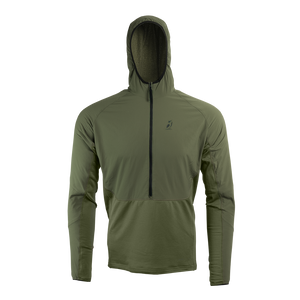
[00:00:00] Tayson: Hey everybody, welcome back to the Live Ultralight Podcast powered by Outdoor Vitals. Today, we have a product deep dive a development story with the Vantage Alpine Down Jacket. Or is it the Vantage Alpine Down Jacket
[00:00:11] Brigham: that matter?
[00:00:13] Tayson: All right, we'll start again. Hey everybody, welcome back to the Live Ultralight Podcast. Powered by Outdoor Vitals. Today, we have a product deep dive or a design story for the Vantage Alpine Down Jacket. Yeah, we're gonna be diving through the original concepts of why we wanted to develop this jacket. What went into it testing and then obviously the end result and how we got there. So stay tuned with us. This is a fun podcast. We have a lot of comments on these people. Really enjoy these and if nothing else it will just help you understand this piece at a different level and help you build a lot of confidence in the gear that you're buying. So
[00:00:56] Tayson: other be this Vantage Alpine Down Jacket, or maybe you're looking at another piece for us, go back on the Live Ultralight Podcast and search for the piece that you're looking for because you will be able to get details about the products that we make at a deeper level in those podcasts than anywhere else. Really. So, With that. Let's talk about the the Vantage Alpine Down Jacket. How we doing today? Brigham?
[00:01:18] Brigham: Doing well. It's finally. Finally, cooling off seems to be permanently which is nice. I mean, it's not like
[00:01:28] Tayson: It's the highs are not cold but these or something
[00:01:30] Brigham: a mid to Upper 70s is feels really nice. Mm-hmm.
[00:01:35] Tayson: That's a good change for sure. I just got back from Colorado. and I, it was like that trip of the Year where you realize you haven't adapted to the cold yet like your body, hasn't Gone from being used to heat to cold and so yeah, I feel like that that's Zapped me back into being used to the cold now and now I'm hopefully more adapted but it's really interesting how the body does that. I feel like I feel like this is just spitballing here for a second, but Sometimes I feel like my body. Very easy. It's like temperature about five degrees from Summer, like, I'm comfortable five degrees colder, in the winter. Then I
[00:02:12] Tayson: am in the summer or I'm comfortable when it's 5° hotter in the summer and then I am in the winter type of thing. I don't know if there's some science behind that but I kind of want to look into it. I would My
[00:02:23] Brigham: opinion. Is that you have both, perhaps? No I would just say I just think you in particular. I've never seen somebody that has such a swing of like what feels really cold and what feels like way too hot.
[00:02:38] Tayson: I'm a kind of Base that a little bit off of. I don't know, like your thermostats in your house and stuff like that, I kind of vary but maybe five is a little more than most Anyways, I did get back from Colorado. I was just using this jacket
[00:02:52] Tayson: for the week out there, and so it's top of mind and I'm excited. We're gonna be releasing this jacket right now. The tentative release date is September 29th, for presale and then we're going to be shipping this jacket towards the end of October or early November And for those of you that are wondering like why we're doing a presale, the main purpose of the presale is to allow people that are highly interested in this piece to lock in their color and size early. And then we were also going to airship or advance a portion of the production run to get it into those hands first and fastest. So if you do want this jacket as
[00:03:33] Tayson: soon as possible again around end of October, you're going to want to participate in the pre-sale. We also, this is a part of the Mountain Pursuit line and with the first two pieces that we released on the Mountain Pursuit line. We had such high demand that we kind of also want to do this presale to just help gauge demand and and also prepare for future orders because we blew through some of the stock on like day one day two with the Mountain Pursuit line on certain colors and sizes so be aware of that I don't know what's gonna happen with this. I don't know what the hot colors gonna be actually was wrong on what
[00:04:13] Tayson: I thought the hot color is going to be on the pants a little bit based off of our historic numbers. So yeah, definitely want to jump onto this presale if you're listening to this podcast within a couple days of it being live. So, Okay. So let's Let's back all the way up to the beginning of where this concept came from. And what we were trying to accomplish when we started this design process, Brigham. So walk us through kind of what we put on paper of. This is what we were hoping to create and we know we're we know we created the right thing and we're successful. You know, when we did these things
Editor’s note: The September 29 presale, late-October or early-November shipping, colors, sizes, stock, air shipping, and Mountain Pursuit demand were September 2025 launch plans. Check the accepted product resource for current availability, specifications, pricing, offers, warranty, and support.
[00:04:50] Brigham: yeah. I mean, the quickest easiest way is like It's almost like something. I don't I don't like to say a design is based off of just like a couple arbitrary parameters but but it does kind of help. I don't know bracket it in but like, the one of the I guess. Original Concepts was to have basically like a one pound or a 16 oz jacket is warm as we could get it. And I will say it's like the number 16 oz, that's not really the important part. Because if you design something around, just one parameter, oftentimes, you make a lot of sacrifices, but with the down jacket is it's an easy way to kind of
[00:05:40] Brigham: sum up. Kind of the origins of it. Conceptually though. I really the reason for that is something 16 ounces are under is very It's very like it's it's packable, it's something you can you really can pack in your backpack, not that it's needed in the summer time. But let's say you have a 16 oz jacket. Like that's not going to break the bank so to speak like it's not going to make or break. Your ability to knock out 100 miles hike you know because you have four extra ounces of jacket. But what it does mean is there was kind of a gap in, like, some of the just really functional puffy down insulation options out
[00:06:25] Brigham: there including our own of just especially in regards to shoulder Seasons, spring and fall. where, Temperatures, get a lot colder at night. There's less Sun, there's less days or less hours of sunshine or daylight. That's just colder. And so, Really want to just get the warmest jacket, we could for kind of that weight threshold. I mean. Without for, you know, Frills and and gimmicks or features or things that really don't contribute to that. So maximizing warmth for kind of, that one pound threshold again for where a really comes into play or the most benefit is in shoulder Seasons, because in the summertime I've not experienced something, I mean, Maybe one out of a thousand times.
[00:07:24] Brigham: I've been on a trip that, you know, in the summer time Sure, it would have been nice to have this, but probably still have been Overkill in the summertime. You can get away with much less insulation, especially when you're doing like a thru-hike type. Trip where you're most of your waking hours are spent walking and you're not hanging around camp for a long time. And
[00:07:46] Tayson: you're really just not static for very long. So, I think that's a good point. I mean, it kind of sum this up like we wanted. We wanted to have some parameters on it, kind of like, with the shadow light. We're like, we want to keep it sub two pounds, so kind of the same concept of this, we didn't want a two-pound jacket, something that wasn't light wasn't packable, wasn't usable in our setup. So we kind of put a stake in the ground at 16 oz. Try not to pass this but let's make it as warm as we possibly can and you mentioned like No Frills and things like that and so I want to I
[00:08:20] Tayson: want to clarify that because that doesn't mean that we don't have features. What it means is that we don't have features that don't add to warmth that don't add to function, right? We don't have extra features just you know just to have but it is still a very useful jacket. The features that it does have very useful, highly useful, but I think you also bring up a really good point That. I don't know for me and maybe this is just different but I find it's kind of interesting in the summertime. I'm doing a lot of like big-mile days you know kind of walk in sun up to sun down and You know, it kind
[00:09:00] Tayson: of doing the thru-hike mentality and so when you are at Camp, you know, half the time when you're at Camp, it's like you are still warm from hiking. And so you've got high body temperatures then you like eat your dinner, or something you pitch your tent and pretty much, you just go straight into the tent. Oftentimes, but what I find in the shoulder Seasons, like you mentioned is one there's way more nighttime hours just in general. The sun is not up as much and I'm not usually doing as many miles and Hike like at the goal isn't to go as many miles as it seems like but in general though you are sitting in
[00:09:39] Tayson: Camp, a longer which is where It really makes a difference to have a piece like this, you know, I just think about, like, when we we went on the Zion Traverse Last year, me and you, and we were in Camp, a long time. And we have to break Camp early, because we aren't trying to log a big mile day and so And we're using pieces like these. A lot more in the shoulder season. So, yeah, something something to think about, I don't know if that's really the case for everyone. Obviously, the more time that you plan to spend on it and spend in Camp though, the more these static or non you know like more
[00:10:17] Tayson: stationary pieces of gear become very very valuable and our friend Steve with EXO who also helped you know with development on this piece I like the way he puts it which is I've never had a puffy jacket. I was like oh man this thing is just too hot, I can't handle it, right? So it's like, all right if we're gonna do 16 oz jacket. Let's just make this as warm as possible. We don't advise you hike actively hike in this piece. It built for for being stationary, for sitting in camp for, for watching things, maybe you're sitting, maybe they're sitting there fishing, I don't know, something like that, where you're just not moving and you
[00:10:55] Tayson: need as much warmth as possible. So okay, so that was the parameters would kind of set out with We have obviously designed a lot of jackets. So we have some base, we had some initial knowledge and I'd imagine that's a good place to start. And well, what did we what did we want to start with and what are we throw out and, and want to scrap
[00:11:17] Brigham: Well, I mean, in an insulated jacket, the thing that keeps you warm is the insulation itself. So, That, you know, there's some easy decisions to make with regards to the jacket being packable and wanting to maximize the warmth for the weight. That is an automatic shoo-in for down. It's just not even. That it's just a no-brainer. So obviously we need, we wanted to go with a, with a down insulation and then you know, when you want to maximize down insulation, warmth-to-weight. I mean The more down you put in it, the warmer it gets. regardless of fill power, but there is a thing called fill power and what that means is You know,
[00:12:05] Brigham: a lower fill power of down, would require even more down to go into the jacket, which would be more weight, the higher, the fill power goes, the less down. You are required to put in the jacket to achieve the same level of warmth so you know, making a decision there and there's you know, there are there are diminishing returns both ways like the higher you go and the lower you go. And so we had to make some decisions there and you know, we want it. He's just a very warm jacket for the weight and so that that does lean us toward the direction of a higher fill power. Jacket. Let's let's quickly touch
[00:12:54] Tayson: on that because I think that's something that is. Just really powerful to know which is if you took a 900 plus fill power down and you wrap it or put it inside of a heavy material that down will not have enough push. Loft fully like to lift the fabric and to stay lofted fully. So you do really have to pair the weight of the fabric with the higher fill power or the lower the fill power, right? So something to note there, when, when Brigham kind of mentioned that like you can totally spend a bunch of money on a really high, fill Power Jacket, put it in a heavy Fabric and it did you know good?
[00:13:33] Brigham: Yeah I mean the only way. that's why it's such a it is a balance of diminishing returns, because yeah, I mean, if You can go to an ultra-high ultra high fill power. And then the trade-offs are, then you, you really have to make sure very sure that you've got a very lightweight fabric that will allow maximum expansion of the down. But really it's there's There's a lot of trial and error to that, there's not just a recipe. It's not just like, oh look it up in the recipe book and it tells you what fabric weight to use with this much down in this size of a Down chamber and this, you know, this fill power.
[00:14:17] Brigham: And so there's It's pretty blurry, it's pretty blurry but we do there. You do reach a point where You could end up just actually shoving more down in something just to get it to Loft up, which kind of defeats the purpose of going to a higher fill power. So that's not to say that. We couldn't have used a higher fill power. It just would have changed the balance of benefits and drawbacks, so the jacket, but He ended up with so we use. Yeah, it's 850-fill-power ExpeDRY down.
[00:14:56] Tayson: so, ExpeDRY. That is the the Treated with Nano gold and we've had incredible in the field performance out of that. Now we've we've used dwr treated Downs for a lot of years and there's good ones there. There's okay ones there. We had a lot of success with HyperDRY which is a wax based one but what we found is really the down comes with a lot of its own dwr properties. And the Nano gold aspect. Basically, excites water molecules and allows them to turn back into vapor form or dry more quickly. And what we found is that in real world conditions, that means that you're down just performs an incredibly high levels day after day
[00:15:42] Tayson: after day and in this jacket there's a few other reasons why like Waters just not a concern when it comes to fabrics and other aspects but there is a built-in inherent dwr aspect to the down. We use because we opted to strip off the dwr, the natural dwr's to To ExpeDRY treatment. So so yeah, it's it's been a really impressive treatment for us for just day after day in tough conditions. It just stays like 100% lofted. Yeah, 100%. It's probably two, I probably shouldn't say that but like, incredibly High Loft. Very, very low degradation of the down with with moisture. Yeah,
[00:16:21] Brigham: the clarify when It tasting stock about natural, dwr. Like obviously he doesn't mean there's a natural dwr that grows on ducks and geese. He's referring to the the natural body oils that that ducks and geese, have that behaves like a water resistant. Compound on, on the, on the down plumes themselves and then Yeah. The the expert. Right? The treatment that makes extra dry. What it is. It's Permanently embedded. Nano particulates of gold within the microscopic down structure. So this is it's not any kind of coating or covering of the down. It's basically a It's a almost like a mechanical. process that occurs around all the gold that is embedded within the down that basically resists
[00:17:22] Brigham: the formation of bonds that allow water to form, and therefore it's a constant state of that and it makes It hard for water to attach to the down or remain attached to the down. And it works constantly to break down water molecules, which is the speeding up of drying. And the nice thing about the that I like about extra dry is it's a much better long-term solution. Like in terms of if we're talking to down products, cannot you cannot make a down product with more down in it of an equivalent fill power, without the cost of down without the cost of the jacket going up. So knowing that we're making a more expensive jacket,
[00:18:07] Brigham: like we want the customer to get a longer life out of the jacket, and one of the things about traditional, dwr's, wax based chemical based either. One, those are a wash in or spray. Think about now there's like, a coating of You know. Credibly, thin paint all over down, right? Or sunscreen. That. Contributes to down breakdown at a faster rate than a and untreated down. And I've said this before ExpeDRY down is more. Of what would be considered? A non dwr down then. It is a dwr because it literally does not have a dwr on it. So it cannot be classified as dwr. And it lasts longer it regains its life or regains its
[00:19:00] Brigham: Loft. For a longer period and I'm talking about like, the lifetime of the jacket. So, let's say if it's a wax based, dwr jacket, you may get 20 years out of that, right? These are just arbitrary numbers. Well, you'll probably get five to ten years more because the down does not have the ability to break down as fast because of the the dwr's of another down.
[00:19:27] Tayson: Yeah. Allied Feather the one who, you know, did all the work and creating this this down. And they have some really interesting test to that. Basically show them blowing really moist air into the down, and then like compressing and then watching rebound and like doing that doing cycles of that kind of stuff and ExpeDRY down just just Outperforms even their own like because they make dwr treat it down too. Which is what we were using with. Dry. But it outperforms those in those kinds of tests. And in real life that is a real life scenario is you know getting humid or moist, you know, one day and I'm getting a humid or moist the next
[00:20:12] Tayson: day and humid or moist the next day. So it's really a factor of how, well can it dry? How fast can it dry? How thoroughly can it dry? And it's really impressive with that. And like Brigham said, it doesn't wear off, it doesn't fall off, and it's pretty much like a natural. You know, duck or goose down because you're talking about parts per million and when it comes to the gold. So it's not like, you're weighting down the the down compared to with the dwr. You are coding, the entire, you know, the entire plume, essentially with this dwr coating, which can reduce fill power and, and Longevity. So, really happy with that. It's it's just,
[00:20:51] Tayson: just for, for note here, like we have a jacket on the table like it's, it's an incredibly soft, you know, feel even going from an 800 to 850, it's noticeable. It's and it's just very comfortable on the body and very lofty. You can you can just feel the Loft. But okay, so we lift down We have a high confidence with moisture and water with the down piece. You know, this is not a rain jacket, but it is very resistant to to moisture. So we really like down for that aspect when it comes to just weight-to-warmth ratios. Nothing touches down to this day. So what else, what else did we kind of? Take into
[00:21:34] Tayson: consideration as we looked at what we've maybe done in the past what we wanted to change or do in the future.
Editor’s note: The 850-fill-power ExpeDRY down, nano-gold process, moisture behavior, loft, comparative drying, and longevity statements describe the materials, supplier information, tests, and design understanding presented in September 2025. They are historical product claims, not guarantees of waterproofness, drying rate, warmth, or service life.
[00:21:38] Brigham: Yeah. So we because we did kind of have kind of a limit of what the end jacket weight. Was targeted what we wanted it to be. So again, that 16 ounce Mark, that's for a size large. That was kind of the The Benchmark that meant You know, we had to decide. What we were going to include or not include and some things we included that we obviously, that are obvious, like a full zipper. A couple hand Pockets, so much adjustability and we'll get to the reasons why but again, We wanted everything every design aspect of this to to point or to contribute toward warmth or heat retention a much less. So we weren't going to
[00:22:25] Brigham: include something that was not related to heat retention or warmth. So this jacket doesn't have pit zips because that would just add. Oh, maybe an ounce and a half or two to the jacket and would decrease or not contribute to the warmth of the jacket. Certain, you know, extra pocketing. The only pocketing we we include is on the exterior, the two kind of lower hand pockets and those Functionally contribute to basically like the ability to warm up our hands. So, Technically speaking, the jacket could be warmer by not having hand Pockets but for usability of a jacket in cold temperatures. It's much, like, let's say you're sitting down to boil water and prepare dinner. Like,
[00:23:23] Brigham: that's you pretty much need the dexterity of your bare hands. So Take your hands out of your pockets, for a couple minutes, to turn your stove on, put the pot on, and then put your hands back in your pockets. So, It's got those two hand pockets and obviously the, you know, the insulation, the pocket. Behind the insulation. So you know the insulation is outward of where your hands are sitting sitting in the pockets. There are two drop pockets. on the inside of where the hand pockets are and those are you know, actually one of the I don't know, several of the first prototypes we made that, we got a lot of testing on we actually
[00:24:06] Brigham: used mesh. on the pocket liners of the pocket bags and part of that was for maybe some weight reduction and then just maybe some ability to Dry, you know say damp gloves or a beanie or something? but what we found and got a lot of feedback on was man, as soon as you unzip the pocket, you could actually feel Drafting, just from wind, from the open. The open pocket and then are could kind of go win could blow through the mesh and it was very noticeable. And then so just going to a closed fabric and not a mesh pocket bag, it's like a very noticeable Improvement that we made throughout the development process.
[00:24:56] Tayson: um, you would not think that a thin piece of fabric would be that much warmer than a mesh piece of fabric, but it was absolutely, you're sitting still and there's
[00:25:08] Brigham: Five mile per hour Breeze. Like you definitely feel it. Other. Functional design elements that we you know, intentionally included were like a cinch. Cinch cord at the hammer, a draw cord hem. So the ability to essentially kind of closed off. The ability for warm air to evacuate down the bottom of the jacket. That's another I don't think I wouldn't say it's like nobody knows about it but it's underrated. I think how much heat you can lose out the bottom of a jacket just by Not cinching it up. It's it's not a big deal. If it's just like for like, five, ten minutes, but if you're just like, sitting still, or standing still for more than
[00:25:56] Brigham: a few minutes, like you'll start to feel A lot like you'll start to feel like you are wondering why your jacket is not warming you up as much and it's because you're losing a lot of heat out the bottom of the jacket.
[00:26:08] Tayson: Yeah, I actually noticed that with that with the mesh liner, I noticed that more from are coming under the Hem of the jacket then coming in because usually I'd like have my my hand in the pocket and then I've got a sleeve on it kind of seals the hole of the the pocket but then you would just notice as you walked or moved or leaned just this cold air blast that would come underneath the Hem of the jacket from the bottom of the jacket up and into your hands. And a really just like I've never used the cinches on the bottom of jacket more. Than we have those mesh pieces because it was like, super,
[00:26:43] Tayson: super apparent. How much cold air can get in the bottom of a jacket. We have a heat gun and I'm, we're gonna try to get some footage of this, some pictures of this. But I remember watching a video probably 12 years ago. Now on YouTube, one of them like, ogs on YouTube, that would kind of review certain jackets, you want to retail shop. I think it was Pro-Lite gear or something like that and he, I remember he did a video on this with a thermal camera and just showed how much cold air comes out of the bottom of a jacket and it was really, really prominent. And so, yeah, having that cinch cord on the
[00:27:22] Tayson: bottom of the jacket is, is a must when you're talking about how to stay as warm as possible in a jacket.
[00:27:28] Brigham: Yeah. And again, that the theme here, when we talk about the intentional design elements, Their, their all. Attentive to or all directed to retaining heat. So if we didn't include a cinch cord, yeah, the jacket might be one ounce lighter but it would be noticeably less warm. So again, warmest jacket we can make for about 16 oz. Including that draw cord. Hem is was a necessity for sure. on the hood adjustability. So we do have an adjustable Hood again. That's Not just for convenience yes it is annoying to have a hood on, that's too big. And so when you look around or move your head, you know, your head just kind of moves within the
[00:28:22] Brigham: hood that is annoying. It's inconvenient. It's not that comfortable. But also the, the main reason to include the ability to cinch up a face opening or to kind of draw the Hood in a little bit, is to Eliminate or reduce heat escaping out the hood. Because now you've got the bottom clothes off Air is going to try to escape. So close off the bottom with the drawcord Hem and that we all want the ability to, you know, restrict the ability for heat to escape out the chimney which is, you know, the collar and the hood. And so we've got the ability to, to send it up behind the head and that kind of closes the
[00:29:08] Brigham: hood in, just around the circumference of the head. And then the face opening, we have draw chords that kind of enclose the face opening around your, your the front of your head. So those definitely I mean those are There's nothing uncommon about that there, but they're intentionally included in the jacket for sure.
[00:29:29] Tayson: Let's talk about the fabric. This is a new development on fabric, but it also uses some of the technology we've had in other jackets. So why did we want to use? Zero Stitch technology. And what did we change in this fabric?
[00:29:44] Brigham: well, we like We like zero Stitch fabric. So we have our Nova Pro jacket. and that's We've got a lot of experience with that jacket and we just really like the benefits of it which really are, they're really easy to remember. And the easiest way to remember it is that Zero Stitch fabric allows you to make a down jacket without punching, tens of thousands of holes in your jacket It's a really interesting thing, it's not a bad thing to have, you know, a jacket with traditionally stitched down Chambers. They work. They're fine. However, we have just Observed over years that we like this better because it's more wind resistant. It's more water resistant, it's more
[00:30:37] Brigham: dust resistant. Dust resistance leads to longevity of the down inside the jacket. The down is The moneymaker, the down is what makes us warm. Why would we not want to take the best care of it that we can? The dust resistance means we don't have to wash it as much. Longevity of the jacket also, warmth of the jacket dust is the most significant. Deteriorate or I don't know what the word is, but it's that it's a significant contributor to down degradation dust and dirt that comes into the jacket. And then it also reduces or almost mitigates like the the ability for down to escape out the stitch holes. And when I say 10,000, stitch holes
[00:31:26] Brigham: talked about it before, That that's a real number. It's more like 12 to 13,000, but in a size medium jacket. I mean, that's how many stitch holes exist in a very standard weight down jacket, that is traditionally. So so together I want to over be overbearing about the stitch holes, but I mean, it's 10,000 plus holes in your jacket that don't need to be there. So those are the benefits. I mean we we wanted to try at least at the beginning of this project, we wanted to try to use that technology but When we knew how much down we had to put in it there was not a fabric using zero Stitch technology that was
[00:32:13] Brigham: available right away. So we had to talk with fabric suppliers and the Fabric Mill basically to Use Zero Stitch technology to create a fabric that had down chambers. That were big enough to allow the amount of down that we needed to put in the jacket. so,
Editor’s note: The roughly 16-ounce size-large target, pocket layout, omitted pit zips, drawcord hem, hood adjustments, heat-retention explanations, and prototype feedback describe the September 2025 design. Verify the current product page for final specifications and fit.
[00:32:38] Tayson: Yeah, we've we've really been happy with zero Stitch. Typically water gets caught up on stitching, that's where it seeps into your jacket if it is in water for some reason. Um, when that's, that's like, part of what, like protects your down, right? Keeping moisture, out of your jacket, keeps your down lofted. Warm performing at top-notch, actually grabbed a jacket the other day, and just held it up to, like a window that had stitching in it and just looked at the stitching lines. And like, it's one of those things that it kind of feels. Like, once you see it, you can't unsee it because there's like some of the stitches are very small and tight and
[00:33:16] Tayson: then some of them specially where they did like some backstitching and stuff towards the end of some of them it was like holy cow. Those are some big old holes sitting there but what I always tell people is like all describes zero Stitch and it's like, yeah, it's really cool. But what you will notice I would in my personal experience, is when you take it out on a windy day, you will notice that the wind is not cut through the jacket. I guess, if this was just on your bare skin like over, like you were in a short sleeve shirt and you put this on and you if you were to switch back and forth
[00:33:46] Tayson: between the two jackets, you will notice the amount of wind blockage. This is its ability to block. The wind is so much higher with zero Stitch. It feels like it compared to a traditionally baffled and sewn baffle on the other one. So, So we really like that, but we wanted to take it up a notch as well. So, we started working with our fabric mills to develop a more muted color and a softer color and kind of also changed the the noise profile a little bit too. So if those are either watching on YouTube you can see this jacket here in front of us it's a matte color or a matte finish compared to a
[00:34:31] Tayson: lot of down jackets. If you were just think about them they're going to have that shiny glossy look and so we were able to take that away but I did require some some changes because with this particular fabric, the inner material on the outer material are actually woven at the same time together into a single sheet of fabric. So we can't do different treatments, like some some fabric or excuse me, some Fabrics, you can that you using in say like a down sleeping bag or something like that, because it's a single layer of fabric. We can't get on the inside and put a coating on. We can only work on the X Terry's and so
[00:35:11] Tayson: there are some some big challenges there. And thankfully, the Mills that were using are just Super impressive in the fact that they are able to weave this. So tight and so thoroughly that, we're able to essentially do little to no treat or coatings on this fabric, but still retained down proofness, right? Because down is such a fine material, it can seep through or push through fabrics. And so that's why there's, you know, typically that shiny coating on a lot of down is to keep the down inside the material but we were able to essentially prototype and build this alongside with them and then test it in the field and make sure you know that the
[00:35:59] Tayson: tolerance is were there that it was going to hold it down and it's been remarkable. But it's also just a really sharp looking jacket and and it was that like that's something like like I guess what I'm saying is, A lot of people to see this Jackal, just think. Oh, cool. It's matte now like, but they don't know is like, Think actually really incredibly hard. So that's really
[00:36:23] Brigham: hard and it's been a bit of a frustration for us. I mean, the fabric, the ends up on a jacket is great. but the process to make the fabric the amount of loss, Due to tolerance. Rejection is massive. So essentially It's like taking 10 steps forward and four steps back. Like that's the weaving process to to, to meet the tolerances and the requirements for the fabric, the Fabric Mill, loses a lot of fabric because it It has to be woven to such a tight tolerance that it's so it's a slow process. It takes a long time to make the fabric because it has to pass certain tolerance thresholds and It's just tough to do and
[00:37:12] Brigham: we're grateful that The Fabric Mill has the capability to do it and the you know, we're able to end up with fabric to make jackets with that. It's a, it's definitely constellations, it's caused delays and and two, I want to say to their credit but to I would say to not disparage the Fabric Mill, they didn't really know either because they This fabric didn't exist, they'd never made a production run of this fabric. So it's hard for them to schedule and plan out and give us and actually end up at the Target date of completion because at the same time, they're realizing the slower than expected manufacturing rate that they can actually weave the fabric.
[00:38:03] Brigham: So it's been frustrating and difficult but it's a really good learning experience. It's hard to make the fabric and but we are. We're happy with it. I mean, I guess. The details on the fabric, it's a 15-denier nylon fabric, 100% nylon. It's not a not a stretch fabric that keeps the fabric lightweight. And yeah, we're we're happy like early prototypes. We had where we were mostly just trying to dial in the spacing for the down Chambers. They were super shiny. Really, really shiny. Oh yeah. And and so we did we we know what that looks like because we The first fabric that the Fabric Mill made was was really shiny and
[00:38:56] Brigham: that specially when
[00:38:57] Tayson: you're talking about these massive baffles, it it put off even more shots
[00:39:00] Brigham: like a huge reflection of light. You know, you really see like the depth of all that the down Chambers because of the The contrast created by the shininess. But
[00:39:11] Tayson: yeah, I mean and just kind of back to that like this is a First time for this fabric, no one else has this. That like no one's making this fabric. It's a Unique fabric to us at the moment. That doesn't mean it won't will be forever but it is a really technical Fabric and the mill the mill will continue to refine. You know, like the Lost will go down, every time we produce this jacket. So something to note there, something like this is a wasteful jacket, anytime you develop a new Fabric, and new technology and new, anything that there's some level of that, that is expected. But the reality is, this is a really technical
[00:39:49] Tayson: fabric, really Challenging to make. Not a lot of this is the kind of fabric that like we've I think we've talked about this before but like even when we're talking about our suppl,
[00:40:00] Tayson: You know, a factory in Japan and a factory. And China and a factory and whatever Thailand like they will tell us only our Japanese fabric or factory can make this because they're the only ones that can produce under such a tight tolerance and things like, like even a company that has the same management and the same people in the same Machinery, like That like there's a level of difficulty that just requires that much skill from the people working in the factory. And you know it's it's really interesting really fascinating stuff when you when you dive into it. But I think you guys are really gonna like this fabric, think you're really, really gonna like it.
[00:40:43] Tayson: The look, feel, the hand feel, it's very soft. So like when you have the other Shiny Fabrics. It feels glossy. Feels sticky tacky. Whereas, this is just so soft and smooth on the hand. Just a really likeable fabric for sure. So we have the zero Stitch fabric, completely new design finish, Etc. You've gone through some of the features, you know, tighteners him tighteners and and face closure. Went through the fabric. Okay, let's talk about this. We
Editor’s note: The Zero Stitch construction, hole counts, wind/water/dust resistance, down retention, 15-denier nylon, matte finish, manufacturing tolerances, exclusivity, and production-delay comments are September 2025 design and manufacturing claims, not current guarantees.
[00:41:22] Tayson: did skip over this, a little bit, coming back to the down. I actually was kind of thinking through some some video content of what what I could make kind of around this. Specifically around like what makes a jacket warm you know, going through this whole development process what makes a jacket warm? And I kind of simplified it down to a few things. One is like what is the down and what is the amount of the down? You know how many baffles does a jacket have even if it's not zero Stitch that matters because if you've got something that's baffled very very tightly meaning, they just have a ton of the sewing lines across it. That
[00:42:03] Tayson: typically means that there's less down on it that there's more holes in the jacket for wind. And Water to get in. So, you know, baffle thickness baffle construction really matters. And then obviously, the last features would be like the Hem, the Hem tightener and you know, face closures and things like that. Those three things kind of In categories, lump in my mind what makes a good jacket. And so if you have a jacket that you know, you're thinking about that's like, oh man, like I hate to throw this one on the bus. It's just really well known top of mind, if you look like a Ghost Whisperer jacket, So many baffles so tightly sewn together.
[00:42:41] Tayson: Usually they're baffles are, maybe two centimeters or something like that apart, which doesn't give down a lot of space to Loft. But really they do that because of the amount of down in the jacket. So just using that jacket as a comparison in there, I think it's 850 fill, but it might be plus, or minus might be 800 or 900, but it's right in that category. Number between 800 and 900 fill power, they have 2.5 ounces of down in that jacket. So they have to sew it that tightly to keep the down from just falling all over the jacket and clumping up and shifting and keep the down in place. With ours, we're able to
[00:43:20] Tayson: do really big baffles, and leave it really open because of the amount of down and the fill power of our down. So, in our jacket, and I, and you'll know these numbers better than me, and maybe I'll have you save these, but in our jacket, we have over seven ounces of down, I believe in the size medium. Which is incredible. I was doing just some other research on this. I really couldn't find much to compare like, like the only pieces get into like a 400, 500 dollar, price range that have that much down and typically they are built. For like extreme Alpine stuff.
[00:44:02] Tayson: Yeah, I mean it's It something it's like impossible for them. Just saying, like, yeah, General Brands, you guys know
[00:44:09] Brigham: that's the and this comes back to what we talked about pretty early in the podcast, there's a gap and a lot of that Gap exists because maybe these bigger Brands, they have to kind of the They're looking at a development for the masses to appeal to as many people as possible at once, and like this Jack is just not designed for that. There's jacket is for the user that spends a lot of time in shoulder seasons. Some Brands might not be willing to, to put that in the design brief because maybe management or investors aren't willing to focus in that narrow on on a user. But we are and we that's part of what we
[00:44:56] Brigham: enjoy doing here. And so you know, when we talk about how much down we put in here, that's a plug and play recipe. Anybody can do that. Like that's that's the reality. It's just that we just recognize and you mentioned like Steve at XO like that was one of the things he came to us with his like there's kind of this Gap like If I want, if it's if it's October and I'm like on a backpacking hunting trip and I need to sit down for an hour. I don't want to freeze because the only offerings available are 13 Oz and they have two thirds of the amount of down, there's just a gap and so,
[00:45:32] Brigham: you know, it's That's why when we make this decision, okay, we're going to make this jacket, then all decisions are going to lead towards keeping it as warm as possible. Because you know, for a 16 oz jacket, we can put in a size large, you know, seven and a half ounces of 850-fill down and those Just not a lot of jackets out there that do that. It's expensive down, it's the most expensive.
[00:45:59] Tayson: Probably the most expensive thing you're putting into this jacket.
[00:46:01] Brigham: Absolutely.
[00:46:02] Tayson: It's very it's very pricey to buy and treat and stuff down into a jacket for sure. So when I think about it like like I think there's a cost element for some reasons why there's not always more down. And it like, I guess the, like just know not all puffies. Are the same sometimes, Puffy's get put into this category and it's like, oh, I've got a puffy jacket. You know, check the box. Well, There's just no comparing this piece to a jacket that has two ounces of down in it. You're talking about a jacket that has three times, the amount of down in it, so it's definitely those details, not all puffy, jackets are the
[00:46:44] Tayson: same, but our goal at this was to load it with as much down as we possibly could of a premium down, you know, as we possibly could. And that's where you get just so much loft, so much of the warmth. So like you mentioned about seven and a half ounces of down and a size large on this jacket, which is incredible. And it's even more incredible when you start to look at the price point on this compared to other offerings out there. So this piece is releasing at a price point of 200 and 75 dollars for the amount of down for the technicality of this fabric for everything that's gotten to this jacket. It is
[00:47:24] Tayson: a very, very competitive price as how I would put that. But, you know, now you guys are educated, you can go and compare what what other jackets are out there, you know, you compare the amount of down, the fill power, the quality, you know, all of those aspects. It had to head and I think you'll be really, really impressed with the price point and everything else that this jacket has to offer. I know that I was Even as I was just doing some preparation for some other stuff and I started to just look around, like it's not like we design a product and we look at all these competitors all the time and so sometimes that we'll
[00:48:02] Tayson: get to the end and I'll look at some of these competitors of like, okay, what's this gonna go head-to-head with and What's It Gonna compare to you? And it's super impressive, super, super impressive. So you guys have the info now you
[00:48:13] Tayson: can you can go and consider the fact like how tight, you know, baffled things are and how much down and and you know that whole thing. But again this piece super happy with it, I was just in Colorado. It was literally snowing on us as we're walking in. Super cold mornings. Super cold evening's. when blasting us up at, you know, these 12,000-foot passes, and And I was doing a lot of static sitting, right? So I was out there hunting and so, I was sitting a lot staying you know, motionless a lot and Super, super impressive piece, I think it really is kind of one of those Capstone, you know, trips where you're just
[00:49:05] Tayson: like, yeah. I think we we nailed it in every way. I don't have anything to add or subtract from the jacket. But yeah, I mean it's just when you need when you need something that is just bomb-proof, warmth. I, I think that's when you really turn to something like this, when you don't want to have to be concerned about, if it's overly windy, or if there's a lot of moisture coming down because this isn't a rain jacket. But when you are in rain, Stuff gets wet like at least a little bit wet. You're putting on a rain jacket on top, you're taking it off your, your layering, your, your unlayer, you know, things are happening
[00:49:45] Tayson: and water will come in contact with us or you getting into your tent. Well, when it's actively raining, there's so much more humidity in the air and more moisture and condensation that gets into your tent, all those things. And there's just 0.8. Actually, my kids wanted to go out and play in the rain about two months ago and it was just torrential downpour for about an hour and I was like, oh, that's a good, like torture test, like this is not what this jacket is built for but it's good torture test. So I threw on this piece, went out there and was just getting dumped on for for an hour straight and I had like no moisture inside
[00:50:26] Tayson: the jacket at the end of it. The only places I had moisture or where I could run down a little bit of a seam or right underneath my armpit where I'm playing with my kids outside, right? So I'm actively getting water, kind of coming down underneath my armpit and then as I'm squishing my arm back down my armpit, it did get a little bit of moisture there but like it's just bomb-proof it. In my experience, it performed in those conditions. It's definitely what I love about zero Stitch. What I love about expatrie it's it's a it's a phenomenal jacket. So
Editor’s note: The approximately seven to seven-and-a-half ounces of 850-fill down, one-pound target, competitor examples, $275 launch price, warmth comparisons, Colorado use, rain exposure, and “bomb-proof” language are historical and trip-specific. This is an insulated jacket, not a rain jacket; layer and choose gear for actual conditions.
[00:50:56] Brigham: yeah I think I mean I think what I Would give me. I don't know about not validation. I get maybe confidence with the word but so Talk to a lot about shoulder Seasons. Okay. I like I'm gonna say straight up. If I am going on, a backpacking trip in July, in the Rocky Mountains, I'm not packing this jacket like that. I have no qualms about saying that. it's just totally unnecessary, but This jacket was tested extensively in the seasons and conditions that it was designed for specifically shoulder Seasons. So we had about a dozen guys that over a period from like the last week of August to the last week of October, we're going to be
[00:51:41] Brigham: in Alaska. um, and that that describes a very wide range of conditions talk in Southeast Alaska, more Central Inland Alaska I think getting up close to the Brooks Range in Alaska, from late August through October as well as Kodiak Island in November. So those conditions That's like the sweet spot of where we sent this jacket for testing. In addition to our own testing over, probably two years of doing the same thing in the lower 48, during those Seasons. So, That's where. Those experiences that testing that feedback that really drove and guided the end product. So we didn't say, well let's make a jacket for shoulder seasons and test it out. On a couple, you know,
[00:52:39] Brigham: five-day backpacking trips Colorado in July and then come to you in a podcast and make a bunch of ads and put a product listing on the website says, oh yeah, this is a great shoulder season jacket. Except we'd never used it in his shoulder season, like that's not the way we do things. So when we say this is a great shoulder season jacket, it's because we have about 75 days of testing in Alaska. Over multiple years, as well. As, you know, days spent it over 10,000 feet in February, in November in March in April Truly in the shoulder Seasons that it's designed for the people making the jacket are using it. The way it's designed
[00:53:28] Brigham: to be used, and that's I think that's a big part of the jacket, I think, I think the testing and iterative design, you know, That goes into this jacket is a huge part of it.
[00:53:42] Tayson: Yeah, it's very well tested jacket. It's been under development for over two years. And we used a, you know, a group of very well vetted guys to to run this. You know as much or maybe some of them even more than Brigham and I were able to, they just do nothing but live outside, they'll have to come to the office, maybe. But we've we've it is a very, very well tested jacket. Bye, bye. 20 plus, guys, and it's, it's been phenomenal. You know, we've been able to refine and refine and refine and it's now ready for us to to stamp our logo on it and and send it out the door and let you guys take it
[00:54:27] Tayson: out. And to The same type of conditions and see for yourself what we've been able to build here. So Okay, any any last comments to add here? Oh, I mean one last thing I don't know why I thought about this but Felt we we went as far with this jacket, even to take off the thumb hole loops on the sleeves because through testing, and in those cold conditions, even those little thumb loops that we have on like the Nova Pro. They let air in, they let are up the sleeve. Yeah. And it wasn't noticeable and we tested it and we paid attention to it. And so, I mean, every little touch point on this
[00:55:08] Tayson: piece, has been, has been looked at analyzed to evaluated to come full circle to this piece. So, yeah, any last any last comments on the Vantage Alpine Down Jacket for we let you guys guys just get out on the website.
Editor’s note: The Alaska and lower-48 testing totals, roughly 75 days, two-year development period, tester counts, shoulder-season positioning, and performance conclusions were reported in September 2025. They do not guarantee warmth, durability, weather protection, or results for every user.
[00:55:21] Brigham: I guess. Quick rundown of we're offering it in three colors this Chimera its kind of depending how you look at it. That's sometimes a dark gray, sometimes there's some green in it but it's kind of a darker. Darker. Grayish color or offering it in black and then a dusty olive. Um, and then size-wise small to 3XL and then
[00:55:49] Tayson: in tall sizes. At least in a large in an x large and XL tall. Yeah. Pretty sure. That's at least and you'll see that you actually see us doing that if that's not what this jacket is. Just so, you know, it's probably what we're gonna end up doing in the future. We've been offering these tall sizes, predominantly the tall sizes are being taken in a large and XL sizes, so you'll probably see us continue to produce that. But it seems like there's not near as many talls in like a 2XL 3XL. So, just so you're wearing and even in the mediums. Those Hornets as popular either. So but we do want to there's a lot
[00:56:26] Tayson: of guys that seems like that are in that large extra-large category, they're just fit more trim, dudes and they need that link. So, We'll continue to make him that but yeah, really great colors. So check out the colors. Check out the sizes again. Don't sleep on this, don't wait to buy it until we're actively shipping because we did not estimate the level of demand for this Mountain Pursuit collection. And so, we do expect a high turnout. When we were when we hit go on this. So September 29th We'll be when we hit go on this and yeah, you're gonna want to grab your your specific color and size that you want before there
[00:57:12] Tayson: before they're out and we're going to Airship some of these. That's the other part too is. If you wait, there's a possibility that you will not be waiting. Like, you'll be, you'll not be able to get your jacket until more into the middle end of November versus the the start of November or that even the end of October for fortunate. So, Okay, well, it's been a fun project. It's always fun to wrap up a project finally, you know, deliver it to you guys and let you guys put your own hands on it and take it out in the field. It's been fun to have, you
Editor’s note: The three colors, small-to-3XL range, tall-size plans, September 29 launch, shipping windows, stock expectations, and thumb-loop decision were September 2025 claims and plans. Current selection, fit, availability, price, warranty, and support may differ.
[00:57:43] Tayson: know, we have three product launches in the last couple months, this will be our fourth, super exciting, and fun to just be bringing these projects, full circle, that have been literally under development for years and years. But we've got more, we'll continue to develop and for that reason, make sure you guys are subscribed to the podcast. We'll always do these deep Dives when they're releasing a new product, let's you guys have all of the information you need to make confident decisions on your gear. Um yeah, I'm pretty sure you guys being here, make sure you're subscribed like and share the podcast if you would and we'll see you guys on a future episode.
Editor’s note: Future product deep dives and subscription requests describe the September 2025 podcast workflow. Generic homepage, SpeakPipe, and support links are intentionally excluded; the accepted product page is the sole resource.