[00:00:00] Tayson: Hey everybody, welcome back to the Live Ultralight Podcast powered by Outdoor Vitals. Today, we're doing another episode of Ask OV, which is where we do a shortened podcast, episode and answer questions from you, the listeners. We've got a pile of questions here. We're going to be working through. So for those of you have written in, thanks for writing in, just as a reminder, we get a lot of questions in, but this is your opportunity to speak directly with, you know, our designer and and me the owner of the company to answer these questions. So, you know, product related questions are great. We're also the two that You know, in our eyes,
[00:00:36] Tayson: send them out on the trail and in the field. And so just really anything's kind of on the table here that we can. We can help you guys with. But It's Friday at the office. Brigham, you’re headed up to football game with your kids.
[00:00:50] Brigham: Yep. Should be a fun game in October.
[00:00:57] Tayson: And yeah, I've been I've been getting out quite a bit too. I wasn’t on backpacking trips the last week, but I was able to spend a bunch of time out in the fall leaves and Incredible, great time. Great time to be outside some fun things going on at
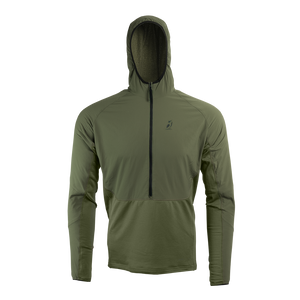
[00:01:13] Tayson: the office, we launched the Vantage Alpine Down Jacket. And again like for like, I don't know how many times you can say this in a year we just have incredible reception of the jacket. It's done very, very well. So if you're unfamiliar with the Vantage, we did a podcast episode I've probably be the last one where we did the deep dive on the Vantage Alpine Down Jacket, but at a high level the Vantage Alpine is our newest, warmest jacket. The, the goal there was to build something that was 16 ounces or less and that we just had made as warm as possible. So we optimize some of the cut and the fit, we built an entirely
[00:01:50] Tayson: new fabric still uses that Zero Stitch technology and then We just loaded it with down, so tons of down on this thing, really puffy really warm and we've had an incredible reception on it. So, Based off what I'm seeing right now. We? Yeah, basically what I would say is just don't sleep on this product. If it's a product you're interested in, go look at it right now because the demand is very high and we've already sold a good portion of our entire production run. So, When we're talking about these kinds of fabrics, but actually this is, this may play into this. I think I had a question on here about
[00:02:27] Tayson: lead times, but I think we've talked about it before. But when you're talking about some of the level of quality of some of our products lead time to produce these items can be nine to 11 months by the time we get them in our hands. So really realistically. The for the Vantage, the inventory that is available right now is the inventory. We're going to have for almost the next year. So You know, we just made choices as a company to work with the highest end fabric mills and the highest end, you know, Trims and cuts and you know, cut-and-sew facilities, and know what that equates to is long lead
[00:03:04] Tayson: times and a lot of that, honestly, a lot of that why we have longer lead times maybe than some other companies is because we really invest a lot in Fabrics. To do some of these Fabrics, we're doing things with some of these Fabrics that honestly I don't know can be done in other facilities that Vantage piece. You know, we talked about this in the last podcast but you know, the way that we're manufacturing that to make a down proof, but not just code it and make it all shiny. That's something that is extremely hard to do. So those are you know don't sleep on the Vantage if it's something you
[00:03:42] Tayson: like but let's kick this off with some questions that I saw. About the Vantage and and just jackets in general here.
Editor’s note: The Vantage Alpine Down Jacket launch, demand, production-run availability, 16-ounce target, Zero Stitch fabric, lead times, and manufacturing comments were recorded in October 2025. They are historical claims, not current availability, specifications, pricing, offers, warranty, or support information.
[00:03:51] Tayson: So this was a question from now. Sorry athi on YouTube. So if you do have questions, you
[00:04:01] Tayson: can put them on our YouTube account or you can write in to support at outdoorvitals.mom. And just say, we've got a podcast question or you can go to SpeakPipe.com/LiveUltraLight and leave a voice question for us there.
Editor’s note: This YouTube, support@outdoorvitals.mom, and SpeakPipe question-submission workflow was described in October 2025; it is historical and not current support or channel-access guidance.
[00:04:15] Tayson: But the question was, what is the temperature ranges in shoulder season? Where was it tested?
[00:04:23] Brigham: Uh, temperature ranges. I'll try to answer that. Maybe the two ways I'm thinking are the context of the question, maybe one, the temperature ranges, it was tested. I mean, it's been tested in, in negative temperatures to You know, I don't think I've worn it when it's been warmer than 50. That would be pretty. pretty pointless, but Yeah, it's been tested in some form or fashion in that range of temperatures, you know? So all obviously that means different layering is taking place underneath. Through that temperature range. Also what to maybe if it's about what temperature? Ranges, we would recommend for. Yeah, I wouldn't recommend sitting still on that jacket and 0
[00:05:13] Brigham: degrees that it takes a substantial amount of jacket to To keep somebody warm if you're just sitting still in zero degree temperatures.
[00:05:21] Tayson: Let's Riff on that for a second. That's I don't know why I've never really thought about this, but if you were to think about sitting still and zero degree temperatures and staying warm Essentially you would have to consider it like a 0 degree sleeping bag. And if you're thinking about a zero degree sleeping bag, the amount of Loft you have is incredible. Plus it's almost like the difference between a mitten and a glove, right? Like meaning a jacket you have your arms are independent, they're not just down to your side you know, wrapped around your torso and so there is all so lost there. So have a jacket, a standalone
[00:05:55] Tayson: jacket. Like this is the only piece you're wearing that. You could sit in zero degrees that thing would have to be so puffy that it's similar to a zero degree, sleeping bag, level of Puffs. So yeah.
[00:06:09] Brigham: For sure. So I mean that's kind of like a quick easy one. That is I think most people would would make that assumption anyway. But real like practically speaking, the warmth level is going to be associated with What you're layering with. and then, kind of, Activity, level or inactivity level and how long? You are in either of those. Statuses like how long you're inactive, how long you're active, how active, and that's a very small window because you shouldn't be active at all in a puffy. So and then obviously there's environmental factors like wind things like that precipitation, whatever. But I think a good range to recommend to people is like
[00:06:59] Brigham: this is a good jacket from, you know, 20 to 40 degrees Fahrenheit as like probably the 80% window of when it's going to be appropriate to use as a static insulation piece something. When you're just you know you're you're sitting still your Camp, you're setting up setting up tent, you're making dinner, whatever. That is, you're sitting up on a Ridgeline, you know, I think that's probably the The most commonly appropriate temperature window.
Editor’s note: The negative-to-50°F testing range, 20-to-40°F suggested static-use window, layering discussion, and zero-degree comparison describe October 2025 testing and personal guidance. Warmth varies by person, activity, wind, moisture, layers, and exposure; these statements are not a temperature guarantee or safety guidance.
[00:07:34] Tayson: Yeah, I think that's. I think it's good range to give for sure. Um, around this question. This was another YouTube one from Greg Swan asking is this replacing the Nova Pro. No. Yeah, no, these are different. We continue. We'll continue to stock the Nova Pro Nova Pro has been phenomenal seller for us, and It can its own way. So these jackets are different even though there's similarities and we could cover those who kind of piece those together. There are differences. The Nova Pro has pit zips. It has a slightly different feature set. It doesn't have as much down. It's a little bit lighter. Weight different look, you know.
[00:08:16] Tayson: So there's there's enough difference, is there that we do not plan to just discontinue the Nova Pro, certain people will want the Nova Pro for certain activities, other people want the Vantage for different activities, so
[00:08:28] Brigham: It makes me think of I think it was earlier this week or last week. A couple people from our customer connection team. Message me with some kind of customer question. I think it was one or two customer questions about kind of like the Nova Pro and the Vantage you know, and and the biggest difference is A the amount of down and the fill power. So the Vantage uses a higher fill power but it also is filled with a lot more down and the down Chambers themselves. They're they're bigger. So it can attain more Loft. But, you know, down quantity and fill power of the down, is what makes a jacket Retain
[00:09:09] Brigham: warmth at any given level. It's that's that's where the meat and potatoes is. And so, you know, with that with the Vantage It got me thinking of how to explain to our customer connection team to help answer this question. But the Vantage has between 60 and 70 grams more down than a Nova Pro. And as I was kind of explaining this to them. Some ideas to how to explain came to my head and what that actually. What that feels like. And it's not going to be like a direct one to one, but Let's say like a really, really ultralight puffy, that's definitely not like a shoulder season puffy. Something
[00:09:53] Brigham: really ultralight that a person might take on a summer, backpacking trip that weighs, you know, like it's like an eighth. Now, a down puffy, right? That's usually going to have about 60 grams, maybe even less
[00:10:05] Tayson: down in it, right? So so quick conversion on that, it's like 28 grams per ounce. So even if it's rounded to 30, you're talking a little over, two ounces of down.
[00:10:14] Brigham: Yeah. so, the difference in like Nova Pro to a Vantage it's kind of like what actually we've done for years with the Nova Pro when we do our winter trips which is we'll stick like a Ventus or a Vario underneath our Nova Pro, To boost the warmth of the Nova Pro. It's kind of like that is like those two combined. So, like bumping up from a Nova Pro to a Vantage is like putting on a Nova Pro and then putting on a really, you know, like a, an ultralight puffy underneath that to give you that necessary, boost in heat, or with our product, it would be like, Maybe even a little
[00:10:53] Brigham: warmer, than putting a would be warmer than putting on a Vario underneath, a Nova Pro. Assuming again that the, you know that there's room to let all the Loft maximize, but it's kind of like it's that's kind of what it equates to. It's like putting on another insulated layer under Your puffy jacket. That's kind of like the Boost you get from a Nova Pro to a vantage. It's it's substantial. Like in the past what we have often done say, you know, it's a trip where the daytime Highs are 25. The overnight lows are in the single digits. Sunsets at five 5:30. So we're sitting around in the dark. Yeah we're maybe making
[00:11:32] Brigham: a campfire. You're sitting in our shelters or whatever but but we're really sitting there for for hours and Mild activity and what we're doing is putting on a Nova Pro and then layering an insulation layer under it to give us the adequate Heat retention to be comfortable for those three to four hours at night time. And that's So the Vantage Alpine Down Jacket really just kind of like puts all that together.
[00:11:59] Tayson: Yeah, it's a significant amount more down talking about two to three ounces more down in the Vantage over the Nova Pro and that's like 30. Plus percent more down right in that range. So, yeah, it's significant and like, like Brigham mentioned compared to most ultralight puffies that you It kind of see out there. It's like double if not triple the
[00:12:25] Brigham: amount. Well. Yeah. And it and it shouldn't be compared to an ultralight puffy that's for summer use because they're completely different purpose. But it's It's in the sweater-weight category versus you know this is like a jacket. Yeah, somewhere between jacket and parka, so
Editor’s note: The Nova Pro and Vantage Alpine Down Jacket availability, feature, fill-power, fill-weight, percentage, loft, layering, and warmth comparisons were October 2025 product claims. Current models and specifications may differ, and no jacket comparison guarantees warmth in particular conditions.
[00:12:42] Tayson: yeah. All right, let's shift gears here. We did have some questions come in on the Shadowlight packs. That's another product that we released only a couple weeks ago. Now three, maybe three weeks back. So, we just got some jacket. Excuse me, backpack related questions, here some are about the backpack, some are just in backpacks in general. So when buying packs, how do you select, how many liters or the size of pack, you should get So great question. There are polarizing ideas on this. Some people say, go buy all the stuff that you want. And then by your backpack, to make sure it all fits in it. Other people are going
[00:13:20] Tayson: to be the other way, it's by the backpack and then buy the stuff that will fit in your backpack is almost like a limiting way of thinking about it, meaning like. Well, I can't buy a big puffy XYZ because it won't fit in my pack. So I have to stay. So, you know, goals matter here, what are you really going for you? Are you someone who's really pushing to get to like that, 10 to 12 pound base weight, are you someone who's Not that critical about that. Are you backpacking in Winter or backpacking in summer? When you backpacking in the winter? You need more layers, more puffies, more pieces. And
[00:13:54] Tayson: so that ends up just taking up a little bit more space. so, that all being said, how Do we pick the amount of liters in a pack? You get I mean, we can get some generalities of like starting points.
[00:14:09] Brigham: Yeah, it's I there's like, what do I do? What do you do and what, what might we recommend? But I mean If the question is, what do we do? Like that's what we can say, what we do and talk about what might be different between us or what another person might do. Like there's Like you mentioned there are polarizing ways because there's polarization between one person to another people are different. Like there are people that are data people, their numbers, people. They, they want a very like, they want to calculation to tell them how to determine their liters, and what volume takes up and they want some numbers, right? I'm
[00:14:52] Brigham: not one of those people. but I have been backpacking for a long time and so I just go by Feel what I've seen. You know, over many, many years. What works? And, you know, for For me, it's more of just, I've have experienced so I know. What? I don't need and what is adequate. So I go with what is What is adequate? If it's a weekend trip, you can go get away. Like, if you never backpack more than two nights, like, And you are you have the kit that is very compressible and light and you have experience and now you're just looking for that, that new backpack, that's gonna suit
[00:15:39] Brigham: your two night weekend, Trip's down to day hikes, then you can really get away with the small
[00:15:45] Tayson: backpack. But I think let's give them that range really quick. So both Brigham and I would say having an ultra light setup, you know, very conscious about things. we can get away with a 30-liter fastpack for one to two nights on average. So that's, you know, two to two and a half days worth of food and our ultralight kit. This summer time set up, let me specify that too. This is more of a summer setup. and then when we can also get away with a 40-liter pack, When it comes to and we’ve done five day trips out of
[00:16:19] Tayson: a 40-liter pack in a summer setup, you know, so and so forth. So, that kind of means, like, it's like we're bringing big, big puffy, jackets, but we'll likely, we'll still bring a jacket either, a lighter weight down jacket, or something like we're in. And so, we're not bringing lots of changes of clothes, but we have obviously adequate layers. We can get away with, you know, so 30 liters on like a two nighter, 40 liters when we're doing, like, five, four or five day trip, that's the low end. Then you've kind of got for us. We will jump up to a 60-liter pack for winter conditions where we're
[00:16:52] Tayson: bringing either lots of layers, lots of clothes, sometimes even like, I'll bring a 60-liter pack and I'll put a titanium stove in there. Other things I can fit all of that, still in a 60-liter pack for me. So our range really lives between 30 and 60 liters.
[00:17:09] Brigham: Depending on the trip for year round. So any month of the year, we are between 30 and 60 liters, 60 liters being, we have the bulkiest kit, 30 liters. We've got the most minimal kit.
[00:17:24] Tayson: um, so, um By the nature of this question, though. Most people that are kind of asking this question, I think. are more on the beginner side and if you're more on the beginner side, you tend to need a little bit more space because like even going back to our our logos and Owl, which is a symbol of wisdom. And what we find with wisdom, it's not just knowledge, it's the application of knowledge, right? And so, what I mean by that is, even if you're, if you're newer Backpacker in general, it Does it can most of the time? It just takes you time and experience to slowly Whittle down your kit
[00:18:00] Tayson: and say I didn't need this, I don't need this or this piece over here, I can use in this way and this way and eliminate two pieces to make one piece work. And so, you'll, you'll reduce your weight over time. So if you are a beginner, what we see is a company is that a lot of people want that 60-liter pack Size. Because if you're new to backpacking, it gives you extra room. I took our 60-liter pack on our 140 miles of the Colorado Trail—that’s six days, no resupply. I had room to spare for me in a summer kit. For newer people, they will use that room to spare
[00:18:37] Tayson: sometimes, you know, to have extras or maybe it's insecurities or things, they just haven't dialed in yet. But then the reason that I think these 60-liter packs have sold so well for us also is the fact that I can use it in winter, spring summer fall. It's a year-round thing that fits and works. You can compress it down when needed so, on so forth. I think, I think you should look and consider about an even smaller pack. When you have a very specific trip, you're doing for specific time, maybe your log in a bunch of miles and it's just worth having a, you know, you're gonna go hike, the,
[00:19:10] Tayson: the PCT and you're like, you know, I really only need a 40-liter pack maybe buy the CS40. You know. Go go with a 40-liter pack the 60 to me is the high end. you know, like, Should give you adequate space and stuff to really make any trip work. yeah,
[00:19:29] Brigham: I mean it's it's you're starting with the most volume so it's hard to need more and
[00:19:35] Tayson: Yeah and I would agree with this.
[00:19:37] Brigham: yeah. It's I really don't even like recommending 60 liters as a volume. My reasoning for that is based on people that I see with our 60-liter pack. it's almost just like, You give anybody an inch, they’re going to take a foot, you know what I mean? And the amount of 60-liter packs that I've seen that are just bulging everywhere and they're strapped and stuff to the outside. I just want to strongly discourage people from trying to fill up their backpack. If it's kind of the easiest way to go, you know, for us to say, yep, just get the biggest one. We have that way you've got enough
[00:20:23] Brigham: space, but if we really want to Enjoy our experience or kind of elevate our experience over time. I would, you know, Not going to. say don't get a 60-liter but consider just A little bit more dialed approach of being realistic with yourself about realistically. What am I planning on doing backpacking. What do those trips look like if the answer is I really am only going to go backpacking you know for a few long trips in the summer time and I'm willing to commit the resources to get light, compressible, ultralight items. Then I would say. Go for a smaller volume pack a 50, a 40 to a 50
[00:21:14] Brigham: liter pack. And let that let the pressure of being Limited in volume. Be that little bit, that little tool that actually helps. You keep your pack weight to a minimum. It's just that I see. So many people over stuffing their, their 60-liter packs and so I just another thing that I would say to somebody that's maybe kind of considering this question or looking into it that is on the beginner side. As much as I don't often recommend, like spending hours on YouTube or social media, I do think it can be a very useful. two hours, spent going through YouTube videos that are Try to find YouTube videos that the person
[00:22:03] Brigham: looks like they have a lot of experience or they've done like a PCT hike, or Colorado, trail hike, and they're going through their gear list and they're showing you how they pack it. I would watch a bunch of those and and ask yourself. Is this me, like, can I do that? Like, if you see a person, you know, packing with no change of clothes, a really minimal compact Cooking Kit. They're not bringing a bunch of extra toiletries and aesthetic things and but they're just they're covering all the bases if you see that and think to yourself, like, okay that looks reasonable. I think I can do that. I would just kind
[00:22:45] Brigham: of take all that take the composite and say like man, it looks like all these people that are having a really good time, they're covering their bases, safety-wise and there in this volume range of a backpack maybe that's a good place to start because you're visually seeing that it can be done and but you're all so asking yourself honestly, am I okay with not taking a change of shorts for a five-day backpacking trip. Am I okay with, you know, Not taking a pair of Crocs to sit around and camp and you know for 30 minutes at the end of the day and my okay with not having a hot
[00:23:24] Brigham: meal three times a day, things like that. Like I do think there's a lot of value in going through and trying to watch a bunch of gear list videos. Interpret their experience and relate that to yourself. And and, and, and In fact, just put that in the equation. If anything else?
[00:23:44] Tayson: Yeah, I think some of the best advice we can give is only take advice from people who have done what you want to do. So when you go to look find people who have done, the type of trip you want to do in the way that you want to do it. Look at their kit, learn from it. Yeah, I think this is I think is really good. This kind of brackets things in. I think if you guys want more specific advice, just put a few more details in some of these questions and we can kind of walk this in to your specific kit. I think that can be can be
[00:24:16] Tayson: really helpful but yeah as far as that goes 40 to 60 liters is kind of where we live for backpacking. We did release the Shadowlight in the 60-liter size. That's a very popular size for
[00:24:30] Tayson: us. You will see some other sizes of different packs coming. In the next.
Editor’s note: The 30-, 40-, and 60-liter examples, trip lengths, 10-to-12-pound base-weight reference, Colorado Trail example, seasonal use, compressibility, CS40 mention, and future pack-size plans reflect Tayson and Brigham’s October 2025 experience and plans—not universal capacity rules or current product availability.
[00:24:39] Tayson: So, Okay, let's go with another backpack question. So this is related specifically to the Shadowlight, any reason why you didn't include the front pockets for hydration, flasks that you might find on a running vest or fastpacking. Okay, I did not prepare for this question. Just basically saying like if you're taking sips from your flask, it's a game changer for them. So why did we not like we, we sell and we have the ability for people to get these Pockets that go right on our packs. But why didn't we make those like built-in and permanent? What's the, what's the thought process there?
[00:25:18] Brigham: Yeah, every every product is a balance of what to include and not to include. so, for example, with with hydration We have very accessible water bottle pockets. On the side of our backpack. I don't, I don't encourage people to put two liters on each side but you absolutely can and they're very accessible. What I advocate for and what I do myself is I always put a liter on each side. That's two liters. The pockets that you put on your shoulder. You really can only realistically, or comfortably, put half a liter on each one. Now, that's not to say that. They're they're not useful, we just chose not to use them
[00:26:09] Brigham: because we chose to put that weight and that amount of material in other places. The backpack is a balance of including organization access features and minimizing weight. So this backpack, you know, for example, we've got stretch pockets on the back with the center zip. That's kind of the organization that we prioritized. And to just add more, we just chose to not add that extra material, add the extra weight and we also have very I would say generously sized and very usable accessible hip belt Pockets. So we're kind of this backpack is a backpack. We're not trying to cover you with pockets. So like I can put, I will hike with
[00:26:58] Brigham: electrolyte mix on a cell phone on one side, and a little Ziploc bag of snacks, like maybe gummies or fruits snacks. And my full water filtration system in my other hip belt pocket. so, you know, between that and having two liters of water access readily accessible on the side, you know, we find it very adequate and then Not everybody wants the pockets on their shoulder straps and so, we offer them as as like an add-on as an accessory. So that's the balance that, that we went with.
[00:27:35] Tayson: I think that part of it is pretty important to note is if you put them on your shoulder straps, They're there. They're kind of hanging a little bit loose. Like if you want to be volumizing volumized they're kind of loose and hanging there. If you don't want to use them they're not like in your way but they're they're in your vision, I guess a little bit and it's not everyone wants those. Some people just want one because they just want to put say, their cell phone in there or snacks or sometimes the water bottle. Now, on a backpack like this, I agree with Brigham. I don't put water in there
[00:28:06] Tayson: because anything you put in that shoulder strap is sitting directly on your shoulder. It can't be transferred down to your hips, through that frame and suspension harness system. It really just weighs right on your shoulder. So water is quite heavy, you know. And so if you've got ability to put water elsewhere, that being said. I do use our Universal Pockets. Pretty much all the time on our packs. And something I think is worth noting is when you're talking about, putting a pocket on For the most part, there's actually not a ton of change in my mind from a static pocket, that's permanently on and a removable pocket because
[00:28:44] Tayson: you have to have an adjustable sternum strap. So that sternum strap has to go up and down, which means you can't just sew the whole thing in there or you, you're gonna lose some adjustability in the pack, which means that using a modular style like we have or whatever we want to call it, the adding that on its almost the same or very similar to just having a permanent one.
[00:29:05] Brigham: Just it's just more versatile to have a removable shoulder pocket and then from a backpack standpoint not everybody wants those. So it's the cost is getting added either way. So it's not like it gets
[00:29:20] Tayson: sloppy. Our pocket compared with one that would be sewn in isn’t sloppy because of that or anything like that. So yeah. Does that mean we'll never put on a shoulder pocket? I'm not saying that they're useful as heck and I use them all the time and I highly recommend people try them out on their, their backpacks. You know, for me, I'm usually carrying camera here. So yeah, like I use a lot of these pockets and I usually use a little bit more pocket because I want a camera accessible for things. So like if you're someone like that, it's got
[00:29:52] Tayson: a little something else. Like they really are helpful. But that is why we didn't make them a permanent fixture on this particular pack. But it's a good question and it's something worth thinking through. Yeah. Overall I would just say if you like the idea of the shoulder Pockets just get them, they work incredibly well and they're really like once you put them on they feel permanent once you take them off it feels like they were never there so it's it's I don't feel strongly about making like the need to make them permanent I guess.
Editor’s note: The Shadowlight pack, side-pocket capacity, two-liter carry example, hip-belt organization, shoulder-pocket load-transfer explanation, Universal Pocket availability, and modular-versus-permanent comparisons describe October 2025 products and personal practice. Verify current specifications, fit, compatibility, and safe load limits.
[00:30:24] Tayson: It's kind of random one. Hi, I'm interested in buying your Kodiak UL accessory straps for my new Shadowlight Carbon 60. I'd like to buy this. The six-inch and 11-inch lengths. Is this possible, please? I’m not so sure about the lengths, to be honest. I'd have to maybe look that up. I think we sell them as a package right now and I don't we don't have plans to sell them a different way. Maybe if we got more feedback, it would be worth us doing. But one thing to notice on the new Shadowlight, we do have those tabs all around the backpack and needs accessory straps for the
[00:30:59] Tayson: Kodiak UL would be a great option to use. If you are going to use those tabs they clip right in there, adjustable, they're fast, they're modular, let's say on one particular trip, you're loaded down because I'm going backpacking with my kids, but I want to bring a chair and I'm just, you know, I'm gonna put the chair on the bottom of the pack or something. Um, those Kodiak UL, you know, accessory straps, kind of modular straps, really nice. You squeeze them. You slide them through you, lock them, and then tighten them. And so, Quick easy seamless something to think about but right now we don't plan to to buy them
[00:31:34] Tayson: and sell them in different configurations, but maybe if we get more feedback we will see. And just If it's worth like kind of separating them and doing this right now, I think it's just four straps all at once versus being able to buy, like just one of any of the straps. So they're all bundled together currently.
Editor’s note: The Kodiak UL accessory straps, six- and 11-inch lengths, bundle configuration, pack tabs, availability, and future sales plans were discussed in October 2025. Current products, prices, configurations, compatibility, warranty, and support may differ.
[00:31:56] Tayson: Okay, we're at the 30 minute, Mark. So we're gonna, we're gonna call it right here. There was just one, We got all of them related to the backpacks, but I think we've got them. So got some other good questions here. We'll jump on the next time that we're on the podcast. If you have additional questions, Right in to support at outdoorvitals.mom. Tell me. You got a podcast question. you can also, Right in on YouTube or you can go to SpeakPipe.com/LiveUltraLight. We'll try to make sure that gets put in the links so you can just click on it and you can actually record a voice question for
[00:32:37] Tayson: us so that we can understand the context and everything you might want for this also. Just one thing I was going to know, you know, where we just got through with some meetings as a company, we've had an incredible year and really appreciative of all the customers who have supported us during this year, we're going to continue to just do everything we can to support you guys and made a few tweaks this year that we thought would really help all of you guys, we started to use a Shopify chatbot, like a chat agent with that. We spend a lot of time training so that people could get really
[00:33:14] Tayson: fast responses on the website when they have questions. We're looking to dial that back in the name of just trying to get really high quality answers for people. Again, we may be able to find a way that we can give that as an option. If you want, like, instant answers versus to speak with the human representative and some of these things. But That's something that I just want to note. If you've had experience that you didn't love with any of the customer support side specifically, using that AI chat agent. We're going to be, you know, dialing that back or stopping it all all together. We have phenomenal, human Representatives that
[00:33:55] Tayson: really take care of people. And so anytime you guys do have questions, reach out to us, make sure that you're getting the support. You need. We have resources here to handle that. Really, we introduced the AI side not to, you know, save money. In fact, it hasn’t saved us any money, it's cost us money, but the goal was just to have a very good tool for you guys to use. And So we're we've worked on that with put effort into it and we're reevaluating that and maybe with pulling back a little bit on the number of people that it's going to interact with compared to maybe opting in to interact with
[00:34:34] Tayson: it or other things. So Started out that. But yeah. If you're reaching out if you're writing in a podcast question, just say I want to talk to a human or may not even be an available when you hear this and make sure that podcast question gets into us and we'll be sure to answer it and give you my and Brigham’s take on on how to you know approach any of these questions or problems that you have. As you gear up to get outside. But it's great timing, here to be out there. Hope you guys are getting out. Hope you guys that have got some of these new pieces. We've just
[00:35:03] Tayson: released are getting them and taking them straight out and putting them to good use. But appreciate all of you guys for listening, make sure to rate and review. The podcast that helps us a lot as a small. Privately owned brand and a direct consumer. Brand goes a long way. So yeah. Anything you want to do to share? Oh we also have a new referral program so it's you can give $5 off and get $25. I don't know. Sometimes you got friends or family or whatever that are like, hey. I know you're super into the outdoors. What do you recommend? It's a good way to just recommend. That's
[00:35:48] Tayson: why it is live cool. Yep. So we do have a lot of things built in to make sure you guys aren't self-referring, so there may be Hoops to jump through or you may get like a denial. If you are trying to refer yourself, there's some really expensive technology in that. Just gonna throw that out there. Hopefully, it doesn't create issues where you get disappointments on that. But really just wanted to use this program for what it's intended for. But it is available and you can get 25 bucks for referring a friend or someone. So It. Okay, well, we'll let you guys go. We're gonna head into the weekend. Appreciate you
[00:36:21] Tayson: guys. We'll catch you on a future episode.
Editor’s note: The AI chat changes, future podcast plans, new-product availability, and referral-program offer were October 2025 company statements. The generic homepage is intentionally excluded; check current official sources for present terms and availability.