[00:00:00] Tayson: Hey everybody, welcome back to the Live Ultralight Podcast powered by Outdoor Vitals today, we're on another episode of the Ask OV Podcast. So we do have some questions. This is a shorter slightly more informal episode where we just take questions from the audience, where you guys either write them in on YouTube, or message them in directly to our customer support. And then we answer them live on the podcast. The benefit of doing this is that you get direct access to myself and to Brigham, our lead designer here. And so, we can get really particular and specific about gear recommendations. Things. We like things. We don't like.
[00:00:38] Tayson: So, keep the questions coming in on this particular episode though, it is airing at the same time that our biggest sale of the year is going on. So, our early Black Friday Cyber Monday sale. It's the biggest sale that we do all year and that is actively going on where you're going to have sitewide savings up to 18%. If you're on the Peak Tier membership, plus you're going to get a bunch of freebies. So every single order gets something for free and then the more you spend, the more freebies we add in and I believe, if you add those up, we're well past the $100 mark, in freebies as you spend, And oh and
[00:01:14] Tayson: the last thing is as you shop, we give you more entries into a giveaway that we're going to be running as well, where you can win, a Garmin inReach Messenger. I've been using the Garmin inReach Messenger all year and have really liked it. The biggest things that I have noticed from going from the Garmin inReach Mini 2 to to the messenger is just been It's really, it's really good at getting those messages out and receiving them. I'd say, it's been a pretty good Improvement there where the Mini 2, which transmits well. Yeah, like the mini two, I often felt like it needed to be, you know, on my shoulder or somewhere where it
[00:01:51] Tayson: had like clear view of the sky things like that. Whereas with the messenger I can put it like in the top of a backpack or like like if you have a backpack with a lid, I've run them in a lid before I've run them. Yeah, just it doesn't seem as as particular, I guess you can say and then battery life, I feel like it's gone up again from the mini two. So I've had it out there for well, I had it running all day. Every day of the Colorado Trail and I was Five and a half six days and I still have battery. So I never, I never charged it once. That's pretty good.
[00:02:28] Tayson: I mean, I'll turn it off when I might tent at night. After I'm done sending you messages at night and then I'll just kick it on when we're when I'm packing everything up in the morning to head out. So yeah, it's, it's an impressive piece. So we are running a giveaway for that and basically, the more that you shop, the more entries you get in to that, but there are more details on this. You'll want to look those up and how you can get entered.
Editor’s note: The early Black Friday/Cyber Monday savings, Peak Tier terms, freebies, giveaway, and Garmin inReach Messenger comments describe the November 2025 offer and personal use at that time. They are not a current promotion, price, giveaway, availability, battery-life guarantee, or product comparison.
[00:02:50] Tayson: Okay, so today we do have listener questions. We're going to get to those for sure. And we also wanted to just take a minute to kind of talk about some some stuff going on around here. It's getting to the end of the year. It's always fun to look back and see what what's been some of the favorite pieces of gear. Some of our favorite things that have happened this year and then of course, just any insights Insider information, I guess, you can say, we know that the people that listen to this podcast are typically are diehards. So, want to keep you guys.
[00:03:19] Tayson: Well, informed so. I'm going to start this off with a really broad question. It's going to be a question that Brigham will hate. But what has been your favorite piece of gear in 2025 2025. I'll go first. Okay. Yeah, that's good. I'll take one of the ones that's going to be on your mind. I'm actually even though we launched some awesome apparel pieces, which I'm sure you'll probably pick one of those. I'm gonna say that the brand-new Satellite has been my favorite piece of gear this year. I think our last satellite was phenomenal. It sold exceptionally well, it's a bestseller for years but the improvements that we did on it this year were
[00:04:11] Tayson: I think we're really, really good. The carbon-fiber frame added a lot of comfort. It fits the body really well for me, it moves with the body really well. And then I love just the minor tweaks that we did with. Pocketing, you know, making something a little bit bigger and moving some things around, but overall. Yeah, the Comfort on that pack is, is Super, super impressive and I used it. I used it a lot this year so that one was top of mind for me as I would say.
[00:04:43] Brigham: My favorite piece of OV gear for the year. Yeah. Well so this is always a tough one. As the common listener knows much of what I use is like a prototype something in development. And there's two or three that I have those that I could name that I've really enjoyed using this whole last year, you know? Talk about those more but coming coming next year, some of them early next year, some of them later, but yeah, yeah, that's tough. So filtering those out. I'd say. I'm gonna I'm gonna talk about two, probably narrowed down to one. There's there's two that are most recently coming to mind just because I used, I was in the mountains
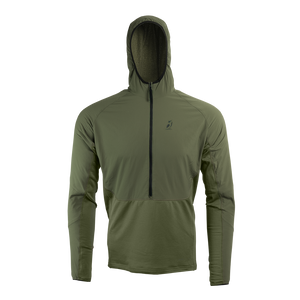
[00:05:32] Brigham: last week. So the the Vantage down jacket and the Pursuit Hybrid Fleece. The Vantage down jacket is It, I don't know it. It's like so simple. It's a very simple product. So simple to just like, get the immediate benefit of that product, you know. So I was in Colorado, last week. Daytime highs were low to mid-30s and the overnight lows were They got down to just below 12 one night, most nights they were in like the mid to Upper teens but you know I'm kind of up in about before the sun rises and after the sun sets a lot of the time and so however I will say just because it's more of a
[00:06:18] Brigham: wear when it's cold I think get as much use out of it this year as the Pursuit Hybrid Fleece. And I would say that's probably Probably my favorite just because it has a broader use case, you can leave it on your body a much. For much more of a given year throughout the seasons and just found that just be really comfortable. Once it's on, it's it's like it's kind of not there, I don't think about it. That's probably my. Favorite OV piece of kit for 2025. Yeah.
[00:06:53] Tayson: You might put the pursuit on and just To the end of the day and realize that never taking it off. Was this? Yeah. It's quite highly. You know, this time of year
[00:07:02] Brigham: it's like I sleep in, you know, I mean, honestly, Don't sleep in it. It's just like rarely comes off. As long as it's the weather, the temperatures are low enough, you know. Yeah, I was out for
[00:07:15] Tayson: two nights three days. And I had packed like some changes of clothes and stuff because I was I was going to be kind of going past, my car, got to the end of that and totally unintentionally, I didn't take off my base layer or that piece in three days. I didn't think about it. I mean, just anyways. Yeah, so phenomenal piece is for sure. I'm gonna list a couple other things that I also like have liked this year that you can typically find in Our other proven Essentials if you're a Live Ultralight member on the website, we have access to these at discounts. Not all of these but some of them Nitecore battery banks.
[00:07:58] Tayson: Those things just continued to perform and they're just so stinking light. Haven't had any issues with them. Really been happy with those. A big one this year, was the Katadyn or CNOC Vecto 2-liter. I use that as a dirty bag. So it's got the wide opening on the one side to quickly fill up. And then you can just screw a Platypus QuickDraw or Sawyer Squeeze, or other filters onto it. And man, that that made a huge difference in speed of water. Filtration, this year. Plus, you know, it's two liters so I can carry dirty water. If I ever wanna carry more water than I, just have the ability to kind of
[00:08:42] Tayson: beefed up on that, but There were there was just multiple times when I was filtering with other people that it was like almost easier for me to just scope and filter their water. Then for them to try to get water and like a bag that has a small opening and, you know, things like that, depending on where I was getting water. So, That one was huge. This one is always on the list, but Easton 9-inch stakes, the eight and a half inch Stakes, or whatever they are. Those things just perform in snow and sand and dirt in high altitude outside conditions, like for sure. If you don't have a set of those Put it
[00:09:22] Tayson: on your list. I started trying this COROS NOMAD watch. And I may have to do some more, you know, feedback on this. But my thought on this is I pretty much have everything that's in the Apex, I have really long battery life. And the price is quite a bit cheaper. So, My thought on this is it is just a phenomenal buy and I like Garmin products I like the Apex product. But if you are like on a budget at all, this is been a great affordable. Like I would still Put it in the high-end GPS watches very feature-packed performance. Yeah. Yes. I've been running it for a couple months now, maybe three months now
[00:10:08] Tayson: and Just been just been solid and and takes a haircut off the price of like the Apex. So that's been really good and I'll give one more shout out here. I've been using so Backcountry Exposure is a friend of ours, runs a YouTube channel that Devin Ashby started making different little dry bags and zippered bags. And I started to use some of those for food and really enjoyed those. We actually just put those on our website as well. So happy to be working with Devin but they Just kind of different sizes of zippered dry bags. I guess they're not dry bags but zippered bags and and then there are some some more dry bags and
[00:10:53] Tayson: I've just kind of enjoyed having a few different sizes and options to go through this year for different trips from going for like a weekend, you know, if I'm going for for a longer timeframe, I have to have a bigger Food Bag, but for weekend stuff, maybe in three, four days. I can pretty much fit everything in one of his zippered bags and it's just so convenient because it holds it all together, especially if I'm gonna repackage any of my Peak Refuel meals or other meals and I'm using Like I can really fit a lot in some of those, those zipper bags. They're good bags. I do like them, I have
[00:11:26] Brigham: I have the original food bag and I want to get the bigger one but I also had I say, had One of the just like the more. I don't know. Like this size of zippered pouches. I took it on on. My last business trip to Asia. And I was really handy. I kept like my battery Bank. Charging cords earbuds are like oh really stuff that when you're on a plane for 15 hours like it's really nice to just have all contained. I, I got back to Vegas and I realized this all after like being home for 12 hours, but I just got off the plane and left that thing on my seat. So I had
[00:12:13] Brigham: had a battery Bank. It had charging cables, had my, My Neck, My Little Neck pillow. Anyway, so I was pretty bummed about that. Was that was definitely a loss.
[00:12:27] Tayson: Yeah, I I need to get I tried using one of those bags for moving all my first aid stuff into because I like that. It's more durable than and what I'd had kind of put some holes in some of my older first-aid zip bag but I need I need to get the slightly bigger size. Out so yeah but yeah, any other like any other products you just want to call out for 2025 that you've enjoyed using.
[00:12:52] Brigham: Well, I mean we were talking about it. I really have liked the Therm-a-Rest NeoLoft. In the conditions. I've used have been used it in. It's been very comfortable. Yeah, Comfort. Like I had 10 for an inflatable pad lightweight inflatable pad. well, it's probably probably the most comfortable I've used. And I'm not like I haven't tried everything out there, but I've tried most of the bigger players. It's it's definitely up there and
[00:13:26] Tayson: yeah. Yeah, I agree. My only thing is, I need to find the exact temperature when to switch because I froze on it when it got quite cold at night, but I was also slept on it warmer conditions say, plus, you know, warmer than freezing freezing and warmer and It is incredible. So if I get side sleeper where I get, I get like pain in my shoulder, sometimes things like that really took a lot of that away. So it was an impressive piece. Any last callouts. And I apologize if you hear any Background noise. We got some construction going on around the office, which has been quiet until, of course, you turn on the mic.
[00:14:08] Tayson: So, um, yeah. Always like lately. It's been a constant stream of improving the office, so, But yeah, any other call-outs I mean there's like just some
[00:14:19] Brigham: really staple items that just continue to work. Well, I still use, I think it's the NU25 headlamp one with the cord, the last chord. That works really well for me. Still I've really enjoyed using that and then it is Platypus QuickDraw is like yeah I mean those are just like really reliable they just, they just work well and
[00:14:43] Tayson: I'm the same way I I do like that Nitecore NU25. Battery. Life wise, I think lasts so long. I will say if you're running or you really need a ton of light I don't know that it's the absolute brightest option. But for just backpacking, it's my go-to for sure,
[00:15:03] Brigham: it's just crazy how I like that. How it's got the dim setting. Oh yeah, most of the time I'm using it. It's just like around the tent and it's plenty of light and so I can I never have to charge a thing especially in the summer. When it's just kind of that situation where I'm using it maybe for an hour at night, 20 minutes in the morning on the dim setting, but
[00:15:26] Tayson: yeah, Yeah, I agree. Definitely impressive. Okay,
Editor’s note: The Satellite, Vantage, Pursuit, Therm-a-Rest pad, Nitecore battery banks and headlamp, Katadyn/Platypus filters, COROS watch, Backcountry Exposure bags, prices, temperatures, comfort, and performance comments are a November 2025 snapshot and personal experience. Verify current names, specifications, prices, availability, and fit for the intended use.
[00:15:31] Tayson: before we get into a couple listener, questions here, wanted to just talk about some, some things to have on your radar I guess for OV, and actually starts off with a listener question. Probably answered this in different forms over time. But a question is, you know, why do you have products stock out? Which from the outside perspective, it's like, Like this is a really dumb thing to have happen if you don't have products to sell, how do you make any money? You know, like keep things in stock. Simple, right? But what's not simple about it is we we build really high-end premium products and takes a long time to make those products on
[00:16:15] Tayson: average. You know, in our quickest products, might take seven months and our longest products might take a full year. So, When we have things like these new releases where we don't really have like a history of sales with them. We don't know exactly how popular they're going to be. When we release them, we put together our best estimate, we place orders, but I can promise you, we sold them very well and we will have stockouts of all of the new releases so that would include Altitude Pants. Pursuit Hybrid Fleece, Vantage Down Jacket. Hopefully not the Shadowlight. I think we can handle the Shadowlight. So be on the lookout for some of those. So this
[00:17:00] Tayson: is kind of your fair warning but just know, you know, we are small company. We're managing inventory as well as we can to not waste and tie up a lot of money and things that aren't moving, but we choose to produce. The best gear that we possibly can and that takes a lot of time, you know. I have definitely talked to other business owners like why do you yeah why do you stock out and you know their lead times are two to three months where ours are on average eight to nine months. So
[00:17:28] Brigham: yeah there's and there's so like, you know, Everyone like we're an independently owned, smaller, you know, small company. And we are very performance-focused, detailed, and quality-focused to make a really good product. But but also we we really wouldn't be able to be that way if we were not financially conservative or you know, just as a general business practice, if we're just almost willingly just over ordering just so we're not ever out of stock. That just ties up so much money that could be otherwise put into the things that matter which is the product. And so like I I can, I can get, you know, a customer's disappointment or frustration with with
[00:18:23] Brigham: stockouts, but With what we want to do as a company in our size and our resources and how we do how we operate. And it's not like we try to have it happen but it's it's something that is you know sometimes going to happen because of how we operate because of what we prioritize and we don't prioritize just trying to hurry and develop a product. And then so that product is really simple and uses really cheap materials that are just basically off the shelf that any, you know, any sewing Factory can just Source immediately because there's a million yards of it available, that's just not how we choose to do business. And and those
[00:19:09] Brigham: are not the products we want to offer. So a lot of time when Tayson talks about the products that we make, we're talking about that. There might be, you know, Five total materials in a product and two of those. You know, take six months to produce. Well. If we want to. If we want to like guarantee we don't ever stock out on anything. We essentially have to blindly over order just so that we just have inventory. And again that just that's just money being tied up. That is much better spent. On more important things.
Editor’s note: The seven-to-twelve-month production timing, eight-to-nine-month average lead time, expected stockouts, product demand, materials, ordering, and company priorities describe Outdoor Vitals’ November 2025 inventory position. They explain historical decisions, not current stock, demand, lead times, or availability.
[00:19:48] Tayson: Yep. Yep, exactly. Okay, a couple other things. I wanted to just put out there on the radar to watch for. You're gonna see sleeping bags stocking out more and more. We're actually not going to be restocking those, we're making way for something better. So, at the tail end of 2026, be on the lookout for something like that. But that's all I can really say for right now, until we get that completely finalized. But yeah, you'll see some sleeping bags stock out. So if you like our Summit, you know, mummy style sleeping bag, you're going to want to get on that sooner rather than later because they're not coming back right now. And then, Hammocks, you know, after
[00:20:35] Tayson: a lot of the stuff that's gone on lately, direction of our company, things like that. Basically our hammock line and accessories is going to slowly fade out as well. It's not our number one passion. I would say to do hammock products and also because of like where we've taken so much of our development and focus kind of taking it off of the hammock side and and it's just not really feasible for us to keep it going. It would require a lot of work for us to be shifting around some manufacturing, redesigning reworking things and it's just not where we want to put our efforts we'd rather put them into these other projects, we have
[00:21:17] Tayson: going on and and stuff. So you'll slowly see some more hammock line and accessories. Stock out and and fade away. So, Yeah, any other things I mean that's all I noted down for as far as things like to watch for. Other than that, we're we're growing and we're moving and shaking this year and so we'll continue to do that. Got some new releases coming in 2026, for sure, and are very excited about those. So we'll try to keep you
Editor’s note: The Summit sleeping-bag phaseout, hammock-line wind-down, late-2026 replacement concept, and other 2026 releases were plans stated in November 2025. They are not current availability, launch, support, warranty, or future-company commitments.
[00:21:50] Tayson: informed on here as much as we can. So okay, let's jump to some more listener questions. I've got essentially three more questions here, I'd like to run through. So don Glazier Was asking what do you use for insoles? Do you use? What comes with the shoes or do you use something like Superfeet? I'll let you answer. I think we might have different answers on this, so you get two perspectives.
[00:22:14] Brigham: It depends on the Footwear, if it's something really Cushiony and soft, and pliable like a trail Runner. And, and I mean, like a true trail run or not like There's some of these. Like Merrell makes them or Danner make some that people might think of their, like a trailer. I'm talking something like, a Hoka, an Altra, Saucony, or a La Sportiva, true Trail Runner like those built for running. Not just hiking with you know they don't they don't it's not that they look like a trail Runner. They are designed for trail running. I there may have been one pair that I ever. Oh as a pair of Topos that I actually changed out the insoles
[00:23:03] Brigham: to a pair of super feet but with Trail Runners. I generally don't, if I'm using something, you know, because I do, you know, I do a lot of like, hunting in the mountains. steep terrain, when I I'll change out my footwork to more of a boot and when I do that, all of the like more mountainous rugged boot type foot where I have, I have super feet. I think they're super feet, hike cushion insoles, and all of them. and, But the ratio to use is way way heavier on trail Runners and like, for hiking. Yeah, so most of my miles are done with just the stock stock insoles that come in, those Trail Runners.
[00:23:51] Tayson: Yeah, for me, I do use an insole in pretty much everything I touch, but I only started to do that after having issues with plantar fasciitis or however you want to say that, that was the thing that brought me the most relief and has continued to now. It's like, if I don't use one for an extended period of time, I'll start to actually feel that like those tendons on the bottom of my feet slowly start to get inflamed again. So like this year, I did go on a five six days trip with some Topo Athletic mid-top hiking boots by the end of it. I could I could feel it in there. Just
[00:24:33] Tayson: a little bit that I didn't have an insole. And so I'm just I'm just so used to having insoles that I do keep them. As far as which insole I've used super feet and they've been good but I haven't seen him be quite as durable as the Currex—C-U-R-R-E-X and that's been my favorite. I've run those For a lot of years now, they're pretty popular, I would say with Runners, but like they're, they're really solid for me and typically I can buy an insole. And I can use it for two shoe lifecycles so the insole outlasts the shoe. So that is
[00:25:15] Tayson: kind of nice because those insoles are about $50. Plus you're buying a trail runner for like $100 or $150 and so it's an investment, but you can typically take that insole and use it for two pairs of shoes before they're worn out. So something to keep in mind, but if you suffer from anything like that, do it, if you're just looking for more, I would say, no, if you're looking for just more padding, Like, you just like, man. Like I just want these shoes to be more comfortable or something like that. And insole may help a little bit, but in reality, I would go back to the shoe itself. And look for something
[00:25:50] Tayson: with more cushion or for something that gives you what you're lacking. An insole isn't going to change the shoe, it's just going
[00:25:57] Brigham: to you know, I don't know it's interface between the bottom of your foot and the shoe and then but it actually then Works vertically as well because That interface beneath your foot and in between your foot, and the shoe on the bottom, actually affects how your your shoe fits. The top of your foot as well, especially when it comes to more supportive insoles that maybe they have a heel cup or more pronounced arch support and then it, you know, it prevents maybe the collapsing of the arch a little bit. So then the top the bridge and top of your foot will fit differently in a shoe too. And that's something I like I'm pretty sensitive to it.
[00:26:38] Brigham: So I'm, I'll pay really close attention to if If an insole actually changes, the geometry of my foot placement in the shoe, I mean, because the shoes shape is fixed, right. And so, if, if an insole changes where your heels sits within that shoe, then that could potentially, Affect the Comfort or the functionality of the shoes.
Editor’s note: The shoe, boot, Superfeet and Currex insole, plantar-fasciitis, fit, durability, two-shoe lifecycle, and roughly $50/$100–$150 price comments are personal November 2025 experience and approximate historical pricing, not medical guidance, a durability guarantee, or current pricing/specifications.
[00:27:02] Tayson: So those laces tie across the bridge of your foot. Yeah, for sure. Definitely pay attention to those things. I have had, at times, different shoes cause discomfort over the top of my foot because I've got more pressure, and that's what an insole can do, especially since
[00:27:20] Tayson: those insoles are going to have arch support in them, which essentially raises your foot a little bit. So, definitely be aware of that. Okay, Daniel Beaupré asks how long does it take a backpack to break in? I feel that some of my packs and their Fabrics get better with use. This is like a Like I don't think we have ever talked about this. So when I saw that question I'm like Huh. All right, like, I mean, talk about that.
[00:27:48] Brigham: The first things that with break in the first things that came to my mind were more things like The actual interface with the body. So things that contain molded foam or any kind of support or structure? you know, because that's something to talk about too. And then in terms of like, what do you say, the fabric seemed to be better. I guess I would want to know, like, define better in what metric or what? You know what I mean? Like, is it better? Because it's softer when you roll it up. or it's quieter
[00:28:20] Tayson: or Yeah, my guess is the way that I would interpret this would just be the things soften up a little bit. Yeah, especially when you're talking about like breaking. You usually talk about like things kind of softening up and conforming and so, Um yeah, my two cents on this is for an ultralight backpack. I don't think there's going to be hardly any break-in period or shouldn't typically be. I think a break-in period is more likely on a heavier, more robust pack. So if you're a sportsman, you're you've got like a hunting pack, they're gonna use much more dense foams. Because you're going to be under a lot more pressure, a lot more weight. And
[00:29:06] Tayson: so I could see there being a bit of a break-in period on some of those, I mean, but I think the best backpack manufacturers are doing their best to reduce or eliminate a break-in period. But it kind of goes back to like You don't break in a pair of trail runners, you typically put on a pair of trail runners, and they're pretty much ready to go. There's a break-in period, it is like five to 10 miles maximum. On a pair of boots. Though there are literally boot manufacturers out there that say, get 30 to 50 miles on a pair of boots to break them in. And but they're just, but those are all
[00:29:41] Tayson: for like packing heavy loads going on, really aggressive Rock, You Know, Shale or sharp rocks or, you know, things like that. And so I kind of think of this question the same way where to me, it's like the heavier more heavy duty to pack is there's probably going to be a little bit of a break-in period, but for something like an ultralight pack, I've never thought once about breaking it in.
[00:30:06] Brigham: know, I can't say I've ever noticed any importance to it with any of the packs, you know, I've used Yeah. Like on the fabric side, if that's just kind of like a personal preference thing you when you Are manipulating your pack bag. When you've taken it off and you're accessing your gear, and you like it to feel like soft and supple or pliable. that's just gonna come with time time packing it and unpacking it and but, I mean to me, what would what would be the most important was just the body interface, anything interfacing with the body. So the suspension essentially. Yeah. Yeah, I've almost
[00:30:52] Tayson: the other way. The more you use the pack, the more salt you get into your pack from sweating.
[00:30:56] Brigham: Oh yeah. And
[00:30:57] Tayson: you know stiffens up
[00:30:58] Brigham: and you wash it with water and a toothbrush sometimes.
Editor’s note: The trail-runner, boot, foam, fabric, suspension, five-to-ten-mile and 30-to-50-mile break-in comments are general November 2025 observations. Break-in, fit, comfort, durability, and load performance vary by model, user, and use; verify current manufacturer guidance.
[00:31:02] Tayson: Okay. So part two of his question was have you ever been on a long enough trip that would require you to wash or rinse, any of your clothes or when will the dirty clothes begin to affect their performance? So
[00:31:18] Brigham: A couple things there.
[00:31:19] Tayson: Yeah, I mean I I would say you definitely can go on a trip. That is long enough mainly thru-hikers. Like you gotta be out to me the way that I think about this. You gotta be out there more than a week before you're gonna see, like degradation of performance for most items. Smell wise. Things like that. Yeah, I have occasionally like rinsed off or like some, I mean you're out there a week, depending on when you might get rained on and kind of get a little bit of a rinse accidentally, but I think you got to be like thru-hiker status, you gotta be covering a couple hundred miles before I think you're going to
[00:31:58] Tayson: start to lose performance. My thought would be on performance like what what is going to lose performance? There's a couple ways to look at that. In my mind one would be performance from like Maybe like almost like fit like you get so much salt on a sun hoodie and it's it's not comfortable anymore or it can or it can bring on a rash or something like that just from abrasion and things. So like there's that kind of stuff where rinsing it can be helpful for sure. And and so that's like more just like, because it's dirty, it's not fitting right anymore? Or it's or it's like stiffening up the Fabrics. Then the other side of it
[00:32:38] Tayson: is like degradation specifically in down loft of insulation, which comes from getting dirty too. Yeah. I can
[00:32:48] Brigham: think of, yeah, there's a few different categories of gear or apparel that. could potentially have some some functional degradation, for example, like A laminated membrane type waterproof-breathable, rain gear, right? So inside or outside, Dirt and body contaminants, body oils those things, whether it's on the inside or the outside, the dirtier that they get the more Easily water adheres to it and or clogs the breathability and, and any waterproof-breathable jacket is not that breathable. Anyway, so yeah, I it's gonna take, you know, definitely a week. You're beyond a week before your you're really noticing like, oh man, this is totally clogged up and feels like a plastic bag because you've you sweat in it.
[00:33:54] Brigham: You've got sweat salt body oil on the inside and you've, you know, set it down and on, you know, and dirt and wind is blowing dust all over the outside. Those, those two are going to functionally degrade the performance of that piece and which can be washed out, you know, especially when you're using the correct washing product at home, but it could benefit from a rinse in a creek or a lake, you know, just to take off 20 to 30% of that Grime and that does affect the performance, you mentioned, so, and down, or any Really lofted insulation. Same thing. Contaminants dirt. Dust body oil. those things once they work their way into down, it
[00:34:39] Brigham: gradually will kind of decrease its Loft and I would agree it's going to be over a week, you know, over a week or more again, depending on activity levels, body. Physiology, some people just don't sweat. I think you and me sweat pretty profusely. and then, I will say like, Depending on the hike man. Like you go hike 50 miles in a day in the sun hoodie and you will start in the warm weather. Like yeah you I I've gotten so much crusty salt buildup that it stiffens up the fabric. So that's not really its kind of functional. It's absolutely a comfort detriment though. You start feeling the rubbing of the salt? Yeah it just
[00:35:25] Brigham: feels you've got like these crispy areas of your of your shirt and and that It's noticeable. So, That can easily happen in a week of Summer, backpacking.
[00:35:39] Tayson: yeah, I think, I think the most important thing on this to say is just that everyone's different in every hike is different. So there's some people that just are rolling around in the dirt per se in their puffy jacket. And of course that's going to get dirty. There's some people that are meticulous about keeping things like things clean. There's people that are going to hike in a puffy jacket even though we don't recommend that, then they get sweat in it. So that's gonna, you know, cause more And then there's times like when you go on a hike, like, for me, hiking in the desert in the sand, like sometimes there's no escaping the sand, sometimes
[00:36:20] Tayson: you wake up and there's a sand dune inside your tent. There's just such fine. Fine, sand here in southern Utah and Northern Arizona, and it can blow through mesh and anything. And so, There's there's times like that. So hike dependent person dependent so it's hard to just say, like one week, Is the is the timeline. But I would say in general it's got to be pretty bad conditions for it to be you needing to wash gear on trail and sooner than a week. I think you are going to. I mean, there's probably people, I'm sure there's people out there all the time that hike the entire, you know, Appalachian Trail and don't wash their
[00:36:59] Tayson: puffy. Will it be degraded and like not as lofty? Absolutely, but do they do it? You can do it. So being mindful of your own gear being aware of it, I think is just the best best solution if you notice something like a down, jacket stopping being puffy. Yeah. Like, that's something to be aware of and maybe try to, to wash it out. So, okay. Want to wrap this
Editor’s note: The week-plus, 50-mile-day, rain-shell membrane, down/insulation loft, rinsing, body-oil, salt, sand, comfort, and performance comments are personal and general observations from November 2025. Follow current care labels, avoid contaminating water sources, and use appropriate cleaning and replacement guidance.
[00:37:23] Tayson: up now, just a quick reminder. Again, again, our our biggest sale is going on right now. Sitewide savings free Gear with stuff giveaways. I also wanted to point out this, this is the first time that any of those four brand new products that we just released will be on sale. So if you've not yet, purchased the Altitude Pants, Pursuit Hybrid Fleece, the Vantage Down Jacket or the the Shadowlight. This is the first time you can buy them at a discount, so take advantage of that. I expect many people will but wanted to point that out As usual though, we're getting close to Thanksgiving. We really appreciate you guys. We're very fortunate to do what we
[00:38:03] Tayson: love and call it work. And we take that very seriously, too to try to provide as much value as we can but at the end of the day none of this would be possible if you guys didn't support us. So thanks so much. Hope you guys have an amazing Thanksgiving to start your holidays and we'll catch you guys in future episode.
Editor’s note: The sitewide savings, free gear, giveaway, and first discounts on four then-new products were a November 2025 promotion, not a current price, offer, inventory, or availability statement.