[00:00:00] Tayson: Hey, welcome back to the Live Ultralight Podcast. Powered by Outdoor Vitals. Today we have another episode of the Ask OV podcast. This is our first episode of 2026. So we'll maybe spend a few minutes just kind of recapping on last year and we're gonna dive straight into listener questions. If you're new to these particular episodes, these are you know shortal shorter episodes where we really get into just questions from our audience. So if you have questions you can drop them onto YouTube comments. You can email us at support at Outdoor Vitals and just say that you have a question for the podcast and Brigham and I are happy to address those. So, 2026. We just finished
[00:00:44] Tayson: some of our annual planning for this year, but realistically is we look back on 2025, it was a great year at Outdoor Vitals, with great product launches we have a lot of new customers. Come into our fold, the team is doing amazing overall, it's been a phenomenal year. That was our 11th year in business, so it's pretty. Pretty wild, I think about that. And, and a lot of ways, it feels like we're still just getting started, so really excited to see where you know, this year takes us and even the next five years take us but so a big plans and still just planning to continue. Cranking out new products. Yeah, new amazing gear, refining products,
[00:01:29] Tayson: and building new stuff. So, Pretty excited. Pretty lucky to be doing this kind of stuff. And we love what we get to do. We love backpacking? And that's where hopefully, a lot of these questions today are centered is helping you guys get out into the great outdoors. So questions around, backpacking gear, anything like that. We're gonna be some of the best people to ask from our company. So this is your direct line to us. Any comments on the last year or looking forward?
[00:02:01] Brigham: Well, I mean you're really covered. It was good, it's good year. Wasn't Super product heavy in terms of, you know, new product releases. But I'm actually as I think that we were in a good spot with what we did release. It was kind of heavy like second half of the year I'd say. Oh yeah. Three out of the four product launches were towards. the later months of the year, but I was Good. Good year. It was fun to to get those products out like like it always is
[00:02:34] Tayson: code. It's kind of brings it to a close or
[00:02:38] Brigham: he's from the side of the anticipation of finalizing the design and getting the product out in people's hands to use and hopefully enjoy Yeah, so looking forward I think. Yeah. Pretty General. Consensus is Feeling pretty positive about the 2026 Outlook. And The yeah, the products that will be releasing in 2026. The things we're going to do and just yeah just kind of company goals.
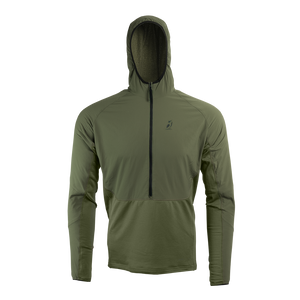
[00:03:08] Tayson: Super exciting, the record year for us, record months, and record days that the launches went really really well and excited to get those things back in stock. So yeah, we blew through some of that inventory especially on certain colors and sizes this and kind of an unprecedented amount of that going on. So, We'll get some of those back in stock, starting with the Altura Pants and then the Pursuit Hoodie and then later in the year, the Vantage. So stay tuned on all of those fronts.
Editor’s note: The record-year account, stockouts, colors, sizes, Altura Pants, Pursuit Hoodie, Vantage restock sequence, and 2026 product plans describe the January 2026 company outlook. They are historical statements, not current inventory, product, launch, or support commitments.
[00:03:40] Tayson: Kind of on that vein, I guess I could jump into this first question that just in terms of like supply chain and costs. Very first question here is how will Trump's tariffs impact your costs Um, this is a great question and it's a question that I'm actually quite surprised is not happening more on a daily conversation across the board because my personal opinion, our opinion I guess is that these these costs, these tariffs will absolutely affect. You know, 80% of all of the things you buy from what we can tell, inside the industry watching Brands, watching as much as we can, the companies that raise their prices, like a little bit earlier on, maybe had
[00:04:24] Tayson: some negatives. And so seems like to us a lot of companies are kind of waiting, until they have to raise those prices, but my prediction, my bold prediction for 2026 is the you guys will see More and more product costs, raising across the board, and more and more Industries. Really the only Industries or the only companies are products that won't be affected in some way. I feel like by this are ones that are like 100% American made, which there is a difference between being assembled in America and being American made. Saw a Fabrics or trims or zippers made outside of America, but it can be being assembled in the USA. But to have a true
[00:05:08] Tayson: American-made product would mean the fabric is being made in USA and the trims are being made in the USA. It's cut and son in the USA. And I would say, for the most part, Those companies, there's lesser volume of them, but also, you know, their cost was already high to begin with, I guess you could say to do that. All in the USA is a costly Endeavor and so like those are the only ones that are insulated on maybe some price raises, in my opinion. But there are already high to begin with. So my bold prediction for 2026 is everyone's prices are going to go up. What does that mean for Outdoor Vitals though? We are
[00:05:46] Tayson: doing our very best to just absorb that cost. There's different ways to look at. Absorbing that cost part of that is just the company grows and the more we grow, the more volume, we were able to absorb some of that lesser margin and There's, you know, we can order more from A supplier and work on just like, increasing your inventory levels but getting a little bit better cost per unit as we increase volume. But really I guess that the easiest way to sum it up. What we're attempting to do is do very, very small raises and absorb most of any of those increased costs on our end, not on our consumers. and of, The the
[00:06:36] Tayson: price tags. So you might see some prices raised from us. When I say that. I mean like 5% type raises, you know, you might see five dollars on this piece or, you know, maybe 10 dollars on another piece. Something like that. For the most part, we're going to do our very best to absorb those costs. And our end and just work forward and hopefully by us keep being really competitive pricing, we'll just continue to grow and do more volume and be able to lean out operations like that.
Editor’s note: The tariff effects, American-made distinctions, supplier volume, margin strategy, roughly 5% increases, and five- or ten-dollar examples were January 2026 business predictions and intentions. They are not current pricing, offer, sourcing, or company commitments.
[00:07:10] Tayson: So, okay, let's move down to the next one here. Let’s tee this one up.
[00:07:20] Tayson: What is the best offline map that you recommend? This came from a YouTube comment of Wolfman hikes.
[00:07:27] Brigham: This is, you know, honestly I I mmm, this is my context and I can break that down a little bit, but my most reliable is, I can't remember which of the Garmin apps but downloaded maps on from Garmin They don't have. I would say modern or new UI, or new techy features like apps, like onX. Or some of the other ones where you know there's like map making or like you can draw out your route and things like that. But just in terms from mapping and accuracy and reliability, which to me is number one, the Garmin Option is the best. And I mean, there's an app on the phone camera is Explorer or
[00:08:21] Brigham: earthmate. But you can download. USGS quads topographic maps. and you can download those and then your phone becomes a mapping GPS and it's very reliable. It's never it never does anything weird. Now it's not a feature Rich as something like onX Backcountry. That's kind of the other one that I use in conjunction when I want to get kind of like supplementary The value or usage or just kind of use some other tools but onX bugs. Me frequently. I would say every single trip I have at least one frustration with onX. Being slow not actually being able to pull up stuff that is downloaded on my phone and in my offline maps but it is
[00:09:19] Brigham: still useful. But so, yeah, when my hierarchy of priorities, is just accuracy and reliability of the map itself. And so for me, that's where the Garmin is the best. I'm most reliable trusted app and then secondary, you know, then all rely on. onX. I also use GOHUNT Maps, you can kind of do the same sorts of things with that and I think those are really Three that I use.
[00:09:53] Tayson: It's actually pretty similar to my experience. I do love. using onX Maps because I love like on a computer from if I'm planning out a route, I love being able to put it into 3D and kind of Zoom around and all the feature sets they've kind of pulled me into that over the years. However, it's hard for me to just fully recommend the app because they continue to make it more expensive. And I have had issues and glitches with the app on my Wind River trip. I updated the app on the way to the trailhead and then a completely failed. And I had to do 100 miles with, with that app, not functioning a single
[00:10:34] Tayson: day of the trip. Was that a one-off experience? It absolutely is a one-off experience. I should have you know, reopened the app and make sure everything was working when I was in service after updating that app. But Just one example of, like, of things that have happened to me with onX, so I do use onX. But I also use the Garmin Explorer app. I find it to be less detailed, but very stable. I also like to put all of the maps for bigger hikes on to my watch and I'll navigate off my watch and it saves me. A lot of phone battery to able to navigate off of my watch. And then if I do
[00:11:12] Tayson: have to recharge my watch, it takes up way less battery to recharge a watch than it does a phone.
[00:11:18] Tayson: Um, the last thing I would say though, is on the Colorado Trail, the PCT. Like is established Trails. I do highly recommend the FarOut app. It's incredibly useful. It's in some ways. I almost feel like I'm cheating when I use the app because it's so accurate, and it's just so specific to the trail that it, it like, it's it's really foreign, I guess you could say for me to use it because I'm used to backpacking. And hiking in the backcountry, you know, on no name Trails or or like those kinds of situations versus you go on one of those busy Trails, you can get the FarOut and it, and it has like, people
[00:12:01] Tayson: commenting, there's water here on this day. There's water here on this day. You can camp here. You can't camp here. It's, it's like it. It's absolutely having your own Sherpa but,
[00:12:09] Brigham: and it's almost in terms of, like, How close it is to just every day? Life versus the feeling of being remote and removed from being plugged in dot connected with all the things and like our modern society. to me, it's like, very close to just driving down a freeway and having the navigation in your car, like that that's kind of how I relate to it is like In terms of navigation. It's it's so So plugged in that. Yeah, to me, it's like not much different than just using driving down the down, the highway in a car. From what was that old knowing? Like, here's your next exit.
[00:12:57] Tayson: It was like there used to go on the online like print off MapQuest to have an Android auto and apple carplay in your car just run.
[00:13:06] Brigham: And yeah,
[00:13:07] Tayson: it's true. Like is I mean, it'll show you like elevation gain and loss from like where you're standing right now to like two miles down the trail when you get to the street like it'll like it calculating things like that and it's It's like you don't worry, you stand and like what's going on at all times with those apps. but I will say this like I when I go on the Colorado Trail like I will use it like I its I have it I've paid for it so like and you buy it per trail which I think is also wave cooler model and so I'm like I'm not gonna not use it. However I also enjoy trips
[00:13:42] Tayson: where it's just not that plan, you know, it's just not that dialed and like handed over in terms of information and requirements. But Yeah, that's definitely an option to consider and I feel like that is is pretty nominal in terms of pricing. You've also got AllTrails I have an AllTrails subscription, I don't know why but I don't use it a ton. I like to use it to find Trails but I don't use it in the field. I can't say that's because the app is better or wrong. I can just say, I just honestly haven't tried it on my phone for quite a long time, but you know, five or seven years ago, I didn't
[00:14:23] Tayson: find the phone app to be my favorite at that point in time. So I probably should give that a test this year and just see how I end up like in that app. But As far as just like the oldest most reliable, like we have Garmin satellite Messengers which kind of gets you onto the Garmin ecosystem and they're mapping app and that thing is like, they’re just not updating it all the time and causing bugs and issues, which is a good thing. When you need reliability, but I will say this, they actually do have the smart-mapping feature on the Garmin app.
[00:14:54] Brigham: Yeah, I was thinking about those. I think it is safe to say they have slowly kept up, and so, I mean, it’s a solid option.
Editor’s note: The Garmin Explore, Earthmate, onX Backcountry, GOHUNT, FarOut, AllTrails, watch-navigation, reliability, feature, subscription, and per-trail price comments reflect personal January 2026 experience. Verify current apps, maps, prices, downloads, device compatibility, and offline operation before travel; carry navigation appropriate to the route and conditions.
[00:15:04] Tayson: Yeah. Okay. I want to jump to this one. I like some of these questions. These are all from, from Josh Vander Lee. I got two spellings on here. So we had some copying errors or something. But so one of
[00:15:22] Tayson: his questions was have you experimented with using something like Brynje mesh base layers with the Skyline Joggers or other gear to see how they manage sweat together and running at or below freezing? so, yes, I most definitely have used them with the Skyline Joggers, but also Have we've used mesh for a long time. It's been an interest since day one. And in fact, Some of Brigham's earliest like prototypes involved using mesh in Wool layers that we tested and we've just like it has been a part of stuff. We've tested ourselves for
[00:16:06] Brigham: Whatever. Six or seven years? No. It's interesting stuff. Yeah, like I don't know, I don't know what to say about this other
[00:16:15] Tayson: than I really like mesh. Um, you could see us dabbling in mesh in the future. it's not a high priority for us but they're like the mesh layers are A really interesting and they 100% work, so layering it with the Skyline Joggers. I have done. I do like it. I don't know that that's like the most recommended combination. I could think of but adding that mesh under any layer It does its job which essentially helps you trap heat when you're not moving and evacuate heat with airflow or another words movement and it'll work onto the Skyline Joggers really well. Works under pants really well or works in layers, combinations of layers, really well. So
[00:17:05] Tayson: I'm trying to think of when I've specifically done that pair I want to say like desert. Hiking is one of the times that I've done that when I'm hiking in you know like the Grand Canyon Wilderness areas and that and I like that because I'll hike in the joggers because it gets so hot in the desert but then at night I mean it gets cold really fast and so that's that's like a combination and the mornings are cold in the desert. It takes a while to heat up. So that is that is a time and place when I've used combination. Success. But Anything. Um, yeah. I I'm
[00:17:44] Brigham: I know that for the people that are aware of mesh base layers. They're I feel like they're a little propped up. With a bit of extra hype in that they're almost seen as this magic. It's a magical thing. It's not that they do. They do function well and they do well. at kind of base layers, things, I would just advise anybody, if you hear something, maybe dial it back like 10, 15% and like kind of just So, your expectations are more realistic. And they're not like a one size. Fits all will do everything for you, like nothing is like that's that's just my, my commentary on it because I hear a lot of Almost fan
[00:18:35] Brigham: boyish. Commentary about mesh layers. Just dial that back, 10 15% and that's
[00:18:42] Tayson: probably about accurate. Yeah, they're not like Supernatural by any means. But They're cool option. The I I tell you what, the hardest thing with with them is just Getting people to use them and recognize them as. Like I put some layers on and anytime I put some layers on and people see me in them for the first time, they're like, what are you wearing? They're just absolutely shocked. I think I'm
[00:19:08] Brigham: headed to like a nightclub, it's a very unnatural so much of, you know, even if people that are like aware of the need for like, performance, specific performance characteristics, out of each layer, right? Like even people that are familiar with that. It's, it's a very unnatural thing and that's just because of society societal Norms in dress, like 100%. That's that's the influence. And it's like, it's such a shock to the system. It's hard for some people to like, get past that.
[00:19:40] Tayson: Yeah, most people that, I mean, Brynje themselves, they've really focused on like Skiing and winter sports and stuff like that, and there's a reason for that like they do. like, I think to take them and just expect them to perform an every single situation perfectly I don't know. You know, Brynje. I mean, you can, you can take some knowledge that the most history, the most use of them has been in really more colder conditions. And yeah, like, skiing is really hard, right? Because it's freezing out. You're surrounded by ice and snow, but you're trying to move an elements, you know? And so, Up and down mountains. And so there's There's, you can learn I guess,
[00:20:22] Tayson: from, from just that application of where they've had a lot of success, too. So yeah.
Editor’s note: The Brynje mesh base-layer, Skyline Joggers, heat, airflow, sweat, freezing-weather, desert, and future-product comments are personal January 2026 experience and historical product discussion, not current specifications, launch commitments, or safety guarantees. Test layers in controlled conditions and plan for actual weather, effort, and stops.
[00:20:27] Tayson: Um, Okay, this is kind of an interesting one. Given the increase presence of
[00:20:33] Tayson: Garage Grown Gear and ultralight in general and inclusion of camp, chairs and Camp shoes and very other accessories. Where do you see things heading as an industry? so, I'm gonna kind of simplify that to More and more conversations, I guess you could say in the ultra World include things like Camp shoes. Chairs and it just blanket, like, ultralight accessories but that kind of like goes against the nature of ultralight backpacking. So What's your like stance and thought on that? I know a lot of people have to make this like really black and white, but I don't know if that's my
[00:21:10] Brigham: stance and thought first of foremost is You do you? Like, whoever you are. Whatever your interpretation of it of what you are looking for, do you and don't worry about what? Other people are presenting as something that is the direction of XYZ. So, and then my other question type, like rhetoric question is like Because we get questions and some of them. You can catch the tone and kind of recognize that like, this question seems to be coming from what something is seeing on social media or YouTube. And that's not bad, but it's just not. If that is the case. Don't base your perceptions on what is? Based don't base out on what you see. YouTubers,
[00:22:07] Brigham: or your favorite YouTuber. There's influence there. And that's not the real 100% picture. It doesn't mean it's false. It's just means it's not the whole picture. So if What you see on YouTube doesn't necessarily indicate. What is the actual, you know, Mass Trend or mass practice? So, take all that with a grain of salt. Yeah, it's tough. What's the future like, where's the industry going with backpacking and ultralight? Yeah, in in reality. Probably gonna be less flashy. And less dramatic as is going to be presented to us. Via a different media channels. Probably slower moving than what is going to be presented to us via different media channels. But I don't think people are going
[00:23:08] Brigham: to stop chasing, you know, trying to be more comfortable, saving weight. The thing about like with the reference to like chairs and Camp shoes. The thing that is the most valuable or not the most one of the valuable things about the ultralight mindset. And and and being very analytical and critical with gear choices. And practices is man when you Get to a point where you can go. And do a five-day, 100-plus-mile hike. Including food water and fuel and your pack weighs 24 pounds. One. That's like a really confidence-inspiring feeling that like, man. Do you know how much comfort I could add for 2 pounds? And like what is the difference between 24 and
[00:23:59] Brigham: 26 pounds? It's not you basically can't even discern that on your body. That weight difference changes three times. A day, every time you drink all your water and then fill it back up. you know, so like it's really yeah, it's it's like empowering and confidence-inspiring to if you have the discipline to constantly Practice the ultralight, mindset, or ultralight. You know, practices and choices. Then you are able to say like I can take one pound of a chair and it's just not going to make a difference in my performance. My comfort level on the trail was gonna add a ton of comfort at lunch. Breaks dinner breaks, hang around Camp, same thing with Camp
[00:24:43] Brigham: shoes. Like what if they weigh like six ounces? if you save all the weight in the right places and you can, it's almost like save as much weight as you can to be safe and comfortable and effective. And then you actually can kind of add in like a couple quote luxuries and you're still very lightweight. And again it's like, Me personally, I don't try to save weight for the sake of saving weight or for the sake of like claiming what my pack weighs that doesn't do anything for me. It. But what it does do is add Comfort capability Longevity of my body. So there's my thoughts.
[00:25:24] Tayson: Yeah, I think, I think that and I feel like I've said this before, but I feel like a lot of people like we push this ultralight, mindset of, like, how do you get your pack as light as you possibly can? But then to me it's like if you once you get it there and you've done it a couple times, you realize, well like I can be like stripped down to like whatever sub-10 pounds. But if I add back in one or even two pounds of gear, I get a big up level on my experience, on the trip, for instance. And so
[00:25:57] Tayson: Do I have camp chairs? Absolutely. Do I have a heavy camp chair? Like, I’m still gonna buy a really light chair. Do I have Camp shoes? Um, variations of them? Yes, that's actually when I don't use very often but I like to have all of those and then I just look at the trip itself and I make the decision of will this be beneficial or not so, when we go to our 100 Mile Challenge, You know, historically we've averaged like 22 to 23 miles a day. Well, in order to do that you are hiking A very, very, very, very large percentage of the day and you are sitting a very, very small percentage of the day. And
[00:26:33] Tayson: so, in those situations, I don't deem it. Worth carrying a camp chair even though I own one, even though it's the lightest one out there, you know, I've got pretty much every one of the sub 1 pound options, but I'm Not Gonna Take It on that because I'm just not going to use it. And so it doesn't have, you know, the value per weight for that trip. Now, when I take my kids out, backpacking, or I'm doing a weekend, backpacking trip, or I expect I'm gonna be stopping doing more fishing or things like that. Like, and I expect to be Stagnant more. 100% of the time. I take a camp chair. I'm not someone who's just
[00:27:06] Tayson: like, I never take a camp chair. I think that's the best way to filter. This is We have all these new tools and they're all lightweight. They're all, you know, quote, unquote, ultralight for their categories and the nice thing is we kind of where you can pick and choose the things that you want for your trip, your style of backpacking, your preferences because they all have usefulness. And for me, I do a lot of variety of them and so I do own all of the pieces and I just take and choose from them. So that's where I see it. It's like, it's just like, what are you, what are you aiming at? If you're if you're
[00:27:42] Tayson: aiming to do 20 plus miles a day, a camp chair is probably not essential for you. But if you're aiming to do 10 or 12 miles a day and have downtime like a camp chair would be super valuable to have because you're gonna be using it for a couple hours out of the day, I would think and you'll find that's way more comfortable for a couple hours than sitting on an eighth-inch foam pad. So, Um, I love it. I want I love the continued development of all of these categories and make things lighter, lighter, But they're all just tools and they're all just you just filter them for for the objective at hand. Also,
[00:28:17] Tayson: like you said there, Brigham as far as like You're not chasing a weight like a number. Wait. You're chasing more of what kind of performance and experience you want to have? You already know that the lighter? The pack is the better you'll feel on trail. The better where like the less wear and tear on your body all those things. But to you, it's not necessarily the number is just you already know what the experience is. If you go heavy versus light and, and then you look at each individual piece above that, which I think is an interesting way to say that. Yes, there's some metrics you can have for like, all right, this
[00:28:49] Tayson: is a good bracket to be in Weight Wise but we do get caught up on like hitting specific numbers. When I think the more experience you have the more you just realize if I keep adding things in my pack then I lose this and if I take these I don't like that. I gain this but I might lose this over here and it's just what trade-offs, you know, you want for this specific trip.
Editor’s note: The five-day 100-plus-mile, 24- versus 26-pound, one-pound chair, six-ounce camp-shoe, sub-10-pound, 22-to-23-mile day, sub-one-pound chair, 20-plus-mile, 10-to-12-mile, and foam-pad examples are personal planning examples, not universal weight or performance targets. Preserve safety essentials and choose for the actual trip, body, conditions, and experience.
[00:29:11] Tayson: So yeah, um, I'm just gonna read this last question. See if we have enough time for it.
[00:29:22] Tayson: Okay, this last one from from Josh, and Any info on how to know when to replace a piece of gear versus getting it professionally cleaned or doing it yourself. but I think again, that's a There's just not a specific answer to that. Replacing a piece of gear to me is done when it can no longer do the function. It's intended to do, um, you know, And then you need to look at repairs versus cleaning, I guess you could say, I would say I've never used a professional cleaning service. I know you can. Clean things yourself. We have instructions on that. There's lots of instructions online. You can look up. So I would say, professional
[00:30:14] Tayson: cleaning out, take that off the board, I don't think it's needed. And so really, like the only time I replace gear is when I've gotten better performance out of a piece of gear by upgrading it. Or I've had some kind of full failure, which I have to think and see what I've had. Any kind of full-failure prototypes fail, that's about it. Yeah. Oh, new fabrics for tents that we tried that, you know, that came out or like, no Fabrics. Not gonna work. Yeah.
[00:30:46] Brigham: I'm trying to just use like the same the same, like thought process, or calculus you would use like if you get in a wreck in your car. He got to look at. Was it my fault was their fault. So if it's my fault, is my insurance going to cover it? Yes, no. Can I cover the repair, you know, like and then? How significant is the damage you had? There's just a lot of things, you weigh out. And then how long have I had the car, what's the car worth? What, you know, am I in a position to get a new car? It's very similar like thought process of a lot of the things that we
[00:31:25] Brigham: use in our day-to-day life but I think. Yeah, first and foremost number one is if it has lost its functionality, then there's obviously no reason or ability to even continue to use it. so, that starts you down that decision Matrix
Editor’s note: The cleaning, repair, replacement, self-service instruction, fabric-failure, functionality, and upgrade comments are general January 2026 opinions, not current care, warranty, repair, or safety guidance. Follow the maker’s current instructions and retire gear when damage or lost function could compromise the trip.
[00:31:42] Tayson: Yeah, for sure. Okay, we'll wrap it up there. Appreciate you guys all for tuning in. If you have questions, make sure to get them over to support at outdoorvitals.mom. Tell them, it's a podcast question, comment on our YouTube channel. You can watch this on YouTube, if you didn't know that already and you can leave comments right there and we'll bring the best of the questions into the podcast for the future. So appreciate it. If you guys found value in this podcast, share it, make sure you rate and subscribe to the podcast and we'll see you guys in the future episode.
Editor’s note: The email, YouTube-comment, rating, subscription, and future-question workflow describes January 2026. Generic submission and support channels are intentionally excluded from episode resources and are not presented as current support commitments.