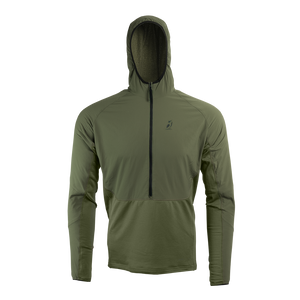
[00:00:00] Tayson: Everybody welcome back to the Live Ultralight Podcast powered by Outdoor Vitals. Today we're going to be doing one of your favorites, a product Deep dive on a new released jacket. This is a Zulu down jacket because you watching this in video form we'll be able to see it here in front of us on the table as well as this yellow colored one that I'm wearing. And so in this episode we'll be talking about really the the goal of this product we set out to design it and then how that development proceeded and what we ended up with at the end of that, we'll cover things like sizing and color towards the end but really just
[00:00:35] Tayson: super excited to take you through another Design Story, another design process on a new piece from Outdoor Vitals. Brigham. Always exciting to get to the end here and why don't you walk us through? Initial design intent. So what was the goal setting out to design this jacket and maybe I'll touch on just the name a little bit of why we're calling it. The Zulu down jacket.
[00:01:05] Brigham: Well. it's also it's helpful to contextualize it, or give the context of our own jackets that we Already have in relation to the new Zulu jacket. So I mean, we've talked about it before. You can make a jacket as warm as you want, really? It's just a matter of how much down you put in and how the as long as it can fully Loft up. So right now, our warmest jacket is the Vantage jacket. We've had the Nova Pro for a number of years. We've had Nova UL. We've got other synthetic jackets that are not as warm as any of them. But they're they have slightly different kind of benefits and drawbacks but
[00:01:49] Brigham: When it came to the Zulu jacket, we really almost. I wouldn't want to say wanted to redesign or but we want to read like establish where our Baseline. but the puffy jacket that I think most Backpackers or most outdoor enthusiasts are used to kind of having in their kit in terms of like a warmth level and a weight category because as the warmth goes up, the weight goes up because you're putting more insulated material in there but also for us We can like I said we can make a down jacket weigh Pretty much anything we wanted it to but as you go lighter and lighter, obviously the jacket gets less and less warm. And for
[00:02:31] Brigham: I guess like kind of our philosophy is like There's a there's a cutoff point where we don't want to go less warm. So we want to have like a benchmark kind of Baseline of what a puffy that we're going to take on a backpacking trip. And that's gonna
[00:02:46] Tayson: accommodate like the vast majority of backpacking trips. So a durability factor to the weight. Yeah, as you get to some of these really really light down jackets, they’re using specialty outer fabrics that are just You know, 7D or sometimes 10D fabric. Yeah,
[00:03:06] Brigham: the variables that make a jacket weigh. What it weighs are, how much insulation is in it. The main barriers the most The biggest influence on the weight of an insulated puffy is insulation in it, how much of it and then the Fabrics used and how much those Fabrics weigh so you could. Make a really, really, really, really Burly, durable puffy jacket and hardly put any insulation in it and it would be, you know, lighter than if you put more insulation in, it just wouldn't be as warm. So yeah, the lighter you go in insulation. You don't have to go lighter and fabric, but There's jackets like we could do it but we don't want to,
[00:03:47] Brigham: we could make a jacket, the weighs very little and that would be because it has very, very light fabrics, and very little amount of down in it. So but for a jacket that you're going to take into the backcountry for like most of the backpacking. Conditions that most people do. So this is all just kind of the excluding Northern Hemisphere winter. Like this is kind of our Baseline. Jacket. Most used most of the Year. Yep. Yeah, I would agree. So I mean when you're going into that country is actually, I mean, really regardless of where you're at, there's always needs for jackets at different times, but out here in the Mountain West, any time of
[00:04:33] Brigham: year, you just check it. No summer, you stop at night, you need a jacket. And so it's like, okay, what, let's design the piece that fits the most there for puffy and and that's what this was designed to be. But I will just add like, this is a static insulation piece so that plays into the variables. Again, like I said you could make a lighter jacket, a less warm jacket, and have that be down. Or you can make a lighter less-warm jacket and have it be made of maybe synthetic materials, and have some other benefits that come with it. But in terms of a static, insulation puffy, that is down, this is this is
[00:05:10] Brigham: where we kind of establishing. This is like the Baseline warmth level. Yeah, I want
[00:05:16] Tayson: to take a little bit of time to talk about kind of our philosophy and synthetic versus down when we're talking about the insulation here in a minute. But um, yeah, so our goal really was setting out was to build, you know, in our mind. The lightest jacket in our lineup That is down insulated, you know, very warm static piece. So we're looking to make it lighter than the Vantage lighter than the Nova Pro and similar to our Nova UL is but are Nova UL will be phasing out just as a heads up there. So this is kind of taking that spot and then as far as usefulness, you know, three-season backpacking. This is
[00:05:55] Tayson: this is primarily going to be your static piece of insulation. We're going to be recommending a lot and so we made insulation changes when we fabric changes and we made feature changes on this jacket during development. Super, super happy with this jacket. I think the very first time that I took it out on trail is actually two summers back. I took it to the Wind River Range and ever since then it has been like my go-to piece. Personally. Yes, we were testing other jackets at the time. So sometimes I'm rotating through this before the most part, you know, this came on the last 200 miles with me and on a bunch of other trips. I mean
[00:06:34] Tayson: I was literally wearing mine two-day into the office. Although I did put this, you know, beautifully yellow, one on today. For this podcast, I grabbed it off the rack in there, but it's just a super usable piece for for so many things. So With that frame of context. Let's talk a little bit. Let's I mean let's let's quickly talk about just Zulu kind of oh the deeper meaning there.
Editor’s note: The lineup position, Nova UL phaseout, three-season recommendation, Wind Rivers use, roughly 200 trail miles, and personal warmth or usability comments describe February 2026 product plans and experience. They are historical claims, not current availability, specifications, or performance guarantees.
[00:07:00] Brigham: Yeah, so the Zulu is actually not. We're not talking about like a language the, you know that the language in somewhere in Africa. I think that that's not the Zulu. The Zulu is the phonetic Z in the phonetic alphabet, ah, so Zulu, the letter Z is is Basically used a lot in aviation commercial Aviation, and then also in like the 24-hour timeline and in kind of a military reference timeline as well. And the whole point of it is is that it's a standard. It's like, it's a baseline time. That is based on, maybe, the prime meridian, basically, It so somebody in a one-time Zone and another time zone, if they both want to meet
[00:07:53] Brigham: at the same time, they will just reference Zulu time, there's no time zone. So it's a, it's a base of reference for anywhere on the globe that is relevant. So that's why Aviation uses it because say we fly from Vegas to A supplier. That's in the time zone, that is 14 hours ahead of us so Zulu time. That's why they use that and they may be as special as because obviously, you're changing time zones and over a period of hours so that that we kind of thought it was a kind of a cool way to reference like This is a very applicable jacket, kind of that anywhere in the globe for the, for the three,
[00:08:36] Brigham: seasoned Backpacker. I was kind of that Baseline that anybody can relate to, it can apply to anybody's kit. So, when we talk about a puffy when we reference What a puffy should be it kind of means the same thing everywhere. So that's that's kind of like the, you know, some of the influence of the name Zulu. Yeah.
[00:08:57] Tayson: Okay, well let's let's dive into this product. And I guess let's go ahead and just start with with insulation. It's one of the biggest factors and a puffy is what are you putting in it to actually make it puff up? So this is a down jacket but we didn't have any yet, got into the details on this being our first-ever 900-fill-power down jacket, or down of any kind that were we've released as of yet. So this is a Muscovy duck down with 900 fill power so it's more lofty per ounce of of insulation and any other insulation that we've used you know historically in summer jackets within using 800 or even a
[00:09:42] Tayson: 850. But this pushes that even farther and it felt very fitting for us to use that in this piece. Because the goal of this was just to be the lightest and warmest jacket. You know that we could we could make for for the ultralight Backpacker or other uses right? So With. I mean, we didn't we've tested a lot of different insulations in jackets over time, but this is the first time we used 900 fill power. What were your kind of thoughts going into it in terms of testing? Similar prototypes, what do you notice? You know, someone who's putting your hands constantly on 800 and 850 fill power jackets, jumping to that 900.
[00:10:24] Brigham: Yeah, well, I mean the Or you get more warmth for the same amount of weight. So say, we put 800 fill in here. the jacket just won’t be as warm. And it would weigh the same, essentially, right? So, so if we're targeting kind of a weight category because I'll just throw out like numbers to kind of bracket things in like our Vantage Jacket was about 16 oz. The Nova Pro weighs about upper 14. So like 14.7 14.8 Oz and then we have a synthetic Vario Jacket. That's significantly less warm. It's about 10 ounces. So when, if that's the kind of discussion, if you're going to step up in warmth and want more warmth
[00:11:14] Brigham: for weight than that, 10 oz, synthetic jacket, that puts us in this like 11 or 12 oz category that we kind of wanted to Target. So, If we want to be say 11 oz, we want the most warmth that we can get for those 11 oz. So instead of going, you know, with something like an eight or an 850, fill we really there's there's almost kind of no reason not to just go up to the 900 fill so that we get kind of that. maximum warmth. Now, there are higher fill powers but there's diminishing returns and and the expenses just not worth it to the customer in our mind. So yeah, using 900, Phil it's
[00:11:55] Brigham: just kind of its a bit of a luxury feeling like hey we can put, you know, more down in here to make sure it's as warm as we want it to be for that, 11 oz jacket.
[00:12:08] Tayson: and I mean, like, going from From some of our past pieces, the specifically use like down insulation. Let's test out at about an 800 fill power. And so to jump from 800 to 900 in terms of like percentage, I want to say is somewhere around like 11 12 13% in terms of The additional for the same weight and so something that I noticed, you know, jumping to these jackets, this special someone who's just using our jackets all the time and has like very very used to those jackets. As you do, notice that it just builds a little bit softer. he do notice that it can compress just a little bit smaller and then with some
[00:12:49] Tayson: of the feature changes we've made like that also kind of aids both of those but For the weight that and Brigham is now thrown the weight out there of this jacket. Weighing about 11 ounces, it's just incredibly warm and but, but I don't know. Just like using the 900 fill power. I would, I would say like, There's something to it that I do enjoy about it just being like it just feels really soft and really like malleable and and comfortable and in that sense. Yeah, for sure. Um, yeah, anything else you want to add on the the down side of things? um,
Editor’s note: The 900-fill-power Muscovy duck down, roughly 11-ounce target, 16-ounce Vantage, upper-14-ounce Nova Pro, 10-ounce synthetic comparison, 11–13% estimate, warmth, softness, and packability comments are February 2026 claims and examples. Verify current product specifications and fit before purchase.
[00:13:27] Brigham: I mean, we could it's fun to talk about the, the really technical details and just what makes Muscovy down interesting, Yeah, all try to kind of just like gloss over it, but let's discuss down. The Muscovy duck, as an animal. Like it's a very large. Duck. It's about the same size as a Goose and the, and the, and the the down plumes are massive for like a duck, but they're just about the same size as A goose down plume. They're they're, they're closer in size to goose down. In fact, if you put them side by side, the kind of the variance between goose down and Muscovy down. There's a lot of overlap to
[00:14:13] Brigham: where like a Muscovy down plume is going to be as big as a significant number of goose down plumes. But what's really interesting about a Muscovy down plume, is they have the side shoots of fiber that actually build more of a three-dimensional structure to the down plume and that helps That helps that plume achieve a 900 fill power out of a duck. But it also, you know it this is like kind of I would say like necessarily microscopic but almost it's on a very microscopic scale but but all those side fibers that kind of shoot off to the side. they do in, you know, as a cumulative effect, like they do, kind of, A little
[00:15:00] Brigham: bit more resilience of the plume, especially, which is really nice with a high fill power plume because a high fill power a high, fill power plume. Yeah. It's the fabric weighs too much or there's not enough room for it to expand it. It can collapse really easy because it is so big and lofty. So like the it's a cool thing about Muscovy duck down is that there's things about it that we like about that resilience, the ability to kind of bounce back a little bit faster. Maybe. But those are, those are properties that We wanted to include that that we we thought. Yeah. Let's bring that value to, to this jacket. So it was going
[00:15:42] Brigham: Muscovy duck down is, it's, it's cool stuff with a side shoots or
[00:15:46] Tayson: an, I guess that's, that's not guaranteed us, but we also looked at some of the warmth values, which is measured in CLO and they have exceptionally High, you know, warmth values for what they are, which is really interesting to see as well. And, you know, I we don't know, I don't know if you know the kind of that structure of the tiny hairs, you know, kind of coming off the ends of the down as part of that or not or if it's just purely plume size but they are big plumes which allows it to get high Loft at all. So, Somewhere in there. Creates a lot of a lot of warmth. So tests really
[00:16:25] Tayson: high in these CLO tests.
[00:16:26] Brigham: Yeah. And it because of those little side shoot fibers. It helps actually the plumes stick together. You can see this if you can get them out Loosely in open. Are you know, if you like Pick up one plume and drag it across another, it's going to hook onto that and like, pick it up. It does that a noticeably a noticeable amount, more than just normal duck or goose down. Just because it's, it's almost like there's like this velcro effect. So helps kind of keep things together a little bit and those are all values that we want to to bring to the jacket, for sure.
Editor’s note: The plume size, side-fiber structure, resilience, clustering, fill power, and CLO warmth discussion reflects February 2026 supplier and design interpretation. It is historical product context, not an independent laboratory guarantee.
[00:17:02] Tayson: Yeah, I'll sit from from shifting around and I think that's, that really describes Muscovy down. And down really quickly. Let's talk a little bit about synthetic versus down. Obviously here at OV. We make a lot of synthetic jackets. We make the vario. We make the Ventus We also make down jackets and what you'll see with our lineup though right now is that a lot of our warmer jackets are down jackets. So this being the lightest of those, the Zulu jacket and we have the Nova Pro and then we have the Vantage, jacket and those are all what we would consider static pieces, you're not trying to move with those or hike in those really. They're just
[00:17:45] Tayson: purely for warmth. but down is still just the best thing that we've ever seen and found across the globe for the highest warmth for weight of anything. Now, the downside of down, no pun intended there is that the way that you capture and hold down in a fabric is you have to
[00:18:06] Brigham: coat Fabrics or you have to weave Fabrics in a certain way. That weave is so tight.
[00:18:12] Tayson: Air can’t pass through it, so the down also can’t leak out of the jacket. And so with that comes some drawbacks of breathability and things like that. The other, you know, another Factor here is just that the less down that you put into a jacket. The more you have to baffle or you know, the jacket it mean, trap the down into the sections of the jacket. So it doesn't just shift all over the jacket. So if you as you remove more and more down out of the jacket, you essentially have to put more sewing lines or weaving lines into the jacket to hold the insulation in place. So our philosophy has been that once you
[00:18:53] Tayson: get under a certain amount of down and a jacket. It makes a lot of sense to go to a continuous fiber synthetic because we can take all of the stitching out of it and have a continuous sheet of insulation as well as offer. More breathable fabric
[00:19:08] Brigham: before to You start to introduce. New benefits that that come via breathability. So you can start maybe using slightly more breathable Fabrics. You still can't you still want to contain the synthetic insulation too? But the but you have more room more ability like you can use a more breathable Fabric and you can also because it's not focused 100% on static warmth and you you want to be able to flex a little bit into some activity. Now, you know, now you can add venting and breathability features into that piece because now you're at a weight category that it just doesn't even make sense to use down because With down. It's it's it's strength. Is static insulation.
[00:19:55] Brigham: Where we're breathability is, is is not necess. or needed, because To be downproof, you lose that breathability? so,
[00:20:06] Tayson: So what you'll find in our lineup because of that, is that our warmer pieces are down. And as you get down below, the Zulu, jacket, you're gonna find some synthetic pieces that are going to offer, more breathability, more flexibility, and how you're using those pieces. But it's also of our opinion that when you get too low in warmth category, the amount of fill in down. The amount of stitching or baffles you have to put into the jacket essentially. Doesn't offer much if any warmth over a synthetic piece. So hypothetically this is just an example. I'm not trying to bad mouth anything here but like if you're taking something like a Ghost Whisperer jacket,
[00:20:45] Tayson: that is as very little down and as and has lots and lots of sewing and stitch holes in it. I would still put like our Vario Jacket in that category but the Vario Jacket at to me, has some big benefits in terms of breathability, moisture, management venting some, things like that but they're going to be similar in warmth at least in categories. So I'm saying one is definitively warmer or not, but that's kind of our philosophy. As you get under certain point. And for performance purposes, we prefer synthetic under certain warmth category. We prefer synthetic for all these Myriad of benefits that you can get from the synthetic side of things. Like I
[00:21:25] Tayson: said, like breathability. The fabric, you can use lack of stitching and and so on so forth. So With this piece right now this is our lightest down piece but I would just I mean it is exceptionally warm. And so let's get into some of the details of what makes this piece. So warm, let's shift over now to the fabric itself and the stitching. What are we using in this? And how do or how our baffles
Editor’s note: The down-versus-synthetic warmth, breathability, moisture-management, stitching, and Ghost Whisperer/Vario comparison reflects February 2026 design opinion. Actual performance depends on the complete garment, conditions, activity, care, and fit.
[00:21:52] Brigham: constructed? so, I mean, it’s Zero Stitch fabric now, Zero Stitch fabric is, is we use that name for other products? Other jackets that we already make That doesn't mean that we're using the same exact fabric amongst those jackets because this is a technology. It's a weaving technology that allows you to create down Chambers in a double layer fabric without stitching them together. Essentially you weave The Weave the chambers into the fabric itself so you don't need to punch tens of thousands of holes in your insulated jacket. So 15D nylon Zero Stitch fabric touch on this real quick. As it's the same technology that we use like in the Nova Pro and the Vantage, however,
[00:22:40] Brigham: with the Vantage and the Nova there, the and the, the Zulu Here you'll notice it has a much like a very matte appearance. Like, it doesn't have kind of that shiny appearance. The shiny appearance comes from the process of making that fabric downproof. They're putting that through. through heat and pressure through a calendaring process, that that essentially kind of seals things off, so that down can't get through it. You can't do that with this this fabric to the same effect meaning. Well, what I mean is you can't create the matte appearance and have and use that calendaring process for. So this fabric has to be woven, like exceptionally tightly because that's the mechanism for making
[00:23:31] Brigham: it down. Proof is just by the the number of Yarns woven tightly together. So, That's why we're able to get this in matte appearance now. There are Other ways by introducing other fiber types like spandex. But again, we want more warmth for weight. So, so there's not any spandex in this? I'm so, again, we want, we just want Of 15D fabric that isn't going to weigh extra because the the spandex fibers are heavier. But so that's how it's made downproof. But the the benefit of using, you know, when we're again going back to this 11 oz category, we want it to weigh 11 oz, we want to be as warm as we can for those 11
[00:24:18] Brigham: oz. So we we chose 900, fill down. Had we? Chosen a traditional down chamber that's stitched through. This jacket would not be as warm. Tens of thousands of holes in the jacket are all space and room for heat to pass through and emit outside of the jacket rather than be retained within the jacket. That's just physics of, you know, radiative heat loss. However, the huge Advantage comes in terms of when the air starts to move when you start to experience wind. The lack of holes throughout the jacket provides a substantial and noticeable boost in heat retention. So It absolutely makes sense to use a zero Stitch fabric, so we're being really stingy with how much
[00:25:10] Brigham: heat we're willing to lose. So we're we're eliminating Stitch holes, we're maximizing wind resistance, and putting a really high fill, powered down in it. So the 15D Zero Stitch now, if you're familiar with the Vantage jacket, it kind of has these offset. We call it, we could call them like pinch points, but the lines that create the down Chambers. That's where the two lines of fabric that are woven, that's when they intersect each other. So now the bottom layer of fabric is on top, and the top layer fabric is now on bottom because they've passed through each other. And at that passing point, that create the spaces between those passing points, create the space that is
[00:25:54] Brigham: filled with down. So, on the Vantage jacket, that's a really warm High number, high amount of fill weight in it. So the space is a really big. So we can put down in there. That'll fill up the spaces and and Loft up. So with this jacket, those spaces are more condensed, so you'll see it's their still the offset orientation but there are all closer together because there's less down and this jacket. So they're you, you make those down Chambers smaller so that it contains the down and and prevents it from shifting around.
[00:26:29] Tayson: Yeah, I want to take just a second two to talk about that weaving. I still see a lot of people online misunderstand. How our baffles are constructed. People will think that their heat pressed, so that's like one method of doing it without putting. Stitch holes through as though. Like, you know, essentially take two metal dies, and, and push them together in each side of the fabric and melt the fabric together and create a baffle or a line that process. What that actually does is it it takes a wide or a bigger chunk of area where there can be no insulation because it might be something like half a centimeter or so of space
[00:27:10] Tayson: that is now pressed together. Durability wise. I can't really speak to that but it just the big thing. There is you have these bigger flat spots with no insulation in them. That's not how ours is done. There's like there's one another method that I'm gonna. Well, I mean, RF welding, so it's
[00:27:28] Brigham: they're using frequency to to weld the the Fabrics together. It's the same thing though. Meaning it for, for it to have a durable. hold on its own. It has to be a certain width. You, you could technically RF weld, you know, attempt to do something. That is the tenth-of-a-millimeter width of you know, our kind of baffle points but it would just immediately Come Undone. You don't, you don't get a strong enough Bond. Same thing would go for like any I don't know that there's many that do this, but like even adhesive bonding process but the major ones are the welding, you know? So those they just require so much width that
[00:28:15] Brigham: that now that's just a dead space that You can't, it can't. Be occupied with anything because it's two pieces welded together.
[00:28:24] Tayson: Yeah, and so I mean just one way to look at this would be with ours though because it's literally just the yarns themselves. They're coming in and weaving within each other. To create the baffles themselves. Um, they are a fraction of the amount of space of well, you'd say is dead space or no insulation space. And like we just said, like, if one of the one of the other ones they might be, I don't know, 10 millimeters or something like that. Like, on ours, you'd already like, it might be like one millimeter, right? So it's like, that's less. Yeah, it's you're talking about like 10 times less dead flat space in your jacket by the
[00:29:05] Tayson: construction method that we do plus durability wise. Like, you can't just pull these apart with pressure, you know, you're gonna tear the jacket, essentially, so, durability Wise. It's exceptional. It's a really complex process to do this. We use a Fabric Mill in Japan that does this. Now, for, for these that are just Tolerances are insanely high and that's just a very, very technical fabric. It's not, it's not off the shelf fabric, you'll see some out there that you similar processes but just watch and look for yourself. You'll notice that some of them Those lines those baffles or significantly wider than what you're going to see on our product and that makes a difference in performance.
[00:29:50] Tayson: So I just wanted to kind of clear that up because I feel like that's that's a it's a really pronounced amount of work we’re doing here and it makes a real difference in the field in terms of additional warmth. So So the 15D as another quick benefits on just the zero Stitch technology as you don't have. You can't, you know, drag your elbow on something and accidentally grab a stitch and pop it from there from your stitching baffles. So we feel like there's additional durability in that from what we’ve seen on other jackets, where you're really not going to do that on this. Pretty mentioned, the wind. That's like the most
[00:30:27] Tayson: noticeable, warm thing that you'll see. Is this when the wind’s blowing, this is a continuous sheet of fabric. And so wind cannot come through those, those pinholes from the needles, And then this is not the intended use but it's really good with moisture and blocking out moisture, you know? Just because it doesn't get in through. It doesn't hang up on the stitching and get introduced. So even if you were to be taking. So let's just taking a drink or something like that and I accidentally spilled on your front it's just gonna go straight off the jacket. It doesn't have anything to like, grab onto and soak into the jacket. And that's a good example of
[00:31:03] Tayson: like why the insulation in this jacket can stay cleaner and more lofted and perform longer between washes. So lots of side benefits of the novelty of the stitchless fabric that we really, really love. And, you know, now we've got three different down pieces that are all utilizing it and it's for good reason. We really like it. We've used it a ton of the fill continues to test and perform at exceptional level. So, Excited to be running that in this piece. Let's see. I mean those are the biggest things. Okay, let's talk about feature set. We did change some features on this compared to say our Nova UL or Nova Pro. The OGs, I guess and
[00:31:45] Tayson: that we've had for a handful of years so what did we change and why on the Zulu Jacket?
Editor’s note: The 15D Zero Stitch construction, downproofing, heat retention, wind resistance, baffle spacing, dead-space, durability, moisture-shedding, wash interval, and Japanese-mill comments are February 2026 product and comparative claims. They are not current specifications, waterproofing claims, or universal durability guarantees.
[00:31:51] Brigham: Well so the Zulu jacket has less features. That's the easiest way to say it's so we don't have pit zips in this and we even eliminated like Hood adjustment, the hood adjustment was really an easy one to eliminate because we've been able to dial in how the hood fits and actually you know just get really good heat retention on the head just by dialing in the shape and the fit of the hood with the, you know, a little bit of an elasticized face opening. and, so, that's A feature that's not on the Zulu Jacket and then the pit zips. Again. We really wanted. for if we're gonna make a jacket, the ways this much, It, it's
[00:32:42] Brigham: a static insulation piece so we don't we didn't want to worry about ventilation. We didn't want to even encourage anybody to hike in this thing. And and there's a little bit of that when you put pit zips in something. Now we do have pit zips on another jacket and that's okay. but for this, the purposes of this jacket being, our lightest down jacket in our lineup, We prioritized fill amount or the amount of down in the jacket over, you know, features that that really are much less of a priority in a static insulation piece. So if we're going to have an 11-ounce jacket, we can remove some weight in features so that we can add more
[00:33:29] Brigham: weight in down. I think that's probably the the most Clear way to kind of explain. Why? Why we did away with those features. Just because we want to maximize warmth.
[00:33:43] Tayson: So you took the pit zips off. Hood adjustments changed just a little bit. We saw that the adjustments honestly trap in way more heat than people give them credit for and yeah overall those are part of why in my personal experience, how I would describe this is this piece is lighter than the Nova Pro jacket. But every bit is warm. Because where those pit zips are, even if you're not using the pit Zips, those pit zips, introduce a spot where there's I don't know. Over a centimeter maybe a little bit more than that of no insulation. It's essentially a spot for cold air to potentially get into the jacket. So when you're talking about just
[00:34:26] Tayson: like weight-to-warmth ratio on these like you're going to see a difference between the 900 fill power. And some of those features that changes between the Nova Pro and the Zulu. Again, there's some preferences though. People do love the Nova Pro. It is one of our best selling jackets. It's phenomenal. We will be keeping that in our lineup, but as far as just weight-to-warmth it's it's really really impressive. And it just simplifies this down. I don't know. I don't know how much you can say like this is it it's affected by like compression or stuff like that by taking some of the zippers off. But it has theirs. There's some effects
[00:35:03] Tayson: or the drawcords or things like that, that around the hood. But I do feel like this piece also just compresses really, really well. So yeah,
[00:35:11] Brigham: I mean, it's it kind of goes back to. We really want this to be like this kind of like our Benchmark. Our Baseline. Backpacking Puffy. So ultralight. Backpacking. We want to do away with as much as we can while maintaining certain levels of performance and performance that we wanted with this was warmth to weight. So Yeah. For, you know, in terms of There may be broad maybe broader. customer base with a more featured jacket, but yeah, for like the guys are really want to spend a lot of time in the mountains And bye, guys. I just mean people guys and gals. Well, spend time in the mountains like this is Like it is the Baseline
[00:36:00] Brigham: piece for us because we've done away with, you know, features that really aren't going to contribute to warmth just so that we can trim down the weight while maintaining as much warmth as possible.
Editor’s note: The omitted pit zips and hood adjustment, elasticized opening, static-use intent, 11-ounce target, Nova Pro warmth comparison, compression, and warmth-to-weight comments describe the February 2026 design. Do not treat a static down jacket as active insulation or as a substitute for weather protection.
[00:36:10] Tayson: Yeah. So I got sizing um this piece is going to initially launch in both women’s and tall sizing so excited about that.
[00:36:23] Brigham: But yeah, clarify: women’s and men’s, and tall sizing for men.
[00:36:29] Tayson: Yes yes. Right here. So what we're gonna have is, we're gonna have on the men's side, well, you know, range from a small to a 3XL and then we're gonna have two sizes in tall and we have released things more in tall. But realistically, these two sizes are by far the, the tall sizes that are ordered which is you can get it in a large tall or at XL tall makes sense to. Because as you get into like, 3XLs or 2XLs, the jacket does just get longer in general, the sleeve length gets longer in general but Um, so there's a couple options for you tall, guys out there. And then for
[00:37:07] Tayson: women, we'll release this from a small to a 2XL in a women's cut, as well. So be on the lookout. For, for those sizes, we do have a growing number of women ordering from us. So we'll continue to roll sizes out in that. I know in the Vantage jacket that we are working towards getting women's size in that piece, as well as soon as we can. So, Last thing I think is is kind of pricey. I don't know if there's anything else you want to touch on real quick colors.
[00:37:38] Brigham: I mean they get they can see them. So we've got three colors and they'll be for the men and the women. So we've got our most Neutral. tone or colorway is the Chimera it's a It's a really cool color, it's carryover. We adopted it from the Vantage, it's like a gray. There's kind of some green in there.
[00:38:02] Tayson: It's like whatever you put against, it'll look gray or just really dark or it'll pull out some green tones if you put it next to some other stuff, but not like all of Green like, right? Just a slight tint of like a dark green. Yep. Um, but for the most part, most people will see this and think it's like a gray but really cool. Really cool color. Yeah. And they're all popular
[00:38:23] Brigham: Vantage, yeah for sure. And they're all kind of like a chalky matte appearance. So then we've got Bluestone, which is all. So Let's kind of just like, just a chalky. Lighter blue. I think what we've got the I think the very like, the Vario blue is, is the closest blue that we have it other jackets, but the But this is less. Oh, would you say less bold or
[00:38:53] Tayson: less? There's less blue in. This this is more unsaturated. So I almost see this as a light blue-gray like, but still like like with had a grayish undertones were it just doesn't come off as like a vibrant. Deep saturated blue but more of a unsaturated blue and so it To me. I really like that because it's just less bold. If you were trying to, if you cared about matching this with anything but still gives off that that really cool blue color. The only other thing I can think of is it's not the same as this but like our our Skyline shorts are in a blue. A blue might be kind of similar. But yeah,
[00:39:32] Tayson: the Vario is probably the most similar, but I definitely prefer. Personally, I prefer this color. Yeah, check it out for sure.
[00:39:38] Brigham: No. And then Thai Curry. That's what you're wearing. Uh, also like,
[00:39:46] Tayson: It's yellow goldish. Yellow.
[00:39:50] Brigham: And again, kind of that less saturated. Kind of chalky. It also has that like, you know, when the leaves are turning in the fall and there's like that. blend between them going from yellow to orange. That's what I see when I look at this, I see. Like this fall leaves turning color of yellow between yellow and orange, which is like, I don't know. For me, it's like, one of my favorite colors to see in nature. It's just so unique. Yeah, so unique. And that's what I see in this jacket. It's not like a strong yellow. I wouldn't even call this a mustard yellow like a. It's, it's, um, it really is like a burnt. Autumn
[00:40:31] Brigham: Leaf. Yeah this so I'm really excited to release this. We did also released like a golden color in the Altura. It's done really well for us. And I wouldn't say they're these are not the same colors, but I like these newer yellow colors. So we've had people, you know, asking for them and it's exciting to release something just a little bit more pop. Yeah. I'm really excited to see what the what the verdict is. when people are ordering, these people pick this out of the lineup. So
[00:41:02] Tayson: yeah.
Editor’s note: The men’s, women’s, tall-size, future Vantage sizing, and Chimera, Bluestone, and Thai Curry color discussion describes the February 2026 launch plan. Verify current sizing, fit, colors, and availability on the product page.
[00:41:04] Tayson: um, correct pricing wise on this. I'm not gonna give you an exact price on this, you can go over to the website to see that exact price, but we are able to keep this at the same price or slightly under what the Nova Pro pricing is. Which I feel like is a huge win as we jumped over to 900-fill power. And we've worked with this fabric, which this fabric is, it's just a little bit more Technical and costly to produce. So really excited about that. So we're looking at somewhere right in that roughly $230–$240 range on this piece. So really excited about that for what this jacket is. Its I it's just
[00:41:45] Tayson: it's a tremendous value. I'm excited though, where we've worked on this piece, we're working on this, you know, side by side with the Vantage piece, the Vantage piece. Blew our expectations out of the water and terms of sales. I mean we flew through certain colors Within felt like days. Yeah, and I mean they're I haven't looked lately but I'm pretty sure we're we've got to be getting close to all of the stock being gone for the Vantage. It’s almost like we don't even carry it. It's like we it's a weird thing to have lost it, and then it's almost like a just doesn't exist anymore because So glad we have another jacket. Yeah, and I
[00:42:28] Tayson: mean, we're like for these technical pieces and we've touched on this before, Cycle of of production is long, like 10, 11 months. The fabric itself can take us up to six months sometimes to make and so keep that in mind. That's like what the Vantage piece. We blew through that inventory and it's just gonna take us, you know, clear till the fall essentially to get that back in stock. So If you love these jackets, what the way the summer launches have gone? The last few months? I wouldn't I wouldn't hesitate to just purchase on the earlier side of things because your specific, your favorite color may stock out or maybe even your size but really
[00:43:12] Tayson: excited to be releasing this piece. Just another phenomenal piece in our whole lineup or all of our apparel, you know, or layering setup.
Editor’s note: The roughly $230–$240 discussion, Nova Pro price comparison, production lead times, Vantage stockout, fall-restock expectation, and advice to order early were February 2026 price, inventory, launch, and offer statements. They are historical and not current price, availability, or restock commitments.
[00:43:20] Tayson: As I’ve already mentioned, It's a piece that I personally. I would just say that it did exactly what we set up to do in the beginning, when we outlined, what this piece was for. What I mean by that is it is the piece that I have used more than any other jacket over the last. Let's say two years. It's just the most warmth to weight. It's it's it's not overly warm. It's not insufficiently warm for a lot of occasions and a lot of opportunities to use this piece. Um, and it's just fast become. Like when I would say like my staple for majority of my backpacking trips. So I really think people are gonna
[00:44:04] Tayson: find a similar use for it as they take it out in the field. Whether it be in the winter or whether it be them, taking it out into into. The backpacking field. So really excited to have it out any final thoughts.
[00:44:21] Brigham: no, I think we've covered it pretty well and we can just wait at this point, see what happens.
Editor’s note: The two-year use, winter and three-season versatility, warmth-to-weight, field-performance, and “staple” comments are personal February 2026 experience, not temperature ratings or universal performance guarantees.
[00:44:29] Tayson: Yeah, we're always excited. It's always exciting for our side of the table too to get these released and just see the feedback and you know, see what what colors people are picking out of the lineup. So if you do have to pick one of these up, please leave us a review. Let us know what you think. We read those reviews, we love to. Um, so if people think, especially those of you guys that'll spend a little bit of time in the pieces and then come back and leave us a review. It's really valuable for design and it does help shape the future of OV. So please do that, super appreciate it. Thank you so much
[00:44:59] Tayson: for listening to the podcast. Being a customer of ours. We just finished a phenomenal 2025 year. Super excited to be in 2026, and just continue to make great products and have great customers. So, appreciate you guys is our customers, and we'll see you guys in a future video.
Editor’s note: The review request, customer-feedback workflow, future design comments, and 2026 company outlook are historical. The exact accepted Zulu Down Jacket product page is the sole episode resource; generic support and submission links are intentionally excluded.