[00:00:00] Tayson: Everybody, welcome back to the Live Ultralight Podcast, powered by Outdoor Vitals. Today, in this episode, we're going to be talking about a brand new tent that we're bringing to Market and releasing, and I'm super excited about it. These are some of our most listened to podcasts. You guys love to get into the the Deep dive and the details of product design, and really understanding products and we love talking about it. So, today on the podcast again, we've got Brigham here or lead product designer. And our only product designer. I don't know what lead the man, whatever. Which by the way, hopefully, that will change in the next year, which will be cool to bring some
[00:00:37] Tayson: more talent in, but I'm really excited to be releasing this piece. And yeah, are we doing today? Brigham?
[00:00:46] Brigham: doing well, that's It's a nice February spring day. Didn't have the wagon April staring there. 16, you know, 60 something degrees and we had snow a week ago, we had yeah, winter last week and then Came and
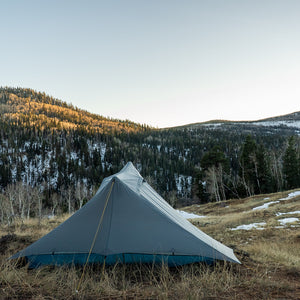
[00:01:04] Tayson: came and went. So it's yeah, I hope we get a little more free home. Hope the little bit more comes in before. It's While I was really loud. Scratch that. But I hope we get a little more snow before. It's all said and done. We'll see but you know, today, we're talking about a release though of a new tent called the Cirq and it's gonna be released in a one person right now and Man, it's an interesting tent for sure. I'm super excited about it. This is, we've kind of ramped into leading up to the launch here and looking back at everything that's gone into the design, using the tent for
[00:01:49] Brigham: A couple of years now really.
[00:01:52] Tayson: I'm really, really excited about this. 10 to get it in people's hands. So let's start at the beginning, what made us, you know, wanted to develop a new tent and what were the hopes that we had? Those would be able to solve by by developing this tent. Well.
[00:02:11] Brigham: Like like a lot of new products or kind of the impetus around developing any product or updating a product or anything. It's just about you know, trying to Find things that. we want to improve or address or take a different angle on to provide a better better experienced, you know, whatever the product is, and I put the tent specifically you know, some of the things that we we wanted to to to offer to really you know kind of Step Up our game or offer as a better new option for the users is a lot of it is centered around, just like the overall tent experience of You know, Comfort ease of use. Simplicity like how
[00:02:59] Brigham: easy it is to set up, how easy it is to get in and out. And yeah, kind of just that whole livability and the usability of a tent. And then, on the Comfort side, you know, there's there's some other things just, you know, how much room is inside the tent, how the what's the Environmental Quality inside the 10? Meaning like what's the air conditioning like? and so, Because you spend, you know, while you do spend most of your time in a tents sleeping. Like that's sleep is that's, that's important. So yeah, a lot of what we focused on was just kind of the livability. It just improving the, the user experience with the tent. Well,
[00:03:49] Tayson: like I think at its core ride, a tent, is there to to Aid in the Sleep experience. But it's also your last line of defense per se out in the wilderness. Sometimes we've had a few experiences where it's like, Yeah, if I didn't have this tearing now like this could get ugly fast, this could get, you know, like you're basically trying to escape the Wilderness at that point versus thrive in it. It's it's it is your shelter, right? So, There's there's some aspects of that and we'll get into some of those, you know, storm, worthiness aspects, later on, in this podcast. But maybe let's also just start with the fact that this is a trekking
[00:04:28] Tayson: pole style tent and we've had trekking pole style tents in the past and I don't know about you, like the best way to say this. But once you've gone to a trekking-pole-style tent, And even able to condense, your shelter system to that small in your pack and you just have everything. Be that like, wait level dropped to that level of weight dropped out level of packability. It's like that's where like the new standard kind of gets set. And and so for us, you know we really enjoy trekking-pole-style shelters, but there can be Some downsides. And so maybe, let's just talk about some of the, the cons that we see in general,
[00:05:09] Tayson: with trekking-pole tents and what we, you know, to, like, lay out, like, what are we want, why did we want to produce what we did? What were those points that we're trying to improve upon, you know, you know, I kind of already touched on one, which is storm worthiness Not all tents are created equally whether they're trekking, pull tents or pulled tents or any tent storm worthiness is a factor. And one of the things though is not always, just can this tent, like survive, a storm. But are you thriving in it? Meaning is the tenth like, collapsing, onto your face collapsing, onto your feet is everything getting pushed in. You know, to
[00:05:48] Tayson: a point where there's no livable space anymore and then obviously is the tenth can a survive. The storm and storm for us can mean I know I personally had some of these out and 50 mile an hour winds you know, in way deep into the Wilderness where that's that's what was getting thrown at me for that day. And Attended to survive some pretty extreme situations. So that's one aspect, I think of trekking Pole. Sorry just tents in general, that we wanted to make sure was confronted. A lot of these trekking pole style tents. Also, you're dealing with single walled shelters. So that's just, I'll just say 10 in general, they're single wall. Type shelters, the
[00:06:31] Tayson: pros of that are that they're extremely like, but condensation can be an issue and trying to just make sure that you're not getting any moisture onto your gear onto the into the stuff in the contents inside. So, that's that's an area we had outlined on the design docket any other major points you want to point out that like we started off this project saying, like, well,
Editor’s note: The shelter, storm-worthiness, 50 mph wind, survival, precipitation, and condensation discussion reflects March 2026 design goals and personal field experience. Site selection, pitch, stakes, soil, exposure, and weather can materially change shelter performance.
[00:06:56] Brigham: yeah, I mean I would say Everything we wanted to address. Those are and it If I try to break it down. One is. They're based on common. Either frustrations among people that use trekking pole tents, that spend many days a year out on the trail or in back country or whatever. There's some common. I don't know if you call them pain points, common pain points are Condensation, that's one. And and the reality of condensation is, you cannot out design condensation. There's no tent on the market. There's, there's no nothing, there's nothing that can just wipe away the conditions that create condensation, but trying to address it and do what we can to reduce it and
[00:07:51] Brigham: mitigate it. And just make the experience with the tent, if there is the, you know, environmental conditions that can produce condensation. Then we want it to handle that, as best as we can. So condensation is one. Another one is kind of the confinement within a tenth or the Restriction of space. and when you combine that with condensation, that creates the the other big pain point when a tent is trying so hard to save weight and space that you can barely move around within the tent or take your shirt off and your brushing up against condensation or a little bit of wind blows. And now you have wet fabric hitting the top of your head or the
[00:08:38] Brigham: top of your sleeping bag, or the end of your sleeping bag and your feet. and so, there's Those are some. Significant pain points just with the livability of a tent. So when you either condensation and or just the Restriction of space being a little too tightly dimensioned inside a tent is one and then, Other pain points with trekking, pole, tents can be what I've I've kind of been referring to as like a fiddle factor. I didn't come up with that term buddy of ours that you know. We do a lot of backpacking with he tests a lot of our products Devin. He texted me that term one time when he was testing prototypes this tent
[00:09:26] Brigham: and that was the term is the term. But what if what it means is something that we were trying to address and that fiddle factor is with trekking pole tents they can be a pain point where the design of attempt to so complex or it's unfamiliar so that you set it up and you're not sure what goes where what lines to stake out first and then when you do it's takes like a bunch of attempts of retention this and resting this line to to fiddle around with getting the the pitch, right? And so Really wanted to like reduce that as much as possible. So we wanted to kind of eliminate, the fiddle factor we want.
[00:10:06] Brigham: We want to address the pain point of just set up having an easy to set up tent with you know, that you were able to acquire a good pitch really quickly with You know, as few Stakes as possible. And so I think those are like some of the major The major pain points that we wanted to address. In terms of you know just broad use General trekking, pole use those are common ailments that the people experience.
[00:10:38] Tayson: Yeah. Okay, so that's kind of the backdrop here. That we want to things, we want to address things, we want to solve and improve upon. We started this project off. A long time ago. Fact, I think I was just looking at some videos where I had it out on trail. I mean, essentially two years back now
[00:11:02] Brigham: so something close to at least. Yeah. At least two years for sure.
[00:11:06] Tayson: Uh-huh. So lock me through kind of, I mean, we went to a lot of prototypes, we took some things too far to, you know, went this direction, move things back. But for you, if you can think back to some like the very first prototypes, Um you know what? What are we I guess learn along this process and what can we talk about that that helps explain some of the things that we really like dialed in? I guess as we as we work through this
[00:11:36] Brigham: Yeah. yeah, the there's the very first prototype and the final product that they're quite similar but there's there's a lot of tiny little Nuance changes here and there that make them, you know, significantly different in terms in terms of like The amount of attention to detail in certain areas that had to go through multiple iterations and of where we are. But but that being said, like, we we got Made a lot of progress, just with prototype number one and and kind of feel like there's a lot of things that we have in the right direction. One of those was the ease of pitch. So, in in, Designing the tent. kind of, Didn't just look at.
[00:12:31] Brigham: Kind of stake out points, guylines and catenary cuts on on the edges of the tent. All those things are must be done in order to have like kind of a know fiddle factor or set up but um, went through a lot of kind of Or gave a lot of attention to actually. Creating specific geometry for every single sewing line. So every single if you have two pattern pieces or two panel pieces that come together, Playing with and and like iterating, very specific curvature of the edges of those two seams that are sewn together and not necessarily. Having the geometry of one match the other. so, that was a, that took a lot of a lot
[00:13:26] Brigham: of work and kind of trial and error. To get it to where we want. So essentially Yeah. Putting very specific attention to Everywhere, any kind of sewing occurs and seam lines are brought together and creating very specific geometry. For each. One of those kind of panel lines. And when what that does is when it allows the tent to set up and kind of create even tension everywhere so that Once you've staked it out where it's supposed to be staked out which is basically only six points everything's pulling evenly and and really, you can kind of get to like 90% of where you want to be with just those first six Stakes, right? Where you stake
[00:14:16] Brigham: them into the ground and then putting a little tension onto each line and that was kind of like the first The first major obstacle is, is getting to where we had. Most of that accomplished as soon as possible.
[00:14:31] Tayson: And let me just like take that a step lower for people that might not understand like what a catenary cut is or things like that. But a catenary cut is if you're to picture the bottom of a tent like just fabric, let's say and you're to drop point from one state to the other like and you have a perfectly straight line. Or just be a straight cut, right? A catenary cut means it's going to curve up a little bit in the middle. So you essentially have a little bit of a raise in the middle and that catenary cut by doing that at To pull things taut and tension as things stretch a little bit and
[00:15:04] Tayson: and settle. And so if I'm understanding you correctly Brigham not only did we have, you know, the catenary cuts on like the visible areas but in a lot of these other areas you are working very closely to make sure that all of these areas where they're sewn together. Also use some of that kind of similar geometry geometry to make it just as the lowest fiddle factor and easiest quickest pitch.
[00:15:27] Brigham: Yeah, so if you were to dissect this tent and lay out the pieces, You, there would be very few straight lines that you would find, basically the edges of every piece. Of fabric that becomes sewn together to create the shape of the 10th there. They're curved and they have a very specific amount of curvature on each one of those things and not any none of them are the same amount of curvatures. So yeah it really just helps things kind of pull. Pull tight. And yeah, just get a nice structure pretty quickly, okay?
[00:16:03] Tayson: So that's one thing we dressed in these going through these products and dialing in. And I know that was As a big time like a tile like like as far as the design time you put into this and hours and hours like dialing that in his death Factor. Yeah. Yeah, what else? What else were some?
Editor’s note: The roughly two-year development period, six-stake pitch, catenary cuts, seam geometry, ease-of-pitch, and “90%” comments are March 2026 design and testing claims, not guarantees for every site or user.
[00:16:21] Brigham: yeah, one of the We? You know, some of the things that evolved throughout each prototype, um, you know, was making the bathtub for Toler. So we, we made the bathtub floor. I think it started out at about six inches tall and it's eight inches tall, so increasing the height of the bathtub floor. Things like how much the the fly kind of extends beyond the inner tent body, which is like the bathtub floor. You can kind of think of that as the footprint of the inner tent body. yeah, and then And that essentially kind of where to there would be the outside fly extending over How It Ends and all so how the bathtub floor
[00:17:12] Brigham: ends. and I know he's like, one of the goals and the things that we dialed in and worked on was getting more head and foot room and kind of getting a more vertical. Vertical n per se, it's not coming right down and touching your toes or touch you like that. Where it's it's ending with with a good amount of height on the ends. Yeah, yeah. And as I kind of think the server is probably, I'm probably kind of if I think in things of think of things in terms of, like, the category of what we're trying to address like with pitching, it was a lot of the kind of the, the pattern shaping and the,
[00:17:47] Brigham: and how it's sewn together. Some curvature, things like that. I'll probably probably best to include right now with the pitching. Everything we did with the tent geometry to get a good pitch. The other main factor to include their is is the fabric. So so adding adding a fabric that Would. Essentially maintain high levels of strength and durability and terms of like tearing strength and wind performance. But one that would Stretch or sag less than 100% nylon. There's there's many fabrics and I can probably go into it now. So the very, very first prototype we made was using Ultra TNT fabric that is the fabric that you know, absorbs zero water and has zero stretch whatsoever.
[00:18:39] Brigham: And in those two performance metrics it, it does those performs those functions very well. What it doesn't perform well is in terms of tear resistance. Puncture resistance and things like that, that doesn't mean to say that we couldn't have. Gone forward with that, and designed around that. But the, it was not worth the effort in terms of what the, you know, pros and cons. it's barely barely lighter than like even the standard nylon fabric of, you know, say like a 15D kind of weight category but Anyway, what we what? We tried that in terms of pitching and water, you know, reducing sag and stretch. And we we actually made a multiple prototypes to using
[00:19:31] Brigham: that. he can go into that later in terms of in terms of fabric but but Ultra TNT, it had some some interesting benefits but the the disadvantages outweigh the advantages ultimately in terms of the tent, it's also much more expensive but it really doesn't give any advantage other than not stretching. So, What we did is. Kind of wanted to sell because we really liked the the durability aspect. The tear resistance aspect of of using a nylon Fabric and and not having to go to a heavier fabric just to you know, a heavier Fabric and say like 100% polyester just to maintain. The durability and tear resistance levels of a lighter weight. Nylon fabric. So we
[00:20:26] Brigham: we talked to fabric mills and and got a fabric to to make a fabric for us. That had a ripstop element that used, you know, a much thicker polyester yarn in the ripstop as part of the ripstop element of the fabric while maintaining a 15D nylon base fabric. So essentially the Ripstop Yarns, they're a 50D yarn versus a 15D. And so there it's a much thicker yarn and then we did a triple by double ripstop. So it's One Direction that's a triple ripstop in the other direction. It's a double ripstop. and then that, what that does is because those polyester Yarns, they won't absorb any water, they won't stretch And we can
[00:21:17] Brigham: maintain a lot of the Stitch line durability that we that we see in a 15D nylon Fabric. And then, if any moisture prolonged rain condensation, you know, that that fabric is going to stretch way less than a nylon fabric. Because essentially kind of like that that grid of polyester Yarns is just holding everything in place and preventing it from from really stretching. And so we we developed that fabric with the Fabric Mill and then That's kind of what falls under like the, the pitching category of what we want to improve. So by going with this fabric that sags way less absorbs, much less water and terms of Water that will affect fabric stretch while maintaining,
[00:22:06] Brigham: you know, essentially equal durability to like a 15D, 100% nylon fabric. Okay, so
Editor’s note: The 8-inch bathtub, fly coverage, Ultra TNT, 15D nylon, 50D polyester ripstop yarns, triple-by-double grid, water absorption, sag, strength, and durability comparisons are historical March 2026 product claims. Verify current construction and specifications.
[00:22:14] Tayson: I'm just gonna ask this question. I mean, you've had this discussion a lot but I think it's valuable to everyone else. Why not just use 100% polyester. Um, because that's there's different people moving that direction. Yeah. And it's becoming. So why was it not just say why are we making a custom fabric when I just use 100% polyester? Fabric
[00:22:33] Brigham: sure. Um because I Molecularly. Mechanically functionally. A polyester molecule is not as strong as a nylon molecule. So the structure doesn't like the structure is what it is and what makes you know the arrangement of those molecules one stronger than the other the bond stronger than the other that that there's no manipulating that. and so, however, by including some polyester in the Yarns that are going to kind of essentially be pulled on in terms of if it does absorb water, what might stretch You can introduce some polyester Yarns especially. At a thickness. That's three times. The thickness of the nylon Yarns that are woven So kind of holds the shape together while maintaining virtually the
[00:23:34] Brigham: same amount of tear resistance that would come from an equivalently weighted nylon fabric. So that's, that's why it's a, it's a durability, it's a tear resistance. It's a, you know, a stitch hole isolated location, tear resistance, issue, that we prefer nylon. And, you know, as just higher durability levels there. um, but there's definitely advantages to be had by using polyester, to mitigate Water absorption and stretch. So um one last question on Fabrics, just because
[00:24:10] Tayson: I want everyone to understand like the extent that we were looking at ever turning over every rock, you know? Did we consider a Dyneema? yeah, we we made prototypes with Dyneema
[00:24:22] Brigham: And that's not like, it's not a closed door. We're not, we're not. It does this know. Good. Closed doors. So we did prototype tents in dyneema. Again, Dyneema has amazing qualities. And very few, downsides. But the major downside is just that it is very expensive. It's easy to look at what you might see on a forum or YouTube. That's really a drop in the bucket compared to the reality of what people are actually using out there and are just Willing to pay for. So, it may seem like You're not worth your salt as a Backpacker. If you don't use Dyneema fabric because your base weight is 10.2 pounds and someone else's 8.7. Because you chose
[00:25:20] Brigham: to not spend dollars on. certain materials, but it is it's very significant and Like I said, we're not closing the door on dyneema. But to introduce a tenth and a tent that does with this one, does at the complexity level in terms of the design. At this point, it was not worth the, the significant, you know, disadvantage that, that is related to cost with Dyneema. So, I mean, it's just incredibly expensive. So I will add
[00:25:57] Tayson: in here to, like you said this all the time that with any single choice and design process, there are pros and their cons. You're, it's a trade-off game, right? You can fix this but it might affect this. And so on so forth with that cost, is the number one factor. I will just say this personally
[00:26:13] Brigham: There's some other little ones that are
[00:26:14] Tayson: like, maybe preferential such as like how crinkly it is or for me. the noise factor. It affects my sleep. I'm not saying I will not use a Dyneema, there's pros to it. Like, like I said, it's not closed door for us, but I think the idea that like Dyneema like is only pros and zero cons is something that is worth, really looking at, because I think he'll find that there is Pros and cons to every single design Choice. Yeah,
[00:26:40] Brigham: yeah. And it follow up like you said, I always say this, you know, about pros and cons compromises. Everything has a compromise and you know, really to To. To to almost like go all in on any single variable. In our gear choices is really doing anybody a disservice. So if if we just say that Fabric weight is the number one priority. Then we're compromising a lot of things and we're limiting ourselves to what otherwise could be a better option. So just a little bit of a little bit of advice there, you know, with, with gear choices. Design choices. Lots choices. if we single out a single variable and base a choice on that, Probably not.
[00:27:35] Brigham: Going to turn out, you know, as well as we'd like doesn't help the whole
Editor’s note: The nylon, polyester, Dyneema, tear, puncture, noise, stretch, weight, durability, and cost discussion reflects March 2026 design interpretation and prototypes rather than independent comparative laboratory testing.
[00:27:39] Brigham: package.
[00:27:39] Tayson: So all right, so we looked at these fabrics and fabrics. We got on the fabric topic when we were talking about the pitch ability aspect, right? So having this custom developed fabric that we that we have now, it allows us to get that. That structure aspect better, whether you're in high humidity environments or getting rain on the tent or condensation, whatever it is, it allows it to pitch easier and hold its shape significantly better than nylon options. If on the pitch ability side to talk about kind of the pattern pieces of cuts themselves, we talked about the fabric, Painting else with. Ease of pitch side of it, I guess you could say.
[00:28:23] Brigham: Um, just kind of some things that we we do is these tents come with, essentially all guylines included and so, Specifically with, you know, the Stakeout points, like the lines that are used to to stake out the corners. Like I said this tent, minimum stake uses six. So it takes six stakes to pitch, and you can get by in many, many
[00:28:52] Tayson: conditions with just those six stakes with just those six stakes.
[00:28:55] Brigham: And that was, that was important. But we make each one of those lines. So at any stake point, it's a it's a Dyneema-core polyester-sheath line that has A line lock tensioner. So every single line is adjustable but we make those about 18 inches long, and that's for just versatility in where you end up, wherever you are having the ability to adjust the length of each corner, or any stake point to suit, whatever the ground conditions are that we just found so many. So many times that that is so advantageous. And so you know, when we look at the whole, the tent as a whole, you know, we're including very generously, you know, size
[00:29:41] Brigham: stake lines and guylines. Because we want to just set the 10th up for Success without having to quote accessorize the tent or really you know, pay a significant extra to make the tent, you know, usable in most conditions. SO pitching that really helps to have the long lines and then we added. Another thing we did is we have so this this is a trekking, pole tent it has a front pole and a back pull. And then on the outside of the tent that each Peak where those pole pockets are there's an external guyline that that you Could connect to the the main front and back stake points as well. Or you can or stuff, run
[00:30:21] Brigham: a separate stake, even farther away from the tent for an even like more Rock Solid pitch. But that really helps in kind of tensioning. The roofline And really kind of anchoring those poles down really well.
[00:30:36] Tayson: Yeah, that's came in. Huge handy for me and some situation, some crazy situations for sure. And so those are really handy options, but I also want to back up just to simplify or like like paint the picture here of like, why we have those longer stake Point guylines with the trekking pole tent? Like, you can't just skip one steak and have the structure work anymore. You've got to get stakes in the ground at every point and sometimes like, how many times have you gone to put a stake in the ground? And there's a rock or there's, you know, something obtrusive there or maybe you've got like a whole or maybe you've got just loose ground
[00:31:15] Tayson: and you need to get some more solid ground. And so that 18 inches, if you can kind of think of like being able to Pivot that a little bit that gives you a very big. You know, I want to say square footage but maybe that's too big. But a big area to be able to get a stake in the ground and maintain that structure. And so we found that that is immensely valuable. So just kind of that that's like what, he's what Brigham you're really talking about is just like, how many times you got to put a stake in the ground? It's like gosh, there's a rock right here. Anyway, I do and you get
[00:31:42] Tayson: in that buying, you know, this really confronts that head on him before you get into that situation. So
[00:31:47] Brigham: yeah, because what trekking-pole tent, Compromise, you can't pick it up and move it, right? Like you can't set up a trekking-pole tent and then just pick it up and move it you know seven and a half inches to the left to avoid a root or a rock. Um so it those are just things that we just threw just tons of doing it out there. You know, in the field that it's just so worth having the versatility into the tent.
[00:32:12] Tayson: Yep. Okay. So that was a big design factor. Something we wanted to address. And I would, I mean just to comment on that really quick. It is it's much faster to pitch. It's much easier to pitch. It's easier for people that have never pitched a trekking Pole to set up and get tensioned right? And not have folds in the fabric or or things like that, and I will also say this particular design works really well. Even on uneven ground. I think that the way that the fly is where it sits. Maybe the catenary cuts, just all that mixed in like, There's definitely, there's some issues out there with with some tents where if it's on
[00:32:52] Tayson: uneven ground, it becomes a big fight, big battle. And I'm not saying that like a little bit of advanced pitching help isn't isn't helpful but like I think you're gonna you're gonna find that this does really well in those categories. So yeah, pretty forgiving, you What about maybe this is good time to just like when we're just talking about the pitch on that but we'll talk about little space for that, so sure. um, I guess, I mean
Editor’s note: The included guylines, six-stake minimum, roughly 18-inch stake lines, peak guylines, uneven-ground pitch, speed, stability, and field-use comments are historical March 2026 claims. Carry stakes and anchors appropriate to the site and expected weather.
[00:33:22] Brigham: for a physical, that's really most of what we put our attention and effort into, then we, you know what comes to, Let's just say I'll just use condensation is just this overall air quality air condition of the the tent itself. Because that's, that's a that really is a huge Comfort issue. And and what's interesting is At first. When we, when we made the first kind of design and first prototype of the tent, the pitch actually came back really well. I was actually that very first prototype that Devin sent me a text and he's like, dude, 0 factor. And so that was great. That was great to hear, but the other thing we were trying to
[00:34:05] Brigham: address that tent at that time with condensation was well to help mitigate condensation, you know? Airflow is a big factor, the ability for air to move that anytime air moves. You know it pulls it, pulls heat or it moves heat away from certain objects and it just it makes it harder for water vapor to condense. And so really what we did a first was just think well what if we make the tent a little bit taller and raise the edges of the fly off the ground a little bit more. So there's just all around more room for air to come in and come and go out and move around. and then, We did that and
[00:34:54] Brigham: I would say it was it was fine. but I, I kind of Did not feel like that was. Significant enough that you could like, like noticeably tell something, you know,
[00:35:10] Tayson: I mean from one trip to another and what you mean by that too, is we say, we raise those edges and the easiest way to visually be looking at right now is to look at the back side of the tent. We raise that vestibule height up as well as all the edges. But like, but yeah, we raise that back side up and I would say, like, testing some of those. It was an impressive amount of reduction like a really impressed because because I'm not taking a like the back vestibule, or back fly all the way to the ground. You're essentially like scooping all that are so much easier um and and you're getting more passed
[00:35:52] Tayson: through of air within the tent and that's that is a factor that we tried on the very first one and it was impressive and so I end up keeping it but we did it just the amount of height play this in different heights of that because we did you know just like with anything you want to cut it too far and then decide where too far isn't. Back it up to where that sweet spot is and and we we did that. But I noticed the significant reduction in condensation, just from the back vent, or the back fly. And that positioning, and how much that allows air to circulate in. And that's not to say
[00:36:23] Tayson: that it's like straight up Breezy in the tent, by any means. I don't get that factor and we, we also have different Fabrics in the bathtub floor. And you can look at that to, to see that. Like it's not one solid piece of mesh. Either for that factor for privacy factors and and like, clean pasture or even or even like splashing of rain or something like that, if it was to happen. But I would say that was a, that really did significantly reduce some things, but we we went stop there either. So yeah, I think
[00:36:55] Brigham: he was just at some point, you know, after spending some time and having some other people. you know, do some field testing in that first prototype by Like, I kind of, I wanted to push that. the ventilation a little bit more and my, my very It's hard to sometimes, put thoughts out of your mind that are almost standardized. So if you look at most most times whether they're freestanding, summer free, standing, trekking-pole tent. Standard vent. Like, if I say what's standard a standard vent, in most tents, like, most people are gonna picture, probably the same thing. I'm going to picture. You're gonna picture kind of event that is triangular shaped. It's towards the peak of
[00:37:42] Brigham: a trekking, pole tent. There's a little prop rod and under that prop rod. There's a void in the fabric And that's in the vestibule and then you know and then there's maybe if one might be significantly ventilated. There's there's a matching or an opposing one on the back side or the back vestibule of the tent. And like when I thought of that, I just felt like, you know what, I don't actually feel like those, you know. They they help but I kind of wanted to like think a little bit more outside the box and think a little bit grander scale in terms of, you know. Okay. That You know, having spent time in intense a
[00:38:27] Brigham: lot, you know, it's crazy how we've talked about in windy weather, just getting in the tent, you feel so much warmer just because of that. And this this could be our first prototype tent. Like if it's really windy outside with how even with how how high that fly sits off the ground. Like you could get in there and immediately feel a little bit safer warmer and protective from bad weather because Even the tent body. And even the mesh slows down wind, it really does. So You know, thinking about wind needing to, you know, pass under the vestibule or you know, go through a little triangular hole towards the top of a vestibule. And then
[00:39:13] Brigham: counting on all of that. After it passes through, this big panel of vertical mesh, that's the inner tent body. And, and yeah, I guess I just Thought. like start kind of asking some what if questions and and really where it was is like what if what if we put the vents So, the vents are directly in the tent body. So, Like I said, this is a single single wall trekking pole shelter. So the vestibules are technically a double wall because the the fly extends away from the tent Stakes into the ground. You zip that open and then you again have to zip all open, another wall. That's made of no-see-um mesh to get
[00:39:57] Brigham: into the fully enclosed tent. Buddy, that's where we sleep, but the roof of that tent is a single wall. So I thought, well what if, what if we put vents right in the roof of the tent? So the air You know, one less. So there will be one less layer and space. There's very little space for are. So if there's a vent built directly into the, the roof of the tent, the air is going right through that single layer and it's going right into the inner tent body. So yeah, I had the idea to just play around with. How could I just make a vent that spans the full width of the roof? and then
[00:40:44] Brigham: do that on both sides and I started kind of thinking about square inches like what kind of square inches is that versus, you know, To versus like a triangular Peak vent or vestibule vestibule vent. Like, you would have to make a vestibule vent, almost half the size of the vestibule itself, like, coming down to two, to get the same square inch number as We could by just making a direct roof vent that spans the full width front to back of the fly on both sides. And so the square inches of ventilation space, massive. So I yeah, essentially, I drew up the design for that and that was implemented into the second prototype. and, and when
[00:41:35] Brigham: we got that, it wasn't perfect, but it was very encouraging because I actually Seeing it on a prototype. They would like it basically was like a confirmation like, wow. This this concept. Could work 100% could work. And so really, From there. We, we fell like, we just able to notice and see, like, how there's just such a massive introduction of airflow because it's at the highest point of the tent. So when that, you know, four feet above the ground, is going to be moving faster than the wind, two inches of the ground. You know, so catching the most win and directing that, that air flow directly into the tent body from either direction
[00:42:23] Tayson: from her Direction. I Would honestly say yes. So, he's got us tools front and rear and then, and that's those are capturing more air, potentially letting more air in the front back. Yeah, I have on the front back. Got two full width set and like,
[00:42:38] Brigham: you know, like in a house, right? If you just open one window. it'll start letting in a little bit of wind or air, right, but if you go to the other side of the house and you open, a similarly sized window, then it will You gotta at least double the amount of airflow. So now you open a window on the front and back of the house too. Now you've got Is it like loosens up the the pressure inside and just allows significantly amount more airflow.
[00:43:07] Tayson: So or if you're catching wind on a specific side or even on a slight angle between it all, it gives it somewhere ability to scoop and pass through.
[00:43:16] Brigham: Yeah. And so, the other thing I did, I started looking kind of looking at like HVAC system schematics and some of the just Like any HVAC Engineers gonna kind of probably scoff at what I'm really getting at. But like essentially there are these engineering principles that That you can base airflow by putting a vent at the top of the, you know, at the ceiling in a room. And if you look at a lot of houses, that's how it's efficiently done. They'll put Vents on the ceiling. At certain points in any given room and that. The placement of those will facilitate. Just this movement of air. And so that that was kind of like a little
[00:44:08] Brigham: bit of inspiration in terms of this design concept for for our ventilation system and realizing that. Yeah. When air comes in, you know, it's coming in at the Apex of a kind of like a triangle. That's the roof line of the tent. And so, having a matching vent on the opposite side allows air as it comes through to potentially As it comes through one side, it can draw are up and then out to the other side, but it'll also force a little bit of air to hit the other side. The other wall of the roof and direct air down and then it creates a circulation of airflow.
[00:44:53] Tayson: And maybe a little quick example of what you're referring to is. Many of you guys have sleeping pads and a lot of those pads come with those big Drive-In things that you blow into and then you push that air into your sleeping pad. I'm thinking about how much more efficient it is, instead of putting your mouth right on the pad and blowing and it's like a one-to-one ratio of every every breath goes straight into the pad. When you blow into that bigger objective, it sucks and pulls in air from surrounding and pushes it into that airbag. So you're creating like a draft situation and it's all pulling in there. And so, one breath can fill
[00:45:28] Tayson: this massive space, you know, and then you push that in. And so it's kind of similar situation where we're pulling and drawing air into there. It's circulating all of the air for top to bottom and and just creating more to movement of air in there. Yeah. Um
[00:45:42] Brigham: anyway, without getting too too. In-depth in Longwood at about the ventilation system, we saw a lot of Promise in this and so until Development was done. You know, we continue to refine the shape, the geometry, the closure, just to make sure that you know, it sets up easily and nicely and is in his stable. And so it's it's a really cool. feature of the 10th that it's kind of fun to talk about. It's just it's been it's been great like it's it absolutely works. um as a word it's like an exciting thing to talk about and I don't want to like I really don't want to oversell it or over blow it but like it's
[00:46:31] Brigham: it works. It's it's cool. Big factor
Editor’s note: The raised fly edges, full-width roof vents, opposing airflow, condensation reduction, HVAC analogy, and ventilation-performance comments are March 2026 design and field observations. Ventilation can reduce but cannot eliminate condensation.
[00:46:33] Tayson: in different tents. I've literally like, been in like the most the most humid of environments at times and I've I've literally just had like water dripping onto my on to me like on my face area that was like the worst of the worst that I've ever experienced and so it is it is a factor to be aware of and condensation management and any tent double wall, single wall, any, any tent Brigham do you know what? The, I don't know if this is a measurement that we've like, technically measured or that we list But do you know, roughly, like how high any of the edges are around the tent?
[00:47:14] Brigham: I can't remember the exact number and it was it's different. No on whether it's the ends or the front vestibule or the rear overhang He's one of them is different so
[00:47:25] Tayson: it's back overhang is definitely in the front. That's the old. Did we raise the front vestibule? Yeah, to previous it's a little bit taller. Yeah, I mean it's all in the net. The ends one of the goals at the ends is that we were kind of How to say this in the right way but the end of the tent fabric there was more there was a more significant height. Their meaningless like a fire. Another trekking-pole tent, you might like where the fabric ends. If you were to measure from there to the ground, it might be five inches or something like that. Whereas on this tent it's almost like where that where that fabric
[00:47:56] Tayson: ends, it might be eight to 10 inches of drop or something, from the end of the fabric to the ground. And so that was a factor that we that we worked on and that kind of leads us into also the internal space. Yeah. But raising all of those edges is also a part of just that the vent system, the big ends up top, you get the vents on the you got, you got the increase there now I guess, before we move off this, though. What do you say to someone who's like whoa, that's sounds too vented for me. That's sounds like like it's it's gonna be blown outside. It's going to be blowing inside my
[00:48:29] Tayson: tent too. You know? Like
[00:48:30] Brigham: yeah I mean it's I am like I have said and it's never not going to be true. Like everything has a compromise. Absolutely, there could be conditions where that could be too much ventilation for somebody wherever they are, whatever they're doing. Absolutely. We just have you know we just haven't found that to be the case in in our experience or others experience and so like again, I it's We designed the tent to accomplish these things, while maintaining the ability to be a very safe and secure shelter from precipitation. It accomplishes that. Now I was just saying this the other day, like, could we have had the fly extend all the way to the ground. Absolutely.
[00:49:25] Brigham: like, That's a decision that also has a compromised and that compromises in that case would be very poor airflow and a very heightened propensity for condensation to to exist. So, yeah, we we went with you know what, we think a lot of Backpackers in most conditions are going to appreciate and it's yeah, it's not, it's not a specialized tent, you know, we want a lot of people to enjoy the benefits of this tent. So Sure. There could be there could be really Drastic conditions, dramatic conditions that, and that, that might be too much airflow for for somebody. And I'll give you
[00:50:10] Tayson: my my thoughts. I know I pose the question but I'll also answer this I was nervous about that in the beginning and then, after using the tent, what I found was that you still have like, I mean, you still are redirecting a lot of win because of the fly itself, but also just climbing, inside of the mesh, it does cut down a ton of circulation, like that's just a factor that you have to deal with if you want to block out bugs and debris and stuff like that. And so in one particular situation, I'll talk about I was in, like, 50 mile an hour gusts I mean this this was this was one of, if
[00:50:53] Tayson: not the windiest conditions I've ever been in. Where it was? I it was, I was watching it. Pull nine inch. Stakes out of the ground that were seated to the hilt in solid placements. It would just sit there and work and work on because it was two days of storming. And we were literally in the tents for Sundown. Some of these days, it just was not letting up and I did not in that situation. We did like, this is actually an event was higher or the back, the back wall was higher, but I was taking are directly on that side. So like in the worst, Position for that are to hit as well. And I
[00:51:34] Tayson: was not in there saying this is too much airflow, like, I didn't have that feeling. And not situation. We actually were dialing in some other aspects of the tent. And I did walk away from that with some really valuable lessons for us that we we fixed and worked on, but I didn't not necessarily come out of that same. Like, man, it like I was getting too much airflow. So, take that for what? It's worth. It's, we have more airflow, absolutely, but don't, I would say my experience is that it's not like you're getting in there and it's just Breezy because that I loved climbing into a tent when it's windy out in your kind of
[00:52:07] Tayson: cold out and you like Zip that thing up and you're like that kind of instant warmth fact that instantly Like, I still get that in this tent. It's it's a factor.
[00:52:16] Brigham: Yeah, and I, I would just say kind of reiterate, you know what we said before? this is not a case where we want to isolate into one variable that we just want to be Superlatively Superior on in just one variable, right? So like I mentioned, the example. Like we could make the entire fly extend all the way to the ground and have 0 air flow, save it for those two vents, we do not want to go. That's, that's a very extreme commitment. We could have made this tent massively have significantly less covers than it does could have accomplished that, but that would be an over commitment on those variables which we didn't want to do.
[00:52:58] Brigham: and, Yeah. So in terms of, you know, just a very usable for, for most backpacking conditions for most, Backpackers that want to appreciate the weight Savings of a trekking-pole tent. You know, having some of the benefits of this tent will bring we've found that it's it's just been beneficial. I guess one thing we, you know, we did on kind of the back overhang to to add more balance to that equation was um, we didn't want that back, overhang to extend very low because we wanted the airflow, but for wind dust and even a little bit of privacy, we found like, you know, there was there's a kind of a gap in clearance to where
[00:53:47] Brigham: you're a little bit exposed, so we actually have a section that's I don't know about a foot tall. That's that's a breathable non-coated. Like nylon woven fabric versus a no-see-um mesh. So it increases a little bit of kind of dust and, and Spindrift, resistance a little bit of wind resistance, that blocks, something getting into the tent and then privacy for sure. Because we, Like I said that that rear overhang it it may be this is just a ballpark as it extends about half the height down the tent and so like if you're changing clothes in there especially if you're like on the at people all over the place um some people might not
[00:54:31] Brigham: want to have that level of exposure so we do we did Implement a big panel of of that solid uncoated nylon on the back wall.
[00:54:41] Tayson: Yep. Yeah that's The cell phone water, whatever different ways.
[00:54:45] Brigham: So, um, but I mean that's like that's, that's what, that's what we did to improve that the air quality experience in the tent. Because again, that pain point is You're in the tent. It's a small lightweight, trekking, pole tent. Condensation really stinks. Especially when it's brushing up against your heavier face or your feet. A lot of people get, you know, pretty protective about their sleep system that wanting that to get wet. And so, That's that those are the things that we did to to improve or address that concern. And then we'll get into some of the other part of that concern is not really about ventilation is just about the volume and size of the
[00:55:29] Brigham: tent. Yeah, I think, I think let's
Editor’s note: The 50 mph gusts, nine-inch stakes pulling out, two-day storm, warmth, wind, precipitation security, breathable rear panel, dust, spindrift, and privacy comments are personal March 2026 experience and design claims, not universal safety or weather guarantees.
[00:55:30] Tayson: let's lead straight into the space factor and I'll kind of start this one off. Just in saying that I've slept in quite a few trekking-pole tents. I was actually thinking back some of the first ones that ever used that were were not produced by OV. And I remember us going the first time I went to the Wind Rivers trip. I was using a different truck and that was honestly one of the coolest trips I've done and Like remembrance and last decade, it's like in the top two trips. Three trips for me in terms of not maybe that the temperature was that cold, but that I was sleeping that colonized a few factors. But one
[00:56:07] Tayson: of them was that I was trying to turn to pull 10 out. And there was not adequate space and I was bumping the edges. I was getting wet. I was getting condensation on me. I was touching areas and and that's not the case for everyone. But I am six foot two and space is a factor if I have. Like I don't want to get in a tent and be like I have to sleep in this exact position. I can't move an inch wood, or an inch down. Or I will touch the edge of this tent because if you're touching the edge of that tent and there's condensation which in a tent, there's that's a factor
[00:56:40] Tayson: a lot, like, you could directly be putting water straight onto your sleep system, which is the opposite of what you should ever want to have happen. Especially if you're going day after day after day and potentially having that compound. And and he's just at nature,
[00:56:55] Brigham: even forget even absent, the water. The pressure of the tent fly pushing up against a sleeping-bag footbox. That's just that's just compressing The Loft and the insulative factor of your foot box. So even if there's zero condensation, 0 moisture. still is going to negatively affect your foot box warmth because it's just like if you you go to sleep and then but you you know, you Put something big Broad and heavy right on top of your sleeping bag. That's gonna become a cold spot because it's just, it's just flattened the down there. So, that's it. That's the other significant factor there.
[00:57:33] Tayson: Yeah, so being as tall as I am, it over 60, that was a factor. That was like that. I was very, very consciously aware of and then not to mention. If the wind is blowing and it can blow the fabric into your footbox, or blow the fabric onto your face, you know, when you're not gonna sleep or two, you're gonna be getting cold from that and then three people keep making bigger and bigger pads. So, I'm sleeping most of the time on three inch thick pads that I going up to you, like the NeoLoft. Oh, things like four, four and a half inches. Sometimes in the right conditions and so when you when
[00:58:10] Tayson: you add that, Extra, you know, inch and a half or two inches and then you add my height, you're just gonna get close to the, to the flights. And so that's where having those steep sidewalls and more space really matters. So that was something that we stepped on the same, okay? We need to improve This and like, bring him already mentioned changing clothes. There's different reasons why, but the reality is, people want space in a tent especially if it doesn't come at as much of a week cost. I have seen personally on trail I'm sure many of you guys as well, tons of people using trekking, pole, two person tips. Just because they want space
[00:58:48] Tayson: for one person to have ample room. Yeah and I don't think that's the goal either here we you want to have a tent that is just Adequate for your needs, you know, in sized appropriately, for your needs. So we wanted to address space. So where did we start? And what did we do with space?