[00:00:00] Tayson: Hey everybody, welcome back to the Live Ultralight Podcast, powered by Outdoor Vitals. Today we're going to be doing another episode of the Ask OV podcast. So we've got Brigham, our lead designer here, as usual to go through listener questions, musings or other takeaways that we've had recently that we want to share. These are slightly short shorter form episodes so about 30 minutes of just hammering through questions. Now, if you have questions, And go straight to our website. Jump on the little chat widget or you can email us to support Outdoor Vitals. You can ask a question on our YouTube channel. There's there's many ways or there's a SpeakPipe SpeakPipe link down in the description
[00:00:39] Tayson: where you'll be able to record an audio question to us, but sending your questions, happy to answer those, they definitely do not need to be about product, we love answering questions. About Real World, experience is questions about backpacking questions about Anything to do with getting out in the mountains and and enjoying that experience. So, It's been a minute since we've been on. It's been a very busy summer, how things been going really quick for a jump into these, these questions.
Editor’s note: Product, support, and channel statements reflect July 2026 historical context and may no longer be current.
[00:01:10] Brigham: Then going? Well, yes crazy. Busy summer. This is my only full week in the office, the whole month. So I won't be in the office. I guess I'll be in the office two days. The last, like, couple days of July.
[00:01:27] Tayson: And that's not just because we give incredibly gracious paid time off. You've been out backpacking about
[00:01:32] Brigham: hacking. Yeah almost all of your time how to spin backpack? Yeah no it has. And then next week is a family vacation but The week after that's the caller out of Trail. So yeah. And then, yeah, I'm home for like three days. And then going with, that's when we're doing our Idaho trip is like right after. Yeah. The week after the Colorado Trail.
[00:01:54] Tayson: Yeah. That's been busy. It's been busy for sure. Gene was June. Was wild? Like couldn't believe it was, his already coming gone and now we're And days. And Know why? Oh, like July, I just started. But Kind of standing in my world been doing a lot of backpacking. A lot of Trips with the family camping, Trip's, things like that. And now we're getting into the heart of more and more backpacking. So
[00:02:16] Tayson: I got to go spend some time up in Wyoming, doing some backpacking and like saying a week and change, we're going to Colorado. To do our OV 100 hike on the Colorado Trail. We had to actually had to manipulate our route. We're gonna have to skip ahead a section because of the Willow Fire going on outside of Leadville, which is a bummer, but maybe it'll be good thing after. It's all said and done this next section of the trail looks really good at. We're gonna take the Collegiate West route around there, and I was really looking forward to it because it's Big mountains. Big Wilderness looking area. that's what really calls to me, but
[00:02:57] Tayson: we're gonna skip ahead or we're going to be kind of going like Up and through mountain passes. And then, back down crossing a few more roads along the way. Still looks like it's going to be really pretty and a lot of High Country, but at least next year, when we come back into that section, that will probably be our last leg on the Colorado Trail will only have like 34 miles left to go to Denver and so realistically, I met Look for an opportunity to like Day hike or day. Run that trail when I'm in Denver Summer to some other
[00:03:28] Brigham: reason for being there. Yeah
[00:03:29] Tayson: exactly. But it might not be worth though like a full dedicated trip to do those and I think, I don't know this for sure, but it sure seems like those are probably the 34 miles that are least enjoyed of the 400 plus Mile Trail. So yeah.
Editor’s note: This July 2026 fire, closure, trail, route, and land-manager discussion is historical only. Verify current official land-manager and fire sources before making decisions.
[00:03:43] Tayson: Anyways, looking forward to doing that. Then mapping out the trail, getting things, ready, and organized for that. And I really this weekend, I'm hoping to sit down and kind of go through some food plans. And make sure I've got the meals that I want to have, but also the snacks that I want to have. And yeah, I feel like anytime I get out on trail and I haven't properly planned snacks. Someone shows up with the snacks, I wish that I had. And then for five days I got to look at those snacks that they have, and I'm like, I would have just been paying attention a little more or not wait until the last minute
[00:04:15] Tayson: to pack my food. I could have had those snacks. Yeah I
[00:04:19] Brigham: know I mean that's real it's almost like impossible to avoid though. That's where someone always has. Some always has something. Even if I thought through pretty well or I feel like pretty good going into it. There's always like something. You hear something, rustling out of a bag next to you and it always looks good.
[00:04:37] Tayson: Yeah. Um, maybe he just start this off. Let's get like whether it's one tip or one thing that you like about The way that you do backpacking food.
[00:04:52] Brigham: The thing that I usually default back to is variety. It's really easy to get in and pack the same thing. Today. And I, I definitely do that because it's it's Easy. It's systemic. But wherever whenever possible abdomen a little bit of variety and snacks is probably the easiest place to add and variety really enjoy doing that on these longer hikes. The biggest thing is for me. I don't want to get like food fatigue out there because you need to be putting in a lot of calories. And for me personally, again I'm a you know 200 to 210 pound guy that that consumes a lot of calories. I've decided compared to some other people. I really
[00:05:38] Brigham: am going to be targeting like 4,000 calories a day. The thing that has confused me in the past where I sometimes get off on, this is for me, personally, this is my own experience. A lot of people pack less calories than that. Don't get me wrong, some people talk more calories than that, but what confuses me is when I go from like a hunting trip a sportsmanship, when I'm hiking in and then I'm pretty stationary. As I'm like, just classy and staying like I'm not doing 20 miles every day on a hunting trip, right? I don't need 4,000 calories a day for that. Yeah so then all like so when I bounce between those two
[00:06:13] Brigham: things, sometimes last year was an example, I got out there and I probably only had about 3300 calories a day. And I was hungry a lot. I was bumming as much food as I could off of Kayden because he brought like a lot of extra food. Anyways, back to the original tip here was was with diversity of snacks and things. Obviously, I bring a different meal for every day for like like freeze-dried meal. And then I try to just bring variety as much as I can for everything else that I'm not getting food fatigue out there and sometimes coming back to I jump to the gallery thing, sometimes you'll just decide out there. I
[00:06:54] Brigham: don't want to eat any more of this item and if you packed like two or three of those every day for five days and you decide you don't want to eat that anymore, that becomes really painful. So
[00:07:05] Tayson: yeah, I mean, it kind of just becomes like whatever however, many category or calories that thing is like, count that out for the next permit remaining days of your trip. That's it happens. It's hard. I mean, Rocky Mountain trips because like elevation kind of like, Presses appetite, just inherently for most people. So there's already like sort of having to like, Force a little bit of the intake. So then what if you get bored, if you get tired of eating something that's like it's even worse. I mean, everybody's different, you know? Some people I think I've talked to some people that they can eat the exact same thing every day, and it just doesn't bother them
[00:07:55] Tayson: but Not me for sure. Not me. I do some things that are the same every day just, you know, just I mean, for practical reasons, just on that. Spending a ton of money and a ton of money at the store, buying a bunch of variety, but variety is definitely. Necessary for me to. take in what I what I need to
[00:08:20] Brigham: Maybe the last. Quick hit. I imagine you're gonna repackage your food this year. Yeah. So I do that. And what it what do you doing with that?
[00:08:27] Tayson: Yeah, so I take out all Take my freeze-dried meals out of the original packaging and I put them in Ziploc steam bags. I mean, it's probably, it's saves, probably I'd say it's about 50% of the bulk, just just Volume and probably 50% of the weight of the packaging. I think we've talked about before we kind of had like a pretty decent estimate of what the packaging. Original packaging, ways. And it easily saves several ounces for like a five-day five-day trip. So, there's Oh yeah. Couple good reasons to do it. Somehow I want to add into that. That's
[00:09:08] Brigham: Super easy to do, but it's just on top of my mind because I went out on a trip recently. And in back to back trips, one person. So one of them wasn't me and one of them was me having meal that had been compromised prior to the thing. One of them, they cooked it up, they had pulled the oxygen absorber out and they went to eat it and it tasted terrible. It tasted really off, and I've never seen it happen before and I don't know what happened, but like that was like no bueno but the easier one was, I took a meal out there and I opened it up and it clearly had
[00:09:44] Brigham: absorbed some moisture or somehow. And the thing is at that you don't know when it was, you don't know if that day, you know, if it was a year ago, you don't know if it was that way from the factory and so I didn't need it, you know, it's like, I'm not gonna risk, eating like chicken. Yeah, could be compromised. Yeah, food poisoning is not something I care to get very much in my life. So
[00:10:05] Tayson: One thing that's really easy to do, shake the bag. Or repackage it like Brigham says and you can see if it's all dry and powdery inside of there. Still. And that's just a quick like integrity test for the food. But I've never really had to be a problem. I think I've had it be a problem for me when I've got there and it's been slightly damp inside the bag, either two or three times. Over my like, 15 years of like pretty like backpacking with with these kind of meals. So not having been all that common but it, that's one more reason for me that like I got when that happened to me, I guess
[00:10:41] Tayson: my mind to go like, yeah. This is why I like to repackage food for these bigger trips too. So something to think about,
Editor’s note: Health, nutrition, food-integrity, sleep, warmth, and water-filter advice is general discussion, not medical or current safety guidance.
[00:10:49] Brigham: okay, let's jump into some questions. this first question is, I don't have a name on it, but I would love to hear more about what people bring slash dude to sleep comfortably at night while limiting weight. Do any of you use a different pillow than Outdoor Vitals inflatable pillow? so, Yeah, let's just give a few thoughts on sleeping comfortably. This is probably a topic we touch on and we'll talk about it over and over again because it's just so critical to enjoying your time out there. I'm gonna start just because it's
[00:11:25] Brigham: top of mind for me with pads getting a pad that you really like and really enjoy is it's just huge and depending on if your side sleeper, which From my from surveys. I've seen certain like most people are side sleepers anymore. and if you're side sleeper, depending on the warmth of the pad that you need, And some of these other factors like, pads can be harder to find or more expensive to find. However, there have been some recent paths that have come out that have brought some price points down. So historically, you know, Therm-a-Rest has had just some amazing pads. They're like the warmest and lightest and they've moved up to a three inch thick
[00:12:08] Brigham: pad and so that those have been like the gold star for me for quite a while. Quick tip with that, don't blow up rock hard if you can. I usually I'm letting air out of it that I sink into that pad a little bit if you let too much air out of it though. You might think too close to the ground and your RV values aren't really helping any more. So you might get like a cold hip. So that's something to pay attention to is to try to find that balance in the pad. That's kind of been the gold star. This last year, though. NEMO came out with an email eclipse and I haven't actually
[00:12:45] Brigham: seen this pad but I just was hearing about maybe, you know, this pad from Big Agnes that I think is similar in weight and size and things from Big Agnes. I don't know that. So I don't know either if you know that you're watching on YouTube, maybe drop it in the comments for other people but But the NEMO Clips is actually been a really solid pad. Like really light, really big and thick. And ouR-value has been good enough for a path that thick even with a higheR-value typically. You can't take them into the coldest conditions, but for the R-value that it has, I've been taking it to freezing temperatures. I think it
[00:13:20] Brigham: would be good down to maybe down a 20 degree, is probably where I'd trusted at this point. Been really solid pack, so, I don't know, pads. Pads are really important for sleeping, I can't stress that enough, but it's just one of many factors. So what other things do you do to sleep more comfortably at night? I don't know. That one came to my mind, because I've been here, I guess. Yeah,
[00:13:42] Tayson: comfortably is like, there's a lot of Things that could apply to, you know, I think the pad like kind of that physical laying down comfortable. Actors in area for sure. But I guess maybe some things that people are would include like being warm enough. As part of like, sleeping comfortably. I mean, goes without saying, use a Sleep System, that's adequate for the conditions. In terms of, you know, how much insulation value it has. However, you know, there's Things that I do. I almost always will take, I'd say probably 90% of my trips in any month of the year. I always have this. It's just a really lightweight fleece beanie. I think with about an ounce
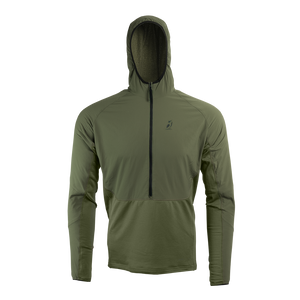
[00:14:34] Tayson: and a half and that's I'll Just sleep in that like if it's summertime. I may not even do that. Just depends on the overnight lows keeping in mind that I am sleeping in something that has a hood. So there's been some summer time conditions where, like, even in the Rocky Mountains were all be sleeping in and Altitude Hoodie. um, and I will. Just put on the hood of the Altitude Hoodie and that's like just enough to keep my head. Totally comfortable throughout the night. If that's not, then I'll put the beanie on and then put the hood over that again. Things that I will also do to kind of add that warmth Comfort. If needed
[00:15:24] Tayson: is just keeping in mind that I have a layering system in my pack, so it's colder than I thought it would be. Maybe if I've got like a Pursuit Hybrid Fleece with me, then I'm putting that on as well. Putting the hood on there to keep the head form. I will say yeah because the head you if you're using a top quilt or maybe like a sleeping bag, And you're not tucking your head in or there's not a hood, a top, you know, head coverage, that's exposed area. So, you know, think of it as like a valve, you know, to a chimney like if you don't cap it the Heat's going to go out your
[00:16:04] Tayson: head. So that's a way of regulating Heat. And I think just keeping in mind like the layers that I've already got with me using them to supplement the sleep, you know, the top quilt or sleeping bag that I'm using Of putting leggings on at night. Things like that are generally, like the most I ever need to do. If it comes down to You know how often I sleep with a balaclava. Very rarely, I will sleep with a balaclava if I know that overnight lows are going to be like low single digits, or lower than that. Honestly, if it's not then I get by just fine by just using the hood
[00:16:45] Brigham: now. I think one important pickup with with having some some head coverage even mentioned, like well, some some sleeping bags, have a hood system on them. But unless you're going to like cinch that down, which almost no one really wants to because it feels claustrophobic, it's not super comfortable. Your head is still quite drafty and so the way that I look at it is anything that could be exposed to any kind of draft, I want to have at least a base layer coverage on that because in the mountains, it's a little bit more Breezy a little bit more windy. And if you're sleeping and you get a cold gust of anything that hits any more
[00:17:24] Brigham: Exposed Skin, Is just a startling fact. It's a factor that can wake you up or bring you out of a deeper sleep or something. And so a beanie, even a super lightweight beanie gives you just like that little bit extra something so if you do get a cold draft or something coming through gives you that tiny bit of Regulation even he's got a hooded sleeping bag or if you're in a top quilt with no hood or or something like that. So but that applies to in my mind that applies to the whole body. So if I am a top quilt and there's a risk of a draft as I roll over, I typically like to
[00:17:56] Brigham: have a like, a full base layer on. I'm not sleeping, you know boxers on pad. You know. I've liked to sleep in a base layer I think that provides it's nice like and I don't really sleep in short sleeps. I like to have like an Altitude Hoodie or yeah or a turn or something like that. That's full length. I just find that having at least something so that if a cold draft hits you for any reason, it's not a stark contrast, a hard blast of cold air that can they can bring you out of a deeper sleep. He also mentioned the leveling or she's me the the Using other layers or layering systems on and
[00:18:34] Brigham: say, I will just add to this that out there in the mountains almost never. Are you gonna find a perfectly flat level campsite? And so, I'm just a huge fan of using my extra clothing, layers to balance my pad or flattened, or regulate my pad to be flat as much as possible. Just a really easy thing to do to. Like, if you're not sleeping in a puffy jacket, like take your puffy jacket, and put it on the side of your pad that might roll you off at night, or that might be lower than the other part and I've really simple, but I am. I do that, like, 90% of every place that I sleep? I
[00:19:14] Brigham: mean, it's
[00:19:17] Tayson: Incredibly helpful to Sleep Quality. Like not being able to just lay in the position that you want to without trying to resist gravity. Moving your body somewhere else. It's like it's very disruptive to to my sleep at least. So Yeah. I mean, you guys know I'm always paying attention to the levelness of the site but then once I get I still have, you know, I'm definitely trying to level out my pad as much as possible because it is disruptive to my sleep.
[00:19:48] Brigham: Yeah, they specifically called out pillows. So I kind of wanted to touch on that. I will say this about pillows. Going from zero to one is. Level. Like if you've never had a backpacking, pillow and you're going from coming from like a jacket or something like that, any pillow is going to be a massive upgrade. But if you think about pillows at people's homes, And you look at preferences. Everyone has preferences. It's a highly like shoes. Yes. Yes. One shoes gonna fit one person. It's not gonna fit the other same thing with the pillow. Like, I don't even know that many couples, the sleep in the same bed and have the same pillow I would
[00:20:27] Brigham: say, is rare to none. so, what I would say with pillows is, Find the right pillow customized, right pillow. I'm not someone who needs to put a shirt on top of my pillow, to have the fabric, Phil against my face, feel different than a pillow fabric. Some people are, there's a lot of people that that's kind of a pro tip this to take a shirt and wrap their pillow in it. Some people want to really tall pillow, some people want to average pillow, some people get by with like really small pillows. I would say, this is a very preferential thing, a very customizable thing. And so while our pillow I think is great, it's billed
[00:21:08] Brigham: more. So for the masses I would say and from there like if it doesn't work for you, We're not, I'm not offended if there's a pillow that works for you. because that's one piece that is just It's just harder to nail for every single human out there and their sleep style. They're preferred things. Like, I know people like if I slept on their pillow, I would wake up in my neck would be destroyed. Destroyed. But for them, if like, that's what works the best for them. And so I would say test some different things. Try some different things. You can always start by customizing your own pillow. One. So two easy ways. Obviously is put
[00:21:45] Brigham: a like a shirt over it. The other easy thing is like you can just start pillows, you can strap it down your pad. You can get a little shock cord and strap it to your path. And if you want to experiment with raising it with more material underneath it, that's something you can. You can do to see if that's something that helps you sleep better so you could fold up a shirt and a nice and square put it underneath the pillow with those bungee with that bungee cord system on it. It'll save pretty well intact and you could experience experiment with the height of your pillow. So maybe something just a customized and try to
[00:22:20] Brigham: figure out. I will there's not really a one size fits all with pillows and in my experience our pillow, I think you really close. it's not a one-size-fits-all, so All right, let's keep moving. You.
Editor’s note: Health, nutrition, food-integrity, sleep, warmth, and water-filter advice is general discussion, not medical or current safety guidance. Editor’s note: Product, support, and channel statements reflect July 2026 historical context and may no longer be current.
[00:22:34] Brigham: Brought this question up? I brought this question up recently. I
[00:22:38] Brigham: mean, it's been a question actually in one of our customers came in and actually returned a water filter and then, you know, I think me and you heard about it after the fact, but they'd purchased a quick draw, a Platypus QuickDraw, water filter because we recommend them, they're phenomenal. Phenomenal, Water filters. Well, they bought it. They took it out there and they said it was a complete failure. This is someone, that we personally know in town. Who's had tremendous? I mean, who's a very experienced? Very experienced outdoors guy. He bought, he took it out. He didn't work like he's like he was a complete failure, is getting 0 water out of it. So he
[00:23:15] Brigham: brought it back and the story got back to us. And then I kind of mentioned that I like this. That I had been seeing these differences and air bubbles, like an air bubbles, getting trapped in the filter. And then these guys went out on a Shakedown hike for the OV 100, and they had two filters. That you guys said were like, complete failures.
[00:23:34] Tayson: Can't remember if it was there were two there, there was for sure, one there and maybe one of the other people saying that theirs had recently done that. But there was for sure one where their yeah, they first first use, you know, straight out of the package couldn't, couldn't they get water through it.
[00:23:52] Brigham: So then when I was on my trip to Wyoming, I had a filter that was doing something pretty, dang similar. And I've also had a Sawyer filter completely die on me that I wish I'd thought about this and tried this in the field. But The because I already had issues. I was I was noticing for years now, I mean I've been bringing with kind of noticed that if you can get all the air bubbles out of the filter, And typically, what I would do is I would cap the filter so that the water is not actually going all the way through the filter to cap the clean end. I would put the dirty end on
[00:24:23] Brigham: screwed on and hold it upside down. And that having that pressure of it, actually filtering the water out. It gives the air bubbles a little bit more of a chance to come to Bubble up to And get out of there because where the air bubbles are in contact or stuck in that filter water can't come in contact with the filter fibers, which just means that you're filtering on like half of your fiber. Sur, Or none of the fiber surface mass if it's completely, if all there is completely trapped in there. So so I got a lot of those Quick Draw. You've got the end that like you open and close you could drink out of
[00:24:56] Brigham: with your mouth. I keep that enclosed. I put the dirty side on, I flip it upside down and I try to get air bubbles to come out. Sometimes I'll even kind of like tap it lightly, flick it lightly and that'll get more air bubbles to come out as well. And I do that and I kind of let it sit like that for just a minute because air bubbles will kind of continue to come out the more the water that gets in there and then my filter runs really fast. Well, when I was in Wyoming, I was doing that and I was getting just the worst flow, and I was getting hardly any air bubbles out.
[00:25:26] Brigham: So eventually I tried a new tactic on it which was I took clean water in my mouth and if you know how to test the Integrity of a water filter you get the filter wet and then you try to back-blow air through the filter and if the fibers are all wet then you shouldn't be able to back blow air through that filter. So I don't know why exactly water can pass through it but are can't. But anyways, so I took clean water and I with my mouth, just pushed the Clean Water backwards through the filter. And almost like your backflushing it. So you basically just backflush your filter with clean water and
[00:26:01] Brigham: it pushed the air bubbles back out of my filter and my filter ran perfectly after that. Now, that sounds very complicated. So bring I think you should try your best to explain what it is. I'm trying to say here But more or less air bubbles. Get stuck in. These water filters. And unless you get the air bubbles out, your water filter will either not filtered or to filter very slow. so yeah,
[00:26:27] Tayson: I mean what you said is simple and I think you just Over complicated. No, it's just like you. Adequately explained it? I don't know. I it's simple but it takes explanation. Yeah, and how to simplify saying, you know, how to get the, just get the air bubbles out, you know? Yeah, it's the one and closed. Screw on the other one, hold it upside down, let air bubbles, get if that air bubbles, come back out. If that doesn't work, maybe try blowing through the other, the other end.
[00:26:59] Brigham: yeah, unless you realize that air bubbles are trapped in there, you have no idea because just you see the fibers you can't see the air bubbles in there and say there's a lot of people to get them and they have no idea that there's there's air bubbles stuck in it. Trapped in it and then they can't get them out. I tend to believe that what they saw your water filters. This is probably one of the number one reasons. That keep them. You know, clogging or their flow rate slowing because of the design of them. The only have that little like little valve, like I don't know what you call that like nipple opening inside of
[00:27:31] Brigham: there. It's not like the membrane is not nearly as exposed, which in my mind would make it a lot harder for the air bubbles, to get back out of that filter after each use after it's dried out. So knowing that I would say essentially like do a small amount of backflush Slash, you know, just even use your mouth to push clean water backwards through the filter. If you're really, really struggling to get the air bubbles, out of your filter. But try that in the field, I think you'll see your flow rates, go up to at least the filter turn it upside down let air bubbles, come out. That's I do that every single time and
[00:28:05] Brigham: if you're having a bunch of problems, do tiny bit of backflushing like holding it upside down and trying to get the air bubbles to Bubble Up and out of that filter. Yeah, it's
[00:28:14] Tayson: a the one actionable thing I would suggest is do this at home before you're out in the mountains like that's what I would suggest. Try to discover this when you're at home, prior to a trip for versus getting out into the mountains and then figuring it out. Like for example, if you have a new filter, Fill up your bag. Try to filter water in your sink if you can counter. This you're doing this before your trip. So it's not as urgent of a thing. You've kind of got a more controlled situation. It'll be like a strong suggestion is Just test your filter before you go and if you run into it, then try to do
[00:28:52] Tayson: these things.
[00:28:53] Brigham: Yeah, and then I've got another tip now. I don't know if I've ever really talked about this, but I like to try to get the water out of my filter before I package it up and move on the trail. I've gotten into a habit of kind of like swinging my filter to get the water to fling out of it because it kind of gets trapped in there. I actually think that's why my filter may have. Been trapping more air as I may have kind of stretched. Some of the filter membranes or by gravity and force, push the filtering up against the back of the filter housing. And that makes it. So there's less Gap in
[00:29:33] Brigham: space for that to come out and that's all I think that sometimes these brand new filters are having issues. Is all it would really take in my mind. This tape philosophy of tasting here. If they produce their filter and their filter membranes were, even just a fraction longer than normal a fraction. Those filter membranes are going to be pushed up more against the back of the housing, which then gives are less space less area to escape out. So, I think that some, some filters may just have like, by production may have a little bit more issue with that. But the other thing is I'm gonna stop like flinging. My filter around a little bit, to
[00:30:10] Brigham: get the water out of it. I just, I now that I've kind of seen this, I think that it could contribute to that filter membrane shifting a little bit and potentially
[00:30:20] Tayson: causing more air, bubble trapping. So, that's interesting, because I I shake my every time I use it, but do you? I don't know if you do like a big screen. Like I do a pretty violent, like start like this. And I whip it down like that, okay? And you've never. Yes. So maybe I'm not have this. This is never happened to me in the field. So,
[00:30:39] Brigham: so that's probably a low percentage chance that's happening, but I'm probably just gonna be a little more gentle with my filter and see if that makes a difference. Yeah, like lightly, shaking it out and set of violently shaking. Yeah. Um, Okay. Well hopefully that I mean that was that was good. I think that honest, I think there are some really good tips in there today ones that we don't talk about all that much special with the, with the water filters. So hopefully that was valuable.
Editor’s note: Health, nutrition, food-integrity, sleep, warmth, and water-filter advice is general discussion, not medical or current safety guidance.
[00:31:10] Brigham: If you guys have additional questions that you would like us to cover, make sure to write them in, support at Outdoor Vitals just reach out to us, you know, chat on our on our website or put the comments, right in and YouTube or SpeakPipe. We try to make this easy as possible, but right in ask us things that you've been having issues with on the trail. Things are concerned with on the trail. We love to answer these questions.
Editor’s note: Product, support, and channel statements reflect July 2026 historical context and may no longer be current.
[00:31:35] Brigham: We're excited to be heading out and do it participating in our 100 mile. Hike definitely a highlight of the summer. So I'm super stoked to be going to that cross our fingers knock on wood that we will not have any more fires, pop up. And then popping up left and right, it's been really sad to see. You've got this hearing, you always had so many of our mountains now. Burning up. I in fact came off of a backpacking trip with my kids and family and later that day that mountain started on fire and burned almost a hundred thousand acres and like 48 Hours, it was just a flash fire burned, a bunch of structures, it's
[00:32:12] Brigham: been it's been a rough year. So across our fingers, we do not encounter any more fires out there in the trail. We have a great 100 mile trip.
Editor’s note: This July 2026 fire, closure, trail, route, and land-manager discussion is historical only. Verify current official land-manager and fire sources before making decisions.
[00:32:20] Brigham: We will probably not talk to you before then. So when we come back on the podcast, we'll give you a bit of a breakdown of that trip. Get out there. Do some backpacking. Make sure you subscribe to the podcast. Share this. If you've had someone who has had issues sleeping or Issues will turn water on the trail and we'll catch you guys on the next episode.