[00:00] Tayson: Everybody, welcome back to the Live Ultralight Podcast powered by Outdoor Vitals. Today, we are back with another episode of ask OV. So we've got Brigham, our lead product designer here in the house to help tackle. Some of these Listener and customer questions and hopefully, we can provide some value for you if you have questions for us. Make sure to go and submit them. You consider them directly to like our support team on the website, just go on there. So I got a question for the podcast and it ends up coming over to us or you can go to YouTube and drop it as a comment and we go and look at those before. We start these off. So excited to jump into some questions. But how are we doing today? Bring them.
[00:00] Brigham: They're pretty good. Just go back from a long road trip. Yeah,
[00:42] Brigham: it was pretty quick turnaround and turn around and whether all you go up. It was like it was really windy but like it's 60s
[00:52] Tayson: and
[00:53] Brigham: it was like It was a white out until like 4 p.m. yesterday and the high was like, 32 degrees and windy like freezing cold and then we, today's still pretty chilly, but it's like sunny, it's back to Sunny and oh, 4850 degrees and tomorrow's gonna be 60 again.
[01:12] Tayson: Yeah. Yeah, like a cold flash after being 80s around here. So,
[01:17] Brigham: oh,
[01:17] Tayson: pretty crazy here. Up talking to students at Utah, State University. And after a product design, So It's exciting. We're looking to expand the design team, hopefully, So we're just starting that process out and going back to your alumni to talk to some students. So
[01:37] Brigham: yeah, it was good.
[01:38] Tayson: Good. Well, let's jump into some of these questions. We did get some some good questions talk about. We'll cover as many of these as we can. We try to keep these episodes a little bit more short and informal. So we'll answer as many questions we can and about 30 minutes. And if we get to your question then hopefully, we'll get to it the next time or, you know, the better, the questions more likely. They're going to end up here in front of us on this table. So let's go ahead and start with this one. With the higher fill power down in their specifically talking about the Vantage here, does the Vantage jacket compressed to a smaller size than the Nova Pro. Now this is kind of asked by two people back to back, both David and Douglas or maybe Douglas. I'm not sure if there's So yeah, like how does the how does the Vantage jacket? Even though it is a
[02:32] Brigham: warmer
[02:32] Tayson: jacket, it has more down in it. How does it fare in terms of compression compared to the Nova Pro? Maybe some of these listeners already have.
[02:45] Brigham: My. The first simple, almost honest answer. That's the correct answer, is frankly, I do not know because I haven't compressed them down to minimal compression and measure them, but I'm going to speculate their very similar, but maybe the Vantage doesn't compress quite as small. And here's why. So higher fill power. That's one variable of an entire jacket. So there's multiple components in this one jacket. So Fill power. The higher, the fill power. That one variable does mean that that down can compress more. However, there's a significant amount more down in the Vantage that that is that overwhelms that component that's been isolated of fill power. So just because it's 850, fill power, doesn't mean. strictly that it's going to compress more, because there's 60, more grams plus or minus 10 of down in it. So, The only, you know, So that's on the Vantage side. The only thing that may that would deteriorate from or detract from the, the Nova Pro compressing maximally is that it does have some extras zipper bulk but in terms of the two yeah that's probably still likely that the Vantage might not compress nearly as much but it's probably not that discernible would be that's like
[04:19] Tayson: how I would explain it. Yeah. I mean you could kind of look and be like okay well how much more fill is there and then look at the fill power and percentage wise Brigham's right in the sense that it shouldn't necessarily compress smaller but then you factor in the zipper aspect of the pits and I again I don't have I actually like if we had maybe read this question earlier on me we could have gone and attempted this but I think it kind of washes and So then also when you look at the weight of the two jackets, if you go to like your specific size and the specific size, they're very similar and my real-world experience is that I put them at an extremely similar category for packability. Very, very similar. You're just getting more warmth with the Vantage jacket over the Nova Pro. You're getting the pit Zips with the Nova Pro and then you got kind of the shiny fabric versus the dull Matt fabric, but I think they pack really similar. And if I was to throw one more thing into the ring here, I would say though that if you compare it to the Zulu jacket, I would say the Zulu jacket packs noticeably smaller than either of these other two options like totally is very like,
[05:29] Brigham: it's an opinion and notice it. That's a good way of bracketing. The two, the bandage on the far end of warm. The Zulu on the lighter end of warmth Nova Pro in the middle and over pro has the most features, the most bulky non-compressible down in it or non-compressible. He's not down components whereas the Zulu and the Vantage are pretty similar in terms of components just of the amount of down. So yeah, I think between the Nova Pro and the Zulu, you probably would definitely notice the difference in packability or compressibility, but between the Vantage and the Nova Pro hey, I won guy might be able to be like oh you know say yeah I could tell but I think most people would have a hard time telling there'd be very similar and and one extra tip honestly is I use puffies to fill voids in the pack and not try to just crumple them up into a sphere. I use them to stuff into void. So you may have you know, like 80 grams of down, you know, over here in this corner and another 40 grams over here. And So,
[06:35] Tayson: you know, where I notice the difference though, like is because you go from like the Nova Pro, it's an 800 fill To advantage that's an 850 in the Zulu at a 900. And this is Phil power, not a silly amount of down, right? So make sure not Crossing those lines but the I do notice, just that difference in softness as you go up and like the Zulu, I would say the Zulu does compress. Like or fill voids or like, I know there's a difference in that So
[07:01] Brigham: it's
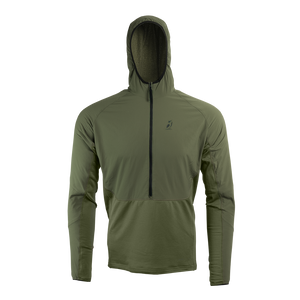
[07:03] Tayson: a good question. It's a really good question. Is it as far as real world experience? Nova Pro advantage and my mind put them very similar to each other. Zulu has definitely an engine and that compression. So It's really good question. All right, we've got some questions that are more related to well. Actually this one's more related to winter stuff but it tailors into this next question. So I'm gonna ask two questions and just kind of open up a conversation here. So the first question, the first part of this question is what's your preferred based layer with this piece? And they are actually referring to the piece I'm wearing right now, which is a Pursuit fleece. But the second part of this is, what are you packing on their snow on the ground and temp ranges are 25 to 50, no rain and mixed sun and clouds. So yeah, what is your What's your starting with the first part of this? What's your preferred base layer with this with the pursuit?
[08:02] Brigham: With the pursuit. If I know I'm going to be wearing the pursuit, one of the characteristics about the pursuit is that I'm going to be wearing it for a long time. Let's just say all day and I'm probably gonna sleep in it. So, I'm probably not just, I'm just not gonna take it off in that case. I'm almost always gonna go with a long sleeve or short sleeve altitude. T the crew neck, no hood. and that really just kind of depends on like if I anticipate that it's going to be more windy on the more on the windy side, I'll wear the long sleeve altitude crew necktie. If I don't see any concerns about like they're that little difference could make a difference because of the wind, then I just where I just wear short sleeve altitude T and it's like a very, very comfortable. Setup. Yeah, you had a great special for these
[08:56] Tayson: ranges that he's got here. 20 to 50 degrees. I seem fair height here. Well, of course, very nice. But yeah, let me know in those ranges, getting up to 50 degrees is not necessarily going to be warm enough to where the altitude by itself most likely. So you're probably going to keep that Pursuit on all day. And then I would definitely agree. Either a short or long sleeve altitude tea. I prefer that over the hoodie just just because it's not as necessary. When you've got this Hood right here, this hood is really nice next to skin on the pursuit, really comfortable to sleep in and do all those things. And So, you just reduce one one Hood, essentially on that. um, this next one is actually not a it's not a question, but I read it as a comment and I really wanted to Talk about it a little bit. So last summer I did 24 miles All Above 8,000 feet, but it took me two days. My excuse is, I'm 73 and have to carry more weight to stay warm at night. And he put He has a 22 pound base weight. Ultra light may be fine for youngster Backpackers but for me it's the trip that's important. Not the number of miles younger Backpackers. Yeah.
[10:14] Brigham: Younger Backpackers says, I don't know, youngster youngster, younger young whipper snappers
[10:21] Tayson: Yes. So first off, let's respond to the second part of this, which is couldn't agree more like there are trips. When we do big miles, those trips when we don't do big miles and quite frankly. Like, I don't think you should be doing big miles all the time. There's just a time and a place where we do big miles and there's a time of place. When like, that's not the point of backpacking is not to do big Miles, by any means. Usually, we're only, I would say, almost always, we're only doing those kind of mileages when we're doing, like, through hiking. When we're doing Colorado Trail, you went to Highline those kinds of things on. Every almost every other backpacking trip, we do. We're significantly under 24 miles a day, even quite a bit under 20 miles a day, most of the time. So
[11:04] Brigham: yeah, I think it's
[11:05] Tayson: I
[11:06] Brigham: really like this because there's So many things to talk about and to kind of continue with what you're talking about. 100%. I you know, at least my personal philosophy. I think most people in our office and you know if we have portrayed that all we care about is mileage then you know that's on us to correct that or clarify that and I think you, I think you did. Backpacking, is is an activity that Whether you whether it's an ultralight category or not, it's completely individual and and and I respect that, we all respect that and just encourage people to do what they want to do. Do it appeals to you, I do it appeals to me, you do it appeals to you. So just getting out, there is great and I totally agree that the trip is important. I would just add some caveats that every trip I do is not the same, they have different objectives, they have different, Goals or Pursuits. They have different. Limitations and constraints, oftentimes, the reason we're doing the the number of days and the mileage we do like you said with because we're having to high that, we also have time constraints and So to achieve the section of a trail, then we do have to do those higher miles. And You know, going into the beginning of that sentence, ultra light, may be fine for younger Backpackers. That's all correct. But it also might be fine for older Backpackers as well. Going back to you just decide how you want to hike you just decide what you want to do. I will say We don't, or I don't at least, just speak for myself. Like I don't pack. ultra light or have an Ultra Lite mindset, So that I can because my goal is to hike as many miles as possible. The less my Pathways makes a two-mile hike, more comfortable, or a 200 mile, like more comfortable. It's constant It's just doesn't matter. And So, yeah, and I'll let you make some comments because I definitely have some some additional comments going backwards in this in this. Set of sentences as well.
[13:38] Tayson: Yeah, I mean like you mentioned just to build off of that like speed speed counters into time on feet, right? So, You could hike 24 miles break that into two days and be doing 12 miles a day. But if you're hiking an extremely slow pace, you're on your feet a lot and the weight of your backpack exponentially like gross throughout the day, too. So, like Comfort is comfort, is Comfort. Like whether it's two miles and 10 miles, 20 miles, the amount of time, you're on the feet, which are doing that all, just kind of adds up. But the bigger thing I would say here is My goal. Is to be as light as I can as I get older. So that I can continue to do the activity and continue to because like risk of injury. If you're on the lighter weight side of things goes down, if you're carrying heavy pack, there's a higher risk of injury, twisting an ankle, following something like that. There's ability to go more places, if you're able to stay light, in terms of, whether that is distance or speed, there's, there's all sorts of things there. What I would, what I want to go back to though is he didn't really mention like there's not snow on the ground or anything like that. So I'm gonna assume that he's backpacking. At least when there's not snow on the ground and he's above 8,000 feet. My thought right? There is We can get your pack way lighter and still be extremely comfortable. Like, it doesn't, it's not black and white that like, there's ultralight gear, and there's not Ultra, like gear. There's like, I just look on this, like, there's just a curve, right? And we can So, because my first thought was, Yeah, but when I go backpack in the middle of winter and we've got down to like -15 degrees Fahrenheit. My base weight, with a tent, with a camping stove in, it is 17 or 17 and a half pounds. So he's still five pounds over me. And I think that may even include me packing a chair, right? It's like if we wanted to add that in, but there's a lot of times that I'm backpacking and these same conditions and I'm at about 12 pounds base weight and again I'm taller. So I've got like a tall sleeping bag a long wide, sleeping pad, these kinds of things that add up and I'm bringing a chair, which to me is like getting into the luxury side of things and I'm still a 12 pound base weight. So my thought would be like kind of a race this idea of like Ultra Lite versus non ultralight and just be like lighter. Our our belief is that. If you can lighten your pack you are more comfortable on trail more happy and like this net better effect. And I think that there's like the way that maybe this is right in kind of makes you feel like you kind of wrote it off, you know. But to me, That that's maybe not the right approach. What I what
[16:11] Brigham: I read this my very starting from the beam. Let's now let's read this like normal people start with the first sentence and and my first reaction when I just read this as a whole was like, first of all, that's awesome. I can't. So I owe my parents, my, my current livelihood, basically. My love of backpacking because they started taking me basically as far back as I could remember in my lifetime. And that was my mom and my dad and we started backpacking. When I was five years old, And So I have a great respect and appreciation for people that are in this age group that are trying to still get out there. So huge level of appreciation admiration and respect for the fact that you're doing this. And So, when I read this, I read this, as if I'm reading this as a note, from my mom, or actually something that just happened a few weeks ago, with a neighbor of hers. That's similar age group that came and asked me questions because she had talked to my mom and found out that I worked here and wanted to ask questions. And So my approach to this is very, that's the place that I want to come from is like, okay, So you're 73. So my mom's 74, my dad's 75. My dad. Who took me backpacking with my mom? My whole life, he can no longer backpack, he's has terrible Health. He's at both his hips replaced. Both his knees replaced. And about eight back surgeries he can't backpack at all. He can barely walk a quarter of a mile. And that's, that's really hard for him. And as me and my siblings, that's tough for us to see that struggle from my dad, because he's in a lot of pain. But my mom, she still comes with me and my little kids, well, different ages but some one of them is pretty little. And She I'm, I just love, the she comes. She's have torn meniscus, and the knee surgery, and she's got tough. And she's she's in pain when she does. All these these, these trips. But she loves it and she is determined to go as long as she can, well, a few years ago, you know, you know, when she was about to hit her 70s, you know, I approached her with this mentality of. Okay, Mom. I want you to keep coming with us, my kids, love it, when she's there how can we help you? And it is by reducing the amount of weight in her pack. 100% that is what has enabled her because once you get to your 70s, you have a couple health issues. You can train and train and train but it cannot overcome the age. It cannot overcome the deceleration of Fitness due to that age, right? So for her, it's just like maintaining as best as she can or slowing down that aging process, and we've done it by Here's a few little things. changing from a three-pound, maybe three and a half pound sleeping bag to I her back now that she uses as probably two and a half pounds and it's a 20 degree down, sleeping bag. Okay, that's that wasn't a thing. But changing from her five pound tent. To our two and a half pound trekking, pole tent. Because she's she likes the space So she's two constrained in a one-person tracking poll 10. Okay, So we're not going crazy. It's just now she's been able to lose. Almost four pounds of bass weight just by Going with a lighter weight. Downswing bag. And this is my mother, I'm talking about, who is cold all the time? She wears jackets in the summer in the house. Okay. So Her saying she's warm enough in the 20 degree bag. And by the way, our backpacking trips are above 8,000 feet So this is very relatable to me. Just those two things, like I said, what was that four or five pounds? Okay. But now, because we've reduced base weight by four or five pounds. Now she can reduce her base pathway. So the backpacks you was using was an old Dana designs from the late 90s, probably weighed about four and a half pounds. Well now, we've been able to say We've taken off 545 pounds base weight. Now you can go to a two-pound Just call it a two-pound ultra light pack that's smaller in every Dimension because it doesn't need to carry the bolt. And you've now lost another two pounds. So, we're at like, six approaching seven pounds of weight reduction by three items. and, That has for the last number of years. Been a been an enabler for her to keep coming on these backpacking trips. And, you know, just things like okay, Mom, your feet are cold. Well, here's some down booties. Okay, we don't need to add a ton of weight to your sleeping bag. It's just that you're saying you have cold feet. Here's some two ounce down booties. A down puffy. She used to just have a big bulky synthetic, insulation jacket, and would pile layers underneath it that essentially just smashed. And she was never really that warm but by addressing like maybe two upper layer pieces that probably eliminated four other pieces. Now we've probably lost another one or two pounds of clothing weight and she's warmer all the time. She sleeps better and she's just comfortable, and doesn't need to sleep in as long in the morning in the tent and she has had a great time. And So I hope. you know, to this, to this person, you know, that maybe gives some some encouragement and just some tips that might be things to think about to, Get your longevity to maintain your longevity as long as possible. Yeah.
[22:31] Tayson: I think that's super well sad. I won't add anything to it. Other than just the fact that This is our goals too. I want to be 703 like you and I want to be hiking 24 miles over two days like seriously that's that's awesome and that's definitely what I hope to do but definitely have Experience both extremes and I can tell you that lighten up that pack will just make it more enjoyable and it and that's not less warm, that's not less. You know, fill in the blank there it's the same or better but just more comfortable as you're hiking and carrying that pack. So, Okay. Let's see what else we got on here. All right, let's let's talk. Well, okay, let's quickly hit this one, this is really easy as a newbie. It would be helpful if you added in talking of time. When you talk about miles, talk about a 25 mile day. Is that 8 hours, 10 hours 12 hours? I would say, typically, What that means is about a 12-hour day of hiking and stopping like from Camp to Camp. That's about a 12-hour day, 25 miles. Sometimes that's even a hair longer than that but if you're doing like our you know, our quote unquote, perfect, 20 mile day, you're about 12 hours but that includes breaks that includes lunches that includes dinner is well water. So like active time on feet is probably more like Nine hours, eight, nine hours, something in that range. Yeah. And like
[24:02] Brigham: it kind of, you know, this is a rounding out, but it just seems to almost always round out to by the end of the day from start to finish. You know, it's about those 12 hours. And if we have done around 20 to 25 miles, And you just divide that by the time it ends up being a good calculation of about two miles an hour. So even though when we're physically walking, we're probably doing three to three and a half miles an hour, some of the time. When you factor in all the stops and just the one we started. And when we stopped it ends up being about two miles an hour. And yeah, 12 hours in total is probably a really
[24:44] Tayson: good round number. And even if I was hiking less miles than that, I still do not mind that it's 12 hours. I just means I'm going to take even longer breaks during the day. But there's, there's a lot of enjoyment in getting into Camp between, you know, seven eight at night, you know, eating eating dinner on trail, taking a long lunch, breaks stuff like that. So but as far as moving time where usually walking it at a pace of maybe three-ish miles an hour and then everything else is stopped time and So you can kind of do some math on that. Let's end with this question. If you were to only pick one pack for both day hiking and long weekend, backpacking trips. What would you pick and why?
[25:28] Brigham: Yeah, it's tough.
[25:30] Tayson: I can go, um, I thought about this just a little bit now for backpacking. I, I end up using the shadow light a lot. I like the pack a lot. I like the organization and for just like, backpacking itself. I end up like that would be like, my jack of all trades pack because sometimes I'm packing with kids. Sometimes I'm going winter season, and I want a little more capacity. I like the upper pockets and organization but the truth of the matter is, that's Overkill size wise for a lot of other stuff that I do and So special. If I'm thinking My Day hike in, then it's even more Overkill. So I land on the carbon EVO, to be able to do both well, you know, bigger backpacking trips and day hiking trips. Carbon Evo, I can do five six days out of it without resupply, I've done that before with the capacity that it does have and the way that I pack and carry stuff, but then it's just a little bit more tight, little bit more Nimble and stuff. For More Day stuff, it's inches up its its side closure because I don't have the pocket, we can kind of connect in the side compression, just a little bit differently and So it can compress pretty well and and stay pretty flat and that sense. And So I would vote my answer to that would be, I would go with with the car with the new carbon. Evo as my all-around, do everything pack.
[26:55] Brigham: yeah, the reason it's hard for me is because if all I if all I'm thinking about is long weekend, backpacking trips You know, then it's the quick answer is carbon Evo because that's my Preferred Pack for any trip. Yet. It's small enough that it's, you know, for a long weekend, backpacking trip. It's not Overkill. I mean, it would still, I would still have a lot of empty space in it. but the The obstacle for me is now we've got day hiking and long week. Backpacking long weekend, backpacking trips. And I know if it's fare, whether I know I can do that with a fast pack. It's tough. I think. Yeah, my answer would be
[27:44] Tayson: a bad answer because it's two packs.
[27:46] Brigham: It would either be the fast pack and if you know like you have really a lot of confidence in your kit and you, you know, you've got a lot of compressible items. You've got a lot of confidence in your clothing system, how to use it, and how to just kind of maximize or optimize, all of those things. Then I would, I probably recommend the fast pack because you're your day hikes, you'll enjoy them more. If not. You're really not going to be off, put or at a huge disadvantage by going with the carbon Evo, 50, and just leaving it. You know, mostly empty with just your day hiking items. It's not going to bother you that much, but you will have For sure, a lot of buffer you know a lot of forgiveness in terms of like what you pack on a long weekend, backpacking trip. Oftentimes, if it's something like that then I'm like I'm tempted to bring a chair tempted to bring some extra like Culinary luxuries you know like bring some extra hot chocolate or or just just some things like that because it's a more laid back. Trip, maybe, maybe it's not like, I don't know. Be like
[28:56] Tayson: Louise on our last trip and bring a thing of popcorn. Oh yeah. No, I thought you might say that the fast pack, if you're a true Ultra like guy you could pull that off for sure. Like we've done a lot of trips that are two nighters out of a fast pack and that works but you got to be like dialed in ultra light to to do that. I would say otherwise the carbon Evo you could get creative. So a couple just quick thoughts on using the carbon for Day hike in Like obviously you've got the side compression, you can roll that top up really tight and you can also tighten the top strap really tight but there are other little attachment points around it. Like you could take a little bit of shock cord or something like that and and even tighten it up more, if you just don't like any slop in it. But the thing that I would do first is like, if you're going day hiking, you might be thrown in a jacket. We'll settle like, compressing your jacket down at all, like, Let it Loose fill in the back and it'll just fill the voids and, you know, throw your puffy in there. And instead of like stuffing it into its pocket or rolling it into its Hood, like, just throw it in there and let it like, fill the space. Yeah. And that'll that'll make it feel like it's less floppy because what you wouldn't want that hiking is if you throw a few harder items and they'll say, like a first aid kit, and a little bit of food, that's kind of flopping around, I think you would really get that. But using some of this other clothing items, they might be bringing layering items. You can totally reduce or eliminate that. So, Okay, these are good questions. Good discussion items for sure. Getting excited. We're we had a glimpse of summer. We had a glimpse of getting into the High Country, which is definitely what Well we love and this mid, this mid-season stuff can be a little bit hard for us because it just gets kind of Muddy and nasty up in the High Country. It's not, it's not just snow and it's not just, you know, dried out yet. So, getting excited though. Kicked off the OB 100 Mile Challenge. We have now, you know, broken our record from last year, in terms of how many people signed up. So we have over 1,000 people doing the OVO. 100 Mile Challenge with us, which is super exciting. It's a new milestone for us and just We had a live kickoff call with everybody and just tons of excitement. The Facebook group is just getting tons of comments. People, people are excited So that that kind of stuff gets me excited too. To get out there and make sure I'm, you know, staying fit and ready to go. Just enjoy the heck out of the summer as things start trying out them out, if they if they do for us but Yeah, So for that you guys can still sign up for that if you'd like to you're going to start a little bit later and like some of the Frameworks stuff, but there's still ample time. So we're gonna leave that registration open for a couple months actually, even though it's technically kicked off but you have clear tell the end of September to complete the highs So plenty of time to sign up and do that. If that's something you're looking to do, go check that out again, that's just the OVU 100 Mile Challenge and you can find that on after vitals website. So, Okay, what you guys go appreciate you jumping on here. Make sure to ask more questions either on YouTube, or through our customer support. Love answering those love to get these. These good thought-provoking questions would love to provide as much guidance. This doesn't have to be just like gear specific stuff. So, if there's just questions, you have about backpacking that we can help or or, you know, some of these comparisons, I think are some of the best questions where it's like, well, should I do this or that? Because that's where a lot of people do get hung up in the process is just try and they get kind of that analysis by analysis effect going. And So it's always fun to get into that and give our takes on that. So ask the questions share the podcast, this is valuable and we'll see you guys in the next one.