Tayson: So here's the big question, how do we live a life? Full of Adventures travel and memories on our terms without being millionaires without previous experience? And without unlimited amounts of time, that's the big question and this podcast will give you the answers. I'm your co-host Tayson and I'm Dave and you're listening to the live ultralight podcast powered by Outdoor Vitals. Hey, what's up over tribe? Welcome to the live ultralight podcast. We are excited to be back with you. It's been a while since we've been on a podcast. Things have been crazy around the office. We've been traveling. I've been busy. We've been growing, we've been scaling, just all sorts of things and it's been really busy, it's been really exciting. We're excited to be back on the podcast and we'll we'll try to do. Maybe a backwards look at a few things. There's some trips that we're going to talk about in the future on the podcast. But today, we're gonna be talking Gearing up for winter and we're gonna be talking about clothing, we're gonna be talking about all of the gear side and really making sure that those of you that are interested in Winter camping, you are going out ready. But also that when maybe some of you that are not thinking winter camping is a good option, maybe we'll be able to change your mind a little bit and show you some of the reasons that we love winter camping on the podcast today we have to excuse Dave, he's out with some family matters but we do have Brigham our product designer here as well as Derek and Derek. This is one of your more not your first time on the podcast but he's a little bit newer. So Derek does some marketing things for us and helps with videos and and all sorts of other content as well. So, welcome both of you onto the podcast. And we'll just Dive Right In sorry. Alright so to start off let's talk. Just a quick second about some of the Misconceptions or the preconceptions. The people have that that we may might want to. Destroy in this podcast per se so I don't know. What have you guys heard? What are reasons? People don't go winter camping or things that we definitely want to touch on this podcast.
Brigham: I mean, the obvious one is that, it's, it's too cold or Maybe the fear is that you just can't get warm or stay warm or sleep warm.
Tayson: And once you get cold, you're cold.
Brigham: Yeah. So, I mean, which is part of the reason why we're doing this specific podcast is to help people get more comfortable, like overcoming that. So,
Tayson: yeah, I would agree. I think people just think like, it's not worth it. Like, it's pretty hard to stay a perfect temperature at all times. When you're out out there, like, you can do a really good job at it, but even in a perfect, like my best scenario, like there's gonna be times when I'm cold for a few minutes and that's something, you know, even with all of the right gears stuff, you might feel that. But what I will say is, it's totally worth it. I think, I think people don't realize the beauty of nature in the winter. I don't think they realize the Quality. The lack of crowds people animal behavior. As far as just them being more in their Zone. Without, you know, the interference of humans. There's lots of things that I think make winter camping worth it, quote unquote worth it. Well, I think another thing to
Derek: think about that people fear is the extreme conditions that you find in the winter. So, there's a fear that if you do something wrong, maybe you forget something or or so, you do get cold. There's that fear because of the extreme conditions, you won't be able to warm up and Is going to be some pretty harsh consequences because of that. So that our concern. Yeah. It's dangerous.
Tayson: Yeah, I would agree and just even touch on that one. It's always interesting to me to like, when you start gearing up for winter, you definitely, you definitely add things to your pack. People get, I think people get nervous that it's, it's too heavy or maybe they don't have the right gear, so they can't afford it or or some things like that, but You know, along with that, sometimes when you actually look at the temperatures I've had it just as cold in September. For instance, on the Wind River trip that will talk about in some podcasts. It was dang cold some of those nights and That's really like, on other times during winter, you could be in the middle of January or December and still see the same temperatures, you know?
Brigham: So
Tayson: I think that sometimes people don't always understand that too. Like sometimes, depending on if you watch the weather a little and you see things, there's definitely three season temperatures quote, unquote temperatures in the fourth season but sometimes there's big big extremes as well. So, just keep in mind that that's, that's something to consider as well. So, Yeah, I think there's I think there's a lot to cover here, but we take all of those, we attack them head-on. We talk specifically about the gear and what you need to to have to be prepared, to eliminate some of those fears. I always say that fear comes because of a lack of knowledge, or a lack of experience. So the more knowledge, the more experience that we can give you on this podcast. I think, than what the less fear you're going to have to go out there and try it yourself. And so, that's our goal here. So again, episode one, we're going to be talking about the clothing and episode two, we're gonna dive into the gear. So let's jump right into clothing and let's start with the things that you shouldn't do and why. So Brigham. Let's what do you would you say is the first thing you want to avoid with clothing?
Brigham: It might be in one of the most important things you want to avoid is also the most difficult and almost impossible to avoid. And that's A soaking, your clothes via the work and the perspiration from your body and you know, from overheating which is very hard to do in the in the cold especially in the snow. But that's one of the things that I want to avoid the most but I'm sure we'll get into that. It comes to a point of managing that because like I said, it's very hard to avoid but just sweating excessively is very necessary to avoid.
Tayson: Yeah. And we'll talk about specifics with with, you know, maybe types of clothing to have, but I think that's a really good point. Is, when you're out in winter, you have two things working against you, you have external elements that want to get your clothing wet. You have internal elements that want to get your clothing wet. And then that the caveat to both of those is once things are wet in the winter. They don't drive like they do in the summer, right? So, so managing that, I think is a big big one. What is there? A specifically let's let's kind of dive into at a fabric level. You know and what I'm kind of thing about is like caught in, right? Cotton is something that you want to avoid. There's the same that caught in kills right and I had, you know, I have a weighted cotton pretty well, but I had a tiny instance with this in March, and I may have touched on the podcast, but I had a cotton t-shirt. One of our Of our first generation outer vital shirts and we hiked in, I got sweaty got wet, we got a blizzard that rolled in, it was real cold. Real windy, I climbed into my tent, you know, was doing some things in there and I was just cold and I got thinking about like you know I still have that cotton shirt on and so it's like the last thing I want to do is pull all of my layers off. Take my cotton shirt off and then relay up. But regardless, I did that in instantly. I could fill a difference instantly which which blew my mind honestly. I I thought that I might feel a difference, but it was a significant difference to remove just one layer of cotton out of the layering system. So that's a big one. What what fabric? So that's that's something to avoid. Is there anything else to avoid that? I'm missing Brigham. As far as just Style. Level fabric level.
Brigham: Um, Fabrics. I mean that would be The more significant one, I'm sure there's other ones that I'm not thinking of right now, but
Tayson: really,
Brigham: that's the big one too, to pay attention to,
Tayson: okay? So let's talk for a minute about the Fabrics that we might want to use. I'm starting specifically with a little bit more of the base layer mid-level stuff which is going to be Fabrics. You might want to use would be like nylons polyesters and wool. What do you think the pros and cons are of those, I think it's let's get into a little bit of the hydrophobic hydrophilic, so, And correct me. If I'm wrong here, bringing my often. Just get them tongue tied and mixed up. But a wool is hydro filic correct. It pulls water in and holds on to it, right? And a polyester and nylon would be hydrophobic, which means it's going to try to push the water away. So nylon, polyester pushing water away. Wool is sucking it in. However, both are warm Technically, when they're wet correct,
Brigham: right?
Tayson: Is there one, that's going to be warmer than the other.
Brigham: It's interesting. It depends on what type of fabric you're topping talking about not necessarily whether it's polyester or nylon. It's more. So like if it's a fleece, Fleece. I would say please stays almost almost as warm as wool when it's wet just because it is so lofty and has so much are within the within the fabric It's a lot harder to get to that soaked point from the first place, so like a fleece. Will retain quite a bit of warmth when it's wet. Well, maybe a little bit
Tayson: more. So I think that's just to interject here too. For those of you that are on a budget, your best friend, so there's kind of like there's two things to look at here, but As far as pure budget, there's that. And then there's also kind of like the well I'm I want to be warm and I have a little bit more money. You can spend away from this, but fleece is probably your most affordable layer and commonly layer that you can get your hands on today. That works really well in the winter, but but it is going to be a little bit heavier than some of the higher-end more technical Fabrics that are going to give you some of that weight. So so if you're beginning out, all I'm saying is a good fleece sweater, good fleece, you know, layers like that, they're fantastic because they extremely warm when wet, but going back to what you're saying. You're saying that wool stays really warm when it's wet, but it's easier to get wet than fleece, right?
Brigham: Yes,
Tayson: that's, that's an interesting trade-off. So, let's talk here as far as base layers. You personally, do you like to wear, you know, wool as a base layer or would you prefer to wear a synthetic as a base layer in Winter conditions?
Brigham: It's interesting. I I would say I I trade off and I would probably say I do synthetic base layers like probably 60% of the time. you know will base layers like 40% of the time and as it gets colder, I may be a little more likely to go with the Merino wool but then again it depends on my anticipated activity level. So if I know I'm going to be really exerting myself. You know, no way of preventing sweating. Then I'll probably still go with the synthetic base layer. Just because, knowing that I'm going to dry out faster but as the temperatures drop even more and more the feeling against my skin with Merino wool feels a little bit warmer and so I'll opt for that if I like you know, if I know it's going to be like, single digits into the negatives. I'll almost always go with the Merino wool, basically. I think it's important to
Derek: iterate, especially for anyone. That's never been backpacking in the winter or even winter camping how hard it is to walk through snow. It's not like you're you're three season backpacking trips, where you're just on a trail. You're, you're literally trudging through possibly a couple feet of snow and, and every single step takes Much more effort than walking normally should. And then you can also add on top of that, there's other activities you can do in the snow, in your backpacking, in the winter, whether you're cross-country skiing or or snowshoeing, but you're gonna probably be working a lot harder. Physically. And so, that's something to remember when you're thinking about these base layers and, and, and the type fabric. I agree, 100%. Yeah,
Brigham: you almost need, you have to really pay attention to the performance factor of whatever you're wearing. Because like, it's It's increased exponentially because like to go the same given distance you exert yourself so much more in the snow. Even if you're on snowshoes skis, it's still a lot of physical work so that's a good point because you really have to pay attention to what your fabric is going to do for you. Yeah.
Tayson: Yeah. Those of you that are, you know, down there in Florida, or whatever you could equate walking to snow to probably harder than walking in sand, you know, just, just as a quick reference, it's, it's Kind of that more difficult plus plus, when you're talking about, like you're exerting yourself that much more each layer that you put on, you're taking away breathability. No matter what, layer it is. It's going to have some effect on breathability. So yeah, these are super important because almost no matter how you look at it, you will sweat. Um so I really like that you were saying Brigham with with that layering system. Personally something that I found I'm actually gearing up to head to Colorado for a week. We spend a lot of time out there and it is cold. It's snowing out there already. It's it's I'm pretty intense. And what I personally like to do is I like to wear wool a light wool layer next to skin. And then I'm putting a synthetic right on the back side of that, I do that. For two reasons, one is I'm already a sweater and if I was to go out there for multiple days in a row in synthetics, I know for a fact, they would get pretty stinky. And I'm not saying that you can't get stinky on the trail, you're going to, but I do if I can help from from having that I will. But that I think too is, I like that wool is hydro felic. Meaning it's gonna pull moisture directly off my skin into the wall itself. And so that creates to me that helps me stay warm. But then if I back that with the synthetic right on the back side of that, a lot of times that wool pull it into the wool, and that's going to get into that synthetic layer. And that's synthetic layer will help it quickly dry. And so, personally, I like to use All as a thin base and then I put right on the outside of that the synthetic side. So maybe maybe I've got a wool shirt but then I've got a synthetic hoodie or something. That's right on the back side of that. So that's personally how I I like to layer up before we get off of base layers. Let's talk for just a second. It's about socks. I mean I think personally you know growing up and whatnot. I just always heard of wool, socks thick, pair of warm wool socks and to this day I almost still only use wool socks again because I'm a I'm a sweater like my feet, my feet are gonna sweat a little bit and and and and whatnot. But has any of you guys had experience with using synthetic socks versus wool socks.
Derek: I have like Jason said in the beginning. I I've done a lot of winter camping whether it's I've slept in Igloo is I've slept in snow trenches and then I also use these same kind of layering ideas when Snowboarding or, you know, cross country, skiing or snowshoeing. for me, I I've worn wool socks and I've worn synthetics. They're to me both pretty similar in the performance. Other than I do know that I have been disappointed by wool socks, like tasting, everyone's drilled into my head, where your wool socks in the winter. And so, I tried that, I'll try to stick to that someone. And, and almost every time I'm still Little bit cold and I still get cold feet. and in another times when I've tried some of these synthetic socks, I've been a little bit warmer, and some of that could be Differences in moisture levels. but generally, I've found that I like, A mixture of both of them if I can layer my socks to me like that, when you mentioned winter camping, the very first thing that comes into my head. How am I going to keep my feet warm? That is the number one thing for me to have an enjoyable experience. If my feet are cold, the rest of me is miserable, if my feet are warm the rest of me, I find is a lot easier to keep warm as well. So Footwear and socks is very important to me. What I like to do is, I'll take a synthetic layer of socks. Usually, those are a little bit thinner and easier to fit in, and then some really thick wool socks. Around the outside of those and I found that's been able to keep me fairly warm with the synthetic on the inside. Its kind of offset what tasting was just saying, but it it keeps moisture away from my feet because this isn't like hold on to the moisture and my body heat kind of It kind of can just Wick away moisture and so it'll kind of kick that moisture out on that base layer and then into the wool into the wool on the outside will kind of suck it all up if that makes any sense. Well the yeah the different
Tayson: the main difference is with when you talk about socks is your boots. Almost every pair of boots out there as a Gore-Tex layer as a waterproof layer. So that water, it's not getting out of that boot, right?
Brigham: Yeah.
Tayson: And so you gotta, it's almost like you have to manage it in some way, right? But thoughts on that Brigham.
Brigham: Yeah, it's just a lot of this really comes down into, you know, management instead of, you know, you're not going to eliminate a lot of this stuff, it's management and and breathe like the breathability of what goes on in your, in your boots is it's just something to pay attention to because you may have You know, some people's feet, sweat a lot more than others. And then, That combined with whatever type of boot you're wearing. You're just trying to you want that boot to breathe as much as possible, but you also want it to be warm and, you know, like I tend to use a Merino synthetic blend sock. That might be 20% nylon 80%. Merino that combination works well for me. In terms of warmth moist moisture transfer breathability, I feel like a wool sock tends to breathe a little bit better and then, you know, there's also some tendency for some And kind of getting some stink in your feet after a while. It's just a hot bed for bacteria. So yeah, so
Tayson: I don't know if we've answered that there. I feel like we've got some different takes on it, but I think I think the bottom line is Try some different things, but don't go into winter and kind of expect to use your same Footwear and get the same results. Layering socks. I think that is a great option. Something to look at. But I might say personally, if I if I'm gonna lean some way, I'm wool socks like die hard 100% three seasons out of the year in the fourth season though. I I could see me tilting towards adding synthetic, adding, either a layer or something or going full synthetic. Based off of the science of it because I just don't think you're going to get rid of that. So it's kind of, like, When you can't dry things out very well. So, one thing that I've seen, I guess, is that when I go to bed at night, a lot of times, that's your best chance at drawing something out. And so a lot of times I'll take my socks. You know, taking your socks out of your boot. And some people will switch socks at that point. But either way, my sock that I ordering, that day is going in my sleeping bag with me. Whether it's on my foot or just in there for my body heat to heat it up and so I feel like a synthetic sock might do better at drying out over the course of the night, give me a dry foot for the next day and then again, just just That's, that's kind of how I'm leaning, but that's a tough. That's I feel like that's a real tough one. I don't want to spend too much time on their butt, but potentially look at layering or trying out different options for yourself. Yeah.
Brigham: And one thing I would just add to that that everybody should keep in mind as if your feet aren't circulating. It doesn't matter what sock you're wearing or how many socks or how thick they won't be warm. So you're the blood circulating to your foot is is just as critical if not more than what if you're using a synthetic or a wool sock. I've seen people that will two or three pairs of socks on in a boot and now they've created a boot, that's too small for them. Their feet are freezing because their feet can't move their constricting and restricting the ability for blood to flow. And that's actually what keeps you warm. So I've seen that gloves,
Tayson: yeah, gloves are too tight and your fingers get cold and they just can't heat up. That's good. So let's let's segue into gloves. There's a few things I want to come back to on feet, but more so tips and tricks to warm up at night time, let's move on to gloves. I think that's the two things that I think about the most. Maybe it's because I just have bad circulations and it's because I'm a little bit taller and more lengthy, but my feet and my hands are usually the coldest. I've gotten frostbite on my feet in Colorado before my hands have been freezing before. Thoughts on gloves. Personally, I use gloves, I use a liner glove and then I'm using some kind of an outer glove. Like, a mitten this time, I'm going to be trying, let's call the glom it. So I gonna have one, one finger, and my thumb will be kind of able to hit buckles or different things. And my other three fingers will be locked into one singular. Connection Point. Any any thoughts on gloves tips? Tricks Hot Hands using them do not.
Derek: I I kind of agree with how how you use gloves taste and was just a liner of Five Finger liner is, is good to me, it insulates in between all your fingers and it keeps them warm. If you do have their cake, take your hand out of those bigger thicker gloves, but
Tayson: it's amazing how fast your hand will get cold. If it's bare skin, instead of just that lighter, right? You just want to
Derek: avoid that bare skin. Even if you do have to take your hands, like I said, out of those thick winter gloves with those thick, winter gloves that my favorite setup is the one that you're using. Right now, it's not a full Mitten. You still have dexterity in your pointer and your thumb. And those other three fingers where they're locked into kind of, that, Mitten like, compartment of the glove, it keeps them warm. Because they're together, they're not separated, if you separate your fingers out, each one has more possibility to get colder. Or they're all together, your own body Heats, keeping you kind of warmer. And you can pull your pointer finger out. Stick it in that mint compartment and warm. Now, when I went up to, if you need it, but that one I found I need to take my hands out of those gloves. Less often still have like you said that pointer and a thumb or you can hit buckles, you can Kind of do what you need to do. For me that's that's basically the only layers that I typically use on anything. I'm doing in the winter whether that's you know, snowshoeing or cross-country skiing snowboarding, any of that? Just that that liner glove And then, then the thicker winter glove on the outside.
Tayson: I don't know if there's a whole lot other than that needs to be said. Just realized, You Know, You're Gonna Want to layering system for your hands, just like everything else you're gonna want, whatever it is, you're gonna want your outer layer to be waterproof, absolutely waterproof. It's going to be in the snow. It's gonna be out of the snow. It's gonna you know it's taking the full brunt of whatever weather or conditions that you are in, so make sure that's water proofed and then and then you know on the interior side of that you're gonna probably want to lean towards synthetic. To to dry out and stay warm Etc. You could look at a wool liner glove. I may be testing some of that but in the past I've just used synthetic as my liner and synthetic as my glove insulation with Something that's fairly waterproof on the outside. So I do use hands occasionally but personally I really I don't aim for using something that that's like a One time. Use. It's just, you know, like these these heated jackets with batteries, you know? Like, I just, I don't like to lean on stuff like that. So I will take hot hands and depending on the conditions I'll either say like I have a hot hand for every single day, or I'll bring like one one set of hot hands and be like, okay, this is my emergency set if things. Get real cold, get real bad, I'll pull that out and use it. Typically, when I do that, I end up never using it, but I still like to know it's there and and I have definitely use it but just not not consist. Not every time. So but that is that is an option. They're super cheap and You know, if that's the piece of mind, that that's worth having, I think they're worth, they're worth taking, I'm not against them, I guess.
Derek: I mean, I agree. But I would, I would like to emphasize that point you made about not relying on them. I've been out before where we've had hot hands and and needed to use them. We pulled one out and it just didn't work whether whether you use her are or
Tayson: inspiration dates. My wife pointed out that I hold on to him for a long time and expired.
Derek: If you're in a situation with, you know, extreme conditions, ice snow, cold temperatures, you don't want to rely on something. That may or may not work and that also will wear off that hot hands isn't gonna stay warm forever.
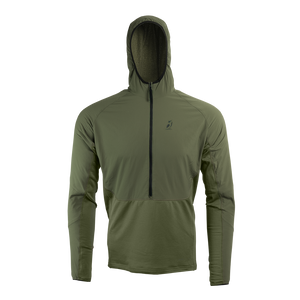
Tayson: Yeah, Okay, so let's just dive back in for a little bit about the overall layering system. We covered the base, the base layer feet hands as well. What? I like to look at a layering system and kind of three parts. You have base layer, mid-layer outer layer. Moving to that mid layer. I've kind of already touched on that, I like synthetics and Both synthetics in the term of like I said like a hoodie or something like that but also in the sense of like our Loft tech jacket. That's A siliconized fiber that's lofting up and really holding in the warmth. That's typically something that I'm looking at. So for me personally, when I am doing this again, I'm using a wool base layer. I might have on a very lightweight. Hoodie so that I can pull out up over my ears at times or zip it up, right? Right underneath my chin. And then I'm running my loft tech jacket as my mid insulated layer. There's like a there's a mid-layer that you're typically looking at to supply most of the warmth. But the thing is you don't necessarily want that mid layer exposed to the elements which is where an outer layer comes into play. Any thoughts on Mid layers,
Brigham: I think mid layers are like hugely important. They I mean, they're they're like the conduit from the heat, the heat source, which is your body and the moisture source, which is also your body. And that heat that your heat from your body pushes, the moisture away from your body. So if you don't have the right mid layer or insulating layer, that moisture won't be able to get through because you want that moisture to get to The outside, you want to get away from your body, through all your layers, to the atmosphere, to the air. So you know, it's really cool when you, if you winter Campland enough, you can kind of see your system work if you have a dialed in, right? You hike into a place. You sweat your base layer gets wet as soon as you drop your pack and start setting up camp put on your insulating layer. If it's not snowing, don't put on a shelf and just get to work. Start sending things out and you will start to see Little droplets of vapor on the outside of your insulating layer and if it's really cold and you know, your systems working, you'll see a layer of frost or ice on the outside of your layers and that's how you can. It's like, you literally can see your system working for you, your water. The moisture is being Away from your body through your layers. And if it freezes on the outside, that does not matter. It's now away from your body. It's not going to make you cold. Your insulation is doing its job. So Yeah.
Tayson: I think that's hugely important and there's a really big Pitfall that. I know I've made in the past in my life, which is, I'll put two soft shells on hoping that they'll insulate. But the thing is a soft shell. It's not as unbreathable as a rain shell, like a waterproof layer, but it is meant to be a tighter weave. Something that's less breathable. And so, if you put two of those layers on and hope that they're going to insulate, you're not going to see that Vapor push through both of those nearly as efficiently. So, essentially your whole at that point, if you have two soft shells on or two external layers on you are holding moisture in and against your body, and so it's going to work counterintuitively. So, that's a really good. That's a really good point. Something to bring up. If you don't have to wear an external softshell, or an outer layer don't, and let those layers pull that pull and push that moisture away from your body dry out. And then when you need it, you know, External layers on whether it be for wind or more weather coming in. Another thoughts on Mid layers are actually jumped outer layers here. So, for outer layers, there's really two types of outer layers. It's how I like to classify them. You've got a soft shell, and you've got a water water membrane shell, which would be a rain jacket. I'm not talking about a windbreaker, a windbreaker is kind of in between both of those and probably something you're not really going to use in a winter scenario for me. Personally, when I'm going into a stereo in the winter, I know that if there is moisture coming down, it's usually in snow form. And when it's in snow form, a good soft shell that still has good, you know, treatment on it, dwr treatment on. It is plenty for me. I've seen them work really well. You might get a little snow on it, it's gonna fall off as you move as you brush it. And rarely rarely leaves it sink into the fabric or anything like that. So, personally, I'm a big soft shell guy as my outer layer. And I usually just leave rain gear at home in the winter. Outside on that.
Brigham: Yeah that's a good that's a good. That's a good way of doing it. It's funny because like out where we live it's almost like in the winter time. If there's moisture involved with the colder it is the easier. It makes things to manage the moisture. If it's like around 30 degrees that's like a, that's a tough temperature, like rain, because it's just just warm enough for rain, to turn to water to snow. But it's you're not it's not that cold so it just it hits your your body or your layer and it melts and starts absorbing. So that's, yeah, that's good. Good thing to think about and like because I breathability is better. no breathability and I will always Like wait to put my hard shell on till I really just can't, you know, wait any longer. So I'll forego any kind of like waterproof anything as long as I can, until like, you know, either, it's just warm enough that I'm starting to get soaked or you know, or I'm static and I'm not really Off much body heat anymore. And so then all, you know, throw on a shell, just maybe because there's a breeze or something and helps the block that.
Tayson: Yeah, I don't want to pitch after vitals gear here too much, but I will say, I have, I wear my loft tech jacket on the outside all the time. I like I almost live in this, this Loft jacket to be honest. And now that I've had it longer time, and compared things actually just recently washed my loft tech jacket. With another synthetic jacket that I've had for, you know, since before this. And man, that thing I thought was amazing as breathable and it tried out fast and I could hike in it and I could do, you know, do all these things and it was trying out fast and it's interesting. I put them both in the washer and I washed them and when I pulled them out of the washer, The Loft tick jacket was practically dry. I mean, the water, it didn't have any extra weight on it. Maybe a couple ounces of water. Weight was in that jacket and the other Jack that I pulled out that was still a synthetic jacket. It was Heavy, it was probably double the weight, it was already. You know, 50% heavier than the Loft tech jacket when they're both dry. But I mean that the sleeves were soaking wet. The water had, just not left that jacket. And I was just super, super impressed with the ability for the Loft tech jacket to dry out plus plus, because of the nature of the insulation, it is warmer than this than this other cheated to style synthetic jacket. But Personally, I just I just really believe in letting those layers work for you. I'm trying to like out like I say, I'll run my loft tech jacket on the outside, as long as I can. When when things get nasty, I'll change it up and then going back to that first point that you mentioned. Yeah, I, you know, we were in Oregon last year at a trade show and we had a case of freezing rain. And I mean, and that that stuff is nasty. I mean, that is a tougher scenario. I don't think I'm gonna dive into it, just stay home when there's freezing rain in the forecast, that's tough, because you would probably still want a, a rain layer, but but then, as soon as the Rains Down, and it's into the freezing temperatures, you'd want that off of you as fast as you could, because no water, it's like Gore-Tex. I'm not a big lover of Gore-Tex, because yes, they say it's breathable but in every test I've ever done every time I have used it, it's really not breathable, like you once the water is in there, it's not coming out. So if you do have to use rain gear in the winter time, just make sure you get out of it as fast as you can and only use it when when the weather is coming down. So, Okay, one other thing, I just wanted to touch on before we get off of layering, is down jackets in the winter time. This one's a little bit tricky. I have gone to Colorado. And into the middle of their heart of the Rockies and it snowed like four to five days straight. And I was also hiking and moving and because of those two factors that we kind of Started With both perspiration and external factors, I ended up not using that down jacket. A single time. I may have put it on, in my tent, you know, to sleep in one, or one time or something like that. But other than that, it literally just was dead weight in my backpack. However, I know that a lot of people do use down, jackets in the winter, on this trip, that I'm going on and again, I'm not anything against down jackets. We're we're actually working on our down jacket and changing some things up in the future. But I'm gonna take two Loft, Tech jackets and I'm going to leave my down jacket in a particular home. That's just that's just what I've deck. In the winter, particularly jackets. Leaking bags later,
Derek: you know, my thoughts, go back to a Brigham was saying about temperature, we're both from the same area and in that temperature is huge as far as whether or not any kind of precipitation is going to be frozen or if it's going to be liquid, if it's going to be liquid and you're going to be in temperatures around 30. I am personally against down, but if it's going to be that much colder, where things are still going to be pretty Frozen, I I think down has its uses particularly if you're doing a good job to do your best to keep it away from moisture. then I think there's still ways that you can Effectively, use a down jacket, or a down layer of some sort. and whether that's brushing any kind of snow off regularly, or or just keeping it on when when, You're kind of more stationary. I think it has its usefulness but again I think that also really depends to me on the temperature. Yeah, I would
Brigham: agree with that. It's kind of the same thing as the colder. It gets meaning. Let's just assume This whole conversation is freezing or below. so even if it's like mid-twenties, I probably still opt for a synthetic, you know, insulating layer but as it gets into single digits negatives And I and I know that there's going to be a time or a length of time. I won't be moving much and exerting myself. Down is an incredible insulator. And so that's that to me. That's where it has. Its biggest benefit is You know, once I I know I'm going to be stationary not moving and it's going to be really cold so I know that the down is has a very low risk of being compromised from moisture. Then I'll go it all go with down because it it's warmth the way it is just incredible as you know as we all know but you know because when it's that cold if it's like single digits and snowing and I'm not exerting myself. That that down jacket is the only exterior layer, I need like the snow's gonna hit it and just fall off. It's not going to melt and start absorbing into the shell of the the jacket because it's just so cold. So, I'll offered down when it starts getting really, really cold.
Tayson: Yeah, and on that scenario, I gave our temperatures were probably ranging of a low at night of 10 degrees and, you know, high in the day of upper 30s, lower 40s and so we're moving a little bit. And so yeah, like if I pulled that down jacket out the snow would have hit it and melted almost on contact during the day and so on so forth. One other thing with that, that I just want to touch on this. I feel like this is a really important point that I've rarely heard anyone talk about is, well, you know, you could run the down jacket as a mid-layer, you know, throw and while that is possible, here's why a lot of you that are thinking, that it might not be
Brigham: a good
Tayson: idea. And that is simply, you know, a lot of you guys are running 800 and 850 and 900 fill power jackets. The thing about Philpott those higher fill power jackets is they are extremely lofty. Specially when they're in a 20 10 year 15 10 year or 10 day in your fabric. The second you put that same down into a heavier fabric. Let's say a 50 denier fabric, it loses Loft, it does not perform at a 900, fill power level. Now, imagine taking that and shoving it inside of another layer of fabric, let's say a soft shell which is a heavier weight of fabric, sometimes they're, you know, 200 grams per square meter. So it's I mean it's a heavier fabric, all of that. 900 fill power. You may get half the performance. Because it is literally de lofted by the weight of that external Fabric in any place that that you're getting pressure. It's going to deth. So that's why I personally have been using things like The Loft tech jacket inside of as an insulative layer. You know, underneath there is because because it is that, you know, in that 600 to 650, fill power range. Still has a lot of. When you would you call it like body you know stiffness to it that allows it to still insulate even if you have something else on the top of it pushing it down. So something to consider there and then last thing I will say is I do on this trip, I will be bringing down pants. I may be sleeping in the down pants which I may get to in a minute but it's a tool that I am willing to take. I don't know if down is the best option or if we could create a different option in the future. But but yeah, I mean I think what you guys had was really relevant the colder. It is the more likely I'm going to use a down jacket. So Okay, we've covered a bunch on layering we've covered feet, all sorts of things there. I wanted to touch on just maybe two last pieces here. One, I'm going back to those of you. That might be a little bit more budget-minded. There are things you can do to take your current gear and make it better for winter conditions. Number one, being watching, in waterproof washes, dwr washes, and things like that. We sell a few on our website. You can pick them up on Amazon. I'm not going to try to hard. Sell you anything like that? They what we recommend typically is a Nick Wax wash in and there's two different types. There's one called downproof and there's one call called TX washing or something. Similar to that. Where You one is for synthetics, one is for down, but let's say you have some, some decent synthetic layers, maybe they're old, maybe they're secondhand things like that. Simply wash some of your items in a sink or a bathtub. put this you know synthetic waterproofer in there and at the fabric you know, thread level, you're going to add a dwr coding to all of the The gear that you're washing in there. So let's say, you've got some, some polyester, mid layers, your outer layer, whatever it is. You can wash it in there, it's going to re-waterproof it which is greatly going to help its performance out there. Because like we said, once it gets wet really Really hard to dry things back out. One of the other thing we didn't touch on as far as gear, wearing insulated boots, and and Gators. Before we get too far the time that I got frostbite in my feet. I thought, oh, I'll just use my summer boots and I'll switch my socks. Every day, get a new. You know, warmer pair of socks all dry out at night and I'll switch and put warm socks on tonight. Yeah, that was a terrible idea. Because they're gortex boots. So as soon as that that snow got in through that Gore-Tex those boots never could dry out again. I was putting my feet in the morning even though I had a Dry socks in the morning, I'm putting them back into a frozen stiff boot. That is still wet on the inside as my foot goes in there, warms it up all the Frozen elements of it. Just turned back to liquid and Wet the rest of the day and cold. So things to that, you can do with that. Is just make sure you get a pair of boots that have some layer of insulation in them. I know there's different weights of them. As far as the thickness of the insulation in there so there's you know 400 gram insulation 600 800. You know there's Different things in there. So you might want to look at that the heavier, you know, the higher the installation on the heavier. The boot goes, I'm not one that likes Pac boots, or quote, unquote, snow boots, those big old, five pound things. I think you can find a really solid hiking boot with some insulation embedded in them, and then I personally couple them with a gator, a waterproof Gator. So anything we need to add there for listeners. Yeah, just be aware of that. It really sucks to put your foot in a frozen boot in the morning and have cold feet, the rest of the day and day after day eventually. Frostbite. Like I am. So I think we've covered most of that one thing. Okay. So as we talked about in the very, very beginning, a lot of people are worried about like, my feet are gonna be cold or my hands are gonna be cold. You can usually wear warm your hands up, you know, stick them in your pockets, don't take them out for a long time, whatever it is, but to me feet can be really rough. One hack that I do typically have sleeping socks any-ways that I'll bring but in the winter I opt them and switch them out for a down sock so let's simply it's not something you walk in or where it's just something I'm going to sleep in only, it's a real lightweight fabric. Usually, they just weigh a couple ounces, but man, there is something extremely satisfying to me about knowing without a doubt that my feet will be warm at night. You know, if my, my elbow gets cold or my face gets a little cold, I don't know. Whatever it is. I feel like I can handle that mentally better than my feet feeling cold for morning. You know, from night till sunup or even during the day and then through the night, you know, just things like that. And so I really, really enjoy having a way to keep my feet warm down. Socks is one just behind the scenes here we we are currently looking at solutions for that. Hopefully we have something for you guys at some point in the near future but I think they're really important and we don't have anything to offer right now but there are some some options out there and they can range from 20 dollars to I don't know, 60 dollars. I would say is the more common to be honest but I personally love them and in the winter I'm taking them Okay, anything else we need to cover for layering we're we're coming up here on the end at least as far as clothing. And layering anything we didn't hit on. We want to touch real quick. Before we end this one and jump into gear.
Derek: I just think coming around Circle. The question we asked at the beginning. Why why Winter Camp or backpack? We've talked a lot about the horror stories of of getting too cold or getting wet, but I think once again like there there's a lot of value in Winter backpacking or winter camping. In my eyes it's it's about the experience I think here Outdoor Vitals it's about the experience and not just about how light you can get your gear or this or that to me, winter camping. Gives you an experience that you cannot get in any other way. You see things, even if it's a place, you've been a million times when you when you go there and the winter. It's like, seeing it brand new for the first time. It is completely different and I think that whole experience is 110% worth it. Yeah.
Tayson: Yeah, I think that's really good.
Brigham: Yeah, you touched on earlier that the Tranquility, like the Solitude, like the Mountains thin out in the winter time. Compared to Summertime, right? All like, But that to me is just a huge huge. Plus, you can have like a whole drainage or a whole Mountain Side to yourself. There's nobody out there and I swear the knights, just seemed quieter in them in the, in the winter time when there's snow everywhere, Snowden, it's just silent there at night and like, Knights are just beautiful and just so like when you talked about the experience, like, for me, like winter camping or winter, backpacking is kind of the way that I tend to do it. It's all about the experience. And it's also about experience, so, like, the experience being the Solitude and the Tranquility in the adventure but experience being if if we can backpack in such a difficult, Situation or environment as winter. It gives you so much experience that. When you know, you can do it that way, it's so much easier in the in the shoulder seasons and the summer time, like the experience that it gives somebody getting their system. And I I feel like winter, backpacking camping helps. You understand all the processes more in depth because they're more critical. So like, layering you still layer in the summer, it's just to a lesser degree, right? So so me I just you know, winter camping and backpacking is is a you know, one of my favorite ways to do things in the in the outdoors and it's just challenging and like coming out of the mountains at the end of the trip. Is really satisfying like having knowing that you like you got through what is a pretty difficult thing to do. If you If you haven't done it if you don't know kind of what you're doing so yeah,
Tayson: it's great. Yeah. I mean I would add to that like I I touched on the frostbite that I got, but guess what? Like I could have avoided that frostbite by going to my truck and leave. It, but I was having so such a good time. Like I was enjoying it so much that I stayed out there. You know, in particular, I just remember waking up one morning and, you know, climb out of my tent. I got dressed inside of my sleeping bag. Pro tip number one, you know, everyone's like I don't want to get out of my sleeping bag. Well, don't just get dressed right inside that bag. That's a lot easier but I remember, you know, climb out of my tent. I walked maybe a hundred yards, you know, in this Deathly quiet snow it snowed, you know, a couple inches on us that night and, and just going. And I was looking at this big. Massive range is almost right on the Continental Divide. And yeah. Just insanely pretty, you know, I could see a herd of elk off in the distance and I mean, it was just, it was just it was amazing. You see the sun come up on the snow, you know, I'm trying to scribe this but I feel like you never Can Do It full justice, but there is definitely something almost mythical, you know, you know, just so Majestic to be out there and that type of a thing and and you know, sometimes you just don't have to go as far. You don't have to go fight, you know, in the summer you might go 10 miles and the winner. You might go one mile and you can get a completely different experience than you would in the summer. So I hope this was was motivational to you guys. I hope it was all so, educational again. If you have more questions, make sure to reach out to, when I get your Specialists, email in chat or leave comments and different things and we'll try to, we'll try to cover him. We want to answer questions because I again, like I said in the beginning, I know if we can, the more knowledge that we can impart with you, the less fear you're going to have the more likely you're going to go and enjoy. Situations. So, Let us know if you have questions, we're going to. Go ahead and wrap it up here, and we'll dive into the gear side of things. Part two next. So stay tuned for that. If you'd like to help us spread the word about the live ultralight lifestyle, please give us a five star review and tell your friends to subscribe. We're available on Apple podcast Spotify, Stitcher and have you made your listening app as well as live ultralight, calm. So, thanks for listening.