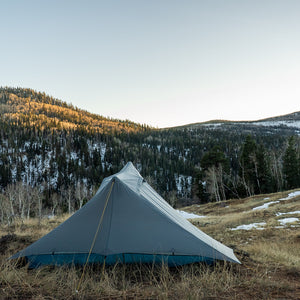
Tayson: Here's the big question, how do we live a life? Full of Adventures travel and memories on our terms without being millionaires without previous experience? And without unlimited amounts of time, that's the big question and this podcast will give you the answers. I'm your co-host Tayson and I'm Dave Kahn and you're listening to the live ultralight podcast powered by Outdoor Vitals. Aob tribe. Welcome back to the live Ultra Lite podcast. We're excited to start up on part two of gearing up for winter and part one. If you missed that, we went over clothing and pretty much everything there is to do with clothing, from from boots to gloves and then layering systems all things like that. In this particular episode, we're going to be talking more about the gear itself, shelters pads bags, cooking systems and just other intricacies that you might not have thought about or maybe have thought about with winter backpacking and camping. So Again, our purpose for this is to try to answer as many questions as we can and eliminate as much fear of doing this as possible. So, we'll do our best at that and then all. So hopefully along the way we motivate you and let you know how how Winter. Backpacking. Can Be much to contrary, delete popular belief, I might say. So, let's Dive Right In and I'm kind of the, the big three starting with the shelter system. I'm gonna speak for my own experience. Hopefully there's some different experiences going on here. But personally, I have found that a solid. I'm gonna preface That a solid three season shelter has performed pretty well for me in the fourth season snow load all of those things I've done pretty well with three season. Shelters in my personal experience. For instance, I've had like our two person tent and I've taken severely high winds and between four and six inches of snow load on that tenth. Performed performed. Great. That's been my own experience. So personally, I'm typically using the same shelter in the winter. As I am in the summer, I am taking a footprint, definitely in the winter just to have that second moisture barrier. And I'm not gonna take anything that's like a three-season quote, on quote item that doesn't have Out. Lines or that I'm nervous that the pole structure isn't that strong. Like if there's wind and I've seen it in the summer and I've seen wind and it. it rattles around like a plastic bag in the wind or where The really Bend, that's probably not gonna work. But if you've got a solid three season tent, I've had great success with them in the four season. So any any thoughts on that? I mean, I have as well. I've used the same 10 in the summer as I have in the winter when I'm using a tent and it's performed great for me. Every single time that I've done that the only the only there was one time that I was a little bit worried about it but that wasn't because of Snow low or anything like that. It was more of because of the wind, which was the same worried, I would have had if that same wind situation had been in the summer. That was the only time I was wearing about attend in a winter camp. My other thoughts on that though, with, with shelters and winter camping, is that you've got a lot more options at open up. Particularly if you're your camping in a lot of snow where if you want to go, Extra Ultra Lite. You can just bring an aluminum snow shovel, and some plastic, and build a trench, or if you just bidding a shovel and you dig a cave or you, you know, if you know how to build an igloo, I've slept in Igloo a lot before and then you can eliminate a tent altogether and sleep, in my opinion, much warmer than sleeping in a tent. There's a big fun factor to that. We have a video on our YouTube channel where we dug. Trenches and hung our hammocks, through the trenches. And basically, it's snow caves with our hammocks, and that was one of the funnest things I've done. You know, I'd love to go do that again. This winter with, with the team, and I was able to use a, I think he's a four-sided tarp, you know, for winter conditions, but I was able to build, you know, the extra seasons on to a little foresight at tarp.
Brigham: Yeah, that's cool. Do you know, various self-made shelters? It is really cool. It gives you like the sense of adventure, the sense of life, going out into a harsh environment and using your own hands and your own skill to like. Create a shelter for yourself. That's totally viable. Like every bit as viable as a tent and having done that a lot too. Like it is warmer like, you know, like Derek saying it's it's warmer you've got walls of snow which is a great insulator, actually around you and then the top is a bunch of Pine boughs. You throw on top of the pine boughs and you've got a ton of insulation and you don't lose a lot of heat in those in those trenches. You know, if it comes to like that, like a decision making process, Those things take time obviously. So if you are going light and you have the time, then it's a great option. There's the convenience factor of a tent, meaning, you find a level spot, and then snow, it's even more easy because you could level out snow with your shovel, or just by tamping it down with your feet and then the tent goes up, really easy. You know, three season tent. I definitely agree. Use a proven solid durable, three season tent one. That you've, you've personally been through some weather in. They've got confidence in and then, you know, use long, I'll often take Three season tent and all use long like two foot long sticks to drive
Tayson: into
Brigham: the snow because this the length of that will play a big factor into how stable it is, but yeah, good options. I mean a Force season 10, definitely has its place the painting on where you are geographically, but I would never let. Not having a four-season tent prevent me from going backpacking in the winter.
Tayson: Yeah, you touched on some really good points, both of you. And one thing I want to add is when you are building a snow cave, be very careful not to overheat. You know you may you may build a nice warm snow cave. Only to find that your soaking wet from the work of it and then you know, then you're back at square one. Like is this gonna be any warmer now that I'm soaking wet because I didn't, you know, take layers off, right? I didn't do this or that. Sometimes I like to look at it like It's harder for me to totally rely on a snow shelter, if that's like your destination, that's your thing, it makes sense. But sometimes. It's snowing and I don't want to build a snow shelter in the snow. I'd rather just set up a, you know, something else that's easier. Touching on hammocks really quick. Even our six-sided tarps are four sided tarps. May or may not be enough in the winter. You really want to look at something that's going to lower. The ground has doors. You know who we can, we can cover you in the future but as of right now I have I have showed up at a Trailhead with a hammock thinking, I was gonna make a camp, saw the blizzard coming down and it's like, I'm gonna not take the hammock, you know, I don't have a tarp that that's good enough. So something to consider with, with that, a lot of times with hammocks, you do need a different tarp than your three season tarp. Let's talk about Stakes just for a second. I think there is a place as well to potentially swap out a few Stakes for snow Stakes or just bigger Stakes otherwise you'll be left. Mistakes potentially in the snow such as with, with limbs or rocks and trying to make that work. But something to consider, you know, I, I personally like to take maybe a couple larger stakes and and just, you know, maybe those are my guy out Stakes if weather's coming in. I know that I'm going to have a heavy or stake on this particular guy out where the winds coming in full force. And then, let's let's not sneak over the Four Season shelter. What is a Four Season shelter? And and To me, I only see disadvantages but there's got to be advantageous for sure. So let's let's just briefly talk about what a Four Season shelter is in the advantages slash maybe disadvantages.
Brigham: Yeah, well, you know, a Four Seasons shelter. it's going to have a more robust pole structure capable of handling, you know, heavier winds heavier snow loads and they're also a Like a double wall meaning, they actually retain some Heat versus a three-season tent that generally is going to have a mesh inner wall. A Four Season tent will have a non-mesh breathable inner wall. So they will actually retain some heat whereas I can't have two wind layers now. Yeah and they and they and they go down closer to
Tayson: the
Brigham: ground go to the ground you know. So the they try and you know, it's to eliminate as much draft and heat losses possible, right? There's no heat Source other than the body in there. So the idea is keep as much of that heat in while managing the moisture coming from your body as much as possible. That's why most of them use like a breathable inner wall so that the you don't get a lot of condensation and dripping on yourself but Those are the like, the two big things of a Four Season, you know, a little bit stronger, pull structure. They might even have a little heavier fabric too. That's a good point, you know? Because they have to be able to withstand heavy wind and snow loads.
Tayson: Yeah, the one thing that I frown upon is condensation is hard enough and we'll be touching on that quite a bit with the gear and sleeping bags. I would be very nervous about Condensation side. And You know, it's a three-season tent already, can have condensation issues, a four-season tent to me. feels like it's gonna be just Genomically problems. If you're taking out more mesh putting in, you're taking the outer fly down to the ground. And somebody says again, I don't, I'm not speaking from from experience with the Four Seasons shelter. Yeah. Things to consider. I think there's a time and place for it just like Brigham said but I would say the biggest thing I would make sure that you're aware of when you switch to a Four Season, 10 is your likely going to increase probability of condensation and management of that kind of sensation. Trekking, pole tents. I am going to be taking a trekking pole style shelter with me to test out and it's going to be interesting. I haven't used that. I don't have a ton of familiarity with it. So it's going to be, I'll take Typical, you know, Dominion tent, outer vitals tent as well as a backup plan. But I'm gonna be testing a trekking, pole style, tent. Neither of you guys have any experience with using something like that, with snow or you know, whether
Brigham: I haven't done it in snow.
Tayson: Yeah, I mean, the one thing that I will say is I have heard negative experiences of some people using them with high winds in like a teepee style where it's a single pole. Like they just Can't like the wind just is too much for them. I can imagine, this is my personal thoughts, prior to the trip off, after a report on this, I can imagine that the fabric itself is going to be a lot more Flappy. Maybe a little bit more droopy. As far as just the fabric having more play in it. However, if the trekking poles, I mean you could put a ton of weight on trekking poles. So I feel confident in snow load abilities and some of those things so it'll be interesting to play around with this particular, one is two trekking, pole style system, you know, double vestibules seems that ample guy outline. So I think I'm gonna be just fine. We'll see if there's a lot of wind if I am annoyed with any flopping materials, but I think it should perform so I'll report back on that. Just wanted to see if anyone had any input on that and then last thing Shelters here. I feel like there's a trend I've seen a trend in some of the communities. I've you know, I'm in to that you've got to have a titanium wood burning stove now like it's like People that maybe try them out. They're I don't know between two and four or two, and five pounds is weight. You can burn tiny little sticks in them. They're made of titanium and they collapse down really small. And people have been using them. And like people use them like, They swear by them, you know, and if you see that and this is really what I want to point out here is like people that see that I think they're like, well if I don't have that 400 dollar titanium stove, I can't Winter Camp.
Brigham: yeah, it to be honest, I wouldn't I want one like I would love because of the advantages, but to your point. I even winter camping my entire life and I still don't have one. So I would just hate for somebody to to think that way that like Can't do it without the winner without the stove. Like you have a can it shouldn't hold anybody back. It hasn't held me back and there, you know, there's advantages and disadvantages. There's always things to consider and like some of the advantages to having that stove is like, I want one strictly for winter camping, because it helps with management of some of the main issues like, Your wet clothing. Like when you have a hot tent kind of the generic term, where you've got a stove in there. Then it's less critical. How you conduct yourself once you're wet, right? Like you can dry out your your boots. You can dry out your wet clothing and you know you can kind of kick back and relax a little bit more. Obviously, there's the heat Factor you can kind of warm the thing up before you go to bed. And in the morning I would say, you know, people need to not have an expectation that that thing is going to keep the tent warm because as soon as that goes out that little thin fabric of your tent will retain nothing. So as soon as that fire goes out, it's cold. And then the other you know, you just have to be aware that there's a little bit of weight there, there's a little bit of bulk. so, Yeah there I I think they're I think it'd be great. Yeah. But there's you just have to just like everything else we talked about, it just be aware of what the factors are and Yeah, I agree.
Tayson: I think they sound Nice nostalgic I could see me wanting one if I'm bringing my kids you know is my little boy and girl get older you know thinking hey I want to take him out on a winter backpacking trip but one time I have a good time maybe maybe that is the scenario when I went out or vitals invest in one, right. But but until then I I definitely don't think it's a hurdle and just to just to reiterate reiterate two things. You said they're one, I've used the stove in a canvas tent, the second that's still goes out that canvas tent was ice cold so a little backpacking tent, it will retain nothing. I mean, the best thing that that's happening is that you're just deflecting the wind and I mean, there's don't give me wrong, there is a different noticeable temperature feel from outside the tent to inside the tent. But that that's still is not going to add any warmth once it is out. But I just to reiterate that like I don't know. What's the coldest temperatures? You guys have like slept in and winter conditions without a stove? For me probably about negative 15 degrees. I like Brigham. I've never had a stove like that my entire life and I've been winter camping, saw a little kid. And there is there's other ways to keep yourself warm, as I'm sure, we'll go into with different types of gear, but also, like, going back to Alternative shelters where using the snow and set of a tent or something. you know, if you've got a trench or an igloo or a cave, something as small as a candle, Can do a lot, not only for heat, but also for, you know, is that is that candle? If you like just a little candle inside of a snow cave or an igloo, it'll it'll warm up. Just the inner edge of those snow walls and now to where they'll start melting and tiny bit, but it because of the cold it'll it'll refreeze just kind of solidify the inside of your shelter, which will add more barrier between you and the weather outside and like Brigham touched on earlier. Snow is a awesome insulator. And so, that's one way that I found without having used the stove ever to stay, completely warm and comfortable while winter camping. yeah, we yeah, we're from the same place which It's warm up there. Come on. That's the
Brigham: second lowest recorded temperature in the lower. 48 was right up the street from where we where we grew up and that's I mean, that's Right in that area is where I cut my teeth winter camping. And so like, well into the negatives negative teens into the low 20s that was pretty common for for our Our campouts and yeah, we never. Never had stoves and back in those days, I mean, it we didn't take tents, we did the snow trench thing. so,
Tayson: That's pretty interesting. I I looking for feedback here maybe but I mean what if you just took and maybe I shouldn't say this, but Do not condone this. Don't do this at home, but what if hypothetically? You got a very, very safe way of putting a candle in your vestibule of a tent? Would you notice a difference? It's very risky. I mean, I don't do it at home. I'm just saying like Wood. Or is it strictly? Because the amount of snow that it's insulating and working in a snow case scenario?
Brigham: I don't know. I you gotta feel that he I mean. if let's say there's no wind,
Tayson: right, because
Brigham: if there's a little bit of wind coming underneath, the vestibule probably just blowing out blow that, that take, that heat right away, but
Tayson: I
Brigham: would think you might be able to feel a little bit, if anything else, you know, and you just need to kind of warm up just a little bit. before you get to bed, like, I would think that some Heat's gonna bounce off the vestibule wall back towards you.
Tayson: Okay, oh, interesting to try. Yeah, I know. We're not gonna try that, bring him with danger, I just had to ask the question. Anyways, um, one thing I just wanted to know here, we may or may not be working on some negative degree backs. So keep an eye out for that. Let's move on from shelters. I feel like we've covered that pretty well. I feel like, just so you guys know, if you've got a solid three season tent, we feel like it's, it can work pretty well in the Four Seasons and don't let things like stoves, keep you from going and maybe some small modifications such as a couple bigger stakes and things like that. Can can also improve your shelter yourself and prepare it for those scenarios. Let's jump to pads and I specifically put paths before sleeping bags because again, I find that you know, 70 80% of people that email in and say you know my sleeping bag wasn't warm enough. If you dig a little bit deeper, it's not the bag. It was the pad, they were on. That was not warm enough. I think there's a big misconception. I've publicly said this before, but I think there's a big misconception and the Opera Community where Our values are not high enough for most scenarios that people are going into and people don't fully understand our values. Personally, I think that a three-hour value pad should not be used under, you know, freezing temperatures, I think you need a four, our value pad to get you into the teens and then, you know, I mean, you really need like a five-hour value pad if you're going below, I don't 18 degrees or low teens and lower. And so, what do you do? You know what, if I've got a three-season pad, I can't afford another pad or what if what if I mean, there's not very many options of paths that are five and six are value. There's just not. So one thing that I'm doing for this trip that I'm headed out on here soon to Colorado we'll be. I cut up a closed cell foam pad and I am using it in conjunction with my outer vitals pad. By doing that I am increasing the R value level. I heard I heard someone from a big Pad Company say once that they almost like they add straight together. Like if you have a four-hour value pad and three of our value pad and you stack them together, you have a 7 hour value pad. I don't believe that. I don't think the science would work quite like that, which is why I would save this. Our, our paths are depending on which page you're getting, you know, you're looking at. Let's say, A 20 degree pad some you know our regulars are more towards 15 or long wide sir or more close to 20. Let's say I'm going into single digits, I could put that closed cell foam pad underneath my Outdoor Vitals pad and stay warm but let's say I'm getting into a scenario where it's even colder. Maybe I'm dipping into the negatives, personally, I'm going to take that closed cell phone path and I'm now going to put it on top of my outer vitals pad so that I'm getting Like sorta, I'm like, I'm creating a barrier from the ground to me, but also now, I've got something right up against my back. The sure holding in heat. That's going to be less comfortable for sure, which is why I'm not gonna do that unless I have to unless it's getting that cold but personally. Yeah, like Taking taking a closed, cell phone pad, cutting it up so that it fits exactly the same size as your your pad that you're using sticking that underneath. Or I've also said, you know, taking any clothing layer's that you're not using and putting those underneath your pad. So I don't typically wear my Soft shell jacket, let's say during the night time. So I'm going to take that softshell jacket, I'm going to put it underneath my pad and just Create as much barrier as I can between me and the ground. So, That's on pads. I think it's incredibly important. I I can't stress this enough. You'll never be warm. Camping, if you can't get warm from underneath. No, I agree. Completely with that. I've done the doubling up different paths before and it works pretty effectively. Like you said, there's just not a lot of five or six r value. Pads out there. And so sometimes that I've just done is I've taken some of those cheap, kind of egg, roll type pads. Those foam ones that are kind of big and bulky. They're pretty light but they're just big. I've taken one of those and another smaller pad and double those up. And those are, you know, the pads. I've used inside a snow caves and even when I'm just in a tent in the middle of the winter camp and I said fairly warm just doing that. I think, I think the big thing to remember is not to overestimate. The performance of their pad and just take one, you know, chances are the one that you have. won't be warm enough and you'll kind of regret that decision
Brigham: yeah, I definitely agree with what's been said, it's it's In my opinion. All, so very overlooked. Underestimated, the importance of of your pad. I've done the, my, my favorite system for backpacking is like an inflatable pad on top of closed cell phone pad, I have is personally haven't Experienced. Anything where I needed more than that. Like, I've always slept very well with that system. I've also done what Derek's talking about and those are more. Definitely those situations have been where I haven't had hike very far because they, they are bulky. They're not heavy. They're just bulky. So, I've been plenty warm with, you know, kind of like the egg crate foam, pads doubled up on a, you know, a closed cell phone Pad. But, definitely, it's a huge, huge factor that I think is unfortunately overlooked, but It's almost like, if people would just experience that one time, I will be enough to learn that lesson. Like they'll sleep so much better. and, you know, because you could take a negative 15 degree bag. And if it's 10 to degrees outside, And you have a two and a half three r value pad. I, you know, I've got most people would still be cold.
Tayson: They will, there's just that the heat is just,
Brigham: it's just escaping, write out your way back.
Tayson: Yeah. And if they say like that, they're not cold. It's because they're constantly rolling over whatever part is down. We'll get cold. They'll roll over. That side will heat up the other side. Will get colder warm enough but
Brigham: didn't sleep. Well,
Tayson: yeah, they I was warm enough but I didn't sleep well. And once you hear this, you will find that you'll start to pay attention and my cold because of my bag or my pad because you'll start to think am I cold on my Underside or the top side and that's a good indicator? Whether it's the bag or the pad? Yeah, those are really good tips. one thing I did want to add here to and is So far, we've said, okay maybe add a few steaks and then buy, you know, add a close up on pad. Both are those are really cheap things to do, you know, for the budget-minded camper as well. It's pretty easy to to adjust. Those two things. I don't know, closed, cell phone, Patty, you might be 30 bucks, Max. And Stakes maybe 10 or something like that. But one thing I will say here is if I am going to spend money on this, spend it on the pad before the bag. That's a guy who sells a lot of sleeping bags. I'm telling you spend your money on a on a, on making your pad warmer not your bag because you can always sleep in more of your clothing if you're cold. So I can't tell you how many times when I get in my bag and I'm, you know, maybe I brought a 30 degree bag and should have brought something a little bit warmer. All right, I'm gonna take my puffer jacket and I'm gonna wear it to bed. I'm gonna take my other jacket. I'm going to wrap it around my feet, something like that makes a big difference and so it's easier to wear things to sleep in wear clothes to sleep in and stretch the temperature rating of your bag, but you can't really stretch temperature rating of your sleeping pad. Password. It's meant to be without I mean it's just there's not good ways other than you know close on foam pad, or I've mentioned this the past, putting some things, underneath your path helps. but, Yeah, that's my that's my two cents on there. So let's move on to sleeping bags. This one is interesting. Kind of two debates here. I feel like that are gonna come up, but first off, just making sure you understand temperature ratings. Make sure that, you know, that 99% of bags out, there are rated on a lower Comfort rating. If you're looking at Amazon, some are rated on a survival rating, so be careful, but lower Comfort rating. Means that the average 30 year old adult, man can sleep eight hours without waking up. That means, if you're a cold sleeper, you're going to be cold. That means, if you're a woman, you're gonna be cold in a man rated sleeping bag. Typically, what we tell people is ADD about 10 degrees to that bag rating to get a comfort level and with most of our bags at about five, we try to be conservative on there but but just know that straight out of the gate. So, If you're going down to you know, zero degrees, you've got a zero degree sleeping bag. Realistically, that bag is going to be more comfortable in the five to ten degree range. So if you want to take it to 0, you probably still can as long as you make sure you got a good pad and add some layers onto whatever you're using with that. Be insulative layers, the down booties, we've kind of already talked about puffer jackets, just make sure that and all. So when you're doing that, make sure that you aren't layering one section of your body and not the other that creates a disparity and temperature. And so, your body will wake up and say, my legs are cold because you've got a jacket on but not something on your legs. So just one of the things to mindful of but you can stretch a sleeping bag out a little bit past. Where it normally is. You know, as long as you also understand what normal really means. Let's talk for a second about the debate and I'm literally having this one. I talked about it right before we push live on this podcast. Because of where I'm headed to Colorado. There's lots of snow and all the hiking and different things. Down sleeping bag versus our Loft Tech sleeping bag. So I mean essentially down sleeping bag versus synthetic, the problem is there's really not a good alternative to a synthetic sleeping bag for cold weather. I think I've told you this story before but I literally ordered one synthetic sleeping bag. That was the Ultra Lite version from this company and I ordered it in like a 15 degree bag and that's nothing showed up and it was like six pounds and I mean it's very hard to get his synthetic. That cold, let's say zero degree synthetic bag. That's going to be very hard. It's going to be very heavy. Not as compressible and stuff. So let's let's kind of scoot that off the table for the sake of our own conversation. And let's talk a little bit about the difference between a loft techs and synthetic sleeping bag versus a down sleeping bag, which might be better for the different winter. Camping scenarios, I'm literally right in the middle right now where I'm not sure, exactly which way I'll lean. Well, let's go over. Maybe the difference between the synthetics that you were talking about in Loft Tech just in case anyone listening. Isn't sure. What that. Yeah, so almost all synthetic if we're just bunching synthetic, together comes out in a sheeted. Synthetic, that means that it's basically looks like a piece of fabric coming out, but it's a lot thicker than a piece of fabric. It's connected, it's bonded together. You can pull on it and it doesn't fall apart, right? And so, what they're doing is they're either layering multiple layers of that into a, into a sleeping bag or their Making it as big and thick as they possibly can. But essentially it's a sheet of insulation made out of a polyester and the higher end stuff is going to be siliconized so that it does really well with moisture. The problem is that synthetic just doesn't compress very well because of the way that it's made. Because it's not broken into small pieces, you don't get the air gaps between those pieces. If that makes sense. So like When it's all in one sheet you you try to make it as lofty as you can. But when it's broken into those Little Fibers like a like down as hypothetically, You you're able to create much more air pockets within that insulation and those air pockets are what insulate and capture the warmth. So loftech compared to a traditional synthetic looks and acts and feels like down and it creates a lot more air pockets which allows it to insulate at a higher level. It also allows it to compress at a higher level. So right off the top, that's the difference in Loft Tech versus synthetic to go one step further in our sleeping bags. In particular, we've done a hybrid model, which means we put 80% of the synthetic Loft Tech insulation into into the blend. And we put 20% of a dwr treated 800 fill powered down into the blend. And it creates a really, really cool synergistic relationship. Where The Down creates more stability in the insulation. So it makes it be able to fill bigger size, baffles helps us reduce seam weight and just creates an overall more warm package because it fills the baffles very well. But the Loft Tech, what it allows it to do is it stays completely lofted, even if you soak it wet. So you can go on our YouTube channel. You can see me soaking a loft, Tech, hybrid sleeping bag in a river and then sleeping in it because it's still lofted and it still warm and by morning, I was dry. And that's what's cool is the Synergy between those two is that Loft Tech gives it body and when when the down isn't clumped up and you know, in a pile in the corner of the bat and of the fabric, it can't dry out like that, but when it's mixed with the Loft Tech, it dries out extremely fast because it still has a dwr coating. And so between the two, you get all the benefits of a synthetic for water purposes. It's much more compressible, packable lightweight. So so diving that back into sleeping bags. Personally, I don't know the scenario where I'm going to use a traditional synthetic sleeping bag. Now, that Loft Tech is available because They're when you start to just the colder temperature of the sleeping bag in a synthetic traditional synthetic bag. The heavier and more, bulky those things get, they can get astronomically, big and heavy. because of, Just the science behind how they're made, and the properties of it in and of themselves with Loft Tech, you can stay relatively close to the weight and performances of down. So, okay. So, so basically our debate right now is a comparison between down, which has a better warmth, the weight ratio. Yep. Or lofticries. Would stay warm even if it got wet. Correct. So, the down the down is 800, fill power. Whereas, our Loft Tech is sitting more at 625 fill power. So it's almost, you could almost like to simplify things even wants to further than what you said. You could almost say it'd be like comparing, an 800 plus. Fill power down sleeping bag to a 625. Fill power down sleeping bag, but the 625 fill power down. Sleeping bag has all the advantages with moisture, so it's, it's going to stay warm. It's going to try out faster. To gets wet. Is that simpler simplify that or make that worse?
Brigham: It's I would say it's it's simplifies it okay more. So
Tayson: it's like a budget down back versus a premium down bag but the budget down bag has Water properties. You condensation wise, it's going to outperform. You won't see any any negative effects from condensation. If you were to somehow get it soaking wet. It's not going to fail. You on the mountain side, but if we're going to talk in practicalities, so for me, I'm going going on this trip. You know, I'm seven plus days out there? I I'm not sure if those will all be consecutive or if I'll be two days here, two days here, two days here, things like that. Really, it's like I know that I'm not going to get that bag soaking wet. I'm not using a water, bladder not going to be Crossing big streams or rivers or anything like that. And so the only way that that bag is going to be wet is from literally snow somehow getting on it, which is highly unlikely as long. As I'm doing the right things or the other option would be compensation, and that's that the very high likely one is connotation so I don't know. Let's, I'm kind of in between because usually I steer people towards Loft Tech in the winter, but at the same time, our down bags, a little bit lighter and I'm I'm right in the middle right now, between deciding which one to go with.
Brigham: yeah, I see I'm all I would say I'm almost the opposite as the temperatures get colder. I lean more towards a down bag in the winter. But again, it's kind of like the jacket. It has to be a certain cold, like, if it's 25 or above, I would lean towards a synthetic like our, like, our hybrid Because there's that, you know, if it gets wet and if it's not quite that cold like the condensation is going, it might fall, it might drop, whereas if it's really really cold I don't care about condensation because this can hit the tent freeze.
Tayson: So