Tayson: Here's the big question, how do we live a life? Full of Adventures travel and memories on our terms without being millionaires without previous experience? And without unlimited amounts of time, that's the big question and this podcast will give you the answers. I'm your co-host Tayson and I'm Dave Kahn and you're listening to the live ultralight
Dave: podcast powered by Outdoor Vitals.
Tayson: All right,
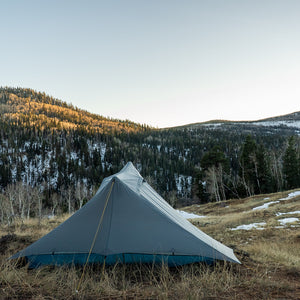
Dave: welcome to another episode of the live ultralight podcast. Today's episode is particular gonna be about our new tent. Our two-person tent in particular and we have Tayson with us today. And our lead designer, bring them to explain. What has changed why we changed it and how this new tent design will help us move forward with Outdoor Vitals 2.0. So I guess my first question would be why Did we change this tent? So I guess I'll direct that towards Tayson and then maybe bring up kid, talk a little bit of ball. What actually did change?
Tayson: Yeah. So you know, our older, our initial first 10th whoever made was the Dominion two and a half person tent and You know, that tent did a lot of really, really good things. But as we started to become who we were, and just know more about our own brand and what we really wanted, one thing came pretty apparent about that tent pretty quickly and it was that it was too heavy. I actually remember getting that tent in its prototype and putting it on the scale and just thinking man this tent is is a little bit heavier than I thought it was going to be. And I ended up acquiring a competitor's tent, just to see what was different. And it was just, it really came down a lot to the sheer size of our tent. And that's why we changed it to the two and a half person tent. Dominion two and a half person and while that was nice, if you wanted that extra space, a lot of our followers and a lot of, you know, us at the company, we wanted a two-person tent, not a 2, 1/2 person tent, but mainly we wanted to cut that extra weight. You know, being a two and a half person tent that tent would just dwarfed you, if you and me ever needed to use it by yourself and then even as a two-person tent, there was just lots and lots of room in there. And so we, we, you know, really decided to look at refreshing this, as we started to double down on ultralight on Lightning, our products and becoming more ultralight. And so, that was really, the main purpose behind. This is, how can we lighten this tent, but still give our customers, you know, the the most Possible space and feel and usable space inside this tent.
Dave: What where did you come up with 2.5? Like, that's a question that I feel like I get a lot. Like, where's the the point five? come from and I guess, I kind of know with traditional backpacking, tents like a two-person, backpacking. 10 is Pretty tight. Like I have a two-person backpacking tent from a competitor and Decides for me and like I would never put two grown adult men in that traditional tent. So I guess maybe talk a little bit about the two point overs, this newer 10 and How maybe we shave some size or the size of it a little bit? Yeah,
Tayson: I mean I mean, just kind of like I said, the reason we want that 2.5 is when when I got ours and ours like that older model and it was heavier. I was like, man, what is going on here? So I acquired a few other ones I had you bring in. Now, you aren't even here yet, I don't think so. I anyways, I looked at some of the real, backpacking, two persons and was like holy cow. This is not the same size like like the size that I designed this. Was just really big. I mean, it was just it dwarfed a lot of the other two persons. So I went with the 2.5 to really let people know. Hey, this is bigger than a backpacking, you know, for two person tent. And so that's where we came up with that. But When we were looking at this particular design, you know, we wanted to figure out how we could get the most usable space, but reduce that weight. And some things that we really liked from the two and a half percent tent was that it had, you know, near vertical sidewalls. And we had a really good head space in there. And so I was like, okay, how can we keep that, you know, without keeping the same weight? And so, that's where we started to really hone in on some things. And we came up when we started designing, the one person tent actually. So, when we started to, to figure out a few of these things. And so, the big thing that we came up with at that point was doing a larger, why section on the head end and a smaller white section on the foot end and that allowed us to shave off pole sections, but still get a very vertical sidewall on the head end and make it whiter on the head in. So, there's a tapered floor, you have like on the single person, you have a four inch, it's four inches wide or on the head in than the foot end and I believe on the two person. Were five inches wide or roughly on the head in the foot end. And and that that just creates a lot more usable space because we get a more vertical sidewall by your head and we get that extra five inches of width by your head, so it should feel pretty similar to that two and a half person tent. you know, even though it's not as wide through the whole thing, so, I guess
Dave: a question for bringing would be maybe more if you can. Elaborate on what Changed, maybe design material wise, I guess some major factors.
Brigham: Yeah. Well first of all, if anybody is already familiar with our old 2.5, this isn't going to appear like drastically different. It's very like the general shape and pull design is similar. But really we're like kind of tasting talked about looking at like smaller details that we can change or improve. That. You know, when they're compounded together they ultimately come up with a vastly improved. and just shrunk down in the right places tent. so, Like you said, the the footprint not the, like, the footprint that goes under the tent, but the, the floor footprint, the shape is tapered. So it's wider at the head and narrow at the foot. We added some extra tie out points at the head and foot ends of the fly. Um, that helped a lot with ventilation, and they really helped a lot with like storm worthiness and and stability in the wind helping, keep the fly very taut. And so, you can get a really clean pitch with this newer two-person tent.
Tayson: Those tie outs just to jump in. Also, make a big difference when you're doing the ultralight mode, that's all I use the tent.
Dave: Both tents, probably most of the time is in the fast and light mode. So that that's good for me. I'm sure a lot of people use it, and that's the same capacity without for people, that I know without the actual body of the tent. So it's just the stakes, the polls, the footprint and the Flies. What we're talking about.
Tayson: ya know, that being able to pull that away from your footprint just It makes a big difference when you're using it in that ultralight mode.
Brigham: Yeah, maybe I'll come back to that in the minute with the tie outs. Let's see. There was also if you're not familiar with the dimensions, got two vestibules and door on each side. So kind of, like, again, going along with just trying to create the most usable space without being excessive. We really just. It's almost like, we just trimmed the fat off this tent. Much like you would do, you know, preparing chicken or something. It just It's just trimmed down so we did things like the crossmember on the top, the piece of Dak pole on the top. It's it's shorter. Meaning the top of the tent is not as wide as it used to be obviously because we narrowed the floor a little bit. So, but what that is, we're still able to maintain really good Headroom like on the side if you want to call it Headroom or Elbow Room, got a really good cross member with their and then we eliminated some of the fabric in the body. So the body is, it's all either bathtub floor and then from the bathtub floor it's just mesh So we've lost some weight there. And we lost quite a bit of weight going with with DAC poles, we've got DAC Featherlite NFL polls. I think takes me, says, six ounces or something is about what we saved there.
Tayson: Yeah. And and actually, let's just let's just kind of run through those numbers. So, so long with losing that we had a 20 denier mesh or not mesh, but material on the inside that connected, with the bathtub floor, and then connected at the top with the, the mesh itself. So there's just a kind of a filler material that gets put in there and a lot of tents and so we deleted that out and just have the mesh a 15-day in your mesh. And then we have historically, we've used a 20 denier and a 40 denier material for the rainfly and the footprint respectively, and we actually changed that to a 15 denier and a 30 denier both using silicone impregnated materials and a few coating. So what that, what that does is basically just reduce weight further. So going straight down the list here, on our old two person tent, the rainfly, used to weigh one pound eight ounces. Now, it weighs one pound four ounces. So we lost about four and a half oz actually on that piece. The tent body. We actually dropped seven ounces off the ten body. The polls. So again going to those DAC poles, We actually dropped six full Oz off of that. Now, with the tent, we include eight stakes and we may have included a steaks before. I'm not 100% certain, but we include eight stakes in two of those are actually longer Stakes. So if you're getting wind, you know, buffeting you from one particular site, we tell you to put those two longer stakes in on that particular site anyway between between all of those major changes I kind of listed and then the stakes, the guidelines, the carry sack and everything. We actually took a 20 oz haircut off of the the tent weight. So that's a one pound one and a quarter pound Chunk that we were able to cut off of the weight of that. So the new person, the new two-person tent comes in at exactly four pounds and that's like what you would actually pack. That's the the rainfly poles tent body Stakes guidelines. As everything except for the footprint and that comes in at exactly four pounds, whereas our old one was coming in more at five pounds, four ounces. So yeah, we were just able to just kind of go piece by piece. And cut. Cut the material off, cut the fat off and every little bit. You know whether before Oz on one piece or seven ounces, like I mentioned on the 10 you know all that definitely added up with the materials.
Dave: I feel like it's a livable two person tent too like yeah,
Tayson: I was. So we went and set it up and we're getting some some footage of it. The other day we and and, you know, I was, I was just sitting in it and I was sliding around. I was basically sliding around the sea, how much Headroom there was. And so, when I sit in that tent and keep in mind, I'm a little over six foot two inches tall. I can slide almost to the very back of the tent and still have my head. Not touch while sitting on our three and a half inch thick pad so there's still a lot of Headroom in this tent. Even though our Pike did come down a little bit, but with, with the newer design and our newer, tint manufacturer, they did a great job. In fact, Brigham, you're pointing this out, you kind of went to the side and we're just looking at it and the way that they've bent the polls on the larger, why side and the foot in and things you pointed out that basically the max Peak height, Basically lasts for about 60% of the length of the tent. So instead of having like the max Pete Kai right in the middle and then it immediately tapering off on both sides and starting to cut into your Headroom. We get like 50 plus percent of that tent has the has within an inch. I would say of the max P. Kite.
Brigham: Yeah, yeah it's really cool. And, you know, this will kind of talk about this and that'll probably kind of get us into talking about the, the ends, and the pole design there but Because of the on the head end, the Y structure of the polls, they're very almost vertical. and so, On the head end. It's almost near Peak height like, just within inches of the edge of the tent. And that Peak height carries through. To, what will? like, if you were to look down on your body, if you're laying in the tent is close to your knees. So from your head to your knees or mid thigh, That tent is at Peak Peak height. but from your mid thigh to your toe, Or like your shins, it only drops. Like five or six inches. So it's a very airy tint inside. You feel a lot of openness and then it's also not tapering in on your shoulders because of the because of the cross member and the way that's Lined up with the with the polls. So it's it has a good feel in there especially for a two-man
Tayson: tent. Is a big difference. I mean, we've had a lot more experience with that one person tent, but there's been occasions where I've flipped around, and put my head on the smaller end with the smaller. Why? Where it's more narrowed? And not as vertical. So basically your feet are supposed to go and you're excuse me, your head, just having that material, that comes down really close to your face. And so a lot of materials, a lot of companies in tents are like that and when that material is close to your face, when there's no real distance between you and the tent wall and you develop a lot more condensation as the other part that I feel like is beneficial by having these vertical sidewalls. So, Having that head in like a designated head, end where you've got that vertical, more vertical sidewall, you've got all that space. I feel like that helps reduce some of the condensation that can get back onto you and fall back onto you. and the nice thing about the, the two person tent is It's got double that's the Beatles so it's really easy to pitch it. And make sure that your head's always on the uphill side. Or on that. Correct. Slope. The one person tent, your vestibule comes off of one side. There's just one vestibule on that. So sometimes that can be a little bit harder, but again, it's totally doable. But and it's only happened to me one time in the last Year, that we've had that one person tent where I ended up kind of switching. I actually thought I had my head in high and I ended up in the middle of the night, just switching my head into the other side because I realized, I had got it wrong. But yeah, having having just that vertical sidewall helps with sitting in there as much as it does, just breathing when you're laying down and having that space over your face, One of the things that kind of popped into my mind is we were, we were going, was talking a little bit about what we changed with the guidelines. Both the length and the placement, if you want to talk about that a little bit Brigham.
Brigham: yeah, so one of the things that we Oh, say we take pride in it, but it's something that we, we make an effort, a conscious effort to do is to really make our tents storm Worthy. We've we've we take our tents up high, you know, 11 1200 feet above Tree, Line back if you
Tayson: want to see where we take our 10. Go check out our YouTube video Dave gets wrecked. I think yes the title that's
Brigham: good.
Tayson: He did not have the storm there. Oh it was trying out a new piece of gear for us and didn't go super well. Yeah
Brigham: it's a good video to demonstrate like the conditions that we really like to see our tents in. It's something that doesn't scare us or we Have No Reservations about doing it. so with that, in mind, That your tent is like, your last ditch shelter, right? And so I just like reinforcing like bad weather, worthiness of a tent. So we took at the head and foot end, there's the guy out points that are, I don't know. Halfway up the tent that I think we're, they were already there but we notice that if we put a tie out point at the bottom edge of the of the fly at the middle point of the head and the foot. not only does it kind of give you a more pitch, it kind of pulls it out and creates better ventilation better airflow, but it also really makes it a really solid pitch especially with the head end having such a vertical wall when you're thinking when that can be a bad thing to have just a straight vertical wall. But with this guy out system, on the way we have the tie out point in line with the original guy out point. You can actually stake the two guidelines to the same stake, or you can extend the upper guideline out farther. And then Pull the lower tie out point about 18 inches away from the tent. It really just helps anchor that down in like if you're in really strong winds, it's going to be very stable kind of unusually stable for like a three-season tent So this kind of some really, like, I guess less talked about benefits about having the way we've, we've got the that guy lines, set up.
Tayson: Yeah, one thing that I also remember coming up through this process was just because we switched some things around some of our tie points for all. So able to get a little bit lower, you know, on the on the peak, on the side of the vestibule is just kind of a factor of Pike, but on the other side, as well. We are able to get some of the most high up points a little bit lower. These are particularly guy out points like on the foot end and that that helps with stability as well because you're actually pulling on the tent in a better placement than where they may be used to be when they're a little bit higher on the tent, we also extended the link of some of those guy out points so they're pretty strategically LinkedIn to give you a lot of string to make sure you're pulling on good angles. Particularly on a free-standing tent. If you pull too close to the tenth, you're just kind of putting more stress and strain on your polls themselves. And so that those those the cordage on there has been lengthened a little bit to make sure that you can get far enough away from the tent to actually help with the wind coming in instead of pulling it more down. But yeah, that's just a big benefit of a freestanding tent in general, is they're going to be easier to set up. The pitch, is going to be pretty good. and then with these additional tile points and these things can can definitely take a beating and I don't have any problems with non-free standing tents and we have Aspirations to do some really cool things there, but they definitely require more skill and making sure that you get them set them up, right. Make sure that you're you're anchor points are anchored, very securely. Whereas like, you know this tent, I've had it in a lot of conditions where it's just been bomb proof. I mean, I've had in Colorado where it's taking a foot of snow and I mean the thing was just bomb proof and I've had it in fact on that same trip in Colorado, we got some crazy winds and one of my guy out points like one of my tie lines actually pulled out of the ground. I mean that tent was staying here, touching my nose on some of those big gusts But it held through the night and I totally could have got out and re anchored it but I just didn't want to. But yeah, there's just they're just definitely bomb proof shelters and options for people and going back to that example too. That's part of the reason why we did also give you two longer stakes in the steak packet is When you're tying out some of those guidelines, they're taking the brunt of the wind and the length of that steak is a big factor in the security of it. In fact, I was Brigham's idea to throw in two longer Stakes like that, which I thought was very smart,
Dave: Cool. I mean, I guess I feel like we've covered a lot of updates and materials and specs of the tent, but maybe we can talk about how the tent Falls in line with our new branding, if you will alter vitals 2.0, maybe you can talk about, you know what? made you want to design this and in Gold, tulle some new manufacturers and things like that so, maybe if you could just talk about that and I guess this would be The first product under the new branding. What would you
Tayson: say? Yeah, since we've lost that new logo, it has been. In fact the logo on this thing looks super good which I was super excited about to see. Off to get a picture up on the listing, just to see how it looks on there. But yeah, I mean, we definitely did a lot. I mean that the whole 2.0 like it's new to our customers for us to kind of talk about it or the Rebrand to show people the Rebrand. But I mean, this is something that's been worked on for, for a long time for us. This particular product, we had produced the Dominion tents with a previous manufacturer and what we like that manufacturer lot and they did, they did. Good work. You know, we were always striving for for excellence here. And so we, we actually, I kind of went out and sort of searching for hiring tent manufacturers, you know, once that Specifically specialized in some of the highest and tint. You know, Brands out there and things like that. And we came across manufactured that, that was exactly it. And so we, we started to work with them prototype with them. And experience was really good. And so just overall quality of this, you know, in the stitching and the topness of each of each side of things like that. You can tell you know minor improvements there from from you know going from a good to a great manufacturer as well. But yeah I mean it's definitely just comes back to to kind of that Relentless Focus. I feel like we have on And pushing forward into, you know, a new out revital one that's that's really focused on premium gear. One that's really focused on on lightning. Every aspect that we can, you know, you're probably never going to see us come out and and become what, you know what, we call like a gram weenie, where just everything has to be 100% focused on weight, but like, with this tent it's a really good example of like this tent is super usable. I mean, you can get two people in there and use it just fine, just a very usable shelter, but at the same time, you know, it's it's very packable, in fact, me and Brigham. When we were out looking at it, the other day we were talking about how, you know, if we were doing something like Alaska. And there's a possibility of getting trapped in a tent for multiple days. This tent would actually be a good single person option. It's not that much heavier than a one person shelter and you just have that much more space for days on end of maybe getting trapped in that shelter. Now, I don't advise that, you know, for most people that's pretty unrealistic. But in those if you're someone who's Got that option of maybe being rained into a tent for days on end, it would work as a single person because we were able to shave some of that off. So, Yeah, I mean, I guess I guess overall, we're just we're just trying to continue to push that that envelope. And there's two ways when we in Brigham sit down and talk about design, there's two things that I'm always asking I'm saying, how's our foundation and to me, our foundation is sleeping bags. You know, a tense paths things that we'd already manufactured in the past. Have we shared up that Foundation to align with the new brand? And then the next question is, what's the new stuff? You know, what's what's, what's this new apparel? Or these pants that are coming out next week or You know, our wool base layers and stuff like that. Like that's new stuff but we try to make sure that we're going backwards in our catalog just as quickly to revise and make sure that these other things are the way that we want them to to be. That their weights are inspects. So a lot of people are asking for instance, about the rhyolite backpacks. So, quite a lot of these 60 liter highlight backpacks and we've let them run out of stock. You just don't align with their brand anymore and we don't want to manufacture them that way. So we are pushing really really hard to have a new backpack up and ready which I think you guys will be stoked to see for sure. But you know we're letting that old that older model just fall by the wayside which you know, a lot of people really like that pack. But for us we definitely wanted to you know, make sure that we we had a backpack that a line branding. And that's exactly what what the story is here with this pen.
Dave: I think that's covers most of it, I guess. Depending on when this podcast comes up, comes out. When can this tent be available?
Tayson: Yeah, well I would say, let's, let's go ahead and push this podcast live. Just basically the same time. I'll be able to get that tent so that that tent is is actually it's on our website right now but we are finishing up the listing. So as soon as you hear this, the tent will be available. And you'll be able to pick one up, so awesome. Now I think that pretty well covers. This definitely stay tuned, we've got some really exciting things coming up in the next week or two. So stay tuned for a few more podcasts. We'll be talking about our trip to Vietnam last December. We'll be talking about some of the manufacturing stuff that we did there and worked on there because we'll be releasing those products. Week. So stay tuned for that. And other than that, make sure you subscribed and we'll catch you on the next podcast.
Dave: If you'd like to help us spread the word about the live ultralight lifestyle, please give us a five star review and tell your friends to subscribe. We're available on Apple podcast Spotify, Stitcher, and every major listening app, as well as live ultralight, calm. So, thanks for listening.