Tayson: Here's the big question, how do we live a life? Full of Adventures travel and memories on our terms without being millionaires without previous experience? And without unlimited amounts of time, that's the big question and this podcast will give you the answers. I'm your co-host Tayson and I'm Dave Kahn and you're listening to the live ultralight podcast powered by Outdoor Vitals.
Tayson: Hey, what's up? We'll be
Tayson: tribe and listeners to the live ultralight podcast. We are coming back with a new episode. I know it's been a little while, but it's time for us to get this thing going again. And today, we're actually gonna be talking about a behind the scenes trip that we took and we were utilizing a hot tent setup. So this is something new to me. It's new to the guys on here. Today we have Darren what's up tasting and Brigham joining us and we'll be just going going through everything about this trip. There's a lot of good takeaways, a lot of fun experience, but also good things to be learned from this trip. And so we just wanted to share some of those with you guys and dive right into that. So, this particular trip, we definitely had it in mind to test out some new gear and that was the titanium stove. Tent and see how that works in Winter conditions we were also, just looking for, kind of a way to get out of the office. A good break from the office. And so, sometimes, here in Utah, we will go out and actually look for dropped horns off of animals, like elk and deer. And so, that was kind of a side benefit. We were hoping to do is get in to an area where we might be able to, to find some of those. It's just a kind of like a some people describe it as an Easter egg hunt for adults but Darren in particular, it's been a big passion of his in his life. So we try to support his passion at least once
Tayson: a year
Tayson: anyway. So let's just Dive Right In. We got out of the truck at 7500 feet and what were the conditions like
Darren: Cold cloudy and snowy. It was good though.
Tayson: Yeah. When we were pulling up, there was some massive I would call them snowballs falling from the sky. I think we got some of those on video. We need to grab those off your phone and those pretty wild though and we actually did have to chain up the truck just to get to the trailhead, which we found out later might have been excessive and whatnot, but just because we probably didn't need to go that last 300 yards without a little farther. But we chained up the truck got to where we were going. Got out of the truck and yeah we were we were in snow conditions and we had picked out a route to go up a common trail that I'd been up in the summer time quite a bit and Um we we talked a little bit about getting snowshoes and in the end I ended up not acquiring enough snowshoes for us to all have a pair to go so we didn't really have snowshoes as a good option. We started on this Trail and we were we were breaking through a lot. We got, I don't know. Three, 400 yards. Probably up this Trail. And we, we started to reconsider where you guys thoughts on that point.
Darren: oh, once we started pulse hole in things started getting a little bit more difficult and I mean there was a point where I was literally, you know, on all fours, you know, trying to stay on top of the snow and When you decided, you know, let's try a different option. I was all for it, you know, backtracking a little bit to get off the, the north side, where the snow is had the big drifts was A good choice.
Tayson: Yeah, I do remember looking up and seeing you crawling in the snow and that's one. I was like, okay. Well, this is this might not be the best route, but when I was starting to suggest, hey, maybe we should look at a different route even though we were only a few hundred yards up that trail. Was it hard for you guys to turn around?
Darren: No, no. I mean, no,
Tayson: no.
Darren: I want to get your hip and snow, you know, like I can post hole pretty well, but you know, when it's up to my hips like
Tayson: that's
Darren: right.
Tayson: That's a surprise me because for some reason when I start out on a trail
Tayson: I
Tayson: get pretty set on that trail and the thought of turning around. It's hard for me. It's Something that I think internally is really hard for me and I've had to learn over the years that turning around. A lot of times is the much faster route. And in this case, it turned out to be. I mean, there's just wasn't a Way Forward almost. And so, I feel like we've, you know, with a few within a few hundred yards. We said, hey, nope, we got to go to plan B, right?
Tayson: Yeah.
Tayson: And unfortunately, Plan B required us to, to drop back down the canyon, quite a ways, not a long ways, but a decent amount, cut across the canyon and start going uphill. But for those of you that are new to this, or maybe haven't experienced this, or might just be like me, I am telling you right now. You a few things. One always try to go on a trail and possible. There's so many times. I've been looking at a map. I've been like, oh, I just cut from here to here, I'd be there in half the distance or half the time, and I've never works out just calling that up. This time, we actually were on a trail because of the conditions. you know, just just when you hit conditions like that where you are falling through the snow, you don't have snowshoes you know it's not looking like a good option, just learn to call an audible faster because if not, you just Up wasting a lot more time, a lot more energy, getting a lot more frustrated sometimes. And and so just throwing that out there. If you're like me the sooner you can learn to do that the happier. Your experiences
Tayson: will be
Tayson: in the less likely to get into a bad situation. So anyways, we turn we turn back around. We go down the canyon, we cross the canyon we start hiking up. A ridge on that side. And it was a pretty steep hike. You guys were Trucking up there. I thought like I was dragging, I had recently been sick and was just, just felt like, I was struggling a little bit, but it was a pretty good client. Any guesses to how much elevation that was?
Darren: Check at one point. I
Tayson: I know the number. I just don't know if you guys know. I
Brigham: mean are you talking just that first Ridge or like from from where we started back again at the bottom
Tayson: where we can? Yeah, from truck to Camp? I don't know, maybe 1500 feet
Darren: I guess too.
Brigham: 2002. 2000 feet.
Darren: Yeah, it
Tayson: felt it felt like 2000 feet, right. But I kind of just tracked it like, you know, line aside a little bit on a map and it said it was only a mile And I wasn't, like, perfect line of sight. That was kind of me drawing a line there, but that was only a mile and it was
Tayson: 1350. Okay.
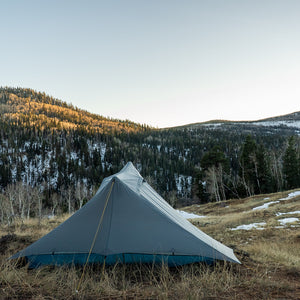
Tayson: Was actually less than both of you guys quoted. It would have been kind of same to me, too. I I always overestimate how underestimate how easy it is to climb elevation but that was that was a pretty good butt kicker, right? Like, after we got there, we found a place to set up camp and I don't I was filming pretty much like just hang out and camp tonight. Take a more relaxing rest of the day. I remember at one point we got everything set up and we looked up on the hillside and break. It was like a bird up there, jumping around in the snow. And now this is Darren Darren. He's already up there Easter egg hunt, clear up on the side Hill, but me and bring him. We took a nice relaxing time, we flew the Drone around a little bit and got some good shots and played around with the stove. So Anyways, that's just cracked me up but I think the other the other learning point here is is just learn to understand really what elevation is and what it does. I think 1300 feet isn't that big of a deal when it's spread out over miles, but when you compact that into one mile, that's steep that's steep country. It's slows you down. It makes sure that make sure you realize exactly how much weight might be in your pack. So anyways, side note. Okay, so we, we got camp set up. We had to dig out some snow and beat some things. I did at least you guys had those one person tents and just drop them down. It seemed like, in no time, but I had to dig out some snow because I was using a 2.5 person tent, with a titanium stove, and an insert, and the insert basically separated the zipper, so, that I could put the titanium stove, chimney, right out of the zipper, it took me a minute to set it up a little bit longer than you guys, for sure. Because I had a lot bigger footprint to set up once I have the actual tent set up though that the fireplace itself did not take that long to set up and we, we kind of started playing with it. So that the titanium stove, weighed two pounds, four ounces with the stove and the chimney and then weighed 2 pounds, nine ounces. If I included the weight of that additional insert that I had to put in there, so it made my whole shelter system a little bit heavier, because I also had a larger tent to be able to accommodate it. But overall it wasn't the stove. Did not add that much weight. So we got the, we got the stove set up. What did, what did you guys think about
Tayson: the stove?
Brigham: um, I thought I really liked it, I really liked The option. It was very, I mean, I think it's probably worth noting that. Our backpacking tent is not designed for a titanium wood, burning stove, and vice versa that titanium stove is not designed for our backpacking tent. That being said, The way that. You were able to set it up, it's still was noticeable. When you, we had the fly unzipped all the way in and rolled back. So, the door is open, right? So one a fourth of one side of the tent was totally open when you have once you got the fire going in there. And I poked my head in for the first time, I mean. From when I poked my head and I could instantly feel probably a 20 to 30 degree difference. You know, and that was like, that's the least of the fishing. You can be with the door wide open gaps along the side, but it was 20 in your nylon. Yeah, it was even them. So that was like, the least Retention configuration that you're going to get. I was pretty impressed.
Darren: Yeah, for me I mean I was over there. Trying to get a little titanium wood-burning stove. Going for a while
Tayson: for cooking for tiny. Yeah, foldable cooking one.
Darren: Yeah, just trying it out and I can hear these guys, talking in the tent. You know, I was freezing outside. Trying to get my little boiling water, you know, just going, you're out there a while. Yeah. And I just hear these guys like, you know, talking like it was any other day. Not not worry in the world. When I finally got over there, you know, and got inside there was it was a big difference. Like I don't know how cold it was that day, but it was, it was cold enough that I was shivering and when I opened that 10, I could just spill it. Just a wave of heat hit me. So, it was really nice. I quite enjoyed it.
Tayson: Yeah, I mean, so let's talk a little bit more about the conditions. We talked about how I was kind of snowing, but it wasn't. It wasn't like a normal snow in Brigham's terms. I believe he called this suck Fest weather and that was simply because it's it's it's, it's cold enough to snow. But with any kind of heat, it's gonna melt. So when it falls on your clothing and if you're walking around and generating any kind of heat, it's like immediately melting on you. It's melting around but it's also still snowing and so just kind of gets everywhere and makes everything wet. What were you guys wearing that day on the way in? What were your thoughts on how the layering systems works that you had
Tayson: chosen?
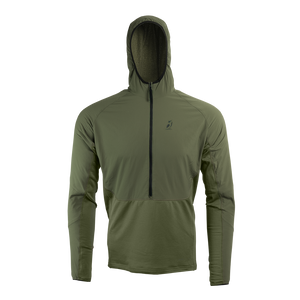
Darren: A rain jacket. And so that was my problem. I brought our Loft tech jacket, which worked well. But once it became saturated, I mean it was wet until I gave it a chance to dry. And so, My body heat was constantly pushing the moisture out, but after all day of hiking and getting to Camp, that was pretty wet. But once the, you know, snow will let up for a little bit it would dry out fast. So it was never never too demoralizing for me but it did get saturated at points before my body had could push that back out. So
Tayson: yeah.
Brigham: I had, I was wearing our pants no base layer or anything underneath, and just just our pants. I was wearing our Merino hoodie and just a lightweight rain jacket over that So, I had the pit Zips down the whole time, we were hiking. But as far as warmth goes, that was definitely not an issue. I was plenty warm with just our Our Merino hoodie and the jacket. And then, yeah, I was definitely I I'm never gonna hike up a mountain in the snow without sweating, so my back was Definitely wet but it was not a condition of being cold. Because once I get to Camp, I mean, I say moving setting up the tent. By the time I was done setting up my tent with my jacket on, still the cold sensation on my back. It was pretty much gone. And my I'd say, my, my hoodie was, at least 50% dried out just from My body heat actively or just kind of drying things out. Yeah, that's kind of my experience. I think, I think there's no way to be
Tayson: dry in these scenarios. Because we're climbing straight up this mountain so you're going to be sweating from the inside. So you're going to be that either be like Darren where you go with not much rain protection. Like not a rain jacket but your clothing can breathe. So you might not be sweating as much on the inside but you're getting wet from the outside or there's the options like Brigham. And what I was wearing was also our Dragon wool hoodie underneath Just a rain jacket and because those rain jackets don't breathe, really you? You're gonna sweat from the inside. So, either way, that you spin it, you're gonna get wet to some degree. So I think the more important question here for me was once you guys got up to Camp, what were your what were your layers? Like we're gonna be kind of touched on the fact that like things were drying. I had Our sought to Adventure pants on, and I had our Dragon Ball hoodie on and both of those layers dried super quick for me, the pants, never really got that wet. They did those things. I don't know how, but they seem to dry get wet and dry. Just multiple times. Seems like, even in an hour sometimes, but the wool to me was the most surprising because on this podcast, we've talked about how I've tested wool. And I've had it get too wet and then it kind of fails. I've talked about how I tested some synthetic face layers, and how they don't. They don't fail like the wool does when they get too wet, they still say warm and they still dry off really quickly, but obviously, odors a big problem as well with those just because I'm a big sweater. So I was really, really impressed with the dragon wool in its ability to dry quickly and stay warm at the same time. Now I know this is your first time ever using it at all. Right. Darren
Darren: yeah, the Dragon Ball for me, worked great. The wettest thing on me was my feet and I was wearing waterproof boots. And it's because inflation in them in insulation in him. So anytime I post hole the snow would go inside my boot. Whenever I lift my foot out of that post hole and so because they were waterproof, they would never drive. And I, you know, I was wearing the Loft tech jacket too, and yes, sometimes did get wet from the outside but it dried super quickly. Same with the Dragon Ball any time that I had a little sweat it dry out super fast. So let us think on me was my feet because of my waterproof boots.
Brigham: yeah, part of the reason I call that kind of weather suck Fest weather is is because it's almost the least desirable environmental conditions for on the colder end of the spectrum for like, keeping your body temperature where it needs to be. So, It could be like the ambient temperature may have even been above freezing. It could have been 33 or 34 degrees, but when you're in the Rocky Mountains, that means it's snowing. It's not going to rain it's gonna snow but That also means like we were socked in with fog probably 80% of the day, so very humid Cold Air does not lend well to like drying out. It makes it even harder for your gear your clothing to dry out. So it really, that's why I call it suck Fest weather. Because if you get wet like it's just the worst, the worst type of weather to be wet in because it was windy too.
Tayson: Yeah,
Brigham: and that I mean, we kind of all know, like wind and wet are a bad combination.
Tayson: so, I yeah. So I think the big takeaways here is the can be learned by by listeners is one in this type of situation. Make sure that what every every single piece of clothing that you're bringing is a quick drawing piece of clothing. You have a cotton shirt on or something like that, just a T-shirt. If you will notice it significantly because it'll never it won't try. It's not going to retain any heat and and so just just things like that. Just go through all of your gear, make sure that everything you have is going to be a more quick drying piece. The other thing that I definitely noticed too is like when we hiked up the mountain, I was burning up in that rain jacket. Well, the second you stop. You just start losing body heat, you're not now you're all sweaty, you're not moving. I've only got a rain jacket on so you can really start losing body heat quickly. And so as always in the winter you're just gonna have to layer and delayer more often and this type of weather where you're trying to maintain a good body temperature but you know, moving in the snow is extremely strenuous. So that, you know, so there's just all these caveats, you know, there's moisture coming in from the outside so quick, drying layers, and then just being quick to layer and delay. Later in these
Brigham: type of conditions, makes a big difference. I would absolutely second that and I kind of just think of it in terms of having a plan. So, a layering system is a plan. So in those kinds of conditions, having a plan, or an awareness of what your layers do and having that plan to know, okay, when activity level stops then, adjust this layer when it picks up that adjusts the layers, again. Like just having a plan makes, is the difference between freezing and just shivering the whole time because you don't know what to do or what to put on or take off or kind of thriving like we were able to do. Um, because you're paying attention and you have a clothing plan. Yeah, so
Tayson: we're at the camp. We have all the tents set up and I I thought it was just beautiful up there again, winter camping. I've been preaching this for a while but it is, it's Stellar. I mean, it's deathly quiet. We have fog rolling in and out of Camp so it'll clear up for a second, you can see, you know, this fresh snow covered mountains and then the foggle roll in and kind of envelop. You, it's just deathly quiet and just a really, really cool place. But as the as the Sun starts to fall starts to get cold, these guys have had suggested that we would have a fire and I said I bet we end up spending some time around that that stove and that's that's basically what happened is that 2.5% shelter. So waited up all cramming inside there for a couple hours so we just hung out had our dinner, talked dried gear out, and enjoyed the heat of that fire. Well, we were sitting in there. I was, I was stripped down just to my base layer, so I had nothing on, but my dragon wall hoodie and my satsu pants. I've been putting any layer other layers on the mat. I pulled my boots off, had them sitting by the stove, and we were just hanging out in there, and it was really impressive. And I think this is one of the biggest advantages to that stove, is it was really impressive to see stuff, drying out. So, at one point I literally looked across the tent and I could see steam coming off of Darren's pants. His pants were just trying so fast just from having a heat source and that's something that we've talked about too that in the winter time. It's really hard to dry things out, but with that stove, it was the opposite. Like my boots were drying out. I could see steam coming out of my boots. Yeah, I was just it was just really significant how well things were able to drive sitting in that tent for a couple hours. On top of that, we initially thought that we'd be can't somewhere near to a stream and that didn't end up being the case. So we just sat there and melted cup after cup after cup of snow on that stove and that worked out all so really, really well I thought I mean we all topped up a couple Leaders with the water that was just nice because we're not burning fuel. We're not burning anything. We'd already. We'd take in a few minutes and gathered some wood. Stockpiled me with wood, which is nice. And then we just sat there, the rest of the night enjoying that fire. Any, any thoughts on just kind of that evening out went
Darren: I mean, they're just comfortable, you know, like just being able to hang out. He was a small tent and I don't know if you already mentioned this but how it was set up? I didn't really realize that you weren't going to be using the bug net. You know, like the actual part you would zip up for a tent, this is just the fly and to me it was really cool how efficient that was you know, super lightweight didn't have to worry about the fly and it was still just as warm didn't have to worry about melting walls or anything because of that. So, Yeah, it was it was interesting to me because I didn't know how it worked before.
Tayson: Yeah. Yeah.
Brigham: It was,
Tayson: I mean,
Brigham: what would we hang out in there for like two hours at least at the end of the day? And
Tayson: I was kind of kicking you guys out of the end, like
Darren: you guys.
Tayson: Yeah. But that was like, kind of the
Brigham: Able to relax, but at the same time gets something critical done. Like like you said, we were because we had to adjust our route. We weren't buying running water, which we had, you know, planned on. But we also need going into it that we all have a way to melt snow which is not ever my first or third choice for hydration. But when you're just hanging out comfortably and you have plenty of wood to burn, The snow melted really quickly. I mean we were all able to top off and and hydrate and then top off again to have water for the next day. It was just, I just thought the efficiency of being able to relax. warm up dry gear and, you know, set up our hydration for the next day it was pretty impressive.
Tayson: Yeah,
Tayson: I will say so Lessons Learned here with the setup that I had and you guys will be able to see this on our YouTube
Tayson: channel.
Tayson: So if you go subscribe there, we'll be posting a video where you can see, you know, contextually everything that we're talking about here. But the big lesson here for me was You know, that was a two and a half person tent, and typically, I've slept two people in there, easy, I love me. My wife and my kids in there. Like it's it's a pretty roomy tent for two person tent. But when you bring a stove in there, it's pretty remarkable. How much room is stove takes up? I'm even a small stove because now you've got your wood that you stack in the vestibule. You've got your stove in there. And then you've got where your sleeping but you need to give the stove room so that you don't like bump up against it which Darren learned and Is like that. So one thing that I think I really learned is when you're using a titanium stove, like that, it's pretty important. That your shelter just can accommodate the extra space that it takes up. So I personally would have a hard time looking at the, at the stove. Option, if I was in anything smaller than what I was using it in that night, even that, even that set up would have been hard for me to get two people in there to sleep. It would have been really hard actually. Just because of like, you've got to put that much space between you and the stove. But anyways, so we hung out in there a couple hours melted snow hung out. Eventually I tell these guys, they got to go back to their cold tents and experience that and me and Darren did two things that we've never done. So for me, I decided that that night. I was going to take an emergency blanket, put it on top of my pad to try to add some R value. I was using our long wide pad typically that's a pad that's good to more in the 20s, you know 25 to 20 degrees our regular long wide pad. These are rectangular models they're good more down to Mid teens, you know, 15 degrees or so. But I ended up trying this I want to see if that added any R-value and Darren. What did you do?
Darren: I just use a sunshade like what you would use in your car you know. Just to make sure it doesn't get too hot
Tayson: so and and did you end up putting that on top or below?
Darren: I put a below the pad
Tayson: and
Darren: for me it actually, it's one of my more comfortable nights of sleep. I mean, how did you measure how cold it got that?
Tayson: Know it snowed and Brigham said it rained. I never saw any sign of it raining, but but it was definitely right around that temperature and it was a bit windy at times. Awesome
Tayson: on. I felt like,
Darren: I mean, it was I didn't wake up in the night because of being too cold ever. So that was First time for me and that extra warmth, I have to attribute it to having that some shade under my pad.
Tayson: That last time we did a trip like this was probably slightly colder conditions. You had a zero degree top quilt on the same path on the same pad and you were cold.
Darren: Yeah, I had I remember specifically just on my back, it was drafty you know as compared to this night so yeah it was it was considerably warmer.
Brigham: Yeah.
Tayson: For me, it was really hard to tell the effectiveness of the emergency blanket. I would say maybe it reflected another five degrees up on the pad, something like that. But I'd have to test that again, because the stove had an effect, but again, just another important thing to note is that, you know, when you're going to these colder temperatures, you need to layer, you know, second piece of insulation, a lot of times on paths, bring them. I think you said you forgot your pad, your extra piece or your extra clothes cell phone pad.
Brigham: I was gonna bring a closed cell foam pad because that's what I like to do. On the winter is put that under my inflatable, but I decided to strap my snow shoes onto my pack. And I didn't have room to strap on the path. So, were you were using a long way or regular long wide and where you are? Right? I was fine. I think any colder I would have definitely wished for more insulation underneath but I was I slept fine in terms of like temperature. Yeah,
Tayson: bring them also, wears a lot less layers than Darren. Darren is walking around in like two or three jackets, all day. I could not believe
Darren: this for open, so I was just easier.
Tayson: Yeah, I think, I think Darren might be a little more cold blooded didn't bring him. But oh my wife. She
Darren: has my fireplace in my house pumped all the time. So I'm just used to the warmer weather. So,
Tayson: Yeah. Anyways, so that gives you a little frame of reference there. What I thought was super cool is Brigham. Apparently, he brings a saw everywhere, we go and he cut a few thicker pieces of wood, probably two inches thick which is two, that that's way too thick for me to be able to break that into like the 12-inch sections that I would have needed to put it in my stove. So he cut a few of those, and those are not to be absolutely money. So I'd always heard that like a titanium stove when you use it, you know, the second it goes out it's just freezing and it's you can't keep it stoked. You have to constantly Stoke it and that really was not my experience all the time we were in there. It performed really really well. And then that night, I just put in Just stocks the stove to the brim with those thicker pieces of wood and I specifically remember waking up at about 3 a.m. so we've been asleep. I don't know how many hours at that point, quite a few and and I was like man I think I can still heat from that stove, but there's no way everyone said that it would burn out in an hour and be done and I was like let me just see. So I pulled my hand out of my sleeping bag and put it right next to the stove and sure enough, I can fill all this heat so I kick on my light and I open up the grit and I can see all these holes and so I just threw more wood in there. And I was gonna light it, but I was like, let me just see if it'll light itself. So I closed it back up. Gave it a couple of minutes. Sure enough. That thing. Lights back up. I fall back asleep. Wake up at 7:00 or something, or 7:20, or something like that. And it was still Warm. So I gained heat completely the entire night from having that in there and I only restocked the wood one time and that really, really impressed me. I don't know if everyone has experienced like that. We were burning like Cedars and junipers and stuff like that. That's a more dense, thick wood. But I was super impressed that that stove, I only had to restock it one time. I was, I told these guys before, I'm like, I'm not gonna stay up and restock this, I'm just gonna sleep. So I was planning on restocking it. Not at all because I thought I would have had to restock it 10 times, but instead, you know, restocking at one time and I had extra heat in that tent, the entire night. So I was just super impressed with that but Um anyway, so that was that was kind of my experience with the hot tent. The next day we got up I was definitely sluggish. So here's the, here's the, the negative side of the hot tent one taking it down takes more time. So if you were to like, get up super early and try to beat the Sun and all that stuff, you know, it's a little bit harder, you wouldn't be able to start that stove in the morning going. Otherwise, you kind of got to deal with the heat and taking everything down, but I chose to light it back up and use it that next day, and the next morning and the hardest part. The thing, the big caveat here is you do not want to get out of your tent in the morning. I was just basking in there and all the heat later around eating my breakfast. And I can hear these guys jumping out of their beds and putting everything away. And I'm like, and that doesn't sound fun. I'm leaving here in comfort. So usually I'm like the first guy out of my tent. I'm going, I'm trying to find Wildlife. I love just watching wildlife. And you know, I usually bring some kind of Optics so that I can sit and watch. The wildlife and I told him on that, but when I was in that tent and I rolled over in the morning and throw it on another log in that fire and it started right back up and it was all hot there. I didn't end up coming out of that shelter until these guys basically have their tents down. So, just as a side note, if you end up ever trying something like this, that, that was my experience. Anyway, so, the next morning we got up got camped down, and we were quite a ways we were able to find some elk. The night previous, we were quite a ways above them. So I ended up deciding to Hike down off of the ridge. We were on, go down back, close to the truck and then hike drop our gear kind of and go up the other side and get closer to the animals and whatnot and we ended up doing that. And there anything I'm missing here before we go on thinking of importance. Okay? So we'll kind of circle back around a few things. But one other thing I wanted to point out is I dropped, you know, I dropped our gear in the bottom and we started hiking up this other side and we got up pretty high. We started splitting off and right after me and Brigham split off. some snow like some started snowing again, and blowing and it got real cold and Had left some of my layers down at the bottom. So not thinking it was gonna be a big deal, but I decided to stop and try to eat at about the same time that it started, the weather changed like that and I was absolutely amazed how cold I got how fast I got, you know, and that and that sucky, whether it was crazy, it really turned on me. And, you know, I think I was trying to send a couple messages to my wife at the same time I was trying to eat. So I had some my hands out of my gloves, I only had a single layer on my legs. So I took my loft tech jacket and I wrapped that around my legs to protect them. So that I just had a rain jacket up on top. And my my temperature definitely started to dip it pretty quickly and I had to stand up. and moving again to just to Just eat back up. But again just another one of those examples of, hey, make sure you have a layering strategy. Make sure. You know what you're getting into. I had left my pants. My zip off wool at the bottom and so I wasn't able to put my walls on when we were up there, which definitely would have helped. But yeah, just going into winter and there's nothing to be scared about but just making sure you have a plan in place. And making sure, you know, you know what's going on. It is always critical because conditions can just change really fast. And, again, it's nothing to be scared about. It's just just awareness and having that plan in place. So, So, we spent the rest that day kind of walking around and then we hit it off and went back home. We never did get into the horns, really, but we did see some elk and some of us saw some milk and had a really good experience. Just a, you know, we've got, we've got the, the coronavirus stuff going around and that's on everyone's mind here in Utah, we're not on lockdown and especially last week, things of escalated a lot since last week and it was a very good mental health break to to just get out there. And I really enjoyed that that was kind of, I was happy to come home to my family, but on the other hand I was just I was kind of sad to have to come back into the office after being able to just hang out on. For a while. But
Darren: yeah, apparently things got really bad earthquake in Utah, too. We didn't feel any of it, but the rest of you tell us,
Tayson: we were all in turmoil
Tayson: and
Tayson: turmoil that time and we're just up on the mountain in oblivious to everything. It was
Darren: awesome,
Tayson: not a soul in sight, you know, it was, it was great. So, you know, I was a lot of you guys are on lockdown now and just limiting exposures and things like that. Just keep in mind that even after this All Passes, which it will eventually You know, you're not the last place thing, the last thing you're going to be want to do is, you know, go back to movie theaters and bowling alleys and that type of stuff. Hopefully, you guys are at least using this time to plan out some really cool trips. Maybe for later this year. And maximize some of that time that you're not able to right now for the later part of this year. I think that it's just really important for for mental health. Almost totally get breaks like that. If you're in an area like Utah, where you can get it out and get away from people and have no risks like that. I say go do it. It's, it's You know, there's there's definitely different parts of health and I think mental health is a big factor and the social media and news sites and things like that. Just exploiting some of that. It's, you know, going Outdoors was just a big relief and big break for me. And I really enjoyed that
Darren: wasn't like a national park either. It's just a off the trail, you know, off the road Trail, something that nobody else is going to be. We're not so like, we're gonna be social distance because nobody else was around. It was really nice.
Tayson: Yeah yeah. I mean as you guys get to planting these things just know like when these bands lift the national parks will be slammed. So it's a good opportunity to look at some other, some other routes, some other, some other options, and and things. So if you fail to plan, you plan to fail. So now while you're quarantine take the time to plan out some cool routes, but so let's go ahead and wrap this up. I just wanted to give you guys one more chance to to kind of give a thumbs up, thumbs down on the hot tent. Whichever one whichever used one. How do you, how do you see this potentially working for yourself in the future?
Brigham: Thumbs up for me, I was very impressed. I kind of thought it would be that way, but it was really cool to see it, you know? Experience it in person so I absolutely
Tayson: get one for myself. When you say for yourself, do you mean like to use by yourself or just like for your family? Or for
Brigham: I would definitely, I would Do both. I would use it on my own for extended trips. And I would definitely use it to take my family and colder seasons.
Darren: Okay, I feel the same. I'd probably more use it. If I had other people with me, if you have a good sleeping bag, you don't necessarily need it for all your trips, but winter camping. I mean, if you want those Comforts, you'll bring it in. But if you have another person with you, you can split that weight and just make it a little bit easier for you. But for me, personally, I like it. And if I was bringing someone else with me, I'd for sure, have it
Tayson: Yeah.
Tayson: Yeah, I would say that I second a lot of this for me personally doing it solo was kind of hard, just because the way that I had to set it up and again, you know, our tent and our setup wasn't the most ideal for this, you'd probably want to pick Shelter by a shelter system that was specifically designed for this or use a tarp system or something like that because you might notice to shave some weight. But for me, personally, my thought was, if I'm going in with, with more than one person sharing the same shelter and the same stove, then the weight really wouldn't even be a factor, you spread that out over two people. And, and those types of things and It'd be totally worth it, right? You just need a bigger shelter to accommodate that type of setting, so that stereo I would totally use it. For winter, when I'm going a little bit more relaxed maybe I'm not like logging miles or I'm not getting up super early in the morning to log those miles things like that. Then again I think it works out really really well for that. And then the last thing in the thing that I just thought about the whole time, I was up there was how cool it would have been if I could have brought my little boy and my wife and my daughter, you know, out into the place like that because Experience winter camping like that is something that most people just don't they don't even know what that's like to sit there in the snow. The snow just deadens, the sound of everything you're out there. Watching Wildlife. It's So So Silent there's no people. I mean it's it's so phenomenal. But I can never take my family out to go do that. Because or I rarely can because of the temperatures, like I can't have my little, you know, eight month old daughter. And my three year old kids sleeping in a sleeping bag and just, I'll be worried about him all night trying to keep him warm, which I think you could, you could still manage it. I'm not saying you can't manage it, but But also the sun goes down a little bit early. So, with the hot tip to me, I was thinking, man. You know, if I had, If I Had A system that was built more around this, I could bring my whole family out in the winter to experience this and they'd be comfortable and they'd be happy and it'd be a good stereo. So for me that's how I see it if I'm probably never gonna use that stove for me personally. But if I'm going with someone else, I'm going with my family, that's really where I see the benefit of that stove and where I see coming to Handy, plus you got more people together, would, you know, you run the store for one person to run a pretend you still got to run the stove. So just the more people, the more volume, I think the better scenario for that stuff but I really really enjoyed it. So
Tayson: I agreed
Tayson: Okay, so we're gonna go ahead and wrap this up. Hopefully, this is insightful and you learned something whether it be about layers or maybe if you're interested. In looking into the titanium stove, we were able to meet the guys that own the founder of like seek outside. That's the stove. We are using really cool guys. Really appreciate them. And what they do. So, if you're looking for a titanium stove, I would recommend those guys, but, but yeah, let us know your thoughts, your comments on this. Hopefully, we helped you out. Stay tuned. We'll have some more things coming on. The podcast. Shortly will be more consistent on the podcast. As we get more into the summer months, we get Outdoors a little bit more. And we have some new products and things, they'll be releasing which we talked about in this podcast, maybe the pants and the wool thermal switch are really remarkable pieces, so stay tuned for those and we'll catch it on the next podcast. If you like to help us spread the
Darren: word about the live Ultra Lite lifestyle, please, give us A five star review and tell your friends to subscribe, where are available on Apple, podcast, Spotify, Stitcher, and have you made your listening app as well as little ultralight.com. So, thanks for listening.