Tayson: So here's the big question, how do we live a life? Full of Adventures travel and memories on our terms without being millionaires without previous experience? And without unlimited amounts of time, that's the big question and this podcast will give you the answers. I'm your co-host Tayson Whittaker and I'm Dave Keim and you're listening to the live ultralight podcast powered by Outdoor Vitals. Hey welcome to the ultralight podcast. I am out currently on a backpacking trip with the gang here. We've got Derek Brigham and derrin all out doing a local through hike that we piece together. This is our first night on the trail and we just want to stop and film a little podcast and talk about how this day went. So I guess for starters, let's talk about a few things that we've got that. We're kind of testing and and then we'll talk a little bit more about the trail. So this particular podcast and trip I should say we are Testing cold soaking versus stoves. Well, Derek is so we'll get to that. We climbed a bunch of elevation. We'll talk about hydration and elevation gains. Testing our pack a little bit. Darren got to run our pack for the first time on this trip. So we'll get to Weighing on some feedback from him. Yeah, so we've got a bunch of different topics to cover. For sure, we all have been using a little bit different gear, so we're just gonna go ahead and Dive Right In and cover some of that. So I guess for starters, Trip itself is actually one that we planned here in a local Wilderness Area. Right by our home, for many of you, if you're like us, it's would be almost infeasible to go and do and actual through hike of like, the ATU the PCT, but I think there's a lot of opportunities in people's backyards if you get creative. So, we got piecing together, some stuff. And by the time we were finished, we had a full through hike for sale of this Wilderness Area. It's right by our home. I've never heard of anyone doing this hike. It's about 30 for miles and total. There's about 8,000 foot of elevation gain and it's a pretty pretty intense hike. But yeah, just right in our backyard. So I hope that I guess this inspires some of you guys to maybe get on Maps and look around at some things. But what do you guys thought of the trail so far? Here for me I think it's been one of the most beautiful trails that I've been on so far by far one of my favorites. As far as how beautiful it is up here. The Narrows was up there with it is between this one and the Narrows but in terms of like how difficult it is is it's definitely one of our hardest Trails. I think that we've gone on as a company. A lot of the scenery I've seen reminds me a lot of Wind Rivers just without all the water. So but it's been really, it's been really fun to see Just what's here? I, you know, just living in Cedar. I didn't know this is in our backyard. So for me, we just really cool to see this. Yeah, I agree. It's areas really cool because I don't know, it's it's kind of isolated. So maybe maybe explain what Wilderness is Utah. I think maybe will their miss another State's a little bit different. Well, I mean On that on National Forest, that it should be all the same. But depending on where it is, there the regulations will be different but yeah, we're in that we're in a Wilderness Area. So totally non-motorized Um, I mean there there's other restrictions Depending on time of year and they'll always post those at the trailhead. But It's really cool. it was quite a haul like gaining, the 3500 feet of elevation this morning. But once we got on top, it was it was really cool. Yeah, so, so right out of the gate. We climbed up 3500 feet of elevation from about six. Six of two, 10 to. I want to say, And then, on top of that, like we got there, we had our lunch, so 1:00 in the afternoon, we pushed a little bit farther than we wanted to get there. And then from there we kept hiking and it was a lot of kind of ups and downs and ups and downs across this Ridge line up here. And so, I don't know, as a whole, we're supposed to hike about 8000 feet of elevation, but I think we've done most of it today. I wouldn't be surprised if we were close to 5,000 feet in elevation, between what we've gone back down and back up, and so on and so forth. So definitely been a Bruiser of a day, but super, super pretty. And, you know, we saw people for sure when we started the trail but by lunchtime, we never saw a soul after that. And I don't know, a full seen other shoulder. Rest of the trip to be on us, not even any tracks on the trail. It's yeah. Almost non-existent in the trail itself, but where we're pretty far out here even just one day in Yeah. yeah, we were racing some horses up the trail actually we're playing a little cat and mouse with them but yeah, but going on that note I guess I guess one I just You really ought to look at trails around you and see if you can't put them together like this. Because the thing that I love about doing this is every time I drive, by this mountain range. Now, this Wilderness Area, I'll have memories associated with what it's like being at the top of that mountain and what the sceneries like up there. And I love that, I love doing hikes close by, but the second thing I want to jump into is hydration. So This is something that I think comes with experience in learning your own body and being in tune with your own body because I changes year after year. But I've learned over time. I feel like how to manage things for me personally, I'm, you know, 6263 200, 255 pounds right now. I've put on some covid weight and I need coming into this that it was going to be a grind for me. And so I was very careful about a few things that I bring and I found that hydrating and getting headaches or under hydrating has been That and foot care has been the number one thing that have slowed me down, employees down, people have backpacked with. It's, it's a really critical part. So, I wanted to take a second talk, a little bit about hydration. We got going. We thought we'd have water in the river, dried out quicker than we thought, or that's a river. But Springs and we're like, well, I think we can push through her up and over the top So we got a little bit dry, I'm not not fully, but we are definitely rationing a little bit and that's that's a situation. I personally don't like to be in because I'm very susceptible to getting dehydrated when I'm climbing that kind of. I'm at bigger guy, I sweat a lot just I've always sweat a lot and so I lose a lot of water so after replenish that so some of the things I was I was happy with today is I actually didn't end up getting any headaches. I stayed this hydrated, I feel like I could have, but a few tricks that I personally have is one I like to bring electrolyte mixes. So that's that's definitely a big one. I know that there's different people out there that make them mountains. I think we've mentioned that, but they, they're one that I've used quite a bit. I seasoned Wilderness athlete today, wasn't in love with the taste, but I think the results were good and there's a handful of others. The other thing that I like to do is bring something with some caffeine, you know I consume a little bit of Kathy at home and so sometimes I come out on these trails and I was just thinking about this other day and I think I go light on the caffeine. Plus I'm overexerting I was at the factors and I think that might contribute to a headache. I don't get headaches per se if I don't have Kathy at home, but when you're out here in the sun all day hiking, I think that might have been a contributor. So today I was staying on top of those two things. And then I also like to bring some Himalayan salt. So I have some Himalayan pink, salt, and capsules, but I also mix it into drinks. Sometimes kind of tastes like Gatorade like with a Crystal Light packet or something like that and so that's another thing that I personally like to do and I found works really really well for me but I know that there and over here, he seems to be able to run on fumes for for days and make it work. So I once watched Aaron go a whole day in the desert, hiking Hills with one bottle of water and one Red Bull. And I don't know how he lives through the day, but the Red Bull man. Yes, it's all about knowing your limits. You know, that's that's kind of started this whole conversation with. So for me every day I go to the gym, I drink when I'm done so I I sweat a lot but my body's used to that kind of exertion and then getting that reward at the end. So for me I can I don't, it's I try to sip water as much as I can throughout hikes like this, just to be on the safe side, but it just might not seem like a lot to you. Yeah and and give and there's there's this over 50 pound difference in our weight too. Yeah. But the thoughts on kind of hydration topic or yeah, I just say you know everybody every individual is is different than their body reacts different to the conditions and You know, today, we we had we put a lot of work in early gained. A lot of elevation. and I'd say there was It was interesting because we were walking through a lot of woods but there wasn't a ton of shade as we were walking. So I think, you know, the the sun combined with the heat that takes the moisture out of you faster than if you're just walking in the shade the whole time and for me, I when we kind of realized we were going to need to ration the water a little bit. I kind of know for myself that on a day like today because I sweat profusely you salted your shoulder straps. I was impressed, I saw her myself. My sweat is very salt, heavy and I lose a lot of salt, but I know like, if even on a day like today where I had to be a little bit more measured about how much water I drink I drink. About four liters of water on the trail today and that is actually not as much as I would like to drink for me. A good number is about six liters for this kind of distance and these conditions. But I know that 4 liters. I'll still be safe. I won't be as hydrated as would be ideal, but for me it just I kind of know those numbers. so, Well, I mean, one of the other issues we ran into today was some mistakes and guessing where water would be and where we would have water to fill up our water bottles again. So the first part of the day, we have the stream going all the way along the trail for a number of miles and and we dumped out water in the trailhead because we knew that and you all we can just fill out with that strain because we'll have that with us for a while and then we ran out of stream before we kind of before we knew it and we can't go and thinking well maybe it'll show up again. Maybe the stream will come back by the trail or it'll come above ground and it never did. And so we had a way quite a bit longer before we feeling our water bottles and then then we kind of made a similar mistake again. After that, we filled up our water bottles Drink some water and got going again thinking, where we're where we set up camp. we would be camping by a water source and then once again, we made a mistake and ended up camping somewhere completely different and so like, some of that hydration stuff if, you know your limits, but you know, you know, you at least go with the bare minimum and also make sure you're packing enough and not We shouldn't have jumped everything out and taken for granted that stream at the beginning. The way we did, because we ended up kind of running out of water almost before before we could fill up. Yeah, I would say when in doubt or not even went in Dallas, just always pack more water than you think you need. And if you start to get low and you pass the stream and you think you're going to come to another one special here in the west like just at least fill up your dirty bag, just to have that piece of mind and you know, water is one thing that I I hate it because it's heavy, it's super heavy, but it, you know, makes or breaks a trip really quick really quick. So yeah, it's a just If you're crossing the stream feel up, you know, it's hard to. It's hard to regret having enough water, you know, we kind of we kind of did it to where it was just barely enough today. Like we ended up at camp and we all still have water but I would have preferred to have all my stuff full. Rather than almost empty, are we expect to have water? Maybe another mile and a half in the morning once we get going but we'll be cutting it close with, you know, after cooking dinners and having some water to drink tonight and and maybe something for breakfast. The mile is not, not too bad before, you know, getting some more water. But once again, do we, I mean, we've messed up before if that water source isn't actually a good one, then that could be some problems. Yeah, I'm gonna switch gears here for a second because as we were talking, I remembered when we were climbing up, we were at about 3200 feet of elevation, climb to get to the point. The top point of 3500 or the peak was and the view was and about 3200 feet. I hit a wall for sure. And I just like, Man, I ran I like to train typically where I am. Like trying to exercise when my stomach is emptied to try to help my body, learn to burn fat and different things and where I've been kind of out of the gym for a little bit. I haven't been doing that as well and it really showed because I just hit this wall of. Like, I'd burned up all the available sugars my body and as I was like, there was nothing left there for a second and I took Five or ten minutes and just ate some food and sat there for a few minutes and got to the top and then we had our full lunch and you know that that 30 plus minutes are sitting there and having lunch with not like totally reset me. So I think that's something to think about as you come out on some of these longer Trails is either one if you know that you're not like good at running out of fuel sources and keeping going then trying to snack throughout the day. I think is important. Every time you stop take something out of your, you know, your food bag and put it in your, your hip belt or your pockets, you can snack on it as you go either that or doing some training to be able to hit those walls and keep going a little bit better but I was definitely one like I typically I know I've hit those walls before in previous years and this year I've just not been exercising and training as much and man that wall was pretty wild so be aware. It's also I feel like we've talked about this on the trail today is we've hit we hit some moments where we you know just breaks and you can feel like a totally different person in 30 minutes sometimes by just sitting there drinking water cooling off in the shade and then you know resetting so that was a big one today. Um, so let's jump now to, how is the cold? Soak Derek? So far so far, I actually really enjoyed it, but I, there are some caveats. I will say so far, this is my first time, cold soaking, if you are a texture person, probably, it's not for you. Well, let me let me pause right here. Some people in the podcast, might not know a cold soaking is, okay? So cold soaking is basically, you get rid of your stove, your fuel, canister, or bottle, and your pot and basically, the way you Prepare your food is just by having like a, you know a sealable container, like an empty peanut butter jar or something like that. And you basically just put some water in a dehydrated meal. You can do your own recipe, add different things in whatever you want and you just let it soak all day long or at least for a few hours. And by the end of the day then all that dehydrated food, soaked up the moisture and you have a meal just like your you hydrated. Dehydrated backpacks that you you know Add boiling water to the difference is it's cold. And I didn't notice all the texture was very different. There's a lot more soggy and mushy. I had some pasta tonight and The noodle soaked up a lot of water. A lot of moisture, but they were like just a lot more mushy than than had notified if I boil basically, right? I didn't mind that too bad because I don't mind textures so much. But if you do like my wife, she hates weird textures. Cold soaking probably wouldn't be for you if you're that kind of person, another thing that I noticed is the flavor was a little different at least with the meal that I had. It just have a little bit different flavor. I don't know. It's kind of Flowery I operate or broccoli alfredo pasta and and just flowery from some reason, I don't know if that was from the noodles or just the sauce, but that was a different I'm pretty sure that could be avoided. If I chosen a different cold soaking recipe. There's a time. You can look up. I wonder if just soaking it. You have a little bit too much water and a soaking a little bit too long, maybe some of the flower. So here's the big question, how do we live a life? Full of Adventures travel and memories on our terms without being millionaires without previous experience? And without unlimited amounts of time, that's the big question and this podcast will give you the answers. I'm your co-host Tayson Whittaker and I'm Dave Keim and you're listening
Dave: to the live ultralight podcast powered by Outdoor Vitals.
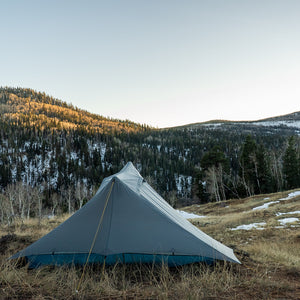
Tayson: Hey welcome to the ultralight podcast. I am out currently on a backpacking trip with the gang here. We've got Derek Brigham and derrin all out doing a local through hike that we piece together. This is our first night on the trail and we just want to stop and film a little podcast and talk about how this day went. So I guess for starters, let's talk about a few things that we've got that. We're kind of testing and and then we'll talk a little bit more about the trail. So this particular podcast and trip I should say we are Testing cold soaking versus stoves. Well, Derek is so we'll get to that. We climbed a bunch of elevation. We'll talk about hydration and elevation gains. Testing our pack a little bit. Darren got to run our pack for the first time on this trip. So we'll get to Weighing on some feedback from him. Yeah, so we've got a bunch of different topics to cover. For sure, we all have been using a little bit different gear, so we're just gonna go ahead and Dive Right In and cover some of that. So I guess for starters, Trip itself is actually one that we planned here in a local Wilderness Area. Right by our home, for many of you, if you're like us, it's would be almost infeasible to go and do and actual through hike of like, the ATU the PCT, but I think there's a lot of opportunities in people's backyards if you get creative. So, we got piecing together, some stuff. And by the time we were finished, we had a full through hike for sale of this Wilderness Area. It's right by our home. I've never heard of anyone doing this hike. It's about 30 for miles and total. There's about 8,000 foot of elevation gain and it's a pretty pretty intense hike. But yeah, just right in our backyard. So I hope that I guess this inspires some of you guys to maybe get on Maps and look around at some things. But what do you guys thought of the trail so far?
Dave: Here for me I think it's been one of the most beautiful trails that I've been on so far by far one of my favorites. As far as how beautiful it is up here. The Narrows was up there with it is between this one and the Narrows but in terms of like how difficult it is is it's definitely one of our hardest Trails. I think that we've gone on as a company. A lot of the scenery I've seen reminds me a lot of Wind Rivers just without all the water. So but it's been really, it's been really fun to see Just what's here? I, you know, just living in Cedar. I didn't know this is in our backyard. So for me, we just really cool to see this.
Brigham: Yeah, I agree. It's areas really cool because I don't know, it's it's kind of isolated. So maybe
Tayson: maybe explain what Wilderness is Utah. I think maybe will their miss another State's a little bit
Brigham: different. Well, I mean On that on National Forest, that it should be all the same. But depending on where it is, there the regulations will be different but yeah, we're in that we're in a Wilderness Area. So totally non-motorized Um, I mean there there's other restrictions Depending on time of year and they'll always post those at the trailhead. But It's really cool. it was quite a haul like gaining, the 3500 feet of elevation this morning. But once we got on top, it was it was really cool.
Tayson: Yeah, so, so right out of the gate. We climbed up 3500 feet of elevation from about six. Six of two, 10 to. I want to say, And then, on top of that, like we got there, we had our lunch, so 1:00 in the afternoon, we pushed a little bit farther than we wanted to get there. And then from there we kept hiking and it was a lot of kind of ups and downs and ups and downs across this Ridge line up here. And so, I don't know, as a whole, we're supposed to hike about 8000 feet of elevation, but I think we've done most of it today. I wouldn't be surprised if we were close to 5,000 feet in elevation, between what we've gone back down and back up, and so on and so forth. So definitely been a Bruiser of a day, but super, super pretty. And, you know, we saw people for sure when we started the trail but by lunchtime, we never saw a soul after that. And I don't know, a full seen other shoulder. Rest of the trip to be on us, not even any
Dave: tracks on the trail. It's yeah. Almost non-existent in the trail itself, but where we're pretty far out here even just one day in
Tayson: Yeah. yeah, we were racing some horses up the trail actually we're playing a little cat and mouse with them but
Brigham: yeah,
Tayson: but going on that note I guess I guess one I just You really ought to look at trails around you and see if you can't put them together like this. Because the thing that I love about doing this is every time I drive, by this mountain range. Now, this Wilderness Area, I'll have memories associated with what it's like being at the top of that mountain and what the sceneries like up there. And I love that, I love doing hikes close by, but the second thing I want to jump into is hydration. So This is something that I think comes with experience in learning your own body and being in tune with your own body because I changes year after year. But I've learned over time. I feel like how to manage things for me personally, I'm, you know, 6263 200, 255 pounds right now. I've put on some covid weight and I need coming into this that it was going to be a grind for me. And so I was very careful about a few things that I bring and I found that hydrating and getting headaches or under hydrating has been That and foot care has been the number one thing that have slowed me down, employees down, people have backpacked with. It's, it's a really critical part. So, I wanted to take a second talk, a little bit about hydration. We got going. We thought we'd have water in the river, dried out quicker than we thought, or that's a river. But Springs and we're like, well, I think we can push through her up and over the top So we got a little bit dry, I'm not not fully, but we are definitely rationing a little bit and that's that's a situation. I personally don't like to be in because I'm very susceptible to getting dehydrated when I'm climbing that kind of. I'm at bigger guy, I sweat a lot just I've always sweat a lot and so I lose a lot of water so after replenish that so some of the things I was I was happy with today is I actually didn't end up getting any headaches. I stayed this hydrated, I feel like I could have, but a few tricks that I personally have is one I like to bring electrolyte mixes. So that's that's definitely a big one. I know that there's different people out there that make them mountains. I think we've mentioned that, but they, they're one that I've used quite a bit. I seasoned Wilderness athlete today, wasn't in love with the taste, but I think the results were good and there's a handful of others. The other thing that I like to do is bring something with some caffeine, you know I consume a little bit of Kathy at home and so sometimes I come out on these trails and I was just thinking about this other day and I think I go light on the caffeine. Plus I'm overexerting I was at the factors and I think that might contribute to a headache. I don't get headaches per se if I don't have Kathy at home, but when you're out here in the sun all day hiking, I think that might have been a contributor. So today I was staying on top of those two things. And then I also like to bring some Himalayan salt. So I have some Himalayan pink, salt, and capsules, but I also mix it into drinks. Sometimes kind of tastes like Gatorade like with a Crystal Light packet or something like that and so that's another thing that I personally like to do and I found works really really well for me but I know that there and over here, he seems to be able to run on fumes for for days and make it work. So I once watched Aaron go a whole day in the desert, hiking Hills with one bottle of water and one Red Bull. And I don't know how he lives through the day, but the Red Bull man. Yes,
Dave: it's all about knowing your limits. You know, that's that's kind of started this whole conversation with. So for me every day I go to the gym, I drink when I'm done so I I sweat a lot but my body's used to that kind of exertion and then getting that reward at the end. So for me I can I don't, it's I try to sip water as much as I can throughout hikes like this, just to be on the safe side, but it just might not seem like a lot to you.
Tayson: Yeah and and give and there's there's this over 50 pound difference in our weight too. Yeah. But the thoughts on kind of hydration topic or
Brigham: yeah, I just say you know everybody every individual is is different than their body reacts different to the conditions and You know, today, we we had we put a lot of work in early gained. A lot of elevation. and I'd say there was It was interesting because we were walking through a lot of woods but there wasn't a ton of shade as we were walking. So I think, you know, the the sun combined with the heat that takes the moisture out of you faster than if you're just walking in the shade the whole time and for me, I when we kind of realized we were going to need to ration the water a little bit. I kind of know for myself that on a day like today because I sweat profusely you salted your shoulder straps. I was impressed, I saw her myself. My sweat is very salt, heavy and I lose a lot of salt, but I know like, if even on a day like today where I had to be a little bit more measured about how much water I drink I drink. About four liters of water on the trail today and that is actually not as much as I would like to drink for me. A good number is about six liters for this kind of distance and these conditions. But I know that 4 liters. I'll still be safe. I won't be as hydrated as would be ideal, but for me it just I kind of know those numbers. so, Well, I mean, one of the other issues
Dave: we ran into today was some mistakes and guessing where water would be and where we would have water to fill up our water bottles again. So the first part of the day, we have the stream going all the way along the trail for a number of miles and and we dumped out water in the trailhead because we knew that and you all we can just fill out with that strain because we'll have that with us for a while and then we ran out of stream before we kind of before we knew it and we can't go and thinking well maybe it'll show up again. Maybe the stream will come back by the trail or it'll come above ground and it never did. And so we had a way quite a bit longer before we feeling our water bottles and then then we kind of made a similar mistake again. After that, we filled up our water bottles Drink some water and got going again thinking, where we're where we set up camp. we would be camping by a water source and then once again, we made a mistake and ended up camping somewhere completely different and so like, some of that hydration stuff if, you know your limits, but you know, you know, you at least go with the bare minimum and also make sure you're packing enough and not We shouldn't have jumped everything out and taken for granted that stream at the beginning. The way we did, because we ended up kind of running out of water almost before before we could fill up.
Tayson: Yeah, I would say when in doubt or not even went in Dallas, just always pack more water than you think you need. And if you start to get low and you pass the stream and you think you're going to come to another one special here in the west like just at least fill up your dirty bag, just to have that piece of mind and you know, water is one thing that I I hate it because it's heavy, it's super heavy, but it, you know, makes or breaks a trip really quick really quick. So
Brigham: yeah, it's a just If you're crossing the stream feel up, you know, it's hard to. It's hard to regret having enough water, you know, we kind of we kind of did it to where it was just barely enough today. Like we ended up at camp and we all still have water but I would have preferred to have all my stuff full. Rather than almost empty, are we expect to have water? Maybe another
Dave: mile and a half in the morning once we get going but we'll be cutting it close with, you know, after cooking dinners and having some water to drink tonight and and maybe something for breakfast. The mile is not, not too bad before, you know, getting some more water. But once again, do we, I mean, we've messed up before if that water source isn't actually
Tayson: a good one, then that could be some problems. Yeah, I'm gonna switch gears here for a second because as we were talking, I remembered when we were climbing up, we were at about 3200 feet of elevation, climb to get to the point. The top point of 3500 or the peak was and the view was and about 3200 feet. I hit a wall for sure. And I just like, Man, I ran I like to train typically where I am. Like trying to exercise when my stomach is emptied to try to help my body, learn to burn fat and different things and where I've been kind of out of the gym for a little bit. I haven't been doing that as well and it really showed because I just hit this wall of. Like, I'd burned up all the available sugars my body and as I was like, there was nothing left there for a second and I took Five or ten minutes and just ate some food and sat there for a few minutes and got to the top and then we had our full lunch and you know that that 30 plus minutes are sitting there and having lunch with not like totally reset me. So I think that's something to think about as you come out on some of these longer Trails is either one if you know that you're not like good at running out of fuel sources and keeping going then trying to snack throughout the day. I think is important. Every time you stop take something out of your, you know, your food bag and put it in your, your hip belt or your pockets, you can snack on it as you go either that or doing some training to be able to hit those walls and keep going a little bit better but I was definitely one like I typically I know I've hit those walls before in previous years and this year I've just not been exercising and training as much and man that wall was pretty wild so be aware. It's also I feel like we've talked about this on the trail today is we've hit we hit some moments where we you know just breaks and you can feel like a totally different person in 30 minutes sometimes by just sitting there drinking water cooling off in the shade and then you know resetting so that was a big one today. Um, so let's jump now to, how is the cold? Soak Derek? So far so far,
Dave: I actually really enjoyed it, but I, there are some caveats. I will say so far, this is my first time, cold soaking, if you are a texture person, probably, it's not for you.
Tayson: Well, let me let me pause right here. Some people in the podcast, might not know a cold soaking is,