Tayson / Brigham / Derek: Here's the big question, how do we live a life? Full of Adventures travel and memories on our terms without being millionaires without previous experience? And without unlimited amounts of time, that's the big question and this podcast will give you the answers. I'm your co-host Tayson Whittaker and I'm Dave Keim and you're listening to the Live Ultralight podcast powered by Outdoor Vitals. Hey, what's up, OVie tribe? And Live Ultralight listeners. Today, we are gonna be talking about why slot canyons out here in the west are the most beautiful and dangerous, Canyons to be hiking and backpacking. In, we just recently got out of a slot canyon, in fact about halfway through today, we just got out of the slot canyon and so we wanted to recap on some of that. So got Brigham here and Derek and we're just gonna dive into with the trip and they just give a lot more information on slot canyons.
Tayson / Brigham / Derek: We know that it's a very sought-after thing to come out here to the Zion area, Arizona even you know, parts of what Southwestern Colorado in backpack in hike, through some of these slot canyons, they are It's not there's nothing else like them out there I guess. And so they are very sought-after thing and a lot of you may be thought about it or seeing videos about them and thought about coming out here. And so in this video or this season is podcast, we wanted to just Dive Right into things that you may need to know. So, the slot canyon that we just got out of was one of those really close to our headquarters. It's not an extremely long Slot, Canyon compared to some of the other ones out there, but it was definitely a good size slot canyon. with 100 foot, you know, multiple 100 foot walls in the bottom of it, and I don't know, your typical typical Utah, slot canyon, I guess.
Tayson / Brigham / Derek: So, we ended up going up. The canyon about four miles, and we're walking in, and out of the water constantly. I remember when we first putting this together, I asked you Derek. Anything? We could keep our feet dry. Can we not? What kind of Canyon is this really? And we know we probably cost the water. Well, past 100 times walked in it for spells of time, Etc. So but we went about four miles up in there and Found us a little Camp spot and spent the night up there. And then, on the way out, we did some side, Canyons, as well, and saw a few things there, but I guess to start off. Let's talk about the mileage. So Derek you had said I was four miles. I looked at on the map and I thought man that seems like a short four. Mile's. I don't know how long it's really gonna take us and yes that's on how long it actually took us to get to Camp. Um, it took us at least two hours.
Tayson / Brigham / Derek: Honestly, and I looked at the map actually, this afternoon, after getting back. I looked at another map again and it actually might even be only three, three and a half miles. What we hiked, not counting the side canyon as we went and explored this morning, but definitely took quite a long time to do just a few miles and all of that is because of how rough the trail was or the following that riverbed. Yeah, when you're walking up through there, you're basically walking on round rolly rocks a lot and it really slows you down. You've got to be go, slow be careful and you could definitely rush through that and easily turn ankle and or get someone injured which is the last place that you're going to want to get injured. So things to consider when you are hiking in that kind of country is shoe wear and trekking. Poles.
Tayson / Brigham / Derek: You know we've stayed on the podcast the handful of times that we use trekking poles here. Derek you do not is this a scenario where you wished you could have? I know you're doing a lot of filming so keeping your hands-free. But would you have used trekking poles and in a canyon like that there's a lot of times I would have there's times I'm used to hiking without them, but there were specifically on this last trip just a few times. And I'm like, wow, this would have been way easier and this particular step, if I had trekking poles coming through slot, canyons, a lot of times the water is murky. Sometimes it's clear, sometimes it's not. But when it's murky, you can't see the bottom to tell what you're stepping on.
Tayson / Brigham / Derek: And this particular Canyon was was very clouded and you couldn't see, you know, like, there's times you could see where you're going to step on, you get stuff on the bigger, rocks or whatnot. But there's other times, you're kind of going in blind. And for me, having those trekking poles was a was a big game changer to staying stable and trying to make sure and, you know, turn ankle or something. On top of that, let's talk about Footwear for a second. We all three had different Footwear. We are going to be releasing a video with video, you know, images and whatnot. You can go and see of this particular Canyon and see how pretty it is. Because it was, it was very breathtaking. I didn't realize the breadth of this Canyon and what I had to offer, but We all three did use different Footwear. And that'll be in a video so quickly. Going, OVer that Derek, you had sandals.
Tayson / Brigham / Derek: We're gonna be a trail Runners. And I was utilizing some boots. And I guess the, the synopsis on that is that we all liked our Footwear but another thing to consider for me and why I went with the boots, a non non-waterproof membrane, but not a Gore-Tex boot or anything. So that water drain back out but was to was to help protect my ankles. Going up through that, kind of country that many around rocks, stepping blindly a lot of times. But yeah, so those are definitely some considerations that, that was really only three and a half miles that that really, you really slows, you down in that kind, Of country for sure because I would say we were hiking from almost upwards of two hours. yeah, I was like something to consider as unless it's maybe a very popular or frequently traveled. slot canyon or Gorge, that has a very established Trail.
Tayson / Brigham / Derek: Whether it's crosses the water or not, this is not the case. I mean, I think people do it sometimes but it's not commonly traveled. So there's no Trail and at the bottom of that you know, the gorge slash slot canyon. It's a lot more of like you're walking through. An obstacle course or like a debris field more than you're not. It's not like walking around it, you're not Trail hiking at all. Like there's basically no Trail 99% of the time, so kind of looking ahead, if you're planting it, don't don't plan on your typical Trail hiking Pace or travel time because I mean, whether it's crossing a little creek or watch stepping OVer Boulder, after Boulder, after Boulder, or Stepping OVer a tree and getting stung by yeah like I did and these trees are there. Driftwood trees. Basically they're from you know flash floods that wipe out an entire tree and So, it was like it's a lot like that.
Tayson / Brigham / Derek: Well, I've been through a lot of slot, canyons, both on OVernight trips, and through day hikes. And that, that is the thing about slot, canyons or deep Gorges, is that there are multiple flash floods every year when there's rain and any kind of heavy rain or whether Upstream from the canyon. And so there's no way to actually have I mean maintained Trail in a deep gorge or slack Cannon and it's going to be always changing, there's going to be debris and different sediment. That's dumped in different places every time there's a flood. And so that's one thing to always know if you're going through a can even if you've been there before, chances are, there could be a huge log somewhere that there hasn't been there before or you know in the more narrow slot canyons. Maybe some rocks or sediment making it a little bit difficult to pass through a certain point in the canyon.
Tayson / Brigham / Derek: And so just factor that into your applying because with Just the nature of being a spot can and it's been carved by water flowing through it. Water still flows through it, and sometimes very powerfully in these flash floods and it's going to change things up, fairly regularly. That was it was very obvious as you're going through there, that it is just a debris field. I mean that's like the best way to when the water's low. It's a debris field and when it's high, you don't want to be there. So it's kind of dive into that. I mean, we've, we've started down this path. I guess. With talking about flash floods, but slot, canyons can definitely be one of the most dangerous places to be and dangerous. Backpacking, you can do if you are not aware if you're not aware of what to look for. So four starters, Derek, you've probably done, Sauk County is the most, what's the first thing you're doing?
Tayson / Brigham / Derek: And looking at, when you're looking to go into a slot canyon, the number one thing I would say you got to look before going into Slot, Canyon is the weather both in the area where you'll be hiking and you got to do your research and look at a map follow up anywhere that the stream or the river is coming from even to the source and you got to check whether all the way along that route all the way along that Canyon and clear up to the very Source because if there's Any kind of rain or whether going on, even if it's miles, and miles out upstream and there's no way you can even see it on your own Horizons. They're still a very high possibility that that water will flow Downstream while you're in the canyon. And you'll be in a lot of trouble if you get caught in the flash flood. So, yeah, it's very unfortunate here in Utah.
Tayson / Brigham / Derek: There's seems like there's cases every year that we hear about where someone could be backpacking. It could be sunny skies OVerhead. And out of nowhere, flash, flood will just come through and wreak havoc on these unaware hikers and that's because it could be storming, you know, sometimes 10, 20, 30 miles away so I mean, I don't know I guess I don't know how far but sometimes Upwards of that mileage, even, and you'd be totally unaware where you're at, and then that water comes down like a wall and can just clean you out. So, yeah, whether definitely one of the first things other things, you check for when you're looking or plotting out a slot canyon.
Tayson / Brigham / Derek: Um, if you're going to be camping in there OVernight, or multiple days in the canyon, you want to double check that there's areas that actually widen out if at all possible, where you can set up a camp on, on some sort of a high ground, because even if you do, check the weather, there's always good reason to have a contingency of being at least on High Ground is specially while you're sleeping while there can change fairly quickly. So even if you check it, and it's going to be good, there is still a small chance of that that forecasts could change and then something could happen upstream and a flood could still pass through. So the next thing would be to check if there's areas where there's some High Ground, you can set up camp in and that's a fairly important thing it. If you can't find any High Ground, you can still chance it.
Tayson / Brigham / Derek: But just know, there is a little bit of a wrist just The amount of risk of the weather forecast changing. Yeah, and to put it in perspective, you know, when you're in a slot can you can't see much more than what straight abOVe your head. So, if there's something that could be just, just barely off to the side where you feel like that would be totally visible. But once you're in there, and you can only see straight up your head if you're visibility is so hindered and most slot canyons as well. Um, what about Roots? So I know that some slot. Canyons require climbing. Some don't. So I know like, one thing that you you looked into was, you know, just looking at where you can find the best sources of information on what the root looks like for me, I'm not a, I'm not really a climber. And so I'm gonna make sure that when I'm looking at slot canyons, there's no climbing involved.
Tayson / Brigham / Derek: I don't have ropes, I don't have gear and I don't really plan to do that. So there's for most canyons especially in the southwest. There are a lot of personal blogs that a lot of hikers and explorers have have written and, and made and put on line that you can read through, or you can look up other things, like, Ultra Trails actually has most slot canyons in in the app, and have enough information on their listing. So that you could know whether or not you're going to need to decline or repel or swim or anything like that. So just check on line. Most most canyons will have information. Like I said to do all Trails or through bloggers everyone like the blog about their their hiking trip. Um, there are some canyoneering specific websites that you can check if you're worried about that. Those are not necessarily as applicable to.
Tayson / Brigham / Derek: If you're looking for, you know, a slot canyon that you can backpack through But if you're at all concerned, double check on one of those Canyon, I won't get into them now which ones they are. But there's there's a number of Canyon earring specific websites. I will have information on a canyon and what to look for and if you're going to be doing any kind of repelling, but so, One other thing I want to know. I think that we cOVered a lot of the planning side but one thing you might not always think about and if you're, you know, me and Brigham. We both utilize Garmin in reach devices so that we can message out do check ins. And things like that and inside of a Slot, Canyon it can be quite difficult to get those to work. Something you might not think about. Maybe you're used to doing a lot of solo trips and you're like look I've got my device.
Tayson / Brigham / Derek: I can always reach someone whenever I need but that's that's not really the case inside of a slot canyon. So you need to be aware of that as well last night. Where we can't we, for sure. We're not getting a GPS signal out. We did have to mOVe a little bit to be able to get a GPS signal out and do a check-in, but be aware of that. So if you're going in, make sure that someone knows where you're going when you're coming in, when you're coming out, and that can definitely help you to You know, if you can't get a message out and you're used to that to just being aware, you know you may have one of the other devices out there that only allows you to send out some kind of an SOS signal or pre-planned message. You know those those may or may not be able to get out so you still want to check in and have people aware of where you're at and what's going on?
Tayson / Brigham / Derek: COVers a lot of the dangers, there's obviously a dangerous in any type of hiking, you know, and to build on that. You know, this is a place where you might be highly likely to injure yourself you know hurt an ankle, something like that. And so getting a message out can be can be can be hard. So again just making sure you've got those systems in place but whatever thing to remember when you're, when you're factoring in a lot of these Canyons, like I said are carved by water flowing through them. Some are dry but a lot of gorgeous and slot canyons do still have a stream or river running through them and and where they're a deep Canyon and there's mOVing water. And other thing to plan is how cool it gets at night even in the middle of the summer. The temperatures can, the temperatures can drop quite a bit, especially with that flowing water, cooling, the air around you.
Tayson / Brigham / Derek: You can't really get too far away from a water source, and in one of these canyons. And so just remember to bring in Gear that will keep you warm enough to sleep at night. Yeah, I bet outside of the canyon. It was probably in the 50s and inside the canyon. We were definitely in the 40s. I think we were all a little bit surprised last night at what the temperatures got down to unfortunately, we were all quite comfortable but initially, I was planning on bringing You know, not very warm bag, just thinking like an Airy 45 thinking, you know, that would be plenty fine. And it may have been, but I ended up taking a different bag because I want to do some testing on some tweaks for doing to a top quilt and I was a 15 degree bag and I enjoyed having that 15 degree pack. I mean it was maybe a little Overkill but it ended up not being nearly as much Overkill as I thought.
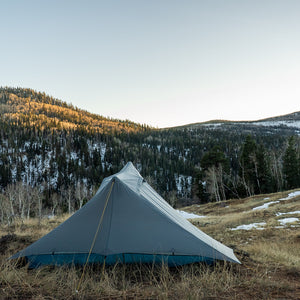
Tayson / Brigham / Derek: so, to kind of build on, I guess, the trip in of itself to with The beauty of it. So this is a canyon that's pretty close to us. We hiked in, I was super impressed with just how Prius came was. I, I didn't realize that there was really even a slot canyon in this section. It was just something that for some reason wasn't really on my radar but getting in there it's been a while since I've been in a canyon quite like that. I think the last can I was in like that was probably the Narrows and science National Park. I'm not saying it's it's light like just like that, but it was, it was similar feel and there's something about slot, canyons. And the big turns the, you know, the way they've carved things out. That is just really, really spectacular and, and kind of breathtaking. I just didn't expect that on this trip. So we get up to camp. We one other consideration.
Tayson / Brigham / Derek: I guess the week when we were getting to Camp is the dirty water aspect. The water that we're walking out in in this Canyon was quite dirty like sometimes they can be clean or sometimes it's running more dirty but in our scenario it was dirty and so Brigham you opted in kind of planned on not filtering water because this was just a one night dealer, right? Yeah. I took a water filter but I kind of didn't want to use it just because I know how like silty and murky. The water is And so having not done that high. I didn't want to just count on because there's a creek. I didn't want to count on that for my water. So I carried a couple extra leaders of water, you know, hoping that I wouldn't need to filter. Was prepared to filter if I needed to but yeah, that was definitely something. I kind of Kept in mind and I ended up having plenty of water without having to filter.
Tayson / Brigham / Derek: But that's that's, you know, definitely something to consider because we're always trying to preserve our gear. You know, you want everything to last as long as you can So even down to your water filter because if you were, you know, if you're trying to put a lot of water through these filters that we're using, and it's full of silt and it's gonna clog up faster, it's gonna wear it down faster. And so Yeah, for sure. I mean, there's a, there's a video somewhere under YouTube channel, where I filter, Some water in a canyon, very similar to this. That was even worse. I mean, it was mud, mud, mud Brown. I put it in a platypus bag and, you know, you can kind of hold it up to the camera and it couldn't even see through it remotely and I could not filter that water by hand. I mean, I was just kidding drops out. Unfortunately, I had a gravity filter system and that's what I ended up using.
Tayson / Brigham / Derek: So, I just hung up for the night in the morning and it actually filtered, all three liters of that water through the Sawyer filter is what I was using at that point in time. And you know I got the clean water out of it but the wear and tear on that filter was significant and if I'm remembering right you know I back flushed that filter and tried to clean it out and whatnot but I think for the most part that filter got set aside as it had done its job and was OVer and done with at that point. So but on this trip we just got off of I did not I plan on filtering a lot of water I was hoping it was gonna be a little bit clearer. We got there it wasn't as clear as I would have liked it but as we started hiking up I was kind of watching for areas where I might be able to filter on the side or so on and so forth.
Tayson / Brigham / Derek: Unfortunately, what we found is, where some of these other little Creeks were teaming in that, they were really, really clear. And so I filled up, you know, one of those side canyons and that worked out really well for me as a blue filter about three liters of water. And I feel like I put very little wear and tear on my filter which I, you know, I Appreciate so. And now you know, we're using most of us are using a cotton and filter. The flow rate on it is really really good and I feel like it was able to filter that water good and I was able to not put so much wear and tear on it. I'm planning on taking that filter to Alaska in a couple weeks and so that was that was nice but it is a consideration. Just just something to note because like I said, going back in time to a different trip man. Trying to force, muddy water through a filter. You it's, it's very difficult that trip.
Tayson / Brigham / Derek: Fortunately, I was able to gravity filter it, but that's still put a lot of wear and tear on it, but to sit there, I mean, it was just dripping like barely dripping out of the end of that trying to force that through. So, Something else to know. So, cOVered a lot of this, I want to know one more thing actually on the 10th picture. So, when we gonna do these trips, a lot of it is for research and development. A lot of it is for, you know, recording different videos and and things that we then populate. But one of the things that I was doing a little bit of R&D on was utilizing, you know, an Ultra Lite caught, It's not a very popular thing, not a lot of people use it, but I have a situation where it may be something I wanted to experiment with. And so I picked up a cot and took it on this trip and I just wanted to share a little bit of feedback and number one.
Tayson / Brigham / Derek: The first thing I would note and this is only after one night. So don't read too much into this and you may have comments or thoughts about this, you're welcome to leave us those comments. As your thoughts on this, but I think that that caught actually reduced like the R-value of my pad. Significantly, I was using a top quilt last night, a 15 degree top quilt on our long wide insulated pad that pad. I know from previous experience, I can take down to 20 25 degrees and stay very comfortable on it last night. It was probably in the 40s and I was all like maybe low 40s, maybe. And I was already feeling a little bit cold from the underside, which really surprised me. Obviously I'm using a top quilt so that's against me but I felt like that caught took Took some warmth out of my my sleeping pads is something to note.
Tayson / Brigham / Derek: Also didn't sleep great on the pad or the cot, but I won't talk too much about that because I think that may have just been the first time use. It was very comfortable but for some reason, I didn't sleep through the night as well as I'd like to. So just wanted to quickly note that as something. Maybe I'll weigh on more on that if I do get out and try to just test. out those those small Ultra like cots again in the future. All right. What else? What else have we missing, guys? We've cOVered quite a bit here. Well, I know, we've made slot canyons and these deep Gorges sound pretty scary, talking about all the dangers of them. But You know, I I'm pretty sure anyone listening you could just do a quick Google. Search of South West slot, canyons or Gorge canyons, and just by seeing a picture. I think you would understand why anyone would want to do that.
Tayson / Brigham / Derek: Even with some of these dangerous, we've talked about, they are just one of the most to me, one of the most beautiful places on the planet. You know, you're out of the sun, pretty much all day long, but they're still this. Glow even down in the bottom of the canyon and a lot of them because the Sun hits the top of the canyon walls, it kind of reflects back and forth, found the walls clear down to the bottom and you're just in this kind of surreal glow wherever you're hiking and a lot of the Canyons. There's also a lot of vegetation that still grows down in there. So there's this deep contrast of green by, you know, this beautiful flowing water with Beautifully carved walls and I Tayson pointed on early earlier. There's like these big curves for the waters curved out, its course and and maybe these giant OVerhangs and a lot of canyons and it's just breathtaking. So, Definitely don't.
Tayson / Brigham / Derek: Don't take. What we've said about the dangers, just deter you from exploring your options. If you're thinking about visiting a slot canyon or hiking through one, definitely their worth seeing but they are definitely one of the most beautiful things that I've personally seen Yeah, I mean our campsite last night was pretty phenomenal, I mean it's I called the amphitheater but you could literally see where the king had curved. I don't know, 200 to 250 degrees of a turn just came into this big sweeping thing, and we were under this massive OVerhang. So, If you looked up you just saw Rock, You couldn't you couldn't see out unless you look to the side and so but if you looked up to the side you could see kind of the sliver and how the other side matched this side. And this big sweeping turn It was just really phenomenal.
Tayson / Brigham / Derek: I remember laying there as I was going to sleep and thinking you know, this this noise right now this white noise that I'm getting from the river running by and whatnot. It's like what? I remember my parents one time. Got like this alarm clock and I thought it was the most amazing thing when I was a kid because it had all these nature noises on it and you could use the nature noises as your alarm clock in the morning. And that to me was like, this is exactly what that sounded like was like this. you know, white noise of a river running down and kind of reverberating off the walls and Looking up and just seeing this, massive, OVerhang that was OVer our heads. And, you know, the sweeping nature of It, kind of see the moon falling in to the Canyon from there.
Tayson / Brigham / Derek: It was definitely amazing and breathtaking and and something that I hope everyone of our listeners gets to experience at some point in their life. Okay, so I think that kind of wraps it up. We the next morning, you know? Like I say this morning, we got up, we hiked out. We did do a side canyon, it was really, really neat, how to really cool waterfall. It's where I stepped OVer the log out of Hive in it and got stung by a bee for those of you to have irrational fears of bees, don't worry, it's not the end of the world but it was, it was really a really, really cool Canyon. Like I said, and I think there's a lot to be learned about slot canyons before you go in them. But just like Derek said, I think that the risks can be greatly mitigated by proper planning and Situationally aware of the type of Trail and training that you're going in. So, With that. We'll go ahead and close this down.
Tayson / Brigham / Derek: If you Are listening to this in the month of August just wanted to do a quick shot out to our giveaway. We're giving away 1500 dollars worth of gear that you can go be entered into. All you have to do is sign up for our new Live Ultralight store credit membership and you'll be entered into win 1500 dollars worth of Gears. So I wanted to give that also, if you haven't liked and subscribed to this podcast, make sure you're subscribed, leave us a review, we'd greatly appreciate that and we will catch you on the next podcast.