Tayson: So here's the big question, how do we live a life? Full of Adventures travel and memories on our terms without being millionaires without previous experience? And without unlimited amounts of time, that's the big question and this podcast will give you the answers. I'm your co-host Tayson Whittaker and I'm Dave Keim and you're listening to the Live Ultralight
Dan: podcast powered by Outdoor Vitals.
Devin: Hey, welcome to Live Ultralight
Tayson: podcast. Today, we have a very special episode. We are actually on the trail with the guys from the office, Brigham, and Derek, and all. So then Becker and Devin Ashby.
Dan: These guys are awesome. Let them do some quick interest in who they are. And then we're gonna dive into what the heck's going on on this trip and why it's a pretty
Tayson: crazy unique and awesome trip and then some of our favorites from the trip. So, guys,
Dan: gonna introduce yourself real quick. And what makes you instafamous, special? Yeah, my name is Dan Becker. I run a backpacking slash outdoor YouTube channel. Been doing that for almost two years. So yeah, it's been that long already November 2018 is when I started. Yeah, wow. Yeah, well I'm Devin Ashby better known as Backcountry Exposure and also the backpacking Experience podcast. And yeah, backpacking. Hiking camping focused content. but lover of the outdoors, and
Tayson: All that. Yeah, both these guys have some amazing content that they put out and we definitely recommend going and tuning into their stuff. So make sure you do that after you listen to the podcast or while you're listening to the podcast. But we definitely want to start off this trip by just giving a quick overview of what the heck we're doing. And Devin, you really put the trip together and plan it. So why don't you tell us a little bit about
Tayson: where the heck we're at? And how you started to put this trip together? I think there's a lot. There's a lot to learn. Yeah. With
Tayson: this I mean when we're meeting or talking earlier, he's like hi you know where I'm from. Like you don't do like trip planning but out here, it's extremely important and and you're kind of the man at it. So
Dan: Yes. So it's kind of interesting for me because normally like I'm the one that's inviting other people on trips. I don't get invited on trips very often.
Tayson: So like death people, still love you,
Dan: yeah, Jen reached out to me. He's like, hey man, I'm coming to Utah. You should come on the trip. So we made it work, but I just in emailing back and forth with Derek was like, do you just want me to figure out a route for us and Derek was select on that. So yeah, we made it happen but I I happen to really enjoy planning trips and so where we're at is in the Escalante area. We've walked down the Silver
Dan: Falls Creek, Canyon walked five or so miles down the escalator River. And now we're walking up Canyon through chop Rock. And this is a route that some other content creator had inspired me to to check out and it definitely has not It's not well known.
Dan: Yeah, it's not well known, but it has not disappointed as well, but I like being honest and transparent. I was actually kind of concerned that it was going to be kind of underwhelming and not as like awe-inspiring for specially an out-of-towner. That is a local here, but for everybody else that doesn't doesn't see this area. Is it gonna be like an amazing area to see? And it's really paid out to be a pretty phenomenal trip. Yeah, so
Tayson: like happy with it super quick. Like what are like the most? I don't know, two, three. At Max like, important things you look
Dan: for when you're planning a trip. I look for total mileage that we can comfortably do over like a three-day period. So, three days, two nights and what kind of elevation gain and loss are going to see. What are the the water sources available, which today has proven to be kind of a Crux in the route. So I had it not been for a little water pockets in the grounds, we would not see water for a long time and that, that kind
Dan: of stuff can really put a wrench in how you plan a trip. So, most of the time, I like to plan trips that are around known water sources and I'll do a lot of research called ranger stations and stuff to figure out that kind of information. So just I think to really answer the question, I do a lot of research on the area. Try to find out as much information as I possibly can. So that I'm going into it feeling more
Dan: educated and not having to second-guess myself and play The Guessing Game of. Well I think there will be water and we should be okay. Like yeah, we sat at we sat at lunch and I knew that it was going to be dry for a long time. And so, we were cautious about making sure we had enough water and all of that. Yeah.
Tayson: I think one thing to note here too, is like the route that Devin is planned. I would say, is a little bit more of an advanced route. Yes, in planning. So if you're a little bit newer to backpacking, you're going to want to, you know. There's there's trails that you can find a lot of information online. You know, there's sometimes you can find guides. Those are great and better places to probably start, but we actually were looking at like coyote Gulch
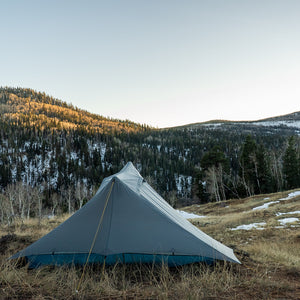
Tayson: but it's so busy this time of year that like let's do something different. Let's put something on their different and, you know, fortunately we have some experience and a very experienced guy out here Devin to to put that together. And so that worked out really well for us. So kind of like Devin mentioned day one, we packed about eight or so miles down into our first Camp. It's been an awesome night down by the river and just hanging out and relaxing.
Tayson: And then today was where I feel like the fun like really started. Yeah.
Dan: So yeah. Dan. How was that like the talk about the narrow section because you've never really been in anything like that? Um,
Dan: yeah. Well originally, when you said narrow section, I was thinking like I'm gonna have to take off my backpack and barely squeeze through this. Of course what Devin never shares like details Beyond like the title of something, you always have to just learn as you're going, which is fine. So the narrow section was just it was like, I don't even know how to describe it. It was like just huge Canyon walls. I don't know, maybe it was worth 15 apart 15
Dan: feet 20 feet apart maybe some at some points I could touch either both walls with my hands.
Tayson: Yeah. They got really narrow. How many, how do you think they were? Maybe a couple hundred feet high and
Dan: 300 feet? Probably, it was easy, unreal, epic. It was just,
Tayson: it was I live by like cornfields. Okay so that's like it was a definite upgrade. Yeah, I definitely definitely took me by surprise how, like, after starting a trip yesterday. I was like this is cool and then today just like kept getting exponentially more more epic for sure. But so now we're a night to found luckily we found a little spot to get all of our tents up and it's been good. But let's talk about some of the the big takeaways
Tayson: I guess from The trip today. So for starters, we woke up, put wet shoes on and walked five miles in the river. How did that guy? How did I mean feet wise, Footwear wise anything we can learn from that or, or how did you fare?
Dan: I think for me I wore my trail Runners with socks on. I don't think I would have wore socks. The next time I feel like That was a mistake, I don't know, maybe not. But I, you know, I was my first time hiking five miles in a river water. So, I think for me there, I don't know if there's anything I could do to change this, but I think it's just something to be aware of is the amount of sediment in
Dan: the river. Is just there's a ton of sand and sediment buildup inside my shoes, just because I really breathable Trail Runners as well. And so, That can do a number on your feet, specially if you get to between your toes and you know, through your socks and that's just something to be aware of and expect if you if you know what the sediment levels are in a river. So I definitely got a ton of sand and
Tayson: The crazy thing is, I think a lot of it comes through the breathability of the shoe doesn't necessarily come in, like, over the top like a gator, I don't think would necessarily solve, right? And it doesn't necessarily so because I've done
Dan: a lot of routes that comes through the escalator River. And I've spent a lot of time walking and, like, backpacking in the, in the river actually, where Vortex Line shoes for that reason, because I don't like the toe box of my shoes getting packed with. Yeah,
Tayson: you could share that a little sooner. Yeah, that was nice. Thanks for that because
Tayson: that's exactly what happened to mine. I got sand and Pebbles underneath my toes, and I was hiking just fine. And then, when we stopped for lunch, I pulled my socks off and I had like, up my toe. I didn't even know what I tore like the outer layers. The skin off my toe unfortunately wasn't like super painful, but that's definitely good reason to carry something like Moleskine. Or I had some duct tape and I threw a little bit of duct tape
Tayson: on there. And And fine. But, yeah, I was very surprised at how much, like, just soaking your feet in the water, and getting that sediment in there, it started to just kind of grind away those outer layers of all my calluses. I've worked so hard to develop are gone, so that's around them right off, but But now, that was, that was good. Any, the other things on the, on the river part? The big thing, we also want to talk about was,
Tayson: was hydration right out here. It is super hot. I don't know what it got to today. Like you guys pulled. Oh 90s. Yeah he's like 91
Tayson: I think yeah. I'd like what was 100% humidity down or no? It was 10% humidity. Yeah,
Dan: if that man, it was super dry.
Tayson: Yeah. And so, like For instance when it's that dry and hot sometimes, you don't realize how quickly you're dehydrating, right right? He sweat. Even a little bit of dries so fast. You don't even realize you're sweating sometimes and You know as much fluid as you are. So we just kind of shot a video on this so you can probably go check that out. But let's talk for a second about just hydration tips and Devon. I know you've got some experience with
Tayson: this so I'm like kick this off with with different thoughts. You have, you actually had and just one thing to touch on my talk about this is you talked about over hydrating which is something that I've personally never done.
Dan: I've always tried to always keep right on point but
Tayson: I thought that. Was also. Yeah, I think it's important to first
Dan: remember that you have to drink enough water. And even Dan was saying today, these like, yeah, I think I got so dehydrated dehydrated because I just get it. So in the zone that I forget to drink water. Yeah.
Dan: And I think that happens fairly often, especially if you don't frequent areas like this, that are so dry and hot. I mean, even when it's like low 80s, it's still really, really hot and dry in these desert climates. And so you have to be very conscious of making sure that you are drinking enough water and no, not drinking, too much water. Because you can actually drink so much water in this kind of setting that you basically wash any of those essential
Dan: minerals in your, in your bloodstream and your body that keep your muscles from cramping up and I kind of stuff. I'm not like 100% on all of that science and everything but you can basically poison yourself with water that you are flooding your body with so much water that it's having a reverse effect.
Tayson: Then hydrating. So it's a condition called hyponatremia. Yeah, so like I said, that's never been my problem, but it is, it is good to know. Does that happen more often when you like drink a ton of water like in a very short window of time, you can? Yeah. Okay. Yeah.
Dan: And it's good to keep in mind too. The like your body can only like process and absorb so much water at a time. It's I don't remember the exact like formula or but it's something like 300 or 400 milliliters every 20 minutes of what your body can actually
Tayson: consume at a time before it just so like, like to put that in perspective. That's like a cup and a half of water. Roughly almost almost two cups.
Dan: Yeah. So if you're just like, guzzling water super fast and everything that's just gonna, you're kidneys are just gonna like push through that really fast, and you're going to pee a bunch.
Tayson: So it's not actually helping as much as it. Yeah.
Dan: And and the other thing to keep in mind is if you do find yourself dehydrated, don't let yourself guzzle bunch of water because then you'll make yourself sick. And you'll actually scroll up, and then you're having a total reverse effect of what you're supposed to do. So that's kind of like a common knowledge with dehydration, but
Tayson: Yeah. That's always what I tell people is just make sure that you're sipping water other than guzzling it and, you know, every hour. So, just taking massive amount of water and just try to sip it as you go. So, making sure you have access to water. As you're going is, a, is a huge part. But anything surprise you Dan from being out in this, this kind of country or hydration side.
Dan: Yeah, I mean, I the biggest surprise for me is that I didn't feel sweaty. So, like,
Dan: What I didn't understand was happening, was that as I was sweating, it was just evaporating like wait, so like I was typically I was just dry whereas where I'm from, the humidity is so high. Sweat, just like you're just drenched. Like it doesn't, it doesn't go away. So you're like, you know, you're so for me I was that's why I feel like I was in the zone hiking and like I'm just not drinking enough water. I Didn't drink enough water because
Dan: I didn't think I was getting died rated and it just didn't even cross my mind. And tell, You know, you start getting dizzy and you know you're just like oh man something's not right. Then you're like holy cow, I need to drink some water.
Tayson: Yeah. And threes and me, and Dan went back and filtered. I wonderful groundwater. All these guys went on a extra mile for other water source, that worked out super well. The. Yeah, I think those are some of the big takeaways here. Let's talk about like a little bit about what it's like to come to Utah. Dan, and just see some of this. I, I jokingly said the same as like, we're walking on Mars right now. No, totally.
Tayson: That's like what I kind of picture for something joke. Yeah,
Dan: this place is so so far from what I'm used to seeing. It's it's it's, it's like a bucket list place for people in the midwest. You guys don't know. I'm from Wisconsin, you know, flatland, I live it like 500 feet of elevation. And so, to be out here, I would like, I'm like, looking up at the Canyon's waiting for like an Ewok to shoot me with. The laser gun
Tayson: like it looks like Star Wars was filmed here like this. Place is unreal and then to
Dan: just experience what it's like to hike out here. So different too. So like back and like, you know, tasting you touched on a bit like back in Wisconsin, you know. The routes are essentially planned for you because you have a lot of dedicated campsites that you have to Camp. I have to camp at and you really, you know, you the trails are made. And here, there was no Trail here. We sort of followed a riverbed. So It was just it was
Dan: a very, very cool experience to kind of see how you guys do it out here. Yeah, it was funny. A few times as we were walking along the river dam has got would go, are you? Is there a trail there? Are you going up on the trail? I just like, Dan there is no Trail,
Tayson: but there was a trailer and it was,
Devin: it was the cow Trail. Yes.
Dan: Cattle paths are in the area, but yeah, no, no established trails.
Tayson: All right, let's do a quick round circle here on your favorite piece of gear today. I'll start. I'll let I'll let Derek kick this one off. My
Dan: favorite piece of gear today. Oh, man. That's Okay. Definitely the, my Canon be free water filter, right? That saved the day. Just tasting mentioned, we ran out of water, or we were running out of water and then and we plan on a water source to be there. And it was up the side Canyon a little bit off our planet route, we went up and away some of us and just went on and on and on and on and just did not
Dan: find any water and so we ended up turning around. Going back out of the site. Canyon and even going back down the trail where we'd come to these basically puddles to filter water. And I just grateful to have something that was as quick and easy as the beef free to kind of rehydrate a little bit. I think at that point I hadn't been hydrating very well either, but
Tayson: after that, I was good. Yeah, Devon. Favorite piece of gear for the day. Well.
Dan: yeah, I was, I was gonna say the b for you as well because like There was so necessary for us to be able to, I mean, once I got that water, that was that was huge. But I have a new pack that I'm pretty psyched about and his carried, really well, it's the way Mark evolve. But it's a pack that doesn't have a hip belt. So I was really nervous. Being first time ever using a pack that doesn't have a hip
Dan: belt of how that experience was going to be and long day today I mean, I feel good and I was is a good. Pack to carry like it was like
Tayson: about it. Yeah. Yeah, I've kind of wanted to hear how that went on. You come here first trip, just no hip belt, and you packed light. I mean, I, you have a very nice light pack to pull that off, but it looked nice. Yeah,
Dan: I mean, I started the trip, 19 pounds with food and water, so that's
Dan: pretty like to, to begin with, for sure. Brigham Say I might have to throw another vote for the the BC
Tayson: altered as a really gonna say another one. I'm just important that we
Dan: we tally the votes, you know? Because we should like sell these on our website. We might as well. Let people know that it's a good filter, then just letting one person say likes it. They're all like it, then we say so. But yeah,
Dan: the be freeze. I mean crucial piece of gear today so it's not like it's fun to use or great on the body or anything. It's just It's just flat out works for me. But I'd say today, my favorite piece of gear. It's probably just my tracking polls. Just all the miles and they were useful in the river for five miles. A lot of times you couldn't, Quite see what you were stepping into or on. And so it was good to kind of just put The poll
Dan: out there as a Feeler and then pretty much on every trip. They're just, they help with the joints. And at the end of the day, I feel better after using them.
Tayson: Yeah, I I'm a huge trekking pole guy and I could definitely second that and I guess I could second to be free. He good product. Now it was definitely awesome. Um, I am gonna say today. My favorite piece of gear which is hard because I have a lot of them but is probably our Shadowlight backpack. Like, these guys mentioned water's a big thing, open on a lot of miles, not a lot of water sources and I'm a big dude, and
Tayson: I just sweat a lot. It's just It's just something I do and so I always carry more water. I walked behind you. Yeah, yeah. I mean like sure the Flies and yeah no so I always carry more water than most people just to make sure because I also you know I know what it takes to stay good and hydrated for my body personally and so I always try to to make sure I have enough water. You know, I'll hear life is
Tayson: just revolves around that. So anyways but with a lot of water it adds a lot of weight. I mean It's the thing you can spend like all this time and money shaving off these ounces. And then you like, load up water and you're like, geez, can I get like freeze dried water? But no, so at one point I had six liters of water in my pack just to make sure that I have enough for tonight tomorrow. And if anyone else, you
Tayson: know, needs any And you got six liters of water, plus your gear. I mean, six liters is like 13 plus pounds, plus my gear. So it starts to get a little bit more heavy but the shadow like backpack. Just the that I'm not 24 inch frame, just helps pull that that load off your shoulders, puts it on your hips. Stays really comfortable and You know, throughout the day I just using that zipper to access it. So my favorite piece of gear
Tayson: for today is the Shadowlight backpack. Yeah, Dan.
Dan: Yeah, yeah. Um. Be free fine. Yes, that's totally true. I used I used that as well. Best water filter I've ever used my trekking poles. For sure, I brought one. So my trekking pole that was a lifesaver in the river for me because You know, you can't see what's down below half the time and sometimes water gets deep and you can kind of you know feel how deep the water is kind of gauge it that way. And then in a few
Dan: minutes here, my favorite piece of year is going to be
Tayson: my two pillows, I brought
Dan: My Therma, rest compressible, pillows 7 ounces each so I brought 14 oz of pillows and I don't care. Okay, y'all can make fun, I don't care
Tayson: dude. We have not judge, you know what you like, Dan?
Tayson: Why do you pack Ultra Lite?
Dan: I pack ultralight because I carry anywhere from four to sometimes close to 10 pounds of camera gear. I have to compensate for the camera gear by packing as light as I possibly can, but
Tayson: that is, that's true. I mean, you guys like massive, it's like an anchor, but but on top of that, by packing, as light as you possibly can, you get to take some luxury?
Dan: Oh, yeah. Yes, thank you. Yeah, for sure. I carry. Yeah. My pet. Yeah, exactly. So I bring my chair. That's a pound. I bring a pound of pillows.
Dan: And I was my base weight was still like 11 and a half pounds before camera gear. So that was pretty good.
Tayson: Yeah, it's solid. Super solid. Okay. Anything else we need to brush on before? I've got some closing questions for you too. Anything noteworthy new and noteworthy. Saw some pretty wicked lizards. Yeah. The
Dan: first one we saw this morning was wild.
Tayson: Yeah, he was. I wanted to take him home. He was cool, man. It was a big lizard. Okay, to close this off. I am gonna ask both of you to say your favorite video that you have done, that are listeners. Should go look up right away. So Devin, that country exposure. What's the video that you think? Is
Tayson: just the one that they need to see right now?
Dan: So what can I say to? Because one's kind of a given, like if you haven't seen my wag bag videos, You gotta go watch My Wag Bag videos.
Tayson: Wait wait, what the heck is a wag back? Devon, I'm just gonna say what 80% of people are thinking right now. Okay, so
Dan: the Quick and dirty answer is very dirty. Yeah it's a mylar bag that you do your business into because in a lot of like high traffic areas. like you mentioned cargo, for example, there's so many people in that area and The. Soil and such Doesn't have the ability to break down human waste. But also its Hard in these narrow canyons and stuff to get away from water sources. And we know that human waste contaminates water sources so rather than Holding it
Dan: or anything that you shouldn't be doing. You poop into a bag and put it in your backpack and throw it away when you get home.
Tayson: So that's a wag back, that's why I
Tayson: Love swag bag experience is. Yeah,
Tayson: that was awesome. And you have the best tutorial around is what I'm what I've heard. A wag bag video. What else
Dan: I would say my my most recent trip video, which was down death Hollow,
Tayson: just really proud of how well that turned out that turned out with. big wide
Dan: expanse views and Just really cool experiences. A great great trip.
Tayson: Yeah. And he's also taking some footage of this trip. So you can you can see he's kind of in the guy that's running the camera. Probably the most on this trip. So if you want to kind of see where the heck we're at and what's going on?
Dan: Go see the only video from this trip. Yeah, for real. So
Dan: it shows the actual route.
Tayson: Yeah. So yeah. Go check out that video Dan. And I would say is just like a gear expert very knowledgeable teaches teaches backing for living as a part of what he does. He does many things but so yeah, check him out Dan over here. On the other hand, I'd say he's decently relatable And he has some amazing videos for for getting started as as well as just comparison videos. But what video should they check out from your channel?
Dan: Oh man. Okay, so good starter video, I think for people out there, if you guys are new to backpacking or have been backing a while, I did a video call to sleep in a tent and love it. So for guys that dreads sleeping in a tent, I can't get comfortable. You know? Just can't figure it out. Can't find the right location to put your tent at. You're always waking up all night long. It's a good video to help that out.
Tayson: Yep, nice. Looks like your most popular video ever,
Dan: my most popular video is a video called I quit. Ultralight backpacking. So Admire any right?
Tayson: It was not clickbait. It was it was not. I swear yeah that's a good one to go, check out because it's got a lot of really good points in there. That's coming from an ultra backpack company. So go check those videos out from Dan as well as Devin and I think that's gonna be a wrap. It is now dark. We're just looking at Shadows of cliffs here and it is gorgeous. So thanks for tuning in to the liberal I podcast. Make
Tayson: sure you like and Subscribe, take a screenshot even of this episode and share it. If you found some value from it, we definitely appreciate that. And make sure you've rated like say this podcast if you haven't yet. And as always, if you have questions about backpacking or need any help from us, you can reach out to us at support at Outdoor Vitals.com and we'll catch you on the next episode.
Dan: If you'd like to help us spread the word about the Live Ultralight lifestyle, please give us a five-star review and tell your friends to subscribe. We're available on Apple podcast, Spotify, Stitcher, and every major listening app, as well as Live Ultralight, calm. So, thanks for listening.