Tayson: So here's the big question, how do we lighten our gear and build our confidence. So we can start living a life full of Outdoor Adventures and memories without having unlimited amounts of time, money and previous experience. That's the big question and we are here to help you find the answers. This is the little Troy podcast power, bi Outdoor Vitals. Hey, what's up? What we try and Live Ultralight members. Thanks for tuning in to listen to the Live Ultralight podcast. Today, we
Tayson: have Brigham back on the podcast to geek out about some gear stuff, specifically taking three season gear into the fourth season. But before we get into that, I did want to mention. I just give a big thank you to all of our listeners. The podcast has been doing really, really well lately. We're super excited about it. We're gonna continue to put more energy and effort into the podcast. It seems like you guys are enjoying the content that we're putting out, and
Tayson: we do appreciate that. Also, if you haven't rated the podcast, go ahead and go and do that. And at the same time, as you're leaving a review, hopefully, it's a five-star review, right? But at the same time, give a little bit of feedback. Tell us like what is your favorite thing about the podcast so that we can continue to do that? And a lot of ways we are finding that you guys are enjoying the, the technical side of things, really breaking
Tayson: down gear, breaking down, Um fabrics and insulations, and things like that, and we'll continue to do that, but we'd like to know as well if there's other things so that we can build and expand upon so. So again, this particular episode, we're going to dive heavily into taking three season gear into the Four Seasons. There's a lot of you guys that are are camping and backpacking in the summer seasons, maybe you get into the shoulder Seasons just a little bit, but
Tayson: then when it comes to the fourth season, you you kind of check out and you're done for the season. But I think that a lot of us around the office would argue that you're missing out on a really, really fun time of year to be outside. And so that's what we want to do is we want to help you get into this aspect of backpacking and do so affordably anything out on, kind of, that intro. Brigham. Nope, that's good. Do you
Tayson: particularly enjoy winter camping? I do
Brigham: I just like to be out and winter so long in Utah. That A lot of the year to not participate out in outdoor stuff. So I definitely like getting out there year round. Yeah. What? Is it besides just like the fact that you're
Tayson: getting out there? Which for a lot of us fills almost programmed, like we can't go too long with gout getting out there and not really feel it. Both mentally or from whatever perspective but is there a specific aspect of winter camping that you feel like you get to capture that you don't get to capture or experience
Brigham: in other Seasons. I think there's a couple things all touch on one is I think we talked about this in previous podcasts but almost creates a remoteness, a lot closer to wherever you are like for some reason when it's winter time. Everything feels more remote, rugged. If you're able to escape the crowds, more everything just feels feels more like Wilderness, even though you could be a mile from a road. But because You know, a lot of the summer and fall traffic
Brigham: is not there, it just makes the experience feel a lot more. Yeah just remote and there's a lot more Solitude and serenity out there. The other one is kind of just the the challenge of there's more up against you, like there's more critical factors of the freezing temperatures that I really enjoy putting more skills into practice, where in the summertime, you can get away with a lot more and kind of be a little bit complacent with some of the the Knowledge
Brigham: and Skills and I I like putting all the place in the winter time.
Tayson: Yeah, you stole two of my three reasons that I like to get out there. I would say my first reason that I'll go different and then I'll kind of come around to yours as bright that I love the aspect of Hearing or seeing more of the wildlife out there because they're typically out in all times of the day, trying to stay fed and stay healthy and different things like that. And there's less people, you typically get to be around Wildlife, a
Tayson: little bit more or you get to see wildlife that you don't typically get to see such as a snow ferret per se or something. Or you just get to watch them out in the day and many of you guys don't know this but I'll probably do a video on this pretty soon that I'd like to take Optics binoculars or things of that nature out when I go backpacking because that's a big part of why I like to get out there and
Tayson: Enjoy watching animals, seeing animals and, and so, that's one thing that I really enjoy. So, the other things are, I, you went with the challenge, but I would just say the difference of experience, it's like, just the totally different feel and experience. It can be challenging like us building, our Snow caves last year, if you missed that on the YouTube channel or even a couple years back, we did hammock snow caves. Sometimes you just, it's just fun to mix it up
Tayson: and create a new challenge but just experience something different. And then I'd say last, which I'm gonna totally space here now. Oh, is this Serenity? I think snow just deadens noise. There's not as many people out for sure, but then all the snow just like silences everything, right? Yeah. The
Tayson: silence is pretty awesome. So I, I really enjoy that. All right? So that's all the reasons you guys need to get out and winter backpack and winter camp. So knowing that let's Dive Right into this. So me and Brigham did a little bit of brainstorming before we jumped on the mic here to talk about like, okay, what is our, what does this person can have this? Hypothetical person that's taking three season of the four season and then what do we need
Tayson: to change? So, for starters, we said that this person would have about a 130 and a half hour value pad, it's going to include a freestanding tent. It's going to include that's a three season freestanding tent. It's gonna include a 15 degree sleeping bag. It's gonna include some kind of Gore-Tex boots, but that are likely not insulated. You're going to likely have a puffy jacket, and a rain jacket. And then you're probably also going to have like, thermals or tights of
Tayson: some kind. So those are kind of assumptions that we're making that you're starting with. so if we have that as the the base scenario, then let's look at the fourth season. So, going into a Four Season scenario, what we're planning for, would be a little bit of walking not summer, Miles by any means, but a little bit of walking that requires, no snowshoes, that requires no snow skis, or anything like that, maybe microspikes. But we didn't really dive into that, but
Tayson: just a little bit of walking, there's gonna be a little bit of snow on the ground and you're potentially going to see single digits as far as lows and temperatures, maybe zero degrees fahrenheit as kind of the lowest potential scenario. So knowing all of that, that's like the base core gear that we have to work with and kind of the scenario that we're moving into. What's the very first thing that both of us said, was the that you needed to change
Tayson: about your gear going into that Four Season, Brigham? Turner was it wasn't the path.
Brigham: It wasn't bad change. Add a closed cell foam to it. Yep. That's, that's exactly right. That was the very, very first thing
Tayson: that popped into my head and when we started talking, I feel like that was the first thing that came up is a three and a half. Our value pad in the winter season is, is going to be detrimental. As you're going to be cold, like, no matter what you do, it doesn't matter if you add layers, if you get a negative 15 degree, sleeping bag, whatever it is, you will be cold if you don't change up that pad. So, in order
Tayson: to stretch your threes and gear, what we advise is, adding a closed cell foam pad of some sort, some kind of a foam pad to supplement, your existing 3.5 R value pad. If you're, if you're going into decent, I don't know. Let's say you're getting into the teens, maybe the low and maybe you have a different opinion about this program, but typically, if I'm going into the teens, I'll put the foam pad underneath my sleeping pad. If I was going to
Tayson: go colder than that, I'd be tempted to put it on top of my like and I'm talking about like an air chamber path, a 3.5 value our value, air chamber pad. I'll probably gonna put my phone pad on top of that. I'm getting into the single digits or zero degree range, just to try to get that r value or the, or the actual insulating piece is close to my body as I can.
Brigham: Um, I for me, I always just stick it on bottom. I don't think there's There's not much Rhyme or Reason to it, it's just always worked for me. So I think in order of putting one thing down before the others, it just makes more sense to me. And I don't know if it's because I feel like the pad might be slippery on the, on the tenth floor or whatever. But yeah, I think, I think, either way because I've heard of a
Brigham: lot of other people to do that, too, and then obviously works. And so I think it, you know,
Brigham: Yeah, I guess people try it out either way but the pad the closed cell phone pad is it's got to be the easiest way and one of the more or less expensive ways to increase your your value, in your sleep system. Totally. I mean you are looking at maybe a twenty dollar
Tayson: investment like a Walmart or something that we're going to be trying out this winner, if you're very conscious towards weight is gossamer gear actually has a little foam pad you can get it in 8th or fourth inch thick. I actually picked up both of those just recently and I'm going to be trying those out in the winter season. They're much lighter option and that's the only reason I picked him up because I think the 8th inch is like In the two
Tayson: ounce range in the in the quarter inches and like the four and a half nearly five ounce range. So very very accommodating for for their weights. So that's a very easy add. It's gonna cost you a little bit but it is a necessity, I would say, yeah for sure.
Tayson: So, moving into the sleeping bag itself, Our advice there would be to look and see if you have anything that you could take to supplement. Your 15 degree bag. In other words, like put inside of your 15 degree bag, you've got a summer quilt, like a 30 degree quilt, 45 degree quilt, a technical blanket, like even like a Rumple. Or if you've got like a down throw from Costco or anything like that, those are going to be pieces. You're going to
Tayson: want to add and supplement that 15 degree bag Yeah,
Brigham: it's again it's a really easy and economical way of doing it. If you are already have assuming you have something else, it's always easier to just put something else in that you already have. And to go buy a very warm sleeping bag because the warmer the sleeping bag, the more expensive it is and so I think it's a great way to go. I often use just a quilt that I made and I'll stuff that in like a 20 degree bag and
Brigham: I'll be toasty like it's Very adequate for very like, down to single digits.
Tayson: Yeah. Yeah, I agree. A lot of people like sometimes I have like down pants and a down jacket. I'll wear those to bed sometimes, but I would still put this as a piece, that's gonna add more warmth than having it pair of down pants or down jacket. I'm going to kind of push this along here. Because we got a lot to cover, but the other thing would be with the three season, four standing or freestanding tent. The only thing we really
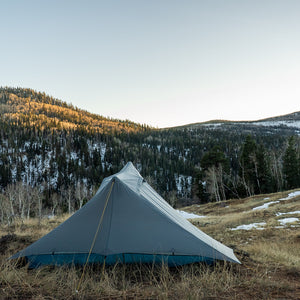
Tayson: thought of there is that should be adequate as long as a quality tent, you know, for instance, our 10th taking. I've taken serious snow loads on those and they've done, they've done well. But the biggest thing is just to change out your Stakes. If you can get a hold of some snow Stakes, those are always helpful, sometimes they're not accessible and you kind of have to go into each given scenario and figure it out. But like I've used our stakes in
Tayson: deep snow. So when it comes to the tent side, if you've got a three-season free standing tent, typically we've seen those do pretty. Dang. Well, as long as it's a quality brand, if you like DAC, poles or Eastern poles, it can take a decent amount of snow load decent amount of wins but the bigger thing is staking it out, right? So you might want to look at investing in a little bit of snow Stakes. Those can be, I feel like I
Tayson: picked some up for like 10 bucks. Amazon recently. Or you can use your existing stake. Sometimes those work as well. You can freeze them into the ground a little bit. We've used different like like sticks and things like that to tie out to instead of the stakes. Sometimes you have to get creative but the easiest thing to do that, you know, is going to work. Is if you're going to be camping on a decent amount of snow, get some snow stakes
Tayson: and you can easily stretch a three-season tent into the Four Season. Jumping into backpack. Now really, any backpack that you use in the other parts, the season should work just fine on the Four Season. The only thing that we would say is you're gonna be adding additional layers. And, and Just more gear essentially and so you're likely going to need a slightly bigger backpack or to make sure your backpack has a little bit more space to accommodate. Additional items and then
Tayson: last would be to, you know, use a pack line or if you can in the winter when things get wet in the winter, it's way harder to dry them out. So you're going to be probably setting your pack in the snow from time to time or just having situations like this. So at a bare minimum, pick up a pack line or put a trash bag in there and just try to keep your gear dry and a little bit more protected. I'm
Tayson: jumping into the apparel side. This is probably where more the magic happens. Like the biggest things you could do, would probably add that foam pad and then do your layers, right? We are going to be doing more on layers and Fabrics on the podcast to come. Probably more in December at this point. So if that's something you're interested in, stay tuned for that. Because there's definitely a lot of right things you can do and wrong things, you can do, but starting
Tayson: at Layers Brigham. What's, what's our
Brigham: advice? Get a wicking base layer whether it's synthetic or Merino, or blend. Just get something that's up against your skin that's going to Wick the moisture away. Help move it through your layering system. Old. It'll take care of you pretty. Well, why is it important that they
Tayson: get something that is wicking? Why isn't important to get that water off of them?
Brigham: You just want your skin to be dry. That's the one of the more effective ways of staying warm, especially once you're activity, level is dropped, you don't want to be sitting still with wet skin. Whether you win or just cold air, it's going to make you a lot colder.
Tayson: So if you're looking for that Wick layer wicking layer, basically, they're looking for synthetic or wool typically write like wolves gonna Wick a little bit better. It might dry and push the moisture sometimes a little bit better as well. Yeah. If you haven't actually seen stuff about our dragon wall, we kind of explain and break that down because we use wool against the skin and then basically a polyester multifilament to spread that water out and transpose it. But that's kind of
Tayson: like picture perfect scenario for how to handle that moisture. If you don't have those though, you know, getting a 100% nylon polyester or wool. Right up against your Skin's. Gonna be your best option? Yep.
Tayson: What's the next thing that they need in the layering system? Something along the
Brigham: lines of like mid-layer. So a real easy one that I think is very prevalent is just fleece. It fleece. Well, it's common, It's relatively inexpensive. And it's good insulator. So I think that's a good mid layer's. Just use the fleece that you already have or find some.
Tayson: Yeah, I would, I would definitely agree with that as I was talking in preparation for this. I I've used a lot of the wrong fabrics and the wrong scenarios growing up, just not really knowing better. Whether it's cheap gear or using what I had, you know, scenarios like going out in the winter and using cotton jeans and then having bad experiences, but one of the things I can say, I actually did write, was we used to get fleece pajama bottoms, like
Tayson: every Christmas and when the temperatures would drop, we would use fleece to, you know, underneath our pants or whatever. The other piece was that we were using and kind of put that fleece more against the skin. And that will actually worked out pretty well, because fleece performs at a very high level. We even when it's wet, it's one of the warmest. Pieces of fabric, you can get that performs when it's wet so and it's extremely cheap whether you go to a
Tayson: thrift store military surplus or you know, your local discount store down the road, you should be able to find some fleece layers at pretty dang, reasonable prices. Yep.
Tayson: You don't have fleece but you have other synthetic layers other polys or nylons or Blends. Those should work pretty decent for you as well. But a fleece is going to give you a little bit more Loft and typically a little bit more warmth because of the way that the fleece is made to to create some Loft. So, so we've got our base layers. We've got this kind of mid layer fleece or synthetic layer. What's next? After that.
Brigham: Definitely want to use something. For an insulation layer. I think if people maybe have a fleece and base layers, they might have something. A light insulated jacket. So like an example is the Loft tech jacket. It's an insulating layer or something with either synthetic or down fill, just something lofty that you. Can throw over your fleece mid-layer, and you can switch it out as your activity level changes. And as your, you know, your your needs So yeah, an insulating later,
Tayson: I'd say, good way to look at. That is like fleece. To me is a mid-layer, it's an insulating layer, but it's not a high Loft, like insulating layer. So this piece to me is kind of like a high Loft insulating layer. Loft Tech is going to create a good amount of Loft. A down. Jacket is going to create a good amount of loft or even some of these, you know, like primaloft insulating layers, they can work. Okay? To but you're typically
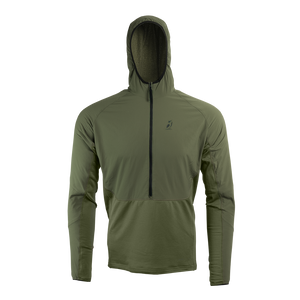
Tayson: looking for something with with a decently High Loft for this? Of your layering system. A lot of you guys, even for the summer months are going to have some kind of a down jacket, or a synthetic jacket, and you're going to want to bring that along and use that within your framework. So, Last piece to all of this would be using some kind of a soft shell or a hard shell. What's your preference on that? Brigham?
Brigham: I don't ever use soft shells, just personal preference, or a little heavy. So I find that whether it's a fleece or a puffy jacket, there's a lot most of the time, the weather permits me to use that if I need something to either cut the wind or precipitation, I'll just use like a rain jacket, you know, waterproof shell, and
Tayson: I've had just good success with that. Yeah, Yeahs Heads might roll over this but I am a hard show guy all the way through and just to clarify that though, what that means to me is I like really lightweight rain jackets if they can breathe in some way like pit Zips or something like that, I'm definitely more of a fan of that, but I'm more of a hard shell guy and the reason being is I have had soft shells. I've used
Tayson: soft shells. And essentially what I've found is that I've froze my butt off in soft, shells. Making the assumption that they breathe and can transpose the moisture pretty efficiently. And a lot of times, they, they can't. So they're not really, they're not really rain proof because they don't have a membrane and they don't really allow moisture to get out of them. Very successfully either and they weigh a lot more than like a really lightweight rain jacket. So what I have found
Tayson: is, I will run my loft, tech jacket, or whatever. On the outside a lot. And only when it starts to snow or rain or Whatever It Is Well I put that hard shell on and the second it stops I take it right back off. Personally, that's just the way I roll, because it's a lot lighter weight to do that. Like I might get a rain jacket, that's like say eight ounces or 10 oz. That's gonna be a lot lighter than a
Tayson: pound Plus. Soft shell. And, again, I've just I've gotten really cold. Like, I had a scenario out in Colorado, where I hiked in, I had a loft tech jacket on, and I had a soft shell on I hiked into this place by the time I get there. I'm pretty. Dang cold. It's been snowing all morning. I stopped we sit for a while and I just start getting super cold and I'm like, man, I must have some moisture in my, my system
Tayson: right now. So, I I take off my soft shell and I actually had a second Loft tech jacket there and I threw that on and I actually took so to back up, I took off both the hard the soft show and my loft tech jacket. I put the new Loft tech jacket against my skin and the Loft tech jacket that may have had moisture in it farther away from my skin. And within minutes I was 10 times warmer and I hate
Tayson: could actually start to see the other jacket where it was wet and watch that moisture start to evaporate from my own body heat. And after that I was just like, man, I got so wet and cold in that soft shell. I may as well have been wearing a hard shell, because that's what it acted. Like, that's what it was, treating me. Like and after that, I took that back to the truck and I used a hard shell, pretty much ever since
Tayson: just because I save weight and I try to never use it unless I have to. So, all right, hopefully that was kind of insightful. But yeah, typically your summer rain jacket and your insulating layers that you hopefully already have should suffice. You're just adding in a little bit better, mid layers and if you have multiple insulating layers, that's always, that's always good. So, Jumping into Footwear. I wish I had more to tell you to save, you know, to help you on
Tayson: this. I I can't say that hopefully within a year or two. We have an option for you to bring along on winter scenarios like this. That Could help your feet. I've actually gotten us a degree of frostbite in my feet multiple times and it totally sucks. And last time it happened was when I was out in Alaska and I came back and was like, all right, we're gonna try to expedite this program because I am sick of getting frostbite in my
Tayson: toes. Now this is this is something I will say don't be fearful of this I wasn't I was pretty stupid on a pulse scenarios. I could have prevented it. I couldn't have changed my situation. Maybe I got a little bit too tough mentally to, and I, and I allowed it to happen, so don't let this scare you. But I wish that there were some more situations in here besides telling you to spend money. Right. But eventually, if you're gonna do much
Tayson: of this, you're probably gonna end up spending money. So, the tips that we have here are re-waterproof your boots. If you've got like, a Gore-Tex boot already, you know, re-waterproof it and you're gonna want to make sure to bring extra wool. Socks heavy duty wool socks to sleep in and then additional socks to potentially rotate throughout the day. If you've got bigger size boots, you might be able to wear two pairs of socks, that's always an option. And then the last
Tayson: thing that I have is this little cheap toe, warmers, you know, they do a pretty decent job, bringing it bring a stack of those and you can stretch your boots out a little bit and they're gonna help you survive and be a little bit happier throughout the day, but to back up just a little bit. With the socks. You know, make sure you're not wearing any kind of cotton, sock. Preferably you're using wool or synthetic.
Brigham: Do you have any preference with those Brigham? I generally use like a blend, so I'll use a sock that baby is like, 55 to 60% Merino. And then the rest nylon. Yeah,
Tayson: I'm kind of the same way. I if I had like a perfect world, I might look at boosting my synthetic content. And a sock for the winter months, but then in the summer months, I like a higher percentage content of wool. But either way both of those are going to perform pretty well just make sure you're kind of avoiding the Cottons and whatnot. So Try to keep your feet warm. Try to keep them dry, do whatever you can to do that
Tayson: because that's that pays dividends both of the scenarios where I got frostbite. I let my feet get wet. And that is what led to my issues. So, That's Footwear going into gloves, you had some pretty good ideas with gloves, what do you, what do you, where do people start with gloves?
Brigham: Well, again, you know, we're trying to help you use your three seasons stuff. So if you already have like a light glove, take it. But when you pair that with a leather work glove, it gets you, you know, you can go into some pretty cold temps now. that's, Assuming you're doing a little bit of use, like you're using your hands for something. And but if you're just sitting there and it's single digits, you're going to need something warmer at your pockets.
Brigham: Yeah. You got a puppy, just stick your hands in your pockets and that'll keep your hands quite warm. If you need to spend a little bit of money, there's I was telling you about those Fox River. Gloves, you can get these ragg, wool gloves for like 15 bucks. They're like a Midway and Pretty, pretty good money, you know, 15 bucks, kind of goes a long way with those with those gloves. So
Tayson: Yeah, I think that's all really good advice. You know, potentially use some leather work, gloves, you have. If you can treat those before you go out, that's always helpful. Find some kind of glove liners with it, be wool synthetic, whatever you can. And again this might be an area where long term, you know you'd want to potentially look at spending a little bit of money for me. Personally. It's my hands. My feet. That's what's the hardest to keep warm to keep
Tayson: dry and whatnot and these winter months. And so I think you can definitely stretch things out really easy as well though. But yeah, be aware as you get into this little bit more, that may be an area, you watch for some different options to come up, but a lot of you, you know, if you're out here in the west, you may have gone snowboarding, you may have a snowboarding or something like that but adding some layers and that again it's helpful
Tayson: and then last would be those hot hands are pretty dang cheap to to take out until you spend some real money on gloves as well
Brigham: I think yeah just a little bit of Practice of wisdom, too. There's there's just some things that maybe some people don't think about some do's and don'ts regarding, just what you do and don't do with your hands. We may not have time for that day. We might want to do another podcast for like kind of hacks, like, just things to be aware of. But in the meantime, if you want to email us and ask questions about what I'm talking about, it's
Brigham: just like, you know, don't touch metal with bare skin. That suck the heat right out of your hands. And so just some, I
Tayson: think that would be a great topic to continue to cover and additional podcasts. So let's plan on finding a time to work on. On some of that. potentially with that we could we could cover a few more like tips and tricks to Practices or skill set. I'd be a good one in the fourth season so that kind of covers the gear side of things. There's a couple of few other things we need to touch on before we close this out. One
Tayson: would be make sure you've got a good headlamp and you've got extra batteries because when you go out in the winter the nights are a lot longer. So you're going to be using your headlamps and your lighting quite a bit more. Typically another thing would be bringing an audiobook, you know, if you get cold you're sitting around a fire or whatever you're doing. It starts to get cold. You find yourself thinking more and more about climbing in that sleeping bag a
Tayson: little earlier than you normally would. So if you want to bring an audiobook or something like that, it can help you kill a little bit of that time that you maybe are struggling to fall asleep. If you're like me, I am always like, oh yeah, I'll bring an audio, an audiobook and then I like lay down and I'm just out so fast because of the hiking or whatever it is, but Something to think about all. So, make sure you you have
Tayson: some way of starting a fire in these colder wet situations. Just make make sure essentially that you've got better contingency plans, because when things do, go wrong in the winter, Makes her higher, you know. So start off maybe doing this winter camping, a little bit closer to home or like closer to a road. You know something that's feels comfortable to you and then the more you do it, you know the more safe you feel going on bigger and farther Expeditions but
Tayson: make sure you got good contingency plans. You've got good fire starters and people know where you're at. The last couple of minutes. Again, this this is kind of the hydration side. Let's maybe save that for the tips and tricks but there's definitely a few things you can do hydration wise to protect your water from freezing. Making sure that you're staying hydrated because you might always not realize that you're, you're losing water as you're going out there with cooking. I will say
Tayson: this, you can typically use your cook system in a fourth season, if you change up a few little things, such as trying to keep your your gas warmer, whether that is alcohol or isobutane, you know. Put it in your jacket for a few minutes before you try to use it. That's going to help it function just a lot better. Yeah.
Brigham: Yeah. But and again kind of like You're mentioning before you don't want to like make people afraid of using that stuff, because most of the time it'll still work, you know, like the cook system you have, I take my backpacking Cooks system. Isobutane little Stove. I'll take that in the wintertime all the time.
Tayson: People scare you, they're like, oh, that won't work. Like you have to buy this other white gas canister stove. Yeah. Just
Brigham: Try it out but I've never had mine fail and my backpack year round. So yeah,
Tayson: sticking it in your pocket and doing a few things like that can can really help it work better and also if you're using like a cheap Amazon stove, you know, it's there is a possibility that that won't seal very well or something like that, in those colder Seasons. So sometimes having a little bit higher quality of a stove, can pay off in these winter seasons. I think we've got the Crux Lite on our website. You've used the one for not from
Tayson: snow peak, but another brand that's, that's more well known. So, yes, so do MSR, you know, using some of those you probably have a little bit better luck in the winter season. So that's it. That's covering the gear. That's a stretching, our third season stuff into the Four Season. I don't think you're gonna find a lot there that you have to invest in. You know, let's just say conservatively, maybe cost you a hundred bucks to put together a few of these
Tayson: pieces, like a foam pad. And if you want to pick up some stuff from a discount store that you may not have whether it's fleeces or glove liner or something, but it should be relatively simple for you to stretch out your gear and give winter camping a shot this season. Now, there's always room to completely improve your gear, which is what we're going to kind of cover in our next podcast episode, we're talking about like, if we were gonna spend some
Tayson: money to get into winter backpacking, what would we change out in our gear lists to buy, like a fourth season setup? So, we'll cover that in the next episode, but just be aware that you can stretch your gear out, and give winter camping a shot, this season. And also be aware that there are upcoming cells with us. And With everyone else, Black Friday is right around the corner, we're definitely gonna be having a sale. You'll be able to save 15% off