EP 42 - Most Backpackers Are Thinking About Insulation Wrong

Live Ultralight Podcast

EP 42 - Most Backpackers Are Thinking About Insulation Wrong

Highlights

In this insulation deep dive, Tayson and Brigham push past the simple “down or synthetic” argument. They explain how warmth, moisture, compression, drying time, and use case should shape the insulation you carry.

  • Why “down versus synthetic” is the wrong first question.
  • How moisture risk changes the way insulation performs in the field.
  • Where down still wins for warmth-to-weight and packability.
  • Where synthetic insulation earns its place in active or wet conditions.

Chapters & Timestamps

00:00 — Why the normal insulation debate misses the point.

07:00 — Down, synthetic insulation, moisture, and drying behavior.

18:00 — Warmth-to-weight, compression, and backpacking use cases.

32:00 — How to build a layered insulation system around real conditions.

Choose Insulation by Conditions, Not Category Loyalty

The wrong insulation choice usually starts with the wrong question. Backpackers ask whether down or synthetic is “better,” then argue as if one material can win every trip. That is not how insulation works outside. The better question is what the insulation has to survive: moisture, compression, sweat, cold camp hours, long storage, active movement, or emergency warmth.

Down and synthetic fills solve different problems. Treating either one as a religion is how hikers end up carrying the wrong layer for the weather in front of them.

Start with Moisture Risk Before Warmth Claims

Warmth ratings are only useful if the insulation can keep working in the conditions you actually face. Down has excellent warmth for its weight and compresses extremely well, but it depends on loft. When moisture collapses that loft, the warmth drops fast. Synthetic insulation is usually heavier and bulkier for the same warmth, but it handles damp conditions and repeated wetting with more forgiveness.

The first decision trigger is the source of moisture. Dry cold favors down. Persistent rain, wet snow, heavy condensation, river travel, or a layer worn during sweaty movement pushes the decision toward synthetic or toward a more protected down system.

If the insulation will mostly live dry inside a pack and come out at camp, down can be hard to beat. If it will be worn while working, venting, brushing against wet vegetation, or absorbing repeated condensation, synthetic starts earning its ounces.

Use Down Where Loft Can Stay Protected

Down is still one of the strongest tools in an ultralight kit because it delivers warmth in a small package. For quilts, sleeping bags, and static camp insulation, that packability matters. It lets a backpacker carry real warmth without filling the entire pack.

But down should be treated like a high-performance material, not a magic one. Protect it from external moisture with smart shelter choice, pack organization, dry bags when conditions justify them, and a sleep system that manages condensation. Do not stuff a wet rain shell against it and then blame the fill when camp gets cold.

The threshold is straightforward: if the down piece can stay dry until the moment it is needed, it is probably the lighter and warmer tool. If the trip makes that protection unlikely, build in a backup plan before the forecast proves you wrong.

Synthetic Insulation Belongs Closer to Movement

Synthetic insulation is often the better choice for active or semi-active layers because it tolerates sweat and dampness better. A backpacker climbing in cold weather may not need maximum loft while moving; he needs a layer that can breathe, buffer wind, and keep some warmth even when moisture builds.

That is why synthetic pieces often make sense as shoulder-season or high-output layers. They are not always the warmest per ounce in a static comparison, but static comparisons miss the point. A layer that works while you are moving, stopping, adjusting, and moving again can be more useful than a warmer piece that has to stay buried until camp.

If the layer will be worn under a pack, during starts and stops, or while managing sweat in cold wind, synthetic deserves serious consideration.

Do Not Let Compression Hide Durability and Recovery

Packability is valuable, but it can become a blind spot. Down compresses beautifully. Synthetic insulation usually takes more space. That does not mean the more compressible choice is automatically better.

Repeated compression, poor storage, body oils, moisture, and dirt all change how insulation behaves over time. A quilt that stays compressed for months or a jacket that never gets cleaned may lose performance regardless of fill type. Gear care becomes part of the insulation system, not a side chore.

When choosing insulation, ask how often it will be compressed, how wet it may get, how easy it is to dry on route, and how carefully it will be stored at home. The best material on paper can still underperform if the user treats it wrong.

Build a System Instead of Picking a Winner

The strongest backpacking insulation setup often uses both categories. Down handles dry, static warmth efficiently. Synthetic handles moisture, movement, and abuse more calmly. Base layers move sweat away from skin. Wind layers protect loft. Rain shells block external moisture but can trap internal moisture if worn carelessly.

That system view prevents overbuying and underplanning. You do not need the warmest possible jacket if your quilt, base layer, wind protection, and camp habits already solve the temperature range. You do need a smarter plan if one wet layer can collapse the entire system.

Choose insulation by job description. What gets worn while moving? What stays dry for camp? What protects against wind? What can recover from moisture? Once those jobs are clear, the down-versus-synthetic debate gets a lot quieter.

Ask OV a Question

Have a backpacking, gear, or trip-planning question for a future episode? Send it through SpeakPipe below, or message us at support@outdoorvitals.mom.

Recent Podcasts

Full Transcript

This transcript has been cleaned for readability and speaker flow. Minor transcription errors may remain.

Read the transcript

Tayson: so here's the big question, how do we lighten our gear and build our confidence so that we can start living a life full of Outdoor Adventures and memories without having unlimited amounts of time, money and previous That's the big question and we are here to help you find the answers. This is the little trolley podcast power, bi Outdoor Vitals. Hey everybody. How are you doing? Today, we are back on the mic here at the Live Ultralight podcast. Thanks for joining us

Tayson: and today we've got a really fun topic. We're titling. This I believe most Backpackers think about installations wrong, this may or may not speak to you, most of you might think. Yeah, I think I've got to figure it out but there may be a handful of you or of majority of you they're going to wonder am I applying synthetics or Downs, right? In my kit or finding a lot of times is the people are jumping into one side or the other

Tayson: and they're kind of living in those camps. But those are those are typically stereotypes. Those are typically It's just not black and white, I guess is the best way to put it. So that's the topic that we're going to be talking about today. I have here on the podcast, with me, break them our designer. He's going to be tuning in and breaking some of the stuff down with me. So, welcome back. I'm Glad to have you here on the podcast today.

Tayson: This is good to be here. I think that this topic especially feels important to us right now, with some of the product development that we have going, you're going to hear over the next little while some of the, the teases and some things that are becoming out one piece especially sooner than later, but but that's, that's maybe why it's a little more top of mind as well as Being the winter, right? So I mean we're heading out on Wednesday, right? Brigham

Tayson: to to do some winter backpacking. And if there's one thing that you need really dialed when you're going out winter backpacking, it's it's a layering strategy and and gear strategy for these different elements thinking back bringing I guess about like your development getting into winter backpacking. How long do you feel like it took you to kind of dial things in for you personally?

Tayson: I would. Say I mean of course of years because I would look back to when I was a kid it was gear

Tayson: was selecting the right gear was not. A really a big deal I was just too young and just wanted to have fun and be out there. So

Tayson: did you backpack it a young age or like kind of Winter Camp?

Tayson: Yeah, yeah. Probably before I was even in my teens. We would go and do. Winter backpacking trips. We'd hike in sometimes we would pull sleds but usually it was just backpacks. But yeah. I mean back then, it was Whatever felt warm. So Thick heavy stuff and things like that. And then yeah, I guess this time went on and I think with a lot of things in life, you just start paying attention to details more start becoming more intolerant to Frustration and

Tayson: discomfort with anything whether it's gear or not but you just start losing patience just want to be comfortable even though you're doing something difficult. So I think that's just eventually just kind of progressed and as years went on, Started paying more attention to what I was actually using. and you know, kind of souls because the more you pay attention to it and start using your past experience as to affect your future trips, then you you learn quickly what works and what doesn't

Tayson: Category. I would say that my first Experiences with with some of this winter backpacking. And we're not just just we're not talking about winter backpacking today so don't if that's something, it doesn't interest you don't tune out just yet because this is Absolutely gonna apply to three season and summer, backpacking, but the consequences can, sometimes, get a little bit higher or or whatnot when it is winter. And, and what we're going to talk about applies, maybe a hair more in the

Tayson: winter season, but I would agree. When I first started having experience with this, it was actually like through the Boy Scouts program, but really my leaders weren't big snow people either. So many of like our winter klondike's and stuff for like go to this cabin as a hot tub, as a bunch of rooms like a bunch of space. We all, you know, just crowd in there. And it was, you know, that but there were definitely some times where we were doing

Tayson: stuff outside and I think kind of like what you were saying is your level of tolerance for suffering changes because one like if you have to suffer, I feel like I would still suffer but when you know, there's a better way, If you're tolerance for that, really starts to diminish and as a kid you didn't know, there's a better way, a lot of times. And but it was still worth it to you back then because it was fun, it was getting

Tayson: out, you know, a lot of times with friends or whatever it was, it was an experience but definitely the older. I got the more and more and more. I started to pay attention to that and just a caveat, I would say in there too. Is some people's tolerance to some of that suffering per se is a lot less than others. Take my wife, for example, she's just not that interested in certain activities because she's had experiences in the past and she

Tayson: can't really get over those. Cups, you know, and it's up to me to try to make her extremely comfortable when I go out so that her tolerance gets wider and whiter. And so that's, that's something to just think about is like to her. She loves the outdoors, but she doesn't need to sleep, and to enjoy him per se and to me, I'm, this is, this is not maybe totally true but I'm always a believer that, like, you don't, you don't enjoy

Tayson: the outdoors if you're not. I don't know how I typically say that, but basically, if you're not comfortable, and I'm never gonna like fully enjoy it, alright? But if you like, I, I say this a lot about winter sports like you don't like winter because you don't know how fun and winter, you know, stuff like that, right? If you can, if you can get over some of those hurdles, it turns around the kind of Paradigm shifts into more enjoyable things. So

Tayson: Anyways back a little bit more on topic here. We're going to be talking about how so many people think the down and synthetics are polarizing and so Different and they really get set in these camps. I mean, I can't tell you how many times I've seen conversations rise up, where it's like, no, like I just have a down puffy jacket. I don't need a synthetic this or maybe it's in sleeping bags. It's like, no, I use a synthetic sleeping bag because,

Tayson: you know, I just never want to worry at all that. Something could go wrong with my sleeping bag and it's worth the extra one pound or whatever it is. And and essentially it becomes this argument where one is right and one is wrong and I Today, I really want to dive deep into unique abilities of down. You need abilities of synthetic and hopefully create a very clear and streamline For you guys to think about like when you're looking at your own

Tayson: piece of gear, when one might be more advantageous than other, even from our side to go to design products, when we're looking at synthetic or Downs in a certain product, for the installation pieces because of those pros and cons of each one and the advantages and disadvantages. So Is good aerial level View. And I also hope that this will become very insightful. Again, whether you're summer, winter fall spring, backpack or whatever it is. There's a place for each of these in

Tayson: your kit and in your system. So diving right down right, diving? Right in, let's talk about some of the unique abilities of down. Some of these are more widely well known, so we can kind of cruise through them a little bit quick more quickly. But Brigham, what would you say? Are unique abilities down.

Tayson: Probably the most. Commonly. Known factor of down as just the warmth to weight ratio. It's just got a very, very high warmth to weight ratio.

Tayson: Right. Highway work, the weight, which can't be undervalued enough. I would say

Tayson: absolutely. It's It's true.

Tayson: You just incredible what? Yeah,

Tayson: it's there. I mean, For what's available out there. They're pretty much is not matched. There's no. there's nothing out there that can. Compete with it like so. So

Tayson: Yeah, I mean, let's let's go on a little tangent here. Even comparing like Loft Tech insulation to it, right? Because Loft, we've had so many of you guys that are listening to this. Probably own a loft tech jacket. And when we compare things, you know, straight across it is an amazing synthetic piece, absolutely, you know, for warmth to wait, but if you take that same insulation and compare it to the best of the best down warmth to weight, there's Still a

Tayson: very Stark different. So let's just say hypothetically, we take that synthetic and we compare it to a 900, fill powered down the weight to warmth on. Both of those is going to be vastly different because our Loft Tech is sitting more around a 625. Fill power to 650 fill power. So feel quite different there. Now, even if we look at like some of the hybrid products that we do, we're mixing Loft taking down that Boost stuff fill power but we're still

Tayson: not, I have to look at the numbers off, you know later, but I want to say it's even the mixture is sitting us somewhere around like high 600s or low 700s, which is still going to be 200, plus Phil power lower than a high-end down. And Thanks, that makes a massive difference. Depending on how much of the insulation you're using in the total weight of the Garment. So so one of the weight is definitely a huge advantage of Down. Packability Still

Tayson: packs, extremely extremely tight, any other Pros. Or if we jump right into the cons of down,

Tayson: I guess maybe one would be like, just a long-term. Retention of its Loft. So down can remain very effective for. For a long time. Like, you know, 10 plus years whereas there's there's a point in time where eventually synthetic Will not be as lofty. You know, through the life of its use.

Tayson: Yes synthetic being compressed for a long period of time or being compressed over and over again can have a loss of memory of that insulation a little bit more so than down. this is something I've heard maybe not from a direct research piece or anything like that, but For just really, really hard to permanently damaged down. You know the longer its compressed, the longer it takes to rebound. So storing your your sleeping bag or your down pieces uncompressed allows it to

Tayson: then when you compress it, Go backpack and then you uncompress it. It's going to bounce back very quickly. But if you were to compress a down sleeping bag for an extended period of time, the amount of days that it's going to take to rebound is going to be significantly longer, but as far as permanently damaging that down, it's actually got really, really good longevity in that down piece. That's really good. I really good one to point out. So talking about some

Tayson: of the the disadvantages of down. Obviously the number one, piece that everyone already knows, you know, we're gonna, but you have to say it is That when down gets wet it can have, it can, it can fail but one it can, it can start to fail, it can start to lose Loft. and then, you know, in a total Like in a case it can it can have total failure, essentially, where even in that Loft Tech campaign for the for the jacket.

Tayson: We have a little video clip where we wet it out a piece of down completely. And I mean it's just too pieces of fabric clean on top of each other when that fabric, when down completely fails In Downs Advantage. It's extremely hard to fail out down, like it takes a lot of water. Take some pretty unique and, you know, situations and so, realistically. I would say, most people are actually looking in kind of that degradation of down. When it gets introduced

Tayson: to moisture, that's like a much more realistic approach to the loss of warmth with down over

Tayson: a complete failure, you agree. Yeah. Yeah. I definitely agree and it's a good thing to point out although it might not Be put in the situation where it's going to completely be overwhelmed by moisture and go flat. It's it's a real thing where it can lose its Effectiveness over a period of repeating moisture exposure.

Tayson: So I think think of an example of that to maybe put into more of a story format or visual format.

Tayson: Well, I mean, if I guess if you're in really humid area, or you're doing Day after day or night after night, where there's a lot of condensation in your shelter, whether it's your tarp or tent, but whatever, you know, so you get a lot of moisture coming from your body from the inside, then all the compensation that kind of works on it from the outside. After a number of days, you may notice that it's not feeling quite as lofty as it

Tayson: was on day, one versus day 10.

Tayson: Yeah. Yeah, that's that's that's a good example of it. Usually, for something like that, it's going to be multi-day trip. It's gonna be getting just a lot of humidity on it, humidity condensation, things like that and slowly it could, it can start to have an effect. So any other disadvantages to down for a kind of move into synthetic? I feel like you've got something to say here.

Tayson: No, I'm trying to. and I feel like there was something I had thought of, but I I'm not recalling right now. It's a little more pricey I guess. Maybe it's not necessarily A And

Tayson: unlimited. Resource. It is an animal product. So

Tayson: Let's talk about this popped up for me because we just recently and you have to remind me if we've already talked about this on the podcast but just recently, talking with Allied feather. and, going over a few, a few things looking at this new year for us and some different things, we have tried to try to make happen and But I feel like allergies got brought up. and, and he talked about how actually, There's like almost no allergies to down or

Tayson: maybe they're like, they're literally zero or it's like so far and few between that. The amount of people that claim allergy to down are not lying but they're confused and he was saying that realistically it's the washing cycle the treatment cycle. Those different things are what people are allergic to. So, I mean I know we've got it multiple times. We'll get asked, I would say pretty regularly, like, oh, I've got an allergy to down or something or they're like, well, I

Tayson: love your Loft tech product because I'm allergic to down and for what these guys were saying that's just not true. It's that they've had down pieces that were perhaps not treated correctly or washed correctly and that creates an allergy to them and themselves or it could be the fabric itself that the fabric that the that's in the down that they're allergic to some kind of a treatment on that fabric. So I wanted to point that out because a lot of people

Tayson: are like, oh, I'm allergic to down from what these guys said. Again this is this is me passing the buck here because I'm not accountable, I haven't done 0 research on this, but if you have had about experience it down, you may really want to take. If you already got a down piece, take it and wash it. Maybe a couple times with some high quality washes and see what happens for you. If that changes it for you. The other thing that

Tayson: we talked about them was was the wash cycle and yeah. And so, let's maybe before we move off down this and they're getting pretty deep here on down. Let's talk a little bit about how down can be more affected by dirt and grime and he even mentioned mold right, A lot of times bags can be sewn in a super-human environment and then they get packaged in a non-breath plastic bag or something like that and they get shipped and, you know, situation

Tayson: situational that can even create like, Trace Amounts of mold in the down. And if you're using an 800 900 plus, fill power down that can actually reduce fill power on your product. yeah, that was a that was a good conversation we had with them

Tayson: and that's good thing to kind of bring up because and anything we can give out to people, that's helpful. yeah, the washing They talked about. In fact. The leaning more towards washing, it more frequently than trying to avoid washing it. basically, advised that Wash it more often than not, you know, kind of reversing the mindset of not wanting to get it wet a lot because in the end, what actually degrades the insulation, the most is the dirt and the oil build

Tayson: up. And so they in Encouraged us to kind of. Be more encouraging about washing the down. More frequently because the cleaner it is. The more effective, it will be the better, it'll consistently relaw Effectiveness. So

Tayson: yeah, I thought that was massive. Like that was really a big paradigm shift because if I think about how often I wash my down products I washed them very very little and typically I was like a one to one so I would like wash it one time and then like the next time I would typically dwr code it like I would treat it again. So you can buy, you know, like Nick Wax products, or different products out there, that will reapply

Tayson: a dwr coding to your, to your sleeping bag or to your down jacket. And so I was literally like, washing it, half the time and retreating it half the time, and talk about how that was, that was actually what they had found in their research. Was that was a terrible idea that, in fact washing, it was, was way better off because the dwr Coatings are, are not, they're not permanent, but they last a lot longer than people think. And all. So,

Tayson: they're in, you know, they're covered by the fabric piece. So perhaps the fabric was losing some dwr, but the down was still quite well coated in that dwr coding. But rather, if you're, you know, you're using it, Those body oils and you know, the fine powdery dirt, or just whatever it is, can work, its way into the bag and and lose Loft. So by washing it more often, you actually Revitalize, both the down and kind of clean up the the down.

Tayson: So the dwr can then work more effectively because if you're in a picture it like if you were had dirt or I don't know, dirt on your pants, let's say like that's one more thing on your pants that moisture could hold on to or or create more ISS. And then obviously it's weight. So that's gonna reduce some of the Loft as well because specially these high-end Downs, they're very, very finicky, you know, they can lose a little bit off if they're

Tayson: not in an ideal situation, right? Even even you could see a 900, fill power down, wrap in a fabric, 30 in your fabric, will probably put too much weight on it to get optimal Loft. Like, that's how finicky when you're getting these really, really high-end Downs. They can be to being an ideal situation. So essentially what we took away from that was wash your products. Wash it down products. Make sure you are washing, you know, like a front load washer or

Tayson: hand washing. So that you're not binding and putting all the pressure on stitching and seams and, and, and, you know, if you've got an agitator in your washing machine, I just saw on the others that's top of mine. Someone into return back. Something that had been clearly Washed by an agitator and I was actually wall piece and it bound up around that agitator and created some damage on the product. So if you're ever going to buy a washer buy one, that's

Tayson: not does not have an agitator front load type of type of a thing and then wash frequently and you'll see better results out of your down. So okay, I think that kind of covers the down aspect of it. That was that was insightful. I know that was really insightful for us when we when we were talking through that. But moving over to synthetics. So, let's kind of move through some of the pros and the cons of synthetic and and then after

Tayson: we do that, we'll start getting into the more applications specific stuff. So bring on my lead us off on. I'm what you think about the pros are of synthetic, you know, it's Unique abilities for saying

Tayson: yeah, so we're talking about You know, synthetic Loft and insulation. It's going to be We're talking about a polyester fiber which is inherently hydrophobic, so it's very resistant to moisture. It's not going to hold on to or absorb moisture and even when a piece, whether it's a sleeping bag or jacket or something. If it does get completely wet, it still has the ability to insulate when it's wet. So that's that's kind of the big. Kind of practical benefit of a synthetic

Tayson: insulation. So since it's kind of top of Mind

Tayson: does it, is it going to hold up a little bit better to dirt and grime and stuff like that?

Tayson: Should yeah, it should. And some of that has to do with generally it's Just a little bit heavier fiber itself. So it can kind of hold up with some extra weight from dirt and oil and stuff like that.

Tayson: Yeah, I agree. So now getting into like loose fills and and some of these different areas just yet you know, moisture stuff like an advantage being a little bit more dirty from time to time. It should keep a more stable performance per se than a higher end higher fill power down just trying to think of if there's anything else we're missing here before moving to the cons but kind of going to the cons of it. It's it's really kind of some

Tayson: of the Opposites right of down as it's it's weight to warmth ratio, is not going to be as high. It's not going to be quite as packable. Longevity wise even though it's a little bit more robust and better off with dirt and grime, long long-term longevity wise, you're going to see more breakdown per se in the synthetic. Think of it, like, it's polyester piece, right? So, like, folding and crunching that over and over and over again, it's gonna have a little

Tayson: bit more memory loss than down does per se, which will create a little bit less longevity, and I'm not talking like Failure in any kind of a quick rate by any means. But used by use if you are like storing, something compressed consistently where your compressing at a time and pulling it out a ton that's going to hurt some of that longevity warmth out of out of that piece. I see just like with with down you have high filled powers and

Tayson: low Phil Powers. So with synthetics you kind of have some of the same if you were to think of something that's going to have like a very fine day near synthetic. That Patagonia jackets are good example of that. What is it? The micro puff not the Nano. That's yes. The micro Puff. That's a totally different insulation. We'll get too far into it. I know we've kind of covered that before, but the fibers on within that are extremely fine, then your fibers

Tayson: also looking at Loft Tech insulation. We've got some pretty fine fibers and even a synthetic that we use a long time ago that we call Stormlight, I believe That was an extremely. It was a sub one day in your strand, which is kind of cool because it was it was a sheeted piece. But it was so fine that you could put a water droplet on it and the water drop, it wouldn't penetrate it just because the surface tension of water didn't

Tayson: break through how fine those fibers were which is really, really cool. But yeah, I mean the biggest con I guess to me going back to it is just that it doesn't have that same extremely extremely high level of weight to warmth. Now, we do have something that we talked about consistently, which is kind of spreads the gap of, you know, lofty, cancellation being an 600, fill power ballpark, that's extremely high for synthetics. Where Typically a sheeted type synthetic and whatnot. It's

Tayson: not even it's not within that Realm of the weight to warmth, but it also comes a little bit more with the cost because we've, we have to baffle it a little bit differently in our, in our hybrid products. We have to stabilize it with, you know, some additional down in there and some things like that, but it does, it is kind of a gap Bridger per se between these two parks of areas to go. So, all right, so I feel like

Tayson: we kind of covered the pros and cons. Let's start moving into application specific areas, and when, and where we might use, One versus the other. So if you were to talk high level stuff before we talked into like granular pieces of gear that we're using at a high level, when are you leaning towards one versus the other Brigham

Tayson: Shoot. I think we could probably go back a tiny bit because I thought of something that'll kind of segue into some of the things we're going to talk about, whereas like an advantage of synthetic insulation is Its. Engineered, right. So Down installation, you kind of have your options Goose or duck and a few different fill powers and that's kind of it. Where is like, A lot of things you were talking about. Well, this synthetic, and this synthetic, and that synthetic there's

Tayson: There's a wide variety of things that you can do. With synthetic. So it's it's fabricated, right? So that comes into play in product design and development because you can, you can you have more to select from and you can actually engineer and insulation for desired application, which is kind of where we're going to get into some of the application stuff. So I thought that was kind of an important thing to bring up is Yeah, I think you know we'll talk about

Tayson: it and but just some of the discussion we've already had kind of ties into that. There's just you can change the thickness of fibers, you can change the length of fibers and how it just all these things that you can do. So I think that's definitely a an advantage. But so back to your question What was the question?

Tayson: No, I do. Yeah. Every time I get interviewed Brigham on someone else's podcast. I feel like I do the same thing. I like to ask me like a two or three part question and I get like through the first one. I'm like, all right. Start over. Where did wherever we? Um know. So before we get into like specific pieces of gear kit, let's talk about like, when you're going to start the selection process, what application do you prefer down in versus

Tayson: the synthetic? That's gonna help kind of derive from underneath that? Like why some of the decisions we make in our own pieces of gear come to play. But for you to high level, you know, what are you, what type of product? What type of application do you prefer synthetic over it down, or it down over synthetic.

Tayson: yeah, so all one of the factors I consider is, you know, the size of the piece. So, It's a if it's a sleeping bag. If it's down, I save a lot more weight because it has to be filled with insulation. That's a big thing to fill. And so by going with a down, I mean I'm able to Save a lot of weight and obviously have a very warm sleeping bag for the weights. So, you know, kind of the bigger, the object,

Tayson: or the more warm. I needed to be. Then I'll go with down because I get less of a weight penalty for adding more warmth. so basically, whether it's a top quilt or sleeping bag, most of the time I will choose down and then With jackets. I will choose down when I need that extra warm jacket. Which is not definitely not year round. But yeah, and something those both have in common is like sleeping is a low activity. Activity. Like it's, you

Tayson: know, it's it's a low exertion activity. It's not even activity, you're just sitting there. And and generally when I am feeling, like I need to step up to a down jacket is because I want that warmer jacket. And that's usually because I'm not moving. I'm trying to sitting still So something those both have in common,

Tayson: right? Like if you're constantly moving the use of say, a down jacket or even borderline coat, which just for just for sake here, we're going to kind of categorize things into like a hoodie is like a very lightweight piece thicker than a long sleeve shirt, but not a jacket yet, you've got a jacket, it's gonna be warmer than a hoodie, but not quite a coat. And then you've got a coat that's going to be warmer than a jacket. And then of

Tayson: like a park, let's say that's going to be much warmer than a coat. So our jacket, our down jacket, our regulator down jacket, probably could be, it's borderline considered a coat in my opinion because of how much more warm it is than like Sarah Loft Tech piece. But just kind of a just kind of a frame for instance here that should explain a little bit more as we go through individual kit pieces. So you're saying essentially that. Yeah, if you're being

Tayson: active like, you almost don't even need a coat because it have to be really cold out there for you to need a coat while you're being active. Right, right. I mean, If

Tayson: I can barely get you to wear long johns, like ever, like we're out there hiking in the middle of January and the snow. And like, everyone else is wearing DragonWool bottoms and like Sawtooth pants, right? And Brigham's. Like now I just wear my pants like I'm warm if I hike with anything on my legs.

Tayson: Yeah, that's and that comes down to individual. You know what I mean? Like, I just I've absolutely tried all kinds of things like that and it just doesn't work for me. I just get too warm so you know, on the lower half if I'm moving, I don't I don't have any other layers other than the pants I'm wearing. But back to your point, like, for me, I see if I'm moving down, is just going to be too warm, and that's not

Tayson: to say that there's down jackets that are kind of made at the light jacket level that are extremely lightweight sweaters, so they don't necessarily have a ton of down in them, but but for me, I If I'm moving, that's just going to be too warm. And then, if I'm going to have something kind of in that warmth category, Then I actually do prefer to have something that. could put on when I moving, or if it's Misty or kind of moist out

Tayson: or maybe having some precept, And then all, you know, probably lean towards something synthetic.

Tayson: If I'm wearing a jacket at all, but yeah, once I need to step up to warmth in a jacket or coat, I'll just go it down.

Tayson: Okay, so I think I think that's so basically going back to you said, pea, size plays, a big part in it activity levels, play a big part in. It moisture like if there's anticipated moisture or if there is, you know, from either inside the jacket, right? Like sweating, or outside of the piece from, from rain, or snow, or whatever. It might be, those are all individual or those are all pieces that you're that

Tayson: you're talking about. I would kind of build on that size of the piece. To the warmth of the pieces as well, because like you're saying with let's go but we go back to just the down jacket one and talk about sleeping bags, even would be exponentially more. If I was trying to get a parka per se or a coat per se, with synthetic, the amount of synthetic weight that I'd have to put in that coat is going to be double almost.

Tayson: Yeah. Of the amount of weight of down that I'd have to put in that. So for look at sleeping bag per se, because 0 degree sleeping bag. Let's say, there's I don't know, 900 grams of insulation of down insulation in there. Well, if we wanted to do the same thing with synthetic, we'd be probably over 1500 grams or or you know 16 1700 Grand like a nearly doubles the weight of insulation required because it does not have that same high level.

Tayson: Wait to warmth ratios. So that's just like a big that's a factor that I that both of us consider, like you're saying, with the down sleeping bag is. It's like without seed maggots size. It's also warmth level that that piece is required to to prepare

Tayson: well and going back to the piece size. so, There's the word size. So also like you know on the trip I need a warm sleeping bag. I want that to be as compressible as possible too, you know, because I don't I don't like to Just increase the size of my backpack and my backpack just so I can accommodate a warm sleep, you know, if I can get away with using my 45 liter pack, then to me, it just makes sense to

Tayson: use the down for the warmth and all the compressibility. Yeah, I absolutely agree.

Tayson: All right, so let's get into some specific pieces and let's just get this one out of the way because I know we've already touched on a few times and it's going to be one that's kind of looming over us which is just when it comes to sleeping insulation. So sleeping bags, top quilt under quilts anything in that Realm. Seems like you've already mentioned this a few times, but you're a down guy. I'm also a down guy. I did use one of

Tayson: our hybrid products when I went to Alaska, that was kind of that. I'm going into a much more wet and harsh situation and there's there was more that could weigh on me per se, over time, as you know, gonna be sleeping out of that product for nine, 10 days in a row in wet conditions, well and somewhat unpredictable conditions. And so I did switch for that particular one and in hindsight I packed some of my insecurities there probably a little bit.

Tayson: And I'm not trying to like, not. Say that those are phenomenal products. But I'm just saying for me personally, I definitely live in that down Camp when it comes to sleeping bags. We live in the midwest. There's there's less insecurities to be packing all the time per se But I would say that 99% of the time specially after having tested more of the hyperdrive down and seeing some of the results there. I just wouldn't have any problem. Not, you know, just

Tayson: always pretty much 100% of the time. Taking it down sleeping bag. I'm always careful to keep it protected. I don't use water bladders in my pack in case that was over a failure Point per se, a lot of times you just pack liners or different things like that to protecting. If there was rain expected in the forecast so on and so forth. But I feel very well that I can protect it which even which again isn't like maybe the most massive

Tayson: deal anyways. But it's that extra. It gets me over that insecurity potentially and just the way to warmth and packability of down and that's specific application. It's hard to compete. Right. He's looked at it, we've played around with it, obviously we run a line of products that we're trying to compete. Very, very well in the same category and it's still very, very hard to compete with that, right? So pulling away from that, let's talk about tops, right? So coats jackets, sweaters,

Tayson: you know, anything in that realm, you know what are what are you doing?

Tayson: I guess I'd say kind of we already talked about a little bit like if I want a really warm Jacket or coat. I'm going to need that warmth when I'm sitting still because like we've talked about when I active. I don't need insulation or a lot of it because I'm plenty warm. But if I have hiked into a place Whether it's, especially if it's winter time, then I have guaranteed, I've sweat. So I'll have sweat on whatever base layer, I'm wearing

Tayson: or whatever, maybe the mid-layer too but But once you stop moving and it's 20 degrees outside say like you're gonna start, you're going to feel cold quick. And so that's when I like to have like a down piece or something, really warm that I can throw on. but, for when I let's say I'm still active but not necessarily exerting myself, like hiking up a mountain or something, whether I'm setting up a tent or kind of just setting up camp or whatever,

Tayson: so, pretty active, but not active enough to where The shirt I'm wearing is enough, then? then I do want something that's just a little bit, a little bit warmer than my base layer or mid layer. Just something to kind of take the chill off. and, Then I will just either use a mid layer, which, a lot of times is just like a Midway lightweight kind of fleece thing like a pullover or something like that. And then you know lately in kind

Tayson: of a testing phase, I've really been enjoying a piece that we'll be coming out with. Yeah. So the

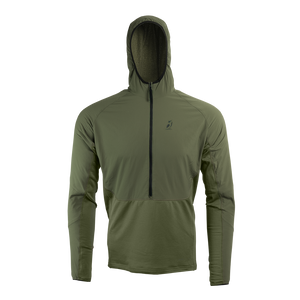
Tayson: cost we can we can tease it a little bit here because we're getting closer and closer to launch on this piece and it's definitely like a reality this piece is gonna happen. So essentially we've we'll give you this is this is the information, all the void at this point, we've got this piece, we've kind of called it an active hoodie and design but we've, we've named it, the Ventus Hoodie. If you want to see a very, very sneak peek on this,

Tayson: make sure you're subscribed to the YouTube channel. About the time of this podcast drops will be putting out a video where I'm going to be kind of wearing it in the video as a little teaser on it. But details why you're going to just want to make sure you're watching us over the next let's say month and a half before we were able to push this out and just so you know like so you don't get your hopes up too too

Tayson: high. This is going to be a Kickstarter product. Not necessarily a related to order in a month and a half, but more. So you'll get to see it and lock in a discount in about a month and a half. So anyways, back with your saying,

Tayson: Um, well yeah, so it's I like to have something kind of in that mid layer warmth level. But it's always nice if you can get a lighter and more Compact. And so that's kind of one of the things we're we're doing with this piece and so far, like, I've really enjoyed it for that because I may not want to put on something really warm, but I just want something a little bit warm. And maybe I'm still sweating, maybe I'm still sweaty

Tayson: my, you know, and so it's nice to have something synthetic and I feel like we've kind of found something that works really well to do that. Where It takes a hardly any space in the pack, and it is deceptively lofty, and soft and warm. And I've really enjoyed, I think everybody else that's been testing it and using it all. So, really enjoys it because it just Feels such a wide variety of purposes, but in the backpacking environment. It works really well

Tayson: for kind of that. Scenario where I want like a mid-layer. I could, you know, if it's really cold I would even hike in it and not worry about it because it's synthetic. synthetic insulation is so light that it kind of gets into the area where you couldn't really do this piece with down. and even if you did, the weight difference of the overall piece is not going to be as significant as if it were a parka, you know? I mean,

Tayson: yeah. Yeah, I mean I so kind of just a retrace this a little bit. It sounds like you're kind of a And maybe I might be putting words in your mouth, but this is kind of where I'm at too. So this little answer both of ours, but essentially when it comes to the coat level, Warm high high Loft, you know, High warmth piece you're down kind of guy for a coat and then when it gets into like the jacket piece, I

Tayson: mean, you're wearing one right now would be like The Loft Tech piece, which is still very like high Loft High warmth, but it's still like, you might hike in that piece and you might sweat in that piece. And you have kind of Peace of Mind in that realm, right? So it's like that jacket level, you, you're kind of in that bridge in the Gap thing that we've created. Now, if we were to look at another brand, this gets a little bit

Tayson: more gray area because you have like the thicker synthetics like let's say a 60 to 80 gram per square meter weighted synthetic versus a very like more tightly baffled down piece, right? So I guess maybe before I move on there, let's say like you've got our Loft tech jacket which to me is the perfect Gap Bridger here. But if you were like saying okay I was looking at different pieces here for you. If you're looking for like something at that jacket

Tayson: level, not the coat, not the high, high Loft High, warmth level not like the pullover fleece or something like that level but that that Gap Bridger there. Would you be more in the synthetic like, 60 gram, 80 grams synthetic category, or more like a tight more tightly. Baffled jacket down jacket. I say like a Ghost Whisperer versus the I don't want to see Nano puff. That's not a great jacket. Sell the crap out of nothing but like, let's think of, I

Tayson: don't know what's another one. Like, I'll talk to your head, that would fill in to that category. Like we're not doesn't have a bunch of baffles going through it. It's just like a big heated

Tayson: Park makes One proton or they have one that uses probably want to say like a 60 or an 80 gram, that's the most common insulation and it's great product. I would. I don't know, I think I would lean towards the The lighter weight down. just, Wait wise, just wait wise, I think. Yeah.

Tayson: That's probably where I'd lean on that.

Tayson: Yeah, I would feel like if I was gonna do that though it would put more pressure on me to have some kind of a longer sleeve. Tee or hoodie. So that like if I need to hike, but I don't want to like Bare skin per se.

Tayson: Yeah, you need something a little bit warmer because you, yeah, me. There's no way I'm hiking and in a Ghost Whisperer jacket. It's just, I would

Tayson: overheat. Like, it's just too warm. It's something like I've seen videos, recently. I feel like I saw one where like they talk about like, you know, just take off your jacket. Before you start hiking, like you get otherwise, you just get two minutes into the hike and you gotta stop and you got to pull stuff off. And so just do it. You'll be cold for like two minutes to five minutes and you'll be fine. Right? Like to me, if I was

Tayson: gonna go into that camp, I would, I would definitely want to have just, at least a long slurp t-shirt or just a really lightweight hoodie. So, I just don't have like bare skin. There's a massive difference between bare skin and barely covered skin, right? Like as far as just the amount of warmth and and feeling of that. So I could see that going like like say Ghost Whisperer jacket. That's a more lightly insulated jacket and then just kind of back in

Tayson: that up with, with a long sleep shirt or hoodie. Like yeah.

Tayson: It if I am very weight-conscious for a trip, then I will, I'll even go with a warmer down jacket. And which cut which makes me have to kind of delete some some other items below it. Just so if I need to be, if I just need to be warm. Then it's like it's almost like I'm it's just black or white like all suffer when it's not cold enough to need the down jacket. Yeah, which

Tayson: means I'm kind of missing pieces that I like to have, but that's if I'm really, really weigh conscious. So if I'm like really high altitude really mountainous, terrain where, you know, I really want to say wait or, you know, day after day type thing, then then maybe I will just Take like, you know, like our regulator because this may be an answer to lighter than the Loft tech jacket. And you know, I

Tayson: won't take a mid-layer or something, you know. Yeah,

Tayson: you kind of you just skip out on the middle layer and some scenarios. Yeah, just kind of where this like, active hoodie that we're that will, you know, we're talking about teasing out here. Really was going to come into play because you can jump that mid layer in certain situations where you don't plan on having to use it a lot. And you, it's just a fantastic jumper and super weight conscious like super weight conscious.

Tayson: Yeah. what will happen is like I'll I'll not want to wear the down jacket because I know it's just too warm and I actually won't Be that comfortable. So I'll end up kind of feeling like I'll just shiver a little bit until I go to bed and I'm in my warm

Tayson: sleeping bag or whatever. So yeah, so again kind of reverse all the way back out, then you kind of a down jacket kind of guy lost or down coat, kind of guy, Loft tech jacket, kind of guy and then you're getting into synthetic or fleeces for like the, the lighter lighter weight, mid layers, or I don't know if you'd call that like a lightweight mid-air but essentially that's I think that's what I would categorize it before you get to your actual base layer. Yeah.

Tayson: Um, And then base layer wise, you know, it's typically wool or synthetic obviously. So okay. So I think that's pretty telling because what that tells to me if I was to try to explain the why behind all of that is one When it's just about weight and warmth, like you go with the down which is that Coat factor, you're not gonna hike in a coat, you're just gonna wear it. When you need to be warm, you're not moving as much. You

Tayson: can sleep in it to add more weight or add more weight to your sleep bag. Add more warmth to your sleeping bag. And he's got like a jacket level which is like I may hike in this. I maybe someone active in this, I might be moving around a bit, but it's it's still needs to be warm, but it's doesn't have to be like, stagnant, warm all the time or, or a piece that's going to be warm for the situation. Let's say

Tayson: it's in the summer. You know, Jack it's gonna be plenty warm in the evenings versus needing like a full down piece per se in the summer or like a coat level. And then for that though, you know we're using, let's say a loft Tech installation piece for that piece, then that does just give you a little bit more ability to move of the Zips. You can vent it a little bit and you can use it being active to some extent if

Tayson: you're being active. And it's not that cold out and you're being active a lot, I was going to take that piece off and then, as you get farther out of your, you know, into the Letter weight started. Going back to full synthetic, whether that's like this active hoodie piece, which is a full synthetic piece, or let's say it's a fleece or let's say, it's something along those lines. You're going full synthetic there, which makes a ton of sense to me, because

Tayson: you're highly highly likely to use that while you're being active, or like, I'm totally gonna hike in a fleece. I'm totally gonna hike in. In something along those level, it's kind of the same look like the like the dragon will write. The dragon will kind of combines almost the base layer with this really lightweight mid layer, but again, that's that's coming back into that synthetic realm so that Jersey face outer so you can get it wet. It's gonna quick dry. It's

Tayson: gonna stay lofted. It's gonna stay warm. And so that's, that's kind of the, the transitional piece. So it's not like, I'm a down jacket, kind of guy, it's like, no, I'm I like all the different pieces for yeah, the application of that trip, you know, going back to what you're saying, like in the summer time like I don't have, I typically don't use down jackets at all. In the summertime I'm using there. Are Loft, tech jacket, or something, lighter weight. And

Tayson: the down jacket doesn't play a massive role for me, but we get into three season, it starts to be situational. And then, of course, season. It's really not a situation, like it's a piece that I'm that I'm asked absolutely gonna take. So I think that's I think that's really telling when, you know, to try to break down some of these Different pieces. Let's tease out. Another product. We're already, we're already moving here, but I'm thinking of other areas where we're putting

Tayson: insulation on our bodies, right? So we've we've played around a little bit with adding installation pieces to our feet, right? Yeah.

Tayson: And and so we're essentially looking at kind of some booties like some sleeping booties and we have been in prototyping and testing, we've wanted to move more. So with a hybrid style product, rather than a full down product, to me, a big reason why that is advantageous personally is one, it's not a big piece, like it's not a massive amount of insulation. It's not a massive size and so on and so forth. It doesn't need to like Does the thickness of

Tayson: it? Yes, it needs to be lofty and nice but it's not necessarily like a zero degree sleeping bag thickness, right? It's going inside the right bag. So that's another reason why I like the amount of fill is going to need to be as heavy but two. I mean right now I'm sitting here in the studio and like my feet are damp my feet. Sweat, you know, moving around, you're hiking being active and stuff your future going to sweat. And so what

Tayson: that allow a piece to do. Looking at something like a loft tech product in that is insulation. It takes away. Some of the fears for me that like, if I put my feet in there and they're damp from hiking around all day, I don't have fear anymore per se because We already know that the Loft Tech and synthetics can just handle moisture and stay very, very lofted, very very warm. And even day after day after day, it's not going to start

Tayson: to degradate. At the same level. So all right

Tayson: maybe it's another another example. Another example is going to tease out here or talk about as far as where we want to make sure there's not such a black and white view of down versus synthetics. I'm I mean there are some some levels of pants out there with, you know, insulated pants on pants and things like that. I don't think we'll get into those. But I would say the same principles are going to apply as the jacket. Yeah.

Tayson: When I go to a to a like a beanie, a balaclava, That one is a good one that one's a good one because there's lots of like down beanies out there and

Tayson: there's a lot of I don't know if there's a lot of synthetic insulated beings but more. So like Synthetic material beanies.

Tayson: Well yeah, it's probably probably the more common is like a fleece beanie. The guys, you know, a lot of guys like using the, the down beanies.

Tayson: Yeah. And to me that one is is gonna be kind of going back to your list of things. It's like activity levels specific. So I have used down beanies quite a bit but I sleep in them. I call him like my sleeping beanie right? Like that's my that's my piece there. If I was to migrate over to a balaclava though, I've used a ton of fleece because I'm gonna be breathing on the material so much more. And I don't want that

Tayson: to start to tarnish potentially the effectiveness of that product.

Tayson: So, I mean, there's there's one of those areas where there's kind of a gap to bridge but if it was me personally, if I'm buying a ball of lava, I might still I might look at a down one, but know that I need to breathe either through it or out of the hole. Otherwise, I mean, just a, you know, a five ten dollar one, your local Walmart, just a fleece material is going to be better off because you can fully cover

Tayson: your face and it's gonna stay very, it's just warm, you know as you're breathing through it. So Maybe more to come there that. We'll talk about it in the future, but let's just think here, I think that kind of covers most of it. Okay, here's one. This might be totally off topic but I'll throw it in here. Breathing into your sleeping bag. Brigham so This was on my mind is that, like, maybe a piece of content that we put out on

Tayson: our, on our YouTube channel. At some point, it's just some of these things, but I always tell people, you know, never breathe into your sleeping bag. It can really Be such a negative thing and so on, so forth. What do you have any? You have any comments on that specially since you're in the downtown of sleeping bags?

Tayson: yeah, I mean, it's I don't know. I, I know my kids do it, so it's almost like that's just some reason it's intuitive or instinctive to tuck your head in, and Do that and you get cold. It's like well if I breathe in here I'll be warmer because

Tayson: my yeah my breath is warm

Tayson: well and your face is sensitive to to cold. So it's just kind of natural to tuck your your face in. And I don't know, I I guess. I was I remember being taught at some point when I was young like, don't do that. and it was, I kind of took it at face value, but the more you actually go out and spend nights, you know, out and zoom bags or quilts, or whatever and In nature, then, I don't know to me.

Tayson: It worked itself out because it's very uncomfortable to have that soaking wet cold. You know, nylon fabric like touching me in the face and sticking to my skin, you know, it's like that's not comfortable. So so even though I may feel comfortable for like five minutes, tucking my face in to get warm but now I I don't even have to think about not touching my face in, because I'll know, I'll wake up. If I am like inadvertently, you know, Accidentally kind

Tayson: of tucking my face into a corner of a hood or something like all wake up, as soon as I start feeling my the fabric getting wet because it's cold. And it wakes up me or wakes me up because you know my face sensitive to that

Tayson: Yeah, and I agree. I think like I have seen situations where people like tuck their head in and they're like I just did it for like 10 minutes and then I was like warmed up and I was okay. And I didn't do it anymore. Like, they're like justifying this piece to me, right? And I'm like, that's that's fine, you know, like whatever you. I mean, it's not like I don't need to control those but But just know like if you were

Tayson: to do that day after day or so on so forth like it's going to start having effect. And another piece, I just want to add in here that I hadn't thought about before because because that conversation with Alex a little bit more recent but imagine the extra introduction of grime. Moisture potential like micro levels of mold that's going to be introduced into your bag now, right? So if you're someone who does this and does something like this consistently, you of all

Tayson: people should be washing your, your bag more frequently. Like it's gonna have an effect, especially over time. So my my thing or I always say is, you know, He can't just just keep your head warm and then hopefully, you won't have to deal with that or just pick the right. So you can bag or pick the right sleeping pad, you know, and just try to stay warm. So that doesn't become an issue. If it does become an issue, there's been a

Tayson: couple times or I've had to do it all kind of Pick a way, where my breath can get escaped, but I'll like still talk my head into the bag a little bit like me. I just forgot my beanie, this trip my Ballot or something that I'm sleeping in. So, instead of like my head being cold, I might like, tuck my top quilt up and over my head, but I make sure there's a clear path out of the bag for my breath

Tayson: to escape. This is just all things, but if you were to Just Breathe inside your sleeping like after day, Or like all night long or something like that. There are going to be downsides. Absolutely, you breathe out. I believe two cups worth of water during the course of nighttime. So I just imagine for a second, like, pouring two cups of water into your sleeping bag and that's kind of the equivalent of what you'd be doing. So, some food for thought, and

Tayson: a little bit of a tangent here, but All right, so let's start wrapping this up, you know, again this is this is the whole point of this was to try to make sure that you are not in one camp or the other. So going back to sleeping bags. Here for a second. I am absolutely not opposed to using a synthetic sleeping bag in a very lightweight piece. So let's say it's a 45 degree or warmer sleeping bag or top quilter or

Tayson: whatever. There's really not that big of an advantage or disadvantage to using down at that level because the amount of installation needed that levels a lot lesson. So that's another application where like that? Everyone's like, oh my down sleeping bag. Kind of guy. It's like, even we trying to talk about it like that but it's not the case. Make sure you don't get roped into these black and white metrics thinking of your insulation pieces. Go back think of like the application,

Tayson: the use case, the pros and the cons of each individual

Tayson: piece and work through your system and that way and I promise you, you get a better system in the end, you'll be way more confident in your system and that confidence is inspiring. When you're confident in your gear, you're going to Go more often, you can be more happy on the trail, you won't pack your insecurities. Like I mentioned earlier. All of these things will start to fall in place and you'll just have a better time on the trail and you'll

Tayson: get out more often like I promise you. In your confident, in your gear, you will be on the trail more often. And that's, that's priceless. That's hard to put any value on. So go through your your take the time, take the energy, or just the next time you're out, hiking start to really mentally checklist through some of the things that you bring and see if you can't fine, tune your systems and and get the right insulation in the right applications because

Tayson: every piece of gear it really has a purpose. Any, well, well-designed piece of gear, I'll say we'll have Clear purpose and a method and a good application. So matching those all up is kind of the fun of it all if you're Gearhead like us. So this was insightful for you, okay, without further Ado, I think Brigham for being on the podcast today. Thank you guys for tuning in. If you have not subscribed to the podcast, make you sure you are subscribed.

Tayson: If you've not reviewed the podcast, make sure to go and leave an honest review for us that really does help us in helping more people get out on the trail and have more enjoyable and confident experiences. So thanks for tuning in to the Live Ultralight podcast. Make sure to stay tuned, because we're gonna be having some awesome new product deep Dives over the next couple of weeks and there's just plenty more to come month after month after month this year. So

Tayson: make sure you're tuned in and if you did want to see a video format of this, make sure to jump over to YouTube and subscribe to our YouTube channel. Outer vitals. Thanks again, and we'll catch you on the next one. Hey everybody. This is Tayson again. And really quick. I wanted to invite you to join, probably the best thing that we've ever put out which is the Live Ultralight membership, buying and affording gear is arguably. The biggest reason that people don't

Tayson: get out and truly enjoy nature. You want to go but you don't trust your gear. It can't handle the expected, weather, or temperature ranges, or you simply don't have the right gear in the first place at all. That's exactly why we created the level of Detroit membership. It works a lot. Like a simple savings account for your gear. You simply Auto load 10 dollars, with store credit into your account every month, and you get instant access to year-round discounts, you get

Tayson: free priority, shipping and prioritize shipping. By the way, early access to New Gear. The worldly singing or early access to cells that are going on, you're going to get limited edition gear. You're going to get expert coaching, and access to the obtained inside our closed, Facebook group, which is also gated not, anyone can join this, right? And something very, very cool where you can now get our most vetted, our favorite gear from other brands that we're not putting on the website

Tayson: but members are going to get it at additional discounts and instant rebates. So, For instance, if you want that new cation, water filter that we've been talking about a ton lately, you can get it with your membership credits and your going to get with a membership discount and an instant store credit rebate, that's just Auto added to your account. After checkup, this membership has too many amazing things to cover. So what I want to recommend you do right now is stop

Tayson: everything. Pause this audio head over to Outer vitals.com forward slash membership to sign up. Start building your credit. We're going to releasing some new products in there really soon at Big discounts. So go sign up today at Outdoor Vitals.com forward slash membership, and we will catch up inside the closed Facebook group after that when we can continue this conversation over there.