Tayson: So here's the big question, how do we lighten our gear and build our confidence so that we can start living a life full of Outdoor Adventures and memories without having unlimited amounts of time, money and previous experience. That's the big question and we are here to help you find the answers. This is the little trolley podcast power, bi Outdoor Vitals. Hey everybody, welcome back to the Live Ultralight podcast. Today, we've got bringing back on the podcast and we're gonna be talking
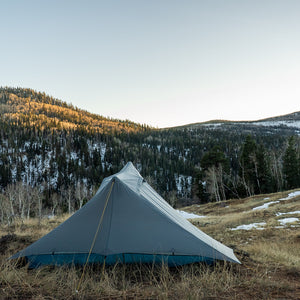
Tayson: about a brand new product. We released a few weeks back now called the Delano ultralight tarp we did a redesign on this tarp. We made some changes and people are kind of asking what's different about it. And so we wanted to walk you guys through the changes that we made why we made these changes and also maybe help you see if there's an application for a tarp in your specific gear setup. So With that Brigham. As we put this back on
Tayson: the drawing board and we wanted to redesign the tarp a little bit lower, some of our objectives in what, we're just hoping to accomplish with some of the changes.
Brigham: Sure. I mean, very broad objective is obviously to change it for the better and how We identified that we needed to do. One was increase the length, just to give better coverage and so we increase the length about six inches, something like that. It was just a little less than what we wanted up to up until now, so should usually reference right? Exactly, yep. Yep. For hammocks. So now it's it's 11 feet long. and the other thing we wanted to do
Brigham: was We added some length right to the in material, so we want to also make sure we're like gaining weight. So we kind of reassess the fabric, went to a slightly lighter fabric but That's actually equally if not more durable just because it's higher quality fabric fabric you know, from a higher quality Mill using denser weeds and it's a 15 D so nylon as a poly. So the nylon gives it some more durability and then going down to a 15 D.
Brigham: Reduces a little bit of weight. So
Tayson: so we jump from a 20 year to a 15 year,
Tayson: but we changed from a silp nylon and we changed the mill that we were getting it out of, which is a, which is Just a more premium Mill, right?
Tayson: So what does that kind of equate to for the consumer? What's that going to do for him?
Brigham: I'd have to look at the numbers. I can't remember the old way versus the New Wave, but it's definitely. again, we lengthened it to so you get more coverage for no way penalty and no. No durability or strength penalty to. In fact, it actually probably is stronger than the 20D just because it's it's a really high quality nylon, a really high quality weave coming from the Top to your tent manufacturing Mills. So
Tayson: in and just so that these several understands this will I want to touch on this really quick. Nylon is stronger than polyester.
Brigham: Yes. yes, as a as a Chemical. Compound. That the components that make it are stronger than polyester,
Tayson: right? Right. All right. So we've we've basically offset if not to reduce the weight. We've lengthened it. Um, better coverage on the hammock. We've we've and those are probably the biggest things for the for the hammock side things. But we also wanted to maybe make it a little bit more applicable or what not to the ground campers as well, that extra length does help if you're to put those trekking poles inside of there, like if you're to put your handle up,
Tayson: It allows you to kind of create a peek inside the the tarp and allow it to pitch down towards the ground a little bit easier. So overall a baker tarp typically is just gives you more versatility, right? And then I think you added some extra Ties on it as well. Right? Where are those ties? What are they doing? What's the Thought
Brigham: there? So those are on the edges on the side so they're they're midpoint guy out points. So halfway down, each side, there's a substantially reinforced tie out point for just extra it kind of wind protection is just like if you're anticipating a lot of wind, stay close out and then Helps with the you know it's 11 feet long. It's a big big piece of fabric so even just things like keeping the tent a little quieter on the slightly Breezy night. It's
Brigham: not going to Flap around as much but also
Tayson: Just makes it a little more storm Worthy. Did we do anything different with the cuts or
Brigham: the the cat Cuts still there? And I also wanted to point out like we still have a pu coating on the inside that helps with things like kind of the Mist or things kind of the Mist sticking to the inside and also helps with sand on the inside. Sand doesn't stick as much to
Tayson: poo. So, yeah. So I think we've kind of outlined every scene that we did. I mean write a tarp is not like crazy complicated but let's talk for a second about what these type of changes do you in terms of production costs for us talk about kind of the fabric, the fabric differences and and
Tayson: talk about how much more premium. Let's talk a little bit about what that does cost wise and if there's anything else that's kind of related to that, I guess because the cost on this tarp did go up to make some of these changes. But we felt that was well worth it. So it's kind of explain that and and make sure people understand what's going on
Brigham: there. Sure, yeah. So there's You know, there's more on the tarp now so it's it's longer. So that's more fabric that it requires and that will That will have an effect on the fabric cutting efficiency. So then go into a nylon versus a polyester fabric nylon is inherently more expensive or costly than polyester. And then all so fabric, weight plays into costs as well. So with typical tent type Fabrics you know rip stops polyesters and nylons say we go way up
Brigham: to a 70D. From a 70D to a 30 D, to a 20D to a 15 D to attendee. It basically just gets more expensive, the lighter it gets. So there's going to be that incremental pricing increase going to that. So combination of a lighter weight and going to a nylon that's increased fabric across costs. So, and then on top of that, the cutting of efficiency we talked about and You know, there's more to the tarp. There's more labor that goes into
Brigham: it because now they're putting reinforced guy out points. Those aren't just like one row, stitching going over a piece of cord, that's in the form of a loop. There's pieces of fabric that get cut certain way and then so on with reinforced stitching. So that's mmm, that takes a lot of time compared to just running a seam along the edge of a
Tayson: giant piece of Fabric. So, Yeah and honestly from a from a standpoint of costs and things like that our costs on this tarp did go up but we actually are priced. We've been able to price it at a lower margin level than our previous one in correlation to how much the tarp price went up. So just kind of wanted to highlight that we like Yeah, essentially we are markup on this, tarp went down compared to our previous one but really quick,
Tayson: two things that popped in my mind that people would be interested and I'm sure let's talk about Hardware. Steaks and then before we dive into those though the reinforcement is that reinforcement on the edge of the tarp or is it in the middle of the fabric? Meaning is that edge down on the edge?
Brigham: So they're all call it like perimeter reinforcement. So you've got great Corners right. Then on the same perimeter, just halfway down the link of the tarp. I think that's cleared up.
Tayson: So let's talk, did we change anything with Stakes or with the adjusters? So on each corner on our last one, we had kind of the line lock, adjusters, really easy to pull, and tighten and different things. We
Brigham: changing anything with us. Still have the line, lock, adjusters, still have the, the cord. So comes with Stakes, Um, yeah. Okay,
Tayson: I think that kind of highlights as far as the build that we did. Let's talk a little bit about applications for tarps when we might use them. We're talking a little bit before we jumped on the podcast. And I think both of us used to use tarps more than we use them currently, because we've been testing a lot of different prototypes. More in that like trekking pole, tint area and I wish that I had more to update you. On there, we've
Tayson: had some I'll call them covid related, manufactory delays. But but the tarp still has a place the last. I mean, I've used the tarp. I used to tarp a little while ago on a trip where I was trying to use. A stove in conjunction with the tarp. To kind of highlight the versatility of a tarp and different ways that you can use a tarp. I took it to Alaska last year. And have used it as a meeting area. For when you've
Tayson: got multiple people all coming. It's, it's kind of like a, here's a one-pound or slightly less than one pound item that you can throw in there, and you have like a meeting area, you can go in there, maybe you cook in there, or maybe you're just hanging out in the evening or something like that. You have is just a nice place. If you're somewhere, where there's a lot of rain, um, it's a nice meeting area for that and then obviously, for
Tayson: me, I use The tarp anytime I'm Hammock Camping that's that's my protection up. And over me I have used our tarp also. And this is this is kind of like hodge podge and I'll let you talk a little bit more about the tarp bivy setup. But I've used our tarp with in conjunction with actually grabbing a hammock bug net and using that almost as my bivy because to me if I'm using the tarp, that's really the protection from the rain that
Tayson: I need. So if I pitch it right, so then I can use our hammock bug Nets that are like six ounces or something like that. And that's just my protection from the bugs because that's the big, that's the last thing that I need. So I've got the tarp to to give me coverage but one of our employees, we probably should have brought them on for this because it would have been hilarious. The reason, the tarp is actually named the Delano Ultra
Tayson: like tarp is because one of our employees was using our previous tarp that morphed into the star when we hiked a peek here. And so then you talk called the Lana. It's it's one of the tallest Peaks in Utah. It's a fun one and we were up hiking across this other peak near to Lana and we could see this storm coming from a ways off away. It looked pretty ugly and we're like, man, we need to bomb off this peak, and
Tayson: we need to set Camp before that thing gets to us or it's gonna get miserable. We're
Brigham: above tree lines. So like we said, you know, when taste says, we come off the peak, Yeah, we went down a few hundred feet but we're still above tree line so completely exposed completely exposed
Tayson: Barren, that's just Barren. Peaks were not on the highest peak anymore but we're still very high and very very exposed. This is in July, right? If I remember right, the dates of this were July, it was definitely middle of summer. And so we we bomb off the top of this and we get down and it's coming and we everyone's scrambling to get their their shelter set up and so I get my shelter set up and Dave. Hopefully some of you guys
Tayson: have spoken with David if you ever do any speaking with customer support or shipping and He decided to try a bivy. On this trip with the tarp set up and it was maybe I guess it was a decent application for it, but you just never know when something like this is gonna happen. So yeah, just so happened that the door of my, I had a one person Dominion tent. Just happened with the door of my tent was positioned, straight at Dave's,
Tayson: tarp and Bibby set up, and he was kind of new to it. I don't think he was like a specialty fastest setting it up. You know, you have the baby, the little cross bar that went on the baby's, taking out the bivy because he staked it down And then he, you know, got the tarp up and he was barely getting it set up as the storm hit us. And and it, it hit, I mean, it, it came in with some, with
Tayson: some power and just started hailing like crazy. So the tents are just getting. I mean, It just so loud, right? Like the noise of just all that, that hail in the wind coming down, smashing on your tents. And I'm kind of in my tent, and I was actually filming a little bit, just on my phone and just kind of laughing and I could see snow. I actually hail kind of piling up around. And I'm like, oh man, let's check on days.
Tayson: So, I zipped down from the top of the vestibule and just kind of poked my head out there, and I can see him, He just did not Pitch the tarp, very tight to the ground. He's in his baby hunker down, and there's just hail bouncing all over and under his tarp. And he's hunkered down. And I stuck my phone up there and caught some footage. It's very comical footage. If you go back on her YouTube channel, you can you can find
Tayson: it. I think that the video title is like, Dave gets wrecked. Or Dave gets wrecked in a tarp or I can't remember, but it's something along those lines and it's it's it's very comical but I thought it was so funny and I mean he was fine. He He barely got and he says, like, you know, if it was one more minute, I would have been getting. See what about it?
Tayson: Yeah. Like he barely got in and because of that, I think he ended up, you know, tweaking his setup after because it just wasn't, he didn't have the time to maybe pitch it as low to the ground. And he ended up ripping the bivy because he staked it down and he's on a slight angle and the, you know, this this particular ultralight baby was Was. I mean his ultralight and he's on an angle, and just a little bit of movement
Tayson: and stuff ripped ripped out, the steak part of the busy. And man, it was it was quite comical. So when we were talking in a in a team meeting about what we should name, this that came up as an idea and everyone just like that's just so fitting, it's the Delano. That's why we're all gonna remember. This tarp is Dave hunkered down and in that storm just getting pummeled, the tarp did great. I mean, it did what it did, the fun
Tayson: part about a tarp is you get to build it and Pitch it in so many different ways. And so you get control over how you want the tarp to set up and That's, that's kind of a fun part. I feel like about the tarps is just that customized ability. So, anyways, that's kind of the backstory on why it's called the Delano Tarp is, I guess it can handle a storm it. 12,000 feet or whatever we're at, but was was a lot
Tayson: of fun. Okay. Well, is there anything any other applications or ways that you've used the tarp or historically? Or
Brigham: yeah, I would actually add just a couple that well, like patient said, I've done a lot of tarpey camping. I don't do it as much anymore, but kind of where just some other uses that are just great for a tarp. Especially a light one like this is like if you're going backpacking with a group and like I'll do with like my kids or my family, it's nice to have and area to hang out outside of your tent. If the rain comes
Brigham: oftentimes summertime in the Rocky Mountains you get after North afternoon rainstorms and I really like packing a tarp. So that, you know, when you've got little kids it's it can get It pretty Stir Crazy seeing in the tent to sit out of storm and so, and then just having, you know, or shade, you know, just something like that, just as a shelter, you're not. Yeah,
Brigham: it's, they're very useful for that. And, and the nice thing is, they're, they're they're compact, they're they're very lightweight, so, Um yeah and just just the overall versatility of using it as just a temporary, you know, to get out of the rain or to sit out a storm, good item to
Tayson: leave in your car. You know, if you're someone like, again, that's just out, consistently something, you can easily tuck, you know, behind a seat in the car and and have it, you know?
Brigham: Yeah. And the other one, you know, for, for a guy like Derek, we've talked about a lot, he Cowboy. So he'll just go right down onto the ground and Again, for somebody like that. the super lightweight to have your protection from the rain, if because there are people that just like putting their pad down right on the ground and It's a good thing to have in the pack for people like that.
Tayson: Yeah, he's definitely the biggest user of it. I would say I'm like a consistent basis because he does. He, you know, a lot of times he won't even pitch it. Like he'll use it as a safety net, you know. Oh it's getting dark. Weather still looks pretty good. I want to look at the stars. What's not put the tarp up but it's right here and I can hop out of my You know my sleeping bag and and throw it up and
Tayson: a couple minutes and be out of the you know. So that's that's a lot of ways. He uses it too, which is cool. Um, it's just a different style. I I've done that for sure, too. A lot of times when I do end up packing the tarp, I'll also do the same thing. I'll evaluate two things. One moisture and two wind because You can definitely lose a lot of heat by not getting out of the wind, something that we've probably talked
Tayson: about a little bit on our podcast about our last trip but you can use that tarp to break the wind and that's that can be significant that can really it's wild. How much wind can can pull heat out of your body just that consistent flow of air. And so Definitely a lot of different ways to use it. Definitely love the redesign that we've done on it. I think it's going to be so much more useful. It's going to give you better
Tayson: coverage more premium Fabrics. I think you're going to see if you've got a previous harp you may even be able to to look at stitching and stuff like that. And see a slide Improvement stitching. This is coming out of a different Factory that makes all of our tent products now and the quality there's been phenomenal. So been really happy with that. So with that, I guess we'll go ahead and wrap up this little overview of the Delano. Tarp thanks for joining
Tayson: us today. If you found out of this, make sure you subscribe. Make sure you review the podcast. We really appreciate you guys sticking around for this. Hopefully, this is helping you build confidence as you get out on the trail learn and continue to build that tool set. To be a better Backpacker and to get out more often. So, thanks for joining us. We will see you guys on the next one. Hey everybody. This is Tayson again. And really quick. I wanted
Tayson: to invite you to join, probably the best thing that we've ever put out which is the Live Ultralight membership, buying and affording gear is arguably. The biggest reason that people don't get out and truly enjoy nature. You want to go but you don't trust your gear. It can't handle the expected, weather, or temperature ranges, or you simply don't have the right gear in the first place at all. That's exactly why we created the liberal Choice membership. It works a lot, like
Tayson: a simple savings account for your gear. You simply Auto load, 10 dollars of store credit into your account every month, and you get instant access to year-round discounts, you get free priority, shipping and prioritize shipping. By the way early, access to New Gear that we're releasing or early access to cells that are going on, you're gonna get limited edition gear. You're going to get expert coaching, and access to the obtained inside our closed, Facebook group, which is also gated not in
Tayson: conjoin this, right? And something very, very cool where you can now get our most vetted, our favorite gear from other brands that we're not putting on the website but members are going to get it at additional discounts and instant rebates. So, If you wanted that new cation, water filter that we've been talking about a ton lately, you can get it with your membership credits and you're also gonna be able to get with a membership discount and an instant store credit rebate,
Tayson: that's just Auto added to your account. After checkout. This membership has too many amazing things to cover. So what I want to recommend you do right now is stop everything. Pause this audio head over to our vitals, calm forward slash membership to sign up and start building your credit. We're going to release some new products in there really soon at Big discounts. So, go sign up today at Outdoor Vitals.com, forward slash membership, and we will catch up inside the closed, Facebook
Tayson: group after that we can continue this conversation over there.