EP 49 - Behind the World's Most Lightweight Insulated Hoodie Design

Live Ultralight Podcast

EP 49 - Behind the World's Most Lightweight Insulated Hoodie Design

Highlights

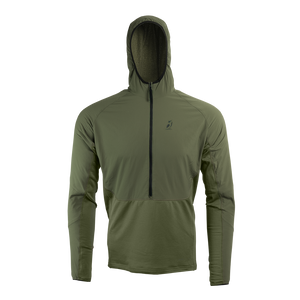
In this Ventus Active Hoodie launch episode, Tayson and Brigham explain the design logic behind a lightweight insulated hoodie. They cover active insulation, warmth-to-weight, wind resistance, breathability, everyday use, and why a moving layer is different from a camp puffy.

  • Why active insulation should be judged during movement, not just standing still.
  • How breathability and wind resistance pull against each other.
  • Where a lightweight insulated hoodie fits in a layering system.
  • Why Kickstarter-style launches need clear customer expectations.

Resources mentioned:

Chapters & Timestamps

00:00 — Ventus Active Hoodie launch and design goal.

08:00 — Active insulation, warmth, breathability, and wind resistance.

22:00 — Layering use cases from trail to everyday wear.

38:00 — Kickstarter launch details, customer use, and product expectations.

Active Insulation Has to Manage Sweat, Wind, and Stops

An active insulation layer has a harder job than a camp puffy. It has to keep a moving hiker comfortable without turning sweat into the next problem. Too warm and it gets soaked from the inside. Too breathable and wind strips heat away. Too fragile and pack straps, brush, and daily wear shorten its life.

That is the tension behind a lightweight insulated hoodie. The question is not whether it feels warm in a parking lot. The question is whether it handles the messy rhythm of backpacking: cold starts, climbs, wind, pauses, descents, and camp chores.

Active Warmth Should Prevent Sweat Debt

Sweat debt is the warmth you borrow during a climb and pay back when you stop. A heavy static puffy can feel great for the first few minutes, then trap too much heat. The base layer gets damp. The wind picks up. The next break feels colder than it should.

An active layer needs enough warmth to blunt cold air without overwhelming the hiker during movement. That usually means less insulation than a camp jacket and more attention to breathability, fit, and venting.

If you regularly start cold and warm up within minutes, the layer should support that transition instead of forcing constant stops to add and remove clothing.

Wind Resistance and Breathability Have to Be Balanced

Wind resistance is valuable because moving air steals heat quickly. Breathability is valuable because trapped moisture becomes cold later. Push too far toward either side and the layer gets narrow.

A good active hoodie should block enough wind to make exposed movement comfortable while still dumping enough heat and moisture for climbs. It will not replace a full rain shell in weather. It should not replace a true static parka at camp. Its job is the moving middle.

The decision trigger is output. If you are hiking hard, climbing, or wearing a pack, breathability matters more. If you are glassing, sitting, or cooking in cold wind, static insulation or a shell may matter more.

The best test is whether you can keep it on longer without overheating. A layer that only works for five minutes before it has to come off may be warm, but it is not solving active insulation very well. Fewer clothing stops can be a real efficiency gain on cold, windy days.

Light Insulation Works Best as Part of a System

A lightweight insulated hoodie should not be asked to solve every temperature alone. It works with a base layer, wind protection, rain shell, and camp insulation. That system lets each piece do a narrower job better.

On a cold start, the hoodie may stay on over a base layer until the body warms. In wind, a shell can add protection. At camp, a warmer puffy or quilt handles the static warmth. On mild days, the hoodie may be the only insulation needed.

If one layer has to do everything, it will probably do several jobs poorly. The better ultralight system uses lighter pieces that overlap just enough to cover changing conditions.

Durability Still Matters in Lightweight Gear

The world’s lightest claim only matters if the piece survives real use. Hoodies get shoved in packs, worn under straps, brushed against rock, pulled on for chores, and used beyond backpacking. A layer that saves weight but feels too delicate to use confidently will stay home.

That does not mean every active layer needs heavy fabric. It means the fabric, insulation, stitching, zipper, cuffs, and hood have to match the use case. Weight savings should come from disciplined design, not from removing the confidence customers need to actually wear it.

If you baby a piece so much that it never leaves the closet, its measured weight is irrelevant.

Launch Clarity Is Part of Product Trust

Crowdfunded or preorder launches ask customers to buy before normal inventory exists. That can help a smaller brand build ambitious gear, but it also raises the responsibility to explain timing, use cases, tradeoffs, and risks clearly.

Customers should know what the layer is built for, what it is not built for, when it is expected to ship, and how the design compares with pieces they already own. Hype is cheap. Clear expectations are harder and more useful.

For the Ventus-style category, the promise should be specific: light active warmth for movement and everyday use, not a magic layer that replaces every jacket in the closet.

Ask OV a Question

Have a backpacking, gear, or trip-planning question for a future episode? Send it through SpeakPipe below, or message us at support@outdoorvitals.mom.

Recent Podcasts

Full Transcript

This transcript has been cleaned for readability and speaker flow. Minor transcription errors may remain.

Read the transcript

Tayson: So here's the big question, how do we lighten our gear and build our confidence so that we can start living a life full of Outdoor Adventures and memories without having unlimited amounts of time, money and previous experience. That's the big question and we are here to help you find the answers. This is the little trolley podcast power, bi Outdoor Vitals. Hey everybody. Welcome back to the Live Ultralight podcast. Today we have a very special podcast, it's your guys's favorite style of

Tayson: podcast to our knowledge. Of course, we don't know exactly what you guys want all the time, but it appears to be your favorite type of podcast, which is a product launch podcast. We are rolling out a brand new product right now called the Ventus Active Hoodie. It is currently available on Kickstarter in presale on that presale platform. For those of you that don't know what Kickstarter is, that is simply a pre-sale platform that we've used multiple times. That's where we raise

Tayson: money for the million dollar jacket. That's where we have the Sawtooth Adventure pants. The Dragon Ball. It's a really, really cool program for us to be able to innovate and grow faster without the use of venture capitalists and other people that can tarnish, what, we'll call it tarnish the company's values and focus. So, by using that platform, we can stay focused on building the best possible products, which is exactly what we've done this time in the Ventus Active Hoodie. Now, we'll

Tayson: talk about this at the end of the episode, but I just wanted to quickly tease this out there. Those of those people that are specially acting very quickly on Kickstarter are going to one get bigger discounts. You're going to you actually save money. There's we offer discounts by pre-ordering these things. So if you're interested in getting a big discount you're going to want to act as fast as you can. The other thing to consider here, Is ship time's. We've been able

Tayson: to secure about 2000 units. To ship early for sale on an earlier shipment. Now of those two 2000 units. guarantee at least, The members are going to get kind of first right to that, but there's a good chance that there's going to be, you know, maybe if you're still backing this on day one day two that those windows might be open. So just go check the campaign because if you're one of those people, you're gonna get two to three months earlier

Tayson: ship time than the next rewards here, which is still going to be one to two months before the general public. So potentially you could get this thing up to four or five months earlier than the general public by acting fast. So, that's really quick a little bit about Kickstarter and what we're doing there. But let's Dive Right In to the actual product. The Ventus Hoodie. Again, we've got a proper designer on here. Brigham. To take us through the process. He's a

Tayson: big part of the story and, and what we've created here. But just, you probably wondering, what is the dentist active hoodie? And there's a few ways. I can I can try to explain it. There's the way of to our knowledge. It's the world's lightest weight insulated hoodie. It's just crazy light, crazy compact. It only seven ounces we can talk about the warmth of it. It is. It's a very warm piece, but very breathable at the same time, we will break that

Tayson: down. I think this piece is kind of the most interesting, which is this thing is literally, as light as a long-sleeve t-shirt. It's as light as your thermals as light as your base layers, but it's just warm or similar and warmth to something is like a jacket. It's warmer than most hoodies. So it's just a really Unique Piece. Like just imagine wearing like, a long sleep t-shirt and it being as warm as your jacket, that's what we're talking about. That's what

Tayson: we've created. It's been an amazing process for super stoked to Dive Right In. So Brigham. Without further Ado, how the heck did we get started on the Ventus Active Hoodie? Where did the idea come from and and how did that even begin?

Tayson: Well, if I am remembering kind of like the very first Spark, it would have been at the outdoor retailer. and I think it was Winter,

Tayson: it was the last show and

Tayson: We we always try to meet with certain Partners. We have a particular partner that is they're just there. I don't know how. Too biased, but they're great. They're they're so solid. But we were meeting with them about lots of things, talking to them face-to-face about current projects, Upcoming capabilities and they showed us. this Tech, this insulation technology, they brought it out and It I guess simultaneously. We really both latched onto that like internally and It really kind of got the wheels

Tayson: turning. as to like it was, we saw the Installation technology and then it generated started generating, like, ideas of what we could use it for and what application we could kind of morph it into. So we left that meeting what? We started that meeting with no

Tayson: plans of developing, a hoodie or developing anything with an installation. Even like that

Tayson: we were talking about and I don't even think we were talking about anything that would go on the upper body.

Tayson: Yeah. We were like talking about the Sawtooth and pants and you know stuff like that and then all of a sudden they bring the silence like boom. Wow. Okay the rest of the day I mean you're kind of like Is just in the back of our minds, it bringing it up talking about it because we were just it presented opportunities to build something that had never been built before. I think pretty quickly. We were thinking, you know, what's the best application?

Tayson: And the first thing was a hoodie like that was the first thing that jumped into our minds this like I would be an exceptional product for hoodie. But before we get down that line, let's just take a quick second to talk a little bit about you know, where does some of our ideas even come from? A lot of things I would say anymore a lot of them come from Trail and use like obviously that's that's where the majority of real ideas

Tayson: come from but there's a big part of the Innovation side of things that comes from Partnerships. in this example, or in the example of Even the The Loft tech jacket, right? The is like we saw the insulation and then it was like boom the sparked this whole idea and I was like let's go with the lactic jacket. For instance for years people have been saying hey go build a puffy jacket, build a puffy jacket and I'd never moved on it until

Tayson: I saw the Loft Tech insulation. That was like, okay go forward and it did great things and same kind of with this where it's like, we weren't really pursuing making another hoodie at all until we saw this insulation. So that's one way that some of our Innovation happens and otherwise that some of our Innovation happens, which you'll catch later in 2021 is we will push our partners to develop something specifically for us. You start with the satellite backpack. You know, we

Tayson: pushed them to develop that aerobic, Specter fabric for the shadowlight backpack, and we're doing it again in some other ways. And so, there's kind of a two-way system that we work with Partners to encourage and promote more development. So that's like from a textile material standpoint. That's, that's where some of that Innovation, I guess would come from. And then I'll be, you know, from the Trailside, you know, that's where we're coming in with, with more feature sets or things like that,

Tayson: but I just really wanted to highlight that because we do see great, cool Innovations, and we're very blessed and we worked hard to get ourselves to a position where we get to work with some amazing partners. And it's been so fun to see what Innovations have transpired and are still in the works. Um okay so bringing it all the way back to the Ventus Hoodie. Let's let's talk. Okay so we see this insulation 25 gram, stretchable super warm for its weight

Tayson: insulation. In fact, they showed us some numbers and on a that this this Innovation was actually so new because they'd actually made 3dfx installation for a while they hadn't made a 25 gram 3dfx insulation. It means 60 grams and even a 40 gram was kind of the newest to that point in time I believe. And and that piece like the 40 gram, they showed us some lab results and when comparing it to, I won't name names but the gold standard will

Tayson: say it was like, oh man. I don't think I wrote down 25% or so warmer for the for the same amount of weight. So as it was warmer and it was trending that way from like the when they tested the 60 gram insulation. So it almost seemed like the lighter. It went, the more disparity was creating, but so he saw that, I had crazy good way to warm for shows that stretched. It breathed. It was continuous. So you could put it

Tayson: in coded, on coded Fabrics. I had a lot of things going for it. So we got pretty stoked, we stopped. Okay, let's put this in a hoodie and we started to lay down some design parameters, like, what was our goal? You know, essentially, if you remember back in those days, Brigham, kind of what we set out to build at that point in time. Some of the things that we thought were the most important to achieve or focus on.

Tayson: Well, I guess along the lines of how lightweight the insulation was, we wanted something that was going to be lightweight. Obviously, that was the best application. For it. But yeah, we wanted you know, in terms of a hoodie. Well, what kind of Hoodie does do we want it to be a full zipper? Is it just like something for? More. Day-to-day City, where or like nothing, but backpacking. But yeah, we kind of decided we wanted something that was for an active person.

Tayson: That had. Good breathability. A really good fit. That was probably one of the other things we really wanted to emphasize was a really good fit, which, you know, we can go into that later. But yeah, we want to to make it. Not just basic maybe basic from a distance, but very technical once you put on her microscope. So Basically, we want to be technical performance hoodie, that was very simple, and lightweight comfortable. Um, just really good for for an active person

Tayson: acknowledging that even an active person has to kind of settle down every once in a while and go to work or you know, go home or they're not always out playing sports or mountain biking or hiking or running. But so in that case it it's just it still had to look good and feel good for kind of the day-to-day office person as well.

Tayson: Right. And I think, I think outlining that active person. Like who might actually want to use this was pretty pivotal when we had to come down to making decisions and and yeah, creating it, I guess the right way, but we really want it to be ultralight. We knew it needed to breathe. Invent for this act of person. We knew that he needed to be really comfortable, you know, both in terms of like maybe stretching and in terms of just fabric

Tayson: materials like against your skin and and stuff like that, right? Because some people's favorite hoodies a lot of times are like Fleet cities or something or cotton hoodies that are just comfortable against your skin. So we need that that was kind of important. Thing that I thought of two and it goes hand-in-hand with being ultralight and whatnot is just the compressibility. I don't know hardly anyone that has really active that is not having to layer up and layer down like

Tayson: it's very unlikely unless you're doing shorter increments of activity that you just like start in one set of clothes and you end in one set of clothes every time typically there's the sun's coming up, the sun's going down, there's weather application. There's, there's amount of strain that you're doing, whether you're, you're running or walking or hiking or, you know, there's all these different things. So packability became a really big thing too that we, that we looked at for sure. And then

Tayson: and then obviously the fit. So we really feel, I really feel like with that person in mind we created something that was just not there before what I mean by this is there was a there's a disparity. I quit using hoodies for a very long time because they just didn't, they didn't line up, like I did, like I mentioned in the beginning, you know, you can basically like a base layer is warm as a jacket. Well, in hoodie world, there's cotton

Tayson: hoodies, there's police hoodies, there's kind of this technical like, tighten it weave hoodie as well. And some of those will even have like grid fleece backers and stuff. But there's these different hoodies Um, first off, almost all of them are pretty heavy. All of them are heavier than a puffy jacket. Let's put it that way. Almost, all of them are going to be heavier than, like 12 oz. So if they're heavier than 12 oz, well puffy, jackets can be warmer and

Tayson: more compressible. It's easier to pack, and it's warmer. So, I've always gotten more utility out of that. Plus when I look at it it's like I'm not really interested in Cotton Cotton's, not right application, in my mind for a hoodie cotton, you know, it it's cold when it's wet, it's hard to get dry and we've talked about this before, but it might be suited better for a tropical environment. So, putting it in a hoodie almost seems like, just a completely wrong

Tayson: application. So why is it done? Well, it's comfortable and it's cheap but then you look at fleece. So fleeces is actually really good performing when it's wet, it's it's quite affordable, it's comfortable. But if any of you have ever had a fleece hoodie and the slightest Breeze and that thing is it's just getting cut through by the wind and then if you ever try to pack it up or put it on a scale, it's heavy and it's quite bulky. And you've

Tayson: got, like, these technical hoodies with maybe like a, like a tighten, it weave, or something like that on the outer shell, maybe even put a grid police, black backer in inside of there or any version of that. And the biggest problem I have with those is just the weight weight and bulk. Again, it's got a dense tight weave on it like that. That's just a heavier fabric. Like it's just It's just gonna be heavier than a puffy jacket. So if it's

Tayson: heavier than a puffy jacket, why would I not take the Loft tech jacket or even our down jacket, right? Those are both, you know, 12 ish Oz jackets and they're gonna compress smaller. They're easier to pack. And then when I need the warmth, I've got the warmth. So I just quit using hoodies and I didn't even realize it at first. Like I just, I don't know, didn't even phase me, right? But as we got into developing this, I realized that there

Tayson: was a huge gap and that essentially, there was no gap between a base layer, type weight and, and a piece that would fit in between that and a puffy jacket. You know, hoodies are really nice when you're wearing them. It's just a matter of when you take them off, you know, they can have a great application, be very comfortable and very useful when you're wearing them. But when you need to pack up or stolen or anything like that, they don't really

Tayson: fall in line with a weight to warmth ratio, on the way to work ratio scale. For those of us that are minimalist, type thinkers and Backpackers and Technical people. And and so there seemed to be this massive Gap and it seemed like these active people could really benefit from a piece like this. So we got to work and I don't know. What do we what happened from there? Bring him just Trying to trying to remember, I guess from outlying what we

Tayson: wanted to build the active hoodie person, the need in the market. I don't know what kind of transpired next.

Tayson: so, Kind of two directions we can go to you know, designing the fit and how it's going to fit a person but then then also the materials.

Tayson: Liquid materials. Okay, so materials

Tayson: this kind of comes into like how we have how it's really important to find good combinations of Everything that goes into one piece because looking at the materials we're looking at a 25 gram. You know, continuous fiber stretch insulation is very very thin. You can basically I mean, it's opaque, you can almost see through it, you know, if you hold it up to, you know, you two feet away from me like I could see your outline through, it's very thin. so,

Tayson: Had to look at materials. Well what's the inside going to be? What's the outside going to be and In order to

Tayson: ruin it, you can ruin that insulation by doing by putting pairing with the wrong fabric. So that look like,

Tayson: Okay, well to get the maximum efficiency of the insulation, to get the maximum Loft and to minimize compressing that insulation as much as possible. You need a light fabric inside and out. The entire piece to be light, very lightweight so that it can Loft up air can move in and out of it very easily. So, it really ruled out, you know, kind of really dense, heavy Fabrics. So if you put a, if you put a heavy fabric on a very compressible

Tayson: and lofty and soft insulation, the way to the fabric is just going to compress the insulation. And you lose a lot of the effectiveness of the insulation. So

Tayson: excuse me, if we were to like, pair this with A heavier fabric such as a 50 denier or 75 10 years or something like that. You're saying that we would see a loss in warmth per se or at least Loft per se where we're taking. I don't know some basically this beautiful ultralight insulation and we're just kind of tarnishing it and clapping it and ruining its performance by wrapping it in the

Tayson: wrong fabric weight. Right. So, let's Okay. So, if we were to use this insulation with a heavier fabric, let's say something that weighs twice as much. Which is going to be somewhere in that, you know. 50. D 40 ish maybe up to something higher than that. Just something a heavier fabric. The piece wouldn't be as light wouldn't be as warm. Wouldn't breathe as well. Wouldn't be as soft and comfortable.

Tayson: Okay, so that's so why. Did nomination, why did we decide on a 20? Then you're set of like a seven-day or a 10 10 year? These super ultralight Fabrics. Yep.

Tayson: So going back to the combination who's this person for what's going to do is for an active person. So whether they're Running mountain biking. Hiking wearing it to the office. A 70. Fabric is incredibly fragile. We have tested other fabric types in that way, category, in that yarn category and just not been at all confident in the durability of that, and it's always a trade-off. We're trying to make a lightweight hoodie. Durable as possible. So yeah, we could have used a

Tayson: 70 fabric but then it's going to get shredded. By a lot of people because we want a lot of people to be able to enjoy this.

Tayson: so it may be a note on that is, you know, we aren't like super big, I don't know we don't we don't we're performance focused we really are heavily performance focused but I will say that we we do really want to factor in durability because the best way that we can can promote sustainability or just you know just not be too consumeristic focused is to make sure that our products last I think I've said this before but to you know, manufacturing

Tayson: two really green products. Totally green products per se is still more environmental impact than producing one that will last longer and so so far we've only ever put 20 D Fabrics on

Tayson: jackets and things like that and I don't know if that's going to change in the near future or if we'll kind of stick at that 20D level yes we could try to push the envelope a little bit but We don't, we don't, we definitely don't want to push it to the point where it becomes a huge durability issue and we we suffer because of that. So just kind of a quick inside peek I guess on that but we decided on a

Tayson: 2010 you're like it was the right amount of weight and durability. And I second that to this day that I feel like it's a great combination. It feels still is very durable, we saw and we have no issues that their ability. We've used it a lot but it's still crazy light and the handful is is amazing on it. So So he picked the fabric, what other? I guess, the other element that went into the fabric selection was we wanted it to

Tayson: stretch, right? We've got a stretch insulation, we wanted to be an active piece. So let's talk about the I don't know. I'm gonna go blank on it with the active venting active, airflow movement per se and why it's important that the fabric is is stretching as well as the insulation and how that benefits people.

Tayson: well, as you know, if you're if you're moving, that doesn't all of a sudden, stop the need for airflow and Air movement venting breathability. So, we needed a fabric that would that would Breathe Because we have a breathable insulation. So the insulation is designed to always provide Loft, whether it's stretched or not, and it's all designed as an active insulation. So it constantly breathes. So we couldn't just sandwich that into between two non breathable Fabrics. So, finding a very good breathable

Tayson: fabric was was important. So again, so we've got a 20D nylon interior and exterior their very much the same. The interior fabric has a little bit softer hand, they're both incredibly soft, but the interior is a specialty. Very soft and pliable. And very very breathable the exterior fabric, we wanted it to make sure it was. We wanted to make sure it was a little bit more durable and have a little bit better. Wind resistance weather resistance. So it has a very

Tayson: light coating on it. That's still allows it to breathe but basically kind of makes the face of the fabric, a little more dense so so it blocks a lot of wind and helps prevent moisture from penetrating the fabric. So it's a water resistant fabric. And it's it's it has built-in mechanical stretch. So and active piece, you're going to be moving around and mobile with a active insulation. That stretches as you go, we want to the whole thing to be very comfortable

Tayson: whether you're sitting still or doing any Dynamic movements.

Tayson: Yeah, and let's, let's cool with this again. We've been able to find a mechanical stretch fabric so that there's no spandex in it, which is going to keep the fabric lighter and it's all going to keep the fabric from holding any moisture. We've targeted with the placement of these two different fabric, well the same fabric but the one without the coating and with the coating to different areas of the jacket so that it does still have big panels and sections that

Tayson: are fully encoded extremely breathable. and, So it really paired up nice. It's a it's a pretty expensive fabric to get when it's that light and stretches and does all these different things. But it was it was the perfect match pair per se for this hoodie. And, and that really brought a lot of things together because now we've kind of got the heart and soul of the product, which is the the insulation. Now we've figured out the the Fabrics that we're putting

Tayson: on this, but we still wanted to make sure it was breathable but again, we're super focused on weight on this hoodie. And so we didn't want to put like pit Zips in this thing, right? We don't want to add zippers, plus your, your running and and you know, so we ended up looking at a different option and what are we end up? Kind of going with here Brigham and what are The pros and cons of it.

Tayson: Yeah. So to to address and kind of, Yeah, I guess to it to address the breathability for the act of person. And so doing pit Zips. We want to have a good, a good offering. So the underarm basically from the elbow down, the whole side of the body is uses the the uncoded Fabric and then the call it like the armpit section. Has no insulation and it's just fabric a single layer of fabric and we perforated it so the the whole

Tayson: armpit area and it's not you know just like a six inch piece. It's I can't remember, it's over 10 Mighty 12 inches long, this perforated area and it's wide enough that it's the hottest part of your upper body whether you're sitting still or active. So we wanted that hottest part of the body to be able to breathe release as much heat as possible and maintain all the other, you know, requirements of the hoodie. So, yeah, and I I've loved the

Tayson: The venting in the perforated zipper because they're not super the perforated fabric offers in the lack of insulation there. Because a lot of times, you know, I'm going to use this hoodie for sure traveling. I'm going to use it backpacking. I'm going to use it on single Track Trail. I'm going to be using it and all sorts application. But guess what? I still use it at the office, you know, and we'll get into some of the versatility of the applications of

Tayson: this piece, but, you know, even sitting at the office, you've got your arms down at your side and whatnot. And, you know, having those vents there and things like that, just keep you regulated so much better. And then when you go out and, you know, if you're stagnant, your arms hurt your side, then you start to get active, you know, you're lifting your arms, you're moving your arms. It's a great way to dump heat as well, so between that and then

Tayson: the zipper, we are able to vent. So what did we do with the zipper? Brigham. And why did we kind of decide on the length of the zipper and the style? Yeah, the zipper is an interesting

Tayson: thing that I think a lot of people Overlook in terms of ventilation and releasing heat and regulating your temperature, it's incredibly effective by just having what's more than a quarter zipper less than a half a zipper. But call it a half zip, so

Tayson: By opening up that up all the way when when I have particularly gotten really hot being

Tayson: in really high exertion activity. It works really quickly at just releasing heat and you can you can feel the airflow immediately. So the combination of the the perforated venting, the lack of insulation and underarms and the zip we have found and a lot of people testing for us and using it have found that it regulates temperature very well, going back to materials selection for the whole application in this hoodie. We also didn't want to include like a full zip. We didn't

Tayson: want it to be a full zip that the whole zipper, we're going to get that question, it looks different. It doesn't have the clean streamlined, sharp, look of the zip of the zipper configuration we have and it adds extra weight. When you're talking about a, you know, a size large hoodie, that weighs 7 ounces. The extra 16 inches of zipper is significant and that those are choices. We make as a company with our product line is, is You know, doing away

Tayson: with extra zipper when we feel like we are

Tayson: very happy with a piece. That uses less materials.

Tayson: Yeah, I mean, devil's advocate here. People can make all. I just want a fully zip but it's maybe easier to get on and off. And if we were focused mainly on convenience, this jacket would be a totally or this hoodie would be a totally different piece, right? Like, we'd give it a full length if we just build the whole thing, different, right? But with this jacket is focused on us is a very high level performance product. They can also compress and

Tayson: pack and be easily stowable and zippers Things that aren't as easily stable. So, some of the pros I guess of doing the kind of third zip, quarter zip hoodie, Is one. If you do zip it down, in my opinion you've got it all the way down. It's going to look better venting. It's just like instead of the zipper being able to go all the way halfway down and so on and so forth. It's going to have a better look about it,

Tayson: but Excuse me, the, the other big Pros, I guess to it, my opinion, obviously weight packability. It's, it looks sharp, but by continuing that zipper down farther to, there's there's other elements, I guess to consider. Now you've got more of a zipper track, you've got more potential for Catching it on things. If you're being super active, right? You've got more potential for just I don't see durability because like jacket is extremely durable. It's not really issues or anything like that but

Tayson: The whole purpose of this piece is to be as light as what is possible, as functional as possible and and just performance focused and the half-cent made the app store, they're not the half with the quarter. Third zip. Made the absolute most sense to us. And, you know, we we definitely debated it, we debated it back and forth. We looked at it, we got a different opinions but when it really came down to it it was of a great fit for

Tayson: this particular application. Anything else, I guess on the zipper side of things that we want to touch on know, I think we're good. I see. We're gonna use a YKK zipper on it. For those of you that care, got a little logo on there, it looks pretty, pretty good looking. So, smooth running zipper. Let's so moving on from that. Let's talk a little bit about the the hood of the jacket now. Well, Actually, before we get to that old State at

Tayson: the bottom here, along the side. So part of having that ZIP down is an easier on and off experience, we did want to be able to, you know, in the ZIP down. Position of the hoodie, it's gonna be easy to get on. Zip up you know Etc we've all added at the bottom of it along. The side little panel some elastic, some stretch essentially that Will makes it easier to get on but still keeps it a little bit tighter so that,

Tayson: I mean, just be aware of that. It's it's a it's a small touch point right at the Hem. So you're not gonna have like ties and things hanging off this jacket. We did away with anything like that, trying to delete out any unnecessary features ties tassels and stuff. That's just gonna have some built-in elastic along the side, which is going to help again for making it get on and off easily. Speaking of getting things on and off, let's talk for a

Tayson: second about the sleeves. I've got a little bit of elastic in the cuffs and then right there as well, we've got some thumb holes. The thumb holes. I don't know if you if this is like true or not but for the most part to my knowledge, Brigham you've designed and you build them strictly for layering not necessarily to like leave on all the time, right?

Tayson: Right. That is really just. Because of the versatility, what? We want this piece to have, we want it to have a broad application. So if you're Using this as a mid-layer or you just need to put a rain jacket over it or a really lightweight win jacket or you know, just something your layering something over it. The fabric

Tayson: is very light and very soft. And so having we just put these little elastic thumb Loops. So it's not necessarily a hole in the sleeve. It's just a little internal Loop. You hook your thumb on that so that when you're just putting another jacket on top of it, your sleeves don't ride up and get bunched up on you. So it's just Pretty unobtrusive little little Loops there, you just put your thumbs on their, put your jacket on and then you just

Tayson: pull them off. Its really just to make it easier for layering.

Tayson: Okay. Trying to think of anything else we want to touch on. We let's talk about their well, let's talk about the hood and then we'll talk about the reflectiveness and then We've got more features to cover, we will otherwise we'll kind of jump into the application and really where the hoodie stands out, right? So, With the hood aspect, this kind of does dabble on the application side, a little bit. But the hood, we have a full Hood, it's gonna be tighter

Tayson: to your head design, to go under a helmet per se. It's, I've really, really liked the hood because I don't know if you've ever put on like a full down jacket type Hood, obviously it's a much bigger piece, even with a good adjustment system on the hood. It's just like, I'm more cumbersome, but kind of more cumbersome, it's just thicker. It's warmer, it's bigger. And a lot of times your heat, your heat is coming out of your head and so you,

Tayson: like, you can get really hot really quickly in your head when you're when you're active, what I've really liked about the Ventus Hoodie is Using it as a hood. Specially in layering systems winners you know, winter time, things like that as I can pull that hood on let's say that I'm using it in a layer. It's not my my heaviest or thickest or warmest layer per se just a great application for a hood. I've really liked the hood. It adds a

Tayson: lot but it's not like you can still hear through it. You know what I mean? You can still talk to people in the hoods on instead of and we so big you're so loud or anything like that and then yeah it'll fit a fit it under helmets. And just just has a good application again, we've done it pretty, I guess, quote, unquote, like feature Elite. It's it's really well, but it's not and you can turn your head. You can move with

Tayson: it really, really well, but there's not much else on the hood to mess with or dabble with

Tayson: yeah, it's really just designed to be and the anatomically cut and fit without squeezing your head and without having too much excess. So it as you turn your head, your head doesn't turn inside the hood and you don't end up looking at the inside of your hood at moves with you without being constrictive. And all without having, you know, some of those little cord locks and things with that, like bumping into the back of your head or just any of that.

Tayson: So it's again, designed to be pretty minimalist and very lightweight and, and comfortable. So it's just something that when you put the hood on because you have a need to keep your head warm. It feels very comfortable. It's slides on easily. But

Tayson: It's not excessive and it's not tight, it just it stays in place and, you know, by-product is that it it looks good. It doesn't look odd or out of place whether it's hanging off the back or on top of your head. So, and one of the, one of the things that I really like about that

Tayson: is, you know, what, my favorite hoods to wear is the dragon will hoodie's Hood, because it's just so on intrusive. It's nice comfortable. Next year, your face, it's, it's just comfortable, right? And, and so, the nice thing about the Ventus Hoodie or the Dragon Ball hoodie, is the fact that I can sleep in it and just be super comfortable. I do sleep in like my loft tech jacket, or my down jacket from time to time. But when I do, I am

Tayson: pretty conscious of like the cord locks like you're mentioning after, you know, if you slept right in the right position, you're going to get a cord lock on the back of your head, which again, doesn't, it's never gonna bother you when you're out in about and using it in the way. that it's kind of designed to be using, but the nice thing about like, the Vintage hoodie, Is if you're sleeping in it, then you just don't have those core locks or

Tayson: other potentials to to be a little bit cumbersome laying in your head down. so, I just thought about that because I've literally slept in the event of City, a few times already All right, talk about the hood. Let's talk about the the the print the as far as the reflective print and just kind of the overall branding. Where it's kind of not unloaded, but minimally minimally logo per se. Yeah, this piece is interesting because it's probably one of the

Tayson: Again, where we wanted it to have such a broad application that we have to put more focus into. kind of like clean look and just it looking good. Not that we sell other stuff that doesn't look good but like it we had to pay more attention to it for this application. And so we felt like we didn't really want loud branding or really bright branding. So like our logo is very subtle and we also wanted to add some kind of safety

Tayson: feature for the active person whether they're cycling just to work or exercising, you know. So if there's you know, low light situations where there's going to be vehicles and things we want to have some kind of reflective but we didn't really want it to stand out. So we put a clear reflective print on it and we used the same Clear reflective point for the logo. So the logo is Right on the chest. But from a distance, you can't even really see

Tayson: it. And you know, I think it turned out pretty well. Most people have received it pretty well. It gives it so

Tayson: that the reflective print is on the arms, kind of out by the elbows. He gives the hoodie a really cool look. It's not distracting, it's simple but there's a nice design element to it. I feel like and then, yeah, the logo with it, being the print. I think that some people like be like Like it'll catch him at first but then once they see it, I think they're I think it's really cool. I think I think it's a really cool application.

Tayson: So yeah, it's got the reflective on their Let's talk about this. Let's talk for a second about. Sizing, I feel like we've we've dialed in the sizing. Everyone's really happy with the sizing. It's, it's athletic cut. But again, if for those of you to follow us a long time it's nothing like our first Loft tech jacket. It's going to be right in line with our current sizing. So if you ever, if you bought the Dragon Ball hoodie or a very current

Tayson: jacket, it's gonna Fit right in between those two as far as the overall sizing of it, right. And just order, whatever size you currently are wearing and hoodies, you know, yeah,

Tayson: don't don't size up or down. Order order your size. Yep.

Tayson: And we are offering it in women's sizing. We've done some. Some extensive work there. We're releasing it in women's sizing. We are pretty, dang stoked for that. And the nice thing is to, with this We've, you'll be able to see with like, video footage and different things we've, we've just got a lot of feedback from women, we've got a lot of women in videos, you know, using it. And you can see the fit, you get a better picture on that per

Tayson: se. I will say this. Developing the Sawtooth pants when we developed those and had women use them and stuff. They like them, they're excited about them. when we developed the hoodie and gave it to women, it was it was like going kind of from good to Great. You know what I mean it was like suddenly I couldn't find my hoodie ever because my wife was constantly taking our prototype hoodie. You know what I mean? I'm like I need that, you know?

Tayson: And then the second, we got the next one. It was like, no, this one's mine. Now you have the next round of prototypes,

Tayson: like, you know, just things like that, giving them to different people to size them on, you know, one of the girls in the office Maddie she's on the podcast, you know, we let her try one on and she's just like was bugging Derek and everyone in the office. Like when can I get it? When can I get a hoodie? That I feel like it's very well received for women. And we do have women specific sizing?

Tayson: Yeah. And let me even I need to add to that because it's not It's not just women's specific sizing meaning you know, tasting kind of said his wife would use his and really loved it. Well, You know, it just so happens that the man's version. She really liked now. We have women's specific sizing and fit. So the pattern for the hoodie is completely different for the women's versus the men's. So it's not just a retagged men's size, it is Like completely

Tayson: specked out for a woman's fit. And that's why I think that's why we're getting such a good feedback loop from from the women that have got tested, it extensively and used in all kinds of applications. So just wanted to make sure that's kind of noted. As it's not, it's not women's sizing of the men's version, there's a men's version and a woman's version and we're, yeah. I I'm probably the most excited about just the being able to offer the women's version

Tayson: with such good feedback. Yeah, yeah,

Tayson: I can promise you, there's a difference. Here I I was filming a video and I needed to throw a hoodie on or something. I mean, I needed to throw hoodie on because I was talking about the mentality and we just gotten a pile of, like samples that we're using for video footage to send influencers, to get more feedback testing, you know, that whole process. And so I walk over to a box. I grab one out that says Excel on it. I

Tayson: come over here, I throw it on. And I'm like, what is going on? I'm like, I'm noticing it and then we kind of jump in and we start filming this video. And I'm like, man, this leaves a little shorter. Like, I don't know, what's, you know, something something is different about this Jack, this hoodie and, and so, then we get finished up and I go over to bring my city. Stop. They've messed up our hoodies. We've got big problems. Look how

Tayson: this is fitting on me. You know? Look at look at this. Look at this. And he's like, wait, which box did you grab that? I pointed the boxing? Yeah those are the women.

Tayson: You left out a massive heart attack on my side. 30 minute window of panic, and anger, and frustration and stress because We'll just elaborate on that a little bit. So, I started

Tayson: pulling. We started pulling measurements.

Tayson: I started pulling out every other Excel and like, holy cow. Look how off this is and pulling out. You know, looking at my specs, looking at all my measurements, for my whole, um, I got the spreadsheet out and I'm like, oh my gosh, this is like enormously off and I was and that just so happened that the thought came to my mind. Like well, let me just grab one out of this box. And measure. Anyway, then I realized you had taken

Tayson: it out of the women's the women's box and that was Giants relief.

Tayson: Bigger Leaf. We got the big Sharpie out, wrote women all over the box, so that we didn't make that mistake again. But that was that was so they're different. Just so, you know, they're very different. Yeah.

Tayson: But I I too am very excited to offer this to the women. I was very excited off of the pants for the women we learned pretty quickly. That was a huge undertaking and we if I could go back and do it again, like I don't know that I would do anything different but I would I'm Fit and everything dialed in. It just sounds like it's more or less. It's harder to have a perfect fit for pants for in the women sizing.

Tayson: You know, men's seems a little bit more straightforward, whereas we would consistently ask women. What size are you and they'd say? Well, it depends that was literally of 10 women that I'd ask what size? They are eight would say, it depends. And so, if it was difficult, I think that that we still did a fantastic job with it and I think And I think the one, you know, the women that bought it would attest to that, but with the hoodies I

Tayson: feel like we've nailed it. I feel like the feedback has been phenomenal. I feel like it's a little bit easier. Target to hit per se too. But yeah, we've were, I'm just, I'm excited. I think that this is really gonna hit the ground running. I think women are able to see other women in the videos using it. And it's, it's Exciting. I think it's a great fit and a good a good product to launch into the women's specific category. So okay,

Tayson: let's talk about colors. What colors are we gonna be offering this in

Tayson: Brigham? So, we're gonna be offering it in black blue and all of like a dark green olive. Yeah.

Tayson: And that's for both the men and the women.

Tayson: yeah, okay, so let's I think we've covered Details. The specs. There's one thing. I don't think we.

Tayson: I think we skipped is the stuff pocket the internal. Yeah, that later. Now,

Tayson: right now. Let's do it. What? What? To go ahead and tell them about the internal pocket. What was the idea?

Tayson: Well, we again, you know, we want this to be so usable for everybody, whether it's travel backpacking. You know, going to work going to the gym. Whatever. So, we wanted to be able to Pack into something we thought do we just include a little stuff sack. Do we have it? Do we make a zipper pocket that with stuffs into and zip it shut and played around with some different things and decided on just having a very unobtrusive. Stretch mesh pocket inside

Tayson: that we've basically just built into the the main zipper and the shoulder seam. So That enabled us to have no additional sewing lines and it's just, you can't even feel it when you put it on. So, it's just an, as one opening, that's relatively small. So when you take the hoodie off, you can just start stuffing it backwards into this little pocket. And then it stuffs into itself about the size of a softball or grapefruit depending on what size hoodie, it

Tayson: is. But, you know, just going into minimalist. Smaller than our puffy jacket.

Tayson: Oh yeah. That would depend, no matter what the size is that you have. It's going to be smaller than the execution. Like I don't know 30 to 40% smaller probably than like a loft Tech puffy jacket. Yeah, yeah.

Tayson: So that was just something we wanted to add in there to make it easy for people that are traveling or going to work or the gym that if they did feel like they needed to maximize space in their bag, they can stuff it into that little pocket without worrying about zippers catching on something, or snagging anything. And the nice part about also not having any zippers on the inside. I almost every time I forget that the pocket exists.

Tayson: Yeah, you can't do it. I think we do need to talk a little bit about pockets and, and just that sense. So the nice, there's I don't know, we'll come back to Pockets. Let's talk for just a second about the fact that this insulation, it's extremely stable And because of its stretch and different things, it's durable, which means we have to, we don't have to put hardly any selling lines in this thing. We've got a, I don't price, it is wrong

Tayson: with Raglan sleeve. And then we've we like there's just no real sewing lines in it which is super nice when he goes talk about the pocket and not having to put any extra sewing lines and stuff in it. That's a big deal because any sewing line, Comes one holes in the product like they have to sew that through with a needle, right? The needles penetrating that that fabric everywhere it goes and the other thing is everywhere that that goes and happens

Tayson: it compresses the insulation. So it's kind of like a marble. Sometimes like a down jacket is so warm. Because you don't make, I don't know, maybe a parkas are this way. But other than that, they don't make a Like a baffled jacket, right? It's all sewn through. So like even with those filmed through lines in a down jacket, it's still extremely warm and that's why I like the size of the baffle matters considerably in the warmth of the jacket. So like

Tayson: a regulator down jacket, the baffle size is like six centimeters or something like that and it creates a ton of warmth because there's less selling lines as well plus, good Loft. So, with this piece, we had to put, we didn't have to do anything for stability, the insulation. We just built it, exactly how we wanted to and the installation of stabilized enough to stay put and be durable and wash and go through wash cycles and all of that. And and that's

Tayson: a big plus because being as thin as it is, any sewing line in there is going to be I don't know, let's say magnified, but just more noticeable per se or like, yeah.

Tayson: And so, the fact that it can be a single sheet basically affords, you, the ability to have a much thinner insulation and capitalizing it better warmth values out of the entire garment.

Tayson: Yeah, for sure, just it it maximizes. The Loft capability of the insulation, which would be significantly decreased. Every time you put a stitch selling line anywhere on the

Tayson: insulation, so people I think will be blown away when they wear this thing at the warmth. Like To be. Blown my mind specially, when you grab it. And Again picture like literally this thing weighs in between the weight of like a cotton shirt like depending on the cotton shirt you have it's a similar weight to a cotton shirt. Yeah. And

Tayson: so picture you're like picking a cotton shirt up and being like this is as warm as like a lightweight jacket, you know, like it's it's It's it's warm and especially when you like have it on and it's so light against your skin.

Tayson: It's, it's a bit deceptive. It is a good word to kind of And people can't hold it right now and look at it to talk about it. It's deceptive. Like it's to see everybody that I hand it to is a little bit surprised or taken back by You can feel the loft. And when you show them the insulation, it's like, how does that even make sense? It's just barely thicker than fabric but

Tayson: one plus one equals 3 in this area just that sweet combination but it

Tayson: really is like like imagine like thermals just imagine like putting on thermals and like a thermal top that's like the same weight but then just like quadruple, the warmth that you get out of that thermal that's like That's what I'm trying to convey in words here. And I don't feel like I could do it because it's it's, it is deceptive. It's, it's remarkable. And it's and for how light it is. We're not saying it's I'm not saying it's full jacket warmth,

Tayson: you know what I mean? I'm not saying that what I'm saying is for the weight and the size of it and everything's you're going to be crazy impressed with how warm it is. And second here, we'll talk about like where it fits in like Ventus, where is it fit in with the Loft Tech and the regulator and the dragon will piece and explaining kind of the applications to that. But let's also just start with with applications in general. That a big

Tayson: purpose of this thing was to be extremely versatile and I feel like we've nailed that. So Brigham was kind of run through some scenarios of use cases applications and where it stands out how you're going to use it, etc, etc. So let's just start with, I've said, core audience, or Backpackers let's start there. And let's kind of talk about travel, maybe single Track Running different things, but starting with backpacking. How are you using this piece? And what are you? What are

Tayson: you? I don't know. What are the biggest pros of it?

Tayson: Yeah, I'll run through how I, how I'm using it. So In cold windy conditions. I will use it as my My outer piece. as I am traveling, whether that's well, I've used it hiking, snowshoeing and cross country skiing with a back on. And and when I say cold, that's because I'm a very warm hiker. I sweat No matter what. But when it's like, for example, we've talked about this before an earlier podcast, but we did a cross country ski. Backpacking trip

Tayson: over 10,000 feet win over 20 the whole time.

Tayson: And we're exposed and that was such a good test and application for that for the Vintage city was the wind was just blowing the whole time and you know up there, you know, so you're you're usually into the 20s, the low 20s, if not the teens with the Wind. And you know with the pack on sure my back was really warm but there's so much exposure so that was that's that's one application is. Well let's talk super quick. I don't want

Tayson: to derail you too much off the

Tayson: application here but like why did it perform in that Breezy windy condition? You know versus another hoodie. Like if let's say you had a fleece hoodie on or I don't know, name the hoodie. Right? Yeah.

Tayson: What was different than than the Ventus? So it

Tayson: the wind resistance. So it was It was very good at shielding from the wind and not. In. So not in a way that you would just think oh well like a win a win shirt or wind jacket can do because it's got that little bit of insulation. So even, you know, a win jacket, if it's against your skin, technically, it's blocking the wind but the Temperature can still be pulled from your body because it's so thin and the wind will blow

Tayson: it. Up to your skin and then, and now your cold. So, for the, for the mental City, it's just really wind

Tayson: resistant. It's almost like, if you were to try to compare it, it'd be like, okay, leave a nice fleece, hoodie on but then put the windbreaker on top of it. Yeah.

Tayson: Instead this combines both of them and is a fraction of the weight.

Tayson: Yes. It kind of eliminates the extra piece so for them, it was, if it was so good, just because it was giving me just the right amount of warmth didn't make me overheat But really protecting me from the wind and I that was where the hood came in big time was just throwing the hood on. And keeping my my ears from freezing and just getting that. that cold headache, the head pain from cold wind blowing into your ears and That was

Tayson: that's one application. I've also used it where Like kind of as a standalone piece, just kind of on walks with my family or just going going for walks with kids where it's what you'd call like Sweater Weather kind of spring or fall type whether 40s maybe 50s and just not highly exerting myself but still moving. That's that would be like the kind of the stand alone. Jacket quote or, you know, sweater, I've used it, layering in a multitude of hikes slash

Tayson: backpacking overnight trips. I'll put either just a rain jacket over it. And that's been enough or I'll put like a down puffy over it. And then that is covered me for the rest of the night in the middle of winter. So, you know, something like a really thin base layer, a Ventus Hoodie and then down regulator jacket over the top

Tayson: That's a really good combination so it works really good as a lofted mid-layer which is it's a it's an interesting thing. Like a lot of times a mid-layer is thought as kind of like that fleece or something like that. This does really well as a mid-layer under whether it's just a rain jacket. I have worn it under wind jacket and all, so a down jacket. Yeah,

Tayson: I think this is a great opportunity to segue for just a second, two into the application of all of the different layering pieces, that we now offer. I know, I think on that trip when we were doing the cross country skiing, you how to Dragon Ball hoodie on underneath as your base layer?

Tayson: I was, I was using a prototype really lightweight.

Tayson: Oh, that's right. A different wall, yeah. Okay. I was using a dragon little piece and I believe and that that like so in context here Dragon will to me, I I'm often using it as a base, layer piece, I do. Occasionally use it as a mid-layer piece. But what if you're using it as a mid layer piece? Think of it more? As like a long sleeve shirt type thing instead of a like lofted. Significantly warm type piece. Right? It's It takes

Tayson: the wind off, it takes the chill off. It allows your body to kind of You know, just not be fully exposed, it dries really well, odor Etc, but it works really good. Close to your skin base layer or really or just maybe one very white lightweight layer in between you and it. Warmth wise, it's going to be warm for what it is, but it's not a high Loft. Piece. So anything thinking, okay, if that's the dragon will piece, then you've got

Tayson: the Ventus which is I'll call it a high Loft but it's obviously 25 gram. It's not like high Loft, right? It's just lofted. I'll say a lofted piece. And that's gonna work great. As this mid layer like, you're not gonna wear it as your base layer. You're going to want some kind of performance shirt or you know, something base layer underneath, it typically, and then this piece. So it's gonna work really well and middle layer. It's going to you just kind

Tayson: of already looted to kind of the warmth level of it. in in context here, I would say it's, it's Gonna be warmer than the dragonwall piece. Not quite as warm as the Loft Tech piece. I think you'd be a little bit surprised at how close it is to the warmth of the Loft Tech piece. Sometimes but it's it's not quite to The Loft Tech, warmth level. So then you've got the Loft tech jacket. The nice thing about both The Loft Tech.

Tayson: And the Ventus though is the, is the fact that you can sweat in it, is the fact that they can get wet and still perform, you know. And so like there's kind of like where it is something like this. So let's just talk about this really quick. Could we have made a down piece? This light at this kind of seemed warm level.

Tayson: And, you know, I don't know. I've been tight, I don't it would be really, I mean you'd use in tons of Stitch lines because you put so little down in it

Tayson: and The people that have like, a down sweater right like that, like, I want to say Patagonia has something called the down sweater. Yeah, very small. Baffles very small amounts of insulation of down in it. And

Tayson: I'm sure it could get pretty young. I don't think it could get lighter, or if it'd be on the same par or just an ounce, or two right here, right?

Tayson: But it'd be a very, very lightweight piece. But Pro of this is the more insulation that you need to use. The more advantageous down gets Because the way to warmth ratio went down is so significant when you're talking about something that's this. Close to your skin, something you're being this active in. Down is not going to be the best application because you've got Coatings. You've got You just lose a ton of breathability in it. And if it does get, you know,

Tayson: if you do sweat, or if you do, whatever, if it gets, wet in any way, you start to have that start that that voice in the back your head. You know, we're going where might might start, depending on what grade of down and down coding. Should you have it can start to degrade it. And so anyways, the whole the whole concept here is using synthetic in this in both like The Loft tech jacket level of insulation and special though, the Ventus

Tayson: level of insulation. It's a great fit. It's a great fit because there's a good chance if you're like me or Brigham and you sweat, like you're gonna sweat in this thing for sure. And it's it's being a synthetic piece. It's going to perform amazing at that. So Okay, so we've got the, the Ventus is kind of that. Lofted mid-layer. It works really really good. There then you've got the Loft tech jacket that's going to be slightly, warmer has all its

Tayson: pros and benefits and then you've got the regulator piece. So we've got a basically, a four-part system right now laid out where, you know, dragon ball is going to be a very good warm base layer. Then you've got the Ventus and then you've got the Loft Tech piece and then the regulator. So Kind of jumping back into the application side of things though. Sticking with backpacking. You've mentioned, how you've used it in layers in the winter? But what about if you're

Tayson: to take this out in the summer like that? Yeah,

Tayson: that was kind of my next application is. for me, this is like kind of that unless I know I'm going to be way high up, you know, where it's still likely to Get down into probably the 30s, you know. So I'm talking like above Tree Line. Unless I'm there it's probably all I need to take in the summers in Somers meaning. All I need is with the shirt that I'm wearing, which is generally, like, just a lightweight base layer type shirt. Yep.

Tayson: And eventually, that's it. That's it. And that's what I that's what I'm really excited about is.

Tayson: Um, you're gonna shave 30 40% of the weight in bulk out of taking a puffy jacket essentially? Yeah,

Tayson: yeah and Some of the other benefits of like, you know, the increased wind resistance. So, you know, let's just point out, you know, a puffy jacket that's got sewn through baffles. Those are, that's your Wind can blow through those holes heat can escape from those holes. So yeah, summertime backpacking in moderate, you know, to warm weather. I'm talking overnight temperatures like, the Ventus Hoodie is pretty much all you need and

Tayson: then Yeah, that's kind of like the the

Tayson: backpacking application. Let me, let me throw one more in there. I agree with everything that you've. You've said to this point about the application. I would just Echo it. And second it. What gets interesting too especially talking about the sewing lines in baffled insulation? The fact that this is unbaffled that it doesn't need all these sewing lines, makes it a fantastic layering piece too. Like they're going out in this real cold. And you stop for camp for the night. Well and

Tayson: I've already got my Ventus Hoodie on because I've been wearing it as a moving. Now I throw that regulator jacket on over the top of it and the match pair is going to be it's gonna work really really well because you're gonna get Just like with, I guess matching two puppies on top of each other, right? Like a loft tech jacket and a regulator, they're gonna try to offset some of those baffles and you're gonna get good warmth, but the match,

Tayson: you know, basically it's gonna just work really, really good in layers. It'll be So far this year, I've kind of judged it this way. Anytime I'm going out on a trip, I'm taking the dentist with a loft tech jacket. If it's not terribly cold, or I'm taking the Ventus with a regulator jacket. If I'm expecting really cool temperatures, Whereas it used to be, sometimes I take either two, Loft Tech jackets, or Loft tech jacket, and a regulator. So just kind of

Tayson: been mixing it up per se, but it's gonna just real work, really, really good and layer. So I wanted to highlight that really quick, but before moving into some of these other applications, so that's backpacking. And kind of General outdoor use. I would say, what do we want to jump into next travel or active?

Tayson: Yeah, a lot of the same Concepts we talked about with backpacking, are going to apply to a lot of the active, the active Outdoor Sports and things like, you know, mountain biking, things like that. So, Kind of kind of carry that over, you know, specifically, I'd probably want to call out, you know with you know with running, if you

Tayson: are somebody that runs year round and you're really really fit like that and you know, say you live somewhere the where you see temperatures in the single digits. A lot of people that are that dedicated to running or people that are going to run, like in the dark hours, either the early, early morning or the night, time's gone. It's really really cold. There's a good piece for starting out your run with because it's going to block any wind. If it's snowing

Tayson: on you, it's going to block the snow. It's very water resistant, it's all synthetic. It's not going to be compromised by moisture. So now on the other side of that, you

Tayson: are not going to want to go running. If it's like 30 degrees in this unless you're really cold person, it might be a little too warm. But kind of that really, really cold weather high activities.

Tayson: Some people might be able to we're just sweaters. Brigham. Yeah, we would sweat temperature.

Tayson: That's true. But yeah, so a lot of the high activity I would say,

Tayson: especially talking about, like, you know, mountain biking, single track, anything like that. You're, you're moving in an accelerated rate, but not necessarily an accelerated Energy exertion level, right? And it's going to really stand out for people. I think mountain bikers are going to love this piece because You. like, I don't know if you're jogging let's say like in the energy level, it takes to jog versus the energy level if you're to match take that same energy level and put on a

Tayson: bike, you're gonna be going two to three times as fast and it you're going to have more wind to cut, right? And so because it cuts the wind so well I think that it's gonna have a just a fantastic application for for bikers and anyone who's kind of doing some level of activity work. Just move in a little bit faster because of that, wind blocking the ability, if you're going down, you know for here where we're at, right? You can go

Tayson: to the top of the mountain. And bike. Down off the mountain actually, and if you're to start at the top, it's gonna be Dane cold. And you start going 20 miles an hour down this Trail. It is going to cut you like a knife. If you're wearing a regular hoodie or something, you're going to have to have something that can block the wind. That's where the Ventus is going to really shine. And the great part is, if you're dropping a lot

Tayson: of elevation, the sun's coming up, start getting hit by the sun you're working hard. With how well it can compress. You could literally throw it in a fanny pack. You can throw it in the smallest a pack, right? So I think bikers are gonna love this piece for that application so just kind of wanted to paint that picture essentially if because of that a little bit of extra of wind blocking I think it's going to stand out especially in that but

Tayson: still gonna be a great piece to run in. I believe, Derek has done a lot of running here in the office with it. And he's like, yeah, I'm running in like 20 degree weather and it's great for me, right? Like us. Yeah,

Tayson: you're right. He yeah, like

Tayson: I'm a little surprised.

Tayson: Yeah, he's still that. He's still running in that thing in the morning because it's starting to get. Yeah, yeah.

Tayson: So I think that's good. I don't know if there's any more on the active side that I want to that. I want to cover. But travel. So I like travel for a second because I guess what, I'm what I'm thinking about is, We haven't been able to do you say international travel for a little bit and if we're doing like car travel, right? Which is been more of what we do lately. A lot of the same principles to backpacking in my

Tayson: opinion. Apply. Yeah. When it comes to international travel, a lot of times that I'm thinking, is, I need something for when I'm in that airport or when I'm in, I don't know, waiting for that taxi or something and I'm outside, or I'm sitting in an airport where the vents just blasting on me, or my neighbor in the airplane, is blasting their vent and I'm getting cold, right? They just happens. um, so you need something to put on, right? I think that's

Tayson: you see tons of people pulling out hoodies. I think the last time we went, I brought a loft tech jacket. You know? I mean that was the best lightest most compressible option. I have just to be able to put something on to take that tiny little bit of edge off, but I'll definitely be switching that out for this because I save 30 40% of the weight and bulk of it.

Tayson: Yeah, I think the nice thing is that, so if you think of the, the people that do a lot of, you know, a lot of international travel for, you know, more than just a few days where they really have to get Pretty deliberate about how they pack. So you get into a lot of minimalism you know, where they want to pack as few items as possible. Well, there's a lot of places, you know, unless it's the hottest parts of the world

Tayson: and the Heat of the Summer where you still have a need for something warmer than just your single Layer. Whether it's a t-shirt or a little dress shirt or something. You still need something for either night time or specially people that are traveling long distance across parts. Of Europe, where it could be the same time of year, but you go to, you know, northern Europe versus southern Europe. You're going to have a big Swing a temperature say, you're out. You know,

Tayson: on a sidewalk restaurant at night time, the sun's down people generally, you need something. A warmer layer. Well, this is nice because for that traveler that needs to maximize space in there. Backpack or suitcase, and and weight, because weight plays into costs when it comes to travel and and really convenience. Now, we've got a piece that weighs basically just kind of half as much as that sweater or the fleece jacket. Or the fleece hoodie that people would typically take takes up

Tayson: half the space weighs half as much and is at least as warm up not warmer. and, and it looks good in so many. So many different environments, mean, you know, not just wild environments but the blue looks

Tayson: great, the all looks great. And the black is I feel like it's gonna be a very sought after piece for travel specially, because black is just gonna look really good in both Urban and and active setting, the A good all-around looking hoodie. So I'm excited. I'm excited for that aspect too. As far as, yeah. Do you get like, let's say you're you're traveler, you know that black one, does it looks classy, it looks, it looks clean, minimalist logo, you know? It's

Tayson: it's gonna look good. Whether you're going to meet someone from a professional setting, or whether you're literally going out for run in the morning before you start work or whether you're, you know, just just traveling in general about to go do some some real adventuring. Yeah.

Tayson: So, Okay. Any other application fit that we want to cover as far as I hope that kind of the goal. I guess with talking about some of these application fit is, this should be a year round piece. Absolutely. Should be around piece that you use. A ton because it just works and so many different applications with your layering with it, whether it's kind of your puffy piece for that trip. Whether it's just something you put in in case it gets colder,

Tayson: you know what I mean? It's a Super versatile piece, any other thoughts on on that. I

Tayson: would just add you know for application just Day-to-day life, you know, just call up home life whether like you know in the shoulders in Spring and fall oftentimes there's a lot of sports going on kids you know, it's a great football game. Hoodie, you know, like that's a great soccer game, you know, just kind of like you're not doing an activity, but you're, you know, you're going to games. You're going to barbecues and things like that. Just day-to-day life you can

Tayson: wear this. And it will be really warm and comfortable, but it's not. It would take a really formal. Situation to have this look out of place. I think that's one of the interesting things about it is. Because it is. A combination of fabric design. Fit and colors, it can fit in a lot of environments. Where if you've got that really outdoorsy, looking puffy jacket that may be on the same warmth level, if not warmer. That has a look to it. That

Tayson: doesn't fit in as many places as the Ventus Hoodie. Meaning like you might not always go. Business meeting or to like a semi casual meeting. And something like that you might feel or look. You might feel like you look at a place. Because those those very defined baffle lines on these puffy jackets. There's they have a look to them.

Tayson: It doesn't some people love them, it's not bad. Yeah, it

Tayson: just it just doesn't look as clean and quite as sharp and appropriate for as many environments or scenarios as the media. I think that's kind of like the That every day life really benefit of the way. This hoodie looks

Tayson: Yep, I agree. I have pulled a hoodie on, in fact, multiple times because I wanted to look more professional than what I was currently wearing. Like, I literally did that this morning, we're doing an interview. For a higher and I was like I don't like super professional and I pulled on the Ventus Hoodie and did the interview, you know what I mean? So it does it does have a good classy look about it. Man, I was covered a lot Brigham. I'm

Tayson: trying to just scratch, you know, back of my brain here and see if there's any other things that we'd like to cover that we haven't covered. I nothing's really coming to mind. I think people are gonna be. I'm we're super excited to launch this. Again where we are launching it through Kickstarter. Those that ACT earlier are going to get the product earlier and they're also going to get the most money saved. So if you're interested in this and you're hearing this

Tayson: quickly, go check it out and see if, you know, look at the different reward tiers. There's just some, there's some benefit we get to having the project take off with a lot of speed. So we we incentivize you to back it sooner rather than later and that helps us. But even if you are hearing this and you're 30 days into The Campaign, which that's about how long the campaign goes, you're still going to get a way better deal than the MSRP

Tayson: price on this, the website price when it is in stock per se, you're also going to get this still months ahead of the general public. So I want two months probably before the General Public. Just know by backing it. You get it earlier, you save money and and you're helping support business. That's not Venture Capital based which allows us to keep promoting and focusing on products that you guys want. And again, you're going to get an incredible deal on this. This

Tayson: piece I won't talk too much about this, but this piece to make to develop. There's a lot of expensive materials that go into this, like surprising amount when we got a bill, bill of basically, you get a breakdown of materials and everything that's going into it, and every step of the way it's premium. And Because of our Direct. To Consumer business model, we were able to still bring it in and incredible price point. I was talked about that and again, by

Tayson: backing it on the kickstarter project, you'll get an even better price point on that. So it'll be fun to get this out the door. I think people are going to hopefully it'll be it's always fun for us to kick it out the door and see what the responses. That's one of the benefits of Kickstarter. It's very public. It's all very it's a bigger launch typically and so we just get to we were watching just like everyone else to kind of see

Tayson: what happens on the campaign. We put a lot of energy to this campaign for months and and for R&D, you know, longer than a few months, you know. So it's it's a it's a fun time to to launch it and we're soaked I We never know what's gonna happen, but we're definitely stoked to see what the response is. And, and even more soaked, when we're able to start shifting, these out to people and get their real in the field feedback as

Tayson: well. Not just our influencers and prototypes and testers that we work with on a closed basis. So, Okay. Any last words, Brigham.

Tayson: Know, I, I'm excited excited to get it into people's hands and I think they'll, I think they'll love it. It's just got such broad application and there's, there's no, there's definitely no right way to use it. It's, I think people will kind of Use it, as it makes sense to them. And that's, it's just really personal. So, glad to finally be talking about it.

Tayson: Yeah, we've been teasing it out just a little bit for for A couple months now. So it's fine fun to find like really, really explain. All the different things that make it special of a piece as it is. So I think we're going to see this hoodie all over the world and no time, I'm even just looking back, thinking back to some of the applications, I've or some of the places I've been, and how it would have fit in so well,

Tayson: and some of these different areas. So, super, super stoked to continue for me, I guess, because we need to work through all the prototypes and samples and stuff, but just to continue to use it, you know. Year and find new and better improved applications for it. I think that it is going to be a piece that's going to be like my constant companion. Like It, I don't see very many times and places where it's not going with me. So, Okay. We'll

Tayson: go ahead and wrap this up. Thank you very much for listening to the Live Ultralight podcast. We love doing these very detailed breakdowns of our products. The the real why behind? We design it a certain way? The real breakdown on all the little details that go into these products. It's fun for us but more. So, the goal of this is that you have a ton of confidence in the gear that you're getting from us. And I think that's exactly what you'd

Tayson: have by listening to. This is you'd gain a lot of confidence in the product. We know the confidence in the product will also quit to confidence on the trail and we want to get you outside. It's big passion for us. We believe the world would be better place. If people are able to spend a little bit more time outside and connecting with nature and connecting with friends and family out there. So go and do likewise drag all of your friends and

Tayson: family and whoever you've got or yourself just to get outside, go enjoy time. Go check out our Kickstarter and we'll see you guys on the next podcast. Hey everybody. This is Tayson again. And really quick. I wanted to invite you to join, probably the best thing that we've ever put out which is the Live Ultralight membership, buying and affording gear is arguably. The biggest reason that people don't get out and truly enjoy nature. You want to go but you don't trust

Tayson: your gear. It can't handle the expected, weather, or temperature ranges, or you simply don't have the right gear in the first place at all. That's exactly why we created the level of choice membership. It works a lot. Like a simple savings account for your gear. You simply Auto load 10 dollars, with store credit into your account every month, and you get instant access to year-round discounts, you get free priority, shipping and prioritize shipping. By the way, early access to New Gear,

Tayson: the world releasing or early access to cells that are going on. You can get limited edition gear, you're going to get expert coaching, and access to the obtained inside our closed, Facebook group, which is also gated not, anyone can join this, right? And something very, very cool where you can now get our most vetted, our favorite gear from other brands that we're now putting on the website, but members are going to get it at additional discounts and instant rebates. So, If

Tayson: you wanted that new cation, water filter that we've been talking about a ton lately, you can get it with your membership credits and you're also going to get with a membership discount and an instant store credit rebate, that's just Auto added to your account. After checkout. This membership has too many amazing things to cover. So what I want to recommend you do right now is stop everything. Pause this audio head over to Outer vitals.com forward slash membership to sign up and

Tayson: start building your credit. We're going to release some new products in there really soon at Big discounts. So go sign up today at Outdoor Vitals.com forward slash membership, and we will catch up inside the closed, Facebook group after that we can continue this conversation over there.