Tayson: So here's the big question, how do we lighten our gear and build our confidence so that we can start living a life full of Outdoor Adventures and memories without having unlimited amounts of time, money and previous experience. That's the big question and we are here to help you find the answers. This is the Live Ultralight podcast power, bi Outdoor Vitals. Hey, everybody. Welcome back to the Live Ultralight podcast Obi tribe members Live Ultralight members and new people that might be listening
Tayson: to this for the first time, welcome. We're super glad that you're here with us. And if you don't know what this podcast is about, typically we're geeking out on gear all the time and really trying to help you understand what you need to get done. And what you need to be prepared for to feel confident to feel comfortable when you get out on the trail. And today's no exception. In fact today, I came up with this concept. I don't know why.
Tayson: I haven't shared it more often in video or on the podcast of How there's a free backpacking item, that saves me more weight and probably money than anything else I have or use. And you think that's a pretty important piece. So today we're going to be talking about that and if you're wondering, what the heck I am talking about. I am going to be talking. Well, me and Brigham. I'll Brigham here on the podcast. We are going to be talking
Tayson: about backpacking checklists and the importance of a checklist. How convenient they are, how they helped us in so many different ways. So with that, Brigham, let's kind of dive right into the why checklists are so important. I said, they saved me more weight out of my backpack than anything else, they can often save me more money, sometimes, maybe they cost me a little money as I realize, and this seems maybe a little high. Let me tweak this or let me buy
Tayson: this titanium one and instead of this different one, but overall I know exactly what I'm getting into. I had a time and that is well worth the use of the checklist. So I guess right off the bat, let's talk about some things that we forgotten on trips. I think come to mind for you, Brigham of things that you've just Been out on the trip and you realize, holy cow, I forgot this. This trip.
Tayson: like I guess the most recent thing was, you know, some Was a meal. And again, it's like not a really gear item, but it's something that I like the most recent trip where I forgotten something that
Tayson: That's a good point, though, because that food item, that you is a meal. You had tried to pack that last minute, right?
Tayson: Yeah, because, yeah, I just grabbed it out of the out of our stock, you know? And so, I pack my normal Food Bag where I'll just, you know, but a certain, you know, days worth of food in one bag and then all of that in a food bag and like with the meals, you know, take those out of the warehouse. And so, That was just one where I. Yeah, I'll grab it tomorrow and when we had out and I grabbed it
Tayson: and put it like in the in the door, compartment of the of the truck and then
Tayson: Forgot to put it in the back. See, I can relate to that, for sure. Anything that's not in my pack or attached to my pack. It leaves an opportunity to forget it and one of those things is trekking, poles either once or twice on trips, I have left them sitting next to my desk here, at the word at the office. They didn't make it into my truck just because they weren't attached to my pack. So that's a new thing that I
Tayson: do now is when I'm packing up everything and I'm going through my checklist. I attach my tracking pulse to my backpack I try to make sure I don't forget those because I you know I love my truck and pulls. Other things that I have forgotten. I've been out on the trail. When I realized I don't have a spoon. I've packed my Cooks set, I've packed my fuel, I've packed my food. I get out there and I am without spoon. And The
Tayson: spoon is a small thing, you think it's not a big deal, but if you don't have a spoon and all you've got a freeze-dried meals, you realize how important a simple spoon is, it's not that easy to make one out of a out of wood out of a spoon, end up Austin using. I've I think what I end up doing was using the top of my like the part that you rip off of a mountain house or a peak refill meal?
Tayson: Trying to use that to spoon, you know, the food out or I end up kind of trying to water it down and try to like drink it almost more so and it's not fun. It's it. But it's a tiny thing and it's so easy to forget that you didn't grab your titanium spoon. Other things. This one this one's thankfully thankfully hasn't turned into a disaster yet on me, but I forgotten toilet paper before, get out there and you're like holy cow.
Tayson: I did not restock my toilet paper on this trip or And thankfully I'm, you know, hyped with people and can share. But yeah, another one of those scenarios where that's that's not something you're really want to leave home without. But those are some ones that come. I don't know. It's top of mine really quick, but there's more and there's more benefits to you. But those are things. Definitely why I use a checklist every single time I'm going to grab checklist, run
Tayson: through it. And I can't tell you how many times I'm like, oh yeah, I forgot my, my spoon. Like, I don't know why it's me and spoons, but I forget that one a lot, but I was, like, go through checklist. I'm gonna remember that. Throw it in the pack, the other side of things that this does really, really well for you. is there a lot of times that especially if you're newer to this is you're headed out the door. You just
Tayson: have some pop mine. Oh, I could. I could probably use this on the trip and you grab it and you throw it in the pack. It's only like Once you pounds, right? If you may not even thinking about the weight like that's it's tiny like I'll just throw it on my pack. And so you start throwing things in your pack last minute. On your way out the door, sometimes it's food sometimes, for me, it is food. Like, I'll be like, I'm
Tayson: just gonna throw on this extra. And drop if you thinks in there and I pack them in and I pack them straight back out typically, but that's a super easy. Way to add weight to your pack. That is probably the easiest way to add things to your pack is is throwing things in the last minute, going through those. What ifs like what? If I need this? What if I What if? This happens. What if this happens and you just start throwing
Tayson: things in your pack? You just start packing your insecurities if you don't, if you're not working off of a checklist. Something that comes to mind. When I talk about this is, I've got a brother and no hard feelings here, he's study, but it seems like every time I go out like I remember Last time and I'm trying, I was trying to remember the gear item before we started on a hill and Colorado we backpacked into this area and we sit down
Tayson: and I pull, I think I pulled some things out for food and he started unloading his pack and he kind of unwinding a little bit about how heavy is pack is or you could just tell it was a heavier denser pack than mine was and we said now, and he starts pulling things out and he just starts pulling things out. So, why do you have this, right? What I might need it. I might, you know, I might need a third pair
Tayson: of gloves or if whatever it is. But he cracks me up because it's consistent or what, you know, last year we took our kids up and did a little backpacking trip. And I want to say it was like a battery Bank. Instead of having like, a little battery Bank, you had like a three-pound battery, think it's like the laptop up. these little things, but they all add up and there's certain people, I think the lens tells a little bit more to
Tayson: the effect of things. Anyways, it's not just my brother. I used to do this all the time. I see people do all the time and it's probably the Most common easy quick mistake. I see out of newer, Backpackers the more you do it. The more you realize you don't need and easier to work backwards and definitely one of the easiest ways to stay on top of this is to just start out with checklists. Checklists are going to help you one, not
Tayson: pack extra things. But then two of the things that you do pack that you still think are valuable. As you come home off the trip, you can reevaluate, do I still need this item? Or can I take it off of My checklist. Um, so those are some of the big ones, there are some save money things, as I got, as I got thinking about the save money things. There's definitely items that you end up buying that you don't need. As you
Tayson: start to really work through gear list, it's easy to go to into a store or start filling up a shopping cart and even go through the same thing. What if I need this? What if I want this? You start throwing these extra things in your cart. I'm pretty soon. You've spent more money than you need, but it can also work a little bit in the name in the opposite way. I will say because sometimes I build out my pack. Listen I'm
Tayson: like, what I'm at 13 pounds. I want to shave another pound off of this. And, you know, sometimes I can be spending spending money to make that happen, but it does definitely help you from buying things that you just don't need. And, you know, just working off a checklist. Even if you're new person, too, backpacking. Find someone else's checklist and work off of off of that. So, What am I missing? I'm white. Why else are there anything that we missed as
Tayson: far as just making people think about checklists and the importance of
Tayson: a checklist? Yeah I would actually also add saves time especially for even if it's not a new backpack or a frequent Backpacker, it's saves time to just know that you don't have to think about anything and a checklist is kind of like it's a it's like a fallback for like organization, when it comes time to pack, you just fall back to your checklist and you know, real quick, you just glanced out you know what to grab and it saves a lot
Tayson: of time and when like when you do that repeatedly you get more efficient with like packing for trips and so I don't know to me the time-savings is Is a pretty. pretty good benefit because when you when you do it enough then you start not just packing the same stuff but you also start putting it away in the same manner or in the same place and then I actually find that it is very helpful to just Just leave the checklist, meaning
Tayson: the physical items that are on the checklist. Just leave it in the backpack. So that again it's another Time Saver of just I know what's on the checklist, the checklist is in the backpack and then the items on the checklist or in the backpack. Just saves a lot of time.
Tayson: Yeah, I do that frequently. There's definitely like a good portion of my gear that doesn't have to leave my backpack my cook system and you know hopefully my spoon not losing that you know, toilet paper, you know, just things like that. But just I just leave in the pack, you know, there's some things I'll pull out to air out or store long-term or different things, but there's a lot you'll find at least half your stuff. I would say never has to
Tayson: leave your pack. Is you're talking about that? I definitely can second that time is really big. The other aspect for me. He's like the anxiety. So there's an anxiety level of What did I forget? What did I forget? I can't tell you how many times too, like, going back to time. I'll just sit and walk circles around like my gear room and just be like, Where I forget, you know, I can't miss anything. You know, I'm looking at the different like
Tayson: areas that I've got every, you know, type of gear. And I'm trying to dial it in. And, and, you know, working off a checklist though, Take up the checklist, I go right through it. If I've got everything on the checklist, Hacked. I'm done. Like I can check out, I can mentally Let It Go and I know I'm ready and I'm good. Like it's very confident inspiring and also just limits that anxiety, that fear. And again, we've, we've talked about this multiple
Tayson: times too, but fear is going to be the biggest enemy to you guys getting out on the trail more frequently. Um, you know, if you're scared, you're anxious about getting out there. It's gonna prevent you. It's going to allow you to come up with different excuses. To not go, it's going to delay, you planning things, it'll just start to work on you and so getting something like a checklist putting that together. It alleviates that anxiety in those fears. You feel ready?
Tayson: You feel confident. And that's that's free, right? Like it's something that is accessible to everyone. So you really, really need to get your hands on a checklist. There's a few ways you can do. So Wait number one that you can get a checklist. Is if you buy anything from us, you're going to get. And we kind of Switched this up recently, we used to just send a checklist with everything. Now, what we've done is, we've added a checklist to the back
Tayson: of a little catalog, so get a little catalog, you kind of see our different lines of products and then the very back page, which is a little bit of a stiffer, or have your density page. There's a little checklist right there that you can cut out and leave with your gear. And I legit use these this lives. In my gear room. So every time I'm going to pack my bag, I just pick one of these up, and I run through it.
Tayson: It's the, it's the quickest. Easiest way to make sure I haven't forgot something. So, that would be way number one that I would recommend of getting a checklist. Now, that would require small purchase or something like that to get this exact checklist. But if you don't, if you want to get one right now, you can go to our website and there's usually a pop-up or a link. I think in the bottom of the website where you can click, it'll say, checklist,
Tayson: you put in your email and we'll email you a checklist. And that one I believe comes in PDF format and I believe Excel format as well. And that'll kind of come into play pretty soon, but that will give you a checklist as well to start. Working off of right now, there's other ways you can checklists online too. One website that I have yet to use personally, but I would like to, I see the potential and we see a lot of traffic
Tayson: actually coming from. This website is one called pacifier.com. You can build out your kit, or your system right there and you can tweak it. It'll calculate weights for you basically, if you're not used to using something like an Excel spreadsheet or a Google sheet, The Pacifier system is going to be an easier user interface essentially to build out a system, you can look at what other people are building on there and and it's all and it's it's a pretty slick system
Tayson: as well. But the thing I guess if you want to take it to the next level, right? Because like these simple checklists are they're really good but I mentioned that if you get the one off the website I'm pretty sure I probably ought to check before this goes out that it's going to send you an Excel spreadsheet. Now that's where I do a lot of packing when I'm going on bigger trips, Because I want to take it to the next level.
Tayson: I want to get a little bit more granular with things. There's probably specifics about this trip that I want to know. And so just before this podcast, I opened up this folder. I have on my Google Drive. And looked at different spreadsheets I have on there, I've got spreadsheets for car camping, I've got spreadsheets for international travel, I've got my spreadsheets for motorcycle trips worth camped off of motorcycle. I've got spreadsheets for Sportsman's trips and fishing, and I've got, I've got
Tayson: these different things, and so when I dial in a trip, I'm like, hey, I'm gonna go do this. The first thing I typically do is I actually fits like a bigger trip. If it's kind of some of these overnighters. I just use our simple checklist that comes with our orders. But if I'm going on a bigger trip, the first thing I'm going to do is go in there. I'm going to find them the the trip that is the most similar to
Tayson: the trip. I'm going on. I just copy that list and then I renamed it to the trip that that's coming up and I just go through it and I start tweaking, things and editing things. I've got columns on there that total up exactly how much weight my pack is going to be, how much weight might warn items are going to be how much weight my food is likely going to be, and I can just dial it in and it really allows
Tayson: me to do a lot, a lot of preparation. Just sitting in front of a computer on my phone and there's no surprises. There's no surprise that the trailhead when I pick up that pack, I know this pack with everything in it is going to be 17 pounds with water and food and and you know it's just so simple. There's no like getting to try and be like waiting it and being like, holy cow, I'm ten pounds over what I really want
Tayson: to be or it's just a very clean simple system. Brigham. I mean, I kind of ran through how I typically am using things. How are you typically using checklists or Sort.
Tayson: yeah, I guess I I use checklist a lot to to save time. and oftentimes like, I Will just make a case-by-case checklist. Kind of like a to-do list. You know what I mean? You writing that on paper or most of the time, I just write it on paper and it's it's not necessarily like an exercise in what do I need? It's just an exercise in my Saving Time, packing and Gathering things. So that I know that I have everything that I
Tayson: am going to need and so that's that's actually often how I how I do it. It's the nice thing about using checklists repeatedly and over and over and going through the exercise like many many, many many, many, many, many times is you end up not having a lot. So It's actually easy to memorize, you know what I mean? Like I kind of like a good gauge of if you're checklist is being effective. You know, there's like some tests you can think
Tayson: about like is my pathway. Decreasing then if it is then your checklist is probably a major contributor to that, or at least you're not taking you know do like ask yourself, do I find myself thinking at halfway through a hike that I've carried too much stuff. I've just my packs too heavy or you get to camp and you're pointing things out that you're now wishing, you didn't bring, that's a good gauge on your checklist being effective. Like, if you're not doing
Tayson: those things and you checklist as being effective and then I would like kind of I just talked about like a good way of knowing that checklist is working. Is if you're almost memorizing it, you know what I mean to wear because They're really shouldn't in just backpacking. Not much ever has to change, even through Seasons. It's like you add a couple extra layers, but most everything stays the same. So, for me, that's kind of how checklists work for me, is like,
Tayson: I want to be able to pack everything in my checklist in my pack without actually even needing to look at the checklist. But once it's all there, you know? I can glance at the checklist real quick and make a mental check. Yep. Yep I got all those things. It helps with you know not thinking or being worried about what maybe I forgot. Or what? I didn't bring. Yeah, a lot of times I'll just write down a checklist and it's It's more
Tayson: of a mental exercise now because I basically have it. Memorized, I write down the same things for every single trip. so it's just like, you know, sleeping bag pad, cook it, which includes fuel pot spoon, you know, and
Tayson: Yeah. Yeah, I think I think you're a little bit more light on it that I am and I think that everyone's going to find their way the works for them as far as like if you're going to do like full spreadsheets. If you're gonna have like a quick reference card or if you're gonna write down your own, Personally, I've done all of them and for me, I like to have that quick reference card, easy to hand easy at hand and I
Tayson: like to have the Excel spreadsheets for my bigger trips. I'm still on those bigger trips. I end up even building out like this is what's going to be in my car. This is going to be left here, getting to the trail or getting, you know, traveling if I'm getting on an airplane or something. You know, I start building out different sections and all of that, I feel like is It's just really useful, but a lot of you guys that are listening
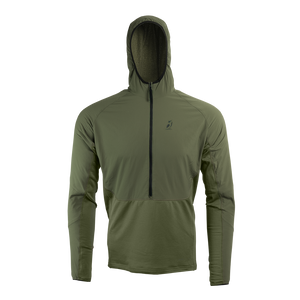
Tayson: to this podcast are listening and you're hearing a bunch of technical information. You're you're building out your packs and your head, you are you know basically you know, piecing things together, right? You don't listen to this podcast and not think like of the applications for you. You don't know podcasts about our upcoming Ventus hoodie and be like well you know what could that application be like, you're thinking about it in your personal context and I would say the best thing that
Tayson: you could do is as you listen to this podcast. Open up you know have a checklist in your Google Drive and on your phone it's easy accessible and just start tweaking around things, add things on, take things off and start planning because the other thing is you can listen this podcast and you could listen to 50 episode we have, but listen to 50 up. So it's and You don't do anything and then the day that you decide to go out, backpacking,
Tayson: you gotta try to remember 50 episodes worth of worth of items and so don't wait that the checklist is actually something that you can act right now on. You can start Play, it's fine. I find I find it. It's kind of fun to play around with it and tweak things and just, just, I don't know. I enjoy it, I think other people would enjoy it, but I would, I would challenge the listeners to start doing that for themselves right now because
Tayson: that is something you can do right now. And then when you go out on this trip, I could say, you're just not trying to go through this back, brain of exercises of things that you've listened to things. You've studied things, you've learned things, that might work. Well, for this type of scenario things that won't and then just to build also onto what you were saying. Brigham. After every hike, after every trip that you go on come back and reevaluate that checklist
Tayson: go through it and say did I use this? Did I not, you'll see that we often do that on our at the end of a trip podcast episode. That's that's a common question that all asked to everyone on the podcast will say, you know, what was your favorite piece of gear? And what was a piece that you could have left behind and that type of exercise will help you trim down your checklist and it's the easiest the lowest hanging fruit. To
Tayson: shave weight out of your backpack. And, you know, if, if you're ahead of the game, it's gonna save you money because you're gonna, you're gonna leave things home that you didn't need. You know, some people might want to Healing Ox chairs, some people don't and maybe just don't need to buy it. He will not share because you're in a buying, a 8 inch closed cell foam pad, and it's a great, let's see, rest and you know, there's just things like that.
Tayson: But as you use your checklist, you're going to save weight, and you're going to hopefully save mental strain, and anxiety, You're Gonna Save time. And hopefully also a little bit of money along the way. So that's kind of our spill on checklist. I hope that this was valuable. I hope that you start using checklists. I promise you that they will be valuable that they will help you in all these different ways that we've talked about. I still use them to this
Tayson: day, consistently on every trip and I'm someone who's going out often often. I'm packing that backpack up a lot. I feel like compared to the average person and I still love to use a checklist because it's just bulletproof. I've proven it time and time again and I'll continue to use checklist probably the rest of my life. So with that, if you want to grab a checklist, go to the website, look for the link, I think it's going to be at the
Tayson: bottom or it's gonna pop up on the screen at some point and you can Put your email in, get our checklist, sent over to you or just make sure that the next order that you place with us that in the catalog that you're going to get you look for the checklist that will be on the back page of that catalog. Thanks for joining us on the liberal. Troy podcast, we're super stoked to have you here please rate the podcast. Please share
Tayson: the podcast with anyone who's gearing up for a trip, you can do that by directly sharing it. You can take a screenshot on your social media say you found some value in this anyway that you choose to share. This is helpful. We were doing really, really well with the podcast. We this month at least looks like we've been kind of on Pace for almost that million dollar or million downloads in a year pace, which is something that we've kind of got
Tayson: as a benchmark. And we really appreciate you guys all tuning in for this. So if there's things you want us to do, email, write in put on a closed, Facebook group. If you're a, little ultralight member, let us know. We're always trying to improve this thing, thanks for joining us and we'll see on the next one. Hey everybody. This is Tayson again. And really quick. I wanted to invite you to join, probably the best thing that we've ever put out which
Tayson: is the Live Ultralight membership, buying and affording gear is arguably. The biggest reason that people don't get out and truly enjoy nature. You want to go but you don't trust your gear. It can't handle the expected, weather, or temperature ranges, or you simply don't have the right gear in the first place at all. That's exactly why we created the liberal Choice membership. It works a lot, like a simple savings account for your gear. You simply Auto load 10 dollars, with store
Tayson: credit into your account every month, and you get instant access to year-round discounts, you get free priority, shipping and prioritize shipping. By the way, early access to New Gear, the world releasing or early access to cells that are going on. You can get limited edition gear, you can get expert, coaching, and access to the obtained inside our closed, Facebook group, which is also gated not. Anyone can join this, right? And something very, very cool where you can now get our most
Tayson: vetted, our favorite gear from other brands that we're not putting on the website but members are going to get it at additional discounts and instant rebates. So, If you wanted that new cation, water filter that we've been talking about a ton lately, you can get it with your membership credits and you're also gonna be able to get with a membership discount and an instant store credit rebate, that's just Auto added to your account. After checkout. This membership has too many amazing
Tayson: things to cover. So what I want to recommend you do right now is stop everything. Pause this audio head over to Outdoor Vitals.com forward slash membership to sign up and start building your credit. We're going to release some new products in there really soon at Big discounts. So go sign up today at Outdoor Vitals.com forward slash membership, and we will catch up inside the closed, Facebook group after that we can continue this conversation over there.