Tayson: So here's the big question, how do we lighten our gear and build our confidence so that we can start living a life full of Outdoor Adventures and memories without having unlimited amounts of time, money and previous experience. That's the big question and we are here to help you find the answers. This is the Live Ultralight podcast power, bi Outdoor Vitals. Hey, what's up everybody? Welcome back to the Live Ultralight podcast. We have another behind the design podcast for you. So as
Tayson: usual, we've got Brigham here in the studio or Clubhouse. I guess you could call it today, literally sitting in between a bunch of sleeping bags in a back section of the warehouse. Got a build out some more space here for for things like this, especially in the summer months. So if you hear some rain or some Thunder, it's just the the sound wall we've made with sleeping bags, isn't perfect, but welcome back. Brigham, how things going? Good.
Brigham: Yeah. It's been like it has been a few weeks since I've been on the podcast for something like this, so,
Tayson: Yeah, the last one more specific to. This was probably the the top quilt redesign. So, yeah, I wasn't too far back and honestly, this is on a very, very similar vein talking about the The balaclava or some people call it a hood that we are just releasing. So, It'll be good overall though. It's the summer meeting your expectations so far. and,
Brigham: Crazy busy and it's not going to change for the rest of the summer. yeah, it's a time spent in the office this summer is There's a lot to do because there's a lot of time outside the office.
Tayson: Yeah, we've had some conversations just as a team about just focus and efficiency because everyone's It's just tough. We've we're just getting busy here but at the same time, we're we're still living the lifestyle. We like so we've got time outside but And I I think is this rainstorm comes in, you may take this up on the podcast so my apologies but pretty rare. And you talk that we see rain. Yeah, not really that. Sorry,
Brigham: that's a good thing. It's good background noise.
Tayson: Yeah. But we've got some some awesome hikes coming up and we'll be using most likely this ball of lava. Well it might be warm enough. It'll be that it
Brigham: I guess we'll have to talk border.
Tayson: Borderline? Yeah, the first I think we can get by without it just fine. Yeah.
Tayson: We're gonna be doing a 60 plus mile fast pack where we'll be trying to do about 25 miles a day and finish early but we'll kind of see what happens is the first time we've done something similar to this, so that's actually next week. So That'll be exciting. And we'll definitely report on that on the podcast. I'm sure we'll put together a few episodes talking about just year and the actual experience. But Got six of us going on it and I
Tayson: would say everyone is stoked. Oh yeah, for
Brigham: sure, like just in our meeting today, just go over the route, got me, really excited and And now just talking about the, you know, doing a podcast about it, after the fact like that's going to
Tayson: be a, that's gonna be good one. It is. I'm, I'm like amped because I've got a personal trip this weekend or I'll be heading up to Montana. And I've got that trip. And then we've got one week break, then we've got or, and then we've got high line. So just Hang out the next and they're all things I enjoy and look forward to. Yeah,
Brigham: that's I'm almost exact same because I'm taking going up the Idaho this weekend. Take my girls backing and then I get back, I'm in the office for one day and then we do the fast packing trip and then I'm on a vacation for the week after that. Oh,
Brigham: and then the day after Let's see. Yeah, the day after I get back from that we go to or yeah, it's crazy.
Tayson: It's funny. I mean, this is, this is the center of hiking season is the best weather, which kind of cracks me up because I was I mentioned you guys talking to Dan Becker and he's like, oh yeah, you know, hiking Seasons about to begin and I'm like, dude, we're in the heart of it out here. Like, I don't know, I don't understand. You know, just different Nixon good.
Brigham: I wonder if it's like I wonder if because where he lives. There's it's like the black flies season. I could see that. I know in Minnesota. That was a, that was a big deal.
Tayson: Yeah. But in Wisconsin,
Brigham: I think. So, I don't know how he says it, but
Tayson: something like that. Yeah, Yeah. Anyways it's it's busy times but we're excited we'll be talking about it on the podcast for sure, because we've got that trip. Like I said, we got a couple weeks after we've got high line, which is gonna be over 100 miles of 10,000 plus feet, essentially. 80% of it, 85% of it, is over 10,000 feet, most beautiful country. I feel like I've been in, but also, just gonna be brutal. So, we're, we're stoked. We've been training
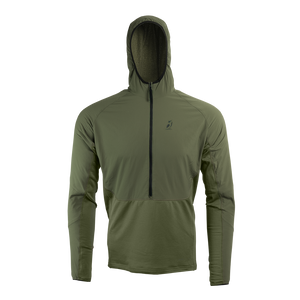
Tayson: for it, and we'll be talking about some of those elements as well. The training went into it, and Um, hopefully, this is just stuff that we can build on and Inspire, but bringing it back full circle. Now that we've done a quick little check-in round table here, let's talk a little bit about this product. So, it's been a while back where Essentially, I was using some hoods balaclavas calling what you want with my top quilt from some different companies and I
Tayson: just got fed up with it. To be honest of just different issues where, you know, one one type, I would lean back on a sleeping pad and I'd have a toggle, hit me in the back of the head and that wasn't comfortable at all. And then, you know, another one, I tried. Wake up all the time with condensation. This is the first one I had. So this is been four years ago or more at every time. I turned my head and
Tayson: my sleep. The thing wouldn't turn with me, so I just breathe straight into the side of it. Wake up hours later just basically soaking wet and it was uncomfortable, just didn't work very well. And so We had some different projects, I think to work on first but we got to finally work on this piece and it's it's awesome. It came together super well and solved some of the issues that I had experienced in the past and Just overall, I'm stoked about
Tayson: it. When you say this first trip, we probably won't be able to use it. We've obviously we've tested it and done a bunch of research and development on it. But it's a piece that for me, I'm typically trying to use it when we're getting into the 30 degree range when I'm using a top quilt. And then above that not nearly as necessary. I would say especially if you've got some kind of a Gator, a hood that you could put on if
Tayson: you needed to but I would imagine Highline I'll probably Be looking at it and seeing if it's something I want to have in my pack, I'm guessing up there. I mean Mid-august, who knows? It could snow or something. So like I probably will have it for the Highlight, I guess. But yeah, I mean, just going back to the very very beginning design premise. What we were hoping to do with it and where the ideas came about from your side brick. And
Tayson: what do you, what do you remember about kicking this thing, out the door to the kicking out, the gate to get started?
Brigham: Yeah. Well, it was a while ago, like like it's it's interesting because it just took a we had to prioritize some other things but like I I remember like I kind of like basically Sketched this thing up. Like. A long time ago. Yeah and it
Brigham: was done like it was it was, it was done we just didn't you know, we had other things to push ahead of it, but yeah, once we got the samples, going and prototypes going, we didn't take didn't take long to get it where we needed but yeah, I would agree like with what you said some of the issues were you know, like you know, when you have a jacket or something, you put the hood on and turn your head. and you
Brigham: end up just looking at the inside of your hood versus, you know, rather than having the hood move with, you will add totally happens with With, you know, hoods or balaclavas or something. You know you're trying to use to keep your head and neck area warm with the top quilt and that Aside for it, like not feeling right? Like that wet clammy feeling against your face. Once you're, you know, you you breathe on it for, not even that long, it gets
Brigham: pretty uncomfortable, and and, you mentioned the, you know, little pieces of plastic Hardware either Adjusters in the back of the head or somewhere that just Wasn't always comfortable, you know, in all sleeping positions. So those are some of the things we for sure wanted to tackle. And then there's the broader the main objective as obviously to retain your heat. Because you know, the top quilt. Offers a huge weight savings because it doesn't have a back. Doesn't have a zipper, it doesn't
Brigham: have a hood. But in the colder temperatures It can be more of a challenge to maintain your heat because your your head and your neck can be more exposed with the top. So that's that's what the the balaclava addresses like on a broad. Sense. But there's like, finer details. We want to for sure. Make the balaclava more, we're usable. More comfortable and more effective.
Tayson: Yeah, I think that there's You know, one more element that I'll probably bring up later, but it has to do with kind of just building on that condensation and and what we decided to do to address that as well. The sides just the hood moving with it, you know. And the insulation side. But yeah.
Tayson: So we went through some prototypes We got some pretty funny ones back. I remember. Yeah. We just remember looked like he had a massive beak, you know. Like it's stuck out at the super fine point. I'm, you know, we kind of questioned how that they ended up with that sometimes that just happens, you know? You know, through prototyping and stuff sometimes just get some funny stuff back. We had some that dropped way down. These super sharp Peaks as well like on
Tayson: your chest and back but You know, eventually handful of prototypes through. I feel like we really nail down the fit. There's good lightning crash, but we really nail down the fit and how far it's coming down on your neck. So this particular piece does come down. If you were watching any of the videos, which I'll probably reference later as well on me. It's going to look a little funny because I got this big beard and so it doesn't go as well.
Tayson: But most people that's gonna come down down to their neck area and should be start peaking over the shoulders. And so there's some Contour to to fit up and around the top of your shoulders as well. Um, what do you talk a little bit about what I feel like is probably where the best design aspects came into this, which is the actual adjustments, because there's a few things that you've got to make happen one. We want to make this. So we
Tayson: don't have some kind of Hardware behind our head, but we need to be able to make it so that you can turn your head and have the hood move with you and set of you turn and look into the side and then we also need to cinch up the face. So when it gets really cold, you can cinch that down and have less of your face exposed. So, try to describe on the podcast. I guess what we ended up doing and
Tayson: why we ended up doing that?
Brigham: yeah, so to kind of eliminate the Hardware, in the back of the head or any any of that, discomfort, that can come from an adjustment, in the back of the head, we just Kind of eliminated the adjustment. Factor. While still allowing the ball of the state put. So we use just a thin elastic in like it's an internal band. So Into the fabric that just goes around from the side of the face around the back of the head to the other
Brigham: side of the face. And I think we achieved a pretty good balance of it being like just the right tension. So it's not You're not going to feel like it's squeezing your head. It's just kind of holding the balaclava in place because it's a fairly thin band of elastic. It's not really thick or you know, it's not going to snap on somebody. You know, it's not going to like stretch out and accidentally squeeze, you know, snap onto somebody's head. So I
Brigham: think the kind of the way it's placed goes around the back of your head, just keeps it put but you don't have any plastic Hardware back there anything That you can even feel putting any pressure on the back of your head so that was kind of a major. Part of the puzzle here. yeah and what's interesting
Tayson: is on the front of the hood, we've got the typical closure that's just going to seal up that face hole and there's kind of a piece of Hardware down by your chin area and you tighten that and as you actually work that piece It can also, if needed tighten up the back of the hood, a little bit, like it takes up some slack, right? And
Tayson: so with one adjustment it has you know kind of a two-way effect obviously, the first adjustment of closing up that face hole is is very prominent and then there's just some very minor adjustment when I would say to the back of it. So that's really what allows us to have a one size fits all option too is, let's see, are someone with a little bit smaller head? Well when you cinch that front up to be appropriately fit it kind of will
Tayson: help snug up the back as well. Yeah.
Brigham: Kind of explain it because people can't see it. So basically the the adjustment cord that goes around the perimeter of the face, opening that intersects with that elastic band. So one you as Tayson the same, when you do, tighten it up a little bit, it basically just pulls the the elastic band that intersects with the adjustment cord. It just kind of pulls it Forward around the face a little bit more. So it just takes up the space just enough to
Brigham: kind of Keep it on. On a smaller head.
Tayson: Yeah. So I mean that's that's the adjustment aspect of it. We've talked a little bit about the length of it. And that's, that's really where a lot of the Comfort aspects. Come in. Let's talk for a second about the insulation and like kind of the baffle structure, I guess there's definitely some out there that are going to do More horizontal bigger baffles, not bigger, but link here, I guess baffles. There's some out there that are using different Downs. Nick Wax, treated
Tayson: Downs, other types of downs. What are we end up doing with this piece and why
Brigham: Well, this be so on volatile, we use our LoftTek hybrid so it's 80% like a loose fill synthetic Loft, Tech, insulation, and then 20%, 800 fill down. And with this piece, it made a lot of sense because you do sometimes you get that condensation that that breath issue. If you're if you do happen to turn your head or often times what just can happen, even if the balaclava is staying, where it should is your The moisture from your breath and
Brigham: your breathing. Is closest to your body. So if it's cold, it's going to fall around your head. Yes, sir that journal.
Tayson: AIDS, even on the external side of it. It's just going to cover the external side of this balaclava. Yeah, just the
Brigham: nature of your body's putting off that moisture from breathing and so then it goes into the air, but the air then makes it fall. Basically all over you. So going with the left, the LoftTek hybrid, it just totally eliminates any any potential, you know, opportunity for the insulation to collapse or lose any of its insulated value really? Because, you know, it's the hybrids mostly synthetic, so it's just totally resistant to any moisture and and with this piece in particular, so
Brigham: we're talking about a two and a half ounce bottle of lava. It's A Small Piece small baffle Chambers where the insulation is the weight difference and the Amount of work that you get. Like, this is where it really makes sense to use this synthetic because you're not talking a large piece like a top quilt or a sleeping bag as you go down inside the the weight loss benefit of 100% down decreases, the smaller the piece gets. So like with this one
Brigham: it was just kind of like a no-brainer. I feel like it was you know,
Tayson: right. You might have saved. 15 grams by, using down, or something like that. But instead by using this LoftTek hybrid insulation, we might have added 15 grams, but instead we get all the peace of mind and extra benefits that go with the ability for this to shed moisture and stay lofted.
Brigham: Yeah, and like, you know I think there will probably be a lot of people that would say or think that, you know it's Downs. Never been a problem and probably is true. But the nice thing about this is like If you're getting up every day in the morning and it's cold and every morning you've got a lot of condensation, you don't have to worry, like you just get it up and stuff. It all, I mean so it could be totally damn,
Brigham: you. Don't worry about it. Like you just get it up and this little item shouldn't take anybody's time or their thought, like so why? Just if it's wet, when you wake up, who cares? Just get it stuff away and wherever you stuff it, and pull it out and night and it'll be toasty warm
Tayson: right? You don't gotta worry about airing it out in the middle of the day or pulling it out at lunch time or whatever it is. That that a lot of times you end up having to do with other pieces if there's a lot of condensation but you weren't around you probably didn't see this last week because you were, you were spending some family time but I did film a video and hasn't been published yet. It'll be published by the time this
Tayson: goes out, but where I did, some basically did an overview of it and then I did some torture testing. Did you see that and know it was, it's a good watch. It's comical. You would shake your head at me for doing it. But because I did I just put it in an extreme situation where I took our our Mist we got a steamer like a wrinkles out. Yeah. And
Tayson: I literally just emptied a full amount like I filled it all the way up and then I just let it blow inside the ball of clava tell it was out of Water. So I blew like over a cup of liquid into the hood and could see no difference, like I kind of compressed it and you could see it on the video and just trying to Showcase it. And I just really didn't have an effect. And then from there, I went into
Tayson: like the unrealistic type of stuff like dunking it in water, or compressing it in water and and kind of showing what happened to The Loft with those things. But let's talk for an instance. Like, how the heck would you get this wet? It's like, it's inside your tent. Like, how are you gonna You know, never get this wet and we've talked about some of them, I'd say number one, you can accidentally breathe inside of it. And number two just like you
Tayson: mentioned by breathing in generally, even out the face hole perfectly, well you're still going to build condensation on the outside of it because that I mean I don't know if you slept out in really cold temperatures even in a sleeping bag you wake up and like right on your chest has a bunch of moisture on it, a lot of times and that's kind of what we're talking about. As you can see, a similar effect that imagine, with this, where you're going
Tayson: to get moisture, Just around the outside of it. There's been it's not super common but there's been times where I've woken up like an overheated and I'm just been sweating for whatever reason. So if you ever did sweat or have something like that happen, You know, come in contact with moisture. Probably the biggest one though, is what you were alluding to at the end, is the condensation on your tent especially as you get into some of these Ultra Lite shelters. There's
Tayson: just there's just condensation on the inside and it's it's a manageable amount but like Sun hits you and you sit up and like it starts dripping and you set up and you've got this hood on, you're going to be rubbing This Hood across the cross, the tent, and you're going to be picking up water, drop Blitz, and so on so forth. And so, those are probably the most realistic ways. Obviously, there's other ways leaking stuff in your bag or so on
Tayson: so forth where this is going to come in contact. But I think what the LoftTek hybrid really, really does well is just like, you said, it becomes a non-issue, whereas with a down piece and all with the down piece that maybe doesn't have. A very, very high-end dwr. That can become a factor, especially day, after day, after day and and also, I mean, think about it. Dwr. And again, specially the lower end. Dwr's, they wear off over time. You have
Tayson: to retreat them over time. So every couple of years, you got to worry about retreating them and some of those types of things to keep them resistant. But the nice thing about this is even with dirt and grime and sweat. It's gonna, it's gonna Loft better than down, because down can be affected by those things more. And then, two, with the moisture and day after day moisture, and those small contact points that slowly build on down It becomes a non-factor. And
Tayson: so, for those reasons for us, it seemed super clear to use the LoftTek hybrid insulation in this piece. I think we think we covered that pretty well. So let's talk for a second, then about the baffling itself. It's A very similar to a horizontal baffle and then we've there's a couple extra seams in there for stability of the Loft to cover insulation. I don't know if there's much more to be said it's going to look like a grid, just kind of like a
Brigham: grid pattern a grid ish pattern. Yep.
Tayson: and, And then what we didn't cover, I guess was the fabric itself. So what fabric are we using on
Brigham: this? It's 10d tendi. Rips off nylon.
Tayson: Same fabric that we're using essentially, on our sleeping bags and top quilt, so it's got either of those. Then, you know, the fabric already. It's going to have a dwr coating on this and this outer fabric. So you know, just another level of resistance What did we cover? I mean obviously this isn't a super technical piece but
Brigham: well, I mean, I think yeah. I mean listeners might in, you know, appreciate just talking a little bit about Some of the, you know, the the use case, or like the best application, will we kind of touched on a little bit at the beginning, but
Tayson: maybe build on though. Yeah. So
Brigham: We? Anytime I feel like where this is going to where this fits in for for my system is like at or around the 30 degree Mark kind of just out the freezing temperature. If I'm going to be using a top quilt below, freezing, this is like gonna be a boost to the To the the easy warmth Factor, like the less hassling around or less. Like, you know, when you wake up and you may be warm but you feel that little bit
Brigham: of chill if you roll over and a little, you get a little shot of cold air coming down through your neck or something. Like this is gonna eliminate that. It's going to keep the head really warm, so you can kind of just have like a Carefree thought-free full night of warm sleep. So, Like if a lot of time, you know, if it's like 40 degrees and I'm using a 30 degree top quilt, totally. I'm not going to use this. I that
Brigham: would be, that'd be Overkill, but that's where I think the benefit of two and a half ounce, bottle of lava comes in is You you know the difference between a top quilt and sleeping bag is probably way more than that. Probably double that five six seven ounces. so, you can Kind of get the benefit of a hood with the, with the follicle lava and you can really extend the use of top quilts and therefore, you get the benefit of the weight
Brigham: savings that comes with the top quilt.
Tayson: Yeah. Oh man, you spawn you spawn the Hop for me but I must have lost it. Let's talk for a second too about because I want to get into maybe some use cases. But what about those people that are like, I use a beanie or I use like a fleece balaclava or something like that. Personally, I'll talk about the fleece. One first, I've I've used the fleece follow a lot, and the reason why is when you breathe in fleece, it still,
Tayson: it's one of those materials that stays very warm even when wet got a little more thunder rolling out there. But so that was always like easy because I just Just Breathe Right in it and not really worry too much about it and go on with my time. But I have had a lot of situations where I would wake up and I'd be cold in my head, like, my ears would be cold because that fleece, even though, like fleece kind of his
Tayson: bulky and it fills thicker, and warmer than it. And it really is it's not a high Loft insulation by any means. It's no, right. It's not a down replacement. It's not a, you know, a loft Tech hybrid replacement, not even a high Loft synthetic or placement. It's a different piece altogether. And so to those people a police follow-up does work and it works well. Not going to take you. Really down to the 30 degrees and Below Fahrenheit temperature. So that's one
Tayson: thing beanies. If you ever used a beanie or like a down beanie, I do have one and I do use it occasionally. Yeah. Like I I like as a standard item,
Brigham: I typically always have a very light fleece beanie in my backpack, you know? I mean it weighs like an ounce. And a lot of that's just for, you know, kind of nighttime stuff like if it's spring or high altitude and Summer and the fall. It's nice to just throw that on at night around camp and if it is Completely like if it's cold and yeah, I'll sleep with the beanie on. but this is If I would say a night and day
Brigham: warmth difference, like it like a beanie, the beanie that I take, just like a probably I like 100 weight fleece beanie, like that's not going to really do it for me with a top quilt if its 10 to degrees, whereas this would be like money. You know what I mean? And
Brigham: now compared to like a fleece ball a claw. I've used those a lot too. And actually, the one I have this kind of just out of laziness. I probably had it for like 15 years but it's always been like, Around my face. So it always actually, like, gives me kind of these tension headaches when I, when I sleep. And so, it's again, it's probably like 100 weight fleece but it's just it's not very comfortable and it's also not nearly as warm
Brigham: but what I'm going back to the point I made before is when it's that cold. I'm usually in a sleeping bag. and so, I'll supplement that with hood of the sleeping bag but that's where it's kind of nice to be able to have You know, a lofted insulation ball of like this. Like I was saying, I think it just extends your ability to use top quilt. Save some weight. you know, down to like, Well below freezing whereas I typically wouldn't you know do that.
Tayson: So Yeah, I think that's really good point. I do have, I think it's an outdoor research down beanie, And I use it. That's a use it in 30-40 works. So okay, I'm not one who wears it around Camp. I just use my hoods. and so, It, like that's just a sleeping beanie to me and but again, a beanie doesn't really come as close down to my face. There's not as much worry about any kind of moisture and things but for me
Tayson: still the beanie. like I wouldn't, I wouldn't take that down below that 30 degree range, I would say because It's covering my ears and the top of my head versus this is going to come all the way down around your neck. Chin, just out the whole area and so just a thought. Now you mentioned that you don't, you wouldn't use this at the sleeping bag, like you didn't say that, but you said is used to fleece Hood with a sleeping bag.
Tayson: Now, I have used. These not ours but years ago probably about four years ago. Actually I did use a down hood or ball of lava in a sleeping bag when I was out in Colorado in the third third week, second week of November. And so it was snowing on me a lot. It was super cold. It was actually when I got frostbite the first time and I used the hood in the bag, and here's the pro for it, if you're someone
Tayson: who does not like to get in a sleeping bag and really cinched down the face, drop quarter area, Um, that's a problem because you've got to be able to cinch it down so that you can seal the warmth in and and the cold air out. Now if that's you you would like the balaclava because it's going to feel like you've just got a hood on which you're probably not as worried about as cinching down a sleeping bag. So tight that like
Tayson: you get claustrophobic or something like that. Which again, I've maybe had that at times in my life. But case in point, it is still a piece that I would consider with the sleeping bag especially if you're someone who does not like to really cinch down that sleeping bag, it bothers you, it's not comfortable or claustrophobic. It does work really well. And there's a lot of Peace of Mind knowing that that your head is basically double insulated like it You know, they
Tayson: say you lose, I don't know what percentage of your body heat out of your head. Well, if you double insulate your head and sleeping bag like that, it really goes a long ways for for total warmth, but just a side note, I guess. Um, yeah, any other like use case scenarios, I feel like that would be helpful to these guys any stories, even that. Showcases using a hood or showcases wishing. We had a hood.
Brigham: well, I mean yeah, I would just say the colder, it gets the more The more the benefit will be realized with with this. I can think of one
Tayson: I when we went to the Wind Rivers. Yeah.
Tayson: I had Our older top quilts in and I was trying really hard to go, super light and, but I ended up taking a zero degree, top quilt. And I had that down beanie Yeah,
Tayson: and we did not expect the weather. We got and the temperatures we got. I don't think at least I didn't know nobody did.
Tayson: And I mean, we were going in and early September and it snowed the day, we got there. And then And then it started melting and then all that Reef Rose. The next day we were up in a basin and it was so cold in that basement. And then, anyways, it was just a Perpetual like it was just way colder than most of us thought, and I had that down beanie. And I, I woke up. You know, consistently felt cold like around
Tayson: the neck around the face. You know, maybe about here comes out of that beanie or something like that. It was it was definitely one of those scenarios when it was a noticeable problem and even with our older top quilts not having that draft collar around the top of the neck. And some of those things was, was more noticeable, taking it into those colder areas. Now, the having the ball of lava would have helped that for sure, that like draft around the
Tayson: neck aspect, but like, That's that was one scenario where I really, really wish that I have a two and a half three ounce bottle of in my back for sure.
Brigham: Yeah. Wouldn't it made a big difference?
Tayson: Anyways, that's one that's one case. We've used this a lot through the winter to get effect and it's been a really good piece as we've gone through specially this last winter. Really using it and utilizing it. Not that this has to be a piece that you use in the winter. By any means. It's just when a lot of the development was happening. And then, you know, you, you have to wait essentially a little bit to get the fabrics and the installation's
Tayson: in for the freaking him so it up. So Anyways. Any closing, I guess remarks on this before, we just start wrapping this up and and let people go check this out for themselves.
Brigham: Um no I guess maybe I just reiterate. It's okay. I'd say it's a pretty substantial warmth gain for like a small weight, a weight, small weight gain. Yeah.
Tayson: So these are going to be available on the website as soon as this is launched. And with our direct to Consumer pricing I will say we've got a really solid price on these things compared to like I literally I did this you know this would probably be dumb in business school or something like that. But we just went through and we marked it up as we usually do with our straight line, you know, honest pricing way that we do things and
Tayson: I then when I Was preparing for some other stuff, I went and pulled up a bunch of the other hoods that are out there. You know, ones that have adjustments that going to your arms, or the toggles in the back of your head and or the lack of toggles that, you know, I'd used where I turned my face in the side of it. And was just really surprised at how much we were able to shave off of the price tag about
Tayson: 50% on them on a lot of them. So it's a, it's a solid piece, they're on the website and if you're listening to this one, it launches, they're going to be on a special discount. So I think it's 10% off and if you're remember that basically is Off. So, you definitely want to act while we're doing this launch and get yours coming, but it's definitely gonna be a piece. That'll that'll add a lot to you. It's going to be a piece
Tayson: that is just a really nice kind of set it and forget it with the LoftTek insulation and just something you should really go and check out because it will add to your warmth and comfort on the trail. So last thought, maybe is We're not, we don't have anything else to release at this point but stay tuned for later in the year. We might have another accessory that kind of can go hand-in-hand with this on the opposite end of your body
Tayson: per se. Some, some things that I may have even shown them in a video Once tease those out. But some, some booties, so, Check those out later. This fall, we'll release those and those are just as awesome, a lot of a lot of the similar fabrics and insulations and things. But anyways, we do appreciate you guys. You guys that are listening to the podcasts are kind of the die-hards and A lot of you. So, it's really cool to see the number
Tayson: downloads that we've, that we bring in. And the number of you guys that listen to us just rattle off things about design, and trips and all sorts of fun things, we'd love to hear your feedback. If you guys ever wanted to get On our website and hit the chat button and just give some feedback for the podcast, we'd really appreciate that. We've got some things in the works that we hope will help us, you know, get more feedback on the podcast.
Tayson: So we can give you guys more of what you want, but in the meantime, give us support directly or feedback directly. And as always, if you do want to support the podcast, just go review it on whatever podcasting platform, you're on. So, thanks for tuning in. We got some awesome content coming from some awesome trips and some things that we have done to prepare for those trips as well. So make sure you're subscribed. Make sure you're tuning in and we'll catch
Tayson: you on the next podcast. Thanks guys. Hey everybody. This is Tayson again. And really quick. I wanted to invite you to join, probably the best thing that we've ever put out which is the Live Ultralight membership, buying and affording gear is arguably. The biggest reason that people don't get out and truly enjoy nature. You want to go but you don't trust your gear. It can't handle the expected, weather, or temperature ranges, or you simply don't have the right gear in the
Tayson: first place at all. That's exactly why we created the level of Detroit membership. It works a lot. Like a simple savings account for your gear. You simply Auto load $10.00 and you get instant access to year-round discounts. You get free priority, shipping, and prioritize shipping. By the way, early access to New Gear, the world releasing or early access to sells that are going on, you're gonna get limited edition gear. You're going to get expert coaching, and access to the obtained inside
Tayson: our closed, Facebook group, which is also gated not, anyone can join this, right? And something very, very cool where you can now get our most vetted, our favorite gear from other brands that we're now putting on the website, but members are going to get it at additional discounts and instant rebates. So, for instance, if you want that new cat on water filter that we've been talking about a ton lately, you can get it with your membership credits and you're also going
Tayson: to get with a membership discount and an instant store credit rebate. That's just Auto added to your account after checkout. This membership has too many amazing things to cover. So what I want to recommend you do right now is stop everything. Pause this audio head over to Outdoor Vitals.com forward slash membership to sign up and start building your credit. We're going to releasing some new products in there really soon at Big discounts. So go sign up today at Outdoor Vitals.com, forward
Tayson: slash membership, and we will catch up inside the closed, Facebook group after that we can continue this conversation over there.