Tayson: Here's the big question. How do we lighten our gear and build our confidence that we can start living a life full of Outdoor Adventures and memories without having unlimited amounts of time, money and previous experience? That's the big question and we are here to help you find the answers. This is the Live Ultralight podcast power, bi Outdoor Vitals. Hey what's up Adventures? Welcome back to the Live Ultralight podcast today. I've got special guests Brigham back on the podcast to talk about
Tayson: some R&D. Today we're going to be specifically talking about how other companies who are indeed, maybe How We Do R&D the different ways that can anyone can do R&D, and kind of the pros and cons of these different methods. For those of you that don't know, r&d's research and development, that's essentially the process that you go through, to launch a new product, or improve a product or decide on a product to move forward with just all of that research. And, and
Tayson: all the process that takes place to bring a product to Market. We actually have this idea, two months ago We are driving around in Washington and the Olympic National Park area, and we were just talking about the all of the good R&D that was happening on that trip. And I think I made some uncomment of like, man, you just can't get this experience. If you did R&D this way and this other way that we don't and and that kind of started
Tayson: on this, this spiral we jotted it down as a cow. We need to cover that in a podcast and then we just been flat out, too busy. To get on here and record this episode. So, So be good. It's definitely an important topic but we I feel like we've got more ammo than ever. Just to talk through more points than ever to talk through because honestly the last two months feel like it's been nothing but a whole lot of R&D. So
Tayson: should be exciting should be exciting. What am I missing my missing is that set it up pretty well that to jump right into all that we need to cover with. Yeah, no,
Tayson: no I think I think you're good. Honestly, I just hope I can Track of all the thoughts. You know what I mean? Because just as you're talking you know, I'm my mind's being flooded with thoughts and different ideas and I hope I can remember all of it. Yeah
Tayson: yeah. Well we'll have to try to take it slow a little bit, so if it feels slow on the podcast, just hit the Button on there to speed it up because we don't want to miss anything here. It's an awesome thing to understand, though, from a consumer perspective, because you probably are sitting at home wondering like, why do certain brands, do the things they do? Why are they launching this? Why do they never refresh this or why are they launching this
Tayson: crazy crazy product, you know what I mean? Like, and and then also just knowing, like, the level that you can trust, your gear comes from understanding processes, like these. So, hopefully by the end of this podcast, what we can promise you is that you'll be able to filter through and know what type of company is you want to trust with your purchases, And your Trip's and I mean for a lot of us getting out is just something that's not always easy
Tayson: to do. And so when you're out there, you want the best. Possible gear best possible experience is, and I think that this will be a really good tool to add into your toolbox to understand what purchases to make. So, without further Ado, let's talk about how companies in general. Do R&D. I kind of wanted to actually start this off by just asking you Brigham. When you were going through school, they brought in speaker, after speaker, from big companies, you all have
Tayson: to do some internships and then you just been around the block as well. So, From what you've seen run us through some of the things that you've seen as far as the different ways. Some companies, do R&D.
Tayson: yeah, we had in the school environment, like you said, lots of we had a weekly seminar where representatives from all different types of companies within the outdoor industry, all kinds of brands Different markets, you know? It would come and tell us their story. They talk about R&D just kind of fill us in. It was very insightful in terms of R&D, there's A pretty broad variety of the way of how comparison there's some consistent generalities. That, you know, there's some patterns for
Tayson: example. one method might be common or more common amongst The really big Brands and then there'd be another method. That is definitely more common amongst like the big brands that are part of an umbrella Corp you know or a VC brand, where obviously the Personnel numbers are huge and kind of The objectives of that company are a little bit different, so there's like I said, some generalities. So you have some companies that Let's just say they're in Fairly related to Camping
Tayson: or backpacking or anything that might have a lot of gear commonality. So you'd have a big brand, big name brand that you would see in most retail. websites or physical stores, and they would do R&D where they rely heavily on like external testing and feedback. Where they'll? they'll they'll research the market or the product category that they're designing for or, you know, research the user and then they'll Kind of have a maybe an app, you could call an ambassador staff or
Tayson: a Pro Staff or just kind of a testing staff. that might not necessarily be employed by the company but that they have a working relationship with They'll get product out to those people. And those people are in general very competent and proficient in that activity, they're somebody that regularly does that activity. So they get the product in those people's hands and, you know, let them use it, Shake It Out, provide feedback, and then they'll go through that cycle of, getting the
Tayson: feedback making changes. And so we talked out there.
Tayson: Are we talking like YouTube influencers like they're sending gear to YouTube influencers for product testing or you talking something else?
Tayson: Honestly? Something else entirely? Because frankly, I
Tayson: think most people Are aware that like YouTube is. It's big, but it's small. So, a big guy on YouTube might not necessarily be like as experience or proficient as some of these people that do this. More on the scale that I'm talking about. You know, I think it's easy for people to think that certain YouTube influencers are like the end. All be all say of what's good or bad or a level of experience not to say that those don't exist. But
Tayson: these big companies, I mean, they're for example, if it's like a snowboard company or a downhill ski company like Just think about the people that show up at the Olympics for giant slalom, right? Most of those are not YouTubers but they are hands down way more experienced and qualified to give feedback on a pair of skis then most YouTubers that have downhill skiing channels, right? I kind of wanted to draw that out, I guess because what you're talking about is
Tayson: most of them are like former professional athletes. Yeah, most of them are or just active athletes competitors, in some way, shape, or form, something that is definitely qualifying them to the point that companies are willing to pay them for feedback. I mean, they value their opinion at such a high level that they're paying them for feedback. And, you know, a lot of times when it comes to something more like YouTube or influencers, you're paying them, Push your product, almost more than
Tayson: you are for the feedback, which is something that we've seen in the past. Is our own company and basically kind of had to move away from it. We approach and method of working with influencers has changed a lot because we, we've we've just drawn some lines in the sand and basically been able to realize that, hey, The influencers, you know, like it's not really feedback when you're when there's a transaction happening, right? And so like, we've gotten away from that to.
Tayson: You know actually be able to pull feedback from people but anyways, back to what you're saying, you're basically to sum that up. These companies are going out. They're paying and finding and working with relationships, with professional level, type competitive athletes or, or maybe it's a Triple Crown guy. I don't know, who knows, but they're, they're coming up with guys that are more than qualified to test a product and provide feedback and they're paying them for that. Yeah, yeah.
Tayson: And and like I said, those will be, you know, some form of like a Pro Staff or an ambassador type relationship. Then there are also. Companies that will hire kind of like a testing. Staff. That's arranged as more of a business on the other business side. So like, A testing. I don't know if you'd call it an agency, but It's another business, right? The business is testing gear for Brands. So those there's that that goes on as well, where a brand,
Tayson: we'll just hire out the testing, get the feedback and then go through that cycle, that Loop of feedback and testing. There's and then there's Well, let me back up they get very valuable testing from that from those methods. Like, there's, I wouldn't say that that's not good testing because the people doing the testing or very qualified and experienced and necessary and and the person, sorry the Design side for the brand. Might not be so experienced. In that product. So there's this
Tayson: Reliance on the expertise of the
Tayson: tester, which that's kind of a vulnerability, right? Like like maybe, I don't know a ton about the specific thing but we have testers that can be bridge, the gap for us, right? Sure, sure. And that's, you know,
Tayson: that's the reality and special a lot of these bigger brands. That have. dozens, if not hundreds of people on their development staff, So
Tayson: that's something to kind of keep in mind. Now,
Tayson: I think the other thing that just popped in my mind to with, with that relationship is Just and basically, with any of this is just the communication, right? So, I'm sure as we dive into other methods of our indeed, the thing that just comes back to my mind over and over again, is is communication anytime that I have to Condensed. Let's say, go out and do a three-day test trip with the satellite backpack. Anytime I have to come back and report
Tayson: to you via, let's say it's a phone call or let's say it's after write out a message or I have to fill out a form. There's communication loss because I'm condensing, you know, 48 or 78 hours worth of use into a few paragraphs or a 15-minute conversation and so you just cannot get like, there's just there's a gap between communication, sometimes it passes hands, almost like a telephone game but that was kind of my thought with was you were talking about
Tayson: that which honestly as we talk about some of these other methods I think is going to be a recurring theme.
Tayson: Yeah I was I was just my thought is like I think this will resurface in a minute especially when we start talking about what we do, how we do it and why it'll come back up for sure. yeah, and there's also another thing that goes on is, There's obviously media Outlets out there, not social media Outlets, but legitimate more Market focused. Media Outlets. So like ski magazine Backpacker magazine outside magazine and then there's websites as well. Like outdoor gear, lab things
Tayson: like that, where those are legitimate business media businesses and they have their own testing staff. And so a lot most of the time that testing staff is also very qualified and experienced. And so then a brand will reach out and send product. They'll have a relationship with the media Outlet where, you know, they're sending product there for PR and testing and review and feedback, so Like outdoor gear lab that's a website you know and they just have their own staff. They
Tayson: they get I think they actually just buy products so that's not necessarily too accurate. The brand doesn't necessarily reach out to outdoor gear lab and say hey will you review this and test this? But As an example. That's a good thing though. That's that's something that exists. Yeah I agree it's a good thing. So yeah there's you know say ski magazine again to the skis friends, you know? Send them to a ski magazine, they'll get a pretty good body of testing
Tayson: and then they'll make decisions based on the feedback there. On the, you know, less involved side. There's also brands that kind of focus more on numbers, like, they'll These are bigger Brands and most likely BC. Venture capitalism Brands Venture Capital brands. Where they're going to be way more number focused, they're going to get a lot more top down direction as towards what decisions to make for product.
Tayson: So, let's just give quickly like some examples of this, just so that people can also wrap their heads around. Like they might be thinking, VC, like, who hex VC. Because if you're not, someone who's digging in this and just kind of knows this like you'd have no idea that some companies are Venture Capital owned, you have no idea what companies are owned by a single founder or a cottage business or something, right. So like and frankly, not everyone does know. Like
Tayson: it's not always public knowledge but maybe list off a couple examples of like a VC or a venture capital owned business and versus like a primary owner type business. Okay, so
Tayson: the very easy one is the North Face is owned by VF. Corp owns. Dozens maybe even hundreds. I don't know. But dozens of brands, at least in the outdoor industry. So, Cascade designs Cascade designs. Yeah, on a smaller scale way smaller than VF but
Tayson: hey on thermarest and MSR MSR pack
Tayson: towel. So it's like way more smaller and frankly way more focused but back to kind of The numbers are indeed and I won't over generalize and say that any VC brand doesn't do R&D or doesn't have things tested. But some of these that are out there, look at numbers more so than other numbers or then other brands rely on testing and R&D from legitimate testers. So like North Face. I'm sure they still do have testing done, they have Pro Staff, they
Tayson: have ambassadors for sure, but They are all. So now have another variable being the guys in the suits. Three levels up that don't do anything with North Face. But own it, you know, they're the guys at the top of VF that it's it's inevitable. Those there are decisions that get made based on numbers and because people have to keep their jobs, they have to keep the their subordinates jobs, you know they want to keep everybody happy. So You start introducing the
Tayson: influence of numbers, it's going to affect decisions, so these Brands will look heavily at just, what is selling, what sold? What was popular? and that's a lot different than just seeing on the product itself and its performance. It comes into play at a major point when they say,
Tayson: hey, we sold, you know, a million units of this jacket. And it's like, okay, sweet like, that's our, that's our money maker or whatever. Now, let's let's do the jacket. But then it, what comes into play is when they sent it back to the designer they say hey this is our money maker anyway. You could cut another five or 10 dollars out of the price, right? So
Tayson: then the R&D becomes what can I take away from the jacket to hit a price point? We already know we can move the units. How do we just increase profit now? Because the guys in suits, just you call them the owners. That's what that's why they didn't buy a company is to make money into flip the company and three to five years. And and so Part of the design process what ends up happening. A lot of times is just that the
Tayson: price points become massive, the what are we, what can we take away and still get the best result? Which now what I want to point out with that is that's not that's not a bad thing that's value-based stuff like We're gonna think about that. We love to look at things from a 80/20 perspective of like, hey, we want to develop the best possible with your possible but you know by adding this one thing that really doesn't add any value, if it's
Tayson: going to jump the price, 30% might not be worth it to our customers, right? Yeah. But, but taking that to an extreme is where things get really bad and that's That's just kind of more common. It's more common scenario because of the, the setup of the business. That's a much more common scenario to see happen with the VC owned brand, that starts just being a price point game, for sure. And and I definitely want to point out, you know,
Tayson: I wouldn't want to paint. Human individuals down at the, the more intimate level of a design or development team or product line management team, you know what I mean? Like, I would never suggest that those people don't want to make the best product, right? But they they have a job their job is their job. But so what happens is another thing that happens is they'll, you know, they have to plan out a line. so you'll have an entire department, say, that's
Tayson: dedicated to Men's. Technical outerwear or even another subset. There will be a staff dedicated to men's insulated. Outerwear. And they'll have to plan out a line. That's two years in advance. And part of that line plan is what's the price of the product. They identify a price point before. Putting pen to paper so to speak before any of the actual R&D. So there's already a limitation placed on a product before the product even gets off the ground. That's very common amongst
Tayson: almost every single. Mainstream or known brand in the outdoor industry. Especially I'll call it out. Even in the backpacking industry, price point development, Is. Rampant and again I'm not saying that's necessarily a bad thing but for sure is a limitation it's a limitation just like I'm building a house right now. There's limitations to what I can do or what house I can build. That's not like the end of the world. That doesn't mean I'm gonna be living in a shanty. It
Tayson: just it's a limitation. So I think it's good for people to be aware that, you know what what things cause limitations to the product.
Tayson: Yeah. So let's kind of bring it back a little bit more to the R&D side of things in the different methods. I would say one method, if I was a swing it to more the cottage base side, I get there, there's kind of split and I think this is where I am very happy with the way we've scaled, which is in the very beginning. I would say almost every Cottage bass brand starts with the founder or the owner Doing all like
Tayson: the R&D and they really like see a need for something, they go out there, they start it, they get it rolling. And usually, that's just a fantastic way to get R&D done and up and rolling. But at some point feedback starts rolling in like crazy reviews. Start coming up or maybe you didn't have a phenomenal idea, right out of the gate go. And so what you're doing is you're just going out there and just reading reviews. My consumer reviews. Or YouTuber
Tayson: reviews or whatever and you're just taking those in mass quantities and then trying to find missing gaps and holes and opportunities there. That's something that I feel like probably gets looked at a little bit more heavily at the cottage level, just because the feedback comes in very direct when you're direct to Consumer
Tayson: company. One thing I would also add at the cottage level is kind of we're calling it or referring to it is. When it's kind of the scenario, you mentioned of like the founder founder or the owner. Kind of seeing a need for something. Generally. because that person he's seeing the need for something that he is very Immersed in himself, his or herself. Like let's just say it's a backpack, like that founder isn't like. You know, a basketball player that decides he
Tayson: has a great idea for Ultra like backpack. Somebody. That is like, Avid at that activity he's like a major Enthusiast Enthusiast. And so, like, one advantage is that like he kind of has a really intimate idea of What? Not just, he needs he or her needs, because he can relate because he knows there's a huge body of people out there that are just like him or her. that he can immediately relate to, because he's He knows that he's doing things the
Tayson: same way as all these people. So that's an advantage to that. Individual in those Cottage Brands because it's almost like there's like the one product that that they're intimately involved with all the time.
Tayson: So, And I think the thing with that is that's also phenomenal feedback from customers is super, super important feedback from anyone, you know, using your gears super important. The thing that to stay away from though is if that's your primary source of ideas, if that's your primary source of what's getting changed in, your product is based off of reviews from people who frankly aren't professionals, who frankly, who knows how much they really use your product, you know, nothing about them. They
Tayson: just Know your product and that they used it. We get a lot of reviews in, right? And we've we have to read them but you also have to filter them and tell you see lots of reviews consistently saying something. I think that we don't really get any of them, any heat. there's definitely personalities out there that, you know, treat their their word like its Gold. You know, they say something and that should happen and that's not always the case and So
Tayson: I think that but just just to know their is, you know, that's not the best way to do R&D. It's an element of a good R&D plan but it's not. It should never be looked at as the primary source and I think that happens and the other thing that I see happen to like just to this isn't so much R&D Focus. But sometimes with these Cottage Brands, it's kind of sad to see that they start off as an avid Backpacker. Come
Tayson: up with some great designs, then they just fade, like, they never refresh anything, and they never improve anything, and they never go back and fix anything or launch new stuff as much. And I think so much of that also comes from them potentially just getting so wrapped up in the business that they're not getting the opportunities to do the R&D. They're not prioritizing it enough to do the R&D because I can promise you, we will launch a product that we think
Tayson: is, perfect, you know, when you launch it And like a few months later after a few trips we're making lists, you know, nothing is ever going to be perfect. That's why I Brigham is employed. So I will have great jobs. Security is, there's always things to improve and if you seeing brands that are just never changing anything that to me, also signifies something about their
Tayson: R&D process. Okay, I think we've covered a lot of kind of a different ways that already happens. Is there anything else that we're missing? Potentially I guess one concept that I'd like to
Tayson: kind of put out there and we'll dig into a more when it gets to kind of talking about our our way. so, thinking back of everything we just Threw what a really important element of a design process is.
Tayson: identifying the target user who it is, you know, and then, Trying to connect with that user and develop empathy. That's a very intimate understanding of who that person is and what they do, what they like what they don't like and just how they do everything. So that's a concept that we'll get into some more but thinking back to all those different methods. How much empathy is there in looking at numbers? What sold the best? What color was the best, you know,
Tayson: there's not a lot of empathy there, that's very disconnected. Even the brands that that have staff, you know, have ambassadors and Pro Staff that are so qualified and really experienced at any given activity. There is still the disconnect in empathy. Even though they might have a really good understanding on the design side of the feedback that the tester is giving them, they're relying on the on the testers empathy. To then take that back to the drawing board. And anytime you have
Tayson: like, Gaps in communication or the opportunity for communication. Communicating empathy is a very difficult thing to do. So anyway, just wanted to kind of like point that out. That'll be something we talk about more for sure. Yeah, and it's very easy, it would be
Tayson: extremely easy to as you get the testers, right? You can you pull together testers to get a tester who just Different way of doing things, then. Go Target customer or, you know what it's being designed for. You might find someone who like a good buddy of ours, If you're listening to this like we still love you but like I remember, we went out on a trip with him and he showed up and he had this massive heavy pack. Well, we've been
Tayson: collecting some feedback from him, you know, here and there. But mainly it was more like images and stuff like that. It was getting for us. But like, I just remember seeing him with that pack and seeing him unloaded and all this kind of stuff, and it was just like hypothetically. If we had like, if he'd been a tester for us and we just weren't super aware like super where, like vetted to the point where like, what's your base weight? What do
Tayson: you know, what are you doing in all these different things? And we were collecting feedback from him. Could a very easily got feedback from someone who had no idea what it really meant to be an ultralight Backpacker while he had some, he had a lot of Ultra Lite gear. I think he had a lot of gear, right?
Tayson: And so that's a that's another example of just. Sometimes you might get a tester and without really vetting knowing and and them being super connected to your avatar, they very well could give you feedback based off of a different use case scenario than you're aiming for, or a different type of person or different type of trip. So, one other thing to note, but all right, we've gone. And we've talked a lot about just all the different ways of development. And so,
Tayson: then it kind of poses, the question of, well, what's the right way? Because honestly, every single thing we've talked about has pros and it has cons and I don't think that you can just say, this is the one and only way, I don't think you can say, this is the right way, right? I
Tayson: think that maybe there's ways you can kind of say, like any one of these taken to an extreme as a negative and you want to take and, you know, not looked at all, is a negative. So Yes, let's just kind of talk about. When we're in Olympic like let's just back up for a second. What the heck are we doing on an Olympic? What type of we done since? Is that all bleed together to make our R&D process and what we
Tayson: feel like is the best way that we can develop product. Yeah,
Tayson: I mean, so why were we on that trip in Olympic? We're. Basically done developing certain products. We've talked about it, Cody UL. Okay, so we talked about that. So the code of UL Pack. Had. Gone through multiple iterations through the design process. And it's a more, it's a Travel and Adventure Pack. So many people within our office had taken it out on multiple trips vacations business trips whatever and really tested out the effectiveness and how well it works for it's designed
Tayson: intended purpose and then And that includes like a backpacking trip, you know, that's part of its intended purpose. So like it had gone through all that testing and vetting throughout the design process, but we wanted to do like kind of a culminating proof of concept type trip. that we were able to just kind of refer back to and and also show our audience So we we did just that we we took the backpack and applied the intended use. That it was
Tayson: designed for and we loaded up kind of what you would call like a tourist, a pretty minimal tourist packing Loadout combined with backpacking. Gear Loadout. All in the same bag and we kind of went through the motions. But literally did it driving to the airport? Going through the airport. Check, you know, carrying on the bag, going through all those steps. Renting a car, navigating through a place, we'd never been stopping for gas stopping to check. Something out. Stopping at the visitors
Tayson: center driving spend a lot of time of the car and then getting to a Trailhead doing a backpacking trip, hiking, back to the car. And going and being more motorized tourists again driving around Olympic Park, going to an airport, Airbnb, finding dinner, you know. And then the next day kind of doing more motorized tourist stuff, where we drive through the park and then go for another hike. And then times up, we got a get to the airport and go through all
Tayson: those travel related processes again. um, that's that really involved. testing and and that we really wanted to be able to fall back on that as like, Not just this idea of let's build this backpack that we say, can do X Y and Z. It's let's start developing the backpack, and Do X Y and Z over and over again. And then do a culminating kind of trip with it.
Tayson: Yeah, and I think when we came up, just with the idea of this this podcast, it was like, man. All of us have such a positive experience with the pack on that trip. That I don't think we came back and had really any tweaks that you had to go and do. And I think what we were all feeling and how this came up was like, man, all of the R&D, we did up to this point and then taking it on this
Tayson: kind of Capstone type trip. proved how well, a lot of that had worked and how it got to that point and just how happy we were with the pack overall and I think that was just a really cool trip whereas like, Man, we would not have got here based off of other people's feedback. We have not have got here based off of looking at everything competitors were doing and just reading reviews we wouldn't have got here, you know, playing phone tag
Tayson: with with influencers and saying, what do you think you know? The travels and the adventure world needs, we wouldn't. I mean and honestly the big thing was this the Kodi UL Travel and Adventure packages a gap that to me has not been solved. We developed the problem by using the gear ourselves. So to be frank, In my opinion, there's not a backpack like this in the market. There's similar ones, there's ones that you know touch the corners of each side of
Tayson: what we were doing with this pack but nothing that lands right where this pack is. It's it's to me, it's, it's almost opening up a new category even though companies have been claiming their in the kind of a space for a while, certain ones, but to me was brand new. And we found that Gap by using the gear, and by sometimes like a lot of it was buying travel packs and using them and just getting so frustrated with them when we
Tayson: were traveling. And anyways, I think that whole concept of like, By going out and doing it. We developed this problem, we found this Gap that existed and it felt to us clear as day like holy cow, there really is a gap here. There really is. And then it's like, okay, well it's develop it. Well, how do we develop it? We do a ton of prototyping, a ton of internal testing, which then. So, so, High. Maybe maybe when you talk about that
Tayson: a little bit more, elaborate on that. But we do a bunch of internal testing go through all these different prototypes until we get to this point. But so let's talk for a second though. About the internal testing with the code of UL. Like what does that look like? Are we playing phone tag? How well that's communication, what's the? Yeah,
Tayson: that's what I kind of was just thinking about that. I wanted to kind of dive into a little bit. Further was, so imagine we have this pack and we were sending it to everybody to test sending it to external testers. And they could be. Really proficient and experience. Travel and Adventures, right? Their feedback could be very valuable. But now I am dealing with emails, Maybe video calls, but I'm dealing with my schedule and their schedule. Those all set limitations on the
Tayson: feedback loop and the time and and all those things. So I could have 20 amazing testers giving that had great experience or bad experience. There's always going to be a loss of absorption from the feedback, right? It's just hard. Now I'll paint the picture of what it's like here and why, you know, I really love my job and what really helps make my job better. And in my opinion that translates and gets sent out to the customer. So now I'm talking
Tayson: to Derek who went to the Dominican Republic with the backpack and his wife also had one and they're doing all the things they're packing flippers in their backpack with all their stuff, snorkel gear, right? But but I'm not getting like email. I'm not getting it, email from Derek. I'm like Derek walks in the door and it's like, hey dude, how was your trip? He tells me how the trip is and then he faced a face can dive in about all his
Tayson: feedback about the pack and here's the greatest thing. Say, three hours later, he thinks of something that he didn't think of before he's 15 feet away and he's like, hey dude, I just remembered this and then three days later, the same thing could occur that right there. Can't happen with external testers. Like nobody is going to just send me four emails. Oh yeah. And then this and then oh yeah and then this you know so that was one person but But
Tayson: you took the, you took the pack many times, tyler took the pack multiple times. Almost everyone in the office has taken the pack out multiple times on extended trips, including myself. So now I can relate my experience and And then face-to-face here, everybody else's feedback. Like, we don't want to give away. All
Tayson: of our Trade Secrets, right? We've we've got some some methods right but more or less there's a very specific process we go through like Brigham made it sound very off-hand right there and a lot of times it is it does feel super casual and authentic but their steps to it, when someone's taking a product, there's steps to them taking the product, there's steps to them, coming back, their steps to them, Brigham, being able to come back and ask them over, and
Tayson: we've got this system down and dialed to where we extrapolate so much information and just like you said so much more information and then the and then like just what you said that reiterating it and then what happens to is we go out on trips every month. Well, what happens when Brigham's talking about the backpack and he's talking to me about What did you think about the hip belt adjustment, right? And we're over, we're talking and suddenly Derek over. Here's us
Tayson: and says, hey, this is my thought on it. Yeah. Tyler over here's actually this works phenomenal for Hawaii and this, you know, and it just, it just streamlines into the point where everyone on the team knows a lot about the product, everyone on the team has personal experience with it and we can we can develop more and more what we would call grade A or high level feedback because they've used it. They've understood what they were using. They understand the intended
Tayson: purpose, they understand or Avatar deep level. so on so forth, but I think that just can't be hit enough on the overall importance of doing internal testing,
Tayson: right? I think I don't know that there's There may be, but I'll just say that the the level of empathy for the user. Is extremely high with our R&D process. Essentially I don't think there's any way to have more empathy for the user than to be the user yourself or yourself. And that's I if we could sum it up is like we basically have to become or be the user and that's why it's that's why one of the the things we
Tayson: continue to strive to do is like we're not going to go somewhere. That we can't say that. If we're trying to develop something where we can't either, we already are the user. or we can't become the user very easily like that's that's that might not be the best product to develop, because In my opinion. we're just not the best person to develop that product, so
Tayson: yeah, I totally agree and that also comes down to hiring side and the HR and the culture that we try to build all the time, You know, if we have someone apply that's just not interested in, not that interested in backpacking, but they're exceptional at whatever field they're in, we we don't look at them, they don't, they don't fit the culture. They don't fit all these other benefits that we get and that they get, and they won't fit in as well.
Tayson: And so, we do work as hard as we can to hire. People, that can have empathy people that are basically are avatars. A lot of our best employees come here because they were customers first, or, you know, things of that element and so that I think is just a massive part of it as well. Do we still use outside testers? Yes, we do. Yeah, let's talk maybe about the Ventus. I think that's the one that comes up pretty quickly. Is like
Tayson: we had designed the dentist. We've done a lot of R&D on it. We use it. Everyone was super happy with it and then we launched it on Kickstarter. And we send it out to influencers. We sent it out to testers, we send it out to, you know, these different ones. And, and Kind of comes back that there's a few points of feedback, and I'll talk about one. One was something that I think I had actually expressed but more or less not
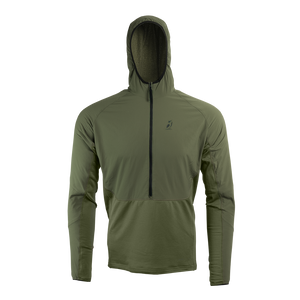
Tayson: enough people had expressed it as a problem, to hit it, onto a radar. But then we got a few testers seeing it. And, and so on, so forth to the point where we're like, hey, we can make an adjustment on this and take it one step further in its performance. And what that was was we had built and internal elastic system on the Hem of the Ventus hoodie. It compressed a little bit, it opened up a little bit and was just
Tayson: The way that it was, I guess like it worked, but we, but, but some people, they didn't work quite well, enough or didn't seal the bottom, quite, as well as they wanted. And so we took that that feedback, seriously, we kind of ran it through our system and sure enough. We're like, yeah, I think we should and can do something about this and it is, I wouldn't say it was a big problem, but it was an improvement and that feedback or
Tayson: that that push over the edge to do something about it. Did come from outside the office, I feel like and then, as soon as it kind of came back into our field, we looked at it and we're like, yep, we agree. Let's do it. And we basically put an adjustable him on it, it's where you can adjust it as tight or as Loose, as you want it to fit you and your body. Shape and style. It's a good Improvement everyone that
Tayson: has ordered pre-ordered. That hoodie is going to get that on their hoodie and just another method of R&D that paid off for us. So I think that's one other way that we get feedback one other process to our R&D comes from feedback, comes from, customers comes from testers, and so on so forth. I feel like there's probably tons more here. We can look at,
Tayson: let's talk about the money side or the price point side. Um for us usually when we start to develop something it's because we're focused on not just building one product. Usually, it's either find a big need in that drives it like we were like, man, we need to develop this, it's totally necessary. And then sometimes it's kind of like hey we need to offer our customers. These different pieces that are important for them in the field, right? So like let's say
Tayson: it's I don't know the pants like we had a jacket and we saw the need for pants and customers are asking us for it and it would allow us to complete our mission, which would be to have basically One Stop Shop for our customers to come in, get everything they needed that really applies to them and go forward. So then we take that and that's like the spark but we we then look at that and decide if we can truly innovate
Tayson: in that Marketplace, if we can't innovate or come up with ideas that would be an improvement. We likely won't touch that that area either. So Far as kind of the. So as far as kind of the price point of that goes, then it comes into like are we making the decision to build pants? Because it's just the most incredibly lucrative thing. Now, We could look at the numbers and we could probably have decided on three or four other items that we
Tayson: could have developed that would have been better for, just pure Financial purposes. So that's one element of the financial side. The other element of the financial side is, you know, when do we decide the price point of a product? Well, we decide the price point of the product, near the Finish Line. Yeah,
Tayson: very near the Finish Line. Yeah.
Tayson: When we talk about the shadow light backpack, it's like, okay. When we started the satellite, backpack, did we say we wanted this backpack to be about 200 dollars? Yeah, no,
Tayson: no, I was never. That was never something that was discussed. It was these are some other parameters. We wanted to be sub-two pounds, we wanted to have actual usable features. We wanted to be a very approachable pack for someone who's coming off of a deer or an osprey, or some other, you know, REI type brand. We wanted them to fill like, they could comfortably jump into an ultralight pack, we wanted to load carry Exceptionally exceptionally. Well, not like a pack
Tayson: with a 16 or 18 inch frame. And so we had these other parameters but then it comes down to like at some point we've got to decide on things like Fabrics. Like Dynamo versus robotic nylon or kind of what we ended up with which was the hybrid. And even at that point, we didn't decide on that fabric. Because the price point. Did we discuss it? Yeah, we definitely discussed it. It was it was something that was that was discussed but more
Tayson: or less. We made a decision because we felt like it was the right fabric for the right product at the right time. Yeah.
Tayson: so, Do we look at Price Point? Yes, we don't ignore it. Do we look at what's going to sell? Well, yes, we can't ignore that either, but those come in much later in our R&D process, we've got a piece right now that I'm pushing for heavily because I personally love the product, but when we talk about it as an office, it's probably not the best place for us to put cash right now. And we've got a process there and actually I'm
Tayson: in fact, you might hear about this later break them but there's a additional process that I'll be working in that will allow us to look at a product like that. And make a very objectified decision based off of a procedure that will run ideas like that through. Anyways, I think that kind of covers all these different areas. So I guess, I guess in conclusion here maybe not to the conclusion Point yet but every piece of our D is important. external testing
Tayson: looking at numbers looking at the use case you developing empathy. All these different pieces are super important. I think that the most important thing though is to never get too extreme on one in particular and ignore everything else over that If you are going to prioritize one over the other, to me personally, the one that we prioritize and for very, very good. Reason seems to be the one with our own personal internal testing seems to pay. The most dividends seems develop
Tayson: the best ideas, the best products and Just the amount of benefit we get out of that is amazing, the last. So we're always talked about doing this on the Olympic trick. Well, what's happened since the Olympic trick Since the Olympic trip as a team we did what we call the hard line challenge. We actually, by the time, this goes out will at least have a trailer out but probably maybe even the first video. So, the next little while, we're going to
Tayson: release seeing a video every Friday about what we call the Hardline challenge. So much of the hard line challenge was R&D and a lot of it all. So was just us getting out there pushing limits and but the amount of R&D to happen from five stages, um, that culminated, you know, into the what is the hard line challenge was was Basically uncomparable. I think to anything we've done before that and in a matter of two months, you know, we logged we