[00:00:00] Tayson: Hey everybody. Welcome back to the Live Ultralight podcast. We have a hopefully an awesome show for you today since we are on the trail and none of us are tired at all after going 26 miles and well over 5,000 feet of elevation game today. So we're gonna talk about day, one of a fast pack trip, a trip that we put together a piece together, different trails to make it happen. and just kind of take you through that day, so, I don't think we'll go into that. I guess the origin story. We'll just start literally at the first part of the day and then dive into how we're feeling. We all are pretty excited to go. Get in our tents and call it a night too. So hey, it is 740 and all of us would go straight in our attention to go to sleep. I think right now. So she started today meeting at the office a little before 5 a.m. Joe Trailhead and got running. Started running at 7:00, this morning, she checked exactly what time we got to camp but 15 so almost 12 hours of like movement and breaks and different things we were doing. Our goal is to try to run, 26 miles, doing fasting, and then hopefully do another 26 tomorrow, and then finish on the third day, that's creating the trails gonna be somewhere around 65 ish. Mild shooting. That's yeah we're still taking bets. So that's not really my guess these guys are gonna box me in. Anyways, um, I don't know anyone, I guess take us through the very first part of the day and then we'll kind of rotate around a little bit but I don't want to hog the mic here. We've got six of us on the trail so maybe really quick. Let's have everyone run through their their names and who you are. And then We'll kind of start going through the trail and all the crap we learned today, and The Good, the Bad and the scenic. Brandon, you can start.
[00:02:04] Brennan: My name is Brennan. I've been on the podcast, I think one or two times, the four, I'm a gear specialist in customer support person. So if you talk to anybody online or through chat, you're probably talking to me. And yeah, that's my introduction.
[00:02:20] Tyler: My name is Tyler. I manage our operations.
[00:02:26] Darren: My name is Darren. I've been on this podcast once you twice before, and I handle it for a website. So there's something out of stock. You can blame me for that or if you have any issues with the website,
[00:02:40] Derek: through the mud. Now, Aaron is the most tenured employee at the company, so he's a jack of all trades.
[00:02:52] Brigham: I'm Brigham. I do product design. On Derek
[00:02:57] Derek: and I am in marketing. Okay. We'll start off the day. Anyone want to talk about any thoughts they had, I guess before we started running are you guys feeling like at the truck when we're about to take off? I had some thoughts. I I've been training for quite a while for different things. I had a half marathon. I signed up for way back in February March, and so I've been training pretty hard since then. But then three, three or so weeks ago, I ran that half marathon and we've been doing other other trips here. But after that, I didn't run as consistently or training. And so I was a little bit worried. Coming on to this that. Maybe I wouldn't feel my best and feel great. So that's some of the thoughts I had before the trail. Later on that was kind of alleviated and I realized, you know, I'm just fine and have a great day. Definitely had some concerns around, you know. Can I really Get through all the mileage while running. Carrying a pack today. With what I've been saying. Yeah. and, We at the truck. We decided to weigh our packs with, I think all this had two leaders of water in there. We're running fast packs which are slightly different in modified to move a little more and With the two leaders water and three days worth of food. And most of us are packing about two full pounds worth of food.
[00:04:25] Tayson: Our packs were were Wing mainly around the 20 pound, mark up to 22, which was higher than we would have wanted them. But again, you got six pounds worth of food almost in there and about what four and a half pounds of water. So, I put all of our base weights down there, pretty low, Tyler actually won that. It's the voodoo scale can be trusted. It was bringing him actually took something out of his pack and somehow gained weight. So it was we might need to invest in another scale for Wayne. But Tyler had the lowest and I told him, I said you definitely forgot something. That's only forgot something and hopefully it's not like his pad or something like that. So what did you forget?
[00:05:08] Tyler: My spoon. So I had to wait around and washed and borrow a spoon and I am pretty sure I forgot my pillows. Two heavy items.
[00:05:23] Darren: Not very heavy items. Yeah.
[00:05:25] Tayson: So I've got all this obvious inches. Yeah. Anywho from there. We took off and first part of the trail was supposed to be some pretty easy miles or flatter miles, but it wasn't necessarily the case we have sections where we were able to pick up the pace It really good pace. And then we climbed quite a bit to get to where we had lunch which is at the 12 mile. Mark. Any thoughts on that first part of the trail? For me is just
[00:05:58] Brennan: like kind of surprise. For those of you that don't know, I don't live in Cedar City with the rest of these guys. so, Just the trail is completely new and we had talked about it in a lot of meetings and everything online, but I really didn't know what to expect and it was going to be long distance. I needed that we were going to be going fast, and that was definitely the case, but I think we made it. Okay, so that first 12 miles was kind of high desert country, a lot of Shades brush and A junipers and, and it's like decently Rocky for where we were. So it wasn't like the easiest running. But muddy, yeah, we've in southern Utah. We've had massive flooding this week just all over the place and it's caused a ton of damage. And so we've kind of wondered what we would run into up here but it hasn't been too bad.
[00:06:57] Tayson: Well, so you got to what we thought was a 12 mile marker and it being 13 and a half almost 14 where we had lunch. Got some lunch now and then from there we started up a different Trail. Followed a creek and started climbing. And this is definitely where we started to feel the effects of where we were out on the day. I think everyone's like, yeah, feeling pretty decent at lunch time and so we had to, you know, slow down, obviously to climb but started to everyone started to have different things. I feel like going on, I my legs started to slow it later. After lunch started, a little crampy and just yeah some things of that nature. But essentially from there we just climbed and climbed and climbed I don't know how many feet would
[00:07:42] Brennan: and it was raining. for a lot of it. Yeah,
[00:07:46] Derek: one thing that I started struggling with and this wasn't for another six to eight after, you know, lunch. but I started getting a headache and I went to the checklist to kind of say, hey, what could be maybe causing this, I get I get headaches fairly regularly but I was wondering, maybe I'm a hydrated enough and calories after testing a few things that I was well hydrated. I had a top stop and take some bathroom breaks about every hour and I was definitely full. I was snacking and eating so I don't think it was lack of calories, just lack of seeing my body would. But that is something that I'll have to be paying attention to tomorrow. And let's maybe see if I can see a little bit more out about that. But that's that's some of the problems that I was starting running into that stations. Yeah. Trying to think of anything other noteworthy that point. But our game started by that.
[00:09:00] Tyler: we had a point system for Any funny or or silly thing that happened. So if you dropped your trekking pole as negative 1 Point We fell all the way down that was negative five. He stabbed someone with a trekking pole that was -3. And so we've been keeping track about points as we go so far too soon. Is that
[00:09:27] Brennan: a solid negative six? I'm the referee. I don't have I don't have trekking poles and so I was I was loaded actually to be the ref because I'm not gonna drop trekking poles that I don't have and so push you down here, I just go straight to the ground just today I did not thankful that's got a solid six drops of the trekking poles. Hey in my defense I have a gadget Gizmo on my trekking pole
[00:09:55] Tayson: so like mount a phone to it for some b-roll and that kept touching on my pocket.
[00:10:00] Derek: So You know? Yeah, I got negative two and I didn't even drop my own checking point.
[00:10:11] Tayson: Yeah. Also one of those drops was you know, Derek could have been kind reached out grabbed my trekking pole but instead he wanted to film me try to hold two trekking, poles, hold the fence, post unwrapped, barbed wire and do all that without dropping my poles and apparently I dropped one and lost points. Yeah. Well, just think about how much one entertaining that video is to watch. Just because I didn't know the classroom, man.
[00:10:34] Tyler: It's part of the game doesn't have any way to gain points. So it's just whoever has the I guess is closest to Zero by
[00:10:41] Tayson: the, I think headaches should be negative people. I still have a good start, my calf from a checking pool glance this summer. But We've had a good time. Spend out I would say type 2 fun today. It's, you know about when we were starting to experience all of these problems and really climbing up the hill like facing the mentioned again, after lunchtime, we really were climbing speed Hill that nonstop for miles and never actually flattened out, or went back. Down, is up for miles and miles and miles, and right. In the middle of that, it started pouring rain and that definitely contributed the type two fun.
[00:11:36] Tyler: Yeah, the rain was just rolling down the trail. Well at one point we talked to put a reindeer on
[00:11:42] Tayson: and Brandon such as packed down on dry ground underneath this tree. We're putting on our Indian and I looked down and there's a river a creek out. I don't know how big you want to call it but is running down the trail on my friend. Yeah,
[00:11:56] Brennan: like running right underneath my path that I set down, probably 30 seconds or early on dry ground.
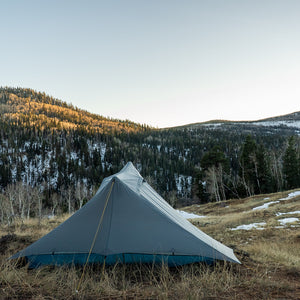
[00:12:01] Tayson: Yeah, it was, it was rolling through for sure. Still got some nice, wet, coffee sheet. As well. And then some of what that caused well except raining on and off for the rest of the day. Pretty much right now. It's kind of nice, but um, the further we got we just experienced more and more and more mud, that was slick and We stayed on the Steep uphill climb and it just became hard to get enough traction to keep going up. Very effectively. It's kind of like walking up sand dunes familiar with how that feels. Yeah, it was a good time before that. I got to experience my first use of schools nut butter. Or also known as body Glide or whatever? That's been interesting. I've definitely dealt with some chasing like throughout this, I, I sweat Astronomical, I can't. I I sweat so much that my shorts get wet and soaking and that's where I get some chasing about that. I can't, I don't know if I think it makes a difference but I just not a lifesaver for me yet. switch shorts to dry shorts at one point in the day, but didn't know a whole lot of good with rain and all sorts of other things going on. But after report back on that too, and Let you know, literally the first time I ever tried, it seemed like it was something a lot of people were using that were fastpacking and running. Yeah, I would I would say help but we'll see how much it helps by the end. He is, so we get up through the climb, we start, you know, topping out, and that's kind of where it starts to be more like up and down. Rolling Hills still climbing more than we're falling for sure. Probably about 9,700 feet at the. Yeah. Yeah. Hang up. The highest I saw was like 96 or right? Yeah. And kind of rolled through some hills and cruise down the trail at that point. By the time, we got to the top or mileage, is probably about 20 miles in, maybe 21 or around there. so you know, 13 inch miles to lunch with not too, excessive a climbing its 1,000 foot or 1500 feet and then from there Handful of hours till we got to the 21 and then from there Tony's Rolling Hills. Captain experience a little bit of Trail Crossing private lands and some good conversations that we had, that was a good time retired at the end of the day and but Here. But today we left on good terms. So yeah, he's a nice guy. Yep. But just super pretty, I think one of the coolest things that happened today that happened off and on and even though I was kind of done with the rain is You ever have that experience for last so hard, you cry. I think the sky was essentially doing that today. It was like sunny and still raining quite a bit which is really pretty though, in the mountains. but had a lot of sunlight and rain at the same time, which was pretty interesting. Okay, and then we got through there and got the campus 26 and a half miles, which I was kind of our goal setting out was to do a Marathon today essentially. Which we pushed pretty hard for and you got done and to take probably a few more breaks and stuff. And I think we initially thought we would or plan or takes six. People, it takes a minute to get water. Here, we talk about the water situation where At least it like the meadow halfway up the climb. Potentially once it started raining, all of our water turned them, chocolate chocolate, muddy, water from all the dirt going into the creeks and everything. So I'd use a little bit of that Nature's filter. Okay, not. Go to the spring, but go to, where is just running out of the grass? Yeah. And yeah, I was able to filter water only plugged. Our Kattedan filters up a little bit. I was definitely thankful and I got to a different spring because that's kind of done with that flavor of water for the time. But if you ask flavor, Pine tree flavor water. Yeah, whatever. Whatever flavor. That was from. All that runoff in the street, right? I wasn't a fan. I think Darren. Didn't you say? You liked it, I liked it. I would rather try some of Brigham's.
[00:16:48] Brigham: That's like a deliberate yummy drink.
[00:16:50] Tyler: Yeah, he's have some of that goes, right?
[00:16:55] Tayson: me a lot more than grass water. Anyhow. What do we miss? What do we miss on the day?
[00:17:06] Tyler: We hit one point on the trail, after we hit our highest point, that the trail was like not all in the last year. It looked like and we had a lot of there for a minute and it was all concentrated in one little Little draw coming down the mountain and so that took a minute to get around. It's like, when you hit a wall like that, and they're massive trees. Then you're just kind of wondering like, oh, I wonder how many miles of
[00:17:36] Tayson: down trees? There will be. I'm just really glad, I wasn't like, when we threw hikes. the Pine Valley range, we had I think Miles, I remember right of just Down. Tree burn and all kinds of undergrowth where there used to be a trail but it was no longer existing at all because of all this stuff that was over it. The damage that happened in the land from fire. Hey, scariest. Part of that is in the roots burn out from underneath the dirt. And when you got a walk over your foot falls in a hole, that wasn't there and twist and Ankle, or break. Something that was had to go super cautious. I'm like, that's not every time I try to speed up. He'd find one of those suckers. Yeah,
[00:18:19] Tyler: I think. My stomach was churning pretty bad I mean on a new medication starting last week and that's isn't it. Quite jiving with the food I've been eating. And, and that's
[00:18:34] Tayson: how many times have to stop time.
[00:18:40] Tyler: Bush. Yeah, and then also Brandon's knee was really Causing quite a bit of pain. So we were slower today than we thought we would be but I think that's a good lesson because like on the maps we could see how much elevation is going to be. We just didn't really take that into account for affecting our, our Pace quite as much as we thought. But but we got here by about the normal time. We would expect to get to our camps and found awesome little
[00:19:11] Tayson: campsite with a real bench. I'm really sitting on a bench with a Outer vitals pillow under my butt. So you That I lost. I feel like everyone learned something about themselves today, physically we all did a lot of training so maybe let's just do a quick kind of around the circle of life. Touch on like what you're doing for training a little bit and then what you feel like you take away from today. I think I'd be late interesting also, as we do another podcast on tomorrow night or the end of the trail, its kind of recap and see what we learned today was able to pay off a little bit, so I guess I'll go first, so quick, I was doing, I didn't run at all before and then about may we kind of booked this maybe area of April and Started running and amping up miles. I finished my training running about Between 15 and 20 miles a week. Usually a couple runs between three and five and then one run where I was trying to get closer to 10 miles. I feel like the training was good. I learned a lot when we did the Brian Head fastpack, which I don't remember if we did a podcast on that, we might need to recap that but we did kind of a Shakedown day so like I learned quite a bit there. As far as like heating walls at certain certain certain points and trying to work through those. But I would say today, I got a little bit behind on hydration, which I was really focused on. And I thought for sure, I just do phenomenal job with. That was like my number one priority. I got a little bit behind on hydration, somewhere on lunchtime and started to feel that as he started climbing, it could be the electrolyte. It could be the hydration, I drink like crazy, drink almost till I was sick as much as I could and kept taking as many electrolytes. But I never seen the fully get caught back up. So tomorrow I'm just going to kind of take a new little on the special when you fastpacking and you trying to just push your body harder than a normally does. And so I'm gonna try to I mean, just drink as much as possible, kind of to that point like where even if I get to the point where I'm kind of feeling sick, just keep drinking and then take electrolytes a little bit more regularly, a little bit more like clockwork. I guess you could say. And we'll see if that pays off hopefully tomorrow too. It's not so much straight up. It's a little bit more Rolling Hills and different things which I think that that changed the face will help us all
[00:21:41] Brennan: to Um for me it was probably just so you know from my training I kind of joined the fast pack a little bit late and my training was mostly hiking because I had been planning on only doing the Utah highlights which is going to be more of a hiking type Trail. So what I found out for me is definitely that I wasn't like, I guess under overestimated, my running ability and for sure she should have trained more running type training. I've had two knee surgery just from high school football and rugby and it's really affected the endurance of my knees. And I feel like that's something that training may not have prevented entirely, but definitely could have helped a ton while on this Trail, the running definitely got to my knees pretty quick. So, I did slowly these guys down a little bit, but they were good. Sports about it and we'll see how I feel in the morning, but definitely, that's something that I want to look into is just making sure that I know what I'm getting myself into in the future and training accordingly. Actually on those endurance, kind of type training. So on to Tyler
[00:22:52] Tyler: All right. So yeah, for me. I have always mountain bikes quite a bit and enjoyed the training aspect of racing mountain bikes and but I never ever thought I would, Be a runner. And and so when we started talking about doing this trip, I was I was intrigued by the idea of fastpacking and being able to just see more country and knock out those bucket list kind of trips faster. And so I took the training pretty seriously, I I looked at and I was like, okay every time I tried to run, I've gotten shin splints or I have struggled in this place or this and I never liked it. I did a lot of research up front and I kind of decided like if I if I followed A loose marathon training program. Then I would for sure be ready for this backpack and for the you wear a high line that we're doing in a few weeks and so, That training consisted of delaying like a long run. Each week and then an easy slow run of only a couple miles and then an interval based run and I just followed one off of Strava and it. Slowly graduated in Miles week, over week. So the about a 15% game over each week and I've ended at about 30 miles a week. Not, there's been a couple weeks lately where I haven't quite had time to get that many, but I still like that was adequate training for the fast path running aspect. The thing that I Really just kind of was surprised with today was just that. My digestive system isn't really like. Working normally with this amount of running throughout the day and trying to eat as much food, as we have to get in order to have the energy to go. And honestly, I might be more hydrated today than like a lot of normal days which might play into it. So my stomach was turning a lot today and I don't know. I think we'll, we'll learn more as we go, but so far so good. It wasn't anything that really like, inhibited me that much.
[00:25:26] Darren: So during here, so for my training I I do running quite often. I don't know how Avid I am, but I try to run at least five miles. When we learned about this fast pack, I got really excited, just because it was a challenge for me. Something I hadn't done. I've got half marathon, it's never a full Marathon. So just knowing the distance Just For Today Was Gonna Be, You Know, over 26 miles now, that really sunk to me, so to increase training. I mean, I didn't I didn't do a whole lot different. I Incorporated some interval training College, Tyler did where I would Sprint different sections and then on occasions, I would do longer ones. That was adequate like I was, I wasn't out of shape, it's like, but I wasn't, I wasn't the most healthy. So one thing that I did do was I changed my diet up, not really helped me out a lot. They cut out bread. Times for the most part and area. Yeah, carbs in there and I did that for two months and there's actually really good for me, I found out what about myself and what I couldn't couldn't do. I'm back on it now, but As far as training I think that really helped me as far as what I learned today on this hike saying hydrated and super important. We kind of learned that when we did our our we want drinking probably enough water. I definitely wasn't getting enough electrolytes and so this time I packed some STM electronic packs and I kind of made it a goal to have one of those packets. Every three hours, it's full of potassium and Things like that. And that really helped me out. I didn't have any issues today, a twisted, my ankle, a few weeks back and it's been better today. And so that really helped out. The biggest thing I learned is just to see how hydrated and to keep taking the electrical and he can All right, Brigham here.
[00:27:43] Brigham: Prior to this trip and like any of the training specifically for this trip. I don't, I don't run regularly. I exercise year-round regularly but in the form of putting a, you know, like a 50-pound pack on and walking up a mountain and then Integrating workouts at the gym. And that. Keeps me pretty, pretty fit to be able to kind of, do you know any backpacking trip anytime of the year? But when we started to kind of research of the fastpacking, Market or, you know, fasting as a as an activity. I knew I would need to nail to do it myself which meant I needed to to start running in military. I used to do a lot of running but that's been a long time and I've got I just avoid running because I don't want to deal with the pain. But knowing that I needed to run, I wanted to be very slow and deliver it about easing into it. Um which worked pretty well. I just kind of took it easy to short, runs a couple times a week for A few weeks, three or four weeks until I felt like my body was ready. And I also had to spend a bit of money to find pair of shoes. That work for me because that was a big kind of thing was my back and my joints. And the shock and impact. So went through landed on the third pair of shoes that worked really well for me. And then at that point, I was kind of able to start picking up a more regular running schedule and with that was just like more running about three times a week. Around five or six miles each time and then also continuing to implement the gym. Two to three days a week. I found that that works really well for me just in my overall Fitness. And if I would say, That training. Worked out pretty well. I felt really good today you know aside from you know like energy depletion and a little soreness in the joints comes after running over rocks, 26 miles but I actually feel A really good in terms of my body. And energy something. I learned I guess would be what I learned what really works well for me, in terms of fueling my body for the duration of this specific day, like a 26 Mile with all that elevation gain. I on the On a Shakedown trip that can remember who mentioned it. But it was like, it was more like a 17 Mile Run. I wasn't too smart on that trip, but I didn't bring a lot of food. Mostly just some snacks, that I thought I would eat kind of halfway, but I wasn't feeling my body. So the first 10 miles of that run and then I hit a cal wall, like literally a half a mile from the end of the run where I had to stop and get some gummies from tasting. And that like me, boosted me, so that kind of taught me a good lesson that run and then I guess it. Just right, I reinforced it today by Constantly, I basically ate like all day, I just constantly ate starting about 30 minutes into the Run. I was putting. probably about 200 calories into my body, every every half hour. To an hour. And that was, I mean, just anything from granola bars to almond butter. Cheese. Trail mix and like gummies, I choose and I really feel really good in terms of like nutrition as energy. And so that was that was that was a nice. I was a good learning experience because I feel really good at the end of the day today. How many calories do you think you hack for 8 through? So I had in my chest pockets of the pack 1100 and 50 cal and that was kind of for me to consume throughout the day. And then at lunch, I had 1130 and yeah I'm just right, you know, drink a lot of water and put A few electrolyte factors in my body and yeah,
[00:32:31] Derek: it was out pretty well. So Gary here, so what I've been doing to train Because I've been running folks that kind of like that Marathon half marathon style training, where I focus mostly on speed and distance. I've been doing that for a long time. Most days of the week. And then scattered between some of those runs. I've done a few more Trail runs that have included elevation or Heights, or have had a little bit more elevation, but but the bulk of my training has been running. Long distances, focusing on speed. And I mentioned earlier, I was a little bit nervous. If that would be sufficient to really help me have the right Fitness for this type of activity. But today I was pleasantly surprised, I felt great and I would definitely be confident in saying that the way I trained for me works really well. Now, I did learn today after hearing, what some of these other guys have done throughout the day. I think what I could do better and I should have done better. I mentioned earlier, I felt super hydrated as far as liquid goes. I had plenty of calories and food, I was eating all day long. Like he was. But I did not. Have near as many electrolytes as most of these other guys who said they had today. So I think tomorrow I'll try doing that and see if that helps with my headache, other than that, Fitness wise and ability to Do what we did. I felt great. Awesome. For those of you don't want to see this, I guess I was just sitting here, looking around is all these guys are talking and we're we're an awesome campsite for sure, it's just super green. It's been raining or totally secluded just
[00:34:20] Darren: quiet quiet. You saw quite a bit of
[00:34:23] Tayson: animal wildlife and stuff tonight as you're coming into camp and we're gonna be putting together a YouTube video series on this called the Hardline challenge. So you may want to just make sure you're tuning into that and you can see a lot of this run and what's going on in a different way. But let's go ahead and get close to wrapping this up that I wanted to go really quick one more time around and have you guys say like as brief and concise is possible? Why the heck you guys want to go do this? Why did you want to run? 26 miles in a day fastpacking? Why did you want to? Yeah it's like what's the drive? I you know, when we came across that landowner guy, like when we told him that he just I think it was like one of those like what did you do? Like why what the heck you guys doing? You know, like type of a situation? And so I think a lot of people probably still something like that and I don't know if we've talked about fastpacking on here not but like that's packing isn't just running its Basically trying to move as fast as you can. Your jogging slots running down Hills and hiking the uphills, but Yeah, I was just kind of go around real quick and some places you can. Kind of give why we want to do this. I'll go first that I can still the best one I can but for me it's it's I was literally thinking last year, we did a different hike and on that hike it was like 33 miles and we did it in two and a half days and as an awesome hike, we loved it. Well it's amazing about fastpacking to me is we're doing. We're gonna do this hike in two and a half days as well, but this hike is literally twice as far. So to me that opens up a ton more options for what I'm trying to balance Family, Life, work, life, and other hobbies to be able to just go and see, and do more and without taking Apple not to time, you know, last year, the cyclic 5 days, and then two and a half and that to Is why I want to do this, why I want to push to continue to do this. So, For me,
[00:36:23] Brennan: I will be pretty honest. So, I am not a runner and I never have probably never will be a super big Runner. I really wanted to do this for the challenge and I just I love spending time with these guys, and spending time with the company, love the company trips, and I love a challenge. So hopefully, my needs get still better in the morning, so I can continue, but just to get an opposing side of things, fastpacking may not be for everybody. Like, I think that all probably remain an ultralight Backpacker and maybe do some shorter fastpacking trips. Maybe not something quite as heavy as this where I can get through some trails that I've done before, in the past. Me personally, I like to enjoy nature like as I'm going as much as possible and like, having the constant running I feel like I'm looking at my feet, okay. But if I were doing a trail that I done before I think fastpacking would be a great option because it's something that I could get through uses a training tool to become a better Backpacker, and just overall athlete. But I think for like longer for me out personally, stick to backpacking but definitely can be a tool in your toolbox for training and and other forms like that. But it may not be for everybody. May not be for you and you may love it. So that's just kind of an imposes inside of things. Yeah. for me,
[00:37:39] Tyler: it was kind of like a perfect combination of a lot of things. The route that we chose through the Tushar, mountains was a route that we don't know of anyone doing. Really. And and that was intriguing to me was for us to pick her, out to go from one Highway that we drive off and all the way straight through these rugged, pressure mountains, and then, and on another Highway that we drive really often and just connect those dots. So, I was in by that. I was also wanting a new goal for weight loss and fitness and training and so that the bill there and then I think that Tayson and Brandon reasons also apply. So it was just a really good combination to see how it go. I I agree with all these
[00:38:42] Darren: guys on all the points, we drive past these mountain ranges all the time. On the last hike that we did was tasting. I mentioned about 33 miles long, it's really cool. Just to look at that range of like yeah we we hiked that whole thing and this is kind of the other direction the touches Another Mountain entry drive by and I'm excited to don't tell my kids. Hey, look, we ran across this whole section. That's it's a long ways. And so that aspect really intrigued me. Also, just the challenge. I mentioned it before. I just I like to challenge myself and Mike Tyler said she's motivation as well to get better sheet. So that's that's it for me. Okay. Try to make this quick
[00:39:32] Brigham: probably first and foremost that I want people to understand is probably the biggest thing for me was from, What I do at Outdoor Vitals. This, the area fastpacking, you know, where we're in the research stage or phase of developing a Fastback. And whoa, I think it's helpful and valuable for people to know like that. Um, like I said, I didn't I didn't run regularly before this but to start this project, I firmly believe that the best way to design something for a user, like a fast, Packer is its, I personally believe that I have to be pretty well versed in that specific activity. I can't just go off, what people's input is, what people's likes and dislikes are That's just a strong. Belief of mine is basically that I can't have empathy and know what people want or like or dislike and without kind of doing that myself. So that was reason number one. And then the reason number two is just combination of a bunch of reasons. I I just love Field Time. I Can't Get Enough field time. I
[00:41:04] Tayson: gotta interject here though, part of the reason we're doing fastpacking is these are paid days so if we can expect this from five days to two and a half days, just that much less payroll
[00:41:14] Brigham: office like we can't really afford much more time at
[00:41:22] Tayson: the office. I don't think Brigham works. Travel plans, backpacking. And
[00:41:30] Brigham: yeah, but yeah, I just love being in the field. I love being able to be in the mountains. Anything close. That was close to that closely resembles. Backpacking, your camping or anything. I just want to do it and be there. I I do love a physical challenge. I love accomplishment, I love the terrain that we're going through last year. I did a section of the skyline Trail here. Some of us about tree line that's just where I love to be and so, It was just just a really exciting opportunity to put this together with the group and and take part.
[00:42:14] Derek: so, Tayson mentioned Briefly before the hard line challenge, which this is. part of and for me this has been the part that I have been the very most excited about I've always loved extreme sports. I've always loved to do something, that sounds crazy. That's just has a huge draw to me and honestly in the backpacking industry, what sounds more crazy than, you know, putting the backpack on your back and running running. Across the whole Trail got a whole mountain range which is what we're doing now. And so that was probably the biggest reason I wanted to come, do this like I just loved I stutter and said the challenge of it but also just the adventure of it. It just sounds like a little bit more exciting. I love, I love backpacking. But this seemed even more exciting than that, in something that really that other part of me that likes a little bit more extreme sports and activities. So yeah, I think they're all good reasons I think. Just to recap. One of the coolest things. I think that happens is when you push yourself past your normal limits, You just learn so much about the body. Will there be working through injuries? Whether it be just seeing what you really can't and can't do but whatever it is. There's always grows and you push past the normals when you push past for you, think you can go. And I feel like I've seen everyone here, push past those limits, learn stuff. And they'll lessons, they will take Forward Forever. So, I was going to talk a little bit about, I just hoping to get some trail names down without that would be fun. I don't think we locked in any Trail names today but presents the closest he put on this. He had his raincoat on his rain jacket. When he was pouring rain, And then he also threw on this like tilt this little rain skirt thing. No, not a skirt and it's like the same color almost as A jacket. So he looks like he was wearing this big wizard rope and then he's got his big, long beard and so immediately, the top is like, okay, this guy's gained all, this guy is straight up Gandalf right now with his long wizard robe and his beard. He's not going to wipe though. I got a lot to learn lots of going. So, if anyone's gonna have a trail named from today, I think Tayson is the closest.
[00:44:41] Tayson: We gotta put it together. Open my end of the hard line we can all. Pick up some fun. Fun games. Darren may not be joining us for the hard line. So we have to expedite his on this one and figure it out. So, Anyways, that's a fun part of it, but okay, we're gonna go ahead and close this up. I think everyone's ready to get in that tents and sleep tonight away. We're planning on getting up really early like 6:00 ish and getting out of here and covering more miles so we can do another 26 but we need to look at it a little bit closer and see but great day and your last thoughts I guess
[00:45:17] Darren: for close it up. Yeah,
[00:45:18] Tyler: one one last thought is We know that we're forecast for thunderstorms and we're going to be really exposed like above tree line for tomorrow. And so we do feel like it'll be kind of a Race Against Time to to get down off of those really exposed Ridge lines before the afternoon evening,
[00:45:40] Tayson: thunderstorms roll in. So I know the the original plan was to Camp up there about three line I tell you what, that is not in my personal plan. For the next day I was before you turned into the Amazon forests. They've been crazy amount of raining, but yeah, we're gonna want to push. But it may create an interesting Dynamic for sure. So anyways tune in to the next podcast. We'll take it from there and tell you about how the rest of this trail goes. So like to podcast, make sure you rate and review it. Share with the friend, we'll keep trying to share good tips, but also keep it entertaining stuff. We've got feedback email support.com, love you back on the podcast, and we'll catch on the next one.