Tayson: So here's the big question, how do we live a life? full of adventures travel and memories on our terms without being millionaires without previous experience? And without unlimited amounts of time, that's the big question and this podcast will give you the answers. I'm your co-host Tayson and I'm Dave and you're listening to the
Dave: Live Ultralight podcast powered by Outdoor Vitals.
Tayson: Welcome back to the Live Ultralight podcast. Today we are doing a slightly different episode where this is an internal episode where we are talking, just with some of the team members about a recent trip that we went on from the feedback we've got from Reviews and different things like that. A lot of you that are listening are wanting to hear some more behind the scenes stuff you want to hear more about gear and different things like that. So because of that, we are doing this particular episode where it's going to be strictly about behind the scenes about arrivals. It's going to be about different gear options and on a trip that we recently did. So with that, we want to encourage you to also continue to give us feedback. We're actually going to do a giveaway on this particular podcast. Where if you go and leave us a review and also make sure to Tell us your advice for what you want to hear in the podcast. We're going to be giving away. One of our prototype, Atlas 15 degree down sleeping bags. It's a little bit older bag that's been kind of laying around our showroom, but still an awesome awesome bag. And it needs to be out in the wild. So we need to let that thing go. So if you go leave us a review and tell us, you know, what you want to hear in the podcast. We'll look through those. You can leave a review on Stitcher or Apple iTunes. And then we will pick one of those at random and ship that out to you. So we'll also update you in a future podcast about that. But Really quick just about the trip. So it operates. We actually try to do a trip once a month. Sometimes it's an overnight trip. Sometimes it might be two days, sometimes you do a bigger trip Works, maybe even longer than that. And the goals of these trips are a few fold. One is, I want our customer or our team members to really know our gear intimately when they talk to customers. They know what they're talking about. And I also find that that we hold the culture here at provide us that everyone here is a part of the R&D department. So everyone has an opinion, everyone uses stuff and everyone has a say in that as well as you know we look hard at the reviews of what you guys are saying. But with those two things we find that, you know, going out on a monthly trip as a team really provides a lot of value. So this particular podcast, we're going to be talking about one of our monthly trips that we took in March around here. We still have a lot of snow. We're experiencing pretty cold temperatures. So yeah, we're gonna go ahead and Dive Right In today, we do have days in the studio with me, as well as Darren. We did a similar format to this on our YouTube channel. So if you want to see some of the gear, you can always hop over there and and listen there. But a lot of you it's hard to go and watch YouTube. Maybe it's easier to listen to this in their car So hopefully we can get a little bit deeper into maybe our own opinions and just dive a little bit deeper in podcast format. So
Dave: then what else to say, like, who dare is, what do here? That's true. We have not
Tayson: Yeah, let's talk about Darren Darren is one of our two first employees we kind of hired about the same time. Darren's one that's still here now. So he's he's the longest most senior old around out of like 30 but yeah, and Darren a little bit about Darren he's he's a kid who grew up in a very small town. How many people were in your city? It depends on which area you're talking about. I've talked about like the little city here from the little town of Oak City. I'm from
Darren: 800 people.
Tayson: Yeah. Yeah. Like there's and that might be really, really small. That's counting a few cats and dogs and cattle. Yeah. So 800 people and he spent a lot of time in his youth Outdoors. He did a lot of hunting. He also did a lot of something called shed hunting. So this is a New Concept that we may talk a little bit about on this trip. As we did, try to plan that around it, but shed hunting here in Utah. There's a lot of Wildlife and special the people that grew up here. You learned to really love watching the wildlife. And So what what shed hunting is is at a certain time of year, the deer and Elk will shed their antlers and people that love to watch him year round. It's legal to go and pick up the shed horns that they drop. So, Darren, that's one of his favorite pastimes with him and his wife, his kids. And So that's, that's just something he did. And So, I actually, when we looked at this trip, we we decided to go into an area that we might be able to find some shed horns as you find out later. We might not these Weren't as successful but I loved it. We got to see a lot of wildlife. So, anyways, that's kind of Daring, a nutshell that I miss anything. I think you got a pretty good. So, Darren Darren does a lot of the website stuff on the back end. So he's, he's Been around this, this e-commerce area for a long, long time. So I had met him at a previous job So many years ago. I've known you what 67 years probably at this point
Darren: 2008. I've been doing internet marketing So
Tayson: yeah. Yep. So that's Darren. So let's dive into the trip. Dave, maybe you want to talk a little bit about what this trip was?
Dave: Yeah, I mean, for me, actually shed hunting is a new sport. I don't know what you want to call it. Hunting is an interesting term for butt. So this was all new to me and I liked it. I liked the idea of, you know, it's kind of like hide and seek for me, the theory of it. But we decided to do a winter, backpacking trip. Kind of intense neck of the woods Sault area that he's pretty familiar with. I don't what was the elevation of that mountain, you know,
Tayson: where we were at? We were only about 8500 feet up was not that extreme Lehigh but we did get the brunt of the weather in that area of the mountain.
Dave: Yes. So we just decided to take a winter backpacking trip. Just kind of hone in our our winter you know, kits and things like that. And what works, what doesn't work? Kind of test them some new gear, one person tent, Some new Loft Tech things that we have in the works and stuff like that. So that was really the idea of the trip was kind of to test the gear hone in our our systems and then also, you know, have a little recreating with the shed hunting and things like that. I really enjoyed it. I thought it was a good test of, you know, being able to camp out and say 15 to 20 degrees, probably in that,
Tayson: I think. Yeah. So I brought a thermometer and Essentially what the estimate was after. We kind of adjusted for a couple of things, we are probably seeing temperatures outside the tent between 12 and 14 degrees. Yeah. Right in there.
Dave: So it was a good test. I mean, for our gear and you know what, we have in the works.
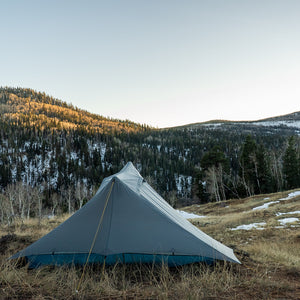
Tayson: So let's let's talk a little bit about that. What gear we took. So before we jump into the trip, let's give a, you know, a precursor of okay. What gear we took? Because we actually all took slightly different gear. That's one thing that I also encourage our team members to do is to take gear that they might not have used before. On this particular instance, the one thing that we all had in common was we all use the one person Dominion tent on the just launched. We all had a lot of interest and some nights in that getting to know that and getting more familiar with that particular tent. And in this scenario, is there any other kind of shelter that you guys would have even considered, would you have considered hammock camping ground camping? With a baby tarp? Anything like that?
Darren: For me,
Dave: I would have maybe Tried to do like a snow cave type deal just you know if you want to add a little bit more Adventure potentially to it but that would have been the only other option.
Tayson: Yeah. Excuse me for me. If I had a good enough tarp like a four-season tarp, I would have attempted Hammock Camping. Personally, that's something I want to do a little bit more in the winter. I've done a fair amount of it. Did it with the mummy pods, things like that, but Hammock Camping. I wouldn't use a tarp out there unless it was one with, like, a stove. Like a big TP. Yeah,
Dave: that's knowing what you know. Now, like about the wind and the amount of snow you still probably would have bought a tarp.
Tayson: I would have if I could say it was a Four Season tarp I could get it almost completely to the ground. And I would have had to have moved somewhere that I could get a little bit more out of the wind because we had some pretty Fierce wind. But but that being said, The. First Choice, still to me, what would have been sleeping on the ground? Just like we did in the tent. It was just very, it was very sheltered. So whether you have wind snow which we can get into in a little bit, it's easy, it's fluid. Yeah, I might take a small weight penalty but But we're talking Oz, probably not even a pound. So,
Dave: I mean, and I think one of the challenges for me, I wasn't Completely certain of where we were going like, conditions wise. I wasn't familiar with the area and things like that. So I think regardless, I would have brought the one person tent, but that definitely was kind of challenging for me. Like, I didn't know if they'd be trees or anything like that for the most part.
Tayson: Yeah, yeah. So real quick, we all had the one person tent. What I chose to do is I chose to use our Loft Tech, zero degree sleeping bag. And this is the Loft Tech hybrid. So it's 80%, The Loft Tech loose feel synthetic, which gives a great properties for moisture, but then it has a little bit of that, 800, fill power hydrophobic down which provides some stability to the baffles and the insulation. So it keeps it really stable, really lofted. And yeah, So that's what I use far as my sleeping system. Everything else was pretty standard. I think we'll talk mostly about the sleeping systems in this. I was using, you know, right like backpack. The tent. I had, I had A fleece face mask, that's super important. That's something that I almost always sleep with, but there might be some Alternatives that that we may even launched in the future. That would work really well for that. But I do love having some kind of head gear. Um and then I usually bring something I can sleep in. Usually that's just thermals. So I have thermals anyways going in there. So I'm going to bring thermals A big thing for me on this trip was I did get a pair of winter boots after some experiences with frostbite in my past, I decided it was time to quit trying to use summer boots in the winter. And So, I buckled down and got a good pair of boots that have insulation. Those were nice. I could definitely tell they were heavier on the trail. It was super nice because my feet were warm like all the time, which never happens for me. Other gear, that might be specific to Winter camping that I brought wasn't a whole lot. You know, I used water bottles and set of a water bladder just to be there, more careful with the potential to water bladder leaking and then it's really it's like one thing that you need to learn about winter camping is stuff gets wet. It's harder to dry it out. You know in the Summer with the heat and potential sunlight and things like that, it can be easier to dry things out and the winter I try to be just extra careful. I'm So but yeah, for the most part it's just just adding more layers and I for clothing I almost only use synthetic layers in the winter because I'm a big sweater and and just Have wet out there So using our Loft tech jacket and using some synthetic bases and in an outer shell. And but yeah, just just added some more layers and then went with that zero degree, loft Tech hybrid.
Dave: And then if you can, maybe explain a little bit about the the layering of the pan system that you use, which I thought was really cool. And yeah that's the first time I've ever really seen like, zip-off type. Yeah, yeah. So we
Tayson: So I I was using an installation piece that was a thermal but it's cut a little bit higher and then it has a side zip access and what this does is it allows me to wear them let's say in bed. Or as I'm hiking typically what I'll do is I'll wear them. You know, I get back to Camp I'll put them on. Wearing around Camp, I'll sleep in them. And in the morning, I'll leave him on. What happened before, had these zip-off ones, that would be laying in my bag, and I'd be saying, do I want to wear my thermals and then have to take my boots off and completely undress on the mountain, to get my thermals off in two hours when I'm hot or do I want to take them off now, be cold for two hours but not have to go through that process of taking off my boots and basically addressing on the mountain to get The Thermals off. So what these do is they completely unzip on the side which means you kind of drop your pants and then you've got these thermals on. You can zip those off without removing your boots and you just pull everything back up and you're good to go. And So it's just takes you all of 10 seconds to remove a layer or Adam layer. So those are super nice. I've really come to love though. Those and it's something you may or may not hear from us more about in the future.
Dave: Yeah they're cool. I've never seen those before.
Tayson: Yeah. So that was me. Let's shift to you wanna eat to talk about, maybe the things that you brought on this trip specifically because it was winter.
Dave: for me, I think one of the more important things that I brought was Like non-insulated, just foam, close all pad that I was able to use. I doubled it up under my my actual insulated air Pad, but then I also was able to use it. For cooking and things like that, when I was setting up my tent and putting my things into my tent, my bag and everything, I can kneel on that or you know, when we were looking at animals and things like that, you can sit on that pad and kind of keep your butt warm and keeps it from getting wet. Yeah. And it just acts a little extra padding and things like that. So that was one thing. That doesn't weigh a lot and I probably didn't need it but it definitely helped. It definitely was.
Tayson: I was jealous even if I wasn't to bring a full like a full length, closed cell phone pad like Is like I am going to be investing one of those just for sitting around camp and then at night, I would probably still take that and shove it underneath my pad. Yeah. And like around my hip or something where it's sinking the most or.
Dave: Yeah. And I did I felt like in the middle and I was starting to get a little bit colder. I was losing a little bit he and I just slid that underneath my actually, I just slid it under the tent because it was all wet, and that really kept me warm. So that would be probably the most luxurious item on
Tayson: my way. Wait, wait. See your pad at night and you put it underneath? Yeah. I just really,
Dave: I don't want to get out. I don't want to get everything. All right.
Tayson: Bring that in and there could be snow Resident Evil on it. Gets your inside of your tent wet.
Dave: Oh,
Tayson: it's really smart.
Darren: So
Dave: I was like, man. And I really don't want to get up. Slid it under there, that would be, I would say that the Comfort item that I brought. I really, I was glad that I brought that and like my NEOS, which is like an over and over boot that. A lot of people will wear actually over their shoes or their boots that if they don't have an insulated boot, which I didn't have. So that was really nice to have around camp and things like that. Just in general, those are pretty nice. I have a little bit smaller of one and I put a Down. Sock like that has a little bit of a tread on the bottom. Put that inside of the Neo. And then that's my my boot for around Camp after you go to the bathroom, things like that. For me, it was my boots were completely froze and the next day. So I You use those to hike out and they're perfectly fine to use the hike. That's what they're intended for. I just use them without any kind of shoe inside of them. But So, like, like our customers or excuse me,
Tayson: are our listeners here, they probably don't fully understand the type of weather that we're in. So I want to report on what we brought in the specifics of if we liked it or disliked it maybe on the flip side as we get into the actual trip. But as far as just the items that you brought. Yeah.
Dave: Okay
Tayson: I'm like Sleep System
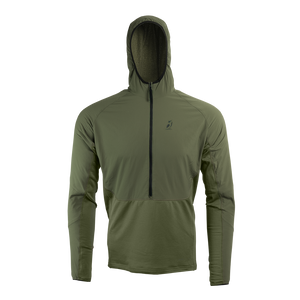
Dave: So I bought the tent, I had a zero degree, So one of our Summit, zero degree down bags. It is dwr coated which is really nice, because everything did wind up getting wet. It was actively snowing when we were setting up and it was windy and things like that. So I brought that I had A. one of our insulated sleeping pads, I brought Merino wool base layers. So Merino wool, long underwear. And then I have like a half zip Hood, that's like my go-to. I don't go anywhere without that summer, winter. Anytime I really have that Marina wave base layer and I also have a Merino buff, which I use as like a balaclava or a beanie things like that. That was a big one for for this because the wind was was really whipping and then Loft tech jacket and Be vast and a shell. So those are my Insulating and shell,
Tayson: Dave is the guy on the team that me and me, and Darren kind of joked that. He's gonna pack. The luxury items. So he's gonna have, he might have an extra layer to, he might bring an extra set of Camp shoes, but he loves those lugs, but it's nice. I mean, we did things, take these guys are busting my chops because I brought like Camp shoes and
Dave: We saw through water for two days straight, but I got the camp and I have my flip-flops on and
Tayson: the basically
Dave: he wearing
Tayson: opposites like like, I feel like you're pulling her off the starring. Now, I don't know though. Darren did pull out like a full Hawaiian Haystack. You know, it King's Peak but I feel like like the king speak. You're like, I got a bottle of water. What else do I need? Like he literally held the bottle of water and just walked to the peak the rest of us. Have camelbacks all this gear different things. It's
Dave: just different. But I think that comes back to like, guiding and leading people, too, because you always have a little extra. I'm always have a little extra food and extra layer, extra extra extra. I know a lot of people not but I think that's kind of that mentality. Just have a little extra I
Tayson: know on Kings Peak, like I brought some extra because I, you know, I feel a little bit responsible So I have my first aid kit in my bag and a few things that are just just
Dave: extras. Yes
Tayson: I can understand that concept of your you're watching out but Cool. Anything else in particular that that was in your pack because of the conditions that You might not have in a summer pack
Dave: know, I think that's, that's basically a covered. Okay. Most of that
Tayson: Darren
Darren: for me I guess I'm a little bit different from Dave. I like to try Getting away with less. So on this trip I took the top quilt zero degree that we offer and the insulated sleeping pad for my sleep system looking back. Could have added a little bit more. I didn't bring a balaclava and that was my one regret on. This is my face. Did to get a little bit cold at night. So I did wake up once or twice from that. And also the inlet is leaving bad was kind of stretched to its limits where we were at. Yeah
Tayson: we made him to about 15 degrees. We drove a little bit under that but one thing we have found and if we Have an updated the side I'd like to is is that the the regular pads are slightly warmer than the long white insulation just because they're thicker, there's just more air in there.
Darren: So
Tayson: really the, the long white pads are probably a better 20 degree.
Darren: Agree with that. And with that, I had the long wide and I did feel just a slight, slight draft, but I think that was more from the top quilt, not being secured completely around me with the, the straps. And that was my fault. Just because I wasn't using the straps correctly, I fixed that in the middle of the night, but I did fix that. But as far as what I brought, I had the top quilt, I had the insulated sleeping
Dave: pad
Darren: as far as layers. I had my Merino wool base layer. I just had You know, just my regular pants, you know, that went over the top of that. My head are down jacket, and then I had a jacket over the top of that, there's just a car show.
Tayson: Oh, you got a car.
Darren: I was actually more free because I didn't want my down jacket to get wet. And So, as far as like, more waterproof layer, I was like, I thought it would be fine and it was I was warm, you know, with it. And then I just had some some snow mittens and
Tayson: just some snow boots and yeah, you're glad for those Dave. Almost came without gloves
Darren: right
Tayson: in there on the side of a hill
Darren: glassing you know just watching elk walk you know moving around my house are getting cold special with that that wind and the snow
Tayson: coming up. So let's let's go back to actually hiking in here now So I had made a plan, it's a scenario that I was familiar with its kind of a roadless area to get into in the summer. So that's kind of what I was anticipating as to be able to get high enough and hiked into this roadless area. As we got up and in there, it became apparent very fast that we were not going to be able to drive nearly as far down this road as we thought. So we ended up having to leave the truck and Hike more up the road and into this area, which also turned out to be much farther than I had anticipated. So the hike in was 100% in snow and we were about two and a half hours on the hike in, right?
Darren: Yeah
Tayson: and we were, you know, depending on what we saw at the top, we were gonna You know stay there or move. By the time we got there and looked around the weather started just really coming in hot. We needed that we were potentially going to get snow and in this particular area we were getting tons of wind, So huge snow. Drifts just lots of lots of wind and and it started snowing. And So we decided. All right, we probably just need to set up camp right now.
Dave: Yeah, I think it was perfect timing, too. Like it was just starting to snow a little bit and then, as soon as we got camp, set up and got in there, it was really dumping like
Darren: perfect timing.
Tayson: Yeah, So we're trying to find a spot out of the wind and essentially what we found was just spot on the other side of a big snow drift, right? Um So the snow Drifters, you know like the wind just gonna blow and pile up Snow and spots and So we just went on the other side of one of those kicked out some snow and kind of dug down just a little bit and we set our tents up in a horseshoe fashion. essentially, So all of our doors were open towards Towards the middle or towards each other. I think the hardest part about setting up those tents, there was getting
Darren: it staked down in the snow. Yeah, if you haven't done it before, you've got to pack that snow down around the stakes to get him to stay. And So that was one thing I learned on that was just it's hard to get those Stakes to stay when it's just When we're on another foot of snow, you know, it just takes a little bit of effort
Tayson: to get at stake. Take some effort but like by morning though, the stakes that you put them in there a little bit warmer than no reason to the ground. And it's it's not it's tough. So like
Darren: I
Tayson: think I think when I was setting up like, okay, I know this is in there and it's in there, pretty good, but in an hour, it'll be free, it'll be solid. It'll be solid. So, that's, that's kind of way I looked at it. But it's it's different to staking to snow. I mean, you can look at snow Stakes if you want. You can do look at different options. I didn't have a bad enough time that I wish that I had anything like that, but, you know, it was. It took a little finesse. Yeah.
Dave: The Learning Experience.
Darren: Mm-hmm.
Tayson: So at this point, it is snowing and we're getting our gear in there. Did you guys have any problems with getting your stuff wet? While this is happening,
Dave: I mean I had my stuff in a trash bag. So I lined my pack with like a trash compactor bag and I was really happy. I did that because then I could put, you know, my sleeping bag was in there. And there's a few things in there that I really didn't want to get wet. While I was doing some other things and organizing stuff like that and that really helped and the pad that I brought helped keep, you know, some stuff dry and off the snow and and things like that. But I mean snow is definitely coming down getting on top of everything, but it was just So cold that. It wasn't really melting.
Darren: That was no wet snow. Yeah, that was what I noticed. Like So I didn't have anything like that. I put leave it in my backpack until the tent was set up. I was fine.
Tayson: Yeah, I didn't get any in my tent either as we got in and out of the tent, different things like that. That's one I tracked a little bit in there, but for the most part they would Keep my gear drive because of the situation we were in. We were on a we're on a really steep Mountain. if we went to the flat part, Extremely windy. So as soon as they dropped off the one side, we got out of the wind, but what we found also is that it was tough to get it as level and it wasn't So much that it was tough to kick the snow around to get level. It's tough to realize what level was
Darren: yeah. And
Tayson: So for me, I set it up. Thought I had my head on the high end. I accidentally brought a regular pad of some long wide pad and for me I really need the long wide pad. I'm about six three. So So I kind of had to commit a little bit. So I put my pad on one end and put some things where my feet would be to keep them off the ground. So I put some Clothes and some different things to help insulate my feet or hanging off the pad in the summertime. I do that a lot and it really it wouldn't have been a problem here. My only problem was soon as I laid down for the night, everyone's quiet, everyone's going to bed, I realized that I had put my feet on the wrong end and my feet were actually higher than my head and that did come into play throughout the night. What happened for me is the night came and we started into it is because my feet were higher than my head. I wasn't getting as good of circulation in them. I already really struggle for circulation. My feet like sitting here in this room. My feet are cold, like I just that's just part of it for me but having them elevated. Added to the effect where it was just, you know, it's higher than your heart and it gets a little tougher to circulate the blood well, and, but because I kind of had that little smaller pad. I would have had to move a bunch of stuff, Slide the pat around. And So, I just decided to tough it out. And that was really the bulk of. The downside of my night was just that, my feet were getting cold, I'd pull him up kind of close to my body that heat back up, and then I kick him back down there and and I wake up again with cold feet, but yeah, but So for me, again, going to the bag itself, the bag itself. I really, I really liked it. I loved the centers. It for me. I'm just a huge advocate of the center zip. And the installation itself I just really, really like it. The bat the shoulder baffles. I like how they work because we were in our bags for a long time. Essentially, we set up a like 6:00 and I was just like, it's snowing, we don't want to get out of here. So we just stayed in our tents until the morning and So it's just a long time in there and So I liked the shoulder baffles and made it really easy for me to. I was listening to some things on my phone. I could get my phone in and out of there, really easy and navigate that. And So that worked well in the morning things. I also had my dog in the tent with me. So my dog was sleeping in the vestibule with me and then I made a mistake where I because it was blowing hard and all these things. I actually kind of kicked some snow around the edges of my tent, didn't think much about it, but kicked it there. And then I didn't open up my best deals. Actually, I tried from the inside of the tent and I thought I had it, but it fell down during the night. Just because it must have not got very secure, just trying to reach out with one arm and and get it open and it's yeah. So my events were closed and I didn't have good circulation on the base. So I got a lot of confidence station in my tent. Didn't bug me at all throughout the night, but in the morning, when things started to heat up. It was like, it was like, it was raining in my tent. I mean, it was just dripping off the ceiling like crazy, all over my bag and that's when it was pretty cool because I got to look at the Loft Tech and be like, man, I don't have to worry that my base getting really wet right now. Specially, if I was going on a multi-day Excursion where, you know, by day four or three or something like that, you would really start to worry about your down, even even hydrophobic coated down that it could potentially start to to get less Loft and get less warm. And what the Lost tech there was, there's a nice sense of security that, yeah, if my stuff gets wet right now, I'm gonna sleep warm, I'm going to be happy. So that was, that was a cool thing and it definitely shifted my mind to. Hey, maybe maybe for me in the winter months. I just switched to a loft Tech bag and said of a Down bag because I've been a down bad guy in the summer and I'll still in the summer. I'm going to use down bags because they're just a little bit lighter and we don't have much more moisture and you talk. But in the winter, I got me thinking about the Loft back. Yeah,
Dave: if I was to do it again, like it was fine for, you know, the length of the trip that we were on, but I would have been curious. If it was like, you know, three, four, five days of, How that would have looked like, you know, once I put that tent inside of my bag inside of my pack and it got wet, like I probably, if we did another winter backpacking trip. I would 100% bring the Loft Tech bag. Just, you know, and I'm like, I'm a big down person. I always bring down, So, just knowing what I know now, of how wet things got, and what the conditions were like, and things like that and the down was fine. I was fine with it. But like I said, it was multiple days.
Tayson: It could have been, I don't know. And I think it's one thing to also note, right there is if you plan on moving Camp every day, that's where it gets worse. It compounds. If we were to have left our gear out all day.
Dave: Yeah,
Tayson: you know what, a good day in the winter, you could still dry some stuff. A little bit in your tent. The condensation of leave your bag would probably get a chance to air out. But for me, typically, I'm resting my bag. Every day. I'm really taking down Camp every day and Your gears not gonna get a good chance to dry out and So yeah. After a few days.
Dave: Yeah.
Tayson: It would you start to wonder? Darin.
Darren: I would probably do the same. I would bring a loft Tech back. Any other time of the year, I would have taken the same setup. I, I really loved the top quotes that up super lightweight. I Diversity of it. But specifically for winter camping at that temperature range and how wet things were getting. And the condensation, I would have taken the Loft Tech bag that you would use. Down to the zero degree. I think, That would have been a great choice, like just changing things around,
Tayson: and you mentioned with you. The big thing for you was the lack of a balaclava or any, right?
Darren: Well, I had a beanie, So the top of my head was fine, but the balaclava is my face got cold and So if I yeah, I need to grow beard.
Tayson: Yeah, I do. Hey,
Dave: So
Darren: what I ended up doing around five in the morning as I just my face was So cold. It is stuck it right underneath that top quilt and that created all sorts of condensation but it was worth it for me. Just to get that extra warmth until the sun came up.
Tayson: Yeah, So one thing here to note, too is right before bed, I called over to Darren. I said, Darren you've got that long wide pad, it's gonna get cold tonight. You should do this little trick that I have and he opted not to do it, which I don't blame him for not every idea that I have is a good idea, but this one that's getting here.
Dave: Because you said that to me too. And I was like,
Tayson: So yeah, this is the trick or tip. So when it gets really cold, like let's say you had one of our paths and you wanted to take it down to like five or 10 degrees, you really need to bring like a closed cell foam pad to double up So you sleep maybe. Yeah. You put it under or over it. And what that's going to do is it's gonna give you the comfort of the air chamber Pad. But its warmth because, you know, most people that are getting cold out there. The coldness is coming from their pads and they don't realize it until you really start to consciously. Think about it like, hey, I'm cold, but where am I cold? Oh, it's my hip, that's underneath me, not coming from the top So in that situation, yeah, close up on Pat, works really well. But when you're getting into some of these teen levels, maybe you're just pushing your stuff 10 degrees, or So past the, the estimated range. What I love to do is I take any of the clothes that I'm not wearing Or even if you completely emptied your pack or something like that and I'm going to put that underneath my sleeping pad. So that just adds one small extra barrier between me and the snow beneath me. I've done this a lot in Colorado, then it here I did it that night. I took my soft shell jacket and I specifically put that right underneath my hip area, I'm just dead center inside of there. And then any other gear that I think I got a shirt or a few things that that I did that with just, give me that little extra temperature, boost, and my pad was, was toasty, all night, I had no issues with my pad. So that's the only one one tip that you can use in a winter scenario. One thing about tips. What other thing is, if you look at the YouTube video that we did, I was wearing just one of our Outdoor Vitals little tree like t-shirts and that video and I just I meant to take that off before we even got on the trail and I didn't. And So I had a long sleeve like thermal on and then I had that cotton shirt and So in the hike in I, you know, it's warm and I and I was sweating a little bit and that shirt got damp. And I was I was cold as we were making camp and getting things ready. I was a little chilled out and I was sitting in my tent and I'm like, man, why am I still cold? And I realized, oh, I saw this cotton shirt on and So I pulled that shirt off through it in the, the bottom of my tent and almost instantly. I started to warm up and I called that over to Darren. And I said, tip number two, coming down there and pull your pull that cotton shirt off. And he's like, are you kidding me? That doesn't make any sense. I did, I did
Darren: this tip and it did it did help. You know, I had my wool layer underneath. and So that was just, Warm up.
Tayson: Yeah yeah, the thing about cotton, the same cotton kills essentially cotton that gets wet does not dry out very fast at all. And it stays really cool certain materials when they get wet. Stay warm fleece, is one of them stays really, really warm, even when it's wet, obviously synthetic insulation, such as our Loft tick insulation, or a primaloft or something like that. Any kind of an aesthetic insulation is going to stay warmer when it's wet, particularly one that has to look, nice fibers on that installation as well. So that the water and moisture is going to drain out of it, such as the Loft Tech, or a primaloft were a A handful of any high quality. Synthetic is probably going to be siliconized. Anyways. Yeah, pulling that. That cotton shirt off of that cotton shirt was just moist. It was damp, and it was just holding in a lot of cold. So, getting rid of cotton and when you go out on a winter, backpacking trip. You shouldn't have a single thing that's cotton really with you. So A tip I learned after the
Darren: trip that I wish I would have known as the next morning. We were we were posting a lot of this High, you know, we were syncing up to our knees in this snow. So my shoes and X-Men are my boots. I mean, my snow boots, we're completely Frozen and I had a, heck of a time trying to get him on and you know, Dave, you know, told us to tip, you know, on the way out,
Tayson: To heat up your now. Jean bottle and put in your boots. I didn't know that till the next day
Darren: but my boots were So Frozen. I could barely tie him, he let alone get him on and I wish, you know, just knowing that I would have just, you know, Boyd and now Jim bottle stuck in my boots for the night and then I had that issue, but
Tayson: His tip. I wish I would have known that I'll definitely use next time. There's two, there's two things that need to be talked about here is both the boots and the algae. And I'm gonna let Dave talk about this because these are both things. Learned or it was his tip to begin with.
Dave: Yeah, I mean, tasting gives the tips out and in the process, I wait till after the factor to tell you about the tips and trick. So I would say for me what I always do when it's
Darren: even even in the fall,
Dave: I'll take my knowledge in bottle. I always always take analogy bottle with me backpacking. I like to make coffee So I can make coffee in the morning with that. I don't have to like, see some people bring like little cups and mugs and stuff like that for like their coffee, but how do you have a water bottle? So why not just put, put it in their tea or whatever you need to do. My wife likes to make TV before bed. So a lot of times I'll just take it. Take the knowledge and boil, the water, sometimes even put a teabag in there, So I can sip on some, some warm tea, when I finish, throw it in my bag and then that really just keeps me warm for
Tayson: the majority of the night. So, here's here's what I didn't understand about this is and this is what blew me away when I woke up in the morning. And Dave said, this is to me, I'm thinking okay now Jean bottle, you know, boiling or hot water going in it going in the bottom of my bag. It's going to keep my feet warm for like two hours and then it's going to be room temperature or and then it may even start to get colder than room temperature, you know, or like the temperature, my feet. So my thought was, yeah, it's gonna help for about an hour or two but it's really not going to help the whole night. So I've never ever done the Nalgene bottle trick, but in the morning you woke up like yeah. My Nalgene bottle still warm. Yeah. And I was like, what? Like I had no idea that could stay warm through the whole night.
Dave: Yeah. I mean, I guess being in your bag, your body heat and everything like that and I was one of the things that in the YouTube we had some people comment in the YouTube, I love that, they make hot chocolate and then in the morning it's still it's still warm. Like that's that's good. But yeah,
Tayson: that's one and then be careful with that too. We had. If you've listened to our previous episode, we did have Someone who's friend did that on a trip and didn't get the threads tight and tight enough and he's still got his bag on
Darren: accident. Yeah,
Dave: I wouldn't recommend doing it with that. Any other bottle besides for like an actual analogy brand. Personally, like I know there's some like People say don't like put boiling water in some certain types of plastics and stuff like that. So like, I'm pretty sure most analogy and bottles are like bpa-free and stuff like that. So like I don't know what toxins go into a boiling water and putting in a plastic knockoff bottle. So that would be, you know, make sure you got a good bottle.
Tayson: Yeah, as you're talking, I'm just thinking for the future for me too. I've got a like a titanium bottle that holds about two, little over two cups of water, and I have been using it on a daily basis, but I really got it to actually try to use it as a stove on the trail. Something that I could potentially cold soak in. But I'm thinking in my head like I think weighs So little I think I'll try it with that.
Dave: I would say you'd have to put like a sock or something on it. I
Tayson: would it would burn you. So
Dave: make sure you put a sock or something.
Tayson: Right? Put the two socks, I wore that day around it dry out something
Dave: like That those little titanium bottles or even, they have like the half leader, analogy bottles, like when you have like that would be perfect for for your boots, for your putting, it in, blow the water, put them in the little small bottles inside of your boots. And you wake up in the morning and your boots, definitely, they may not be warm, but they won't be frozen, because that'll be outside of the tent.
Tayson: Speaking of boots, Dave.
Darren: Check your boots.
Tayson: So for me. Yeah. You brought you brought the most Footwear of any of us with Neo, down booties, and then also regular summer.
Darren: Yeah,
Dave: I was like Sliwa. They're like mountaineering boots, but they're not winter boots, they're Gore tax, but that really doesn't do anything. You know, the waterproofing doesn't do anything in the conditions,
Tayson: Quick Fix works for a week or two.
Darren: Yeah,
Dave: exactly not in the conditions where and for me I might be done with those boots to be honest with you. Just in general here in the southwest,
Tayson: it just gets too
Dave: hot and my feet flat and there's not enough water for for the use of the waterproofing of the gortex selling, you know, and the Pacific Northwest or something like that, I'll use them. But I think here I'm done with with them in general but I they're not insulated, I knew that going into it. Those are the only boots that I had. So I had a really wear them but I had a Compensated for that by bringing the NEOS. Like I said, previously because I knew my feet would be cold So I mean, I had to bring the heels with some down booties and that did the truck. I like, I think if I was Doing multiple days. I would have probably been in trouble, but I think if I was doing multiple days, that probably wouldn't have been my setup, I would have got most likely insulated boots. I wound up hiking out without the boots even on, I use the NEOS and just the down booties. And I mean, they
Tayson: were Neo for those of you don't know. Understand and Neo is essentially an outer boot. Yeah. Or another boot inside of still has tread on it, all these things, but it's a highly waterproof insulated boot that really helps in snow conditions. I think they were originally in, like the Scandinavian countries and used over there, but Yeah, over here. Yeah,
Dave: someone's not familiar. Just Google. I mean you'll kind of see what it looks like So I can't I can't speak go to your points. So essentially,
Tayson: you had a Gore-Tex summer boot on, you're trying to use it in winter and you said, if you've done that a few days in a row, you might have been in trouble. It's exactly what I did when I got frostbite, I used it for what? Five days in a row. My thought was, oh, it's not a big deal, I'll switch my socks, every night, and when I switch my socks, they'll dry out. I'll have warm feet, you know, eccentric Etc. It was not So at all and my biggest problem was I you know I made it back to my truck and then went back out. But I didn't have another pair of boots. I could have swapped Truck and I couldn't get them dry at the truck but essentially, you know, once the inside of a Gore-Tex boot gets wet, you you're done. Like it's not gonna it's not gonna dry back out and if you think that switching your socks is going to dry out your boot, you're also wrong there. So essentially I just had wet cold feet for four or five days in a row. So if you are going out in the winter, definitely one thing that you should really look into is a boot that has insulation built into.
Dave: Yeah, I'm gonna invest in them. Maybe this is probably actually the time to look into it, right? Yeah.
Tayson: But
Dave: I'll probably look into something that has a liner like, a boot liner inside of it that I can take out at night and try and we try that line out or get that line. Or
Darren: if you
Tayson: find something that's still hiking worthy, you should let me know because I typically find anything that has a pack liner in it. They're big boots that you're not wanting to hike great distances in but maybe things have changed since I've looked at them. So maybe we'll have to update the audience. If you find something that would work,
Dave: I'll keep you posted.
Tayson: Yeah. I mean, the other option is is potentially wearing
Darren: Like
Tayson: a neoprene sock I've ever thought about that in the winter.
Dave: No, not really. Like I have neoprene socks, but I feel with those, your feet really have to be pretty wet for the most part and with neoprene socks. I got blisters I have as daring. I was baby feet.
Tayson: Every time we
Dave: go somewhere I feel like I get a blister.
Tayson: You're like rubbing ball.
Dave: Salves of my feet. But yeah, the neoprene socks will run as gold on the socks.
Tayson: Don't give me posters. So
Dave: I haven't really figured out, my winter Footwear situation, and that really hasn't been something I've really been big into is like, you know, multi-day winter,
Tayson: backpacking. So, So, let's talk about that. Let's talk about specifically about because most of our audiences, not probably backpacking in the winter. but, There's some huge advantages to it. Alright, for sure. I mean, what do you guys think about that? Like what advantages do you see about winter backpacking?
Dave: I mean, I for me that like the song, I like the Solitude of it is nice. That's always for me, for the most part. Recreating getting out is just getting away unplugging, you know, Solitude of it. But the winter backpacking for me. Now, I really liked the challenge of it. So like kind of pushing myself and you think you're uncomfortable, but, you know, you know, you're not really uncomfortable to talk, your feet are soaked and it's 50 degrees out, you know, and, and things like that. And it's kind of like, okay. Now I learned that about my boots situation, So hopefully going forward. That's something that X and it'll make my chair be even better. You know, like for you you said you were in Colorado and it was a crappy experience So you invested in insulated boots. And that now, it's a better experience, right? So that's kind of Hopefully, with that. But that's one of the big things for me is kind of just challenging myself. Doing something different. Different scenery you might hike a trail you once a month. Summer. But then doing it in the winter it's just completely different the way it looks the way it feels and no one around things like that.
Tayson: Yeah, those are big ones for me. I can't highlight that and My goal with this podcast with everything like like guys in Outdoor Vitals, like, I want to help as many people get Outdoors as possible. That's all of our goals here, So we have things like the live chat. That's why we, you know, And bring new things to Market, but in reality like I know that I can probably have more of an impact with what we teach people. You know. I don't want people to think that they have like if they go out in the winter that They have to learn hard lessons. Um you know Life's too short to learn from your mistakes alone. That's why that's why we educate ourselves. So I hope that listening to this podcast. You learn some valuable resources to know that that will make winter backpacking actually comfortable because I think it truly can be comfortable. Then you get to experience the pros, like, you just mentioned, but Darren what are some of the pros of winter? Backpacking for you?
Darren: I mean, the obvious less people, you know, you're not gonna run into crowds when it's cold. But if you prepare for it, I mean you can avoid being cold also like Dave was saying the scenery is different. It's it's breathtaking. Yeah. You see that. And you know,
Tayson: Just helping the clouds like the
Darren: valley with fresh snow. Like, you don't see it anywhere else. I mean, especially the top of the mountains, it's a seen. A lot of people miss And it's just one thing you don't you don't want to miss.
Tayson: Yeah yeah we have some good photography. I think it might even be on the banner of the website right now. There's a picture from this trip but it was it was really pretty we were camped kind of below this this peak in when we woke up the valley was filled with clouds below us and it was clear about us and you could see these It's just really, really pretty. Um, one thing I would add is I love, you know, wildlife and watching wildlife and I had been up in this area a lot over the summer.
Darren: and
Tayson: I had seen, you know, decent amount of elk, but we sat there in the morning and and, you know, I have, I bring in a tripod and I bring in binoculars and different things and I love to just sit and watch and we sit down there and These guys, they're like, oh there's no out here and I'm like, oh, there's a herd right there, So they start to watch the oak a little bit and they're like, okay, should we go? And like, there's another herd right here by the time. Before we left, I had spotted between 35 and 40 elk. Bolo not just cows, I just heard but like full elk and I just love watching animals. And in the summertime you're not going to do that happens to animals is in the winter, their guard is down, they're not being hunted, they're not being bothered, there's not as much traffic. They're they're just in the, you know, Eat to Live mode. And So they don't care if you see him which is super cool because, you know, obviously, we don't want to harass animals the time of year it can it can be detrimental to him if you know, they need to be eating, but you keep your distance and you get to watch these animals. And and I love that, I love that. Like you're just Solitude out there and the animals are out and about So those are really, really cool things. I think about winter backpacking. But again, the Solitude, the difference of the scenery, the different looks about it. It does bring challenges but like, So does the summer? And people, learn to expect those summer challenges and that becomes a part of the journey, that becomes a part of the fun of it. We just recorded a podcast as well, with, with Levi and he does, he did. He was a part of a rescue team on Denali, which is the biggest mountain in North America. It's up in Alaska. I think this is going to post before that one. So you'll have to make sure to go and listen to that one when it comes available. But You know, listening to how tough Denali was. Yeah. I mean it sounds miserable but at times but at the same time it sounds breathtaking and amazing and I mean there's just anytime there's challenges. There's also benefits I think in life, nothing really worth having comes easy and I think that sometimes that pertains to even things like like your vacations and backpacking, you know, it's it's not easy to throw hike, but can you imagine what that would feel like when you get to the Canadian border
Dave: like a sense of accomplishment
Darren: for